
25 best talent assessment tools for hiring in 2026
Discover the best talent assessment tools for hiring. Compare features, pros, cons, and pricing to choose the right platform for your needs.

Hiring in 2025 demands more than resumes and interviews. Skill gaps, remote teams, and high applicant volumes make it essential to evaluate real abilities, not assumptions.
According to SHRM, organizations that use structured talent assessments improve quality of hire by up to 24%. They reduce guesswork, shorten hiring cycles, and improve the quality of hire.
This blog lists the best talent assessment platforms used today across technical, non-technical, and high-volume roles.
 ChatGPT
 Gemini
 Claude
 Grok
Grok Perplexity
What is a talent assessment tool?
A talent assessment tool is a digital platform that helps recruiters and HR teams evaluate candidates based on job-relevant skills and traits. These assessments can measure cognitive ability, technical knowledge, communication, leadership potential, or even cultural fit.
Rather than guessing who's the best candidate, these tools provide measurable data that predicts success in a specific role.
Modern platforms like Testlify make this process easy by automating test creation, scoring, and reporting, ensuring that hiring teams get insights backed by data, not bias.

Why talent assessment tools matter
According to the US Department of Labor, a bad hire can cost up to 30% of the employee's first-year earnings, and up to 50% for managerial roles. Here's why every modern organization needs a talent assessment tool as part of its hiring strategy.
They improve the quality of hire
Talent assessment tools help employers evaluate candidates on practical, job-related skills. For example, a coding assessment for engineers or a communication test for customer support roles directly measures the skills that impact job performance.
When you hire based on verified skill rather than assumptions, your new hires ramp up faster, perform better, and stay longer, directly improving productivity and ROI.
They make hiring fairer and reduce bias
Even well-intentioned hiring managers can be influenced by unconscious bias. Talent assessment platforms minimize this by standardizing evaluation criteria.
Every candidate is tested using the same process, and results are data-driven rather than subjective. This promotes fairness and helps organizations build diverse, inclusive teams based on merit, not background.
They save time and speed up hiring
Manual screening and interviews can stretch hiring timelines by weeks. Talent assessment tools automate candidate shortlisting, quickly identifying top performers and filtering out unqualified applicants.
For large-scale or high-volume hiring, automation reduces recruiter workload and shortens time-to-hire significantly without compromising on quality.
They predict job success more accurately
Data-driven assessments can predict future job performance better than resumes or interviews. A well-designed test evaluates how candidates think, solve problems, and behave under pressure, all critical indicators of success.
These insights help recruiters make confident decisions backed by evidence, not intuition.
They enhance the candidate experience
Candidates today value transparency and respect in the hiring process. A well-structured, engaging assessment shows professionalism and helps candidates showcase their abilities in a fair way, improving employer branding and completion rates.
Increased retention and engagement
When hiring decisions are based on both job-related skills and cultural alignment, employees feel more connected to their roles. This sense of fit increases engagement, job satisfaction, and long-term commitment. By matching people to positions where they truly thrive, organizations experience lower turnover and a stronger, more motivated workforce.
Reduced cost per hire
According to SHRM, the average cost-per-hire is about US $4,700, though many employers believe the true cost of hiring a new employee can be three to four times the position's salary. By improving hiring accuracy, lowering turnover, and shortening time-to-hire, assessment tools reduce money spent on rehiring, retraining, and lost productivity.
Types of talent assessments you can use
Different roles require different assessments. Here are the most common types HR teams use to evaluate diverse skills and attributes:
Role-specific tests
Role-specific tests are tailored to assess the exact skills and knowledge required for a particular position. They replicate real job challenges to evaluate how well a candidate performs tasks they'll handle daily.
Language tests
Language tests measure a candidate's proficiency in reading, writing, listening, and speaking in a particular language. They're crucial for roles that require clear communication with customers, clients, or global teams.
Programming tests
Programming tests evaluate candidates' coding knowledge, logic, and problem-solving abilities in specific programming languages such as Python, Java, or C++.
Software skills tests
Software skills tests assess proficiency in commonly used tools such as Microsoft Excel, PowerPoint, CRM systems, or specialized industry software.
Psychometric tests
Psychometric tests measure personality traits, motivations, and behavioral tendencies to evaluate cultural fit and workplace compatibility.
Cognitive ability tests
Cognitive ability tests evaluate reasoning, problem-solving, and analytical thinking, and are strong predictors of job performance.
Situational Judgment Tests (SJTs)
Situational Judgment Tests present candidates with realistic workplace scenarios to gauge how they would respond, measuring decision-making, ethics, and interpersonal judgment.
Typing test
Typing tests measure speed, accuracy, and attention to detail when entering data or drafting text, ideal for administrative and data entry roles.
Coding tests
Coding tests are technical assessments designed to evaluate a candidate's ability to write, debug, and optimize code, simulating real projects to assess problem-solving depth.
Engineering tests
Engineering tests assess candidates' understanding of engineering principles, technical design, and applied problem-solving in mechanical, civil, electrical, or related disciplines.
Process knowledge tests
Process knowledge tests evaluate understanding of specific business or operational workflows, such as supply chain management, customer service protocols, or compliance procedures.
1. Testlify
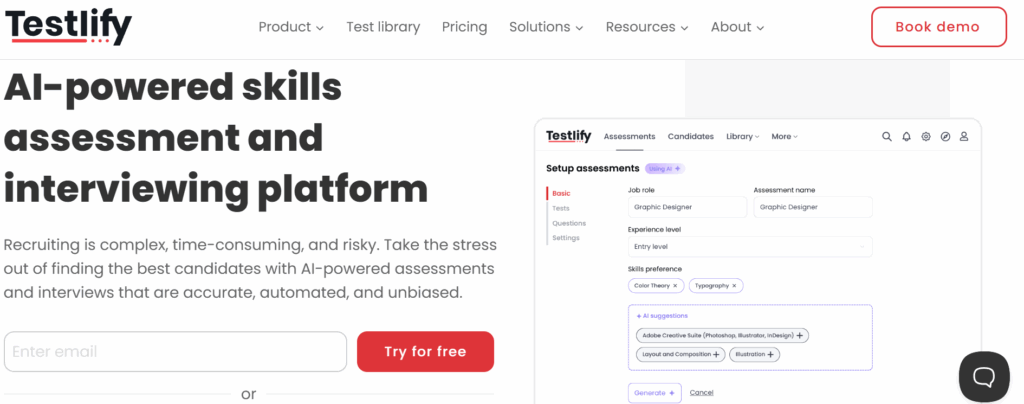
Testlify is a modern talent assessment and interview platform designed for skill-based hiring. It focuses on helping teams shortlist candidates faster by using role-specific assessments that test real abilities instead of resumes or guesswork.
Whether you’re hiring software engineers, sales reps, designers, or customer support teams, Testlify offers a large library of ready test templates. The platform also helps reduce hiring bias by standardizing evaluation and scoring. It is especially popular among companies that need to hire efficiently at scale without compromising quality.
Key features
- Large test library for role-based skills and cognitive abilities
- Automated test creation with pre-built templates
- Candidate-friendly UI to reduce drop-off
- Deep analytics and scoring insights to compare applicants
- Seamless ATS and HR system integrations
Pros
- Very easy to set up and start testing quickly
- Helps reduce bias by standardizing the evaluation
- Great for large-volume hiring across roles
Cons
- Smaller brand awareness than older enterprise tools
- Custom test creation may require little onboarding
Pricing
Starts at $49/month, depending on test volume and company size.
2. Criteria Corp
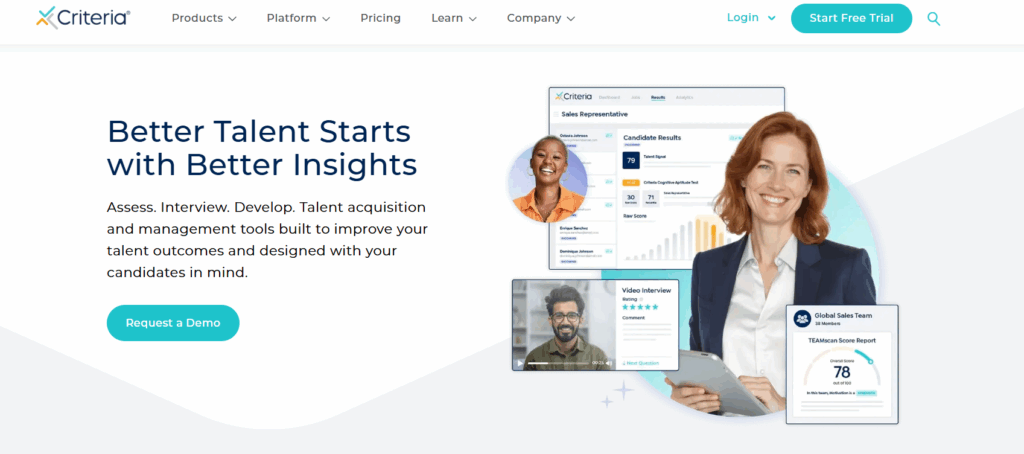
Criteria Corp is a well-known pre-employment assessment tool used widely in enterprise HR teams. It offers cognitive ability tests, personality assessments, and skill tests to improve the prediction of job performance.
The platform is often used when companies want to add a data-backed structure to the hiring process. It’s popular in industries like consulting, finance, healthcare, and large corporate organizations.
Key features
- Cognitive and aptitude assessments
- Behavioral and personality testing
- Skills testing for multiple job categories
- Detailed performance analytics and benchmarks
- Integrates with most ATS platforms
Pros
- Strong reputation and research-backed testing
- Works well for structured enterprise hiring
- Helps predict long-term performance and retention
Cons
- UI feels dated for some users
- Customization options can be limited
Pricing
Typically custom pricing based on hiring volume and organization size.
3. HireVue
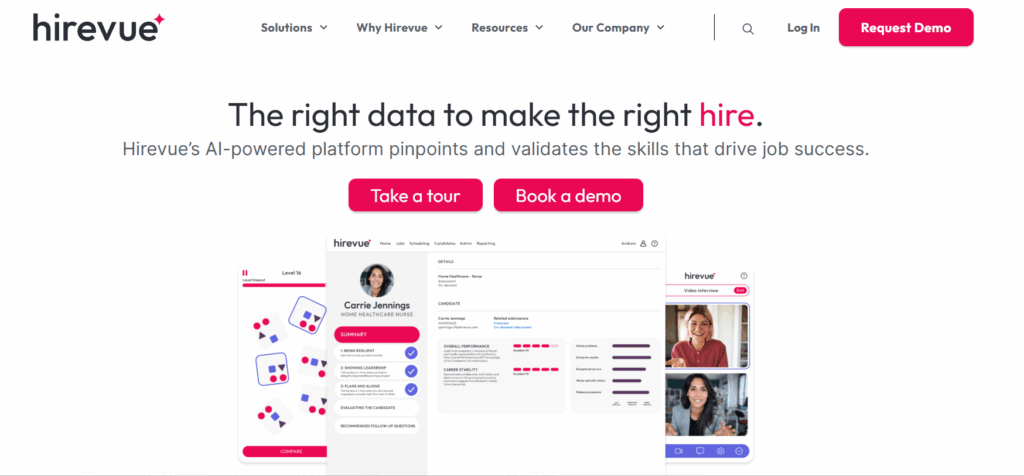
HireVue is best known for its video interview + AI-based evaluation capabilities. It helps companies screen candidates faster by allowing applicants to record video interviews on their own time. The platform can analyze responses using AI to evaluate communication style, language patterns, and job fit. Large organizations use HiringVue to reduce recruiter scheduling time and handle high-volume hiring more efficiently.
Key features
- On-demand video interviews
- AI-based speech and behavioral analysis
- Coding and technical challenge assessments
- Automated scheduling and workflow tools
- Enterprise ATS and HRIS integrations
Pros
- Major time saver for screening interviews
- Scales well for large applicant pools
- Good for remote and asynchronous hiring
Cons
- AI evaluation can feel “impersonal” to candidates
- Some recruiters prefer manual review
Pricing
Starts around $35–$60 per candidate, depending on features.
4. HackerRank
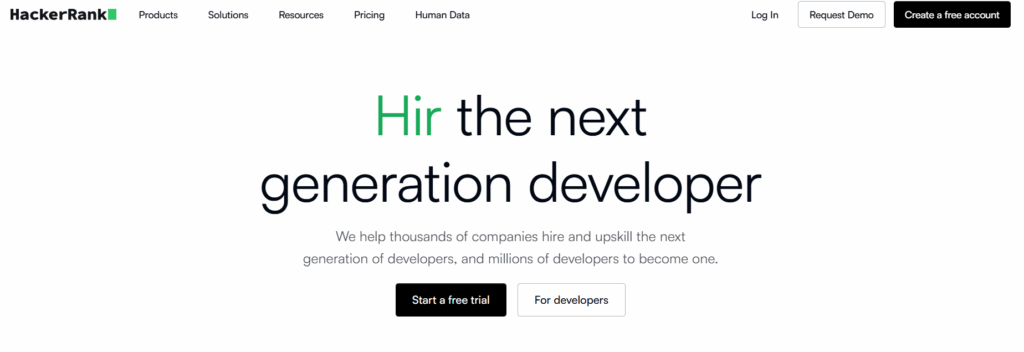
HackerRank is one of the most widely used tools for technical hiring. It specializes in coding assessments, programming challenges, and real-world technical simulations. Companies use it to evaluate developers not on resumes, but on actual problem-solving and coding skill. It is especially common in IT companies, SaaS firms, and engineering-focused teams looking to hire efficiently and fairly.
Key features
- Coding tests in 30+ programming languages
- Code pair live interviews with editors and chat
- Real-world technical project simulations
- Large question library for multiple seniority levels
- Anti-cheating and remote proctoring features
Pros
- Trusted and recognized across the tech industry
- Excellent for screening developers quickly
- Strong anti-cheating environment
Cons
- Best suited only for technical roles
- Some junior developers may find tests stressful
Pricing
Plans typically start around $25–$300 per month, depending on hiring volume.
5. Codility
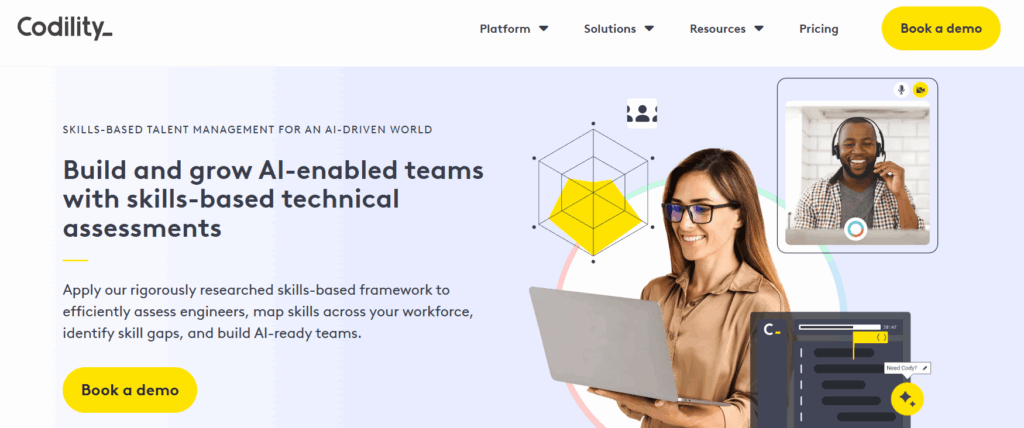
Codility is another popular tool for hiring software developers. It focuses on practical coding assignments that reflect real engineering work instead of puzzle-style problems. Codility’s automated scoring system helps hiring managers review submissions faster without needing deep technical expertise. Many engineering teams use it during screening and also as part of later interview rounds to verify skills.
Key features
- Real-world coding task library
- Automated scoring and code quality metrics
- Plagiarism detection and anti-cheating controls
- Collaborative live coding environment
- Team-ready test workflows
Pros
- Very accurate representation of true coding ability
- Saves engineers time reviewing early candidates
- Strong integrity tools for remote hiring
Cons
- Higher price point for startups
- Fewer beginner-friendly tests
Pricing
Typically offered as custom enterprise pricing.
6. Mercer Mettl
Mercer Mettl is a comprehensive talent assessment platform used across industries for hiring, employee development, and workforce planning. It provides cognitive, behavioral, coding, and job-specific skill assessments, making it suitable for both technical and non-technical roles.
Organizations that hire globally value Mettl for its strong proctoring tools and standardized scoring. It also supports psychometric testing for leadership and personality profiling. Overall, it helps HR teams bring more fairness, consistency, and confidence into the hiring process.
Key features
- Cognitive and aptitude test library
- Behavioral and personality assessments
- Coding tests and technical challenges
- AI-based remote proctoring and fraud detection
- Benchmarks and custom competency frameworks
Pros
- Very versatile for multiple types of roles
- Strong reputation and research-backed assessments
- Works well for global and enterprise hiring
Cons
- Interface can feel complex initially
- Higher cost for full-feature usage
Pricing
Custom pricing depending on volume and assessment type.
7. TestTrick
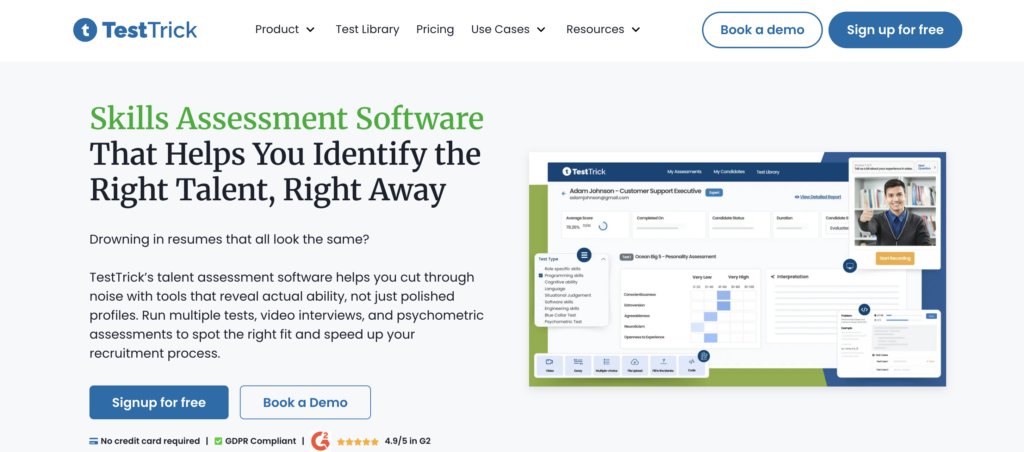
TestTrick is an all-in-one talent assessment platform that helps companies evaluate candidates through skill-based tests, structured interviews, and advanced proctoring. It is designed for businesses that want to improve hiring quality, reduce screening time, and assess candidates based on actual ability rather than resumes alone.
TestTrick supports a wide range of hiring use cases, including technical recruitment, non-technical screening, internship hiring, and high-volume recruitment. With customizable assessments, AI-assisted evaluation options, and multiple proctoring controls, it helps hiring teams run secure and standardized assessments at scale.
Key features
- Skill-based assessments for multiple job roles
- Custom test building and structured evaluation workflows
- AI-assisted evaluation for open-ended and interview responses
- Video interview and written assessment support
- Advanced proctoring with camera, screen, tab-switch, and dual-screen monitoring
- Recruiter-friendly reports and candidate performance insights
- Integration support for modern hiring workflows
Pros
- Supports end-to-end candidate evaluation
- Strong proctoring suite for secure remote assessments
- Flexible for both startups and growing teams
- Works well for internships, graduate hiring, and role-specific recruitment
Cons
- Offers fewer native integrations than some legacy assessment platforms
- Advanced customization may require a bit of initial setup for highly specialized hiring workflows
Pricing
Pricing starts from $49 per month, with custom plans available based on hiring volume, assessment requirements, and feature needs.
8. Vervoe
Vervoe focuses on skills-based hiring, where candidates are evaluated on actual performance instead of resumes. The platform offers simulation-style assessments where applicants demonstrate how they would do real tasks on the job.
It also uses AI to automatically score responses, allowing recruiters to shortlist candidates faster. Vervoe is especially popular among startups and fast-growing teams who want to avoid traditional guesswork in hiring decisions.
Key features
- Job task-based skill simulations
- Automated AI scoring and ranking
- Candidate skill profile insights
- Large library of role-specific tests
- Collaborative review and evaluation tools
Pros
- Strong focus on real capability, not credentials
- Easy to adopt for non-technical teams
- Helps reduce bias in early screening
Cons
- AI scoring may require some calibration
- Not ideal for very high-level specialist roles
Pricing
Starts at $228/month and varies by number of assessments and users.
9. Pymetrics
Pymetrics uses neuroscience-based games to evaluate candidate personality, cognitive traits, and behavioral tendencies. Instead of traditional tests, candidates play short digital exercises that assess things like memory, attention, risk-taking, and emotional response patterns.
The platform then matches candidates with job roles and environments where they are most likely to succeed. It’s popular among large companies focused on reducing bias and improving culture alignment.
Key features
- Gamified behavioral and cognitive assessments
- Machine learning-based candidate matching
- Data-driven culture-fit scoring
- Bias mitigation controls and fairness monitoring
- Employer talent analytics dashboard
Pros
- Very engaging and candidate-friendly
- Helps improve diversity and fair hiring
- Strong science-backed behavioral modeling
Cons
- Not a direct hard skill evaluation tool
- Some HR teams require training to interpret insights
Pricing
Enterprise or custom pricing depending on organization size.
10. SHL
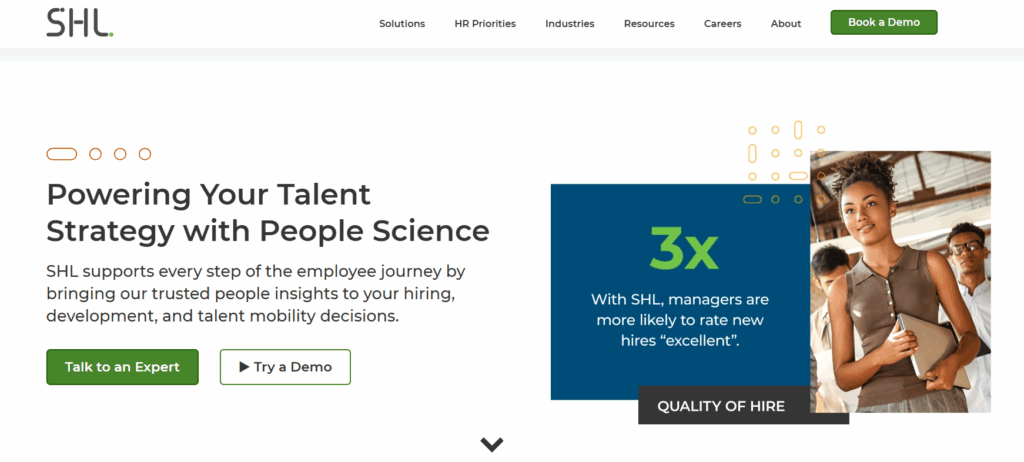
SHL is one of the most established assessment providers, widely used in Fortune 500 companies. It offers a deep library of cognitive, personality, leadership, technical, and situational judgment assessments.
SHL is heavily backed by industrial-organizational psychology research, which makes it a trusted choice for structured and validated hiring. It also includes benchmarking tools that compare candidates against global role-specific averages.
Key features
- Cognitive and aptitude testing
- Behavioral and personality assessments (OPQ, etc.)
- Leadership and managerial fit assessments
- Situational judgment and real-world scenario tests
- Advanced talent analytics and workforce insights
Pros
- Research-backed and widely trusted globally
- Suitable for high-stakes and senior hiring
- Excellent benchmarking and predictive analytics
Cons
- Interface and experience can feel traditional
- It can be expensive for smaller companies
Pricing
Typically, enterprise-level pricing varies significantly by usage.
11. Talview
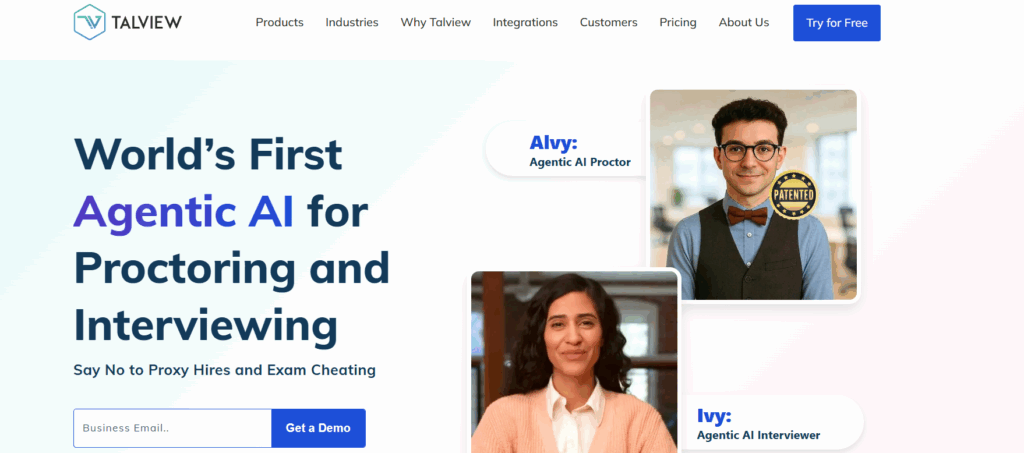
Talview is a talent assessment and remote hiring platform designed to make screening and interviewing faster and more efficient. It combines skills assessments, video interviews, remote proctoring, and workflow automation, making it useful for distributed hiring teams.
Companies use Talview to reduce manual effort during the early screening stage and to ensure fairness with standardized evaluations. It’s especially helpful for organizations hiring across multiple locations or fully remote environments.
Key features
- AI-enabled video interviews
- Skill tests and cognitive assessments
- Automated candidate scoring and ranking
- Remote proctoring and cheating prevention
- End-to-end hiring workflow tools
Pros
- Smooth solution for remote and hybrid hiring
- Saves recruiter time on initial screenings
- Strong proctoring features support integrity
Cons
- Interface can feel complex at first
- Pricing may not suit small teams
Pricing
Custom pricing based on organization size and usage.
12. iMocha
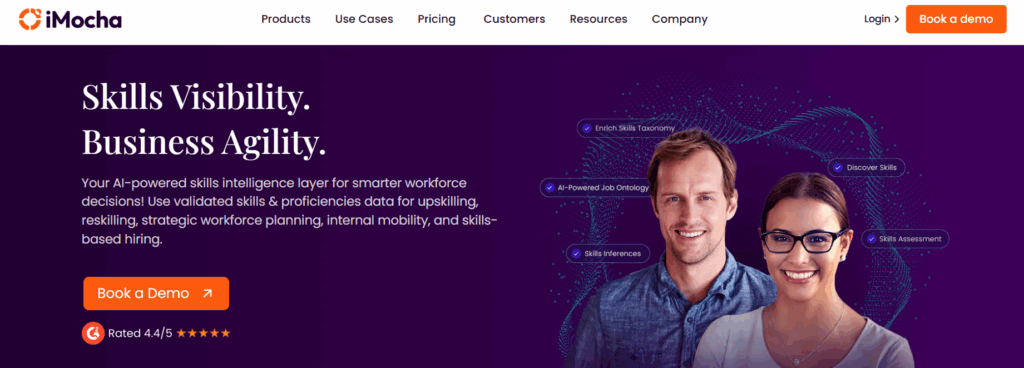
iMocha is a skills intelligence and assessment platform used for evaluating both technical and non-technical capabilities. It includes coding challenges, domain skill tests, language tests, cognitive assessments, and analytics for skill benchmarking.
HR teams value iMocha for its massive test library and ability to measure emerging tech skills, which is increasingly important in 2025. It is a popular choice for IT services, technology companies, and global staffing firms.
Key features
- 2,500+ skills assessment library
- AI scoring and remote proctoring
- Coding tests with project-based tasks
- Skill benchmarking and role-wise competency maps
- Integration with ATS and HRIS systems
Pros
- Very wide range of skill assessments
- Great for IT and tech-heavy roles
- Strong analytics for skill-gap insights
Cons
- Can feel overwhelming due to large library
- UI/UX could be more intuitive
Pricing
Starts around $150/month, varies based on features and scale.
13. Bryq
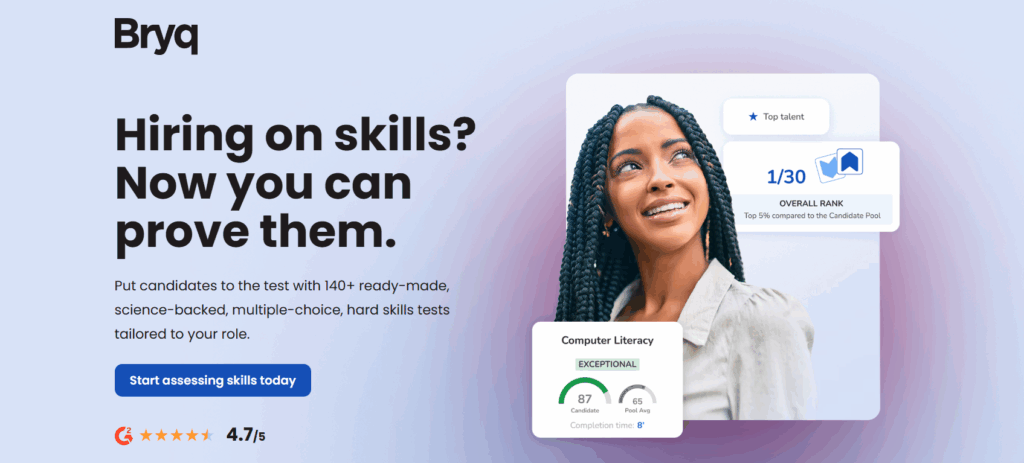
Bryq is a science-based assessment tool that evaluates both cognitive ability and personality traits to predict job fit. It helps HR teams identify candidates who align with role requirements and company culture.
Bryq places a strong emphasis on reducing unconscious bias and supporting diversity-focused hiring. It’s especially useful when organizations want to evaluate potential rather than just past experience.
Key features
- Cognitive and psychometric assessments
- Job and culture fit scoring
- Custom competency frameworks
- Candidate ranking and shortlisting suggestions
- Insights dashboards for hiring decisions
Pros
- Great for unbiased and fair hiring
- Very intuitive and easy for recruiters to interpret
- Helps identify high-potential talent
Cons
- Does not test hard or technical skills
- Less effective for hyper-specialized roles
Pricing
Typically starts around $299/month, depending on number of roles assessed.
14. The Predictive Index (PI)
The Predictive Index focuses on behavioral and cognitive assessments that help employers understand how candidates think, work, and collaborate. It’s commonly used in leadership hiring, team building, and organizational development.
Companies choose PI when they want to deeply understand long-term performance potential, workplace behavior, and team alignment, not just surface-level skills. It is well-regarded for creating a better manager-employee fit.
Key features
- Behavioral assessments (work style profiling)
- Cognitive ability evaluations
- Team compatibility and alignment maps
- Workforce behavior analytics
- Coaching and development insights
Pros
- Excellent for leadership and cultural alignment
- Improves collaboration and team structure
- Strong long-term predictive value
Cons
- Not suitable for evaluating job-specific hard skills
- Requires training to interpret results effectively
Pricing
Offered through annual subscription packages, custom per company.
15. TestGorilla
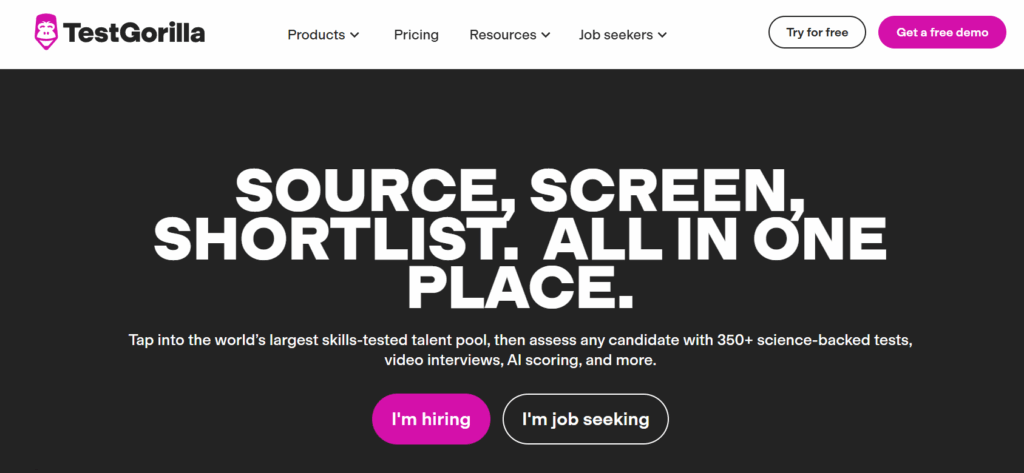
TestGorilla is a skills-based assessment platform designed to make early-stage screening faster and more objective. It offers tests across cognitive abilities, job-specific skills, personality traits, and soft skills.
Companies like it because it simplifies candidate comparison and supports fairer evaluation, especially when dealing with large applicant pools. TestGorilla is commonly adopted by startups, SMEs, and mid-sized HR teams.
Key features
- Ready-to-use skill and aptitude test library
- Personality and work style assessments
- Anti-cheating and secure test environment
- Automated scoring and ranked candidate lists
- Supports asynchronous hiring workflows
Pros
- Very easy to use, even for small teams
- Affordable compared to legacy assessment vendors
- Helps reduce resume-based bias in hiring
Cons
- Limited depth for advanced technical roles
- Some tests can feel too generic without customization
Pricing
Starts at $25/month, with higher-tier feature plans available.
16. eSkill
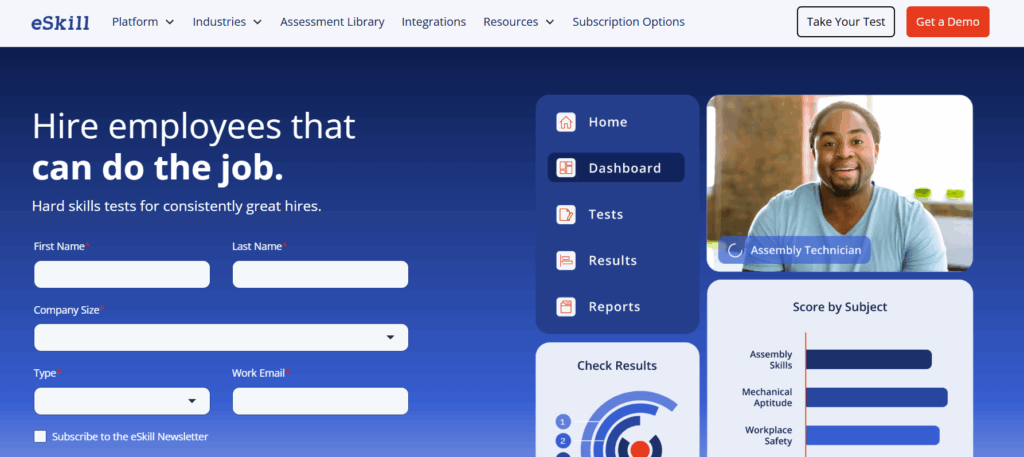
eSkill is a customizable talent assessment platform that allows HR teams to design tests that match specific job roles and skill requirements. Instead of relying only on pre-made assessments, eSkill gives companies the flexibility to combine questions, simulations, and video responses into a single test.
This makes it especially useful for organizations that have unique hiring needs, niche roles, or specialized internal skill criteria. It’s commonly used in customer support, healthcare, administration, and operations hiring.
Key features
- Customizable skill and job-specific test builder
- Video response assessments
- Behavioral and cognitive evaluation modules
- Simulation tests for real-world tasks
- Automated scoring and reporting dashboards
Pros
- Very flexible and customizable testing
- Works across a wide range of job types
- Supports structured, objective screening
Cons
- Requires time to configure effective assessments
- UI design feels slightly dated
Pricing
Custom pricing based on the number of tests and users.
17. Toggl Hire
Toggl Hire focuses on skills-first hiring, aiming to remove resumes entirely from the initial screening process. Candidates take short, job-relevant mini-skills tests that evaluate what they can actually do, not what they claim on paper.
It’s particularly popular among startups and remote-first teams who value speed and simplicity. Toggl Hire helps eliminate time wasted on unqualified applicants early in the funnel.
Key features
- Role-specific mini skill tests
- Automated candidate ranking
- Test builder with question templates
- Collaborative evaluation and notes
- ATS and team workflow integrations
Pros
- Very fast for initial screening
- Great for remote and async hiring
- Candidate experience is simple and engaging
Cons
- Less depth for senior or complex roles
- Limited analytics compared to enterprise tools
Pricing
Free tier available; paid plans start around $17/month.
18. HireSuccess
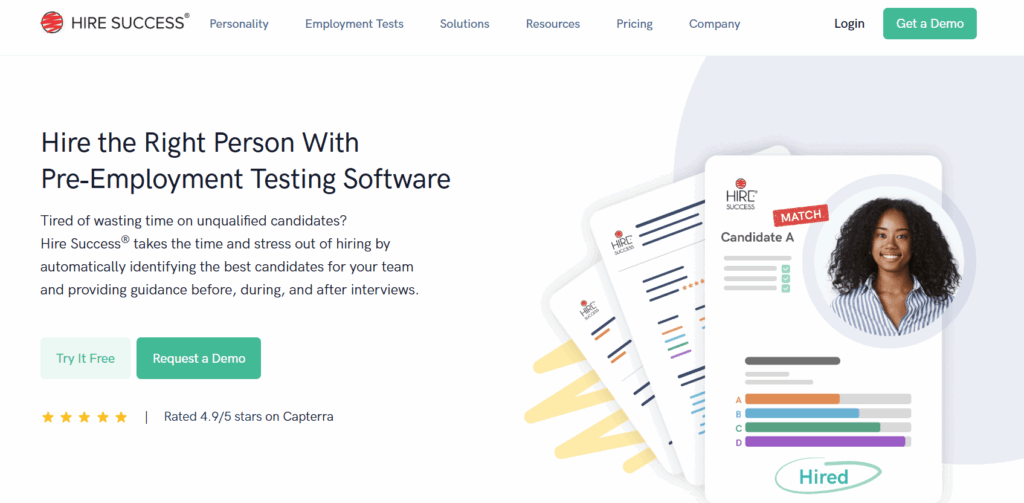
HireSuccess is a personality, cognitive, and behavioral assessment tool designed to help companies understand how candidates fit into a team and work culture. It offers detailed personality profiling, work behavior tendencies, and job compatibility scoring.
The platform is positioned for companies that value building strong, cohesive teams, rather than only checking skill qualifications. It is especially popular among mid-sized businesses and leadership-focused recruitment teams.
Key features
- Personality and behavior assessments
- Cognitive ability tests
- Cultural and role-fit mapping
- Candidate comparison and ranking tools
- Team composition and compatibility insights
Pros
- Strong for culture-fit and collaboration-focused hiring
- Easy to understand reporting
- Helps reduce turnover caused by misfit roles
Cons
- Does not test hands-on job skills
- Less suited for high-volume hiring
Pricing
Custom pricing based on number of candidates assessed.
19. TalentGuard
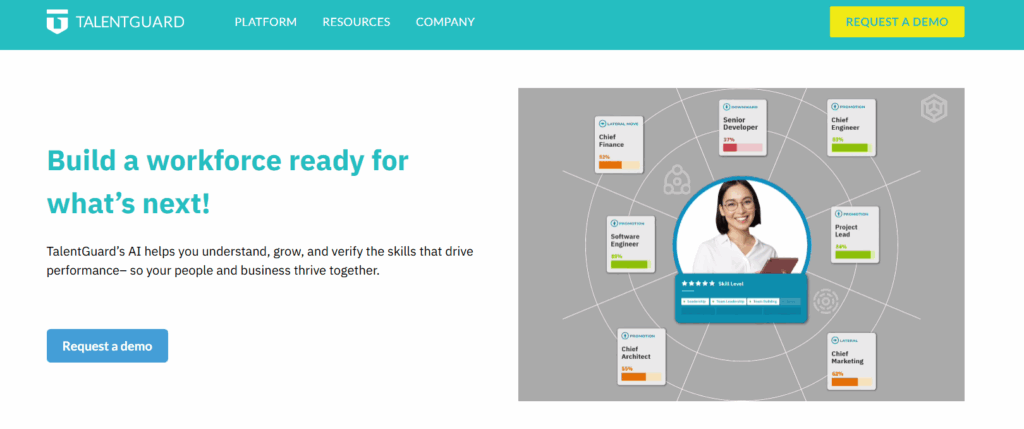
TalentGuard helps organisations assess employees and candidates across skills, competencies, experiences, and work styles to align roles, development, and hiring. It blends assessment with talent management so hiring and internal mobility share insight.
Key features
- Skills and competency assessment for hiring and internal talent
- Behavioral and work-style insights
- Experience, certifications, and qualification mapping
- Talent alignment tools (role fit, career pathing)
- Analytics for workforce planning and capability gaps
Pros
- Combines hiring & internal talent strategy
- Good for career pathing and talent mobility
- Broad view of candidate and employee capability
Cons
- Slightly broader tool, not laser-focused only on high-volume screening
- Implementation may require change management
Pricing
Subscription-based; depends on the number of users and modules.
20. Glider AI
Glider AI is a talent assessment and interview automation platform that specializes in authentic skills validation, especially for tech and digital roles. It provides coding assessments, live interviews, video Q&A, and even job simulations like system design and data analysis tasks.
It’s widely used by staffing firms and fast-scaling companies to ensure talent quality while hiring quickly. Glider AI also emphasizes strong fraud detection, which is essential for remote hiring.
Key features
- Coding tests and live coding interviews
- Job simulation assessments
- Video Q&A interview automation
- AI-based fraud detection and proctoring
- Scorecards and structured evaluation workflows
Pros
- Strong anti-cheating controls for remote hiring
- Great for technical and digital roles
- Supports both assessments and interviews in one place
Cons
- UX can be intense for inexperienced candidates
- Enterprise pricing can be high
Pricing
Custom pricing depending on role types and hiring volume.
21. Spark Hire
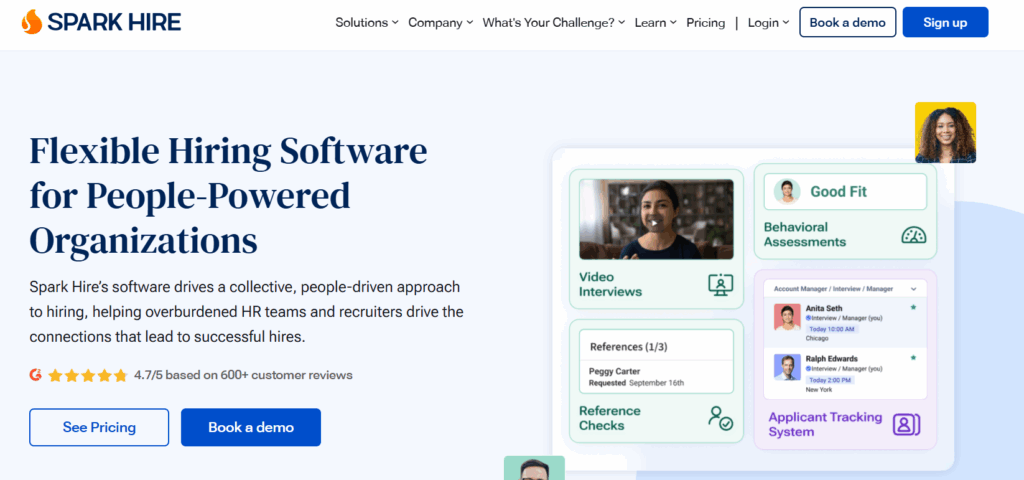
Spark Hire is a video interviewing platform that helps companies streamline early-stage interviews, especially when screening a large number of candidates. Instead of scheduling live calls, candidates record their answers to standardized interview questions.
This allows hiring teams to review responses on their own time, ensure consistent evaluation, and dramatically reduce scheduling delays. Spark Hire is widely used by mid-size companies, staffing firms, and teams hiring across multiple locations.
Key features
- One-way recorded video interviews
- Live video interviews with interview scheduling
- Customizable question workflows
- Collaborative evaluation and reviewer comments
- Integration with major ATS platforms
Pros
- Saves significant recruiter and manager time
- Easy for candidates to complete remotely
- Ensures consistent question format for fairness
Cons
- Not a skills-testing platform by itself
- Some candidates may find video responses nerve-wracking
Pricing
Starts at $149/month for basic video interview features.
22. OutMatch
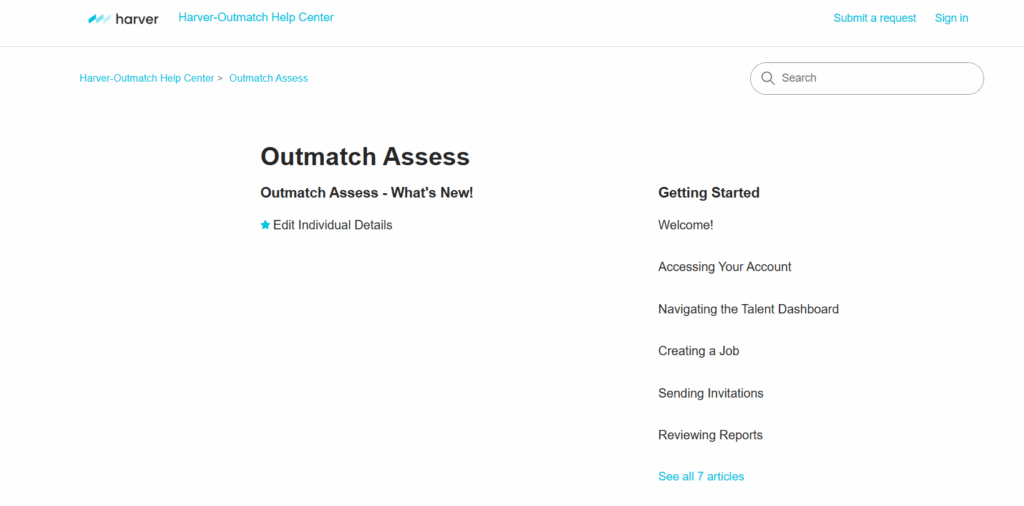
OutMatch, now part of Harver, is a talent assessment platform that focuses on behavioral, situational, and cultural fit evaluations. The platform helps employers understand not just whether a candidate can perform tasks, but whether they will thrive within the work environment and contribute positively to team dynamics. It is commonly used in hospitality, retail, healthcare, and customer service roles where interaction style and temperament matter as much as skill.
Key features
- Personality and behavioral assessments
- Situational judgment simulations
- Culture fit scoring and job adaptability insights
- Candidate ranking and comparison dashboards
- Predictive analytics for quality-of-hire
Pros
- Excellent for hiring where attitude and customer experience matter
- Helps reduce turnover by selecting better-fit candidates
- Clear visual insights for decision-makers
Cons
- Not suitable for technical skills validation
- Implementation and customization can take time
Pricing
Custom plan pricing depending on hiring scale and assessment modules.
23. Wonderlic
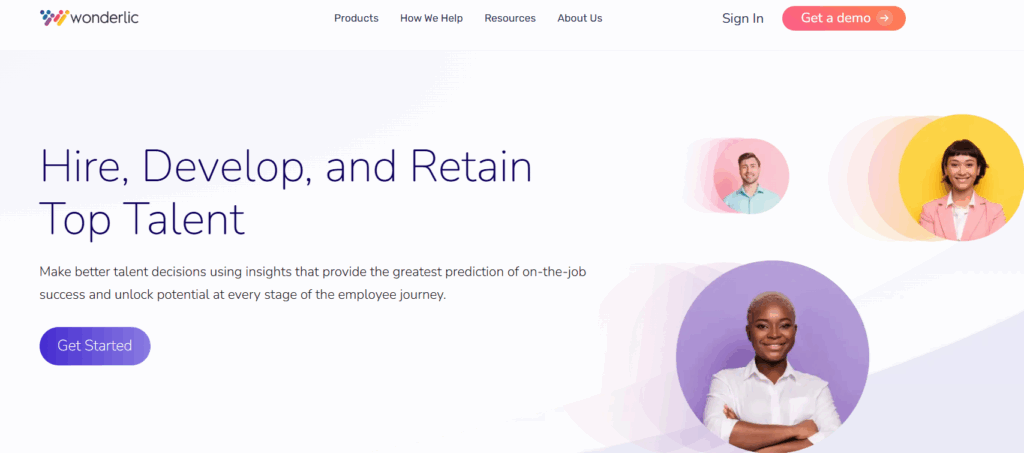
Wonderlic is known for its cognitive ability test, which measures problem-solving, learning speed, and decision-making. It has been used for decades across industries to predict general job performance.
Today, Wonderlic offers a modern digital platform that includes personality insights and motivation factors in addition to cognitive testing. It’s often used for roles where quick thinking and adaptability are key, such as operations, logistics, sales, and corporate roles.
Key features
- Cognitive ability assessments
- Personality and behavioral trait modeling
- Motivation and work-style evaluations
- Automated comparison and job-fit scoring
- Dashboard-based candidate insights
Pros
- Highly predictive for job performance
- Results are simple and fast to evaluate
- Works well across many job categories
Cons
- Does not test job-specific skills
- Some candidates may find timed tests stressful
Pricing
Typically per-candidate or subscription-based, depending on company size.
24. Plum
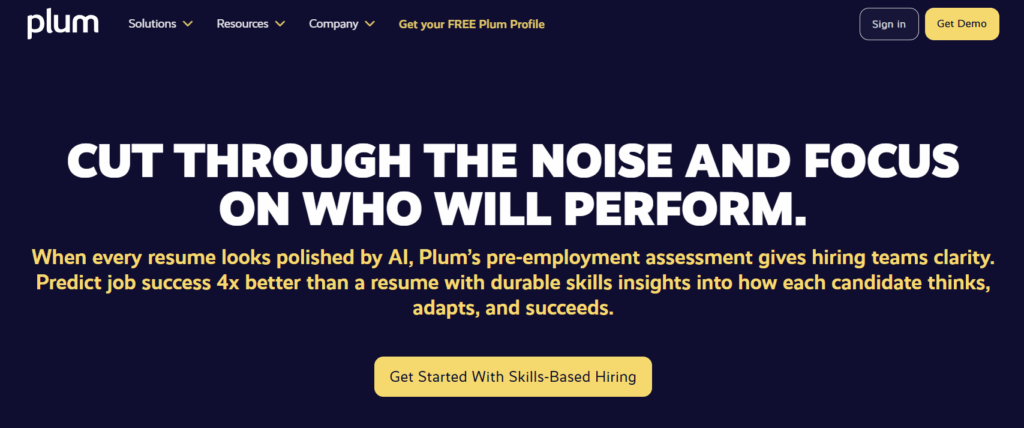
Plum focuses on measuring human potential, using psychometric assessments to evaluate personality traits, decision-making approaches, and workplace-related strengths. The platform helps identify candidates who are likely to excel based on behavioral strengths, not just past job titles or resumes. Plum is widely used in talent mobility, leadership pipelines, campus hiring, and diversity-focused recruitment strategies.
Key features
- Behavioral and personality strength assessment
- Job role matching and fit scoring
- Team composition and collaboration insights
- Candidate strength profile dashboards
- Development and internal mobility mapping
Pros
- Great for hiring based on potential rather than credentials
- Very visual and easy-to-understand reports
- Supports internal talent development strategies
Cons
- Does not include technical or role-specific skills testing
- Best used alongside other assessment tools
Pricing
Custom annual pricing depending on scale and team size.
25. HireRight Skills Testing

HireRight, known for background checks, also provides skills testing to evaluate software proficiency, office tools, typing speed, administrative accuracy, and workplace cognitive abilities. It is especially useful for operations, clerical, admin, support, and back-office hiring. HR teams choose HireRight Skills Testing when they want to combine background verification and skill assessment in a single workflow.
Key features
- Administrative and clerical skill evaluations
- Typing and data entry tests
- Software proficiency tests (Excel, CRM, etc.)
- General cognitive and work readiness assessments
- Integrated background screening workflows
Pros
- Convenient if using HireRight for screening already
- Good for high-volume or entry-level hiring
- Simple and fast test delivery
Cons
- Limited depth for technical and professional fields
- UI feels more functional than modern
Pricing
Typically usage-based, depending on the number of assessments required.
How to integrate a talent assessment tool into your hiring process
The best tools work seamlessly with your existing workflow. Here's how to integrate them effectively:
Identify key roles and skills
Begin by mapping the core competencies and success traits for each job role. Understanding which skills truly drive performance helps align your assessments with real-world requirements.
Choose the right platform
Select an assessment platform that offers customization, strong analytics, and integration with your Applicant Tracking System (ATS). Look for tools that can support multiple roles and locations simultaneously.
Customize assessments for each role
Avoid a one-size-fits-all approach. Tailor each assessment to reflect the specific skills, complexity, and culture of the role, giving you deeper insight into job readiness.
Communicate with candidates
Keep candidates informed at every step, from assessment details to timelines and next steps. Transparency builds trust, reduces anxiety, and boosts participation rates.
Analyze and interpret results
Once assessments are complete, use the data to identify top-performing candidates. Combining these insights with interview feedback helps you make confident, evidence-based hiring decisions.
Continuously refine
Treat your assessment strategy as a living system. Regularly review performance data, candidate feedback, and hiring outcomes to spot improvement opportunities, and adjust question types, difficulty levels, or time limits as needed.
Closing thoughts
Hiring in 2025 requires precision, fairness, and efficiency, and talent assessment tools make that possible. Each platform in this list offers a different approach to evaluating candidates, from skill tests and cognitive assessments to work simulations and culture-fit measures. The right choice depends on your hiring volume, role types, and the depth of insights you need.
When selecting a tool, focus on what matters most: accuracy, ease of use, candidate experience, and integration with your existing HR systems. With the right assessment solution, you can hire faster, reduce bias, and consistently bring in talent that performs and stays.
For further reading, explore 9 Box Matrix.
Frequently asked questions (FAQs)

Founder and CEO, Testlify
Abhishek Shah is the Founder and CEO of Testlify, a pre-employment assessment platform used by 1,500+ companies globally to hire fairly and at scale. He focuses on skills-based, bias-free hiring technology. Testlify is part of the SHRM Labs 2026 WorkplaceTech Accelerator.
LinkedInRelated resources
View all
Talent assessment
What Is Talent Benchmarking? A 2026 Guide for Hiring Teams

Talent assessment
Soft skills interview question bank (100+ behavioral indicators)

Talent assessment
Top qualities every talent leader should have in 2026

Talent assessment
What Is a Job Simulation? Types, Benefits & How to Create One (2026 Guide)

Talent assessment
How to build a hiring process with talent assessment tools

Talent assessment
Best Talent Assessment Software in 2026: How to Evaluate and Choose
Get started.
Hire on proof, not resumes.
Run your first skills-based assessment free — no credit card required.