
Top 15 iMocha Alternatives and Competitors in 2026
Discover 15 powerful iMocha alternatives to streamline your hiring process and assess candidates with confidence.
The best iMocha alternative for most teams under about 200 people is a skills assessment platform that publishes its prices, covers non-technical roles as well as coding, and runs AI interviews and proctoring you can actually configure. Testlify is the pick on all three counts. If you hire mainly engineers, HackerEarth or Coderbyte are cheaper narrow options. If you care most about behavioral fit, Predictive Index or Talogy do that better than any coding-first tool.
iMocha is a good product for what it was built to do: map an enterprise's skills against a taxonomy of tens of thousands of skills, then feed hiring and upskilling from that map. The catch is that a company hiring 20 people a quarter doesn't need the map. It needs a shortlist by Friday, a price it can see without a sales call, and confidence that the person who aced the test is the person who shows up on day one. That last point matters more every year: in a July 2025 Gartner survey of 3,000 candidates, 6% admitted to interview fraud, and Gartner expects one in four candidate profiles to be fake by 2028.
TL;DR
- iMocha is a skills-intelligence platform sold on a quote. Teams that only need to screen candidates pay for breadth they will not use, and cannot see the price before a demo.
- The 15 iMocha competitors below split into three groups: full assessment platforms (Testlify, Mercer Mettl, eSkill, TestInvite), developer-only tools (HackerRank, HackerEarth, Coderbyte, TestDome), and behavioral or interview specialists (Predictive Index, Talogy, TalentClick, The Talent Games, HireVue, Canditech, HireMojo).
- Only six of the 15 publish a price. This page lists each one as checked on the vendor's own pricing page in September 2026, and says "quote only" for the rest.
- Pick on four things: role coverage beyond coding, how configurable the AI interview and proctoring are, whether AI-assisted cheating is detected, and whether you can leave after a year.
- Testlify is the strongest all-round replacement for a team under about 200 people, with a 7-day trial and a Starter plan from $139 a month on annual billing.
 ChatGPT
 Gemini
 Claude
 Grok
Grok Perplexity
Why do companies look for iMocha alternatives?
Companies look for iMocha alternatives when the platform's strength, enterprise skills intelligence, becomes the thing they are paying for but not using. iMocha sells a skills taxonomy, workforce mapping and upskilling analytics alongside its test library and its Tara AI interviewer. A team that needs role-specific screening, a visible price and a way to switch off proctoring for a junior role is buying a bigger product than its problem.
The pattern shows up in five places.
- No published price. iMocha's pricing pages show a demo form and no plan or figure (checked September 2026). You get a quote after a call, which makes it hard to compare against a platform that prints its rates.
- Annual enterprise contracts. Seasonal hiring, a three-month pilot or a single hard-to-fill role does not fit a 12-month commitment sized for a workforce program.
- Built for the taxonomy, not the requisition. Skills mapping across an enterprise is a different job from screening 40 applicants for one role. Recruiters end up in dashboards designed for workforce analytics.
- Setup time. Assessment creation on a platform this broad tends to need onboarding help, which slows the first hire rather than speeding it.
- Coding-first history. iMocha grew out of IT hiring. Teams that now hire sales, finance, operations and marketing roles want a library and an interview format built for those jobs too.
None of that makes iMocha a bad tool. It makes it the wrong size for a lot of the companies that search for it. The Testlify versus iMocha comparison goes feature by feature if you want the head-to-head; this page is the wider field.

How did we evaluate these iMocha competitors?
Each of the 15 iMocha competitors below was scored on the same six questions, using the vendor's own site as the source and the September 2026 pricing page as the price of record. Where a vendor publishes no price, the table says so rather than repeating a number from a review aggregator.
- Role coverage. Does the library go beyond coding into sales, finance, operations, customer service, language and cognitive ability?
- AI interviewing depth. Not "has video" but whether you can set the format, the interviewer, the number of attempts, the scoring and who overrides it.
- Integrity controls. Proctoring presets, identity checks and, the 2026 question, whether the platform detects answers that came from an AI tool.
- Price transparency and exit. A published price, a trial, and a way to stop after a year or a hiring season.
- Integrations. Whether results flow into the ATS you already run, and what that costs.
- Compliance. SOC 2, ISO 27001 and GDPR at minimum, plus a documented human-override path for AI scores.
That last criterion is not box-ticking. The EU AI Act classifies AI systems used to recruit, screen or evaluate candidates as high-risk under Annex III, with obligations phasing in over several years. A platform that lets a human see, adjust and exclude an AI score is easier to defend than one that hides the score behind a rank.
Quick comparison of the 15 iMocha alternatives
Tool | Best for | Starting price (checked Sept 2026) | Standout | Main limitation |
|---|---|---|---|---|
Testlify | Teams under about 200 people hiring across technical and non-technical roles | $139/month on annual billing (100 credits, 3 seats); $198/month billed monthly | 25+ question types, AI video, voice and phone interviews, dual-device proctoring | ATS integrations and SSO are paid add-ons on self-serve tiers |
Predictive Index | Behavioral and cognitive fit | Quote only | Behavioral assessment plus job targeting and team analytics | No technical or role-specific skills tests |
The Talent Games | Campus and early-career volume hiring | Quote only | Game-based aptitude and personality assessment | Little use beyond entry-level hiring |
Talogy | Regulated enterprises that want validated psychometrics | Quote only | Assessment science plus consulting | No hands-on coding or technical tests |
Mercer Mettl | High-volume and campus drives | Quote only | Large multi-domain library and remote proctoring | Heavy for a team that needs simple screening |
TalentClick | Behavioral risk and safety-sensitive roles | Quote only | Safety and work-style profiling | Not a skills or coding platform |
HireVue | Large enterprises interviewing at scale | Quote only | On-demand and live video with game-based assessments | Enterprise cost and rollout |
TestDome | Occasional hiring with no subscription | $20 per candidate (5-pack), down to $7 at 600 | Work-sample tests, pay only when you test someone | Thin on soft skills and non-English |
Coderbyte | Startups screening developers | $199 per user per month (Standard); pay-per-candidate option | Unlimited coding tests and live interviews | Technical roles only |
HireMojo | Small teams that want posting, screening and scheduling in one | Quote only | Hiring automation from job post to interview | Light on assessment depth |
HackerEarth | Developer assessments and hackathons | $99/month or $990/year (Growth, assessments) | Large coding question bank and FaceCode live interviews | Rigid timers; developer-only |
HackerRank | Enterprise engineering teams | Tiered plans; see the vendor's pricing page | Developer familiarity and scale | Coding-centric; slow custom test authoring |
TestInvite | Highly customised exams and certification | $900/year (Starter, 500 credits) | Flexible test builder and lockdown controls | Entry plan limits tests and teammates |
eSkill | Clerical, entry-level and functional roles | Quote only | Subject tests and job simulations | Dated interface, no public price |
Canditech | Realistic work-sample simulations | Quote only (free trial, no card) | Job simulations with SQL and spreadsheet tasks | Smaller ecosystem and integrations |
Two things stand out in that table. Nine of the 15 will not tell you the price without a call. And only a handful cover both a developer and a sales hire on one platform, which is the exact gap a growing company hits first. The sections below take each tool in turn.
1. Testlify
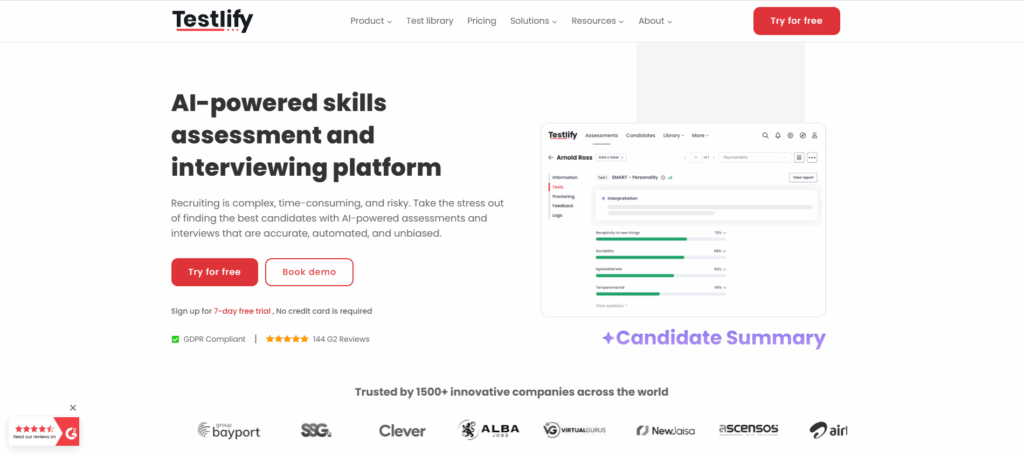
Testlify is a pre-hire skills assessment and interviewing platform with a library of 3,500+ tests, 25+ question types and AI interviews across video, voice and phone. Where iMocha is a skills-intelligence platform that also screens, Testlify is a screening platform first: you set up a role, pick or generate the assessment, invite candidates, and get a ranked shortlist with the proctoring evidence attached.
It is the closest like-for-like replacement on this list because it covers the same ground (coding, cognitive, role-specific, psychometric, language) without the enterprise taxonomy layer, and it prints its prices. It is also the one written for the buyer this page is aimed at: a founder, an ops lead or a hiring manager at a company that does not run hiring full time.
Key features
- 25+ question types. Single and multiple select, ranking, fill-in-the-blank, file upload, typing tests, coding in an embedded VS Code editor with hidden test cases and SQLite database tasks, and real Office tasks in Google Docs, Sheets and Slides and Microsoft Word, Excel and PowerPoint. A "vibe coding" question type lets candidates direct AI tools to a working solution instead of typing syntax, which is how a lot of engineering work now happens.
- AI interviews you can configure. One-way video, two-way conversational AI video, audio and voice questions, and outbound AI phone interviews billed at $0.18 a minute. You choose the AI avatar and voice, write the prompts, set attempts and recording time, and get automatic multilingual transcripts. AI scoring is advisory by design: the product itself says "AI scores and insights are for guidance only. Use human judgment for final decisions," and you can keep the AI score out of the final average entirely. A text-chat AI interview is labelled coming soon and is not counted here.
- Proctoring with three presets. Standard, Strict and Custom, covering full-screen enforcement, tab-switch and multi-monitor detection, photo ID with face match, periodic webcam snapshots, copy-paste tracking, and dual-device proctoring where the candidate's phone becomes a second camera pointed at them and their screen. The anti-cheating and proctoring suite also runs an AI checker that labels an answer Human, AI generated or Mixed, and a separate AI-assistance detector for tools used during the test.
- Evidence, not auto-rejection. Flags come back green, yellow ("a quick manual review is recommended") or red, and auto-termination is a separate opt-in threshold you set. Face verification data is deleted after 30 days.
- Item-level analytics. Difficulty index, discrimination index and a quality-risk flag per question, so you can see which of your own questions are doing the work.
- A light hiring pipeline for teams that do not already run an ATS. Job requisitions, an application form, job-board publishing and an applied to reviewed to shortlisted to rejected pipeline. For the majority who already run Greenhouse, Workday or Lever, Testlify integrates as the screening layer and leaves that ATS as the system of record, with 100+ ATS and HR integrations.
- Compliance. SOC 2 Type II, ISO 27001, GDPR and CCPA, with SAML SSO, SCIM provisioning and audit-log streaming to a SIEM on enterprise plans.
Pros
- One platform for a developer and a sales hire, so a 50-person company is not stitching two tools together.
- The most configurable AI interviewing on this list: format, avatar, voice, prompts, attempts, transcripts, and a human override on every AI score.
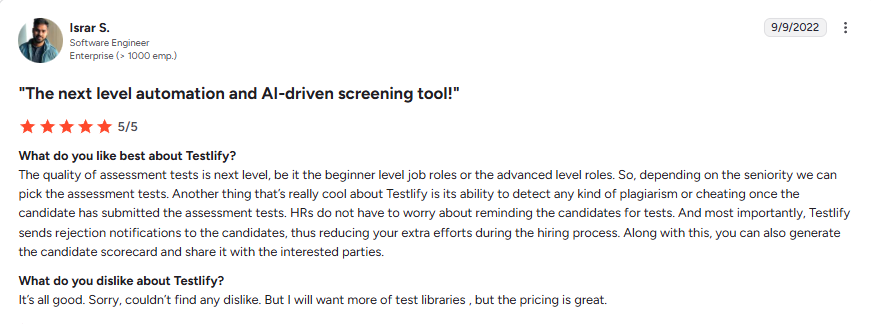
- Published pricing, a 7-day free trial with no card, a 30-day money-back guarantee and a 24-month price lock.
- Dual-device proctoring and an AI checker address the cheating problem the Gartner survey above describes, rather than just recording the webcam.
- Real-time translation of tests and questions into the candidate's language, plus a 16-language interface.
Cons
- ATS integrations, white labeling and SAML SSO are $2,388-a-year add-ons on the self-serve tiers and are only bundled on the Custom plan.
- Candidates need a Chromium desktop browser (Chrome or Edge); the mobile app is a fallback for recording audio and video, not a way to sit a whole assessment on a phone.
- Testlify does not schedule live human interview panels. It runs the AI interview and the assessment; your calendar coordination happens elsewhere.
- Credits are consumed per started assessment and do not roll over, so an idle quarter costs the same as a busy one on an annual plan.
Best for
Companies under about 200 people, agencies and professional-services firms that hire across several functions, and any team that wants to see a price and try the product before talking to sales. It also fits an enterprise screening layer where an incumbent ATS stays in charge.
Testlify pricing
Testlify's pricing is a credit-volume selector crossed with a monthly or annual toggle. One credit is one started assessment by a qualified candidate. Annual billing, as listed in September 2026:
- Starter: $139 a month, billed $1,668 a year, 100 credits, 3 seats, extra credits $21.
- Basic: $279 a month, billed $3,348 a year, 300 credits, 5 seats, extra credits $14.
- Business: $699 a month, billed $8,388 a year, 1,000 credits, 10 seats, extra credits $10.
- Premium, Enterprise and Custom: 3,000, 10,000 and 25,000+ credits with 20, 30 and 40 seats, priced on contact.
Billed monthly, Starter is $198 for 10 credits, Basic $398 for 30 and Business $998 for 100. Extra seats are $15 a seat a month on every tier, nonprofits get 25% off, and the trial is 7 days with no card.
Pro Tip: Before you compare any two platforms on price, count started assessments, not hires. A team that interviews 30 people to make one hire burns 30 credits on a credit model and pays for 30 candidates on a per-candidate model, and the "cheaper" tool flips depending on which side of 100 candidates a year you sit.
2. Predictive Index (PI)
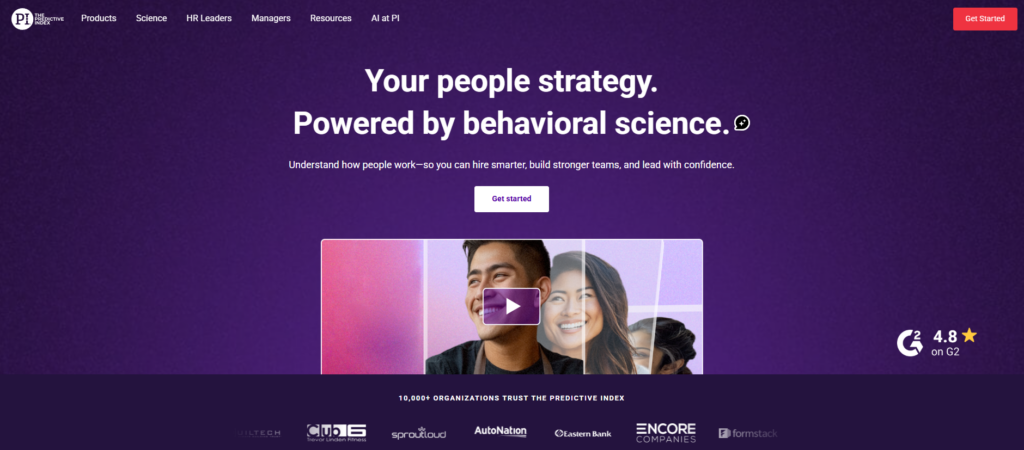
The Predictive Index is a talent optimization platform built around a behavioral assessment and a cognitive assessment, not a skills library. Enterprises use it to define the behavioral profile a role needs, match candidates to it, and then carry the same data into onboarding, team design and coaching. It is on an iMocha alternatives list because a lot of the teams that leave a skills platform do so because they were trying to measure fit with a coding test.
Key features
- Behavioral assessment. A short, untimed adjective-selection assessment that profiles four drives (dominance, extraversion, patience and formality) and how a person is likely to work.
- Cognitive assessment. A timed measure of learning speed across numerical, verbal and abstract reasoning.
- Job targeting. Hiring teams set the behavioral and cognitive target for a role and score candidates against it.
- Team analytics. Maps the existing team so you can see who a new hire would complement or clash with.
- Post-hire tools. Onboarding guides, manager coaching and engagement surveys that reuse the same profile.
Pros
- Decades of validation research behind the two core instruments.
- The role-target workflow forces a hiring manager to say what "good" looks like before interviewing.
- Value carries past the hire into team design and management.
Cons
- No technical, coding or role-specific skills tests, so it cannot replace iMocha or Testlify on its own for a developer or analyst hire.
- Rollout takes training; the output is a profile to interpret, not a pass/fail score.
- Quote-only pricing sized for enterprise budgets.
Best for
Mid-size and large organizations that want a behavioral layer on top of a skills platform, particularly for management, sales and customer-facing roles where fit is the thing that predicts retention.
Pricing
Not published. Pricing is by quote and typically depends on employee count and modules.
3. The Talent Games
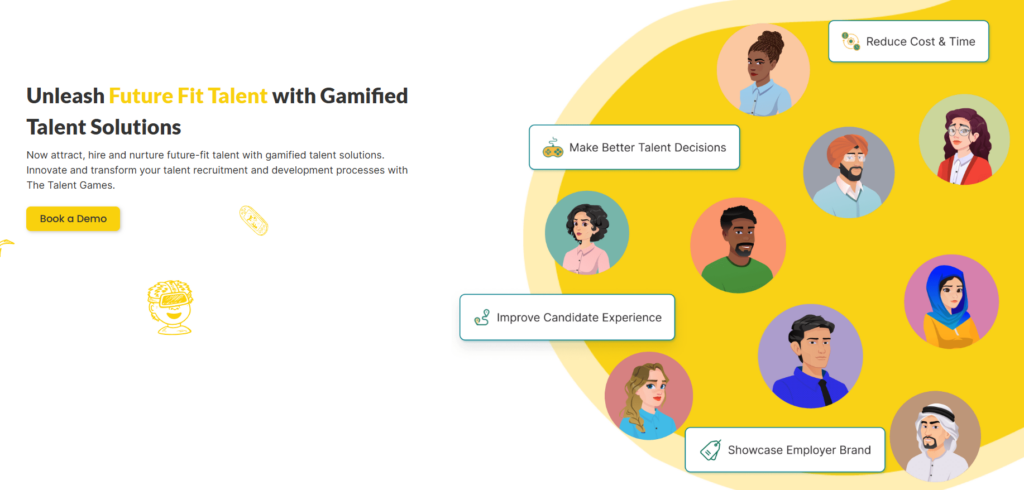
The Talent Games is a gamified assessment platform for early-career and campus hiring. Candidates play short game-based tasks that measure cognitive ability, problem solving and personality, and the employer gets a ranked pool with a branded candidate experience. It is a good fit where the problem is 5,000 applicants for 50 graduate seats and drop-off is the metric that matters.
Key features
- Game-based assessments. Logical reasoning, numerical ability, attention and problem solving measured through play rather than question banks.
- Situational judgment tests. Scenario-based questions that test decision-making and behavior in work situations.
- Role-specific games. Custom builds for particular functions and industries.
- Employer branding. The game doubles as a showcase of company culture and values.
- AI-generated reports. Summary reports that rank candidates on potential.
Pros
- Candidate engagement that a long-form test or a coding challenge cannot match, which lowers drop-off in high-volume funnels.
- Strong at cognitive potential and behavioral traits at scale.
- Fast filtering when the pool is large and experience is thin.
Cons
- Premium, custom-quoted pricing that is hard to justify for a team making a few hires.
- Games are licensed per assessment, so it does not suit one-off or low-volume use.
- Little to say about an experienced engineer or a senior manager; it needs pairing with a skills platform for those.
Best for
Graduate programs, campus drives and early-career volume hiring where engagement and employer brand matter as much as measurement.
Pricing
Custom pricing based on volume and the assessments licensed. Nothing is published.
4. Talogy
Talogy is a talent assessment and consulting company that sells psychometric testing, behavioral assessment and selection science, together with the consulting to validate it. Where iMocha leans on coding challenges and a skills taxonomy, Talogy positions itself as an assessment partner for organizations that need defensible, validated hiring decisions and leadership pipelines. It is not a self-serve SaaS tool and does not try to be.
Key features
- Psychometric assessments. Cognitive ability, personality, behavioral tendencies and work style built on research-backed instruments.
- Success profiles. Role profiling that maps competencies, behaviors and cognitive requirements to a job.
- Situational judgment tests. Realistic scenarios for decision-making and behavioral responses.
- Leadership and potential assessment. Instruments for identifying high-potential talent and future leaders.
- Consulting. Validation studies, adverse-impact analysis and compliance support.
- Enterprise integrations. Connections to major ATS and HR systems for large hiring programs.
Pros
- Scientific rigor and validation evidence suited to high-stakes and regulated selection.
- Strong on behavioral fit, cognitive ability and leadership potential.
- Goes beyond hiring into development and workforce strategy.
Cons
- No hands-on coding assessments or live technical interviews, so developer hiring needs another tool.
- Rollout usually involves a consulting engagement, which adds cost and lead time.
- Pricing is custom and aligned with enterprise budgets; a startup will find it slow and expensive.
Best for
Large or regulated employers, public-sector bodies and companies building leadership pipelines that need validated instruments and a paper trail.
Pricing
Not published. Quoted on assessment scope, hiring volume and consulting requirements.
5. Mercer Mettl
Mercer Mettl is an online assessment platform used for high-volume hiring, campus recruitment and certification-style testing. Its library spans aptitude, technical, domain, psychometric, communication and language tests, and its remote proctoring is one of the more mature on the market. The tradeoff is weight: it is built to run a 5,000-candidate drive on a Saturday, and a ten-person company screening for one role will feel that.
Key features
- Multi-domain library. Aptitude, technical skills, domain knowledge, psychometrics, communication and language proficiency in one catalog.
- High-volume delivery. Infrastructure sized for thousands of concurrent candidates in time-bound drives.
- Remote proctoring. Webcam and screen monitoring, identity checks and human review options.
- Reporting. Score breakdowns, percentiles, benchmarks and hiring recommendations.
- Global delivery. Multi-language testing and compliance support for cross-border programs.
Pros
- A strong choice for campus and volume hiring where reliability under load is the first requirement.
- Mature proctoring for exam-style assessment.
- Broad coverage across technical, cognitive and psychometric tests.
Cons
- Heavy and configuration-rich for teams that need simple role screening.
- Less depth in hands-on coding interviews than developer-focused platforms.
- Setup often needs vendor support, and pricing is quote-based with volume commitments.
Best for
Enterprises and institutions running large, scheduled assessment drives, especially campus hiring in markets where that is the dominant entry route. There is a separate list of TestGorilla alternatives if you are comparing the volume-hiring platforms against each other.
Pricing
Not published. Quoted on assessment volume, proctoring level and role coverage, usually with a minimum purchase.
6. TalentClick
TalentClick is a workplace behavioral assessment platform. It profiles personality, work style, motivators and, its distinctive piece, safety-related behavior, to predict how a person will act on the job. It has no coding or skills tests at all, which is exactly why it appears here: teams in construction, logistics, manufacturing and field service often leave a coding-first platform because it was never the right instrument for their roles.
Key features
- Behavioral assessments. Personality traits, interpersonal style and behavioral tendencies mapped to on-the-job behavior.
- Motivators and cognitive profiling. Decision-making preferences, drivers and response to pressure.
- Safety profiling. Risk-prone tendencies and safety awareness for frontline and compliance-heavy roles.
- Team dynamics. How a candidate is likely to fit an existing team's working style.
- Role-fit benchmarks. Comparison against a predefined success profile for each role.
- ATS and HR integrations. Behavioral data pushed into existing recruiting workflows.
Pros
- Behavioral insight that a resume and a skills test cannot surface.
- Unusually relevant for safety-sensitive and frontline hiring.
- Helps reduce early attrition by improving role and team alignment.
Cons
- No skills, coding or role-specific tests; it needs a skills platform alongside it for most roles.
- Reports assume some psychometric literacy in the HR team.
- Quote-only pricing and implementation better suited to mid-size and larger employers.
Best for
Construction, industrial, transport and field-service employers, and any organization where safety behavior is a hiring criterion.
Pricing
Not published. Quoted on volume, licensing structure and implementation scope.
7. HireVue
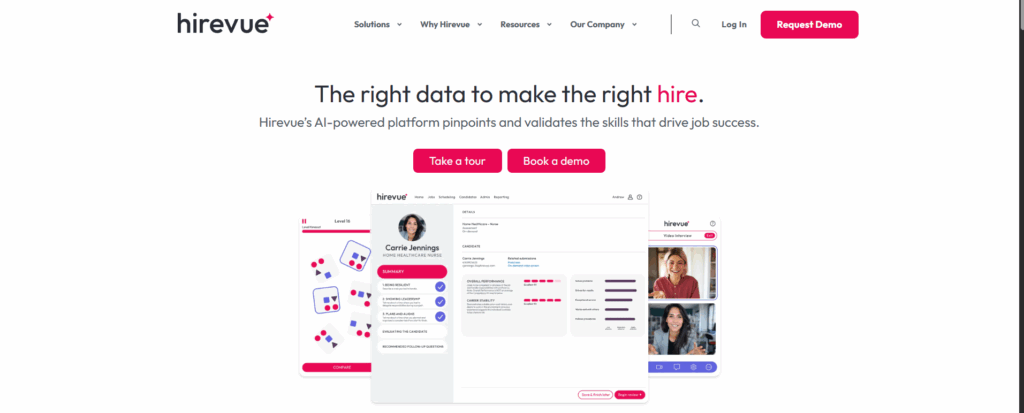
HireVue is the video-interviewing incumbent that has expanded into assessments. It pairs on-demand and live video interviews with game-based and AI-scored assessments and interview scheduling, and it is sold to large enterprises running high-volume hiring for early-career, customer service and corporate roles. If you are weighing it against iMocha, you are really weighing an interview-first platform against a test-first one.
Key features
- On-demand and live video interviews. Structured question sets, scoring rubrics and AI-assisted evaluation of responses.
- Game-based assessments. Short cognitive games that measure problem solving and related traits.
- Validated content library. Role-specific interview guides built by its assessment science team.
- Scheduling and automation. Interview scheduling, candidate chat and ATS integration for volume funnels.
Pros
- Built for interview automation at scale and for standardizing interviews across many hiring managers.
- Asynchronous video gives candidates flexibility and speeds early-round screening.
- Enterprise integrations and global deployment.
Cons
- Expensive and complex to roll out; realistically an enterprise purchase.
- Limited depth for hands-on technical assessment compared with developer platforms.
- Candidate experience suffers when one-way video is overused for roles where it adds little.
Best for
Large enterprises with thousands of applicants per requisition and a dedicated recruiting operations team. Smaller teams that want AI video interviewing with fewer moving parts should read the HireVue alternatives roundup.
Pricing
Not published. HireVue lists plan tiers but prices them on contact.
8. TestDome
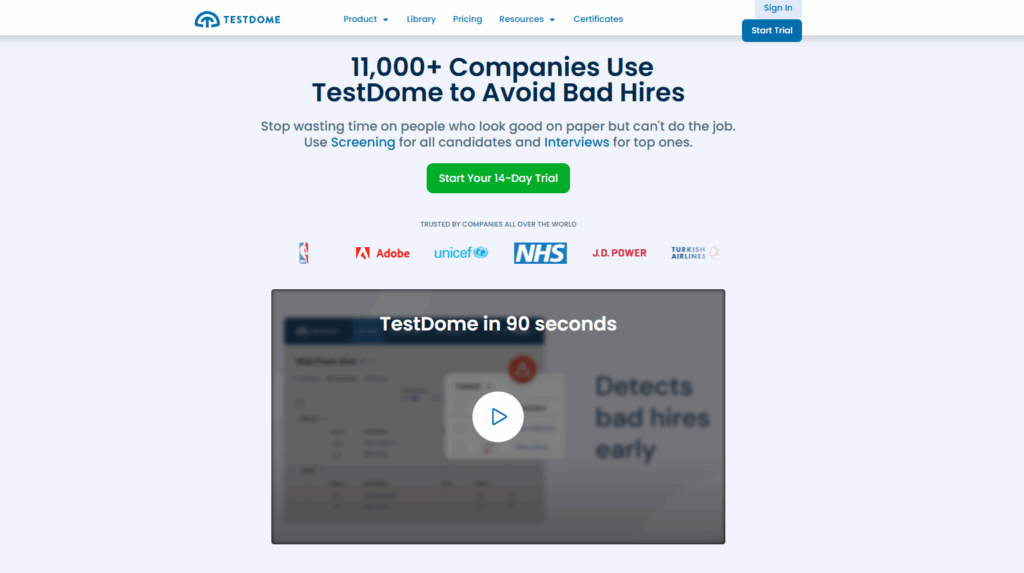
TestDome is a skills testing platform built around work-sample tests: short tasks that mirror the actual job, from programming and SQL to accounting, customer service and data entry. Its pricing model is the reason it makes almost every iMocha alternatives list. There is no subscription. You buy a pack of candidates and pay only when you test or interview someone.
Key features
- Work-sample tests. Real tasks (write the function, fix the spreadsheet, handle the ticket) rather than trivia.
- Pre-built library. Tests across software development, IT, accounting, customer service and office skills, plus custom questions.
- Basic proctoring. Webcam snapshots, screen recording and timers to deter and detect cheating.
- Candidate benchmarking. Side-by-side score comparison across applicants.
Pros
- Pay-as-you-go: $20 a candidate for a 5-candidate pack, falling to $16 at 25, $10 at 100, $8 at 300 and $7 at 600, with packs that never expire.
- Quick setup with turnkey tests and clear deadlines and reminders.
- Sensible for a company that hires a few times a year and does not want a subscription.
Cons
- Mostly English-language tests with no built-in localization.
- The non-technical and soft-skill library is thin compared with a full platform.
- No free plan; the smallest purchase is the $100 five-candidate pack.
Best for
Occasional hiring, small technical teams and anyone allergic to annual contracts. For a fuller platform in the same price range, see the TestDome alternatives comparison.
Pricing
Pay per candidate, from $20 down to $7 depending on pack size, as listed on the vendor's pricing page in September 2026. Unused invites expire after six days and are refunded to the pack.
9. Coderbyte
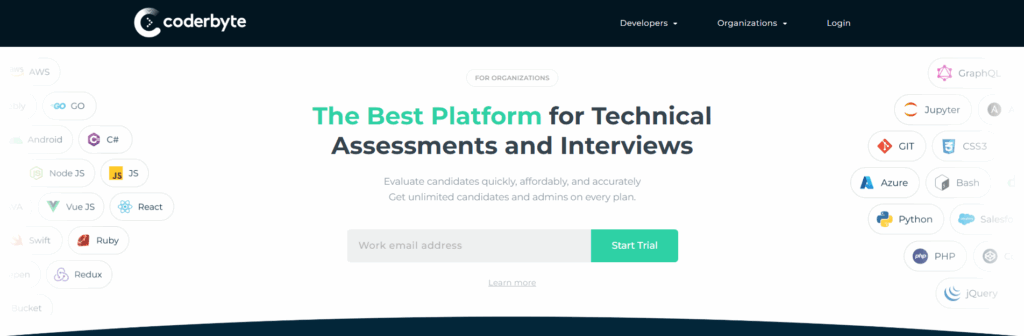
Coderbyte is a technical assessment platform aimed at startups and mid-size teams hiring developers and data scientists. It bundles a coding challenge library, take-home projects and live video coding interviews under a flat subscription, which makes the math simple for a team that screens a lot of engineers and nobody else.
Key features
- Coding challenges and projects. A large challenge library across 30+ languages plus take-home projects.
- Mixed question types. Multiple choice, open-ended and SQL questions alongside code.
- Live interviews. Collaborative editor, spreadsheets, notebooks and a whiteboard for pair-programming rounds.
- Reporting. Code, playback recordings, skill ratings and internal benchmarks per candidate.
Pros
- Straightforward pricing: a Standard plan at $199 per user a month, plus a pay-per-candidate option.
- Built-in editor and a big challenge library; easy to mix templates with your own questions.
- Live coding interviews on the same platform as the screen.
Cons
- Coding only. No help with a sales, finance or operations hire.
- Result exports and some enterprise features sit on higher tiers.
- Per-user pricing gets expensive once several hiring managers need seats.
Best for
Engineering-led startups that want unlimited developer screening for a flat monthly fee. The Coderbyte alternatives guide covers the platforms that add non-technical coverage on top.
Pricing
Standard at $199 per user per month, with a pay-per-candidate plan for lighter use, as listed on the vendor's published plans in September 2026. A free trial is available; there is no free version.
10. HireMojo
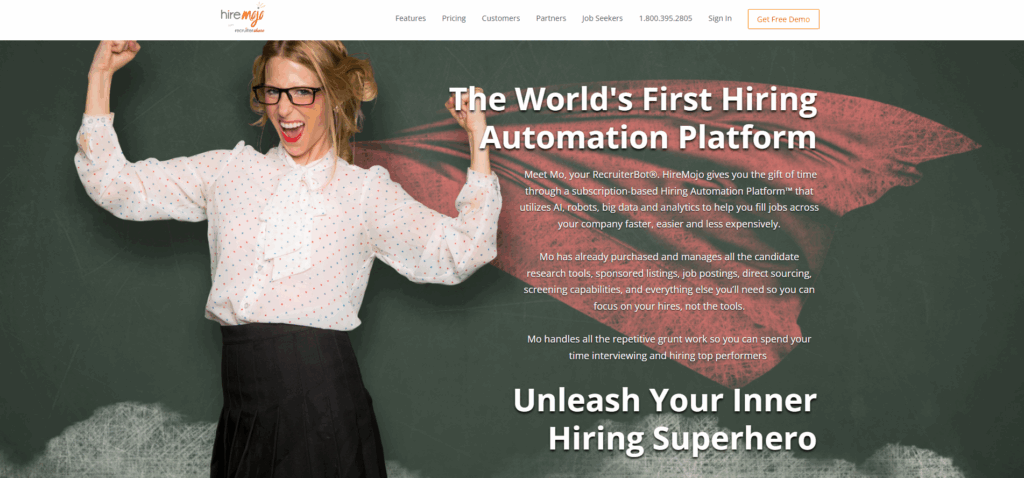
HireMojo describes itself as a hiring automation platform. It writes and distributes the job post, pre-screens and ranks applicants through an online interview, schedules interviews and closes the loop with candidates. It is less an assessment tool than a small-company recruiting suite, and it belongs on this list for the reader who realizes what they wanted from iMocha was a faster funnel, not a skills taxonomy.
Key features
- Automated job posting. Distribution across job boards from one place.
- Pre-screen and scoring. An online interview that ranks applicants before a human reads a resume.
- Content library. Job description and interview question templates.
- Candidate management. Resumes, status tracking, notes, scheduling and rejection emails in one view.
Pros
- All-in-one for a small team: posting, screening, scheduling and compliance reporting.
- AI-driven job marketing and resume matching cut manual sourcing.
- Flat pricing with unlimited seats.
Cons
- Not a skills testing platform; assessment depth is shallow next to anything else on this list.
- The interface reads as dated and navigation takes getting used to.
- A flat fee is poor value if you make two hires a year.
Best for
Small businesses without a recruiter that want the whole funnel automated, and that can bolt a skills assessment on for the roles that need one.
Pricing
Not published. Quoted on request.
11. HackerEarth
HackerEarth is a developer hiring platform with coding assessments, FaceCode live interviews and a hackathon product, used by enterprises to screen engineers at scale. It is one of the few developer-only tools that publishes a price, and its Growth plan is the cheapest published entry point on this page for a team that only hires engineers.
Key features
- Question library. A large bank of coding, multiple-choice, project-based and data science questions.
- Proctoring. Webcam monitoring, IP checks and plagiarism detection.
- FaceCode. Live coding interviews with a shared editor, question library, video and whiteboard.
- Skill reports. Per-skill performance reports and AI summaries of interview performance.
Pros
- Published pricing: Growth at $99 a month (10 credits a month, one admin) or $990 a year for 120 credits; Scale at $399 a month or $3,990 a year for 300 credits. The interview plans carry a 30-day free trial.
- Hackathons and coding competitions for employer branding with developers.
- Real-time proctoring and plagiarism checks tuned to code.
Cons
- Rigid time limits frustrate candidates on complex problems.
- Developer-only; no coverage for the rest of the company.
- Ten credits a month on the entry plan runs out fast in a real screening round.
Best for
Engineering teams that want assessments plus live interviews from one vendor and can live within a monthly credit cap. The HackerEarth alternatives list compares it with the broader platforms.
Pricing
Assessments from $99 a month or $990 a year (Growth) and $399 a month or $3,990 a year (Scale), as listed on the vendor's pricing page in September 2026. Extra seats are $15 a user a month.
12. HackerRank
HackerRank is the enterprise developer assessment platform most engineers have already met as candidates. It runs coding tests, live pair-programming interviews and structured technical screening at scale, with a question bank built around coding challenges in 40+ languages. Its approach stays algorithm-centric, which suits standardized screening and suits real-world engineering work less well.
Key features
- Coding question bank. Thousands of challenges across languages and frameworks, plus custom question authoring.
- Screen and interview. Timed coding tests, then live collaborative interviews.
- Integrity signals. Multiple proctoring and behavior signals to keep scores comparable.
- Enterprise integrations. ATS and HR system connectors.
Pros
- Familiar to developers, which lowers candidate friction.
- Scales to global, high-volume technical screening.
- Reliable infrastructure and enterprise-grade integrations.
Cons
- Pricing climbs quickly with usage, and small teams end up paying for enterprise scale.
- Writing custom tests takes several iterations; the authoring learning curve is real.
- Little to no coverage of behavioral, communication or non-engineering roles.
Best for
Large engineering organizations with a recruiting team dedicated to technical hiring. Teams that want the same rigor with broader role coverage can compare the HackerRank alternatives side by side.
Pricing
HackerRank publishes tiered plans, but its pricing page renders the current figures dynamically, so no price is quoted here. Check the vendor page for the tier that matches your seat count.
13. TestInvite
TestInvite is an online exam and assessment platform for organizations that want fine control over test construction: corporate hiring, education and certification. It stands out for a flexible test builder, lockdown-browser security and published annual plans that scale from a single author to an enterprise.
Key features
- Test builder. A wide set of question types, multi-step workflows, conditional branching and composite scoring.
- Assessment library. Pre-built tests for problem solving, communication and role competencies.
- Custom reporting. Editable scoring logic, derived metrics, norms and score-band interpretations.
- Security. Lockdown browser, AI-driven cheating detection, webcam snapshots, question randomization and a live proctoring add-on.
Pros
- Published pricing with a free trial (100 testing credits, no card).
- Unusually deep test authoring for certification-style assessment.
- Strong anti-cheating controls for exam conditions.
Cons
- The Starter plan allows five tests and one teammate, so a hiring team outgrows it quickly.
- 500 testing credits a year is the ceiling on every plan short of Premium.
- Built for exams more than for recruiting workflows; no AI interviewing.
Best for
Training providers, certification bodies and employers whose hiring assessment looks like a proctored exam.
Pricing
Annual plans as listed on the vendor's pricing page in September 2026: Starter $900, Essential $1,900, Advanced $2,900, Pro $3,900, Premium $6,000, and Enterprise from $9,900 a year. The old $37-a-month entry point no longer appears.
14. eSkill
eSkill is a long-established pre-employment testing platform known for a broad library of subject tests and job simulations across clerical, functional, technical and entry-to-mid-level professional roles. Where iMocha was built for developer screening and skills intelligence, eSkill was built for the office manager, the bookkeeper and the call-center agent, and it shows in the catalog.
Key features
- Subject test library. Ready-to-use tests plus a builder that assembles a custom test from subjects, topics and questions.
- Job simulations. Interactive tasks that mirror real work in office software and customer service.
- Proctoring. Copy-paste and tab-switch monitoring with real-time flags.
- Reporting. Overall scores with breakdowns by subject and question.
Pros
- Deep coverage for non-developer and entry-level roles.
- Practical, job-relevant assessments and simulations.
- Flexible customization for role-specific screening.
Cons
- An interface that feels dated next to modern assessment platforms.
- No public pricing; the sale goes through a rep.
- Navigating the library is slow, and some teams end up building tests from scratch.
Best for
Staffing firms and employers hiring at volume for clerical and functional roles. The eSkill alternatives page lists the platforms with a more modern candidate experience.
Pricing
Not published. Quoted on request.
15. Canditech
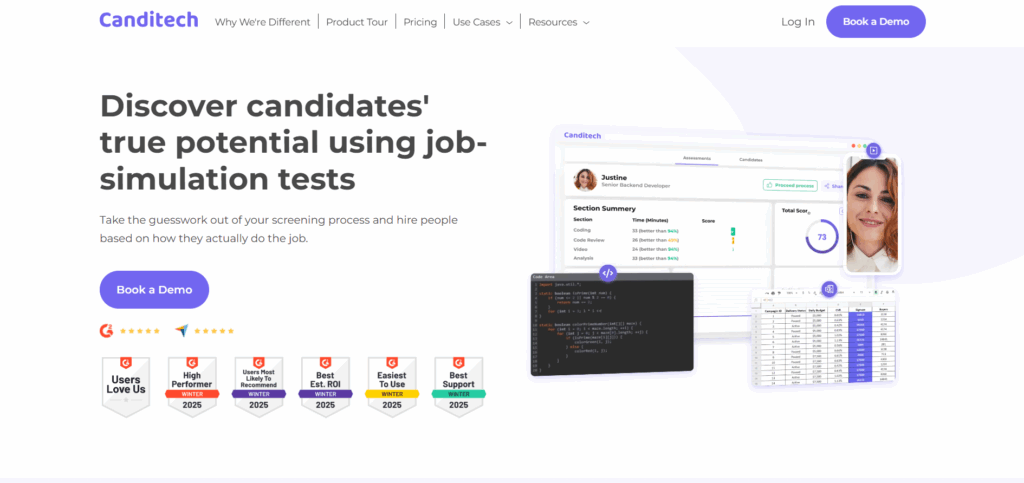
Canditech is a job-simulation assessment platform that evaluates candidates through realistic work scenarios: coding tasks, SQL queries against a real database, spreadsheet exercises, open-text responses and video answers. It is a newer entrant with a builder that non-technical hiring managers can use, which makes it a fair alternative for a team that liked iMocha's simulations but not its size.
Key features
- Custom and pre-built tests. A library of ready-made assessments plus a builder for your own scenarios.
- Job simulations. Coding, SQL, Excel-style tasks, written responses and video questions in one assessment.
- Automatic scoring and ranking. Candidates ranked on performance to reduce manual review.
- Benchmarking. Score comparison against role and industry benchmarks.
Pros
- Complex, realistic question types, including live SQL and spreadsheet work.
- A test builder that non-technical users can operate.
- Free trial with no card required.
Cons
- Prices are not published; the plans page lists Individual, Team, Pro and Enterprise tiers without figures.
- Branding customization is limited.
- Smaller integration ecosystem than the larger platforms.
Best for
Data, analyst and operations hiring where a realistic work sample is the whole point. See the Canditech alternatives comparison for platforms that add AI interviewing.
Pricing
Not published. Four tiers (Individual with 1 assessment and 3 users, Team with 2 assessments and 8 users, Pro and Enterprise with unlimited) are listed without prices; a previously advertised $150-a-month Team price no longer appears on the vendor's page.
Which is the best iMocha alternative?
Testlify is the best iMocha alternative for a company under about 200 people that hires across more than one function, because it is the only platform on this list that combines a 3,500+ test library, configurable AI video, voice and phone interviews, dual-device proctoring with AI-answer detection, and published pricing with a 7-day trial. For a pure engineering team on a tight budget, HackerEarth or Coderbyte win on price. For behavioral fit, Predictive Index; for exam-grade security, TestInvite.
The reason to say that plainly is the shape of the market right now. The World Economic Forum's Future of Jobs Report 2025 finds employers expect 39% of key skills to change by 2030, and SHRM's April 2026 Talent Trends survey of 2,094 HR professionals found 68% still have difficulty recruiting for full-time roles. A resume tells you what someone did in a job whose skills are already moving. A work sample, an interview transcript and a proctoring log tell you what they can do now.
That is the logic behind the Testlify Multi-Signal Talent Evaluation Model: combine several role-relevant signals (a skills assessment, an AI interview, a simulation, references and reviewer feedback) instead of trusting one resume, one test score or one interviewer's gut. The research backs the instinct. Sackett and colleagues' 2022 re-analysis in the Journal of Applied Psychology puts structured interviews among the strongest predictors of job performance and years of experience among the weakest. Any of the platforms above can produce one signal. The question is which one lets a small team collect three without three logins.
How do you choose an iMocha alternative for your team?
Choose by counting your candidates, listing your roles, and deciding how much you need to see before you trust a score. Those three answers eliminate most of this list in about ten minutes.
- Count started assessments per year, not hires. Under 100 candidates a year, pay-per-candidate (TestDome) or a monthly plan (Testlify Starter at $198 for 10 credits, HackerEarth Growth at $99 for 10) is cheapest. Between 100 and 1,000, an annual credit plan wins. Above that, you are in quote territory with everyone, and Testlify's Business tier at $8,388 a year for 1,000 credits is the last published price on the page.
- List the roles for the next 12 months. If every one is an engineer, a developer-only tool is fine. If one is a sales rep or an accountant, you need a library that covers it, and that removes HackerRank, HackerEarth, Coderbyte and TestDome as sole platforms.
- Decide what "proctored" has to mean. Webcam snapshots are table stakes. For remote roles where identity fraud is the risk, ask for photo-ID face match, a second-device camera and an AI-answer checker, and ask to see the evidence report a recruiter gets.
- Check the exit. A 7-day trial, a money-back window and a monthly option tell you the vendor expects to earn renewal. A demo-only sales motion with an annual minimum tells you the opposite.
- Price the integrations. Ask whether ATS sync, SSO and white labeling are included or add-ons. On Testlify they are $2,388 a year each on self-serve tiers; several enterprise vendors bundle them but bundle a much larger contract too.
A worked example, hypothetical but typical of the companies that convert on this page. A 60-person marketing agency plans to hire eight account managers and two analysts a quarter, screening about 30 candidates per role. That is roughly 300 started assessments a year. On TestDome's 300-pack it pays $8 a candidate, or $2,400, and gets work samples with basic proctoring and no AI interview. On Testlify's annual Basic plan it pays $3,348 for 300 credits and 5 seats, and gets the same work samples plus an AI video interview per candidate, dual-device proctoring and a shortlist the two founders can review from one report. On a quote-only enterprise platform it does not know the number until the second call. The right answer depends on whether the extra $948 buys back the founders' interview hours; for most agencies that size, it does.
If that example looks like your team, the fastest way to check is to run one real role through it. Book a 30-minute demo and bring the job description, or start the free trial and invite five candidates to the assessment you would have sent through iMocha.
Key Takeaways
- iMocha is the wrong size for most searchers, not a bad product. It is a skills-intelligence platform sold by quote. A company that needs role screening and a visible price is paying for a taxonomy it will not use, which is why the alternatives search exists.
- Only six of the 15 competitors publish a price. Testlify, TestDome, HackerEarth, Coderbyte, TestInvite and (in tiers, not figures) HackerRank. Treat the other nine as enterprise purchases with a sales cycle, and budget the time as well as the money.
- Role coverage decides more than features. Four of the 15 are developer-only and five are behavioral or interview specialists. A growing company that hires an engineer and a sales rep in the same quarter is down to a handful of options before it looks at a single feature.
- Integrity controls are now a buying criterion, not a nice-to-have. With 6% of surveyed candidates admitting interview fraud and Gartner expecting one in four profiles to be fake by 2028, the questions to ask are photo-ID face match, second-device proctoring and AI-answer detection, and whether a human reviews the flag before anyone is rejected.
- AI scores need a human override you can show a regulator. The EU AI Act treats AI used to screen candidates as high-risk. A platform that keeps AI scores advisory and logs the human decision is easier to defend than one that ranks and rejects automatically.
- Price by started assessments, and check the add-ons. The cheapest tool flips depending on whether you screen 50 or 500 candidates a year, and ATS sync or SSO can add $2,388 a year on self-serve tiers. Run the 300-candidate math above with your own numbers before signing anything annual.
Frequently asked questions (FAQs)

Director of Marketing
Akash Patange is the Director of Marketing at Testlify, where he works closely with HR leaders and recruiters to help organizations improve hiring outcomes. He writes about talent assessment, recruitment technology, and data-driven hiring practices.
LinkedInRelated resources
View all
Alternatives
Top 15 Mercer Mettl Alternatives and Competitors
Alternatives
Top 15 Codility Alternatives and Competitors
Alternatives
Top 15 Adaface Alternatives and Competitors
Alternatives
Top 15 TestGorilla Alternatives and Competitors
Alternatives
Top 15 The Talent Games Alternatives and Competitors (2026)
Alternatives
Top 15 The TalentMetrix Alternatives and Competitors
Get started.
Hire on proof, not resumes.
Run your first skills-based assessment free — no credit card required.