
Top 15 Talview Alternatives and Competitors
Discover 15 powerful Talview alternatives to streamline your hiring process and assess candidates with confidence.
The best Talview alternative depends on which half of Talview you are actually buying. Talview bundles AI video interviewing with remote exam proctoring, so teams replacing it usually need either a hiring assessment platform or a secure exam platform, rarely both at the same depth. Testlify is the closest like-for-like swap for hiring teams, because it runs one-way and two-way AI video interviews, skills tests and proctoring in one tool with published pricing.
That pricing point matters more than most roundups admit. Talview does not publish rates. Its pricing page runs on a unit-based quote model and asks for roughly 150 to 200 candidates before it will start a contract, which prices out a 40-person company hiring six people a year. Every platform below is judged on that basis first, then on features.
 ChatGPT
 Gemini
 Claude
 Grok
Grok Perplexity
TL;DR
- Talview is two products in one contract: AI video interviewing (Ivy) and remote proctoring (Alvy). Work out which one you need before you shortlist anything.
- Talview publishes no prices and asks for a minimum of about 150 to 200 candidates, so small and mid-sized teams often fail to qualify.
- Testlify is the closest swap when hiring is the job to be done: AI video, audio and phone interviews, 3,500+ tests, dual-device proctoring, and rates published on the pricing page.
- Pick a coding-first platform if you hire engineers and almost nobody else. Pick a broad assessment platform if you hire across sales, support, finance and operations.
- Proctoring depth and interview depth are different purchases. Very few tools are genuinely strong at both, and paying for both when you need one is where budgets leak.

What is Talview used for?
Talview is an AI-led recruiting and proctoring platform used for two jobs: screening candidates through automated video interviews and assessments, and invigilating remote exams and certifications. Its products include Ivy (an AI interviewer), Alvy (an AI proctoring agent), live remote and record-and-review proctoring, ID verification and a secure browser.
That dual purpose is why Talview shows up on shortlists next to both hiring tools and exam platforms. Universities and certification bodies buy it for the proctoring. Recruiting teams buy it for the video interviewing. The two groups want very different things from a replacement, and a list that ignores the split sends half its readers to the wrong tool.
How should you compare Talview alternatives?
Compare Talview alternatives on five things: what you are replacing (interviews or exams), whether pricing is published or quote-only, the minimum candidate commitment, how deep the proctoring goes, and whether the platform covers the roles you hire for rather than just engineering. Feature counts matter less than these five.
A few notes on each, learned the hard way by teams who switched and then switched again.
- Published pricing beats a quote: Quote-only vendors are not automatically expensive, but they are slow, and they price by how much they think you can pay. If a finance team needs a number this week, a published tier wins.
- Check the minimum: Volume minimums are the quiet dealbreaker. A tool that needs 150 candidates a year is not a tool for a company hiring 20 people.
- Proctoring is not one feature: Webcam snapshots and a locked browser are table stakes. Identity checks with a photo-ID face match, multi-monitor detection and a second-camera view are a different tier of assurance, and you only need that tier for high-stakes testing.
- Role coverage decides the shortlist: Coding platforms are excellent at coding and weak everywhere else. If half your hires are in sales, support or finance, a developer-first tool will leave you running a second process.
- Candidate drop-off is a real cost: Long or clunky assessments lose good applicants. Ask any vendor for completion rates before you sign.
Pro Tip: Run your final two vendors on one real, live requisition before signing, not on a sandbox demo. Send the same 20 candidates through both. Completion rate and the quality of the shortlist will separate the two tools faster than any feature matrix, and both vendors will usually agree to it during a pilot.
The wider reason to get this right: the skills you are testing for keep moving. The World Economic Forum's Future of Jobs Report 2025 found that employers expect 39% of the key skills a job needs to change by 2030, and that 59% of workers will need training by then. A platform you buy for a fixed list of tests in 2026 has to still be useful when that list turns over.
Talview alternatives compared at a glance
Platform | Best for | Pricing model | G2 rating |
|---|---|---|---|
Testlify | Hiring teams replacing both interviews and screening | Published tiers, from $139/mo billed annually | 4.7 |
TestGorilla | General skills-based screening | Published tiers, free plan | 4.5 |
Adaface | Conversational technical screening | Published tiers | 4.6 |
Codility | Enterprise engineering hiring | Published tiers plus custom | 4.6 |
Mercer Mettl | Campus and high-volume assessment | Custom quote | 4.4 |
iMocha | Skills inventory and internal mobility | Published entry tier plus custom | 4.4 |
HireVue | Enterprise video interviewing at scale | Custom quote | 4.1 |
TestDome | Work-sample tests on a small budget | Pay per candidate | 4.5 |
Coderbyte | Frequent developer hiring | Flat subscription | 4.4 |
Harver | Volume and frontline hiring | Custom quote | 4.6 |
HackerEarth | Developer assessment and hackathons | Published entry tier plus custom | 4.5 |
HackerRank | Established developer benchmarking | Published tiers plus custom | 4.5 |
TestInvite | Highly configurable secure exams | Published tiers | 4.7 |
eSkill | Diverse non-technical role testing | Custom quote | 4.5 |
Canditech | Job-simulation style evaluation | Published tiers | 5.0 |
Vendor pricing moves, and several of these platforms quote rather than publish. Treat the model column as the durable fact and confirm current rates with each vendor before you budget.
1. Testlify
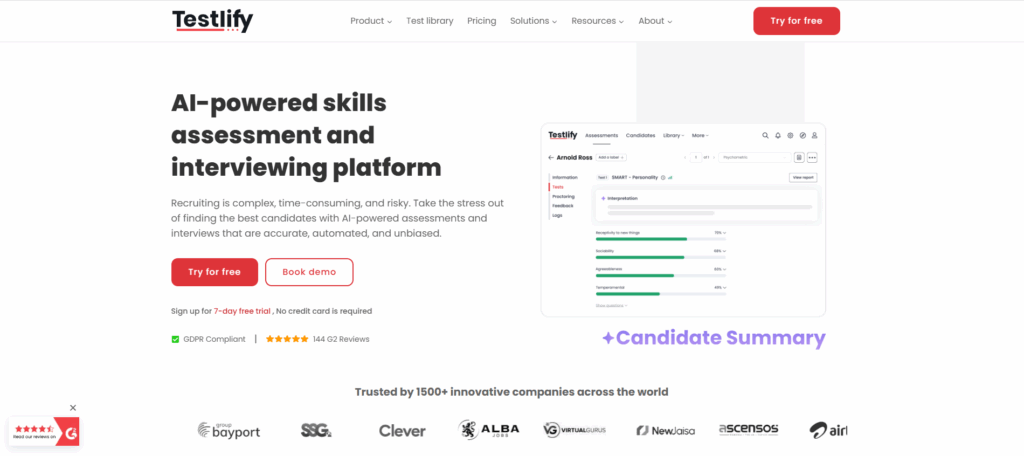
Testlify is an AI-assisted, human-led assessment and interviewing platform. It is the closest like-for-like replacement for the hiring half of Talview, because it covers the same three jobs (video interviews, skills tests, proctoring) inside one product, and it publishes what it costs.
Video and AI interviewing
This is where the comparison is usually decided, so it is worth the detail. Testlify runs one-way asynchronous video, two-way conversational AI video, audio and voice questions, and outbound AI phone interviews billed at $0.18 per minute. The AI interviewer is configurable rather than fixed: you choose the avatar, the voice, the persona and the context, write custom prompts, or start from one of 150+ interview templates.
The controls around the recording are the part teams underestimate. You set the number of attempts (including no limit), the recording time, the completion time and the preparation time before recording auto-starts, so a candidate can read the question and gather themselves first. Transcripts are automatic and multilingual, with the spoken language auto-detected on any recording of at least 30 seconds. Reviewers get the video, the audio, a downloadable transcript, an interview report and a screen replay.
Scoring is AI-assisted and human-final. The product ships the disclaimer in the interface: AI scores and insights are for guidance only, and human judgment makes the decision. Displaying AI scores to reviewers and including the AI score in the final average are both toggles, so a team that wants AI purely advisory can run it that way.
Key features
- Test library: 3,500+ tests and 180,000+ validated questions spanning coding, cognitive ability, personality and culture, language, software skills, situational judgement and role-specific skills across 4,500+ roles.
- Question depth: 25+ question types, including live coding in an embedded VS Code editor, SQL test cases, typing tests scored on accuracy and speed, and real Google Workspace and Microsoft Office tasks.
- Vibe coding: candidates direct AI tools to reach a working solution instead of writing syntax by hand, which tests how engineers actually work in 2026.
- Dual-device proctoring: the candidate's phone becomes a second camera showing both the candidate and the laptop screen. The session will not start until mobile monitoring is active.
- Integrity reporting: a green, yellow and red flag with evidence behind it. Yellow reads "a quick manual review is recommended" rather than auto-rejecting, and auto-termination is a separate opt-in setting with a threshold you choose.
- Item-level psychometrics: difficulty index, discrimination index and a quality-risk flag per question, so you can see which questions are doing the work.
- ATS integrations: 100+ integrations, so Testlify sits as the screening and interviewing layer while your ATS stays the system of record.
Where it fits and where it does not
Testlify suits teams under a few hundred people who want one tool instead of an interview platform plus an assessment platform. Teams with no ATS at all can also post jobs, take applications and move candidates through a simple built-in pipeline, though that pipeline is deliberately basic and is not a replacement for an established system of record.
The honest limitation: Testlify does not schedule live human interview panels. There is no calendar coordination for a four-person panel, so that stays in your ATS or calendar tool. Assessments also run on Chromium desktop browsers, with the mobile app acting as a capture fallback rather than a way to sit a whole test on a phone.
Testlify pricing
Rates are published on the pricing page and billed on candidate credits, where one credit covers one started assessment. Annual billing:
- Starter: $139/month billed at $1,668/year, 100 credits at $16.68 each, 3 seats.
- Basic: $279/month billed at $3,348/year, 300 credits at $11.16 each, 5 seats.
- Business: $699/month billed at $8,388/year, 1,000 credits at $8.39 each, 10 seats.
- Premium, Enterprise and Custom: 3,000, 10,000 and 25,000+ credits, priced by volume through sales.
A 7-day free trial needs no card, there is a 30-day money-back guarantee, and pricing is locked for 24 months. Extra seats are $15 per seat per month. White labeling, SAML SSO and the 100+ ATS integrations are paid add-ons at $2,388/year each on the self-serve tiers, included on Custom, so budget for them if you need them.
G2 rating: 4.7
2. TestGorilla
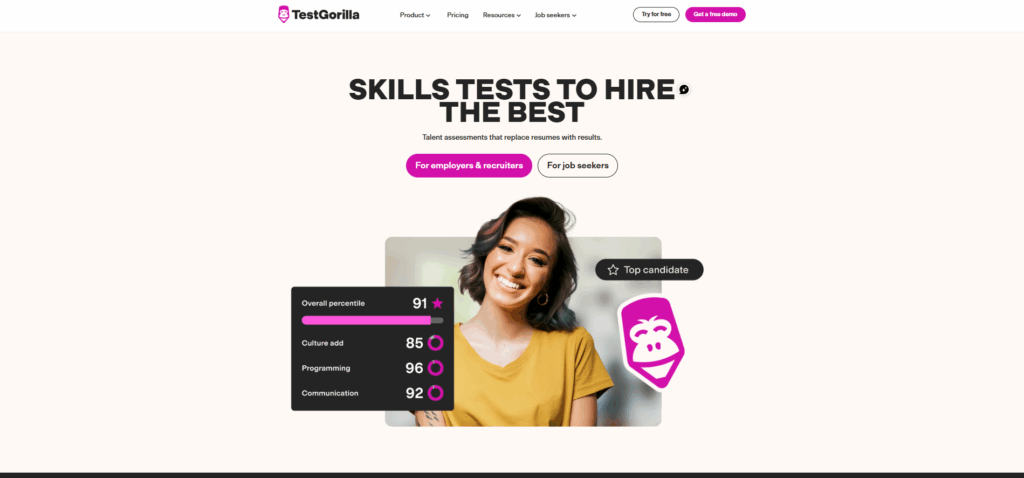
TestGorilla is a general pre-employment testing platform built around skills-based hiring. Its library spans coding and IT, cognitive ability, personality, and language, which makes it a reasonable fit for teams hiring across mixed role types rather than engineering alone.
Key features
- Broad test library: several hundred screening tests covering technical skills, cognitive ability, personality traits and language.
- Mixed question formats: coding challenges, multiple choice, open text, video answers and file uploads in one assessment.
- Anti-cheating: IP tracking, disabled copy-paste, randomized questions, time limits and periodic webcam snapshots.
- Branding: custom logo and intro or outro videos, plus ATS integrations.
Pricing model: published tiers with a free plan. G2 rating: 4.5
3. Adaface
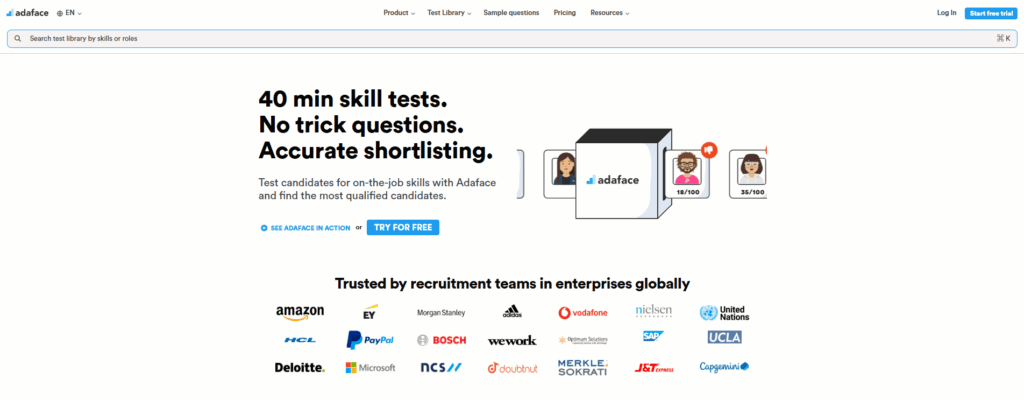
Adaface screens candidates through a chatbot called Ada, which asks coding and problem-solving questions in a conversation rather than a test interface. Teams pick it when assessment drop-off is the problem they are trying to solve.
Key features
- Conversational assessments: role-specific questions delivered as a chat.
- On-the-job testing: tasks written to mirror day-to-day work rather than puzzles.
- Automatic status: candidates are scored and marked Pass, Borderline Pass or Fail.
- Custom tests: a library of pre-made technical assessments plus a custom builder.
Pricing model: published tiers with a free trial. G2 rating: 4.6
4. Codility
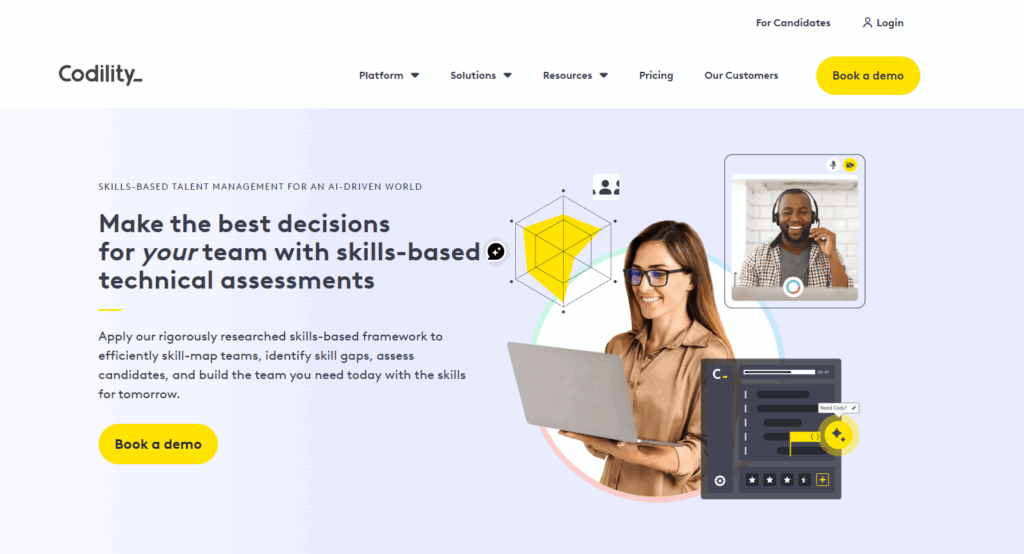
Codility is an engineering assessment platform aimed at larger technical organizations. It handles coding tests, live technical interviews and structured scoring, and is a strong option if software engineering is the only thing you hire at volume.
Key features
- Large task library: over a thousand coding and technical tasks across dozens of languages.
- Live interviews: pair-programming interface with automatic code evaluation.
- Plagiarism controls: anti-cheating and similarity detection built for high volume.
- Reporting: standardized scoring and analytics to compare candidates consistently.
Pricing model: published tiers plus a custom enterprise plan. G2 rating: 4.6
5. Mercer Mettl
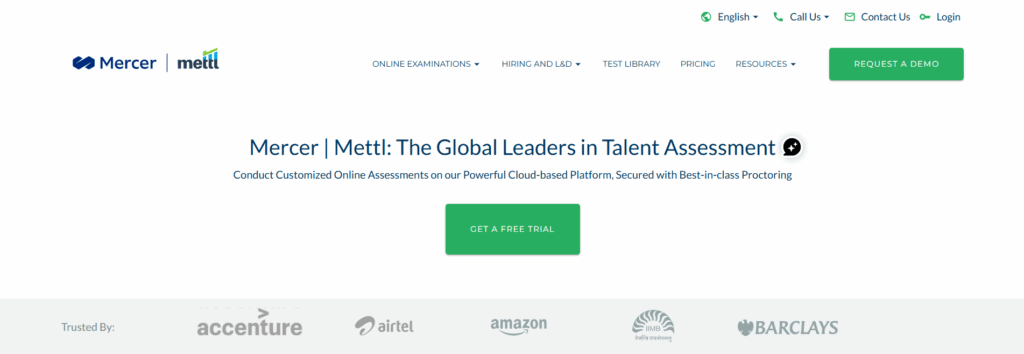
Mercer Mettl covers technical, cognitive, behavioral and psychometric testing, backed by Mercer's research base. It is a common Talview substitute for campus recruitment and certification testing, where secure proctoring at volume matters more than interview polish.
Key features
- Wide role coverage: assessments spanning 200+ job roles and levels.
- Proctoring toolkit: AI monitoring, lockdown browser and live human proctoring options.
- White labeling: custom branding, themes and a custom subdomain for assessments.
- Reporting: competency scores, percentile benchmarks and hiring recommendations.
Pricing model: custom quote. G2 rating: 4.4
6. iMocha
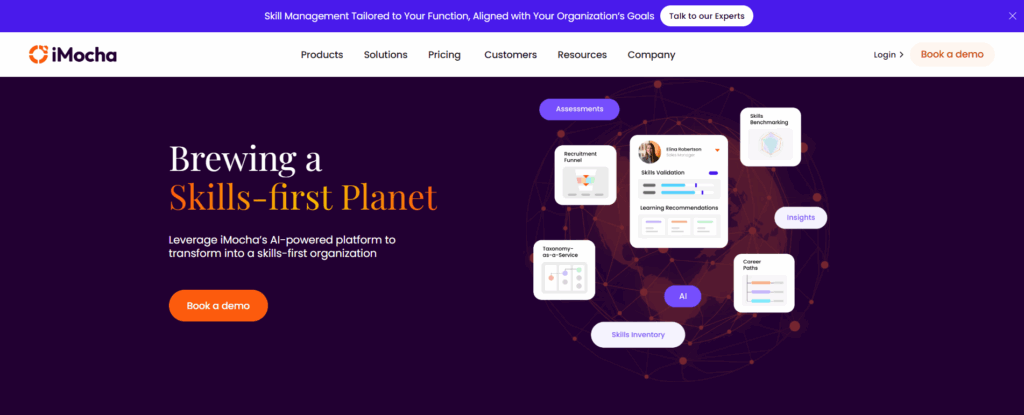
iMocha runs pre-hire testing and internal skills mapping from the same library, which is its real point of difference. Teams that want one skills taxonomy across hiring and workforce planning tend to shortlist it.
Key features
- Large library: thousands of ready-to-use tests across technical, functional and cognitive domains.
- Custom builder: assemble assessments from existing questions or write new ones.
- AI interviews: an automated conversational interviewer that generates a written candidate summary.
- Skills analytics: benchmarking and reporting aimed at skills-gap analysis, not just selection.
Pricing model: published entry tier plus custom, with a free trial. G2 rating: 4.4
7. HireVue
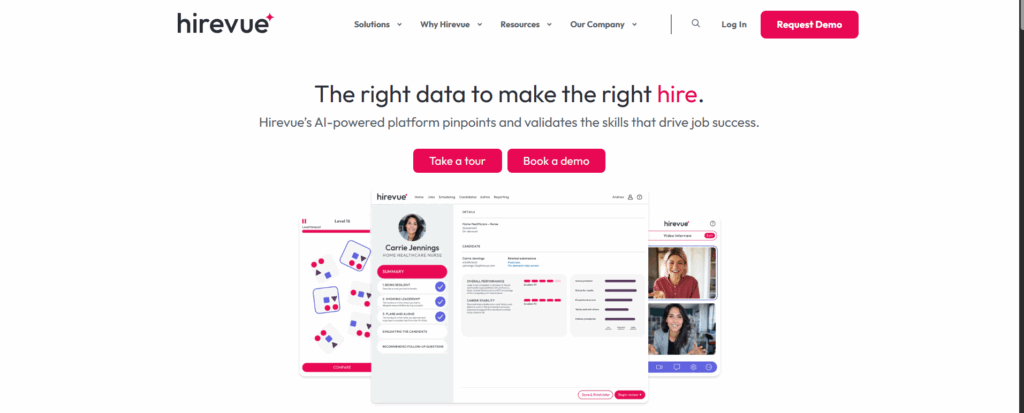
HireVue is the enterprise incumbent in on-demand video interviewing and the most direct like-for-like swap for Talview's interviewing side at very large scale. It pairs recorded and live interviews with game-based assessments and scheduling automation.
Key features
- Validated content: job-specific interview questions built by industrial-organisational psychologists.
- On-demand and live video: recorded answers to preset questions plus live interviews.
- Game-based assessments: cognitive games measuring problem-solving and related abilities.
- Scheduling and automation: interview scheduling, chatbots and ATS-driven pipeline movement.
Pricing model: custom quote, no public rates. G2 rating: 4.1
8. TestDome
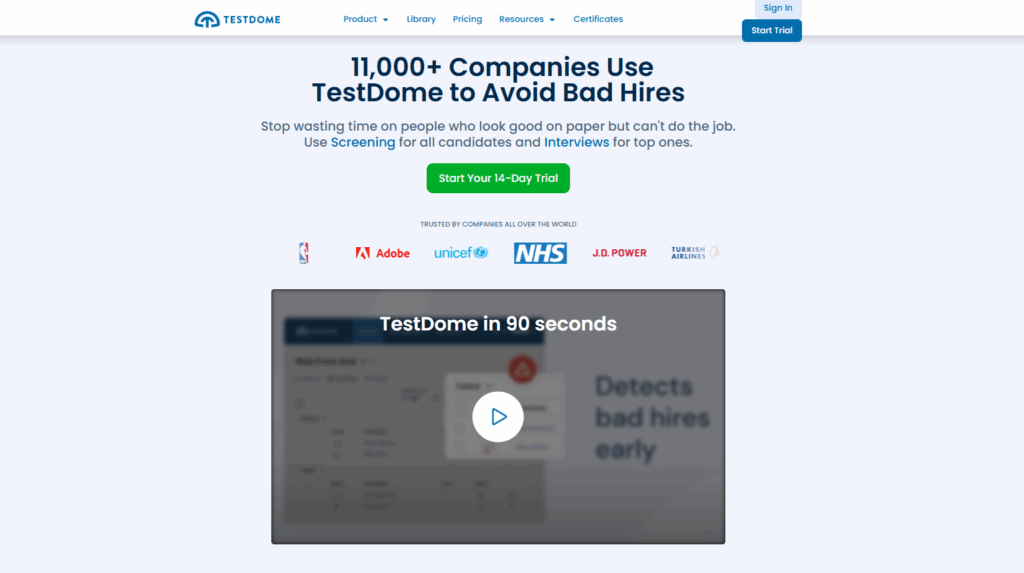
TestDome is built around work-sample tests: short, practical tasks that ask candidates to do a piece of the job. Its pay-per-candidate model makes it one of the cheapest ways to add real screening to a low-volume process.
Key features
- Work-sample tasks: write code, analyze a dataset or answer a customer scenario.
- Pre-built tests: over 150 tests across development, accounting, customer service and data entry.
- Basic proctoring: webcam monitoring and screen recording during tests.
- Benchmarking: side-by-side candidate comparison on score and completion.
Pricing model: pay per candidate, with packages for higher volume. G2 rating: 4.5
9. Coderbyte
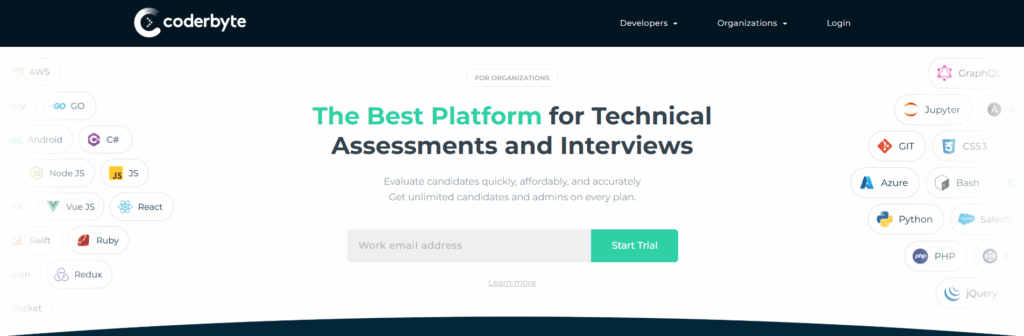
Coderbyte targets startups and mid-sized companies hiring developers on a flat subscription rather than per candidate, which is the cheaper shape when you hire engineers continuously.
Key features
- Challenge library: over a thousand coding challenges across 30+ languages, plus take-home projects.
- Mixed formats: multiple choice, free response and SQL alongside coding tasks.
- Live interviewing: collaborative editor, video chat, Jupyter notebooks and a whiteboard for system design.
- Playback reporting: recordings of the candidate's coding process with automated scoring.
Pricing model: flat monthly subscription with annual discounts. G2 rating: 4.4
10. Harver
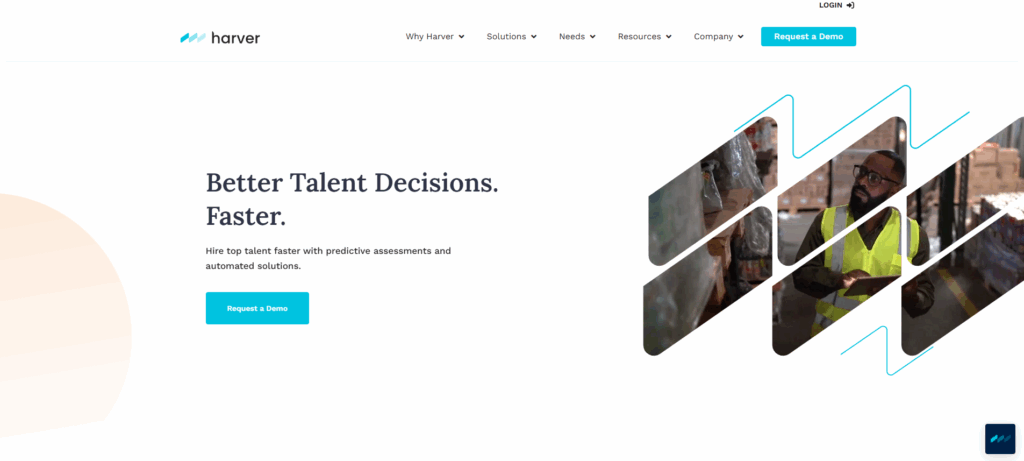
Harver is aimed at volume and frontline hiring, where the constraint is processing thousands of applicants rather than assessing a handful deeply. Retail, contact center and logistics teams are its natural buyers.
Key features
- Gamified candidate journeys: assessment flows built to hold attention and lift completion.
- Workflow automation: automated progression, role matching against pre-built job profiles, reference checking and scheduling.
- Validated assessments: behavioral-science-based tests aimed at predicting performance and retention.
- Analytics: dashboards covering hiring efficiency, retention trends and diversity metrics.
Pricing model: custom quote, no public rates. G2 rating: 4.6
11. HackerEarth
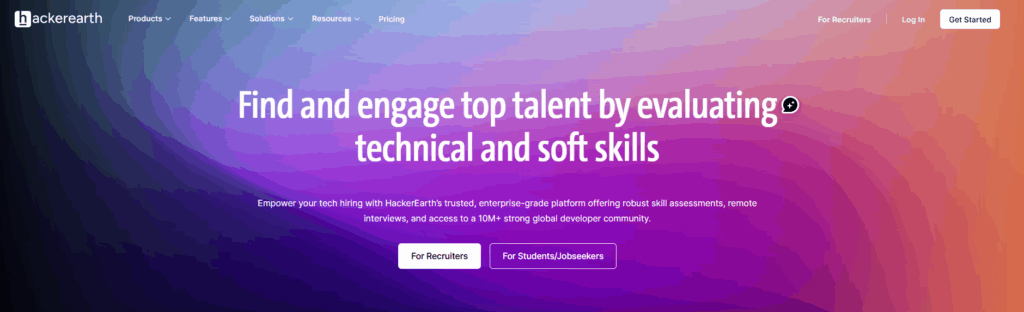
HackerEarth combines developer assessments with live technical interviews and hackathons, and its proctoring is stronger than most coding-first tools, which makes it a closer match if you left Talview partly for the invigilation.
Key features
- Large question bank: tens of thousands of questions spanning coding, SQL, data science and project tasks.
- Advanced proctoring: AI webcam monitoring, code plagiarism detection and browser lockdown.
- FaceCode interviews: collaborative editor, video chat and a whiteboard for live technical rounds.
- Skill reports: performance summaries with comparative benchmarking.
Pricing model: published entry tier plus custom volume pricing. G2 rating: 4.5
12. HackerRank
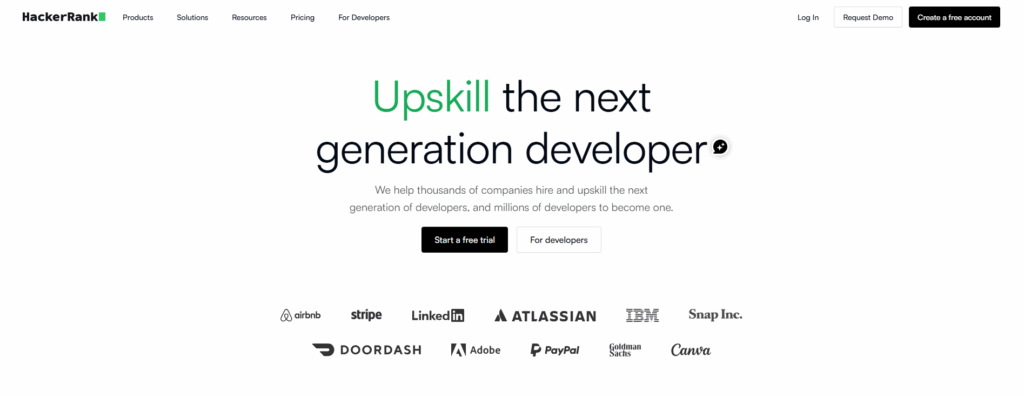
HackerRank is the longest-established developer assessment platform, with the deepest benchmarking data and the widest recognition among engineering candidates. That familiarity cuts both ways: some candidates have practiced on it for years.
Key features
- Deep question bank: thousands of coding and computer-science questions across 45+ languages.
- Screen and interview: assessments, live pair programming and community hiring events on one platform.
- Fairness controls: proctoring measures, plagiarism checks and standardized timed scoring.
- Enterprise integrations: ATS connections plus role, template and interviewer management.
Pricing model: published tiers plus custom enterprise. G2 rating: 4.5
13. TestInvite
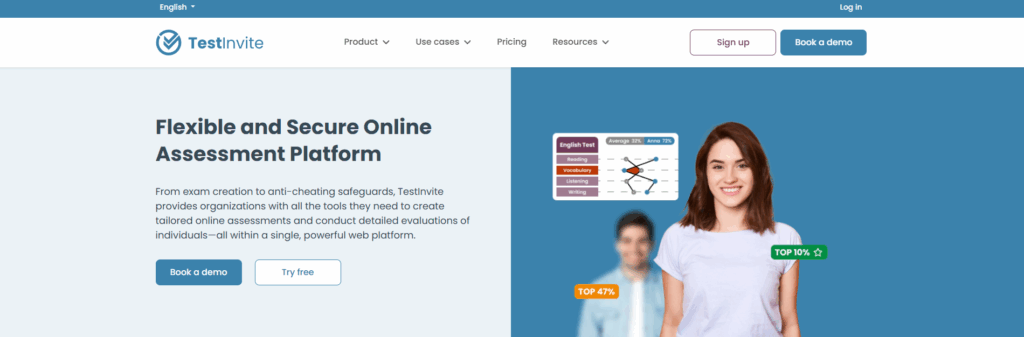
TestInvite is exam software first and hiring software second, which makes it one of the better matches for the proctoring half of Talview. It gives unusually fine control over question design, scoring logic and security rules.
Key features
- Configurable test builder: many question types with granular control over structure and scoring.
- Ready-made assessments: tests for problem-solving, communication and role-specific competencies.
- Custom scoring: editable scoring logic, derived metrics, norms and written interpretations by score band.
- Exam security: locked-down browser, AI cheat detection and question randomization.
Pricing model: published tiers. G2 rating: 4.7
14. eSkill
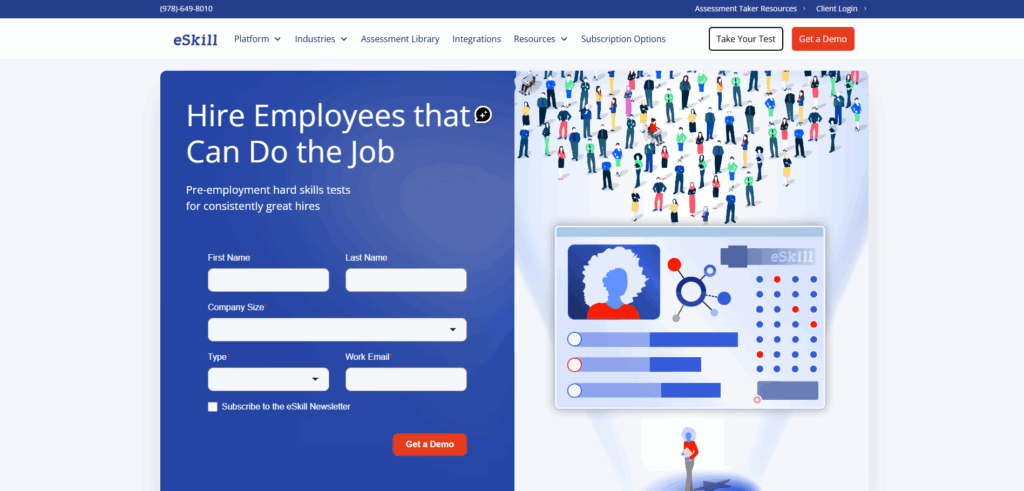
eSkill has been in pre-employment testing longer than most and covers an unusually wide spread of non-technical roles, which is useful if your hiring is mostly administrative, clerical or customer-facing.
Key features
- Large assessment catalog: hundreds of ready-made tests plus subject-level custom builds.
- Job simulations: typing exercises, customer interaction scenarios and similar practical tasks.
- Proctoring: monitors copy-paste and tab-switching, flagging suspicious activity in real time.
- Reporting: overall scores with breakdowns by subject and question type.
Pricing model: custom quote. G2 rating: 4.5
15. Canditech
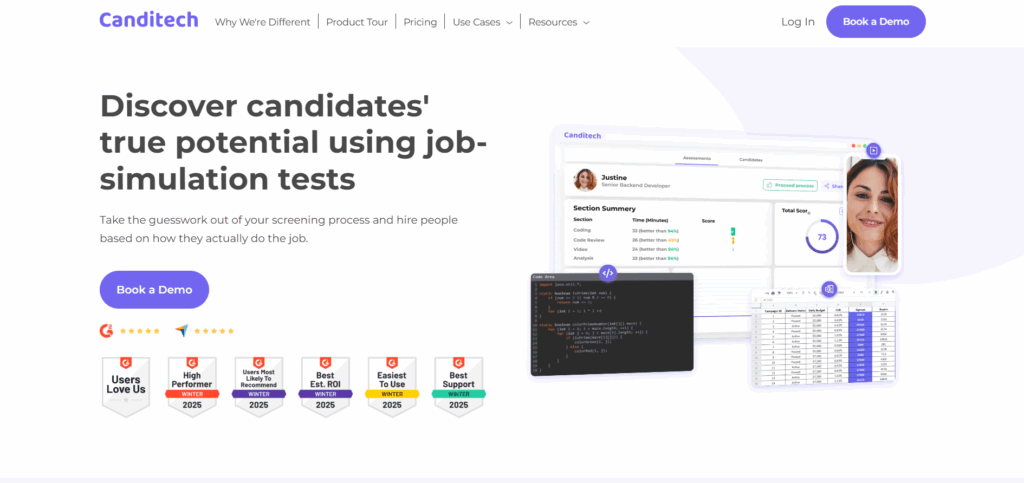
Canditech is a newer job-simulation platform that asks candidates to complete work-like tasks rather than answer questions about them. It carries the highest G2 rating in this list, though on a smaller review base than the established names.
Key features
- Simulation library: hundreds of expert-built tests plus a custom builder.
- Realistic tasks: coding exercises, spreadsheet work and open written responses.
- Automatic scoring: candidates scored and ranked on performance data rather than impressions.
- Benchmarking: results compared against job-specific or industry benchmarks.
Pricing model: published tiers. G2 rating: 5.0
Which is the best Talview alternative?
For hiring teams, Testlify is the strongest overall replacement, because it covers Talview's interviewing and screening in one product and publishes its rates. For pure exam invigilation, TestInvite or Mercer Mettl map more closely. For enterprise video at very large scale, HireVue is the nearest equivalent.
The reason a single tool tends to win here is that evidence gets weaker when it is scattered. The Testlify Multi-Signal Talent Evaluation Model is the framework behind that: combine several role-relevant signals (a skills test, an AI interview, a work sample, reviewer feedback, a reference) instead of leaning on one. A candidate should move forward when several independent signals agree, not because one interview went well.
That principle matters most at the top of the funnel, where the resume still does most of the filtering. A February 2026 audit of large language model resume screening found that many models could not consistently pick the resume describing the more qualified candidate, did not reliably abstain when candidates were equally qualified, and selected candidates from different demographic groups at different rates. Automating a weak filter makes it a fast weak filter. Testing the skill directly is what changes the outcome.
Volume is the other half of the argument. US employers recorded 7.3 million job openings and 5.1 million hires in July 2026, according to the Bureau of Labor Statistics. At that churn, the screening step is not an occasional task, and a tool that needs a quote and a 150-candidate minimum before it will talk to you is a poor fit for most of the market.
Try Testlify on your next role
Start a 7-day free trial with no card, or book a demo to see AI video interviews, dual-device proctoring and the 3,500+ test library on a live requisition. If you want the head-to-head detail first, read the Testlify vs Talview comparison, browse the test library, or check the ATS integrations list.
FAQs

Director of Marketing
Akash Patange is the Director of Marketing at Testlify, where he works closely with HR leaders and recruiters to help organizations improve hiring outcomes. He writes about talent assessment, recruitment technology, and data-driven hiring practices.
LinkedInRelated resources
View all
Alternatives
Top 15 Cangrade Alternatives and Competitors
Alternatives
Top 15 Test Partnership Alternatives and Competitors
Alternatives
Top 15 Alva Labs Alternatives and Competitors
Alternatives
Top 15 Pixonality Alternatives and Competitors
Alternatives
Top 15 Perspect AI Alternatives and Competitors
Alternatives
Top 15 Evalgator Alternatives and Competitors
Get started.
Hire on proof, not resumes.
Run your first skills-based assessment free — no credit card required.