
32 best HR tech tools by category for 2026
A 2026 list of 32 HR tech tools for recruiting, assessment, core HR, payroll and performance, with a comparison table and buying checklist.
HR tech tools are software products that automate and organize HR work, from hiring and onboarding to payroll, performance reviews and people analytics. This list groups 32 of the best HR tech tools for 2026 by the job they do, so you can see which ones fit your stack and which gaps are left.
TL;DR / Key Takeaways
- The best HR tech tools for 2026 fall into five groups: recruiting and ATS, skills assessment, core HR and HRIS, payroll and workforce management, and performance, learning and engagement.
- Large enterprises usually anchor on a suite such as Workday, Oracle HCM Cloud or Dayforce, then add specialist tools where the suite is weak.
- Mid-market teams often pick BambooHR, HiBob or Rippling for core HR, an ATS such as Greenhouse or iCIMS, and a skills assessment platform such as Testlify on top.
- LinkedIn found 93% of TA professionals say accurate skills assessment is crucial to quality of hire, yet only 25% feel highly confident they can measure it.
- Integration is the main buying test: check two-way sync between your ATS, assessment tool and HRIS before price.
- Any HR tech tool that uses AI to score candidates needs a bias audit and candidate notice in New York City, and counts as high-risk under the EU AI Act.
- Several older names are gone: Ceridian is now Dayforce, UltiPro is UKG Pro, Kronos Workforce Ready is UKG Ready, and Freshteam stopped renewals in 2026.
 ChatGPT
 Gemini
 Claude
 Grok
 Perplexity
What are HR tech tools?
HR tech tools are the software HR and talent teams use to run the employee lifecycle: attracting and hiring people, keeping records, paying them, developing them and measuring the workforce. The category is often called HR technology or HR software.
Most HR tech tools fall into five categories. Some vendors sell one product per category; suites such as Workday or Oracle HCM Cloud cover several in one platform.
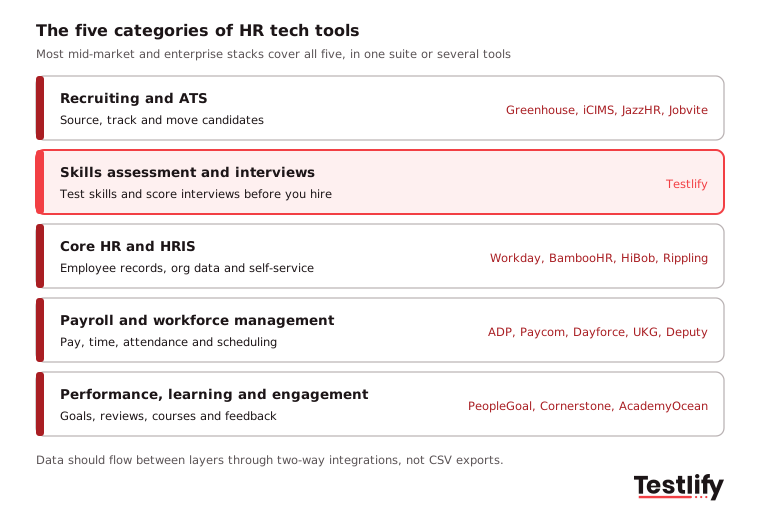
- Recruiting and ATS: An applicant tracking system posts jobs, collects applicants and moves them through stages.
- Skills assessment and interviews: Tests and structured interviews show what candidates can do before you hire them.
- Core HR and HRIS: Employee records, org charts, documents, self-service and onboarding software.
- Payroll and workforce management: Pay, tax, benefits administration, time, attendance and shift scheduling.
- Performance, learning and engagement: Goals, reviews, courses, surveys and team knowledge.

Which HR tech tools fit which job?
HR tech tools fit different jobs and company sizes, so compare them by category before you compare features. The table below lists all 32 tools in this guide with the job each one does best.
# | Tool | Category | Best for |
|---|---|---|---|
1 | Testlify | Skills assessment and AI interviews | Mid-market and enterprise teams hiring on skills |
2 | Greenhouse | ATS | Structured hiring at growing companies |
3 | iCIMS | ATS and recruitment marketing | Large, high-volume recruiting teams |
4 | JazzHR | ATS | Small and mid-sized businesses |
5 | Jobvite | ATS and referrals | Mid-market recruiting teams |
6 | Oracle Taleo Cloud | Talent acquisition | Enterprises already on Oracle |
7 | Bullhorn | ATS and CRM | Staffing and recruiting agencies |
8 | GrabJobs | Hiring automation | Entry-level and hourly roles |
9 | Iris | AI sourcing and outreach | Recruiters who source at scale |
10 | Workday | HCM suite | Large enterprises |
11 | Oracle HCM Cloud | HCM suite | Global enterprises |
12 | PeopleSoft | HRMS | Enterprises with complex, custom HR |
13 | BambooHR | HRIS | Small and mid-sized businesses |
14 | HiBob | HRIS | Mid-market and distributed teams |
15 | Rippling | HR, IT and finance platform | Tech companies with global teams |
16 | Infor HR | HRMS | Mid-sized and industry-specific firms |
17 | Sage People | HRMS | Mid-sized, multi-country companies |
18 | Namely | HR platform | Mid-sized companies |
19 | factoHR | HRMS | Small and mid-sized businesses |
20 | Keka | HR and payroll | Growing teams in Asia and the Middle East |
21 | ADP Workforce Now | Payroll and HR | Companies that want payroll and compliance in one |
22 | Paycom | Payroll and HCM | Mid-sized US companies |
23 | Paylocity | Payroll and HCM | Mid-sized US companies |
24 | Gusto | Payroll and benefits | Small US businesses |
25 | Dayforce | HCM with real-time payroll | Large and global workforces |
26 | UKG Pro | HCM suite | Mid-sized and large employers |
27 | UKG Ready | HR, payroll and time | Small and mid-sized employers |
28 | Deputy | Scheduling and time | Shift-based teams |
29 | PeopleGoal | Performance management | Custom review and goal cycles |
30 | Cornerstone OnDemand | Learning and talent | Enterprise learning programs |
31 | AcademyOcean | LMS | Training employees and partners |
32 | bit.ai | Docs and knowledge base | HR documentation and wikis |
What are the best HR tech tools for recruiting and assessment?
The best HR tech tools for recruiting and assessment are an applicant tracking system to run the pipeline and a skills assessment platform to decide who moves forward. LinkedIn's Future of Recruiting 2025 report found 37% of organizations are integrating or testing generative AI in hiring, up from 27% a year earlier.
1. Testlify
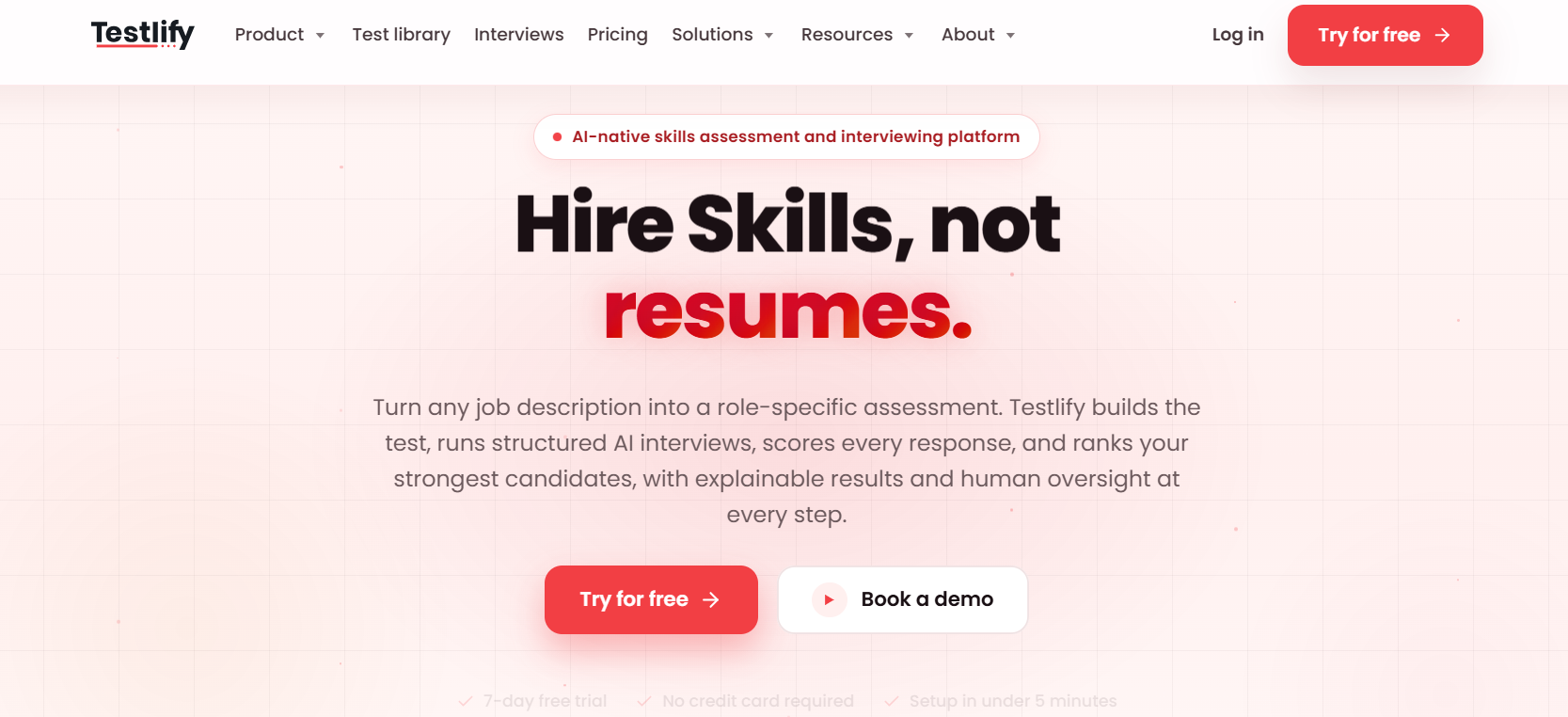
Testlify is an AI-native skills assessment and interviewing platform. Hiring teams turn a job description into a role-specific assessment, run structured AI interviews, and get a ranked shortlist with the evidence behind each score. A single platform covers tech and non-tech roles, from coding and software skills to situational judgment and language tests.
Best for: Mid-market and enterprise teams that want objective skills data before the interview.
- 3,500+ ready-made tests in the test library and 25+ question types
- Video AI, Voice AI and Chat AI interviews
- 20+ proctoring checks and AI-assistance detection
- AI resume screener, 15+ languages and white label
- 100+ ATS and HRIS integrations with two-way sync
2. Greenhouse
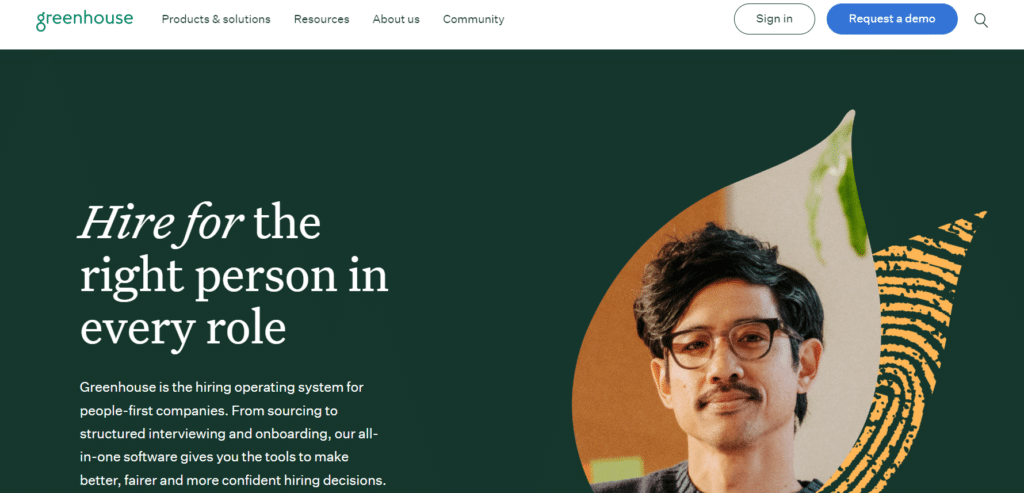
Greenhouse is an applicant tracking system built around structured hiring. Teams set interview plans and scorecards per role, schedule interviews, and report on the pipeline. A large integration marketplace lets teams add assessment, background check and onboarding tools.
Best for: Growing companies that want a consistent interview process.
- ATS with structured scorecards
- Recruiting CRM
- Interview scheduling
- Pipeline analytics and reporting
3. iCIMS
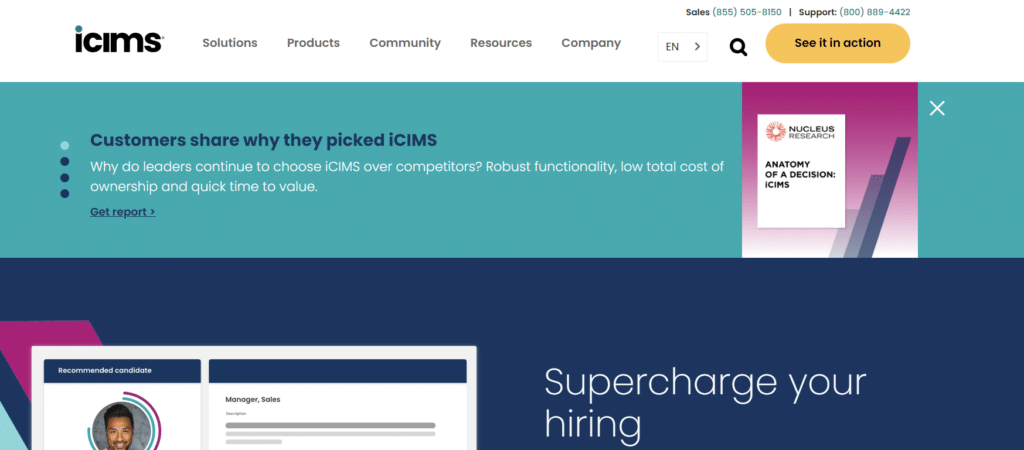
iCIMS is a talent acquisition platform for large recruiting teams. An ATS sits at its core, with career sites, recruitment marketing, CRM and onboarding around it. Reporting shows source quality and time in each stage across many requisitions.
Best for: Enterprises with high hiring volume.
- Applicant tracking system
- Recruitment marketing and career sites
- Onboarding
- Recruiting analytics
4. JazzHR
JazzHR is an ATS for small and mid-sized businesses. Hiring managers post jobs to many boards, track candidates, and collect interview feedback in one place. Setup is fast, so teams without a recruiting ops function can run a clean process.
Best for: Small and mid-sized businesses that hire steadily.
- Job posting to multiple boards
- Candidate tracking
- Interview feedback and collaboration
- Hiring reports
5. Jobvite
Jobvite is recruiting software with an ATS, referral tools and recruitment marketing. Recruiters use it to run campaigns, track employee referrals, and move candidates through stages. Jobvite and JazzHR now sit under the same parent company, Employ.
Best for: Mid-market teams that rely on referrals and campaigns.
- ATS
- Employee referrals
- Recruitment marketing and texting
- Onboarding and reporting
6. Oracle Taleo Cloud
Oracle Taleo Cloud is a talent acquisition product for large organizations, covering requisitions, recruiting and onboarding. Many enterprises run it alongside other Oracle systems. Oracle also sells Oracle Recruiting inside Oracle HCM Cloud, so check which product fits your roadmap.
Best for: Enterprises already invested in Oracle.
- Requisition and recruiting management
- Onboarding
- Reporting and analytics
- Global scale
7. Bullhorn
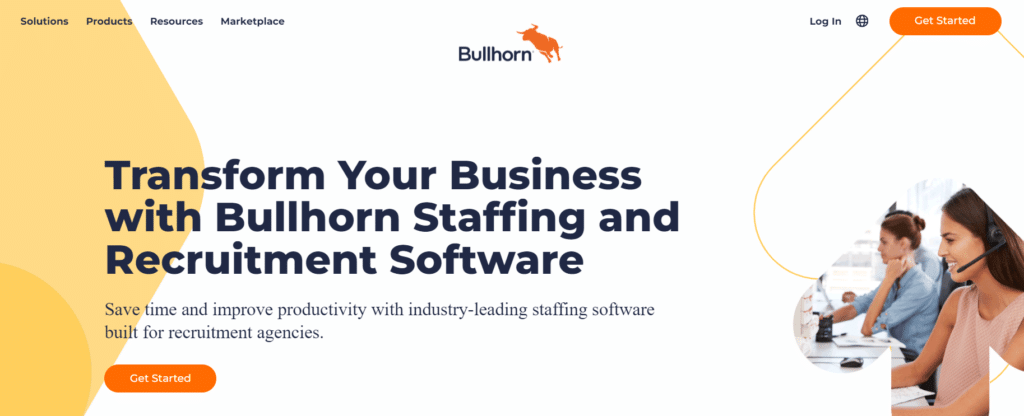
Bullhorn is an ATS and CRM built for staffing and recruiting agencies. It tracks both candidates and client companies, posts jobs, logs emails, and automates follow-ups. Agencies use its reporting to see placements and recruiter activity.
Best for: Staffing firms and recruitment agencies.
- Candidate and client relationship management
- Job board posting
- Email integration
- Automation and reporting
8. GrabJobs
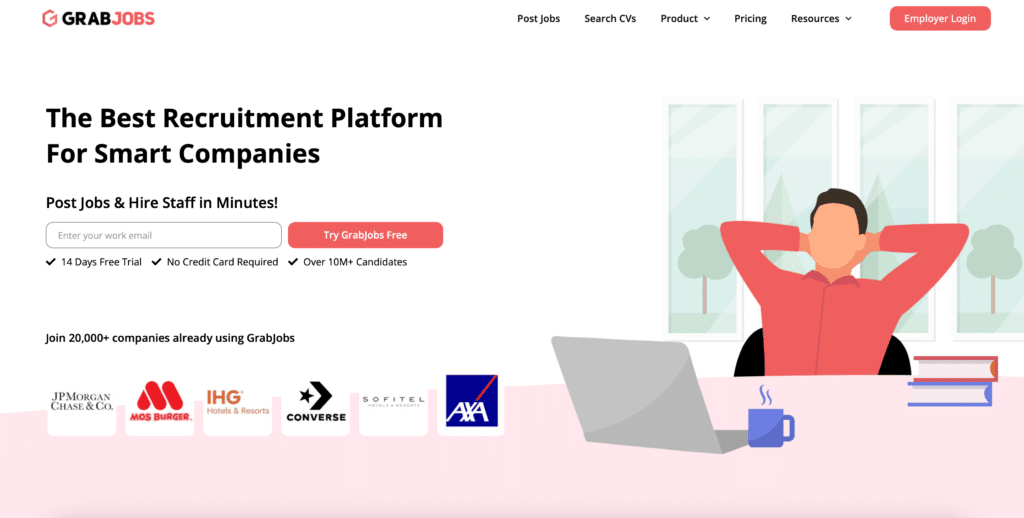
GrabJobs is a hiring automation platform focused on entry-level and mid-level roles. Employers post to several job sites in one click, screen applicants with interview chatbots, and let candidates book interview slots themselves. Retail, hospitality and food service employers use it for volume hiring.
Best for: Hourly and frontline hiring.
- One-click posting to multiple job sites
- Custom interview chatbots
- Self-scheduled interviews
- Resume database
9. Iris
Iris is an AI recruitment tool that automates sourcing, shortlisting and outreach. Recruiters search large profile databases, generate job descriptions, and send personalized messages and follow-ups to shortlisted people.
Best for: Recruiters who source passive candidates.
- AI candidate sourcing and matching
- Job description generator
- Access to many job boards
- Personalized outreach and follow-ups
What are the best HR tech tools for core HR and HRIS?
The best HR tech tools for core HR are an HRIS or HCM suite that holds employee records, org data and self-service, and connects to payroll and recruiting. Enterprises usually pick a full suite; mid-market teams often pick a lighter HRIS and add specialist tools. For a deeper comparison, see the top core HR tools.
10. Workday
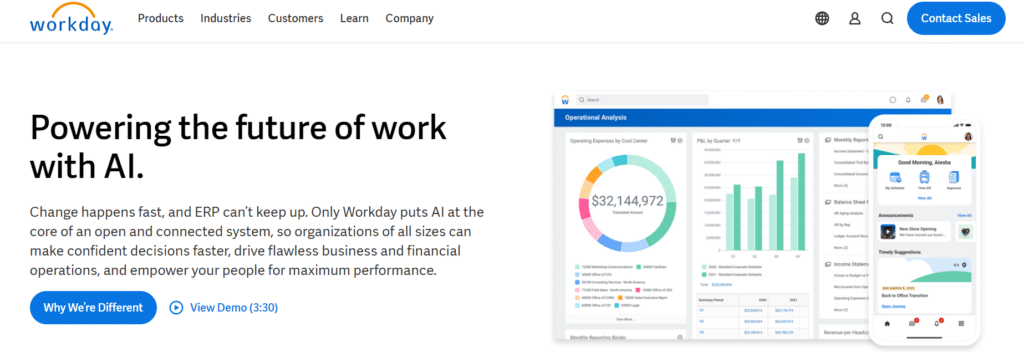
Workday is a human capital management suite for large enterprises that unites HR and finance on one data model. Core HR, payroll, talent, learning and analytics share the same records. Workday Skills Cloud uses machine learning to map employee skills to roles and opportunities.
Best for: Large enterprises that want one system of record.
- Unified HR and finance data
- Global payroll
- Talent management and Skills Cloud
- Advanced reporting and mobile app
11. Oracle HCM Cloud
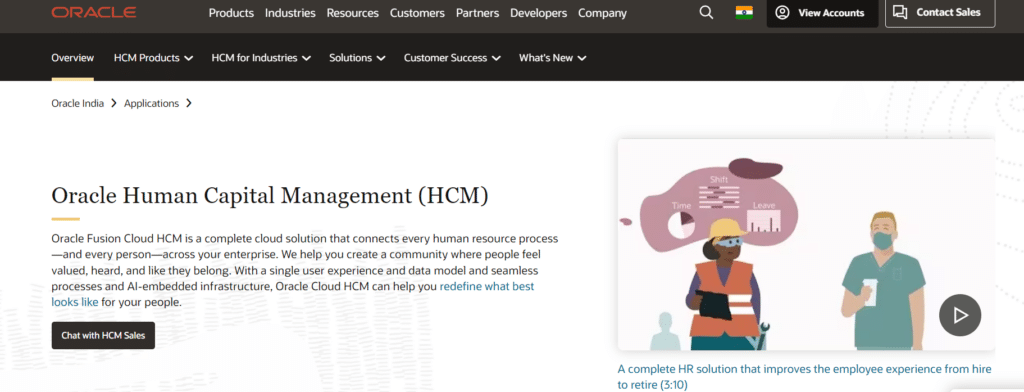
Oracle HCM Cloud is an integrated suite for the full employee lifecycle, from recruiting and onboarding to payroll, workforce planning and learning. AI features suggest actions and surface insights for HR and managers. Global payroll and compliance tools suit multinational companies.
Best for: Global enterprises.
- AI-assisted insights
- Onboarding and talent acquisition
- Global payroll
- Workforce planning
12. PeopleSoft
PeopleSoft is an Oracle HRMS that large organizations run when they need deep customization. Modules cover core HR, benefits, payroll and talent acquisition. Many public sector bodies and universities still run it, often alongside newer cloud tools.
Best for: Enterprises with complex, highly customized HR rules.
- Core HR
- Benefits administration
- Payroll processing
- Employee self-service
13. BambooHR
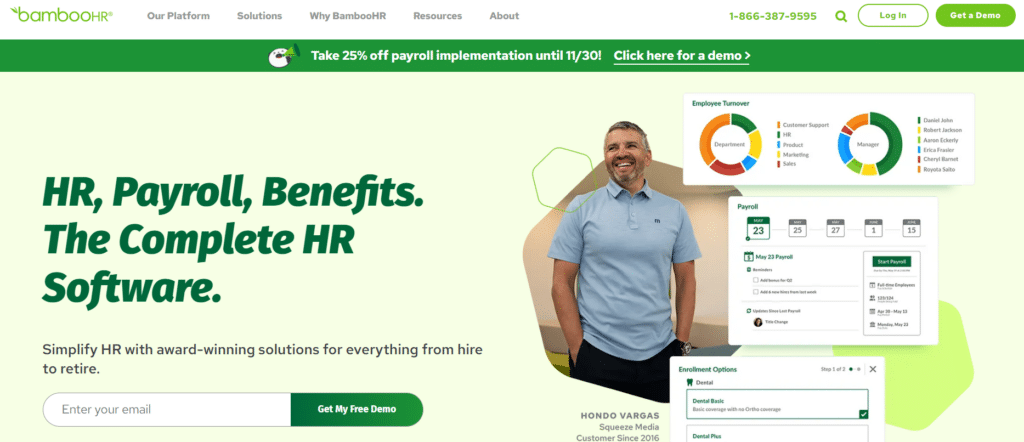
BambooHR is an HRIS for small and mid-sized businesses. Employee records, time off, onboarding, reports and a built-in ATS live in one easy interface with a mobile app. Payroll and benefits are available as add-ons in some regions.
Best for: Small and mid-sized businesses moving off spreadsheets.
- Employee records and self-service
- Time-off tracking
- Applicant tracking
- Custom reports and mobile app
14. HiBob
HiBob, sold as Bob, is an HRIS built for modern, distributed teams. HR teams use it for onboarding, performance cycles, compensation reviews and people analytics. Bob connects to leading payroll providers to keep pay data in sync.
Best for: Mid-market companies with remote or multi-country teams.
- Onboarding and workflows
- Performance and compensation management
- Payroll integrations
- People analytics and KPIs
15. Rippling
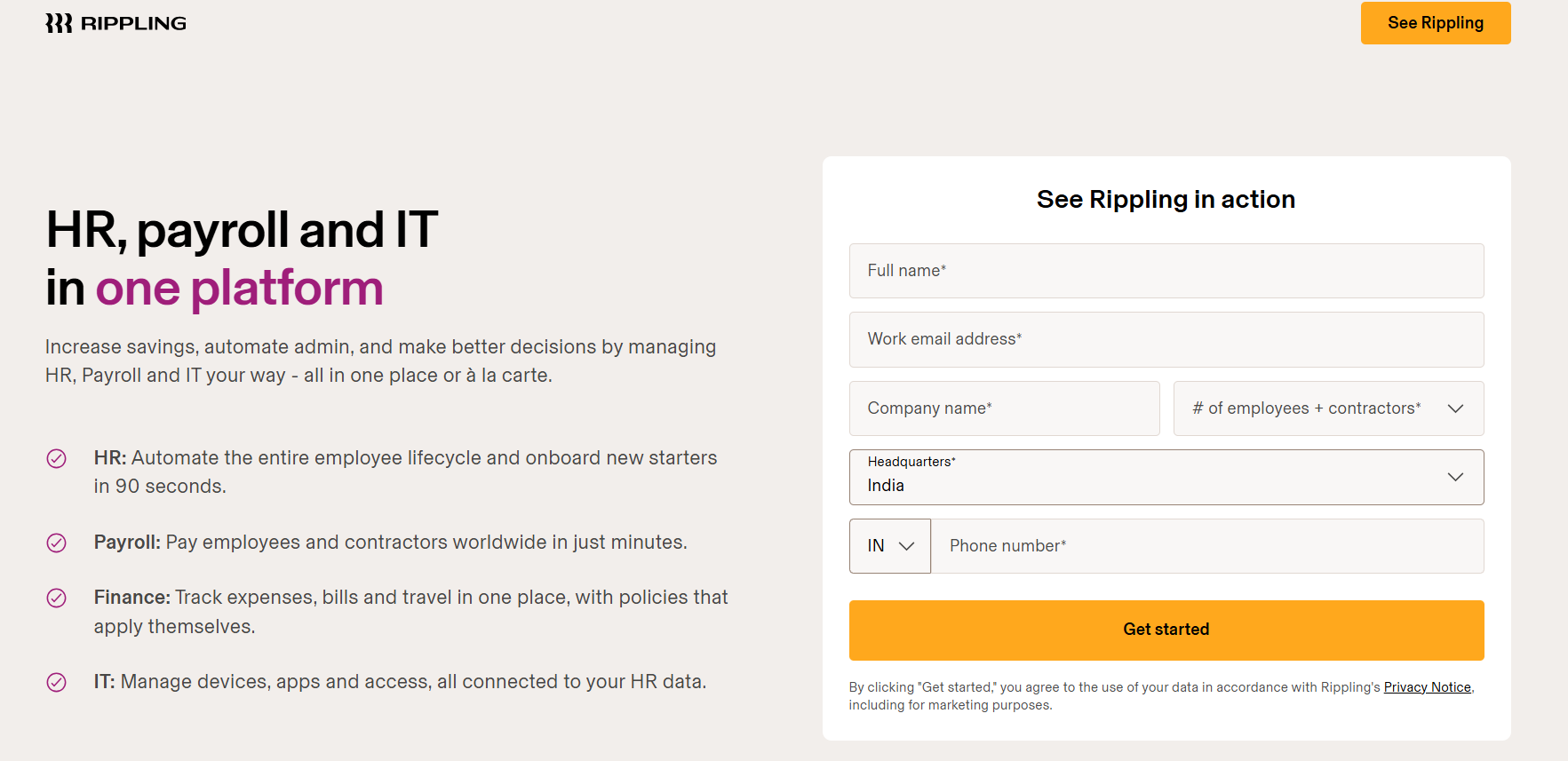
Rippling combines HR, IT and finance apps on one employee data platform. When someone joins, Rippling can set up payroll and benefits and also issue their laptop and app accounts. Custom workflows, compliance alerts and workforce analytics run on the same data.
Best for: Tech companies that manage people, devices and apps together.
- Global payroll and benefits
- Device and app management
- Custom workflows
- Workforce analytics and Slack integration
16. Infor HR
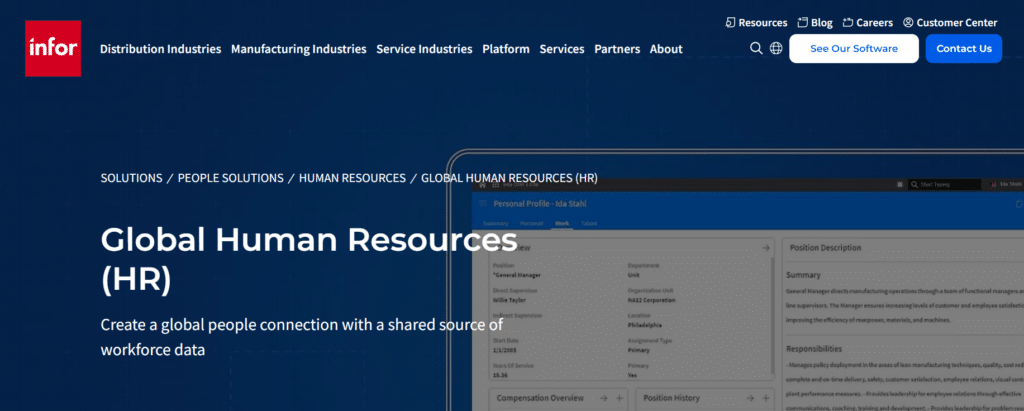
Infor HR is a cloud HRMS with global capabilities, often sold with industry-specific Infor products in healthcare, manufacturing and the public sector. Modules cover core HR, workforce management, benefits and talent.
Best for: Mid-sized organizations in industries Infor serves.
- Core HR
- Workforce management
- Benefits administration
- Talent management
17. Sage People
Sage People is a cloud HRMS for mid-sized, multi-country companies. Core HR, talent, time and attendance and global payroll connections sit on one platform, with flexible workflows for local rules.
Best for: Mid-sized companies with employees in several countries.
- Core HR
- Talent management
- Time and attendance
- Global payroll connections
18. Namely
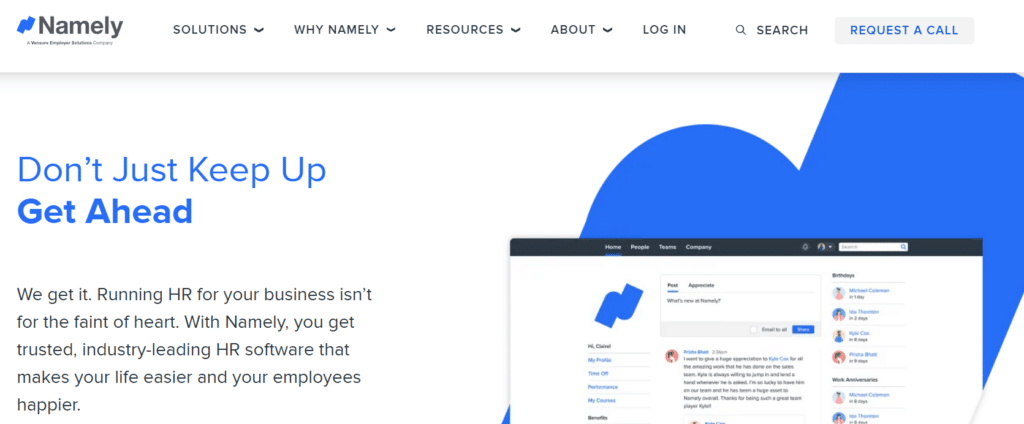
Namely is an HR platform for mid-sized companies, covering HR, payroll, benefits, time and performance. Configurable fields and reports let HR shape the system around their own processes.
Best for: Mid-sized US companies that want HR and payroll together.
- Benefits management
- Time and attendance
- Performance management
- Custom reporting
19. factoHR
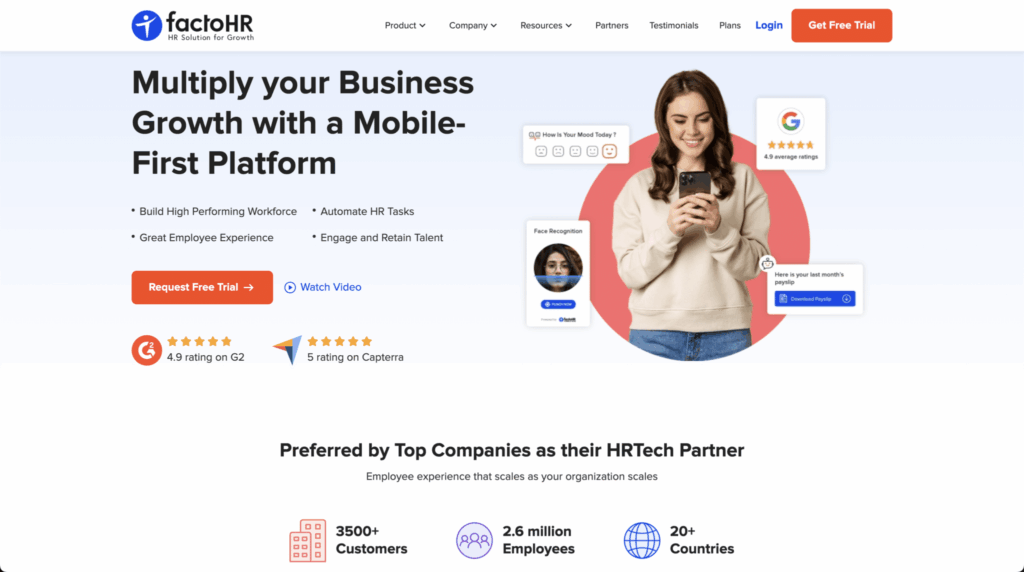
factoHR is a cloud HRMS for small and mid-sized businesses. Payroll, attendance, leave and onboarding are automated, which cuts manual errors for small HR teams.
Best for: Small and mid-sized businesses, especially in India.
- Payroll automation
- Attendance tracking
- Leave management
- Onboarding and performance
20. Keka
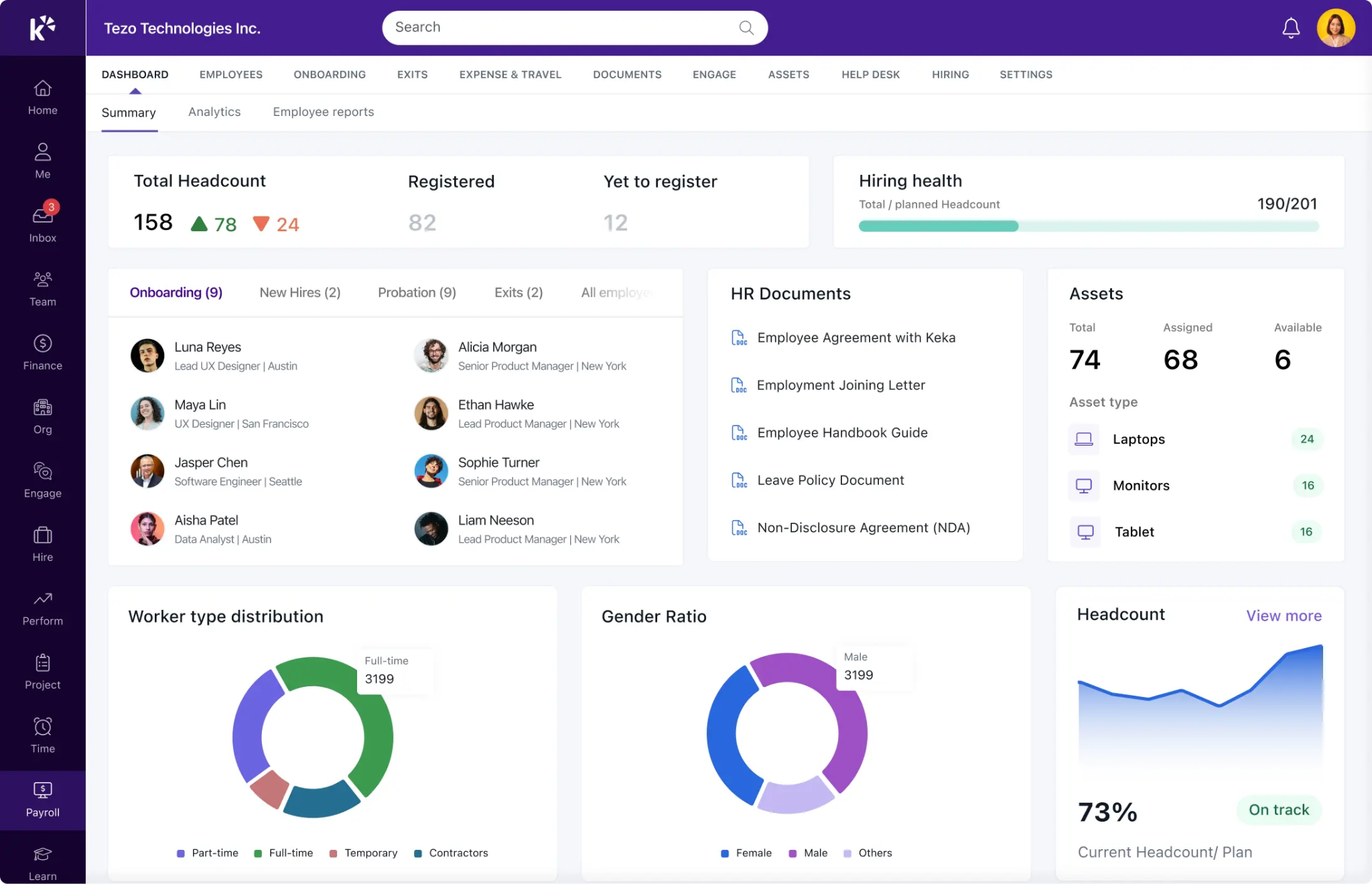
Keka is cloud HR software for core HR, attendance, leave, timesheets, onboarding and payroll-connected workflows. AI helps route employee requests and approvals, and workforce reports pull from the same employee records.
Best for: Growing teams that want HR operations in one place.
- Employee records
- Attendance, leave and timesheets
- Onboarding
- AI-supported requests and workflow automation
What are the best payroll and workforce management tools?
The best payroll and workforce management tools pay people correctly, track time and keep you compliant with tax and labor rules. Choose by headcount, countries and how many hourly or shift workers you employ. Several products in this group were renamed after mergers, so check you are comparing current names. For the basics, see payroll software.
21. ADP Workforce Now
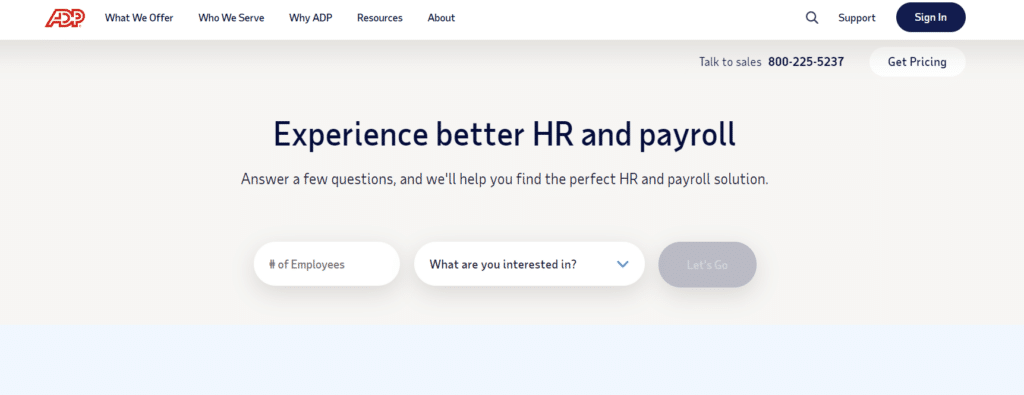
ADP Workforce Now is a cloud payroll and HR platform from one of the largest payroll providers. Payroll and tax filing sit alongside time and attendance, benefits, compliance tools and an analytics dashboard.
Best for: Companies that want payroll accuracy and compliance support in one vendor.
- Payroll and tax management
- Time and attendance
- Benefits administration
- Compliance and analytics
22. Paycom
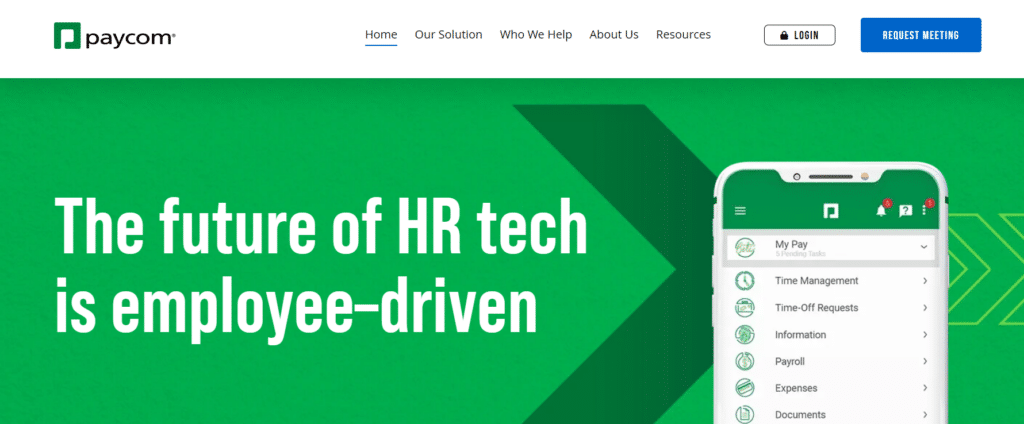
Paycom is a single-database payroll and HCM platform. Employees enter and check their own data, which cuts corrections at payroll time. Talent acquisition, time and labor management and analytics are part of the same system.
Best for: Mid-sized US companies that want employees to own their data.
- Payroll and tax management
- Employee self-service
- Time and labor management
- Talent acquisition
23. Paylocity
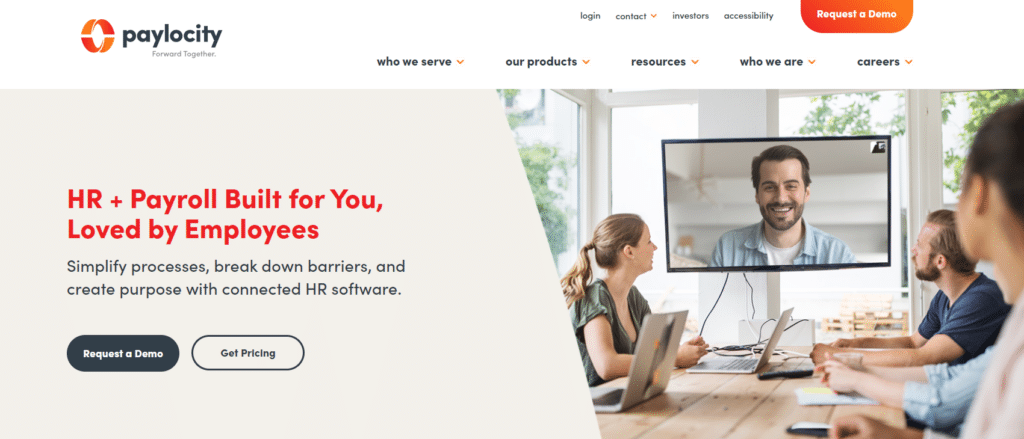
Paylocity is a cloud payroll and HCM platform with payroll, time, benefits and talent tools. A social feed and mobile app help employee communication, which suits distributed and frontline teams.
Best for: Mid-sized US companies focused on employee experience.
- Payroll processing
- Time and attendance
- Benefits administration
- Employee communication and mobile app
24. Gusto
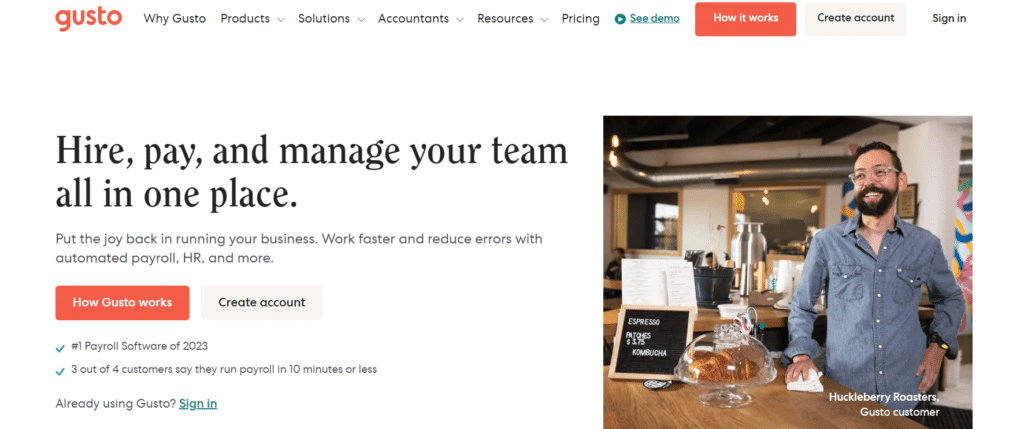
Gusto is payroll and benefits software for small US businesses. Owners run payroll in a few clicks, offer benefits, track time and onboard new hires without an HR specialist.
Best for: Small US businesses.
- Payroll processing and tax filing
- Benefits administration
- Time tracking
- Onboarding and HR support
25. Dayforce (formerly Ceridian Dayforce)
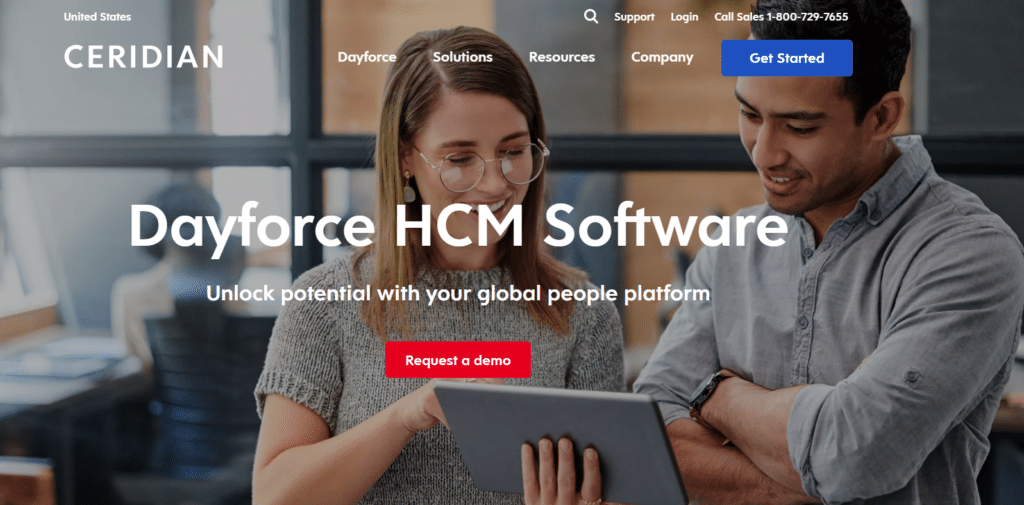
Dayforce is a unified HCM platform with HR, payroll, workforce management and talent tools. Ceridian renamed itself Dayforce in February 2024. Its continuous payroll calculation lets employees see earnings in real time.
Best for: Large and global workforces with complex pay rules.
- Real-time global payroll
- Benefits administration
- Workforce management and scheduling
- Talent management
26. UKG Pro (formerly UltiPro)
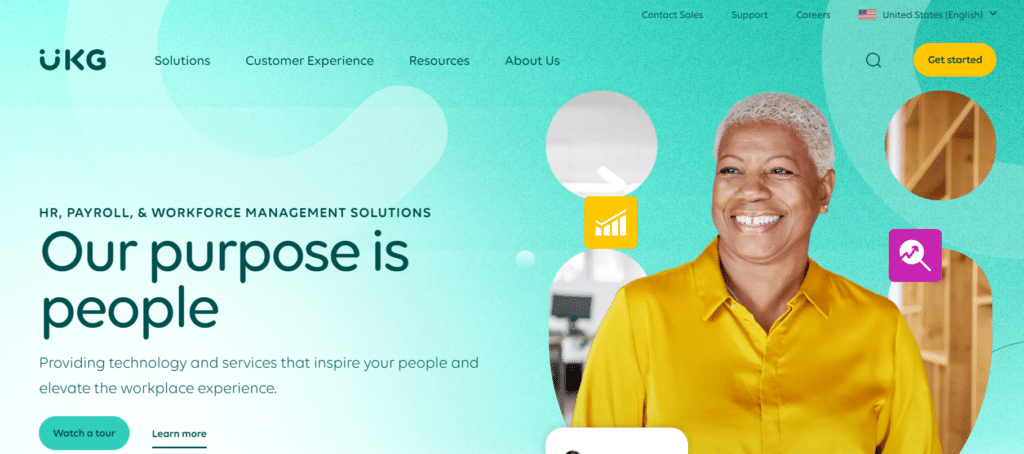
UKG Pro is an HCM suite from UKG, the company formed when Ultimate Software and Kronos merged in 2020. Pro covers HR, payroll, talent, learning and employee surveys for mid-sized and large employers.
Best for: Mid-sized and large employers that want HR and payroll in one suite.
- Payroll and HR
- Performance and learning management
- Employee surveys
- Predictive analytics
27. UKG Ready (formerly Kronos Workforce Ready)
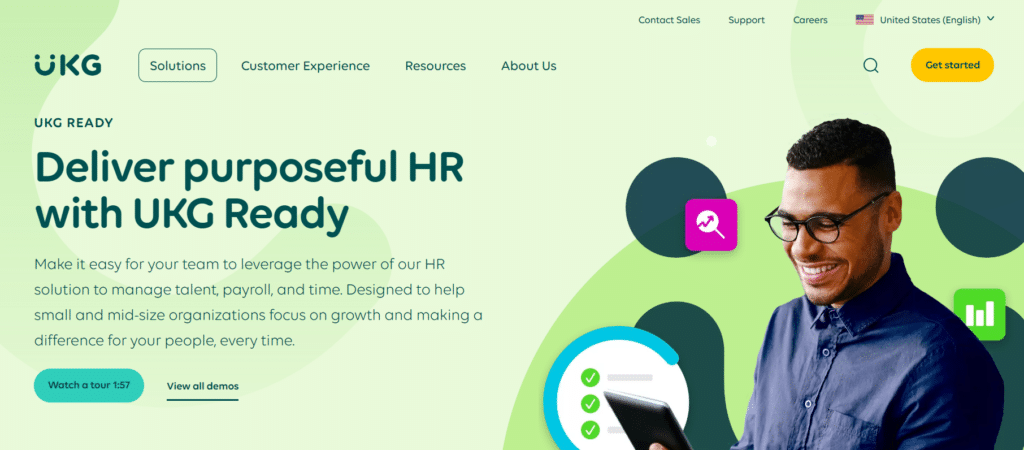
UKG Ready is the UKG product for small and mid-sized employers, with HR, payroll, time and scheduling in one system. Shift-based employers use it to control labor costs and stay compliant with working-time rules.
Best for: Small and mid-sized employers with hourly staff.
- Time and attendance
- Scheduling
- Compliance management
- HR analytics and mobile app
28. Deputy
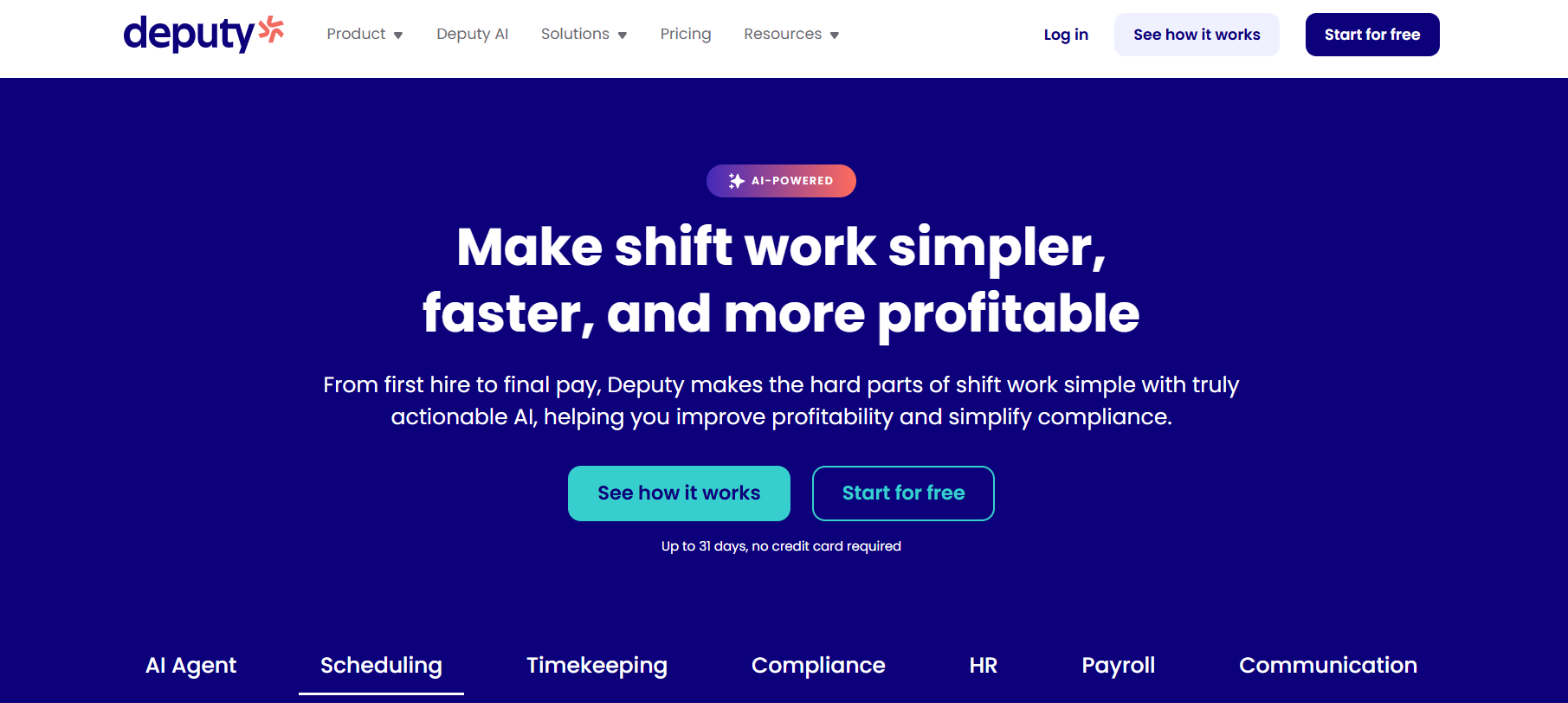
Deputy is scheduling and time-tracking software for shift-based teams. Managers build and share shift schedules in minutes, staff swap shifts in the app, and timesheets flow into payroll. Labor cost is visible against demand while the schedule is built.
Best for: Retail, hospitality and healthcare teams with shifts.
- Shift scheduling and swaps
- Time clock and timesheets
- Labor cost forecasting
- Team messaging
What are the best tools for performance, learning and engagement?
The best tools for performance, learning and engagement help managers set goals, run reviews, train people and keep teams informed. Engagement is the problem to solve: Gallup's State of the Global Workplace report puts global employee engagement at 20% in 2025, costing about $10 trillion in lost productivity. See also performance management.
29. PeopleGoal
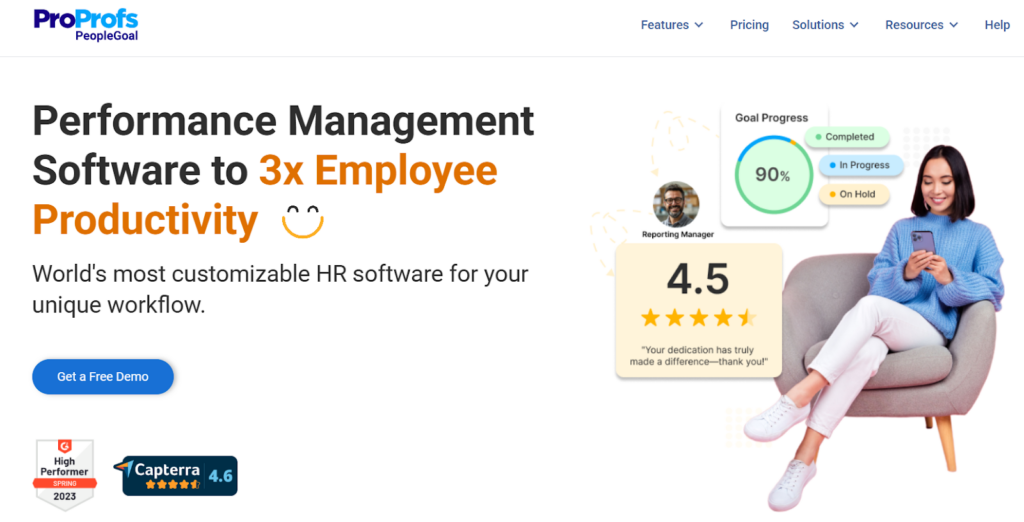
PeopleGoal is customizable performance management software for goal cycles, 360 feedback, continuous feedback and reviews. Teams set OKRs or SMART goals, link individual goals to company goals, and automate timelines and reminders. A no-code app builder covers extra workflows such as onboarding or absence requests.
Best for: Companies that want review cycles shaped around their own process.
- OKRs, SMART goals and alignment
- 360 feedback and performance reviews
- Engagement and pulse surveys
- No-code custom apps and real-time reports
30. Cornerstone OnDemand
Cornerstone OnDemand is a learning and talent management system for large organizations. A learning management system, content library, performance tools and succession planning help companies build skills and fill roles from within.
Best for: Enterprises running large learning and compliance training programs.
- Learning management system
- Performance management
- Succession planning
- Mobile learning
31. AcademyOcean
AcademyOcean is LMS software for training employees, customers and partners. An AI course builder helps HR create courses fast, and branded portals serve different teams or branches. Learning reports show who finished which course, so HR can link training to performance.
Best for: Teams that need custom training portals without a large L&D team.
- AI-powered course builder
- Custom branded academies
- Self-paced learning
- Learning analytics
32. bit.ai
bit.ai is a document and knowledge platform where HR teams keep policies, handbooks and onboarding guides in shared workspaces. An AI writing assistant drafts documents, and teams co-edit, comment and share trackable links. A single source of HR knowledge helps remote employees find answers without waiting on HR.
Best for: HR teams that need a shared handbook and wiki.
- Shared workspaces and wikis
- AI writing assistant
- Real-time co-editing and comments
- Trackable sharing links
Why should organizations use HR tech tools?
Organizations use HR tech tools to hire faster and better, cut manual admin, and make people decisions on data instead of instinct. For mid-market and enterprise teams the case usually rests on three gains.
- Better hiring decisions: Skills tests and structured interviews give every candidate the same questions and criteria. LinkedIn found companies with the most skills-based searches are 12% more likely to make a quality hire.
- Less manual work: Generative AI users in recruiting save about 20% of their work week, roughly one day, according to LinkedIn's 2025 data. HR automation cuts re-typing between systems.
- Data for planning: HR analytics shows turnover, time to hire and quality of hire by team, so leaders plan headcount on facts.
- Support for distributed teams: Self-service, mobile apps and shared knowledge bases keep remote and multi-country teams on the same process.
We have seen the biggest gains when teams fix one slow step first, such as manual resume screening, rather than buying a full suite at once.
How do you choose the right HR tech tools?
The right HR tech tools solve a specific pain, fit your current systems and get used by managers, not just HR. Start with the problem, not the vendor list.
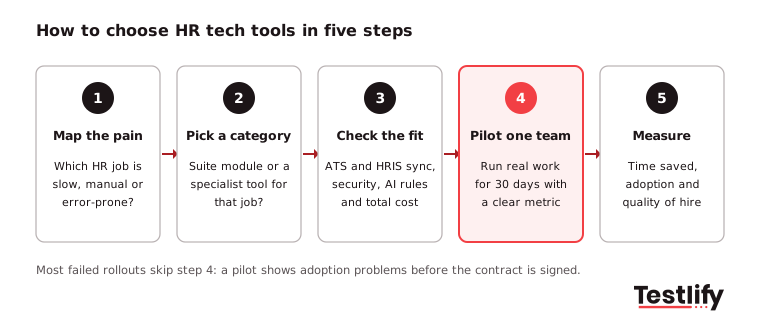
- Assess business needs: List the HR jobs that are slow, manual or error-prone, and who feels the pain.
- Decide suite or specialist: A suite module is enough for basic needs; a specialist tool wins where the job is core to the business, such as hiring for volume or critical roles.
- Check integrations: Confirm two-way sync with your ATS, HRIS and payroll, plus SSO and an API.
- Check security and compliance: Ask for SOC 2 or ISO 27001 reports, GDPR terms, data residency and any AI bias audit.
- Test ease of use: A clear interface raises adoption among HR, managers and candidates and cuts training time.
- Plan for scale: Pricing and performance should hold as headcount, countries and hiring volume grow.
- Run a pilot: Try the tool on one team or role for 30 days with one metric you agreed upfront.
Pro tip: Ask each vendor to show the integration with your own ATS or HRIS in the demo, not a slide. Across the teams we talk to, integration effort is the most common reason a rollout stalls.
What AI and compliance rules apply to HR tech tools?
HR tech tools that use AI to screen, score or rank people are regulated in several markets, so compliance belongs on the buying checklist. Two rules matter most for global employers today.
- New York City Local Law 144: Employers using an automated employment decision tool must have a yearly independent bias audit, publish a summary and notify candidates. The city's AEDT guidance sets out the rules.
- EU AI Act: AI systems used for recruitment and candidate evaluation are classed as high-risk by the European Commission, with duties for risk management, human oversight and transparency.
- Human review: Under both rules, a person should be able to see the evidence behind an AI score and override it.
Testlify's matching model completed a third-party bias audit under Local Law 144 on June 16, 2023. See the NYC bias audit for details.
How do HR tech tools fit together in one stack?
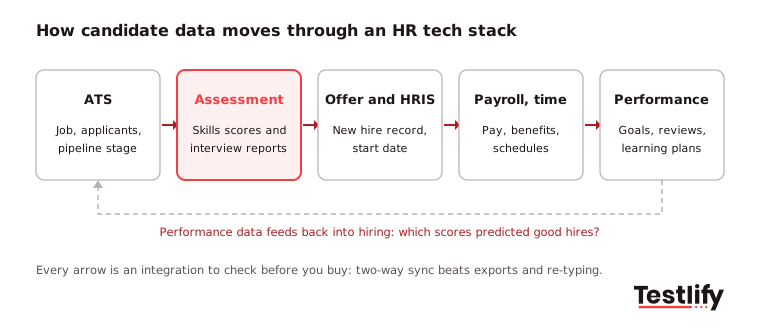
HR tech tools fit together when candidate and employee data flows from one system to the next without exports: ATS to assessment, assessment back to ATS, offer into the HRIS, then payroll and performance. Each handoff is an integration to check.
- Unified suite: One vendor and one data model, easier reporting, but weaker specialist features.
- Specialist tools: Stronger tools for each job, but more integrations to maintain.
- Hybrid: Most mid-market and enterprise teams run a core HRIS or suite, a dedicated ATS, and a specialist assessment platform connected to both.
For a step-by-step build, read how to start building your HR tech stack, or compare the best talent assessment tools.
Key takeaway: Pick HR tech tools by the job that hurts most, then by how well they share data. A tool that does not sync with your ATS or HRIS creates new manual work.
Ready to add skills data to your HR tech stack?
Testlify adds skills tests and AI interviews to the stack you already run, with 100+ ATS and HRIS integrations including Workday, Greenhouse and BambooHR. Browse the test library or start a 7-day free trial, no credit card required, and build your first assessment from a real job description.
Frequently asked questions

Content Writer
Yashika Khandelwal is a Content Writer with 3+ years of experience creating research-backed content on hiring, talent assessment, and HR technology. She is a registered Organizational Psychologist and subject matter expert who combines behavioral science with practical recruitment insights to produce accurate, evidence-based content.
LinkedInRelated resources
View all
HR & recruitment
How to attract and retain blue-collar talent in 2026

HR & recruitment
Top 10 factors that contribute to job satisfaction

HR & recruitment
How to improve job satisfaction of your employees in 2026

HR & recruitment
Guide to payroll management
HR & recruitment
Top 7 corporate learning management systems
HR & recruitment
14 best recruitment marketing tools for 2026, compared
Get started.
Hire on proof, not resumes.
Run your first skills-based assessment free — no credit card required.