
Why online assessment tests are essential for recruitment?
Online assessment tests play a crucial role in recruitment by helping identify top talent, streamlining the hiring process, and boosting overall organizational performance.

One job posting gets over 500 applications on average. Sorting through all those resumes takes too much time and still does not guarantee the right hire. Also, the entire process is lengthy and hectic. That is why more companies are switching to online assessment tests.
These tests help employers focus on skills rather than just resumes, making hiring faster and more accurate. In fact, 55% of companies now use pre-employment tests to assess candidates. By using assessment in the recruitment process, businesses can find the best talent while saving time and effort.
This blog post discusses everything you need to know about online assessment tests and why 90% of hiring managers prefer it.
 ChatGPT
 Gemini
 Claude
 Grok
Grok Perplexity
What is an online assessment test?
Online assessment tests are an evaluation process where candidates’s knowledge, skills, and knowledge are tested through software or a digital platform. These tests can include quizzes, interactive activities, assignments, or exams, typically curated by the assessment platforms. The primary goal of an online assessment process is to evaluate a candidate’s skills objectively, rather than making hiring decisions based solely on resumes. Such online test-based hiring is gaining prominence lately in domains such as recruitment, education, professional development, etc.
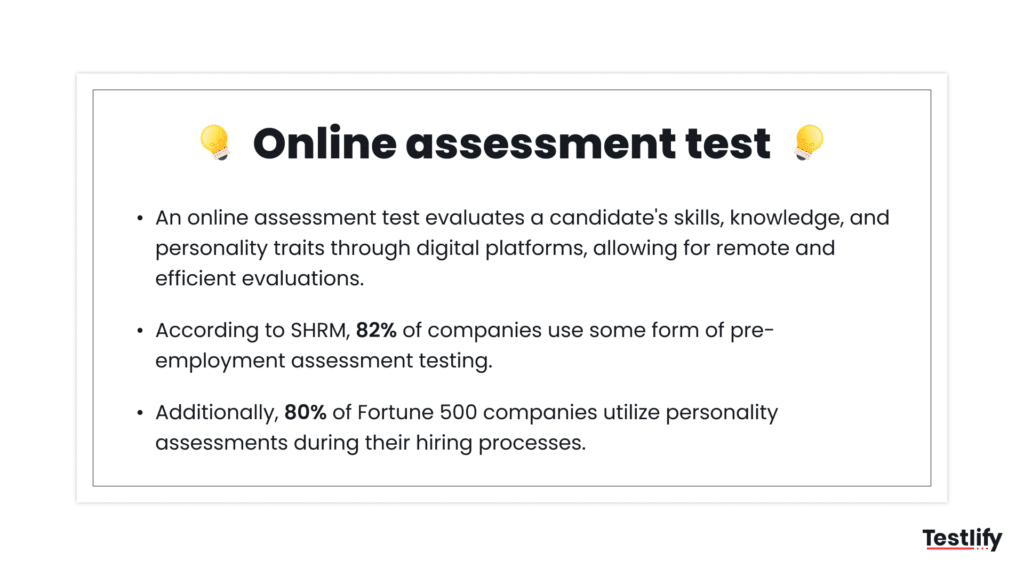
SHRM research shows that 54% of companies incorporate online recruitment assessments into their hiring process, as they provide a reliable way to evaluate a candidate’s suitability for a specific role.
Employers use various types of assessments like skill tests, personality tests, cognitive ability tests, and situational judgment tests to assess candidates. Since these assessments are conducted remotely, recruiters can screen huge volumes of applicants, reducing logistical challenges and potential hiring bias.

How are online assessment tests created?
Online assessment tests are designed to evaluate a candidate’s skills, personality, and job fit through structured tests or questionnaires. The development process involves several key steps:
Identifying job requirements: Employers can define the skills, cognitive abilities, aptitude tests, and personality traits needed for the role.
Selecting assessment types: Based on the job, employers can choose different types of tests. Some of the assessments may include:
- Cognitive tests (memory, problem-solving, logical reasoning)
- Skill-based tests (technical, language proficiency)
- Personality questionnaires (work style, team compatibility)
Testlify offers over 4000+ tests designed to evaluate candidates with accuracy. From cognitive abilities to technical expertise, these assessments help employers make data-driven hiring decisions. Or simply, type in the job role and find customized AI-generated questions as well.
Structuring the test format: Tests can be timed or untimed (time limited), adaptive or fixed, and may allow candidates to take breaks between sections.
Ensuring fairness and accuracy: Assessments are validated through industry research to ensure they measure job-related skills without bias. Testlify uses advanced best proctoring features such as tab monitoring, force full-screen mode, IP tracking, screen recording, etc to ensure candidates are not cheating.
Integrating with hiring platforms: Many online assessments are built into ATS (Applicant Tracking Systems) for seamless evaluation. Testlify integrates with 100+ ATS and HR platforms, enabling recruiters to automate candidate screening, track assessment results in real-time and streamline the hiring process effortlessly.
What are the different types of online assessments?
There are numerous types of online assessment tests available such as
- role-specific tests
- cognitive ability tests
- psychometric tests
- situational judgment tests (SJT),
- typing tests, coding tests
- software skills tests
- CEFR tests
- process knowledge tests
- engineering tests
Online assessments come in various formats, each designed to evaluate specific skills, competencies, and personality traits.
Role-specific tests
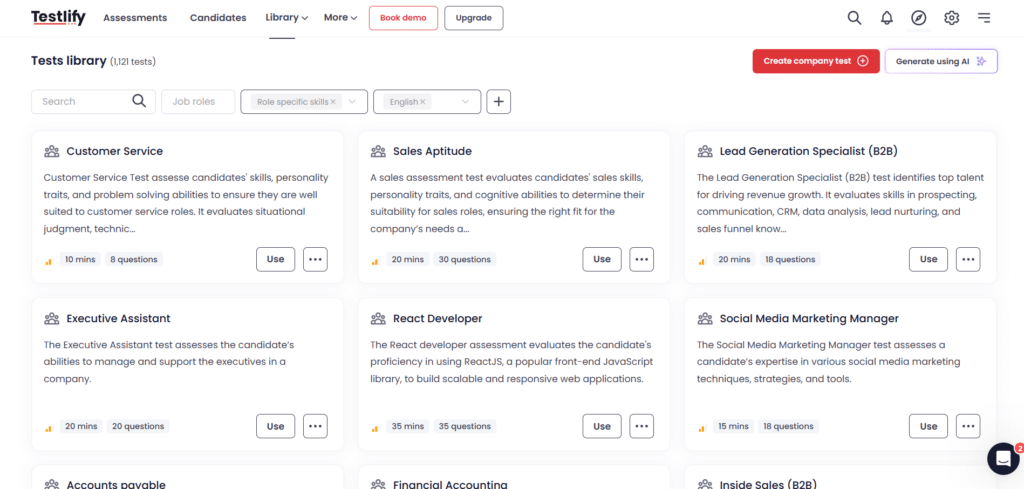
Role-specific tests are designed to assess the exact skills and knowledge required for a particular job. They evaluate industry expertise, technical capabilities, and situational problem-solving. These tests help employers identify candidates who already possess the necessary competencies, reducing the need for extensive training. Common examples include assessments for sales, marketing, finance, and HR roles. Testlify offers over 1100+ role-specific tests. Try your first assessment for free.
Cognitive ability tests
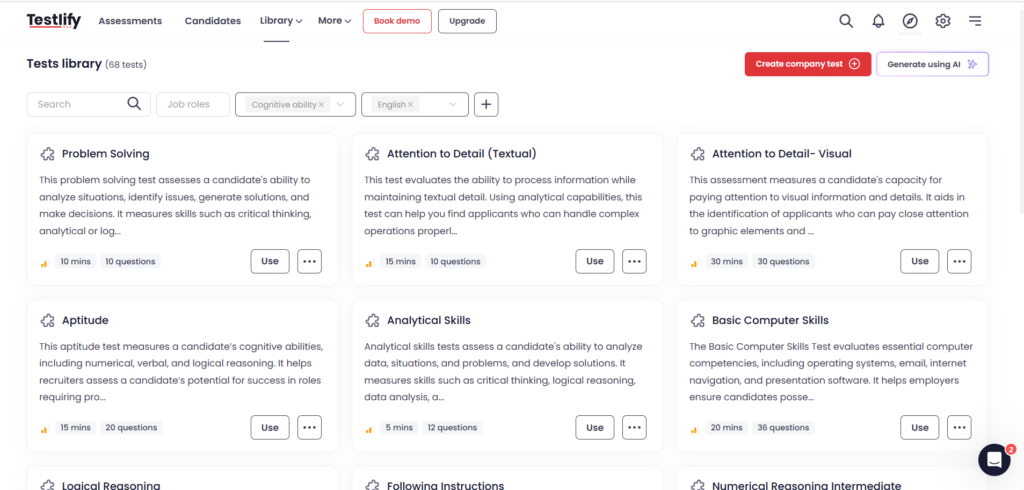
Cognitive ability tests measure a candidate’s reasoning, problem-solving, memory, and attention to detail. There are 68 cognitive ability tests offered by Testlify which help employers predict a candidate’s ability to analyze complex information, make decisions, and adapt to new challenges. They are particularly useful for roles that require critical thinking, such as management, consulting, and data-driven positions.
Psychometric tests
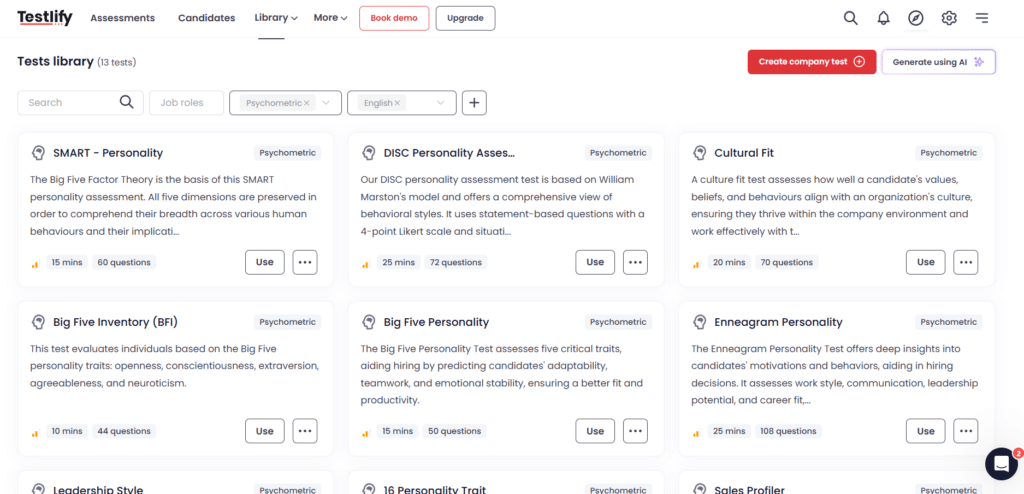
Psychometric tests focus on evaluating personality traits, work behavior, and emotional intelligence. By analyzing factors like motivation, adaptability, and communication style, these tests help employers determine if a candidate aligns with their company culture. They are commonly used for leadership roles and customer-facing positions where interpersonal skills are crucial.
Situational judgment tests (SJTs)
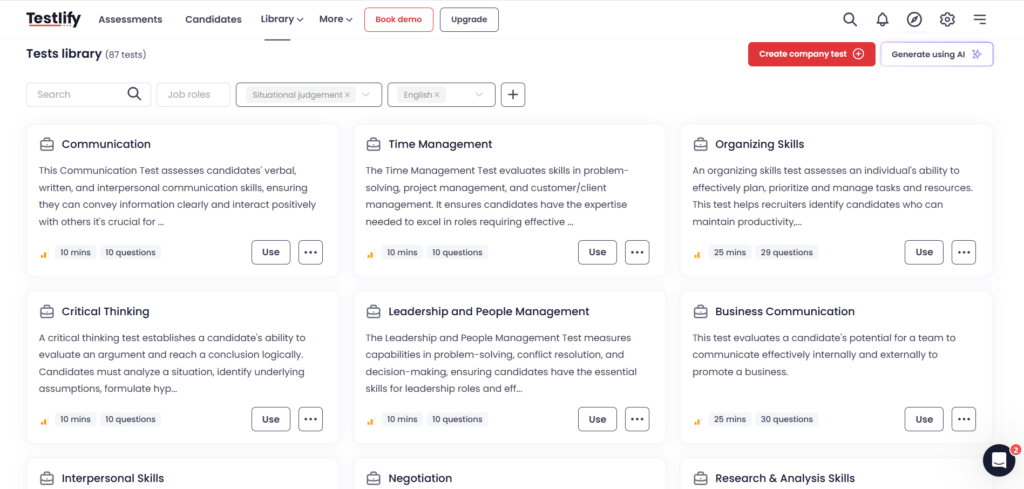
Situational Judgment Tests (SJTs) present candidates with real-world workplace scenarios and assess their responses. These tests evaluate decision-making, problem-solving, and ethical reasoning. Employers use SJTs to gauge how well candidates can handle role-specific challenges, making them ideal for managerial and client-facing roles.
Typing tests
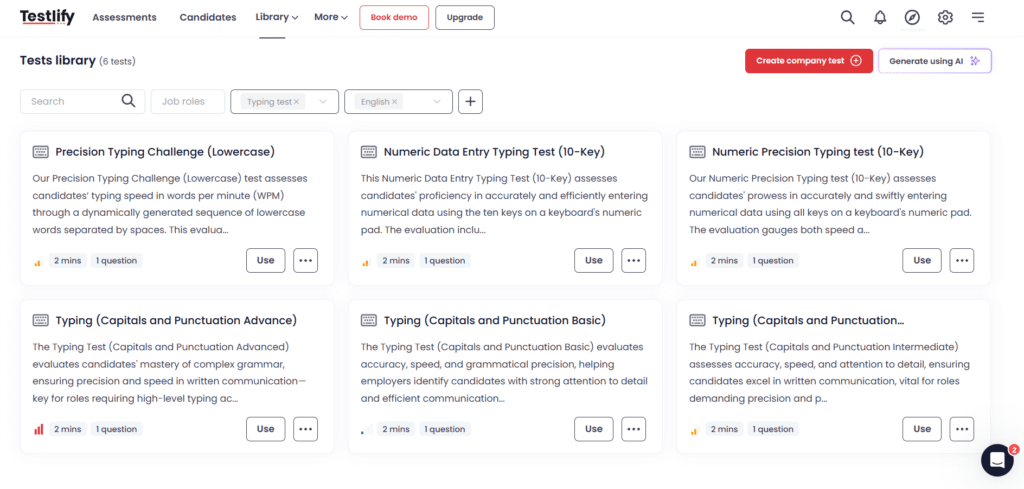
Typing tests assess a candidate’s typing speed and accuracy, which is essential for roles requiring fast and efficient data entry. These tests measure words per minute (WPM) and error rates to determine proficiency. Industries such as customer support, transcription, and administrative roles often use typing assessments to ensure productivity.
Coding tests
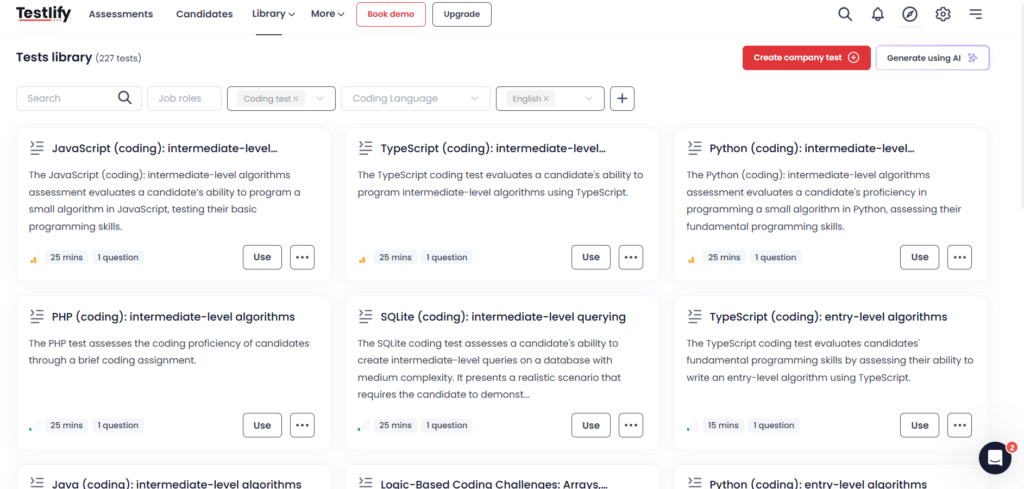
Coding tests evaluate a candidate’s programming skills, problem-solving abilities, and coding efficiency. They measure knowledge of specific programming languages, algorithms, and debugging capabilities.
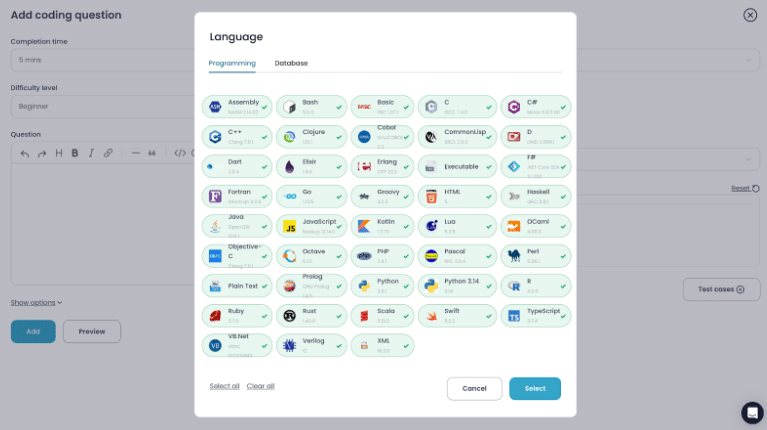
These assessments help tech recruiters hire developers and engineers with hands-on expertise, ensuring they can perform well in real-world coding tasks. Testlify supports more than 16+s. Here’s the list of all supported languages.
Software skills tests
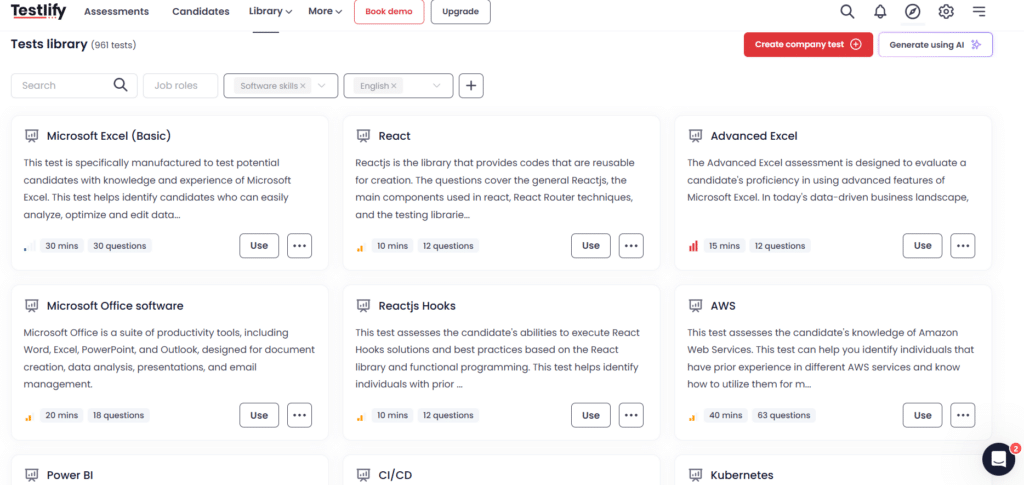
Software skills tests assess proficiency in specific tools and applications relevant to the job. These tests measure a candidate’s ability to navigate software like Microsoft Excel, CRM systems, and design tools. Businesses use them to ensure candidates are familiar with industry-standard software, reducing training time and improving workflow efficiency.
Language tests
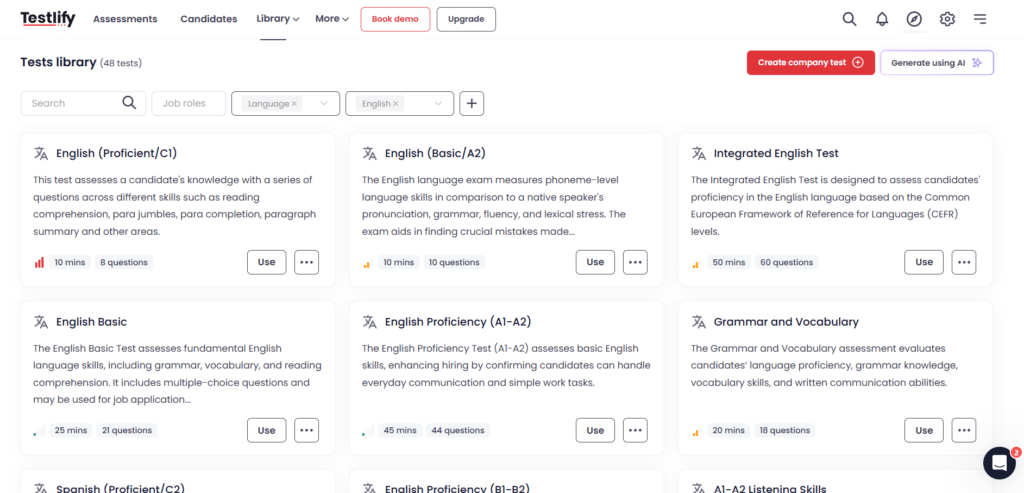
Language tests are used to assess a candidate’s proficiency in a specific language. One common example is CEFR tests. CEFR (Common European Framework of Reference for Languages) tests evaluate a candidate’s language proficiency.
These tests measure reading, writing, listening, and speaking abilities based on international standards. Employers use CEFR tests to assess communication skills, especially for roles that require multilingual candidates or international client interactions.
Testlify offers 48 different types of language tests including English, Integrated English tests, basic English tests, etc.
Process knowledge tests
Process knowledge tests assess a candidate’s understanding of specific business operations and workflows. They measure knowledge of industry regulations, compliance standards, and procedural accuracy. These assessments are valuable for roles in finance, healthcare, manufacturing, and customer service, where following structured processes is critical.
Engineering tests
Engineering skills tests evaluate technical knowledge, problem-solving abilities, and practical application of engineering principles. They measure a candidate’s understanding of concepts such as mechanics, electronics, and design engineering. These tests help employers identify skilled engineers who can apply their expertise to real-world projects, ensuring efficiency and innovation in technical roles.
Blue-collar job tests
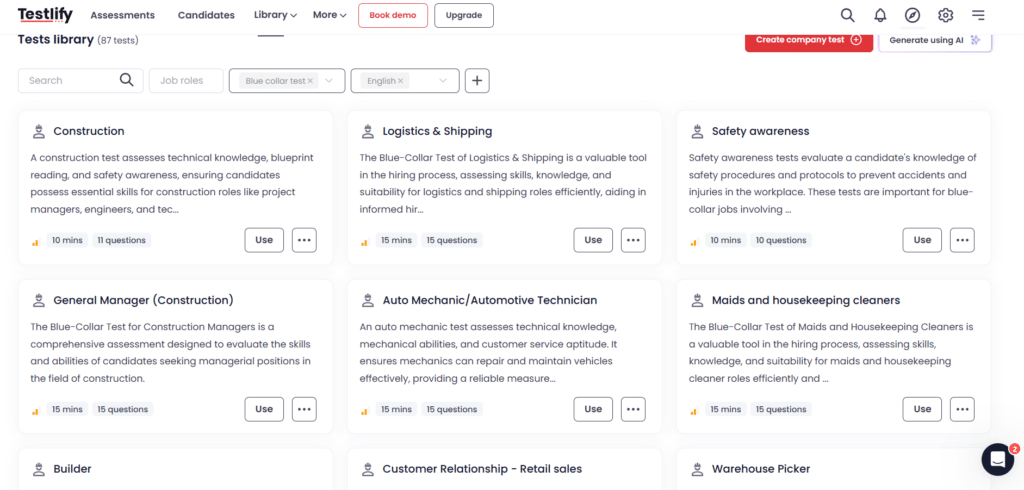
Blue-collar job tests are designed to evaluate a candidate’s practical skills, technical knowledge, and ability to perform job-specific tasks efficiently. Testlify offers 87+ blue-collar job tests tailored to assess trade-specific skills with accuracy. These tests help employers identify skilled workers who can perform tasks safely and efficiently, improving productivity and reducing workplace errors.
What are the advantages of online tests?
Online assessment tests for jobs are an excellent way to assess your candidate’s abilities.
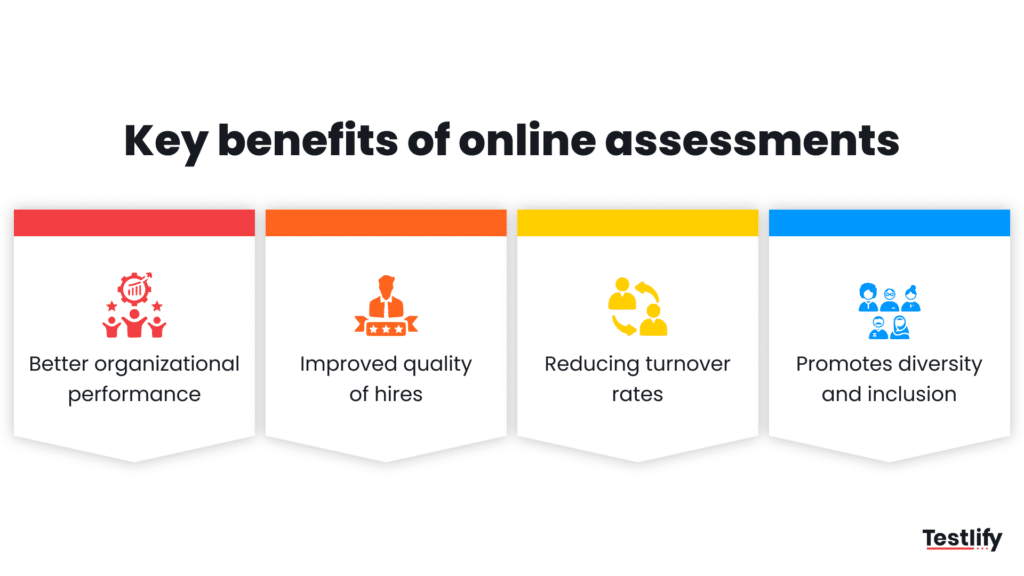
Beyond that, there are numerous benefits, some of which include:
Better organizational performance
Beyond the initial hiring phase, online assessments play a pivotal role in shaping organizational success. By ensuring the identification of high-quality talent and promoting diversity and inclusion, these assessments contribute to reduced turnover rates and a more stable, innovative, and resilient workforce. The integration of online assessments emerges as a strategic imperative for recruiters aiming to elevate organizational performance in the long run.
Improved quality of hires
By accurately assessing candidates’ skills and cultural fit, online assessments contribute to hiring high-quality talent. This, in turn, leads to improved organizational performance as employees are better equipped to meet the demands of their roles. The correlation between effective hiring practices and organizational success underscores the significance of online assessments in achieving long-term goals.
Reducing turnover rates
A well-designed online assessment process helps identify candidates who not only have the required skills but are also aligned with the company’s values and culture. This alignment significantly reduces the likelihood of turnover, as employees who resonate with the organizational ethos are more likely to stay engaged and committed. Lower turnover rates contribute to a stable and productive workforce, positively impacting overall organizational performance.
Enhancing diversity and inclusion
Online assessments can be designed to minimize biases and promote diversity and inclusion in the hiring process. By focusing on objective criteria and standardized evaluations, these tests help ensure that candidates are assessed solely on their merit. This proactive approach to diversity contributes to a more innovative and dynamic workplace, fostering creativity and resilience within the organization.
How do online assessments improve the hiring process?
Online assessment tests bring efficiency to the hiring process by automating scoring and providing instant feedback, enabling recruiters to swiftly identify top-performing candidates. This streamlined approach not only saves valuable time but also enhances the overall effectiveness of the recruitment journey.
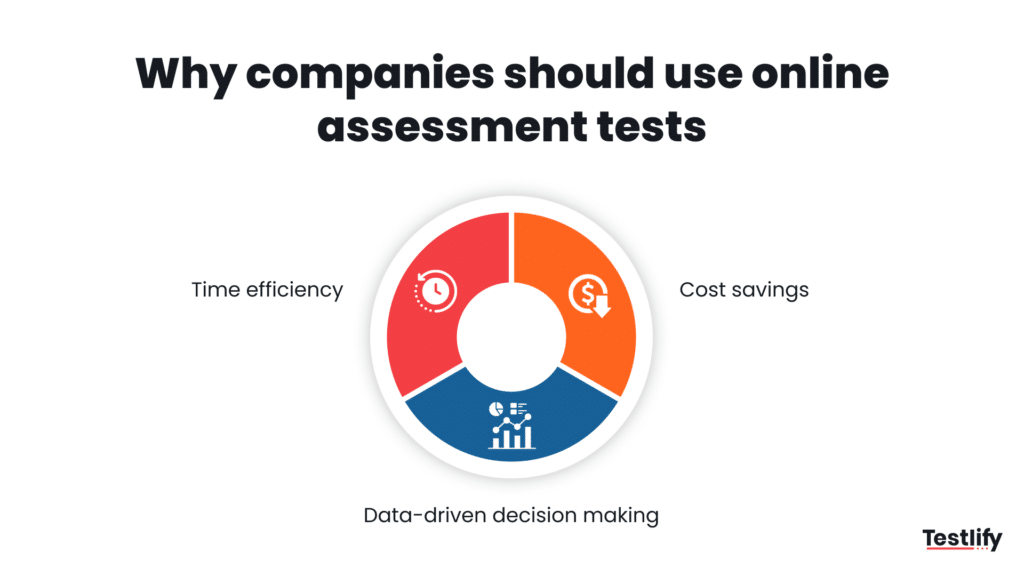
Time efficiency
One of the primary challenges in recruitment is the time-consuming nature of the hiring process. Online assessment tests significantly reduce the time required to evaluate candidates. With automated scoring and instant feedback, recruiters can quickly identify top-performing candidates, streamlining the initial screening process. This efficiency is especially crucial in today’s competitive job market, where a delayed hiring process can result in losing top talent to other organizations.
Cost savings
Traditional recruitment methods often incur significant costs, from printing and distributing assessment materials to organizing physical testing venues. Online assessments eliminate many of these expenses by providing a digital platform for testing. Recruiters can conduct assessments remotely, saving on logistical costs and ensuring a more cost-effective hiring process.
Data-driven decision making
Online assessment tools generate valuable data that recruiters can leverage for data-driven decision making. Analytics derived from assessments offer insights into candidate performance, allowing recruiters to make informed hiring decisions about which candidates are the best fit for the role. This data-driven approach not only improves the quality of hiring but also enables continuous improvement in the recruitment process.
How can HR ensure candidates don’t cheat on online assessments?
HR teams can prevent cheating in online assessment tests by using advanced security measures and monitoring techniques. Testlify has built-in anti-cheating features to ensure fair and reliable results.
Some of these features include face detection, screen recording, and mouse tracking, disabling external copy-paste, multiple attempt prevention, random question shuffling, logout on environment exit,and more.
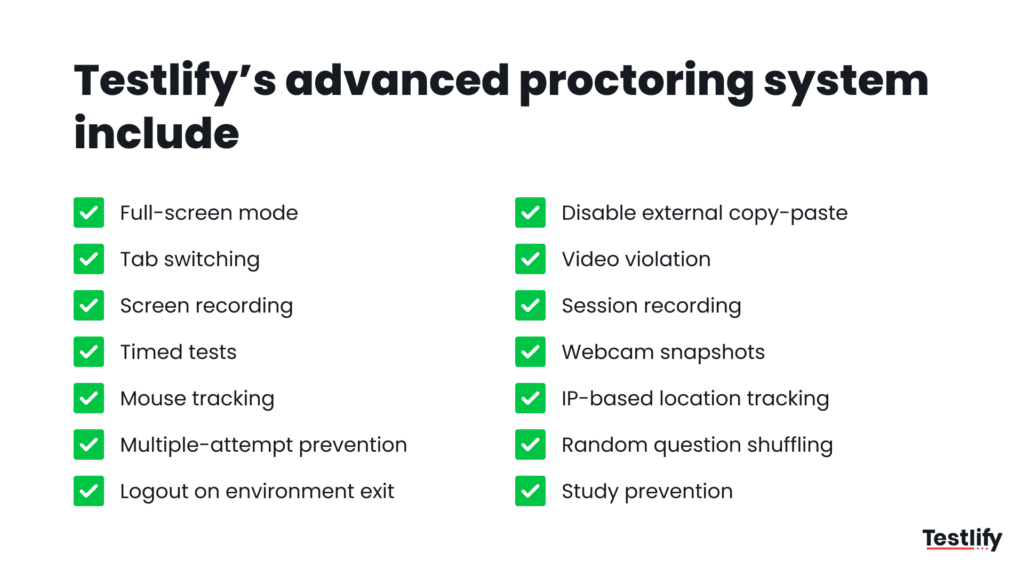
Testlify uses AI-powered proctoring to track suspicious behavior during tests. This includes monitoring tab switching, detecting multiple faces on the screen, and flagging unusual activity. The platform also randomizes questions, making it difficult for candidates to share answers.
Another effective method is conducting retests. If a candidate performs significantly better online than in a follow-up test or interview, it raises a red flag.
Some companies also include live skill validation tests to confirm a candidate’s abilities. Testlify also offers video and audio interviewing tools that employers can use to make better hiring decisions.
With such advanced proctoring systems, HR teams can hire candidates based on true skills, reducing the risk of hiring unqualified applicants. This is especially important as one bad hire can cost $15000 lost.
Are online assessment tests better than resumes for screening candidates?
Online assessment tests are a great way to assess candidates better than traditional resume screening. This is mainly because many job seekers exaggerate their resumes to seem more qualified. A 2023 survey found that 70% of workers admitted to lying on their resumes, often about job titles and responsibilities. This makes it difficult for employers to assess a candidate’s true skills.
This prompts companies to rely on online assessments. These tests give a clear and unbiased view of a candidate’s abilities, ensuring they have the right skills for the job. Unlike resumes, which rely on self-reported information, skill-based assessments provide real data on a candidate’s competencies.
Skills-based hiring is gaining popularity, with 73% of employers using it in 2023, up from 56% the previous year. Companies that hire based on skills also see better employee retention, with a 15% improvement. When employees are matched with roles that fit their strengths, they are more likely to stay and perform well.
Over to you
When choosing online assessment tools for recruitment, it is important to look beyond just test variety and anti-cheating measures. Features like automated scheduling, real-time candidate insights, and customizable assessments can make the hiring process smoother.
Testlify offers an easy-to-use platform with automated workflows, making it simple for recruiters to assess large volumes of candidates without extra effort. Testlify provides detailed analytics, allowing hiring managers to compare candidates fairly and make quicker decisions.
With a library of over 4000 ready-to-use tests and advanced reporting and analytics dashboards, employers receive real-time insights into candidate performance, reducing the need for manual review. The platform also includes AI-generated summary feedback for a more efficient evaluation process.
Seamless integration is key to making online assessments more efficient. Testlify supports multiple-question formats, including video responses, coding simulations, and situational judgment tests, giving employers a deeper understanding of a candidate’s abilities.
Its multilingual support and mobile-friendly interface ensure accessibility for candidates worldwide. By using Testlify, companies can create a structured, data-driven hiring process that improves both candidate experience and hiring outcomes.
Try for free or book a free demo.
Frequently asked questions (FAQs)

Content Writer
Yashika Khandelwal is a Content Writer with 3+ years of experience creating research-backed content on hiring, talent assessment, and HR technology. She is a registered Organizational Psychologist and subject matter expert who combines behavioral science with practical recruitment insights to produce accurate, evidence-based content.
LinkedInRelated resources
View all
HR & recruitment
Pre-Employment Screening: What It Is, Why It Matters, and How to Do It Right in 2026

HR & recruitment
Tips for integrating diversity in candidate assessments

HR & recruitment
Why adopt an employee assessment test for virtual hiring

HR & recruitment
Top technical interview questions to assess problem-solving skills

HR & recruitment
What types of skills can hiring test assess in candidates

HR & recruitment
Are AI-powered recruitment assessment tools the future of talent acquisition
Get started.
Hire on proof, not resumes.
Run your first skills-based assessment free — no credit card required.