
How do you assess and develop team collaboration skills?
Learn how to assess collaboration in candidates using skill tests, interviews, and tools to build stronger, more effective, and connected teams.

Did you know that highly collaborative organizations are 5x times more likely to be high-performing than those not?
While nearly every resume mentions “excellent collaboration skills,” how can hiring managers be sure that the skills are actual and not simply résume filler? Can a candidate actually contribute to a cross-functional team, communicate, and build consensus? How do they manage conflict, provide and receive feedback, and assist team goals?
In this blog, we’ll explore why collaboration is essential, what effective collaboration looks like, and how recruiters can accurately assess collaboration skills in candidates, whether through skills assessments, simulations, or interviews.
 ChatGPT
 Gemini
 Claude
 Grok
Grok Perplexity
What is collaboration?
Collaboration involves two or more people working together to accomplish a shared objective by exchanging knowledge, resources, skills, and responsibilities.
Collaboration involves:
- Shared ownership of outcomes
- Open and honest communication
- Willingness to compromise
- Problem-solving in group settings
- Mutual accountability
Collaborative professionals aren’t just good team members. They’re also strategic thinkers who unite people, bridge departmental silos, and encourage group potential.

Why do collaboration skills matter in the workplace?
Collaboration is foundational to business success for several reasons:
1. Drives innovation
Collaboration involves bringing together individuals with different backgrounds, departments, and areas of expertise. When ideas are freely shared among people, it leads to a vibrant environment where new ideas can be generated and sharpened through shared input. Such diversity of thinking tends to give rise to innovative problem-solving and breakthrough innovations that would not arise in isolation.
Cross-functional collaboration allows for experimentation and risk-taking, which are responsible for creating next-generation products, services, or strategies. Essentially, collaboration promotes innovation by synergizing views into something more valuable than the total of its constituents.
2. Enhances efficiency
When collaboration is executed effectively, it greatly improves productivity and accelerates workflows. Team members are able to break down tasks according to individual abilities, skills, and capacity, which results in intelligent work delegation and quicker delivery.
Instead of repeating efforts or operating in silos, collaboration enables improved coordination and reduced bottlenecks. With enhanced communication and shared responsibilities, projects move more efficiently and are completed faster. Good collaboration simplifies processes and enables teams to produce higher-quality work within shorter cycles.
3. Improves problem-solving
Well-functioning teams are better positioned to solve difficult problems. Through the consolidation of their experience and consideration of problems from diverse perspectives, combined groups can uncover underlying causes and create holistic, sustainable solutions.
Collective decision-making strengthens the decision-making process by minimizing blind spots and bias. It enables group members to plan for likely difficulties before they become issues. The result of bringing many minds together to solve a problem is often more holistic, considered, and flexible, resulting in better long-term outcomes.
4. Strengthens culture and morale
Collaboration fosters an organizational culture where employees are engaged, respected, and belong. When co-workers collaborate, it creates mutual trust and healthy personal relationships, lessening tension and internal competition.
Collaborative organizations are more transparent and receptive to feedback, enhancing employee involvement and job satisfaction. As individuals hear and are heard, morale goes up and turnover goes down. Finally, a collaborative environment promotes belonging and fortifies team unity, which benefits company culture.
5. Increases adaptability
In emerging industries or in times of crisis, it’s all about adaptability and collaboration makes it possible. Well-communicating and trustful teams can quickly shift direction as a reaction to change. Collaborative cultures promote ongoing learning, flexibility of roles, and receptiveness to novel ideas.
When people work together closely, they can identify emerging challenges early and adjust course more effectively. This group agility allows organizations to stay resilient and responsive, no matter the circumstances. Simply put, collaboration supports faster, smarter adaptation.
Also read: How to foster team collaboration in remote work environments
Core traits of collaborative candidates
Before assessing collaboration skills, it’s important to understand the key traits that define collaborative professionals. Look for candidates who demonstrate:
- Strong communication (active listening, clear articulation)
- Emotional intelligence (self-awareness, empathy)
- Conflict resolution abilities
- Accountability and reliability
- Openness to feedback
- Willingness to compromise
- Team-first mindset
True collaboration isn’t just about working well in a team; it’s about contributing meaningfully while enabling others to do the same.
Methods to assess collaboration skills
Now that we’ve defined collaboration skills, let’s explore how you can effectively assess it in candidates.
1. Skill-based assessments
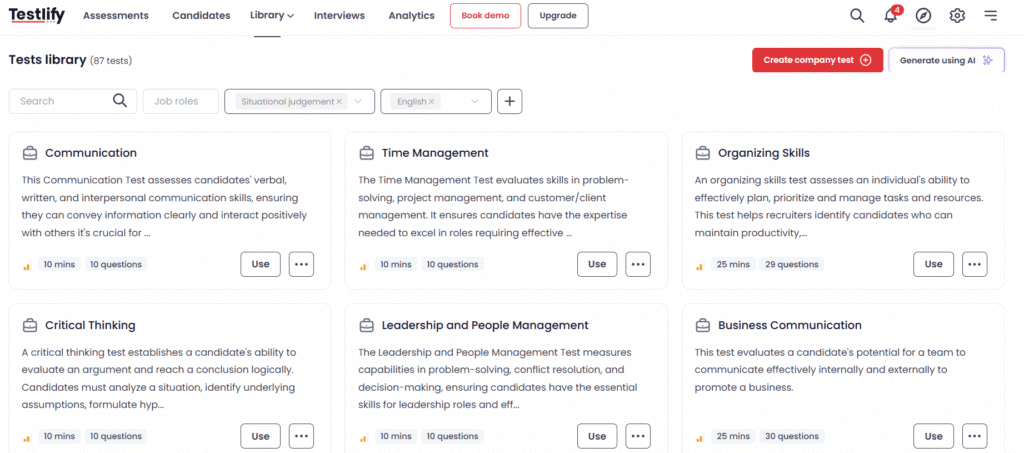
Talent assessment tools like Testlify offer different types of pre-employment assessments that simulate collaborative tasks and measure candidates’ collaboration skills to understand how they behave in team environments.
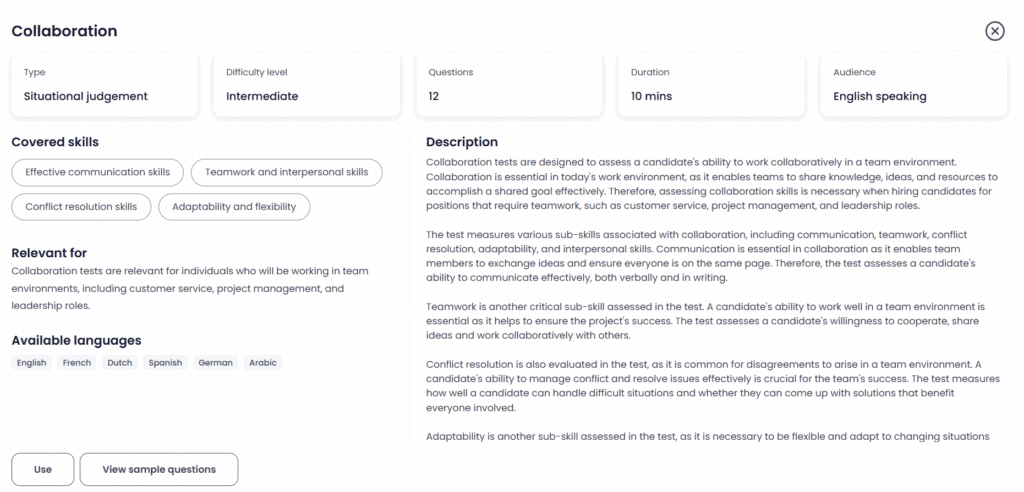
Collaboration test: This test replicates a team-based scenario where candidates must work together to achieve a shared goal. It evaluates their ability to contribute ideas, delegate responsibilities, collaborate effectively, and make joint decisions, revealing how they function in real-time group dynamics.
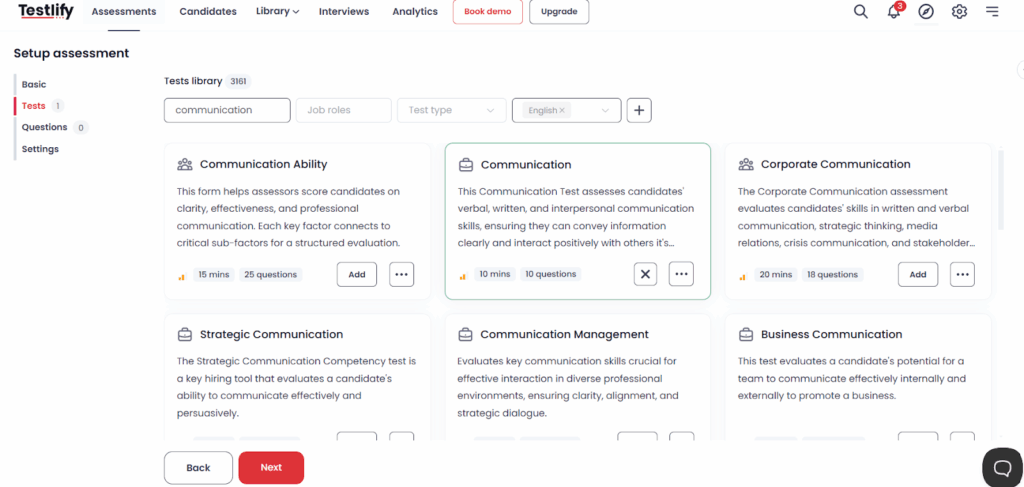
Communication skills test: Designed to assess how well candidates express themselves, this test measures verbal, non-verbal, and written communication. It evaluates clarity, active listening, tone, and responsiveness—critical skills for maintaining smooth, respectful, and productive communication within a team setting.
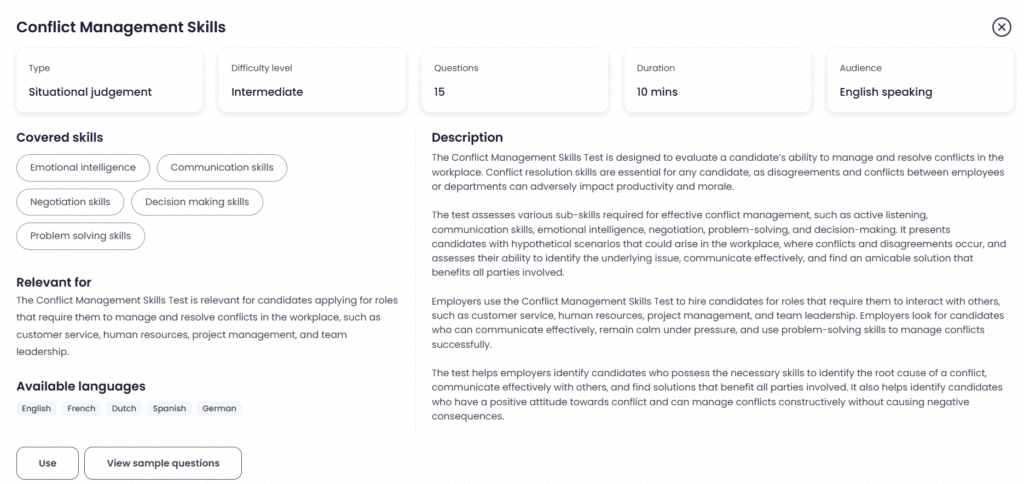
Conflict management test: This test presents candidates with workplace conflict scenarios to evaluate their problem-solving and emotional intelligence. It assesses how they manage tension, consider different viewpoints, and work toward constructive resolutions without escalating disagreements, ensuring healthy and effective team collaboration.
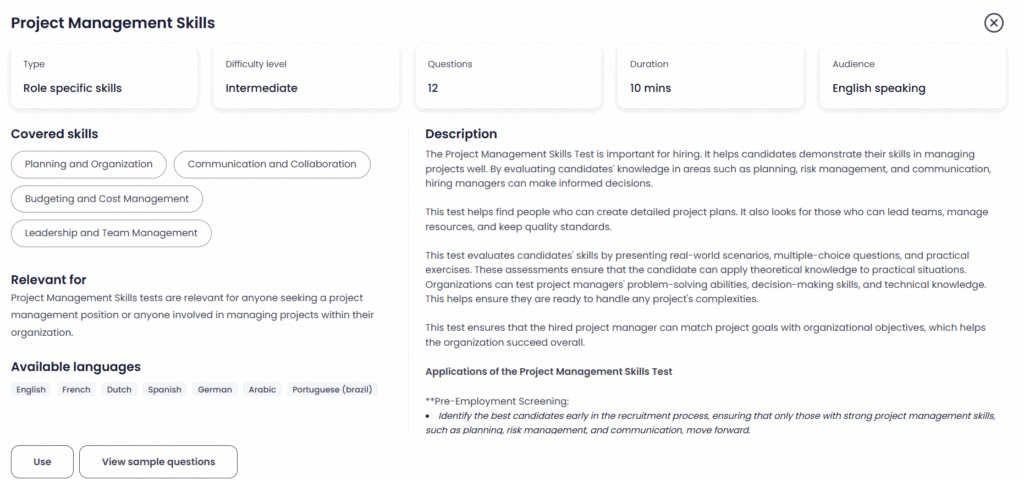
Project management test: Focused on planning and coordination, this test gauges a candidate’s ability to manage tasks, timelines, and team responsibilities. It also evaluates communication, delegation, and resource allocation skills key for successfully leading or contributing to cross-functional projects.
2. Situational Judgement Tests (SJTs)
Situational Judgement tests present candidates with hypothetical workplace scenarios and ask how they would respond. These tests reveal how someone navigates real-world collaborative challenges.
Common examples of questions in SJTs
1. “You’re on a team project, and one team member consistently misses deadlines. What do you do?”
2. “Two team members have conflicting ideas. How would you mediate the situation?”
3. “Your team disagrees with your approach, but you believe it’s the best option. How do you proceed?”
Candidates’ responses can be analyzed for empathy, diplomacy, assertiveness, and problem-solving, which are all crucial skills relevant to collaboration.
4. Behavioral Interviews
Behavioral based interview are a time-tested way to evaluate collaboration through a candidate’s past experiences. Use the STAR method (Situation, Task, Action, Result) to guide their answers.
Top behavioral interview questions:
- “Tell me about a time you collaborated on a cross-functional project. What was your role?”
- “Describe a situation where team dynamics were challenging. How did you manage it?”
- “Have you ever helped resolve a conflict in a team? What was the outcome?”
- “Give an example of how you encouraged others to contribute to a group goal.”
Look for candidates who not only describe their own contributions but also recognize and value their teammates’ input.
How to Create a collaborative work culture
Hiring for collaboration skills is a good starting point, but to have an actual collaborative organization, more is required. It’s not necessarily about inviting teams, but embedding it in the DNA of your company culture. When collaboration is a part of the way your people think, work, and succeed together, the results can be transformative.
Below are a few practical ideas to create an environment where people work together as a team:
1. Set clear, shared goals
Get all teams and departments on common goals. As long as every person can realize the bigger picture and how what they do contributes to its fulfillment, it’s meaningful for them to work in collaboration.
2. Recognize collaborative behaviors
Make collaboration a part of your performance reviews and feedback loops. Reward employees who actively contribute ideas, assist their colleagues and benefit from group success. Recognizing these behaviors sends a strong message to the team members and makes them hungry to learn.
3. Equip teams with the right tools
Provide your teams with the tools and platforms they need to communicate and work well, whether in-office or virtually. Slack, Asana, Miro, and Microsoft Teams are technologies that can simplify processes and maximize connection. Tech implemented properly removes barriers and keeps collaboration on the go.
4. Offer collaboration training
Not all people have excellent collaboration skills, but they can improve. Offer workshops, targeted training sessions, or peer learning classes to improve skills like active listening, conflict resolution, and cross-functional communication. Investing in collaboration skill building allows all members of the team to contribute better.
You can also check out Testlify’s active listening test, conflict resolution skills test to assess candidates collaboration skills.
5. Reward group wins, not just individual success
Emphasizing group success over individual success is more conducive to group effort. Celebrate group success at company events, in company publications, or as part of an award system. This enhances the mood and encourages a “we over me” attitude.
Conclusion
Collaboration is a key competency that fuels business success, innovation, and agility. But quantifying it requires more than gut or resume buzzwords. By combining behavioral interviews, skill assessments, SJTs, and reflective reference checks, you can obtain a balanced view of how a candidate acts in collaborative settings.
Regardless of whether they’re on-site or remote employees, great collaborators don’t just join in they lift the game of the people around them. Use the strategies and tools outlined here to bring on board individuals who are not only competent, but committed to shared success.
For further reading, explore Fashion Editor.
Frequently asked questions (FAQs)

Content Writer
Yashika Khandelwal is a Content Writer with 3+ years of experience creating research-backed content on hiring, talent assessment, and HR technology. She is a registered Organizational Psychologist and subject matter expert who combines behavioral science with practical recruitment insights to produce accurate, evidence-based content.
LinkedInRelated resources
View all
Candidate assessment
Importance of assessing negotiation skills in recruitment for successful business deals

Candidate assessment
Importance of assessing active listening skills in recruitment for effective communication

Candidate assessment
Importance of assessing empathy in recruitment for enhanced employee engagement

Candidate assessment
Importance of assessing conflict resolution skills in recruitment for harmonious work environment

Candidate assessment
Pre-hire assessments for entertainment and media industry
Candidate assessment
Pre-hire assessments for aviation industry
Get started.
Hire on proof, not resumes.
Run your first skills-based assessment free — no credit card required.