
Top workplace adaptability skills and how to assess them
Learn how to assess adaptability in candidates using effective tools, tests, and interviews to build a resilient, future-ready workforce.
Adaptability is the ability to change how you work when the work itself changes: a new tool, a shifted priority, a reorganized team, a customer who moves the goalposts two weeks before launch. In hiring, it is the trait that decides whether someone is still good at the job in 18 months, after the job has quietly turned into a different job.
That is not a soft concern anymore. Employers expect 39% of workers' core skills to change by 2030, according to the World Economic Forum's Future of Jobs Report. Hire someone for the skills a role needs today, and you have hired for roughly two-thirds of the job.
TL;DR
- Adaptability is a behavior you can observe, not a personality label. Treat it as evidence you collect, not a vibe you read off an interview.
- It matters commercially because roles decay. Employers now rank "resilience, flexibility and agility" second on the list of skills they call essential, behind analytical thinking.
- What it looks like differs by role. A support lead's adaptability and an engineer's adaptability produce completely different evidence, so score them against the role, never against one generic rubric.
- Seven skills carry most of the signal: learning speed, cognitive flexibility, resilience, collaboration under change, comfort with ambiguity, open-mindedness, and problem-solving skills.
- Interview answers are the weakest evidence of the lot, because "tell me about a time you adapted" rewards storytelling. Structured methods beat it, and the gap is well documented.
- The common failure is scoring adaptability as enthusiasm for change. Willing and able are different things, and only one predicts performance.
 ChatGPT
 Gemini
 Claude
 Grok
Grok Perplexity
What is adaptability? Meaning and definition
Adaptability is the capacity to adjust your approach and to keep performing when conditions change. At work, it shows up as three linked behaviors: noticing that something has changed, working out what the change means for the task at hand, and changing method without needing to be told twice. It is a skill people build, not a fixed trait they are born with.
The distinction that matters for hiring: adaptability is not the same as agreeableness. Someone can accept every change cheerfully and still be slow to actually work differently. And a person who pushes back hard on a bad plan, then executes the revised one well, is showing more adaptability than the colleague who nods and carries on as before.

Why does adaptability matter more in 2026?
Because the half-life of a role keeps shortening, and the evidence is not subtle. The World Economic Forum ranks resilience, flexibility and agility second among the core skills employers consider essential, behind only analytical thinking, which about seven in 10 companies name. The single most valued thing after raw reasoning ability, in other words, is how well a person handles change.
People move faster too. Median tenure with a single employer in the US has fallen to 3.9 years, the lowest since January 2002, down from 4.1 years in 2022, according to the Bureau of Labor Statistics. For workers aged 25 to 34 it is 2.7 years. Teams reshuffle constantly, so the ability to be useful inside a team you just joined is doing real work.
Then there is the tooling. Gallup found the share of employees who feel very prepared to work with AI dropped by six percentage points between 2023 and 2024, with nearly seven in 10 saying they never use it. The tools arrived; the confidence did not. Adaptability is what closes that distance, and it is measurable before you hire rather than hoped for afterwards.
The importance of adaptability in hiring
Change management is now a board-level worry. Nearly one in three CHROs, 30%, name it a top organizational priority for 2025 in SHRM's CHRO Priorities and Perspectives research. Every one of those change programs runs on people who can absorb change without stalling.
Here is the practical case, and it changes how you run the hiring process end to end. Hiring for current skills optimizes for the first six months. Hiring for adaptability optimizes for the years after that, which is where most of the value of a hire actually sits. A candidate who is slightly behind on today's tooling but learns fast tends to close that gap quickly, and will still be worth keeping when the stack changes again. The perfect-on-paper hire only stays perfect while the paper stays accurate.
The catch, and it is a real one: adaptability does not rescue a genuine skills gap. It is a multiplier on competence, not a substitute for it. Hire someone adaptable who cannot do the core job and you get an enthusiastic person failing flexibly.
Adaptability in the workplace: examples by role
Generic definitions are why adaptability gets scored badly. The behavior looks different in every function, so write down what it looks like in the specific role before anyone interviews anyone.
Role | What adaptability looks like | What it is not |
|---|---|---|
Customer support lead | Rewrites the escalation path mid-incident when the usual owner is offline, and tells the team why | Agreeing to every process change in the team meeting |
Software engineer | Picks up an unfamiliar framework to unblock a release, and ships something reviewable in days | Rewriting working code because a newer library exists |
Sales account executive | Reworks the pitch when the buyer's budget cycle shifts, without waiting for new collateral | Discounting whenever an objection appears |
Finance analyst | Rebuilds a model after a reporting-standard change and documents what moved | Adding columns to the old model and hoping |
Operations manager | Runs the site on a reduced roster and reprioritizes what does not get done that week | Working longer hours to keep everything unchanged |
Notice the pattern in the last column. Every one of those failure modes is somebody being agreeable, busy, or keen. None of them is adaptability, and all of them interview well.
What are the core adaptability skills?
Adaptability is more than simply being willing to change. It is the ability to learn quickly, adjust your thinking, solve unfamiliar problems, and continue performing when circumstances shift. Seven skills provide the strongest evidence of adaptability, and each is transferable across industries, which is why they hold their value when someone changes role entirely.
Learning speed
Learning speed measures how quickly someone moves from unfamiliarity to competence. The strongest evidence is not the number of courses completed, but time-to-first-contribution—how quickly a person can understand something new and apply it effectively.
Cognitive flexibility
Cognitive flexibility is the ability to switch between rules, contexts, priorities, or mental models without losing accuracy. It becomes especially visible in assessments that require candidates to adapt their approach when the situation or available information changes.
Resilience
Resilience is the ability to maintain or regain performance after setbacks, mistakes, or unexpected challenges. It is less about staying positive and more about how quickly and effectively someone recovers and moves forward.
Collaboration
Adaptable employees help others stay productive when priorities, timelines, or processes shift. This means communicating changes clearly, keeping stakeholders informed, and adjusting collaboratively rather than becoming stuck in the original plan.
Comfort with ambiguity
Comfort with ambiguity is the ability to make a defensible decision when information is incomplete or uncertain. Strongly adaptable people can act without having every answer, while remaining willing to revise their decisions when better information becomes available.
Open-mindedness
Open-mindedness is the willingness to consider unfamiliar ideas, perspectives, and approaches without immediately dismissing them. It helps people adapt because they are more receptive to feedback, new information, and alternative ways of working.
Problem-solving skills
Problem-solving skills show how effectively someone responds when the path forward is unclear. Adaptable problem solvers can break down unfamiliar challenges, identify workable options, test their assumptions, and adjust their approach when the first solution does not work.
Most hiring teams test the first three and forget the last two, which is why adaptable-on-paper hires sometimes struggle the moment the work gets political.
How do you assess adaptability in candidates?
Assess it the way you would assess any competency: decide what evidence would convince you, then collect that evidence deliberately. The Testlify Competency-to-Evidence Matrix maps every role to the competencies that matter, then connects each competency to measurable evidence through assessments, simulations, interviews, references, and structured feedback. Applied to adaptability, it means naming the behavior for that specific role, choosing two or three methods that produce different kinds of evidence, and scoring each against the same anchors for every candidate.
Two or three methods, not seven. Each one adds signal and costs candidate goodwill, and a screening loop nobody finishes measures nothing.
Method | What it evidences | Where it falls short |
|---|---|---|
Adaptability and cognitive flexibility tests | Rule-switching and accuracy under changing conditions | Says little about how someone behaves with other people |
Situational judgment and chat simulations | Decisions in role-realistic change scenarios | Needs role-specific design to be worth anything |
Work sample with a mid-task change | Actual method-switching, the closest proxy to the job | Slowest to build and to score |
Structured behavioral interview | Reasoning behind past decisions | Rewards rehearsed storytelling unless tightly structured |
Personality and behavioral assessment | Disposition toward change and ambiguity | Disposition is not ability; never use it alone |
Adaptability test
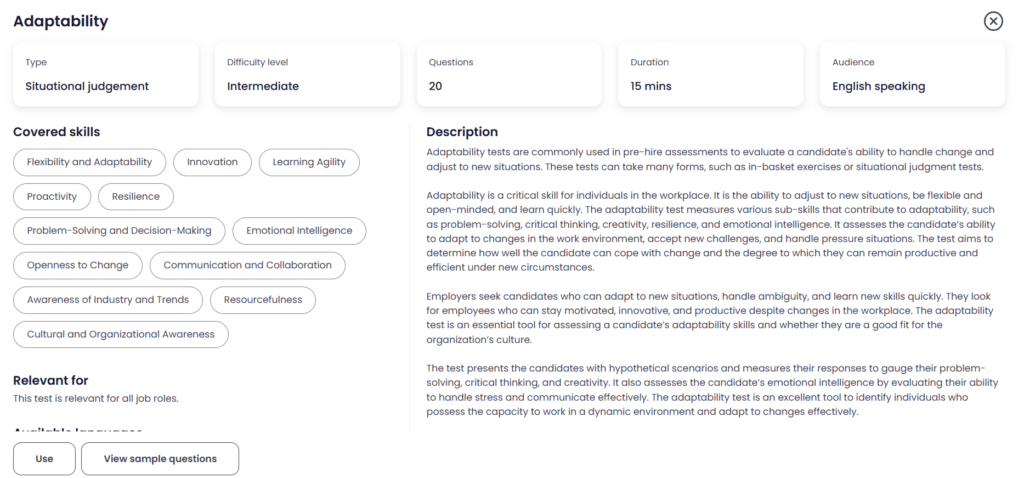
A dedicated adaptability assessment measures how a candidate responds when the conditions of a task shift, covering sub-skills like problem-solving, flexibility and resilience. It is the fastest way to get a comparable number across a shortlist, which matters when 40 people applied and three interview slots exist.
Problem-solving and cognitive ability tests
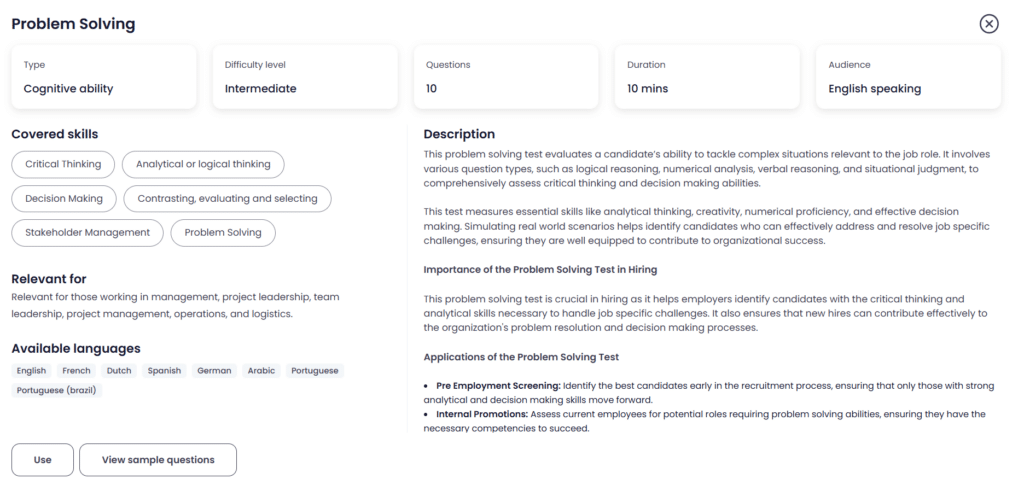
Adapting to something new is largely a problem-solving act under time pressure. Cognitive and problem-solving tests measure the reasoning underneath, and they generalize across roles better than almost anything else you can administer in 20 minutes.
Learning agility test
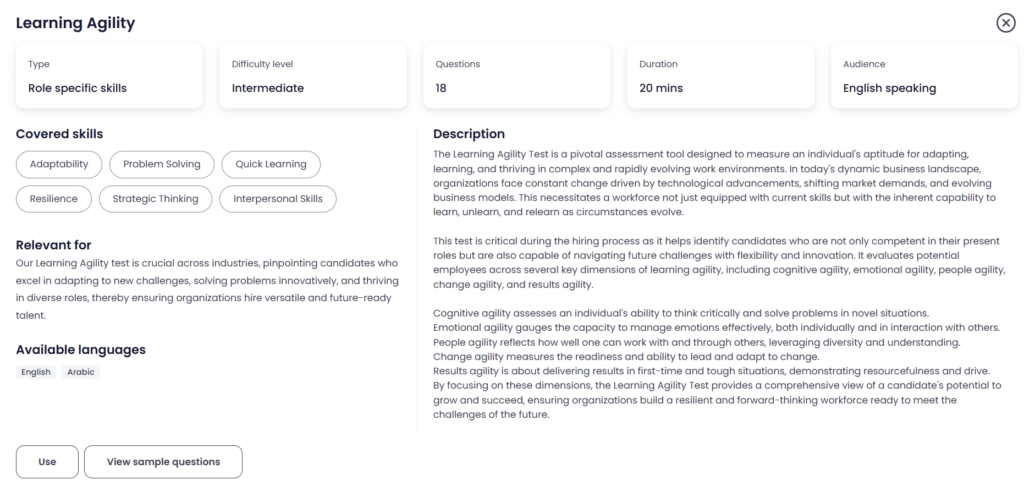
A learning agility test measures how quickly a candidate can understand unfamiliar information, adapt their approach, and apply what they have learned to new situations. It is a strong indicator of adaptability, particularly for roles where tools, technologies, and processes evolve rapidly.
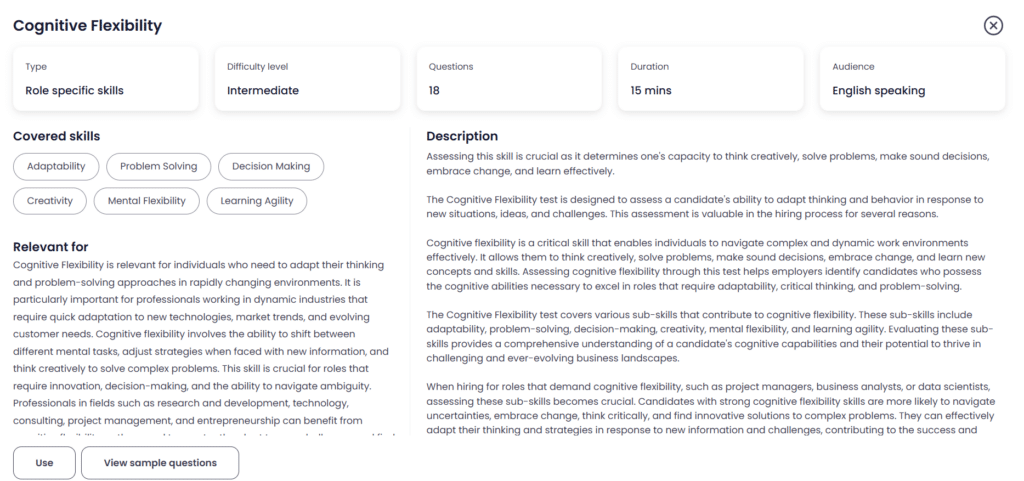
Cognitive flexibility test
A cognitive flexibility test measures how effectively candidates adapt when rules, priorities, or task requirements change. By asking candidates to switch between different rules or approaches mid-task, the test evaluates how quickly they adjust while maintaining accuracy and performance.
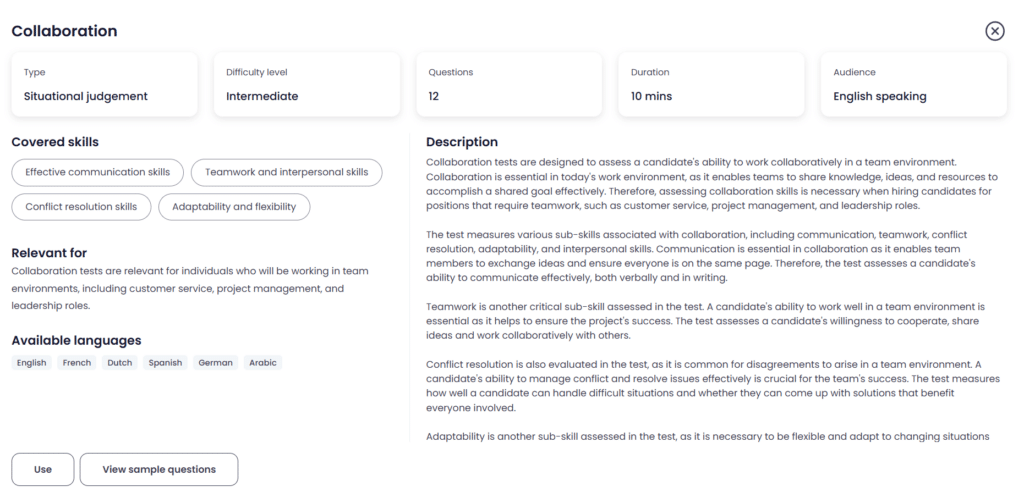
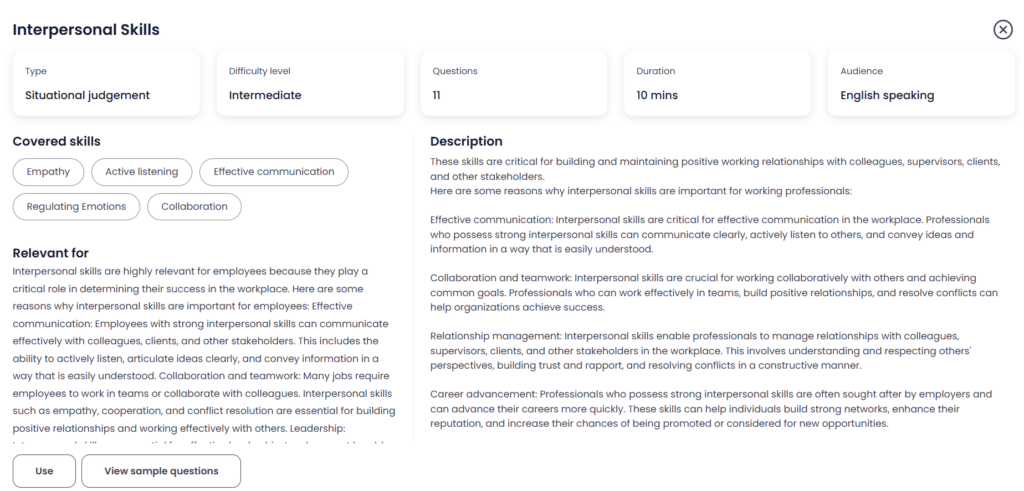
Collaboration and interpersonal skills tests
Change affects teams, not just individuals. Collaboration and interpersonal skills tests assess how effectively candidates communicate, coordinate, and keep colleagues aligned when priorities, expectations, or plans change. This captures a critical dimension of adaptability that individual assessments alone cannot measure.
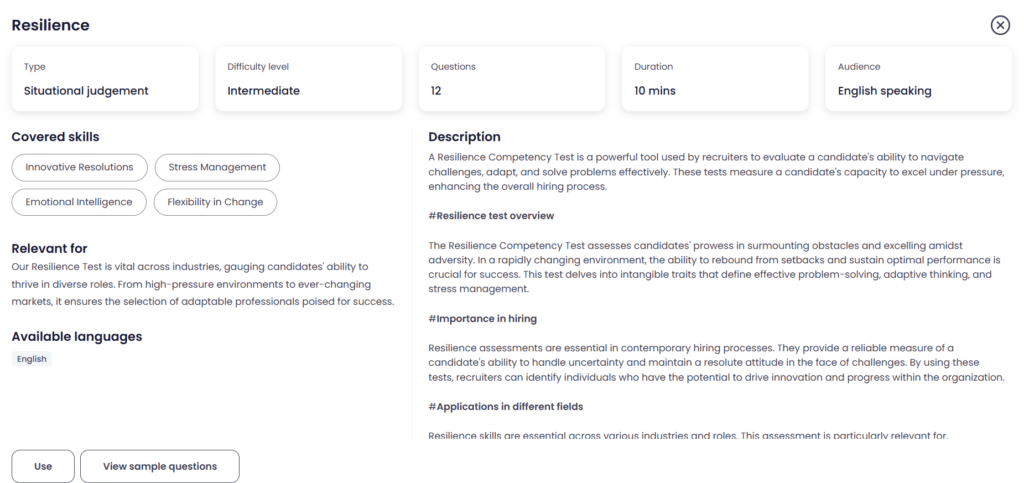
Resilience test
Resilience is the ability to recover and perform effectively after setbacks. A resilience test evaluates how candidates respond when things go wrong, revealing whether they can recover quickly, maintain performance, and adapt their approach under pressure.
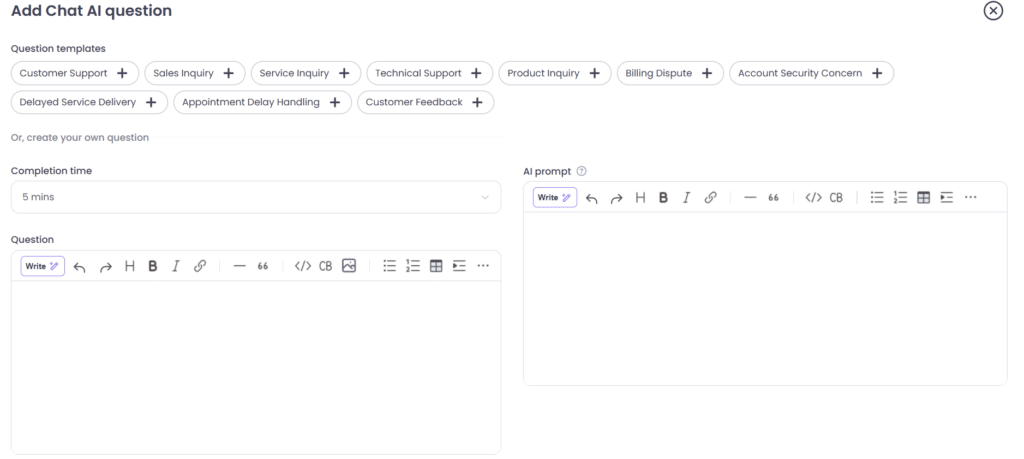
Situational judgment tests and chat simulations
These assessments place candidates in realistic, role-specific scenarios and introduce a change partway through to evaluate how effectively they adapt their decisions. Situational judgment tests measure the quality of their response, while chat simulations recreate changing situations through conversation. This makes them particularly useful for customer-facing and support roles where priorities can shift in real time.
Personality and behavioral assessments
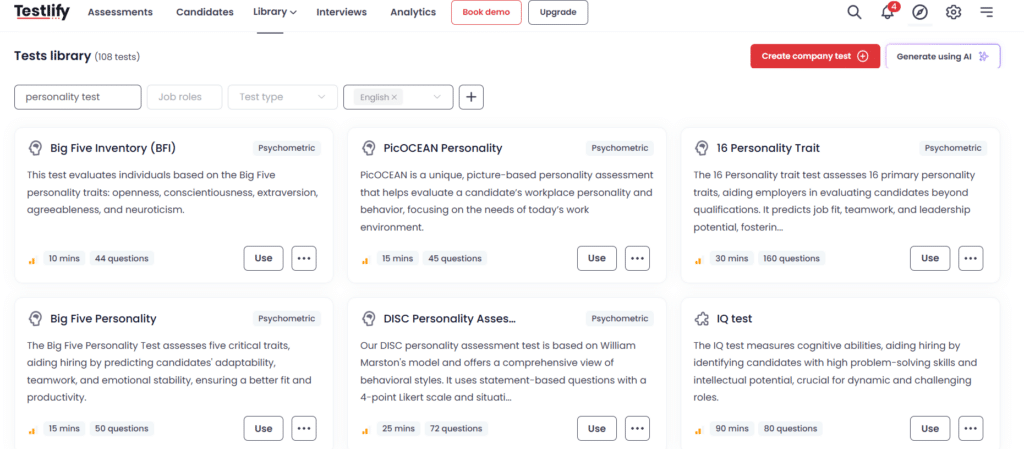
Personality and behavioral assessments provide insight into traits such as openness to new experiences, tolerance for ambiguity, and typical responses to change. They can add useful context, but they are weaker indicators of adaptability when used alone. For stronger evidence, combine them with performance-based assessments that show how candidates actually respond to change.
Structured behavioral interviews
Ask about a real change the candidate lived through, then push past the story into the reasoning: what they tried first, what they abandoned, what it cost. Structure is what makes this work. The US Office of Personnel Management notes that structured interviews with higher degrees of structure show higher validity, better rater agreement, and less adverse impact than loose ones.
Pro tip: Score the follow-up, not the anecdote. Ask what the candidate would do differently if the same change landed tomorrow. Rehearsed stories have a polished ending; real ones have a regret in them. The candidates who name a specific thing they got wrong are almost always the ones who actually learned something.
Where does adaptability assessment go wrong?
Adaptability assessments can lose their value when they measure the wrong signals or are applied inconsistently. Four common mistakes account for most of the problems.
Scoring enthusiasm instead of ability
A candidate who says they enjoy change may sound adaptable, but enthusiasm is not the same as capability. Adaptability assessment should focus on observable behaviors and performance, such as how quickly someone adjusts, learns, and responds when circumstances change.
Using one rubric for every role
Adaptability looks different across roles. A customer support professional may need to adjust quickly during difficult conversations, while an engineer may need to adapt when requirements or technologies change. Use role-specific criteria and anchor the scoring to the behaviors that actually drive performance.
Testing adaptability but hiring on rapport
An assessment loses its purpose when hiring teams ignore the results because a candidate made a strong personal impression during the interview. If the assessment is not considered in the final decision, it becomes a formality rather than a useful source of evidence.
Confusing tenure with rigidity
Long tenure at one company does not automatically indicate resistance to change. Instead, examine how much the candidate has adapted during that time. Ask what changed in their role, responsibilities, processes, technology, or team and how they responded. A person who has spent nine years at one company may have adapted more than someone who changed employers every two years.
Hire for adaptability with evidence, not instinct
Pick the two methods that fit the role, score every candidate against the same anchors, and let the evidence outrank the rapport in the debrief. Testlify's adaptability and behavioral assessments sit alongside learning agility testing and role-based skills tests, so the signal arrives before the first interview rather than after the offer. If you want to see how that fits your current process, book a demo.
Key takeaways
- Adaptability is evidence, not intuition. It is a set of observable behaviors, so it can be assessed with the same rigour as a technical skill. Teams that treat it as a personality trait end up scoring charisma, which predicts nothing about performance once the role shifts.
- Roles decay faster than hires do. With 39% of core skills expected to change by 2030, a hire assessed only against today's requirements is a hire assessed against a shrinking share of the job. Weight learning speed accordingly for any role whose tooling turns over.
- Define the behavior per role before you assess it. Adaptability in support work and adaptability in engineering produce different evidence. Write the role-specific version down first, or the scoring will drift toward whoever is most agreeable in the room.
- Combine two or three methods, not seven. A cognitive or flexibility test plus one role-realistic scenario covers most of the signal. Adding assessments past that point costs completion rate and buys very little extra accuracy.
- Structure the interview or discount it. Unstructured questions about past change reward rehearsal. Structured formats show measurably higher validity and rater agreement, so structure is the difference between evidence and anecdote.
- Adaptability multiplies competence; it does not replace it. Someone who cannot do the core job will not learn their way out of that gap fast enough to matter. Screen for the skill floor first, then use adaptability to choose between the candidates who clear it.
- Let the score change the decision. If a debrief routinely overrides assessment results on the strength of a good conversation, the process is decorative. Agree in advance what score would rule a candidate out.
FAQs

Content Writer
Yashika Khandelwal is a Content Writer with 3+ years of experience creating research-backed content on hiring, talent assessment, and HR technology. She is a registered Organizational Psychologist and subject matter expert who combines behavioral science with practical recruitment insights to produce accurate, evidence-based content.
LinkedInRelated resources
View all
Skill assessment
Best assessments to assess teamwork skills in candidates
![How to measure time management skills [simple ways with examples]](/api/media/file/Importance-of-assessing-time-management-skills-in-recruitment-for-efficient-work-execution-2.png?dpl=dpl_6Z8Gzi5dgny5ePrnCfPbRPCRYCA7)
Skill assessment
How to measure time management skills [simple ways with examples]

Skill assessment
How to evaluate problem solving skills of candidates

Skill assessment
How to accurately assess attention to detail skill in candidates?

Skill assessment
HR playbook for assessing communication skills in 2026

Skill assessment
Pre-hire assessments for retail industry
Get started.
Hire on proof, not resumes.
Run your first skills-based assessment free — no credit card required.