
Emotional intelligence: Why and how to measure?
Learn how to assess emotional intelligence in candidates with tests, interviews, and tools to build stronger, empathetic, and high-performing teams.

Did you know that 90% of high performers rate highly on emotional intelligence (EI)?
However, although many applicants might claim to be “emotionally aware,” measuring emotional intelligence in recruitment is tricky. How effectively do applicants handle their emotions when under pressure? Do they empathize and bond with staff in a real sense? Can they listen, mirror, and respond to shifting team dynamics?
In this blog, we will find answers to these questions and discuss how to measure emotional intelligence in candidates during recruitment. We’ll get into what EI actually is, why it’s important in the workplace, and the various tools and methods recruiters can use to measure EI.
 ChatGPT
 Gemini
 Claude
 Grok
Grok Perplexity
What is emotional intelligence?
Emotional intelligence is the capacity to understand and regulate your own emotions as well as the emotions of those who surround you. It encompasses knowledge of your own feelings, the capacity to control emotional reactions, motivation to achieve goals, empathy, and interpersonal skills to establish relationships and resolve conflict.
In the context of work, emotional intelligence enables individuals to:
- Navigate workplace challenges with self-control and perspective.
- Communicate clearly and thoughtfully.
- Collaborate with empathy and mutual respect.
- Lead and inspire others with authenticity.
Emotional intelligence is not about being nice all the time. It’s about being emotionally effective in professional interactions.

Importance of emotional intelligence in the workplace
Emotional intelligence significantly impacts almost every aspect of the employee experience, from personal performance to team functioning and leadership potential. The following are some of the advantages of using emotional intelligence is important at work:
Better communication
Staff with high EI speak clearly, respectfully, and empathetically. They listen effectively, read body language, and modify their approach to communication for different individuals or circumstances.
This enhances workplace understanding, avoids misunderstandings, and builds professional relationships. Through emotional awareness, they provide room for genuine conversation and effective communication, even in stressful work environments. This enables teams to work more effectively and feedback sessions to be more constructive rather than adversarial.
Increased resilience and adaptability
Emotionally intelligent staff can cope with stress and stay calm in uncertain or difficult circumstances. Their self-awareness enables them to identify emotional triggers, while self-regulation enables them to respond instead of reacting.
This makes them stronger when dealing with setbacks and more able to switch direction when strategies or priorities change. Instead of getting bogged down, they adjust rapidly and help sustain team momentum during transition, making them priceless during periods of change or organizational expansion.
Enhanced teamwork and collaboration
Strong EI encourages empathy, patience, and open-mindedness all vital to effective collaboration. Emotionally intelligent leaders grasp the dynamics of teamwork and value harmony and inclusion. They can understand multiple perspectives, enabling them to develop trust and rapport between teams.
When there is conflict, they manage it positively, putting team objectives in focus. This supports an environment of mutual respect, fosters shared success, and ultimately improves group productivity and morale.
Improved conflict resolution
Emotionally intelligent staff manage conflict with empathy and a solution-focused approach. They don’t let problems escalate but rather work towards hearing all perspectives and diffusing tensions.
By remaining composed in challenging situations and being aware of emotional triggers in others and themselves, they engage in effective dialogue that sorts out misunderstandings. Their concern is not with being right but with consensus and the rebuilding of harmony. This way, there are fewer ongoing conflicts within teams and healthier working relationships.
Stronger leadership potential
Emotionally intelligent leaders establish trust, inspire, and lead through change with empathy and clarity. They are steady decision-makers due to their self-awareness and self-regulation and ensure that their actions have no negative impact on others.
Emotionally intelligent leaders are good motivators who understand how to relate to people on a human level, facilitate group dynamics, and resolve conflict. They are inclusive, empowering environments where individuals feel comfortable contributing and developing.
Greater employee satisfaction and engagement
Organizations that prioritize emotional intelligence foster a spirit of belonging, respect, and psychological safety. People feel valued, heard, and noticed which has a direct effect on their motivation and engagement.
When individuals feel emotionally supported, they’re more likely to be committed to the organization, work at their highest level, and be a positive contributor to the culture. Emotional intelligence enables leaders and teams to build a positive work environment where all people can succeed, ultimately resulting in greater retention and improved general well-being.
Key characteristics of high emotional intelligence
To efficiently assess EI in candidates, it’s necessary to recognize its chief features:
Self-awareness
Self-awareness is the bedrock of emotional intelligence. It enables individuals to identify their own emotional patterns and comprehend how those feelings affect their choices and actions. Self-aware candidates are self-reflective, receptive to criticism, and aware of the impact of their actions on others.
Such awareness aids them in controlling their performance, remaining centered amidst difficulties, and ongoing development. In the workplace, self-aware people play a part in creating a more emotionally equipped and self-regulating environment.
Self-regulation
Self-regulation is a person’s capacity to control their emotions, particularly at times when they are highly stressful or emotionally triggering. Instead of responding tactically, emotionally intelligent applicants step back, weigh, and respond thoughtfully. They are calm under duress, adaptable to change, and professional even when in conflict.
This is crucial in ensuring team equilibrium and in rational decision-making. Self-regulation also promotes a respectful and calm work environment, in which challenges are met constructively.
Empathy
Empathy refers to the power of understanding and sharing others’ feelings. Emotionally intelligent individuals are capable of standing in someone else’s shoes, something that enables them to react with compassion, patience, and comprehension.
They approach different people differently through their way of communication based on emotional triggers. Empathy further enhances inclusion, avoids misunderstanding, and consolidates interpersonal trust hence the skill being highly desirable in team collaboration, leadership, and client-facing work alike.
Social skills
Social skills are the external manifestation of EI in practice. Strong social skills are a hallmark of effective candidates, who are good communicators, rapport-builders, conflict resolvers, and team dynamics navigators. They are active listeners, work collaboratively, and impact others positively and respectfully.
These individuals help build a positive workplace culture by promoting connection, enabling cooperation, and supporting their teams to reach shared goals even through different personalities and working styles.
How to assess emotional intelligence in candidates?
Unlike hard skills, emotional intelligence cannot be measured by a certification or a degree. Instead, you need to use a combination of tools, assessments, and questions designed to evaluate candidates in real-world settings.
Here are the most effective methods to assess EI in the hiring process:
1. Skills assessments
Assessments can provide a standardized way to evaluate how candidates react to emotional challenges and social situations. Below are some relevant options:
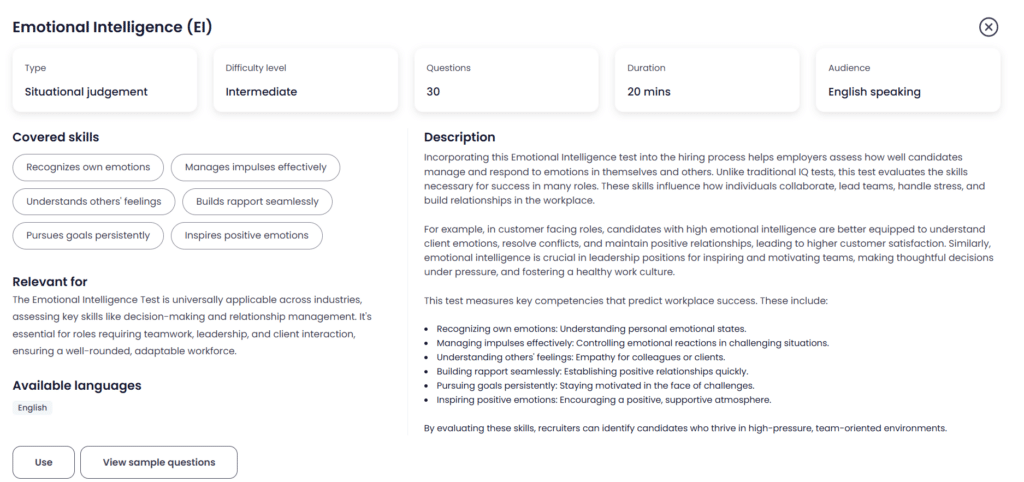
Emotional intelligence test: Testlify’s emotional intelligence test measures candidates’ abilities in five key areas: self-awareness, self-regulation, motivation, empathy, and social skills. Candidates are presented with on-the-job scenarios and asked how they would respond. Their answers are evaluated to determine emotional reasoning, interpersonal sensitivity, and emotional control.
This test is useful in understanding how a candidate might:
- Handle criticism or stress
- Work with team members who have different perspectives
- Navigate emotionally charged situations with professionalism
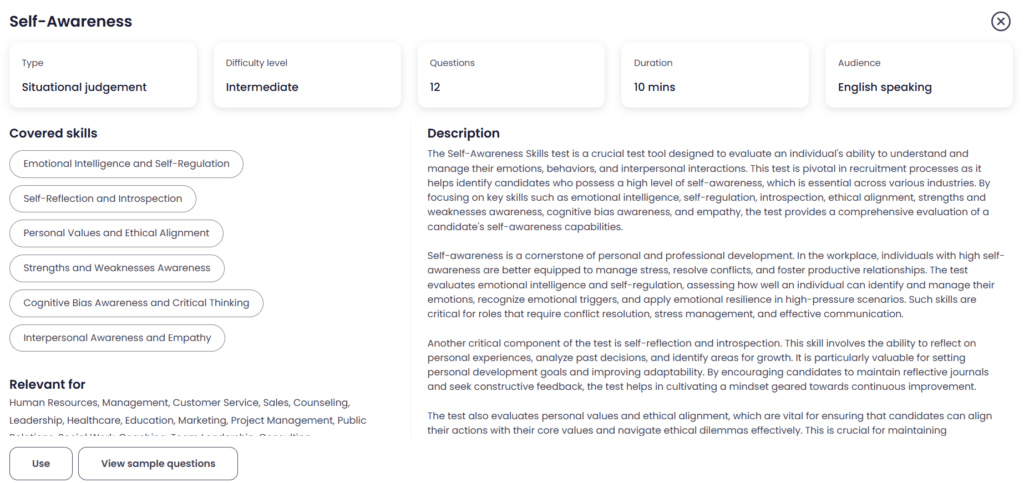
Self-awareness test: Testlify’s self-awareness test measures how well candidates understand their emotions, behavior, strengths, and limitations. Through reflective and scenario-based questions, this test helps identify whether a candidate is able to assess themselves objectively, accept feedback constructively, and recognize how their mood or actions impact others. A strong score indicates emotional maturity and the capacity to self-regulate and grow traits essential for long-term success in both individual and team roles.
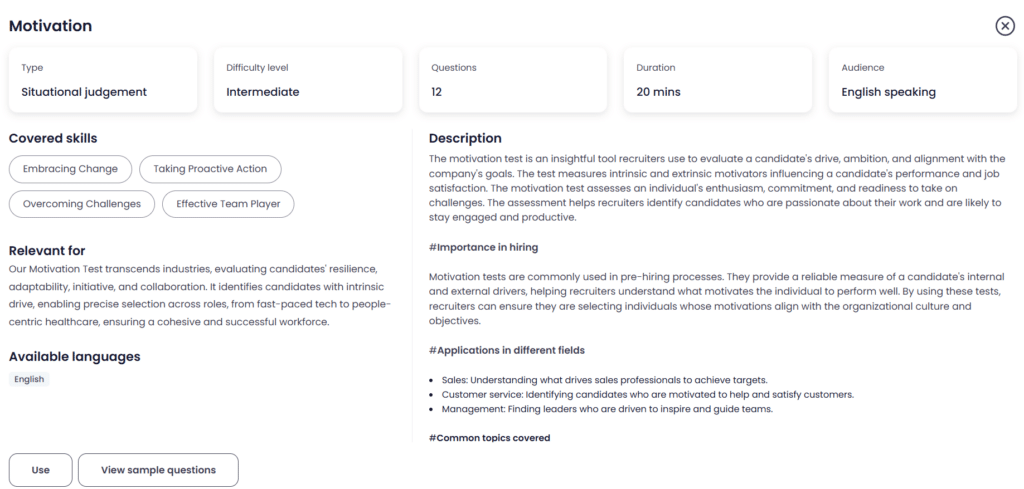
Motivation test: The motivation test by Testlify evaluates what drives a candidate whether they are internally motivated by purpose and goals or externally driven by recognition and rewards. The assessment gauges persistence, goal-setting habits, and willingness to take initiative.
It helps employers identify candidates who are naturally self-driven, enthusiastic, and committed to personal and team success, even without constant supervision or incentives. This is especially important for roles requiring autonomy and sustained performance.
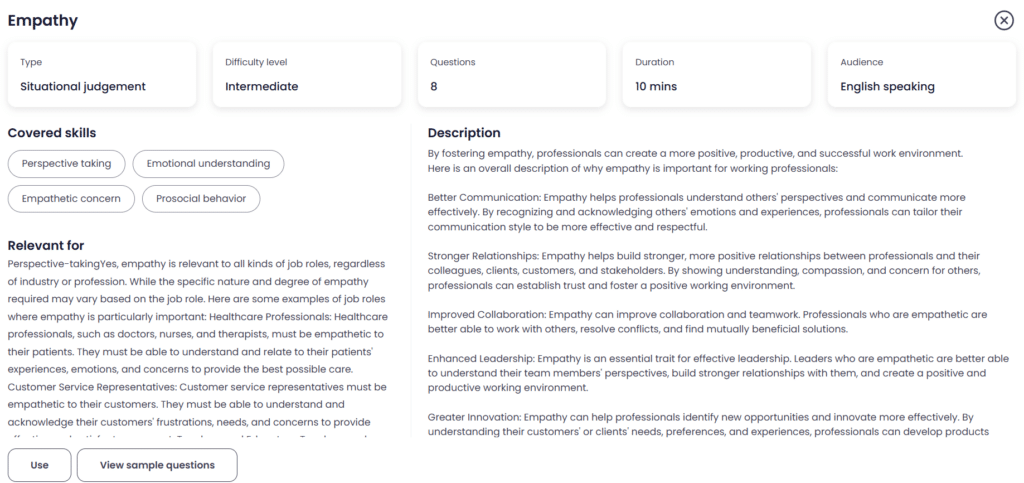
Empathy test: Testlify’s empathy test measures a candidate’s ability to understand and respond to others’ emotional needs. The test includes interpersonal scenarios where candidates must interpret emotional cues, respond with compassion, and adapt their communication style.
It’s particularly valuable for customer-facing roles, team leadership, and collaborative environments where emotional attunement is critical. High empathy not only improves workplace relationships but also reduces conflict and enhances team cohesion and morale.
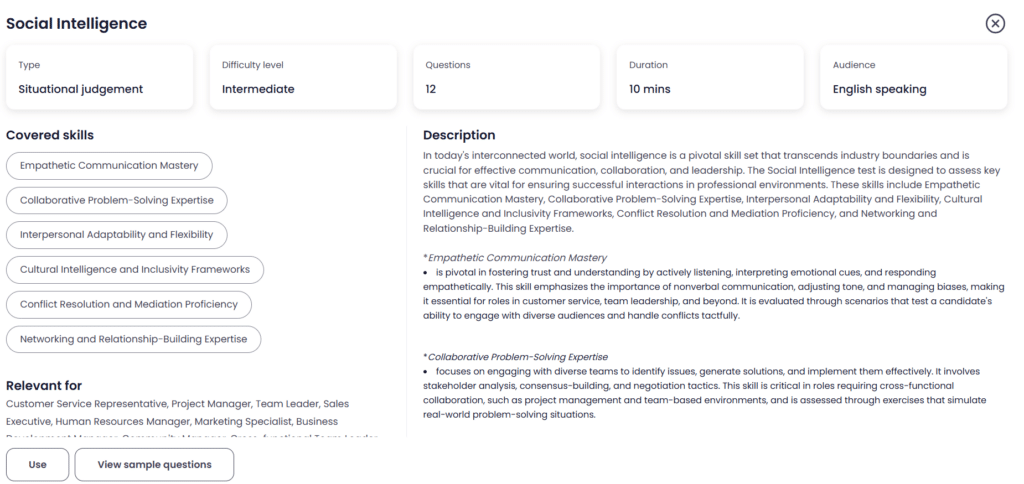
Social intelligence test: The social intelligence test evaluates how well a candidate navigates complex social situations. It tests the ability to read non-verbal cues, understand social dynamics, manage impressions, and build rapport.
Candidates are assessed on their ability to influence others positively, communicate effectively, and collaborate across different personalities and backgrounds. This is key for roles involving teamwork, client interaction, or leadership, where navigating human behavior tactfully is essential to success.
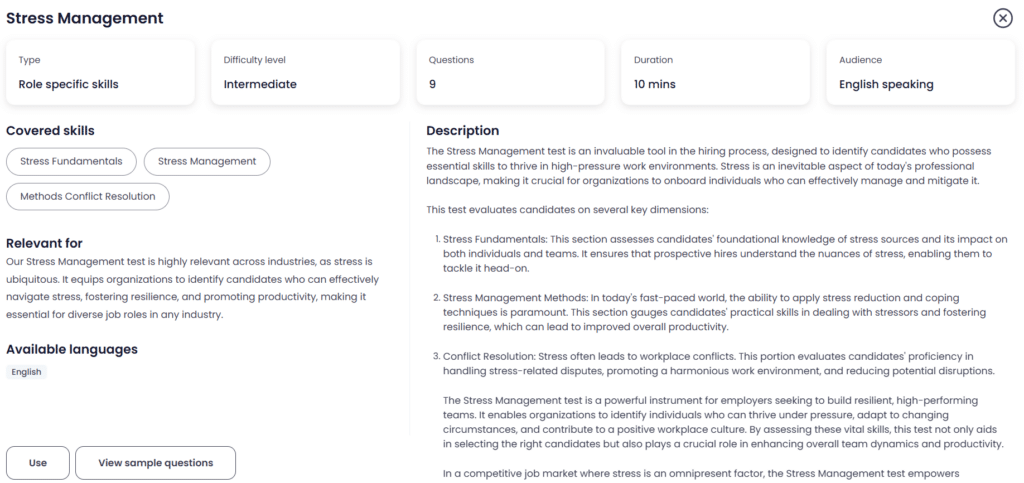
Stress management test: Testlify’s stress management test assesses how candidates respond to high-pressure situations and emotional triggers. It evaluates their emotional regulation, coping mechanisms, and ability to maintain productivity under stress. Candidates who score well are typically composed, adaptable, and capable of making clear-headed decisions even when under duress.
This test is particularly useful for fast-paced, client-driven, or leadership roles that demand resilience, emotional control, and consistent performance during unpredictable challenges.
2. Behavioral interviews
Behavioral interview questions help recruiters identify how candidates have handled emotional challenges in the past a strong indicator of future behavior.
Sample questions to assess EI:
- Self-awareness: “Tell me about a time when you were wrong about something at work. How did you handle it?”
- Self-regulation: “Describe a situation when you were under pressure. What did you do to stay composed?”
- Empathy: “Can you recall a moment when you had to help a teammate who was struggling?”
- Motivation: “What professional goal have you worked hardest to achieve, and why?”
- Social skills: “Give me an example of how you’ve built a strong relationship at work.”
What to look for:
- Emotional insight and honesty
- Calm and constructive responses to adversity
- Clear awareness of others’ emotions and needs
3. Personality tests
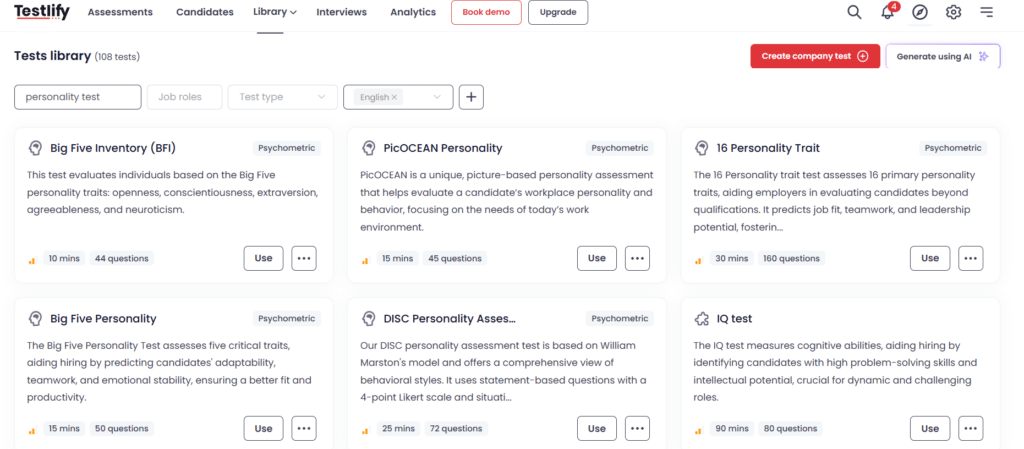
While not a direct measure of EI, personality tests can uncover traits that align with emotional intelligence, such as agreeableness, openness, and emotional stability.
Recommended personality tests:
- Big Five personality test: Measures traits like agreeableness, which correlates with empathy and teamwork.
- DISC assessment: Helps identify communication and behavioral tendencies.
- MBTI: Offers insight into how candidates make decisions and interact socially.
When used alongside other tools, personality tests provide a more complete picture of a candidate’s potential fit with team culture.
5. Reference checks and peer feedback
Past coworkers and managers can offer valuable insights into a candidate’s EI in practice.
Questions to ask during reference checks:
- How does the candidate handle feedback and criticism?
- Have they ever helped resolve a team conflict? How?
- How do they manage stress and deadlines?
- What is their interpersonal style like under pressure?
Reference feedback confirms whether the emotional traits observed during interviews were consistently demonstrated in previous roles.
Conclusion
Hiring an emotionally intelligent individual is not so much about identifying “nice” individuals it’s about identifying emotionally flexible, empathetic, and self-aware professionals who can manage today’s workplace with confidence and compassion.
Using behavioral interviews, soft skills tests, role-play simulation, and reference verification, employers can look past initial impressions to make informed hiring decisions regarding a candidate’s emotional competency.
A strong emotional intelligence profile is one of the major predictors of success in leadership, team building, and customer interactions. It enhances retention, enhances culture, and propels performance at all organizational levels.
So as you craft your next hiring plan, don’t merely inquire what someone knows; investigate how they think, feel, and interact with people.
For further reading, explore Pre Employment Emotional Intelligence Test A Must Have Tool For Hiring, Workplace Bullying, Workplace Democracy, Workplace Deviance, Workplace Gossip, Workplace Phobia & Senior Business Intelligence Consultant.

Content Writer
Yashika Khandelwal is a Content Writer with 3+ years of experience creating research-backed content on hiring, talent assessment, and HR technology. She is a registered Organizational Psychologist and subject matter expert who combines behavioral science with practical recruitment insights to produce accurate, evidence-based content.
LinkedInRelated resources
View all
Skill assessment
Assess creativity skills: Easy strategies to evaluate candidates

Skill assessment
Top workplace adaptability skills and how to assess them

Skill assessment
Best assessments to assess teamwork skills in candidates
![How to measure time management skills [simple ways with examples]](/api/media/file/Importance-of-assessing-time-management-skills-in-recruitment-for-efficient-work-execution-2.png?dpl=dpl_6Z8Gzi5dgny5ePrnCfPbRPCRYCA7)
Skill assessment
How to measure time management skills [simple ways with examples]

Skill assessment
How to evaluate problem solving skills of candidates

Skill assessment
How to accurately assess attention to detail skill in candidates?
Get started.
Hire on proof, not resumes.
Run your first skills-based assessment free — no credit card required.