
Blind hiring: What is it, process, and benefits
Blind hiring reduces bias in recruitment by focusing on skills over backgrounds. Learn the process and benefits for creating a more inclusive workforce.
Hiring practices have changed a lot in the last couple of decades. One practice, particularly being picked up in present times by recruiters, is blind hiring. It’s a process optimized to avoid prejudices and have a more diverse set of employees.
This blog will walk you through the definition of blind hiring, how it is executed, the benefits it can offer, the challenges, and how to implement it in your organization.
 ChatGPT
 Gemini
 Claude
 Grok
Grok Perplexity
What is blind hiring?
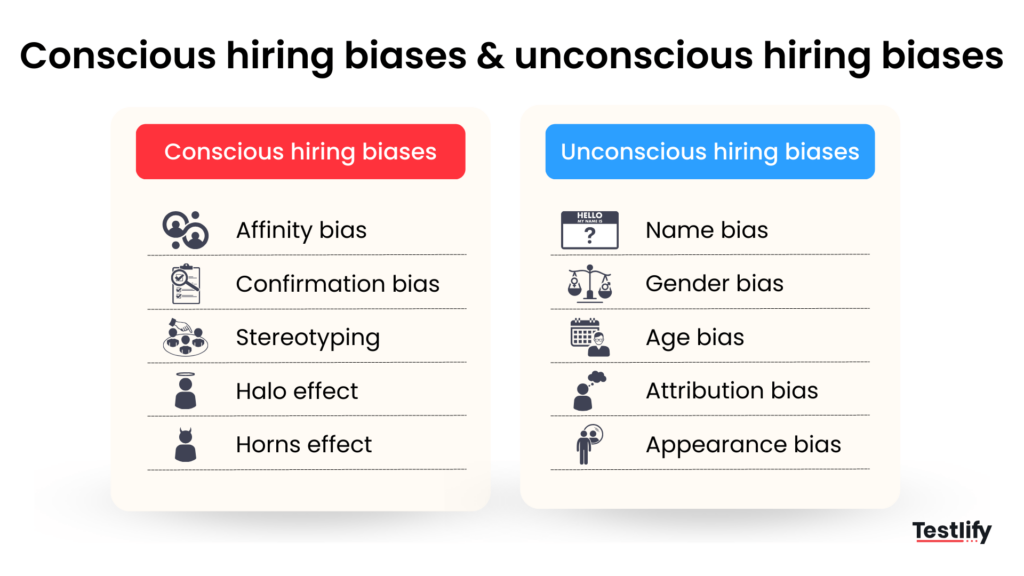
Blind hiring refers to removing specific information that leads to unconscious biases when hiring. Generally, these attributes include names, gender, age, education, or prior employers. This way, the entire recruitment process is based on skills, experience, qualifications, and whether the person can do the job.
The main objective of blind hiring is to promote diversity and inclusion in the workplace by reducing the influence of conscious and unconscious biases that may cloud decision-making in the hiring process.

Why is blind hiring important?
Recruiters often make decisions based on impressions from a candidate’s resume, which may include personal details like name or background. While this isn’t always intentional, biases can favor one group. Blind hiring aims to:
- Reduce discrimination based on gender, ethnicity, or socioeconomic background
- Encourage more diverse teams
- Improve workplace equality
- Focus on talent and skills rather than surface-level traits
How does blind hiring work?
A study from the National Bureau of Economic Research study found that candidates with “white-sounding” names were 50% more likely to get callbacks for interviews than those with “ethnic-sounding” names, even with identical resumes.
Blind hiring tends to eliminate identifiable data from resumes and any other relevant application materials. This can be achieved in various ways, determined by the point in the hiring process.
Steps in blind hiring
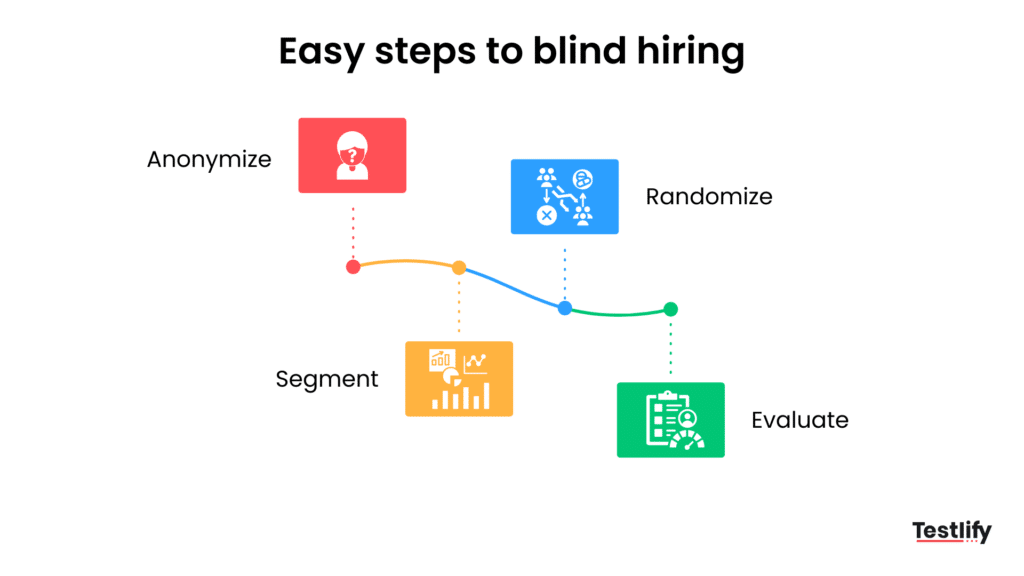
- Anonymizing resumes: Names, addresses, and even education information are removed. The names of previous companies that I worked for have also been deleted. Recruiters focus attention on work experience, skill sets, and accomplishments.
- Blind interviews: Some employers will use text-based interviews or even record pre-asked questions with video interviews by which the candidate’s voice or image only comes across at later stages.
- Skills assessments: An alternative to resumes is administering blind skills assessments, giving the recruiter a picture of the candidate without knowing who he or she is.
- Structured interviews: If it’s an on-site job and when it’s time for in-person interviews, recruiters rely on standard questions and evaluation criteria that focus on competencies rather than subjective impressions.
The benefits of blind hiring
Blind hiring offers numerous advantages that go beyond just reducing bias. Focusing on skills and competencies helps create a more diverse and inclusive workforce, which can lead to better innovation and company performance.
1. Reduces bias and promotes diversity
The first advantage that blind hiring depicts is its ability to reduce biases in hiring, which might influence the choice of employees. Research by McKinsey shows that companies with higher diversity are 36% more likely to outperform their peers financially.
In a blind hiring process, race, gender, and even educational qualifications can be masked, and hiring can strictly be based on work experience and skills. This way, an extremely inclusive hiring process leads to a more diverse workforce.
2. Focuses on skills and competencies
Blind hiring emphasizes what matters most- the candidate’s ability to perform work. By focusing on the skills tests, work samples, or relevant experience of the individual, a recruiter can be confident in choosing the best for the role.
3. Improves company reputation
Companies that commit to diversity and non-discriminatory hiring practices are on the front lines of diversity and inclusion, which can be an attractive advertisement for potential employees and clients interested in fair business practices.
4. Increases innovation
A diverse organization leads to a more innovative and imaginative team. Because people of different backgrounds know different things, when they merge, they bring in a melding of viewpoints and inputs, which leads to more creative problem-solving and inventive thinking.
Challenges of blind hiring
Blind hiring has many great advantages but not without its challenges.
1. Limited information
Blind hiring removes much of the personal information that may also take away the context of an applicant’s experience. For example, information about someone who graduated from a high-powered university or worked for a world-renowned company can be very informative for background information.
2. Difficult to maintain in later stages
While at some point anonymity is likely to be compromised, such as when candidates go through interviews in person, it is impossible not to observe a candidate upon direct meeting – indeed, one of the potential pitfalls of the process.
3. Time-consuming
Blind hiring is more work for a recruitment team because resumes must be heavily redacted. To ensure fairness, new processes might need to be developed for items like blind skills assessments.
4. Not a cure-all for diversity
Blind hiring does help alleviate bias at the front end. Still, it doesn’t solve most of the systemic challenges that may exist either in the process or the company’s overall culture. Organizations continue to support diversity and inclusion well beyond hiring.
How to implement blind hiring in your organization
Do you want to implement blind hiring in your organization? Here is a step-by-step guide to get you started.
Step 1: Identify areas for improvement
First, review your current hiring process to find all possible inroads for bias. Do you screen resumes based on the education or prestige of the company you attended? Do you do interviews in a way that allows for subjectivity? First, understand the places that involve bias and decide which pieces of blind hiring you’ll use.
Step 2: Use blind resume screening tools
Many more software tools can anonymize resumes automatically by removing names, genders, and any information that describes them. You can even train your recruitment team to manually remove this information before reviewing the resumes.
Step 3: Implement skills assessments
Skill assessment in the hiring procedure. This test will allow candidates to prove their capabilities to perform real-world tasks, making it possible for the recruiters to understand their qualifications without looking at the resume.
Step 4: Standardize interviews
Each candidate is assessed using the same standards. One will use structured questions directed to only skills and experience considered sufficient to qualify him, having prepared a scoring method that allows for an objective measure of the responses.
Step 5: Train your hiring Team
Train your hiring team so that they minimize bias in their recruiting. The best blind hiring techniques, awareness and sensitivity training, go well in making the hiring process as unrepresentative as possible.
Step 6: Monitor and adjust
Monitor the effectiveness of blind hiring. Do you get a more diverse pool of candidates? Continue hiring the best fit. Collect data and feedback to hone and adjust your process as needed.
Tools to help you with blind hiring
Several tools can assist you in implementing blind hiring practices in your organization:
1. Testlify
Testlify is a talent assessment tool that helps you hire with skills assessments so that candidates are hired based on their knowledge and skills for the role rather than biases. Features like video interviewing and automated scoring make it appropriate for blind hiring.
2. GapJumpers
This tool focuses on skills-based hiring through anonymous assessments. Candidates complete challenges that demonstrate their skills without revealing their personal information.
3. Applied
Applied is a platform designed to help companies make unbiased hiring decisions. It anonymizes resumes, provides structured interview guides, and offers data analytics to track diversity metrics.
Blind hiring success stories
Several major organizations have adopted blind hiring practices with great success. These examples demonstrate how blind hiring can lead to a more equitable recruitment process, resulting in diverse and talented teams.
1. Deloitte
Deloitte, one of the world’s largest professional services firms, is a trailblazer adopting blind hiring practices. The company implemented blind resume screening to remove details such as names, genders, and educational backgrounds during the recruitment process.
By focusing purely on skills and work experience, Deloitte was able to reduce bias and increase the diversity of its workforce. As a result, they saw a significant rise in candidates from underrepresented groups reaching the final stages of recruitment, ultimately boosting the diversity of their talent pool.
2. BBC
The British Broadcasting Corporation (BBC) introduced blind hiring as part of their initiative to tackle the gender and ethnicity pay gap. The BBC successfully diversified its workforce by anonymizing job applications and focusing only on the candidates’ skills and experience.
This move has led to a greater representation of women and ethnic minorities in roles where they were previously underrepresented. Additionally, the BBC has reported better alignment between candidates’ competencies and the job requirements, resulting in a stronger team dynamic.
3. HSBC
HSBC, a global banking giant, adopted blind hiring to improve diversity in its graduate recruitment program. By removing names, schools, and socioeconomic background information from candidate profiles, HSBC allowed recruiters to concentrate solely on skills and potential.
The blind hiring approach resulted in a more diverse selection of candidates, many from non-traditional educational backgrounds. HSBC’s initiative increased diversity and expanded the talent pool, helping the bank tap into new and innovative perspectives.
How blind hiring contributes to diversity and inclusion
Blind hiring is one piece in the jigsaw of a fuller mosaic of a diverse and inclusive workforce. Ensuring that the candidate’s skills, rather than the background, are held up as the basis for judging them will help quickly resolve many of these biases through the hiring cycle.
However, the initiatives must be partnered with other diversity and inclusion efforts made at a much broader level if they result in a welcoming workplace where all employees are valued equally.
Beyond blind hiring
While blind hiring helps remove bias, creating an inclusive work environment where diverse perspectives are celebrated is important. This can be achieved through:
- Training programs on unconscious bias and diversity
- Mentorship and support systems for underrepresented groups
- Inclusive leadership that promotes a culture of openness and respect
Conclusion
Blind hiring is a very effective tool to help you reduce bias and increase diversity within your organization. The focus must be on the candidate’s skills and qualifications rather than surface-level traits to make more knowledgeable decisions and build stronger, more inclusive teams. Still, despite the disadvantages, the benefits of employing blind hiring far outweigh the downsides.
Want to have a go at it? Start small and then incrementally include these practices in hiring, and you’ll soon see a change in the diversity and success of the teams.
FAQs

Content Writer
Yashika Khandelwal is a Content Writer with 3+ years of experience creating research-backed content on hiring, talent assessment, and HR technology. She is a registered Organizational Psychologist and subject matter expert who combines behavioral science with practical recruitment insights to produce accurate, evidence-based content.
LinkedInRelated resources
View all
HR & recruitment
HR trends in higher education in 2026
HR & recruitment
Raven’s Progressive Matrices Test: A Recruiter’s Guide 2026
HR & recruitment
Headhunting in recruitment: Your ultimate 2026 guide

HR & recruitment
Best Recruitment Methods in 2026: 12 Strategies That Fill Roles Faster
HR & recruitment
Hard skills vs Soft skills: Which one should you prioritize while hiring?
HR & recruitment
Job Description vs Job Specification: Key Differences (2026)
Get started.
Hire on proof, not resumes.
Run your first skills-based assessment free — no credit card required.