
Top 7 Human Resource Management Systems
HRMS tools integrate recruitment, payroll, performance management, and compliance to streamline HR processes across the organization.

Human resource management (HRM) is a critical function in any organization. It encompasses all aspects of managing employees, from recruitment and onboarding to performance management and compensation. In today’s increasingly complex and competitive business environment, HR professionals need the right tools to help them effectively manage their employees.
One of the most important tools for HR professionals is Human Resource Management Systems (HRMS). An HRMS is a software application that helps HR professionals automate and streamline many of their daily tasks. This can free up HR professionals’ time so they can focus on more strategic initiatives.
There are many different HRMS tools on the market, so it can be difficult to choose the right one for your business. Here are the top 7 HRMS tools for 2023, along with their features and cost:
 ChatGPT
 Gemini
 Claude
 Grok
Grok Perplexity
Top 7 Human Resource Management Systems
1. Deel
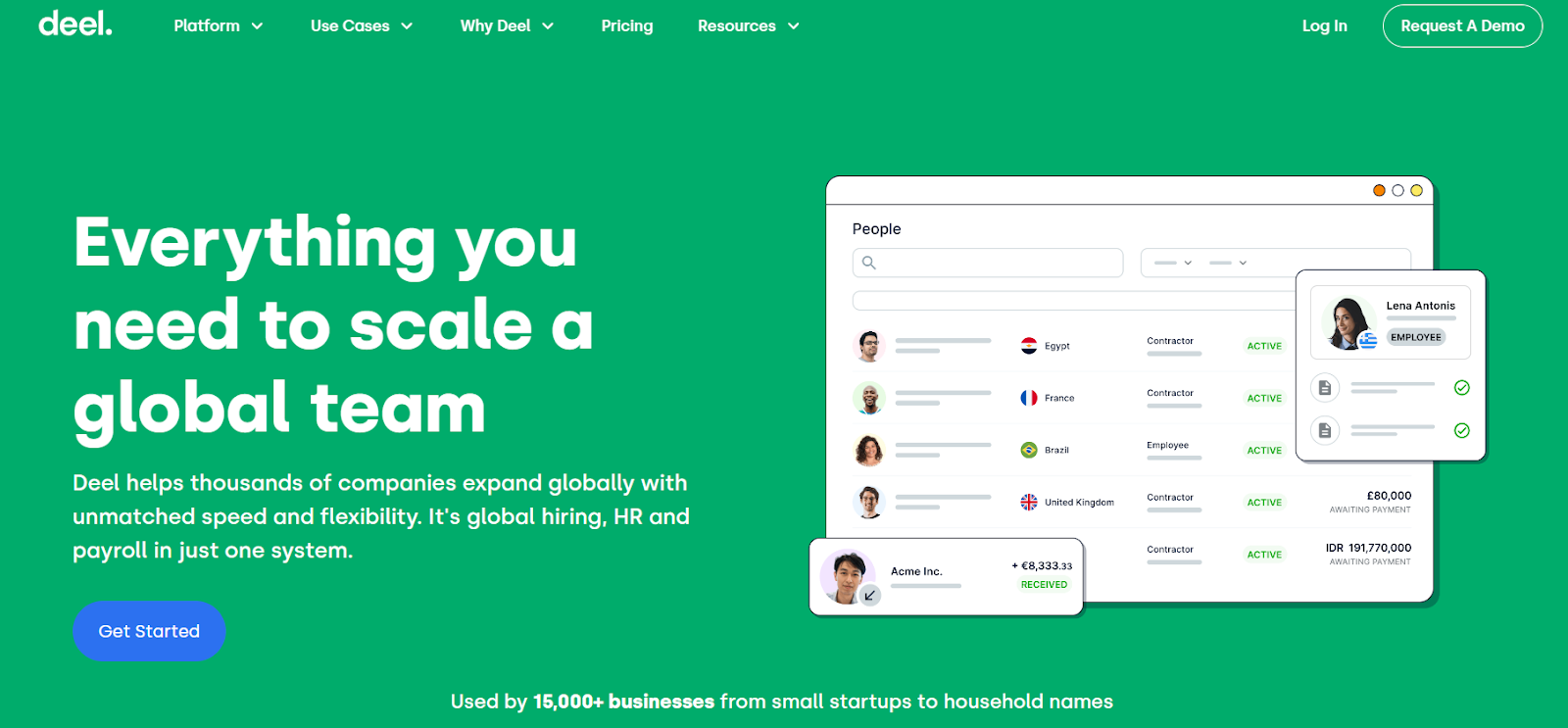
Deel is a cloud-based HRMS tool that is designed for businesses with international teams. It offers a wide range of features, including payroll, benefits administration, time tracking, and compliance management. Deel is also one of the most affordable global HR management systems on the market.
Features:
- Payroll in 150+ countries
- Benefits administration
- Time tracking
- Compliance management
- Global payroll and compensation benchmarking
- Mobile app
Cost:
Starts at $39 per month per user.
2. Paycor
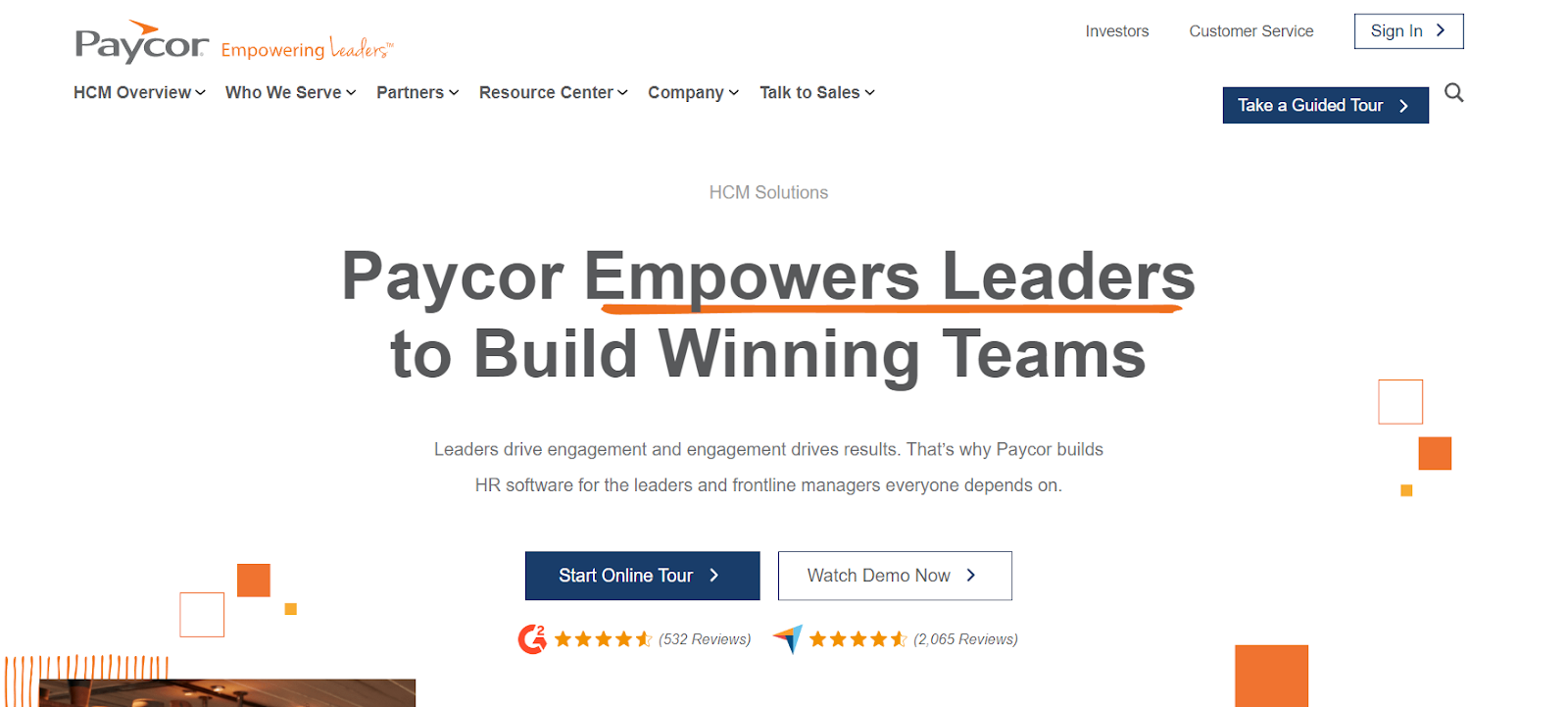
Paycor is a cloud-based HRMS tool that is designed for enterprise organizations. It offers a wide range of features, including payroll, benefits administration, time tracking, and performance management. Paycor is also one of the most scalable HRMS tools on the market.
Features:
- Payroll
- Benefits administration
- Time tracking
- Performance management
- Absence management
- Recruiting and onboarding
- Learning management system
Cost:
Starts at $129 per month per user.
3. Rippling
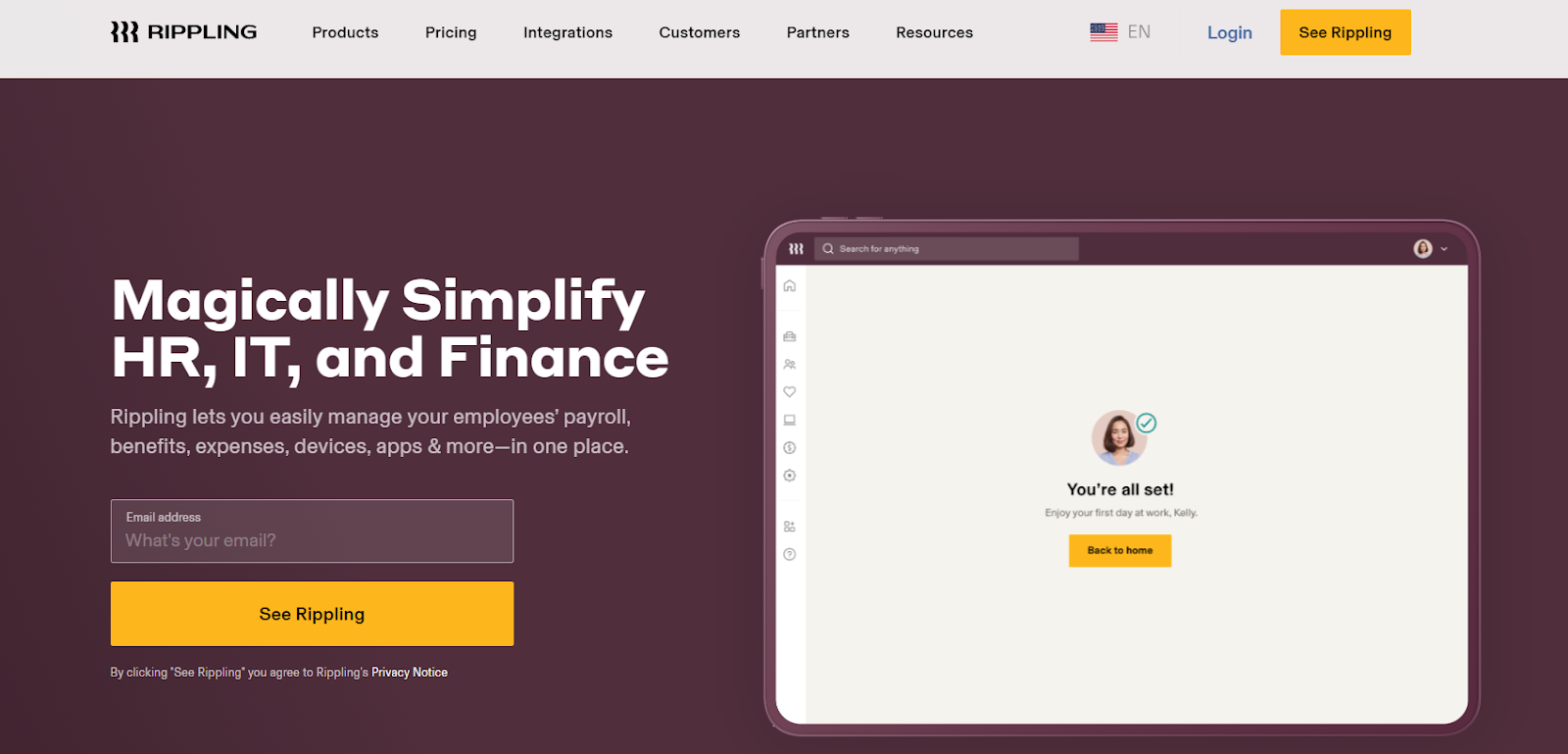
Rippling is a cloud-based HRMS tool that is designed to create a single source of truth for HR data. It offers a wide range of features, including payroll, benefits administration, time tracking, and employee onboarding. Rippling is also one of the most user-friendly HRMS tools on the market.
Features:
- Payroll
- Benefits administration
- Time tracking
- Employee onboarding
- Expense management
- Inventory management
- Document management
Cost:
Starts at $125 per month per user.
4. Omni HR
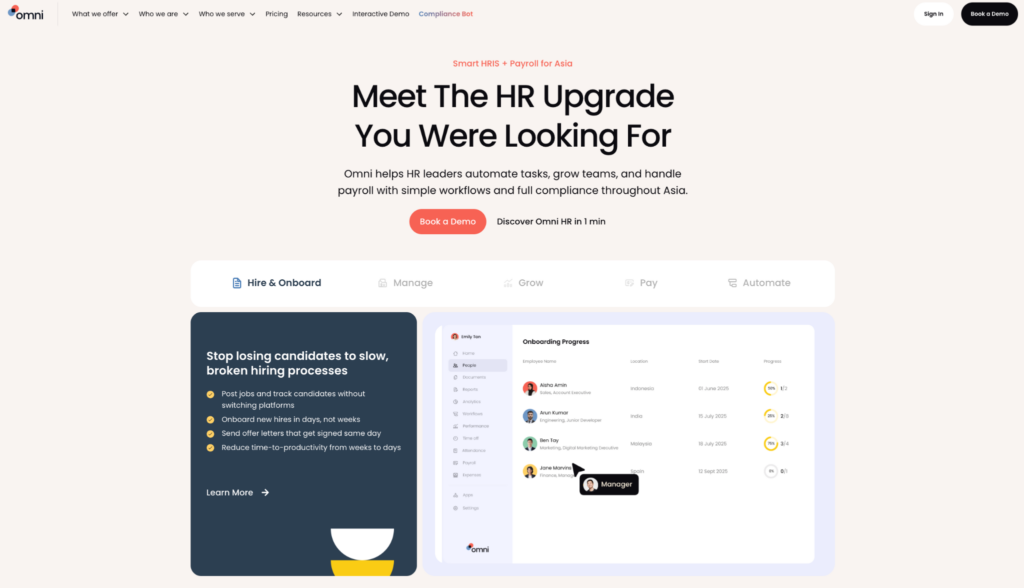
Omni HR is a modern, all-in-one HR platform built for growing organisations across Asia. Purpose-built to consolidate HR operations onto a single system, Omni HR helps businesses maintain compliance, reduce operational costs, and build the workforce infrastructure needed to scale confidently. Combining intuitive technology with deep HR expertise, Omni HR gives teams the tools to drive measurable business impact.
Features:
- End-to-end HR management (onboarding, payroll, leave, and claims)
- Automated payroll with local compliance built in across Singapore, Malaysia, the Philippines, and more
- Employee self-service portal
- Performance management
- Workforce analytics and reporting
- Integrations with leading business tools
- Mobile app
Cost:
Starting from $3/employee/month
5. Connecteam
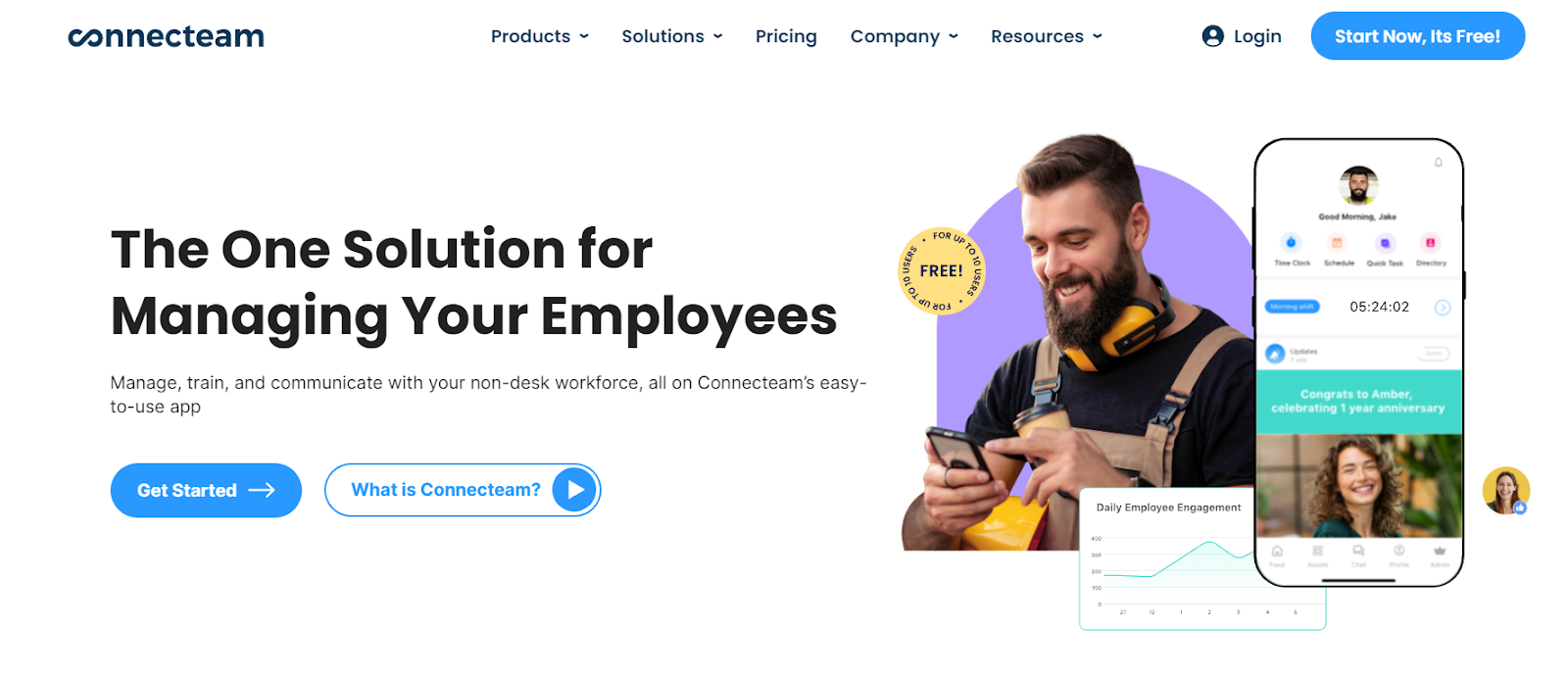
Connecteam is a cloud-based HRMS tool that is designed for mobile-first teams. It offers a wide range of features, including payroll, time tracking, communication, and scheduling. Connecteam is also one of the most affordable HRMS tools on the market.
Features:
- Payroll
- Time tracking
- Communication
- Scheduling
- Task management
- Asset tracking
- Document management
Recommended: 5-step guide to project resource management
Cost:
It offers a free trial and the Starters start at $29 per month.
6. Trinet
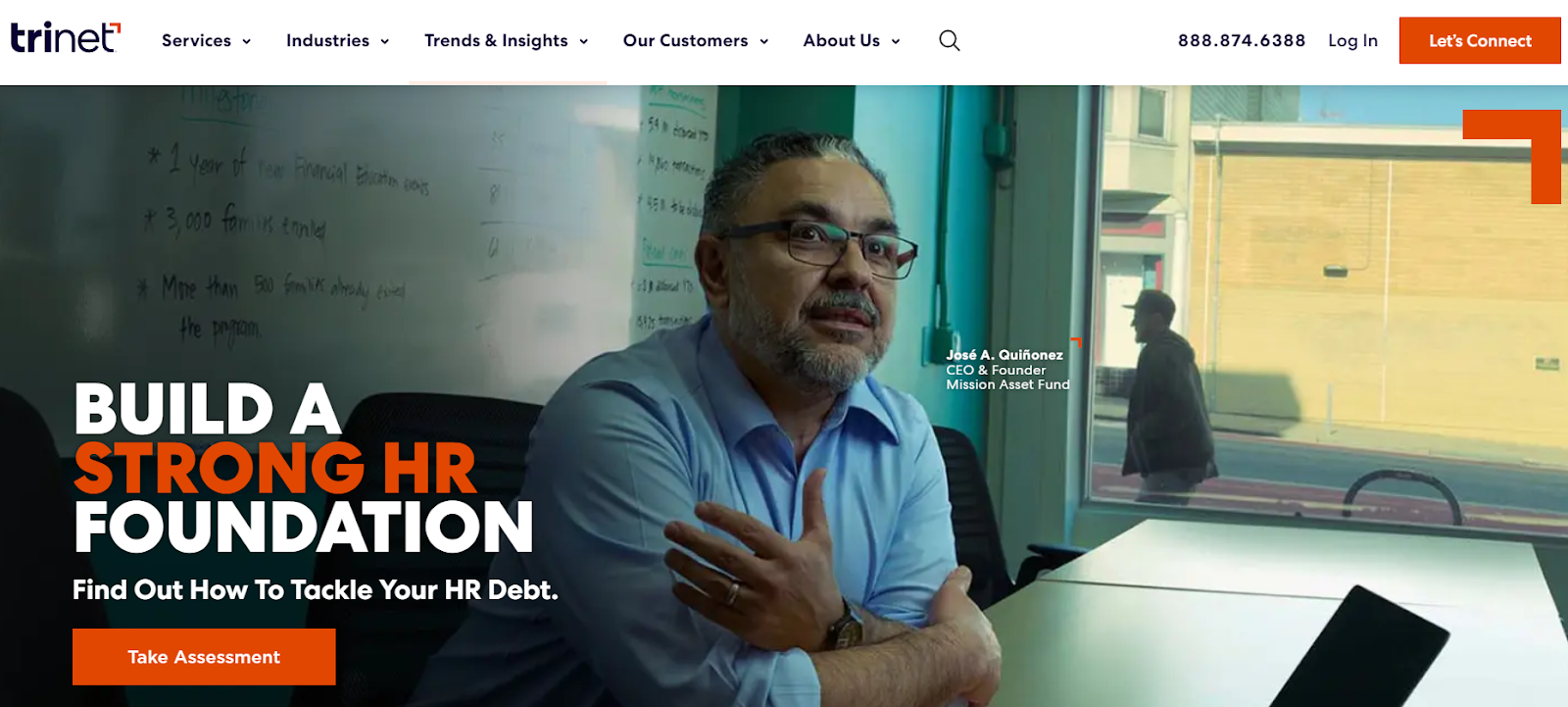
Trinet is a cloud-based HRMS tool that is designed for businesses with global payroll needs. It offers a wide range of features, including payroll, benefits administration, time tracking, and compliance management. Trinet is also one of the most experienced HRMS providers on the market.
Features:
- Payroll
- Benefits administration
- Time tracking
- Compliance management
- Global payroll and compensation benchmarking
- Mobile app
- Integrations with other HR tools
Cost:
Starts at $125 per month per user.
7. factoHR
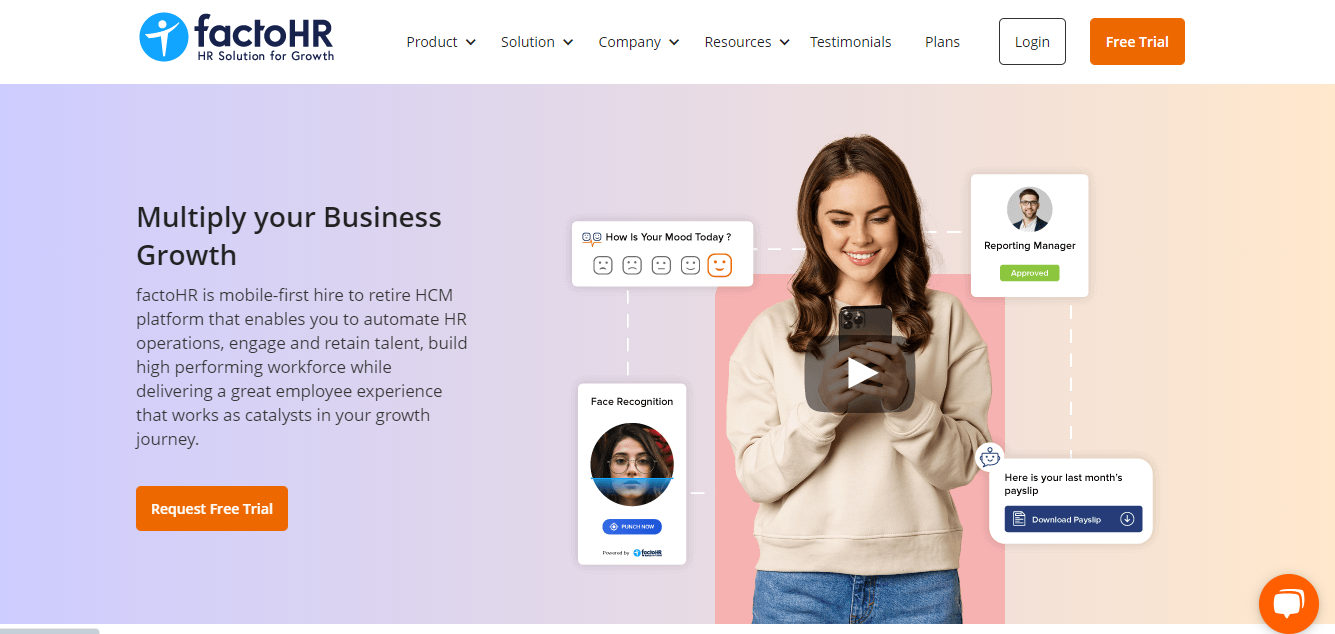
factoHR is a cloud-based HRMS software designed to simplify and automate various HR functions, making HR management more efficient and effective. It caters to the needs of businesses across different industries, from small startups to large enterprises. Its cloud-based system allows accessibility from any location, promoting flexibility and accommodating remote work setups.
Features:
- Payroll management
- Attendance and leave management
- Performance management
- Employee self-service
- Onboarding process
- Mobile app
Cost:
Contact the vendor to get a quote.

Things to consider while choosing a HRMS
Needs: What are your specific needs for an HRMS tool? Do you need a tool that can handle payroll, benefits administration, time tracking, performance management, or something else?
Budget: How much are you willing to spend on an HRMS tool? HRMS tools can range in price from a few hundred dollars to several thousand dollars per year.
The size of your business: How many employees do you have? HRMS tools are designed for businesses of all sizes, but some tools are better suited for larger businesses than others.
The features offered: What features are important to you? Some features to consider include payroll, benefits administration, time tracking, performance management, employee self-service, and reporting.
The scalability of the tool: If your business is growing, you need to make sure that the HRMS tool can scale with your business.
Conclusion
HRMS tools can be a valuable asset for businesses of all sizes. They can help to streamline HR processes, improve employee productivity, and enhance compliance. When choosing an HRMS tool, it is important to consider your specific needs and requirements. However, any of the tools on the list in this blog would be a good place to start your search.
For further reading, explore Human Resource Assistant, Human Resource Director & Human Resource Manager.
For further reading, explore Spa Therapist.
Frequently asked questions (FAQs)

Content Writer
Yashika Khandelwal is a Content Writer with 3+ years of experience creating research-backed content on hiring, talent assessment, and HR technology. She is a registered Organizational Psychologist and subject matter expert who combines behavioral science with practical recruitment insights to produce accurate, evidence-based content.
LinkedInRelated resources
View all
HR & recruitment
How to conduct effective interviews

HR & recruitment
The best practices for reference checks

HR & recruitment
How to create a positive work culture

HR & recruitment
How to retain top employees

HR & recruitment
The importance of employee engagement

HR & recruitment
HR technology trends in 2026: a practical guide
Get started.
Hire on proof, not resumes.
Run your first skills-based assessment free — no credit card required.