
Top 4 talent assessment tools available in Spanish
Spanish talent assessment tools streamline hiring processes by evaluating candidates’ fluency and ensuring job-specific language alignment.

Hiring Spanish-speaking candidates should not mean asking them to navigate assessments designed for someone else. If the questions, instructions, or candidate experience are not available in Spanish, language can become an unnecessary barrier between recruiters and the skills they are trying to measure.
That makes Spanish language support more than a convenience. The right talent assessment tool should let recruiters evaluate candidates in Spanish while still providing the structure, accuracy, and insights needed to make informed hiring decisions.
In this article, we look at four talent assessment tools that support spanish, comparing their assessment capabilities, candidate experience, and features to help you find the right fit for your hiring needs.
 ChatGPT
 Gemini
 Claude
 Grok
Grok Perplexity
Top 4 talent assessment platforms available in Spanish
Let’s delve into the top four talent assessment platforms available for Spanish speakers. In this section, we will explore the functionalities, pros, cons, and pricing of each tool.

1. Testlify
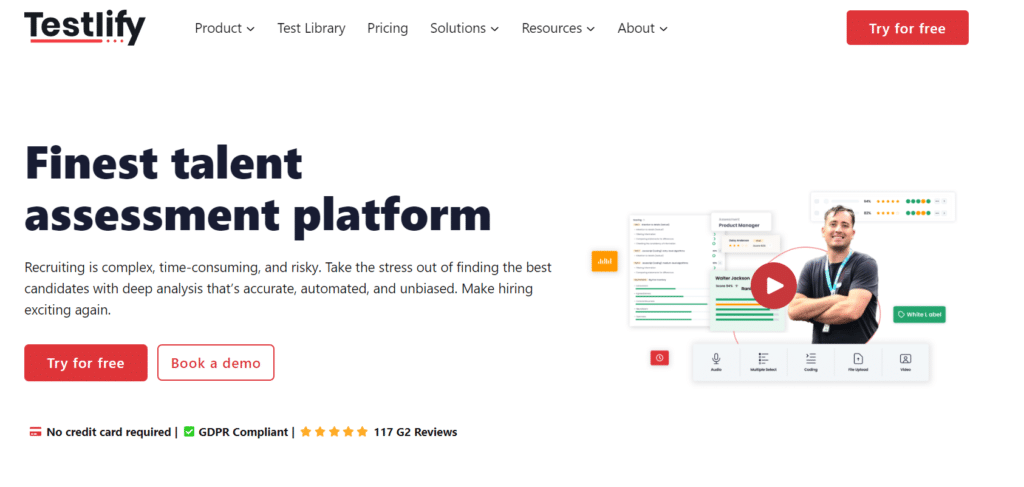
Testlify is an AI-native skills assessment and interviewing platform that features 3500+ role-specific tests in 15+ assessment languages, including Spanish, allowing recruiters to assess Spanish-speaking candidates in their preferred language
The Spanish language assessments can also be used to evaluate candidates at different proficiency levels, including basic, intermediate, and proficient.
Best for: Companies wanting a branded, personalized experience. Testlify is ideal for medium-sized to larger companies aiming to create a customized assessment experience for candidates, with branding options and video interview features.
Features:
- Multilingual assessments available in Spanish and 14 other languages
- AI-powered test recommendations
- 3500+ role-specific tests
- Psychometric tests
- Custom questions (15+ Question types)
- Conversational AI interviews (chat, voice, and video)
- 150+ interview templates available
- White-label assessments and custom domains
- Includes 20+ anti-cheating measures such as AI assistance detection, copy-paste detection, and more
- 100+ ATS integrations
- Comprehensive candidate reports and AI insights
Pros:
- Speeds up assessment creation with AI recommendations and ready-made tests.
- Lets recruiters tailor assessments with custom questions.
- Creates a more branded candidate experience.
- Reduces manual screening with automated scoring and insights.
- Integrates seamlessly with 100+ popular ATS tools such as Workday, Lever, BambooHR, and more.
- Supports multilingual hiring across different markets.
- Offers a 7-day free trial
Cons:
- White labeling and other features come at an extra cost
Pricing: Testlify offers flexible pricing plans starting at $139 per month. Visit our pricing page for current plan details.
Verdict: Testlify is the best choice for recruiters and companies looking to hire bilingual candidates proficient in both English and Spanish. The platform’s API integration and white-label options allow for personalized assessments, but the extra costs may make it less appealing for startups or smaller businesses.
2. McQuaig
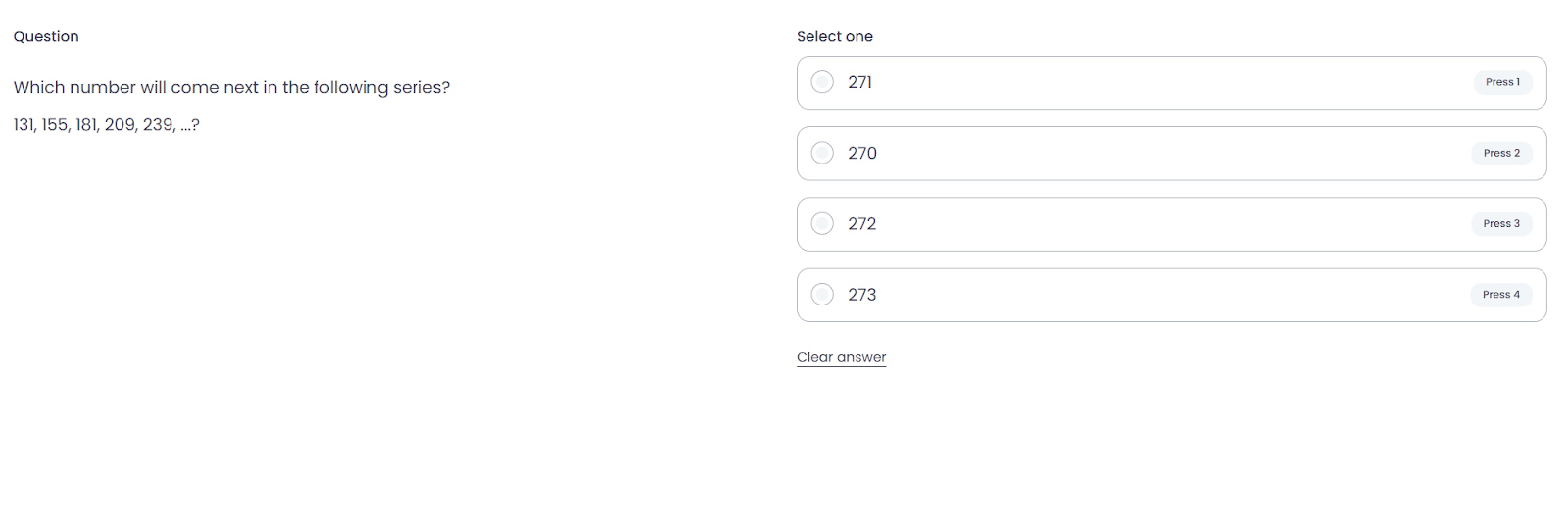
McQuaig is a pre-employment testing tool primarily focused on personality and mental agility tests. The platform allows limited customization of job roles and profiles. It is available in Spanish and offers tests in 10 different languages. However, McQuaig does not provide specific Spanish-language tests for fluency assessment.
Best for:
Personality testing in Spanish
Features:
- Mental agility tests including speed of thought and “intelligence” as defined by job roles.
- Personality testing to assess workplace behavior
- Downloadable reports of candidates’ test scores
Pros:
- Quick assessment (10-20 minutes).
- Available in multiple languages, including Spanish.
Cons:
- Limited quality control features.
- Few anti-cheating measures.
Pricing:
McQuaig basic package bundles start at $1,500 and are valid for 90 days
Verdict:
McQuaig offers useful personality testing capabilities in Spanish but lacks some features found in more comprehensive platforms. Its higher pricing and lack of specific Spanish language tests could be limiting factors for some businesses.
3. iMocha
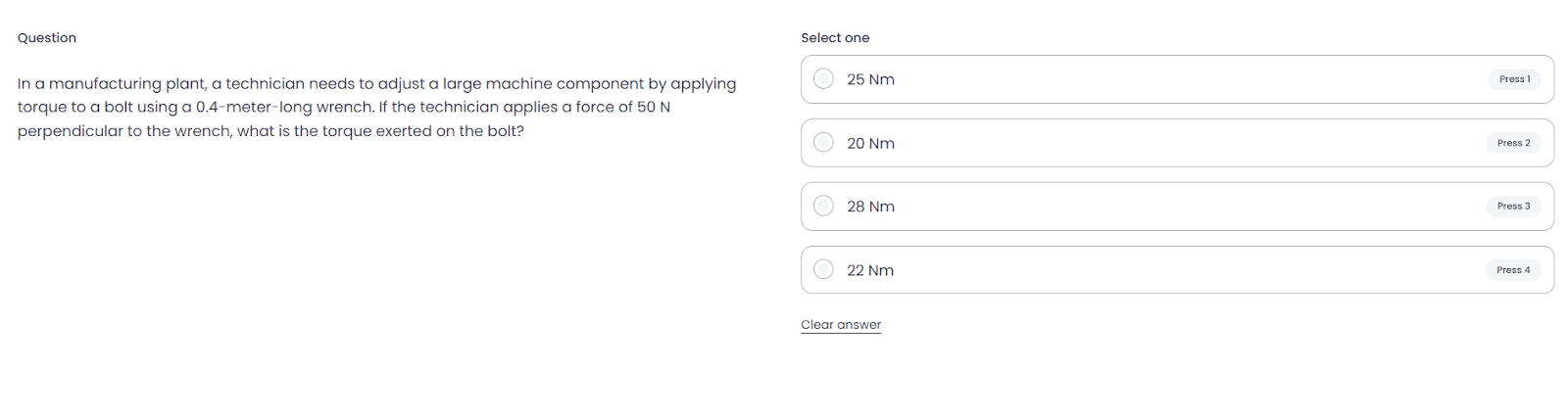
iMocha is a pre-employment testing platform with over 2,500 tests, offering customization options and branded tests. It covers various topics, including coding languages, communication skills, and data analysis. While iMocha is available in Spanish, it does not offer specific Spanish language proficiency tests.
Best for:
Customizable tests
Features:
- Coding language tests including Java, Python, C++, Ruby, and more
- Communication skills tests, including cross-cultural communication
- Data analysis tests
Pros:
- Customization options for test questions and branding.
- One-way video interviews.
Cons:
- Limited quality control features.
- Few data analysis tools.
Pricing:
Buyers typically need to engage directly with the vendor to understand pricing options, as there is no information available on the website
Verdict:
iMocha offers a vast test library in Spanish, but the absence of specific Spanish language skills tests and some missing features might limit its appeal to certain businesses.
4. Testinvite
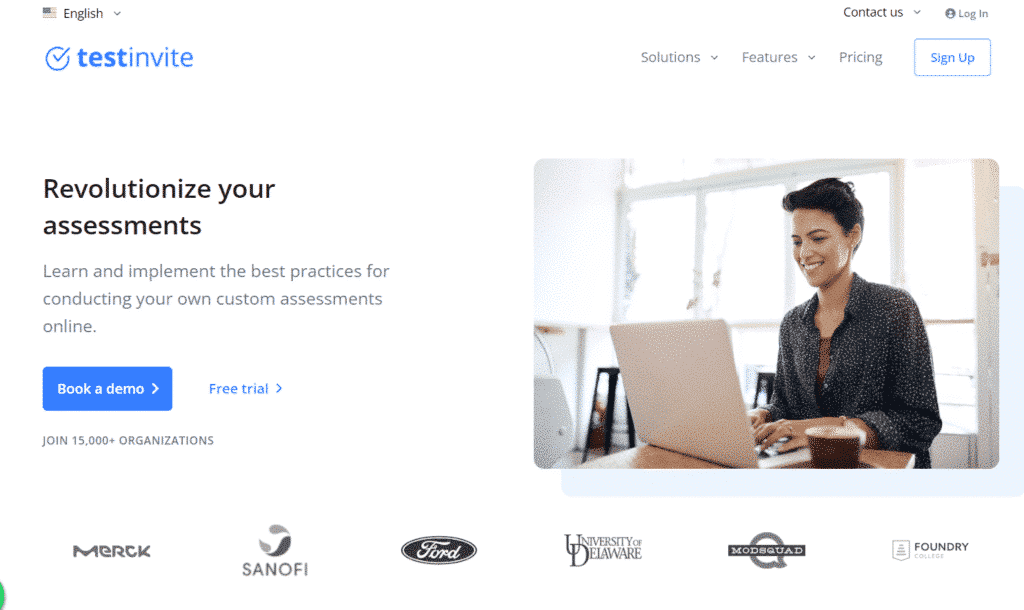
Testinvite is a pre-employment testing tool offering Spanish language tests and customization options. It enables managers to create custom tests or use pre-designed questions.
Best for:
- Reporting and analytics tools
- Features
- Language tests including Spanish, Dutch, Norwegian, Turkish, Portuguese, and English
- GDPR compliant
Pros:
- GDPR compliance.
- Anti-cheating measures.
Cons:
- Complex pricing structure.
- No API access.
Pricing:
Testinvite has a credit-based pricing system, with basic plans starting from $900
Verdict:
Testinvite offers Spanish language tests and customization options, but the complex pricing structure and lack of API access could be drawbacks for some businesses.
Conclusion
Testlify provides a complete talent assessment solution for all your hiring needs. Each platform has its strengths, so businesses should consider their specific needs and requirements when selecting the most suitable assessment tool.
Testlify offers the best range of Spanish assessments and challenges that allow you to gauge candidates’ knowledge, problem-solving skills, and creativity in real-world scenarios.
By incorporating Testlify into your hiring process, you can ensure a more comprehensive and reliable evaluation of candidates’ Spanish language proficiency, ultimately helping you identify the most qualified individuals for your team.
Book a free 30-minute live demo with Testlify. Our expert team will guide you through the platform, showcasing relevant skill tests tailored to your organization’s needs. With our support, you can streamline candidate selection, saving valuable time and resources.
Frequently asked questions (FAQs)

Wordpress Developer
Yash Patel is a Wordpress and SEO Specialist at Testlify with 3+ years of experience in technical SEO, on-page optimization, and content strategy. He works on improving Testlify's organic presence and produces content focused on hiring, talent assessment, and HR technology.
LinkedInRelated resources
View all
HR & recruitment
Top 4 talent assessment tools available in French

HR & recruitment
Top 4 talent assessment tools available in Dutch

HR & recruitment
Top 8 Employee Recognition tools

HR & recruitment
Top 10 Compensation Management Tools for Enterprise HR Teams (2026)

HR & recruitment
Top 5 Employee Engagement tools

HR & recruitment
10 Best Performance Management Tools for Enterprise HR Teams (2026)
Get started.
Hire on proof, not resumes.
Run your first skills-based assessment free — no credit card required.