
Flexibility skills: How to assess candidates for the modern workplace
Learn how to assess flexibility skills in candidates with tests, interviews, and tools to hire adaptable, resilient, and growth-oriented employees.

As companies turn to adopt digital transformation, hybrid work arrangements, and evolve to changing market needs, workers need to be flexible, agile, and receptive to change. However, assessing flexibility in applicants during the hiring process is not always easy.
Numerous candidates can articulate a desire to adjust or profess to be “flexible,” but how do recruiters and hiring managers assess if that flexibility actually exists? How do you gauge a candidate’s capacity to acclimate to new situations, respond favorably to unexpected setbacks, and work through changing priorities?
In this blog, we’ll explore the importance of flexibility skills in the workplace, identify the traits and behaviors that define a flexible employee, and outline proven methods to assess flexibility skills in candidates during the hiring process.
 ChatGPT
 Gemini
 Claude
 Grok
Grok Perplexity
What is flexibility in the workplace?
Flexibility is the capacity of an employee to adjust to new situations, manage change well, and modify their method when confronted with unforeseen challenges. It involves mental flexibility, emotional resilience, pressure problem-solving, and a desire to acquire new skills or assume alternative responsibilities.
There are different types of flexibility skills relevant to the workplace:
Cognitive flexibility: The ability to think about multiple concepts simultaneously and adjust thinking in response to new information.
Behavioral flexibility: The ability to shift actions and behaviors to respond to new demands.
Emotional flexibility: The ability to remain positive, composed, and responsive under stress or uncertainty.
Role flexibility: The ability to step outside defined job duties to support the team or organization.

Why is flexibility so important in the workplace?
Organizations nowadays face continuous disruption from technological change to international crises due to shifting consumer behavior. Versatile workers enable organizations to remain resilient and competitive by:
1. Navigating change smoothly
Agile workers stay composed and proactive in the face of change. Instead of pushing back against changes in projects, tools, or priorities, they rapidly shift their perspective and method to stay on track.
This flexibility reduces disruption and facilitates easier transitions for teams and the business. Their clear thinking in the heat of the moment keeps productivity and morale intact during times of uncertainty, which is critical in the business landscape.
2. Supporting innovation
Innovation flourishes where flexibility skills are fostered. Workers with a flexible attitude are more inclined to try new things, take risks, and think outside the box when resolving problems. They welcome feedback, are ready to adjust when needed, and are interested in discovering better ways of doing things.
Such an attitude promotes a culture of ongoing improvement, enabling companies to innovate quicker and better in accordance with shifting market needs or new technologies.
3. Improving productivity
Productivity is increased when workers are able to adapt to changing tasks, timelines, or equipment without losing steam. Flexible workers are fast learners who adjust their workflows accordingly, remaining efficient even under changing circumstances. They can seamlessly switch between tasks or responsibilities, minimizing downtime and bottlenecks. This flexibility guarantees that projects progress smoothly, regardless of what challenges come up, ultimately allowing teams to achieve goals sooner and more reliably.
4. Strengthening team collaboration
Flexibility skills bolster team co-operation by establishing a collaborative, flexible work approach. Flexible staff are more apt to help each other out, take on added responsibilities, or modify their process to suit team objectives. They accommodate varying ways of working, value differing inputs, and deal positively with constructive criticism. Being open to different approaches fosters team cohesion, minimizes tensions, and leads to a faster, more durable team that is better equipped to cope with obstacles and produce better outcomes as a team.
5. Enhancing employee retention
Flexible employees are generally more engaged and satisfied in their jobs. Their desire to develop, learn, and take on new challenges enables them to grow with the business instead of looking for a job elsewhere. Having a flexible attitude also lessens anxiety in ambiguous circumstances, leading to improved mental health. When businesses embrace flexibility skills and learning, employees are made to feel appreciated and worth investing in, resulting in greater retention levels and a healthier, more dedicated workforce in the long term.
Key characteristics of flexible employees
Before you can assess flexibility skills, it helps to know what it looks like in action. Flexible employees often display the following traits:
- Adaptability to change
- Open-mindedness and willingness to try new things
- Ability to learn quickly
- Emotional resilience under pressure
- Problem-solving skills
- Growth mindset
- Ability to manage multiple priorities
- Positive attitude toward feedback
- Willingness to take on new roles or duties
- Strong communication in changing environments
How to assess flexibility in candidates?
Measuring flexibility skills in hiring requires a multi-faceted approach. Below are some efficient methods to measure a candidate’s flexibility skills effectively.
1. Skills assessments
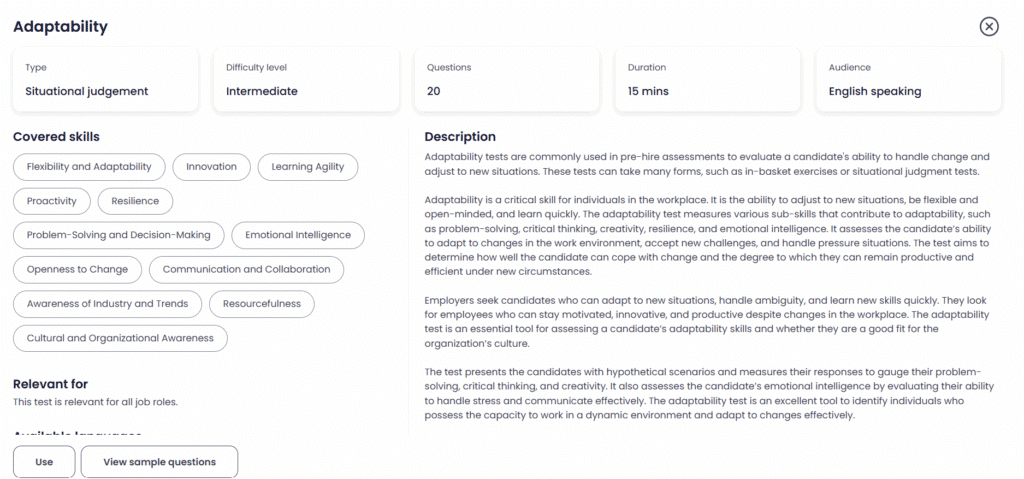
Adaptability skills test: Testlify’s adaptability test tests how well a candidate can adapt to changing situations, environments, and priorities. This test measures how well an individual handles unexpected challenges, new assignments, or changes in strategy. Candidates are usually given situational questions or situations that demand flexibility of thought and rapid changes in behavior. Workplace employees who perform well adapt easily to change, stay motivated under pressure, and change strategies without losing intensity or direction.
Cognitive flexibility test: Testlify’s cognitive flexibility test assesses how easily a candidate can switch between tasks, ideas, or viewpoints in response to new information. This test measures mental agilityhow effectively people can reframe, change strategies, or modify behavior in changing situations. It’s particularly valuable in jobs requiring rapid decision-making or multi-tasking. Well-scoring candidates are open-minded, flexible thinkers who can handle complexity and uncertainty well and are well-suited to fast-paced or changing industries.
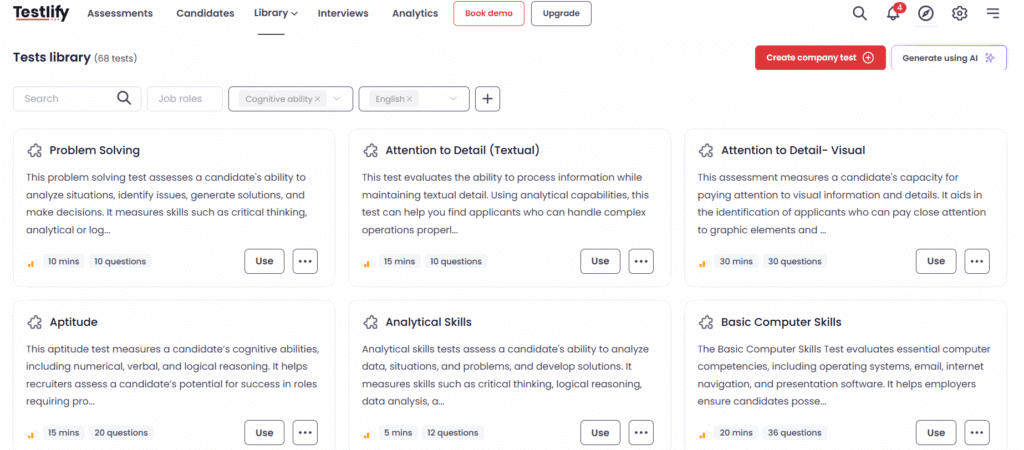
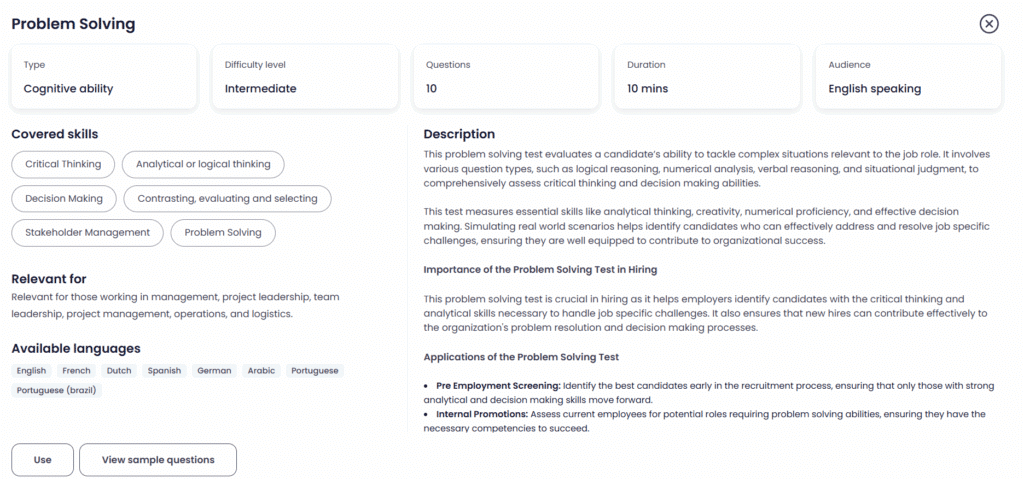
Problem-solving test: Testlify’s problem-solving ability test evaluates a candidate’s capacity to examine intricate situations, recognize underlying causes, and implement realistic solutions. It is one of the key measures of work adaptability since problem-solving frequently involves innovative thinking and the flexibility skills to experiment with new methods when conventional ones become insufficient. The test can comprise logical reasoning questions, case studies, or everyday situations.
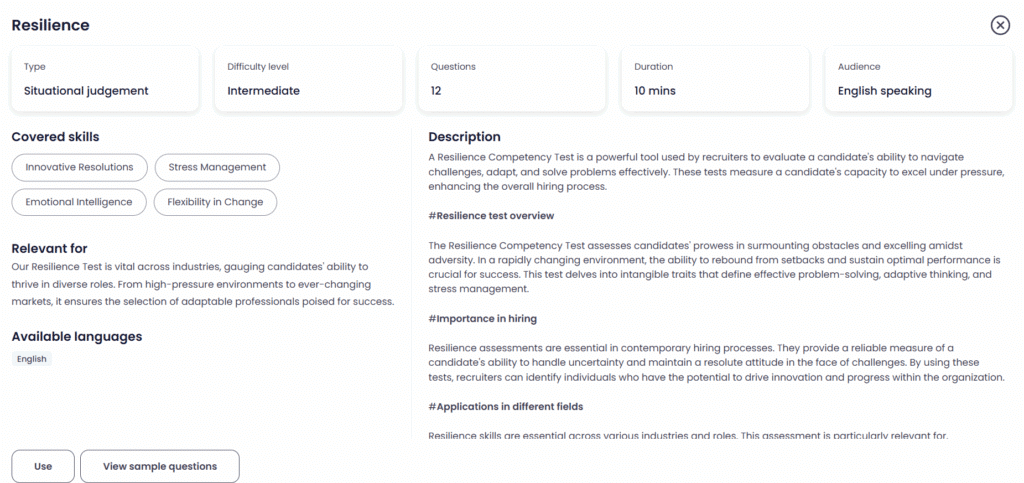
Resilience test: The resilience test measures the ability of candidates to perform under stress, bounce back from adversity, and handle high-pressure situations. It tests emotional flexibility how one recovers from setbacks, handles stress, and remains upbeat in the face of adversity. This is critical in flexible workers who need to change without losing steam. The test is usually based on scenario questions or personality tests to determine measures of perseverance, optimism, and self-regulation. Employees who are resilient are likely to excel in dynamic, high-risk environments.
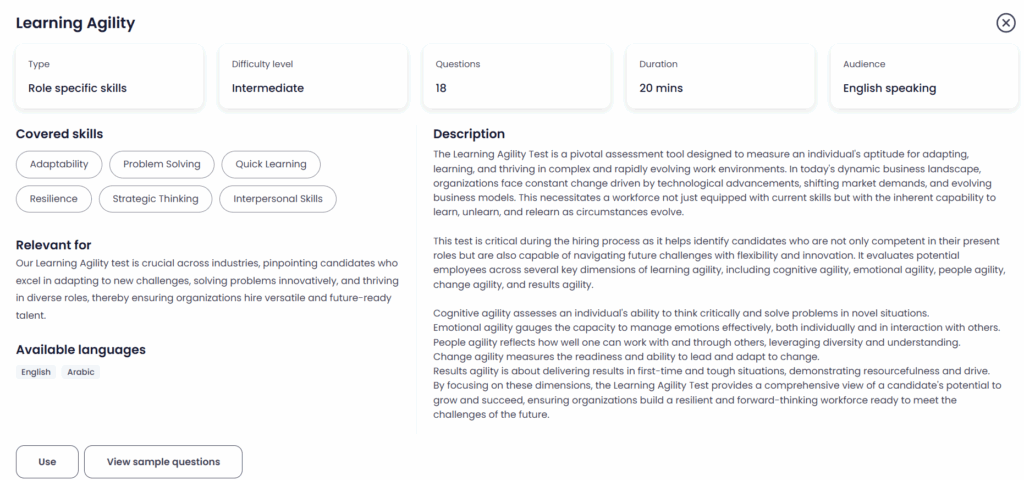
Learning agility test: Testlify’s learning agility test measures how efficiently and quickly a candidate learns from experience and uses that knowledge in new contexts. It captures both adaptability and potential for growth. The test could comprise pattern recognition activities, tasks in transferring knowledge, or reflective questions for decision-making. Those with high learning agility are receptive to feedback, curious, and willing to venture out of their comfort zones attributes that render them of extreme value in changing, innovation-focused work environments.
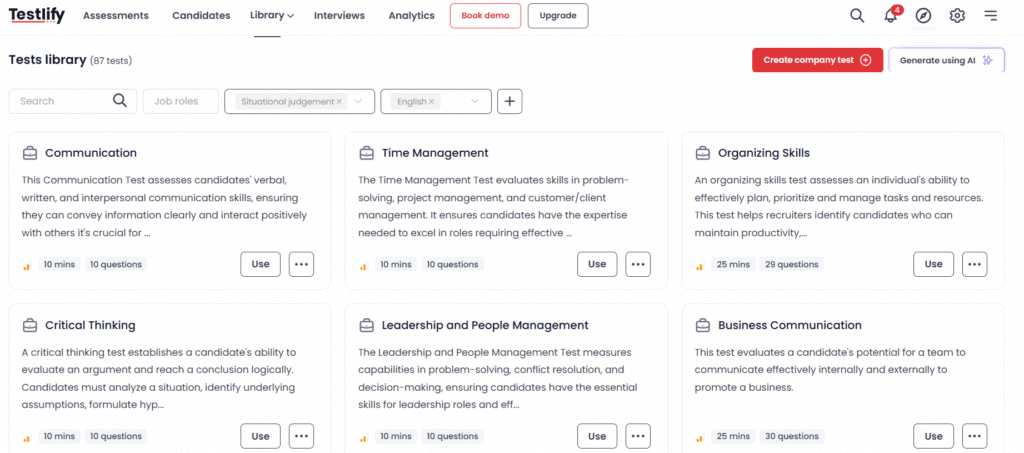
2. Situational Judgment Tests (SJTs)
Situational judgment tests present candidates with hypothetical scenarios that require adaptability. These tests allow you to evaluate their decision-making and behavioral tendencies in response to challenges.
Also Read: How poor candidate experience affects a business
Example Scenario:
“You’re working on a project with a tight deadline when your manager asks you to shift focus to a higher-priority task. What would you do?”
Candidates are typically asked to choose from multiple responses or rank them by preference.
Evaluation criteria:
- Prioritization skills
- Decision-making under pressure
- Communication and collaboration with team members
- Attitude toward shifting responsibilities
3. Behavioral interview questions
Behavioral interviews remain one of the best ways to assess past behavior as a predictor of future performance. Ask candidates to describe real-life scenarios where they had to demonstrate adaptability.
Sample questions:
- “Tell me about a time when you had to adapt to a significant change at work. What was the situation, and how did you handle it?”
- “Describe a time when you had to learn a new skill or tool quickly to complete a task. How did you go about it?”
- “Can you share an experience where your role or responsibilities changed unexpectedly? How did you respond?”
- “How do you handle sudden shifts in project priorities or deadlines?”
- “Have you ever worked in a situation where the guidelines were unclear? How did you manage?”
What to look for: Look for candidates who remain composed, solution-oriented, and positive in the face of uncertainty. Their examples should demonstrate initiative, problem-solving, and a willingness to learn.
4. Reference checks and peer feedback
Flexibility skills are often best judged by those who’ve worked closely with the candidate. Conduct reference checks that target adaptability.
Questions to ask references:
- “How does the candidate respond to changes in the workplace?”
- “Can you describe a situation where they had to adjust to unexpected challenges?”
- “How open is the candidate to feedback or learning new skills?”
- “Were they willing to take on new roles or help outside their job description?”
Conclusion
Flexibility skills make organizations bold enough to weather turbulence, foster creativity, and remain vibrant in the midst of adversity. But measuring flexibility during the hiring process requires more than a straightforward question to an interviewee regarding whether they are comfortable with change.
Using skills assessment tools, situational judgment tests, and behavioral interviews, you can get a clear snapshot of a candidate’s flexibility skills.
As you perfect your hiring process, remember this: Technical ability can get the job, but flexibility ensures long-term success. Being able to expand, change, and prosper under uncertain circumstances distinguishes excellent candidates from superlative candidates.
So, whether you’re looking to hire for startups, enterprises, or hybrid teams, incorporate flexibility assessment into your hiring process and create a workforce adaptable to anything.
For further reading, explore Finance Business Partner.
Frequently asked questions (FAQs)

Content Writer
Yashika Khandelwal is a Content Writer with 3+ years of experience creating research-backed content on hiring, talent assessment, and HR technology. She is a registered Organizational Psychologist and subject matter expert who combines behavioral science with practical recruitment insights to produce accurate, evidence-based content.
LinkedInRelated resources
View all
Candidate assessment
How do you assess and develop team collaboration skills?

Candidate assessment
Importance of assessing negotiation skills in recruitment for successful business deals

Candidate assessment
Importance of assessing active listening skills in recruitment for effective communication

Candidate assessment
Importance of assessing empathy in recruitment for enhanced employee engagement

Candidate assessment
Importance of assessing conflict resolution skills in recruitment for harmonious work environment

Candidate assessment
Pre-hire assessments for entertainment and media industry
Get started.
Hire on proof, not resumes.
Run your first skills-based assessment free — no credit card required.