
14 HR industry trends to look at in 2026
Discover top HR trends, from AI and remote work to DEI and employee well-being, to stay ahead in the ever-evolving HR landscape.

Human resource is the lifeblood of every organization. It’s true that these departments traditionally tended to be synonymous with the duties of hiring and firing and especially the processing of payrolls; however, how far things have changed over the past few decades.
It is now a fast-moving and strategically fit component of any organization, capable of affecting each of company culture, productivity, and long-term success.
Whether you are an HR veteran or someone looking to break into the field, knowing the current state of HR is important for navigating this ever-evolving landscape, let’s dive in the top industry trends to look at it 2025.
 ChatGPT
 Gemini
 Claude
 Grok
Grok Perplexity
What exactly is the HR industry?
The HR industry is essentially about managing an organization’s most valuable asset: its people. HR professionals strive to attract, develop, and retain talent, create and maintain workplace policies, ensure legal compliance, and promote a positive work environment.
In fact, an SHRM research found that 74% of today’s HR professionals believe that talent acquisition is the most important factor in organizational success. This further shows how significant HR is to the business world.

Key roles within the HR industry
if you’ve ever wondered what roles make up the HR department, here’s a closer look at some of the most essential positions that help keep everything running smoothly.
HR manager
An HR Manager is in charge of the day-to-day operations of the HR department. They ensure that recruitment, training, and employee relations are performed in line with the company’s goals. The role will often include developing HR strategies, managing team members, and maintaining company policies. According to LinkedIn, demand for HR Managers has grown by 6% year-over-year.
Recruiter
Recruiters are the ones who bring fresh talent into an organization. They identify, attract, and screen candidates—often working closely with hiring managers to match the right talent to the right roles. In the U.S. alone, there were approximately 300,000 recruiters, according to data from the U.S. Bureau of Labor Statistics, a number which is forecast to grow 5% by 2031.
Compensation and benefits manager
A Compensation and Benefits Manager designs and maintains compensation structures, which include salaries, bonuses, and benefits packages. They also keep track of industry standards to make sure their company stays competitive. In fact, a Glassdoor survey found that 55% of employees say that benefits packages influence their decision to accept a job offer.
L&D manager
L&D Managers focus on the development and continuous learning of employees. They design training programs to develop new skills, advance in their careers, and foster employee engagement with the company. Research proves that companies with strong L&D programs maintain their employees 34% more than those that do not.
HR specialist
HR professionals typically work in a specialized area of human resources, such as employee relations, payroll, or recruitment. They are usually experts in their respective fields and ensure that HR processes run smoothly and effectively.
HR director
The HR Director is a high-level position involving strategic HR planning. They preside over the whole Human Resources department and make major decisions regarding employee relations, reporting to the executive team. They help develop and put into practice strategies for Human Resource Management that contribute toward the growth of the organization.
The core functions of HR
The HR industry is vast, with numerous functions that contribute to the overall success of a business. Let’s explore some of the key HR functions that help organizations run smoothly.
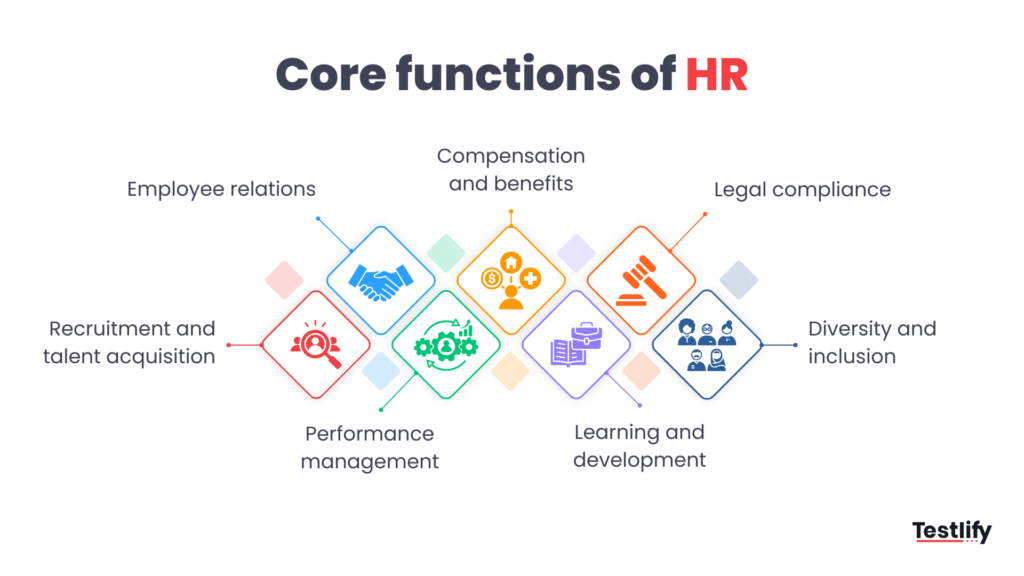
Recruitment and talent acquisition
Recruiting the right talent is one of HR’s most important functions. In fact, 60% of organizations report that finding and hiring talent is one of their biggest challenges. HR professionals are responsible for creating job descriptions, posting vacancies, conducting interviews, and onboarding new employees.
According to a LinkedIn report, 70% of candidates say they’ve rejected job offers due to poor recruitment experiences. This makes it crucial for HR teams to ensure a positive, transparent, and engaging hiring process.
Employee relations
Good employee relations play a key role in maintaining healthy and productive working environments. In such cases, HR professionals serve as mediators and address grievances or concerns employees might have.
A satisfied workforce means the bottom line benefits; Gallup revealed that companies that have engaged workers are 21% more likely to be more profitable than organizations with disengaged workers.
Performance management
HR plays a significant role in managing employee performance. HR sets clear expectations, provides feedback, and conducts performance reviews to align employees with the organizational goals. In fact, companies that implement formal performance management systems are 3.5 times more likely to be high-performing organizations.
Compensation and benefits
One of the biggest roles of HR is managing employee compensation. The fact that employees are paid fairly and have attractive benefits is essential for retention and motivation. As stated above, compensation and benefits have a direct effect on whether or not candidates accept a job offer. According to SHRM, 92% of HR professionals believe that competitive compensation packages help retain top talent.
Learning and development
Employee development is not just training but helping people reach their potential. Learning and development programs are designed to enhance employees’ skills and help them grow professionally. According to PwC, 77% of employees would stay at a company longer if it invested in their development.
Legal compliance
One of the more “behind-the-scenes” components of HR is ensuring compliance with local, state, and federal laws. You must keep abreast of labor laws, workplace safety standards, anti-discrimination laws, and the like. The Department of Labor reported that more than $2 billion in wage theft was recovered in 2023 alone; therefore, proving the importance of compliance in HR.
Diversity and inclusion
A good diversity and inclusion strategy is very important for the positive culture of a workplace. HR teams implement D&I initiatives, recruit diverse talent, and create inclusive environments. According to a McKinsey report, companies in the top quartile for racial and ethnic diversity are 35% more likely to outperform their competitors.
Top 14 HR industry trends to look at in 2025
- Artificial intelligence (AI) and automation in HR
- Recruitment technology
- Remote and hybrid work models
- Employee well-being is a top priority
- Diversity, equity, and inclusion (DEI) initiatives
- Employee experience
- Data-driven HR decisions
- Upskilling and reskilling
- Gig economy
- Employee recognition and engagement
- Agile HR
- Employee self-service
- Flexible benefits and compensation
- Leadership development and succession planning
1. Artificial intelligence (AI) and automation in HR
Artificial Intelligence is no longer solely for tech companies; it’s everywhere. In fact, 90% of HR professionals are already using AI for tasks like recruiting and employee management, and that number is only expected to grow.
AI can automate most tedious tasks like scheduling interviews and even answering employee questions. It makes HR processes faster, more accurate, and less prone to errors on the part of humans.
For instance, AI tools can sift through thousands of resumes in a matter of seconds, enabling HR teams to reach out to the best candidates in record time.
Automation is the biggest ally for HR. Companies are increasingly automating onboarding, payroll, and benefits management in order to lessen manual workloads and increase efficiency. McKinsey suggests automation may save organizations billions of dollars yearly, and the same goes for HR.
2. Recruitment technology
AI is revolutionizing recruitment by helping HR teams filter through resumes and even conduct initial candidate interviews. According to LinkedIn’s 2024 Global Talent Trends, 76% of talent professionals are already using AI to enhance their recruitment process. By automating the more repetitive tasks, you can focus on the more human elements in the process: candidate experience.
Skills assessment tests and video interviews are here to stay, allowing companies to hire talent globally. HR teams are leveraging skills assessments and video interviewing platforms to assess candidates’ skills and cultural fit, making the process quicker and more efficient.
3. Remote and hybrid work models
Remote work is no longer a “temporary solution” but has evolved into a long-term strategy for many organizations. A recent PwC survey found that 72% of executives plan to maintain hybrid or remote work in the future. HR professionals are now tasked with ensuring remote workers feel just as connected, supported, and engaged as those in-office.
Hybrid work environments, where employees can work from both the office and home, will likely become standard practice. HR teams are figuring out how to create policies that allow for blends of both in order to keep team dynamics intact while giving employees flexibility.
4. Employee well-being is a top priority
By 2025, mental health will no longer be a nice-to-have but a critical component of employee well-being. A recent Gallup poll revealed that 54% of employees experienced burnout, therefore underlining the need for mental health initiatives. HR actively supports mental health through counseling programs, stress management workshops, and access to professionals in the field of mental health.
HR is taking a holistic approach to wellness, recognizing that employees’ physical, mental, and emotional well-being are all interconnected. Offering wellness programs—ranging from gym memberships to mindfulness apps—is now a competitive advantage in the job market. Over 77% of employers offer some form of wellness program to attract top talent.
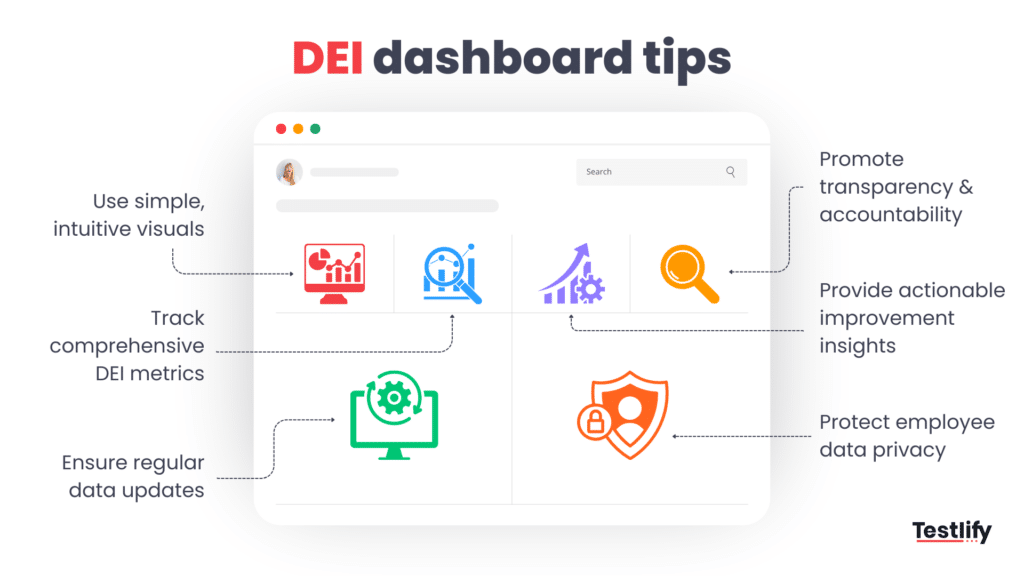
5. Diversity, equity, and inclusion (DEI) initiatives
DEI is becoming much more than just a buzzword. Indeed, 84% of employees say they would opt to work for an organization with strong DEI initiatives, according to a Glassdoor report. Companies are focusing on creating diverse workforces, fostering inclusive environments, and ensuring equitable opportunities for all.
While it’s all about bringing in diverse talent, HR also focuses on creating a truly inclusive workplace. This consists of providing programs to reduce unconscious bias, setting up employee resource groups, and constantly reviewing company culture so that inclusivity doesn’t become a mere formality.
6. Employee experience
In 2025, HR Professionals will be adopting a more holistic approach toward the employee experience, recognizing that it influences engagement, performance, and retention. From first touch in recruitment to the last day on the job, each interaction contributes to the overall experience.
A study by Gallup indicates that organizations with highly engaged employees outperform their competitors by 21%. As such, companies are investing more in understanding what makes employees feel valued, engaged, and motivated at work.
One size no longer fits all. Employees expect a tailored experience, whether it’s in the form of career development opportunities or flexible work options. 81% of employees say they would prefer benefits that match their personal preferences, according to a PwC study.
7. Data-driven HR decisions
Data is becoming one of the cornerstones of HR. Use of some form of data analytics is done by 85% of HR professionals, from guiding decisions around talent acquisition to employee retention strategies. Through analyzing trends, HR professionals can make more informed evidence-based decisions about hiring, training, and engagement.
For instance, predictive analytics can help HR identify employees who might be at risk of leaving, enabling proactive retention strategies.
Beyond engagement surveys, HR professionals are now tracking a wide range of metrics, including employee productivity, turnover rates, and satisfaction. These metrics help HR teams understand what’s working and what needs improvement.
8. Upskilling and reskilling
Upskilling is important with the fast pace of technological change. 74% of employees feel they’re not reaching their full potential at work, and this gap presents an opportunity for HR to provide training and development programs that help employees learn new skills. As automation rises, employees need to learn new tools in order to stay competitive.
As industries evolve, so do the skills in demand. Reskilling programs are a necessity for any organization that wants to be at the forefront of the curve. Through reskilling, HR can help employees move into new roles and avoid layoffs. LinkedIn’s 2024 Workforce Learning Report found that 69% of workers are interested in reskilling programs to expand their career opportunities.
9. Gig economy
The gig economy is booming: 36% of the U.S. workforce now works as freelancers or independent contractors, suggests Upwork. HR professionals are adjusting to the shift by creating policies that address the needs of both full-time employees and gig workers.
Freelancer management means an alternative approach in onboarding, compensation, and integration into the culture of a company. HR teams are ensuring freelancers have the resources they need while maintaining their autonomy. In so doing, they can develop a more inclusive and flexible work environment.
10. Employee recognition and engagement
Employee recognition is a powerful tool; in fact, according to SHRM, 55% of employees reported that they would be more likely to continue working with a company that regularly recognized them. Companies that celebrate achievements foster greater job satisfaction and loyalty.
Engagement platforms like Officevibe and 15Five allow HR to gather real-time feedback, measure employee sentiment, and respond to concerns proactively. These tools help HR create a more responsive, engaged work culture.
11. Agile HR
Agility is no longer just for tech teams. 42% of HR leaders now apply agile principles to their processes, improving HR’s flexibility in responding to changes. Whether it’s adjusting policies for a remote workforce or quickly filling a key role, agile HR enables HR teams to be more adaptive.
Agile HR also supports better cooperation among departments. In cooperation with leadership, IT, and other departments, HR will design strategies aligned with broader organizational goals and hence lead to improved outcomes.
12. Employee self-service
Employee self-service platforms are becoming an essential part of HR operations. According to HR Technologist, 60% of HR leaders plan to invest in self-service tools this year. These platforms allow employees to manage their personal details, request time off, and view pay stubs without needing to go through HR, freeing up HR professionals to focus on higher-value tasks.
13. Flexible benefits and compensation
The workforce today is demanding benefits that suit their needs. 72% of the workforce says that they would prefer a customized benefits package that can respond to their personal circumstances. HR is moving toward increased flexibility, offering employees the chance to pick and choose what works best for them in terms of everything from health insurance to retirement plans.
Another trend is transparency around pay. A Glassdoor survey found that 55% of employees prefer companies that disclose salary ranges upfront. This brings about trust and eliminates gender and racial pay gaps, hence fairness in the workplace.
14. Leadership development and succession planning
Organizations are recognizing the need for strong leaders. In fact, 85% of executives say leadership development is a top priority for them. HR teams are investing more in leadership training to ensure that their future leaders are prepared to manage and inspire teams.
Succession planning has become more critical than ever. Identifying high-potential employees and providing them with career development opportunities will build a pipeline of leaders ready to step into key roles when needed.
Conclusion
Technology, changing workplace dynamics, and greater focus on employee well-being are the factors propelling rapid change in the industry. HR practitioners are no longer just managing the workforce; they are shaping the very essence of work itself. New tools, strategies, and trends can help place these practitioners at the forefront of success for their companies.
As the HR landscape continues to evolve, one thing is clear: the role of HR has never been more important. If you’re in HR, the future is full of exciting possibilities. Stay flexible, stay curious, and most importantly, stay focused on creating the best possible experience for the people who power your organization.

Content Writer
Yashika Khandelwal is a Content Writer with 3+ years of experience creating research-backed content on hiring, talent assessment, and HR technology. She is a registered Organizational Psychologist and subject matter expert who combines behavioral science with practical recruitment insights to produce accurate, evidence-based content.
LinkedInRelated resources
View all
HR & recruitment
What is high-performance culture and how to build one?

HR & recruitment
7 Proven strategies to combat workplace negativity today

HR & recruitment
What is a recruitment fair? (Tips for attending one)

HR & recruitment
Are T-shaped skills the future of hiring? Here’s why

HR & recruitment
Beyond clinical skills: using AI to assess soft skills in healthcare hiring

HR & recruitment
How to conduct a skills audit?
Get started.
Hire on proof, not resumes.
Run your first skills-based assessment free — no credit card required.