
7 ways to start your talent search and sourcing strategy
Discover a comprehensive guide to talent search, covering strategies, tools, and tips to help recruiters find and hire the right candidates effectively.

Finding the right talent can differentiate between winning and losing in the recruitment world. The quality of people you bring into your organization is where the real success lies, and this process of identifying and attracting the best candidates and getting them on board can be so much art and science. When done well, you bring top performers with the technological know-how and fit well within your organizational culture.
This blog will help you learn how to streamline your talent search process. We’ll cover everything from understanding the talent pool to leveraging technology and maintaining strong candidate relationships.
 ChatGPT
 Gemini
 Claude
 Grok
Grok Perplexity
What is talent search?
Talent search identifies, attracts, and recruits top candidates for open positions. It involves a proactive approach to finding talent rather than waiting for applicants to come to you. Unlike traditional recruitment methods, talent search goes beyond posting job ads on job boards. It encompasses building a pipeline of skilled candidates, utilizing various sourcing techniques, and leveraging modern recruitment tools.

Why is talent search important?
The talent search is crucial for several reasons:
- Competitive advantage: Companies that consistently hire top talent outperform their competitors. Effective talent search helps you gain access to skilled candidates before other organizations snatch them up.
- Efficiency: With the right approach to talent search, you can reduce the time it takes to fill positions and decrease your reliance on expensive recruitment agencies.
- Better cultural fit: A well-planned talent search enables you to find candidates who align with the skills required for the role and your company’s culture and values.
- Retention: Hiring the right person the first time around leads to better retention rates and less turnover, which saves your organization time and money in the long run.
7 ways to start your talent search and sourcing strategy
A good talent search and sourcing strategy is the starting point of getting good hires. Here are seven actionable steps to help you get started.
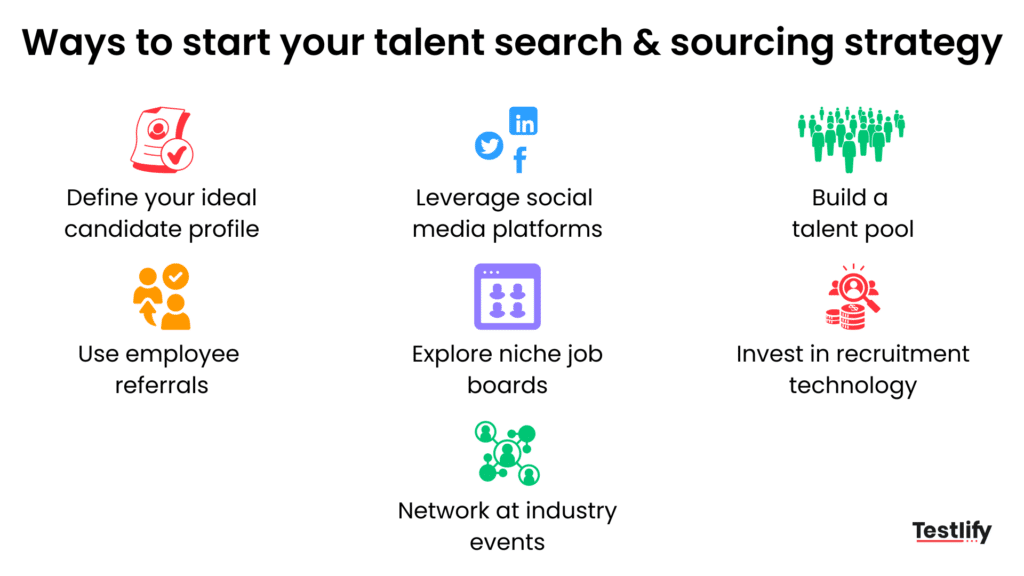
1. Define your ideal candidate profile
You start defining the ideal skills, qualifications, and experiences required by the ideal candidate. Also define their cultural fit within your organization. A well-defined profile ensures that the right talent is targeted.
2. Leverage social media platforms
Platforms such as LinkedIn, Twitter, and Instagram are excellent sources of connecting with active and passive candidates. Advanced search tools, hashtags, and industry groups really help connect with the right talent.
3. Build a talent pool
Keep an updated database of qualified candidates for future requirements. Engage with these candidates from time to time through updates, newsletters, or even personalized messages to keep them interested.
4. Use employee referrals
Your employees can be your best recruiters. Launch a referral program with attractive incentives to encourage employees to recommend talented individuals in their networks.
5. Explore niche job boards
General job boards are great, but niche platforms like GitHub (for developers) or Behance (for designers) can help you find specialized talent.
6. Invest in recruitment technology
Apply tools such as applicant tracking systems (ATS), AI-driven platforms, and skills assessment tools to streamline your process of finding talent and cut down the time it takes in finding the best candidates.
7. Network at industry events
Attend job fairs and conference, webinars to connect with professionals in that trade. Face-to-face can leave a lot of impact in discovering the hidden talent.
How to start your talent search: Step-by-step process
Starting a talent search involves steps that lay the groundwork for finding the perfect candidate. Here’s a step-by-step breakdown:
Step 1: Define your ideal candidate
Before searching for talent, you need to know exactly what you’re looking for. This means understanding the job role, the skills required, and the personality traits that would fit your company. Take the time to create a comprehensive job description and person specification.
- Job description: This should detail the primary duties, required qualifications, experience, and the key responsibilities associated with the role.
- Person specification: This is a more detailed look at the ideal candidate’s skills, personal qualities, and values. Consider whether you need a visionary, a team player, or someone with specific technical skills.
Step 2: Build a candidate sourcing strategy
Once you know the type of candidate you’re seeking, you need to determine where and how to find them. There are several ways to source candidates, and it’s best to use a combination of methods to reach a broad talent pool.
Traditional methods
- Job boards: Websites like Indeed, LinkedIn, and Glassdoor allow you to post job openings and attract candidates actively searching for opportunities.
- Recruitment agencies: External agencies can help you find candidates quickly, especially for hard-to-fill or specialized roles.
- Internal candidates: Don’t forget to consider your current employees for internal promotions or transfers.
Innovative sourcing methods
- Social media: Platforms like LinkedIn, Twitter, and even Instagram can be great places to connect with passive candidates who aren’t actively applying for jobs but may be open to new opportunities.
- Networking: Meet potential candidates at industry conferences, webinars, and professional events. Sometimes, the best talent is found through personal connections.
- Talent pools and databases: Keep track of past applicants, people you’ve spoken to at networking events, and potential candidates you’ve found through previous searches. Building a strong talent pool can save time in future searches.
Step 3: Screen applications
Once you start receiving applications, it’s time to begin the screening process. This can be one of the most time-consuming steps, but ensuring you’re only moving forward with the best candidates is crucial.
- Automate: Use applicant tracking systems (ATS) to filter through resumes and identify keywords and qualifications that match the job description. Assess candidates with skills assessment platforms.
Step 4: Conduct candidate interviews
The interview process is where you get to know the candidate beyond their resume. It’s important to ask the right questions to evaluate their skills, experience, and cultural fit.
- Structured interviews: Prepare questions in advance that will allow you to evaluate each candidate against the same criteria. This makes your interview process more objective and fair.
- Behavioral interviews: Ask candidates to provide examples from their past work experience. Behavioral interview questions (e.g., “Tell me about a time you had to resolve a conflict with a colleague”) give insight into how a candidate behaves in specific situations.
- Technical assessments: You may want to test the candidate’s technical abilities for certain roles. This can be through coding tests, written exercises, or practical problem-solving scenarios.
Step 5: Check references and conduct background checks
Before extending an offer, verifying that the candidate has a solid track record is essential. Conduct reference checks with previous employers to confirm their work history, performance, and character. A background check can also help ensure there are no surprises down the line.
Leveraging technology in talent search
The world of recruitment has changed dramatically with the rise of technology. Modern tools can streamline and enhance your talent search in previously unimaginable ways. Here are some key tools and technologies that can improve your talent search:
1. Applicant Tracking System (ATS)
An ATS helps automate the recruitment process, from posting job ads to tracking candidates throughout the hiring funnel. Popular ATS platforms like Greenhouse, Lever, and Workday can integrate with job boards, manage resumes, and allow easier collaboration between recruiters and hiring managers.
2. Ai-powered assessment tools
Artificial intelligence can help you assess candidates’ skills, predict which candidates are most likely to succeed, and even schedule interviews automatically. Tools like Testlify use AI to evaluate candidates based on their answers, video interviews, or cognitive abilities.
5. Video interviewing platforms
With remote work becoming more common, video interviewing platforms like Testlify have become essential for recruiters. These tools allow you to interview candidates from anywhere worldwide, saving time and increasing efficiency.
4. Social media recruiting tools
To tap into passive talent, social media tools like LinkedIn Recruiter help you search and contact candidates directly on social media platforms. These tools make it easier to identify people who may not be actively applying but are open to opportunities.
5. Job boards and aggregators
Sites like Indeed, ZipRecruiter, and Glassdoor allow you to post job ads and aggregate resumes from various platforms. This gives you access to a wide range of candidates from all over the web.
Best practices for an effective talent search
Having the right tools is important, but the magic happens when you combine them with best practices that ensure a seamless and efficient talent search.
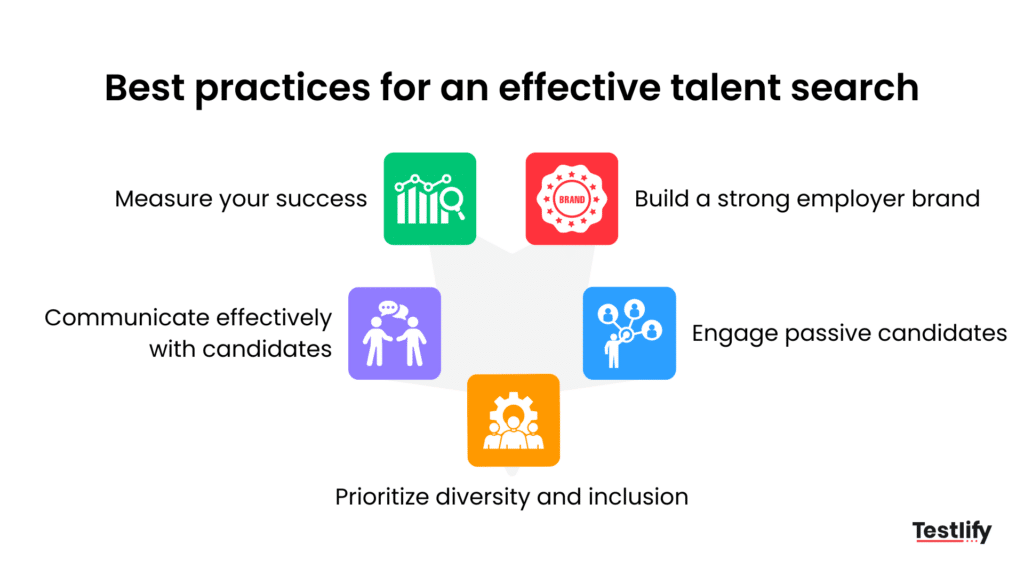
1. Build a strong employer brand
A strong employer brand makes it easier to attract top talent. Candidates today want to work for companies that share their values and offer a positive work environment. Showcase your company’s culture on your website, social media, and job descriptions to make your organization more attractive to candidates.
2. Engage passive candidates
Many of the best candidates need to look for a job actively. These “passive” candidates are often already employed and may need more persuasion to consider a new opportunity. Build relationships with them over time, keep them informed about your company’s updates, and reach out when the right position becomes available.
3. Prioritize diversity and inclusion
A diverse workforce is not only more innovative, but it also attracts a broader range of candidates. Ensure your talent search process is inclusive and actively seeks candidates from various backgrounds, experiences, and perspectives.
4. Communicate effectively with candidates
A key element of a successful talent search is maintaining clear and open communication with candidates throughout the process. Whether you provide feedback after an interview or inform candidates that they didn’t get the job, clear communication goes a long way in building a positive relationship and improving your company’s reputation.
5. Measure your success
After each hiring cycle, assess your talent search process. Look at metrics like time-to-hire, cost-per-hire, and the quality of hires. Use this data to fine-tune your methods for the future.
Conclusion
A search for talent is not just opening up a position, it is finding the right people to help your company succeed. You will attract top talent in a competitive market if you are proactive, and you use the right tools and best practices.
The recruiter, as part of shaping the immediate future of their organizations, has the most important role ahead of them: to effectively develop and refine the talent search process and continuously adapt to new trends and technologies.
Frequently asked questions (FAQs)

Content Writer
Yashika Khandelwal is a Content Writer with 3+ years of experience creating research-backed content on hiring, talent assessment, and HR technology. She is a registered Organizational Psychologist and subject matter expert who combines behavioral science with practical recruitment insights to produce accurate, evidence-based content.
LinkedInRelated resources
View all
HR & recruitment
HR Benchmarking: Types, benefits and challenges

HR & recruitment
Agile recruitment: Step-by-step process and benefits

HR & recruitment
Job Crafting: Types, Examples, and How to Do It (2026)

HR & recruitment
Best practices to ensure authenticity in candidates’ skills assessment tests
HR & recruitment
Purple squirrel in recruitment: Are they worth the hype?

HR & recruitment
What is human resource development: Guide for recruiters
Get started.
Hire on proof, not resumes.
Run your first skills-based assessment free — no credit card required.