
Top unconventional techniques to make lateral hires
Discover unconventional techniques to make a lateral hire. Practical, tested strategies to find top talent faster and smarter.

Shocking data reveals that nearly 70% of professionals are open to changing jobs. Competition for experienced talent is at an all-time high now. In this scenario, if you know how to do lateral hiring, you can give your business a strong edge.
A lateral hire is simply when a company hires someone who already does a similar job elsewhere. Instead of hiring a fresher or training from scratch, companies onboard a professional who knows the work and understands the industry.
A professional lateral hiring strategy ensures impact from day one. Let’s explore unconventional techniques to attract, assess, and secure top lateral hires before your competitors do.
 ChatGPT
 Gemini
 Claude
 Grok
Grok Perplexity
Key takeaways
- Lateral hiring brings in experienced talent who need little training.
- Unconventional methods help you find candidates others miss.
- Small, skill-based talent pools improve targeting and fit.
- Short, realistic assessments speed up screening and boost fairness.
- Fast and transparent processes win the best candidates before competitors.

How to do lateral hiring? (quick playbook)
Let’s walk through a step-by-step guide to understand the process of lateral hiring:
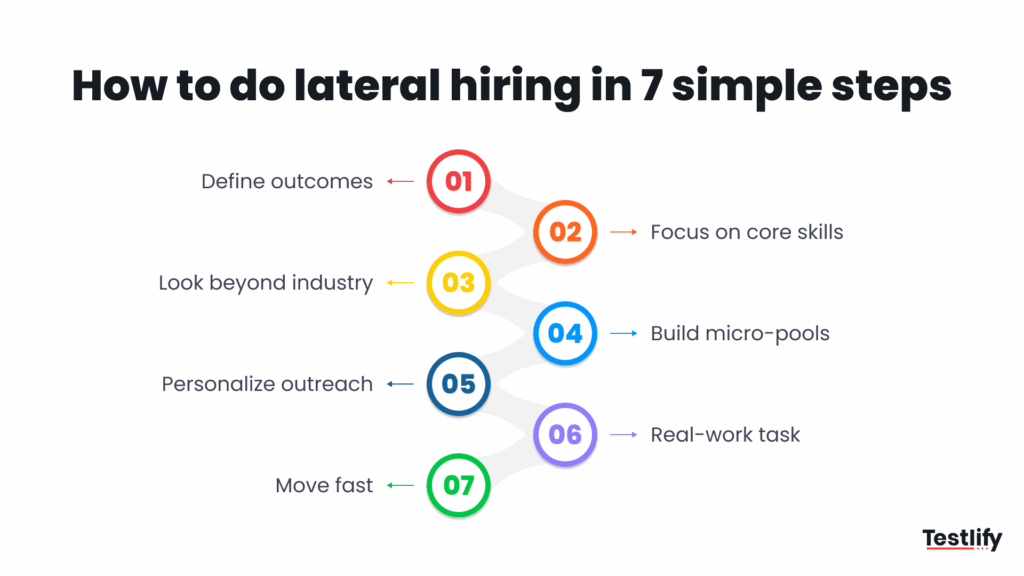
- Define outcomes before the role: Be clear about what success looks like. Instead of a long list of duties, define what the person should achieve in the first 3–6 months. This helps filter the right candidates early.
- Separate must-haves from nice-to-haves skills: Too many job ads try to cover everything. Focus on the core skills that matter most. This gives you access to a broader, stronger talent pool.
- Look beyond your industry: Often, the best lateral hire doesn’t come from a competitor but from a related field. A retail manager might succeed in logistics, or a corporate lawyer could add value in compliance.
- Build micro-pools of candidates: Instead of hundreds of resumes, create a shortlist of 10-20 firm profiles per role. Export data from LinkedIn filters, referrals, alumni networks, or niche communities.
- Reach out with value, not a generic job pitch: When approaching passive candidates, highlight how the role adds to their growth. A personalized message works better than a mass send.
- Validate with a short, real-world task: Rather than long interview cycles, give candidates a 20-minute role-relevant task. It shows their ability and helps you compare candidates fairly.
- Move fast and set a 90-day plan: Top lateral talent won’t wait around. Keep your process tight, give feedback quickly, and present a clear plan for their first three months to build trust.
Now that you know the playbook for how to do lateral hiring step by step, it’s time to move beyond the basics. The truth is, the smartest recruiters are already experimenting with unconventional techniques that deliver outsized results.
These are strategies that you won’t be able to uncover through surface-level research. Many of these insights come straight from real forums and practitioner discussions, where the buzz points to what works in today’s job market.
Let’s shift our focus there and explore the approaches that are quietly reshaping lateral hiring success.
Tactic 1: Find great passive candidates who aren’t applying
Sometimes, the best lateral hires are often the ones who aren’t scanning job boards at all. These are skilled professionals who are already performing well in their current roles. And to attract them, you need a different playbook.
Start by going beyond the obvious. LinkedIn filters and alumni groups are good, but they’re just the surface. Some of the most effective sourcing happens in places where professionals actually spend their time:
- Slack and Discord communities built around trades, coding, or design. Chipotle, for example, pulled in over 23,000 applicants by hosting a career fair on Discord.
- Open-source platforms like GitHub or GitLab are for engineers, where real contributions show skill far better than résumés.
- Portfolio hubs like Behance, Dribbble, or Kaggle, where designers, data scientists, and problem-solvers showcase live work.
- Local associations and trade groups are especially useful in law, construction, or specialized technical roles.
Generic “We’re hiring” messages won’t work. These candidates aren’t actively searching, so your outreach has to answer why now.
Lead with impact, career growth, or flexibility rather than a list of duties. For example, “This role would let you lead projects across multiple markets” is far more persuasive than “We’re looking for five years of experience.”
Not every passive candidate will move right away. That’s why it helps to maintain a light but steady connection. Share helpful resources, invite them to webinars, or simply check in every few weeks. The idea is to build trust until the timing is right.
Finding passive candidates requires effort, but it pays off. Now, once you’ve identified strong talent, the next step is narrowing down by specific skills. That’s where building tiny, skill-focused talent pools comes in.
Tactic 2: Build tiny talent pools around one specific skill
One of the biggest mistakes in lateral hiring is casting the net too wide. Instead of drowning in hundreds of resumes, savvy recruiters build small, skill-focused pools of the appropriate candidates.
A focused pool saves time and sharpens your evaluation. If you need a lateral hire for a Salesforce CPQ role, a pool of 12 proven specialists will get you results faster than a pile of 200 general CRM profiles.
How to build talent pools?
- Map the skill first: Use skills adjacency to uncover hidden fits (e.g., someone with a strong RevOps background could transition into a CPQ role).
- Narrow by specialization: For a law firm, build separate micro-pools for M&A, IP, and litigation instead of one big “legal” list.
- Revisit silver medalists: Candidates who were close seconds in previous hiring cycles often become your best lateral hires when scope or timing changes.
Keep your pools warm with personalized outreach. Instead of waiting until a role opens, nurture relationships so you already have a short, ready list when the requirement arises.
Micro-pools let you stay sharp and efficient, but identifying skill fit is only half the story. To know if a candidate can perform, you need to see them in action. That’s where short, real-work assessments come in. That’s our next tactic.
Tactic 3: Use short, role-specific assessments (20 minutes)
Resumes and long interview panels often fail to show how someone will actually perform on the job. The more innovative way is to use a short, role-realistic assessment.
Why it works
- Keeps candidates engaged instead of overwhelming them.
- Reveals practical ability rather than polished interview talk.
- Ensures fairness by testing all candidates under the same conditions.
How to design role-realistic assessments?
First, shortlist candidates into a small pool. Then, give them a quick, meaningful task that reflects the role.
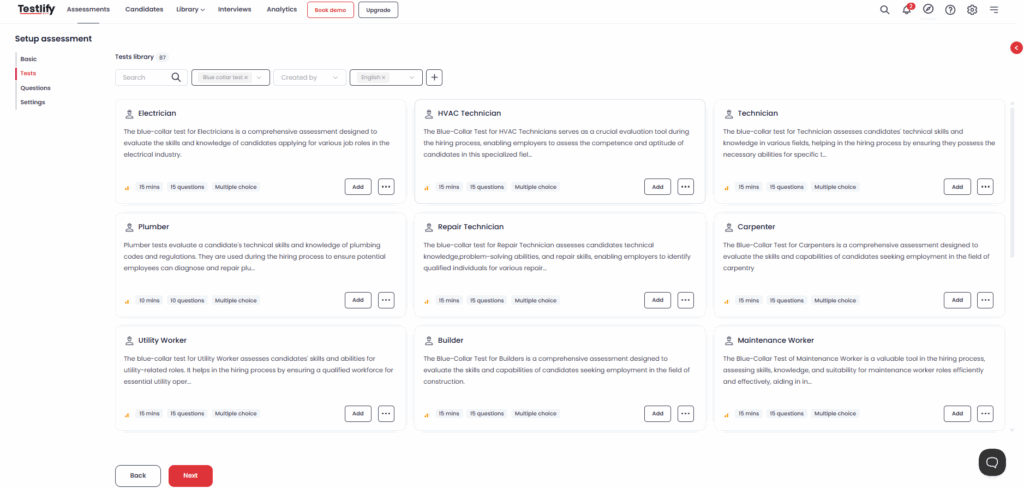
For a developer, it could be debugging a snippet; for a sales manager, drafting a mock pitch; for legal lateral hires, a short case review. The idea is to test what matters most without dragging candidates through a long process.
In Testlify, for example, you can build a flow that starts with a quick skills test (3,500+ Test Library), add an AI video interview, or an AI audio interview.
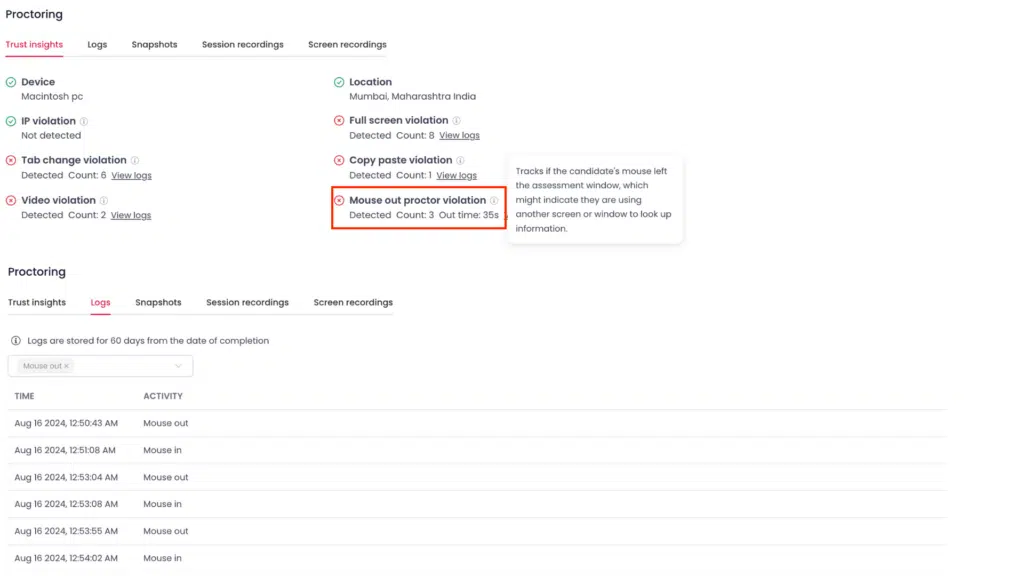
Most importantly, AI-powered proctoring keeps the process fair for both parties. The candidate gets a seamless experience, and you get structured results without scheduling headaches.
These small tasks also reveal how someone communicates, organizes, and handles pressure. These are clues about culture fit you won’t find in a CV. A 20-minute challenge can often tell you more than hours of interviews.
Tactic 4: Build trust fast with proof, not promises
Even when skills look right on paper, the real question in a lateral hire is trust. Will this person adapt quickly, fit the team, and deliver? The best way to answer that is through proof, not promises.
Referrals and peer signals
Candidates who come through referrals or alumni groups often adapt faster because they already carry credibility. A trusted colleague’s recommendation is worth more than any résumé line.
Short trial projects
Instead of relying on endless interviews, offer a paid micro-project that runs for a week or two. It lets both sides test the fit. Many firms now prefer this “try before you hire” approach because it removes guesswork.
Keep decisions structured
Use a simple checklist: Is the scope clear? Is compensation aligned? Is the manager on board? A quick, fair decision process shows candidates you value their time.
Tactic 5: Process experiments that win on speed & experience
Many great lateral hires drop out simply because the hiring process drags on. Speed and a smooth experience are expectations.
What to try | Why it helps |
|---|---|
Fewer interview rounds | Keeps the process lean, avoids candidate fatigue. |
Clear timelines for feedback | Shows respect and builds trust with candidates. |
Run checks in parallel | Cuts weeks of waiting by overlapping steps. |
Instead of building a long, rigid funnel, think of your process like a relay race. It’s smooth handoffs, no pauses, and everyone works in sync.
Market context: Why unconventional works now
Nearly three-quarters of job seekers are passive. And on top of that, the average hiring process drags on for more than 40 days. That means by the time you complete rounds of interviews, your candidate may already be off the market.
Conventional methods like postings and resumes simply don’t work fast or personally enough. People expect clarity, speed, and proof, not promises. That’s why strategies like community sourcing, micro-assessments, or trial hires perform better.
“A good rule of thumb is to hire only people who are better than you. Do not compromise. Ever.” – Laszlo Bock, ex-Google SVP People Ops.
Make your next lateral hire faster.
Lateral hiring works best when it feels less like a process and more like a conversation. The truth is, the strongest candidates usually aren’t active on job boards; they’re busy proving their skills in real roles. Reaching them means trying different routes, testing skills in context, and building trust quickly.
In the end, the companies winning today are building more innovative teams by hiring experienced people who can make an impact from day one. If you’re serious about finding the right candidate, now is the time to rethink your playbook and add platforms like Testlify to your talent acquisition strategy.
Frequently asked questions (FAQs)
Related resources
View all
Hiring Guide
How to address salary parity concerns in lateral hires

Hiring Guide
A roadmap to success with strategic talent planning

Hiring Guide
7 reasons you need a consistent hiring process in 2026 (+ how to build one)

Hiring Guide
What is motivational fit and its importance in hiring?

Hiring Guide
5 ways to improve the legal base of your hiring process

Hiring Guide
5 Creative ways to find blue-collar workers in a competitive market
Get started.
Hire on proof, not resumes.
Run your first skills-based assessment free — no credit card required.