
What is role mapping? Process, benefits
Learn about role mapping, its importance, steps, benefits, challenges, and tools to streamline hiring and employee development.

One of the most important aspects of managing a workforce is ensuring that the right people are in the right roles. This is where role mapping comes into play. For HR professionals, role mapping is essential to ensure an organization’s talent is effectively aligned with its business goals.
In this blog, we will explore the concept of role mapping in-depth, why it’s important, the steps involved, how it impacts employee development, potential challenges, and the tools that can support this process.
 ChatGPT
 Gemini
 Claude
 Grok
Grok Perplexity
What is role mapping in HR?
Role mapping in HR refers to the systematic process of identifying, defining, and organizing the roles and responsibilities within an organization. It involves analyzing the current workforce, understanding the business objectives, and aligning them so that employees’ skills, experiences, and potential are matched with the right roles. Essentially, role mapping ensures that each person is placed in a role where they can contribute the most to the organization’s success.
This process isn’t just about filling vacancies or reorganizing teams. It’s about a strategic alignment of talent. HR professionals engage in role mapping to evaluate the existing roles within an organization, determine if those roles are still aligned with current business goals, and adjust accordingly. This alignment improves performance, clarifies job functions, helps identify skill gaps, and creates opportunities for employee development.

Why is role mapping important?
Role mapping has become an increasingly important strategy for HR professionals because of its wide-ranging benefits. Here’s why it matters so much:
1. Aligns talent with business goals
One of the primary reasons role mapping is so important is that it helps align the workforce with the organization’s long-term goals and strategy. By clearly defining roles and mapping them to the strategic objectives of the company, HR ensures that every employee is working towards the same business vision. When employees understand how their individual roles contribute to larger business outcomes, they are more likely to stay engaged and productive.
2. Improves organizational efficiency
When roles are clearly defined and responsibilities are mapped properly, there is less confusion and streamlined workflows. Role mapping helps reduce overlaps in responsibilities and minimizes inefficiencies in the organization. Employees know exactly what they are accountable for, which means fewer mistakes and higher overall productivity.
3. Fosters employee growth and development
By evaluating employees’ skills and placing them in roles that match their strengths and areas for growth, role mapping fosters a culture of learning and development. It ensures that employees have the opportunities to develop the skills they need to excel, which is crucial for their career progression.
4. Supports succession planning
Role mapping isn’t just about looking at current roles; it’s also about planning for the future. Through role mapping, you can identify the critical roles within the organization and plan for succession by ensuring that employees are ready to step into leadership positions when needed. It provides a clear view of future talent needs and gaps that need to be filled, reducing the risk of disruption when senior leaders leave or retire.
5. Enhances employee satisfaction and retention
When employees are in the right roles, they are more likely to be satisfied with their work and less likely to seek employment elsewhere. Role mapping allows you to make sure that employees are not just “filling a role,” but are in a position that matches their skills, career goals, and ambitions. Employees are more likely to stay with an organization when they feel they are making meaningful contributions and have opportunities for growth.
Purpose of role mapping in the workplace
Role mapping serves several strategic purposes within an organization. These purposes align with the broader goals of HR to drive performance, employee satisfaction, and organizational success. Here’s a detailed look at the key objectives of role mapping:
1. Clarifying roles and responsibilities
The primary purpose of role mapping is to ensure that each role within the organization is well-defined and that there is no ambiguity about the responsibilities associated with each role. Employees must have a clear understanding of their day-to-day tasks, what is expected of them, and how their role fits into the broader organizational structure. This clarity minimizes confusion and helps employees focus on what truly matters.
2. Identifying skill gaps
Role mapping doesn’t just highlight the existing skills of employees; it also uncovers areas where skill gaps exist. When roles are mapped to the competencies needed to fulfill them, you can identify where employees lack certain skills and determine what training or development is necessary. This is an ongoing process that helps keep the organization agile and adaptable to new challenges.
3. Improving organizational structure and efficiency
Role mapping can highlight inefficiencies or redundancies in the current organizational structure. For example, you may find that certain roles overlap or that there is a lack of clear responsibility in some areas. By reviewing roles, you can make adjustments that ensure the organizational structure is as efficient as possible, which ultimately improves performance across the business.
4. Providing growth opportunities
One of the most important benefits of role mapping is that it opens up opportunities for employee development and career growth. By understanding the skills and potential of employees, you can better plan career paths, identify high-potential employees, and facilitate promotions. This helps organizations retain talent and improve morale by showing employees that they have a future within the company.
5. Supporting strategic workforce planning
Role mapping also plays a vital role in workforce planning. By reviewing and understanding the current skill set, HR teams can assess whether the workforce is prepared for future challenges. If the organization plans to enter a new market, develop a new product, or adopt new technologies, role mapping helps ensure that employees are equipped with the necessary skills.
What are the steps involved in role mapping?
Role mapping is a process that ensures an organization’s workforce is aligned with its goals, and it’s crucial that HR professionals follow a well-thought-out approach to make it effective. Below are the detailed steps involved in role mapping:
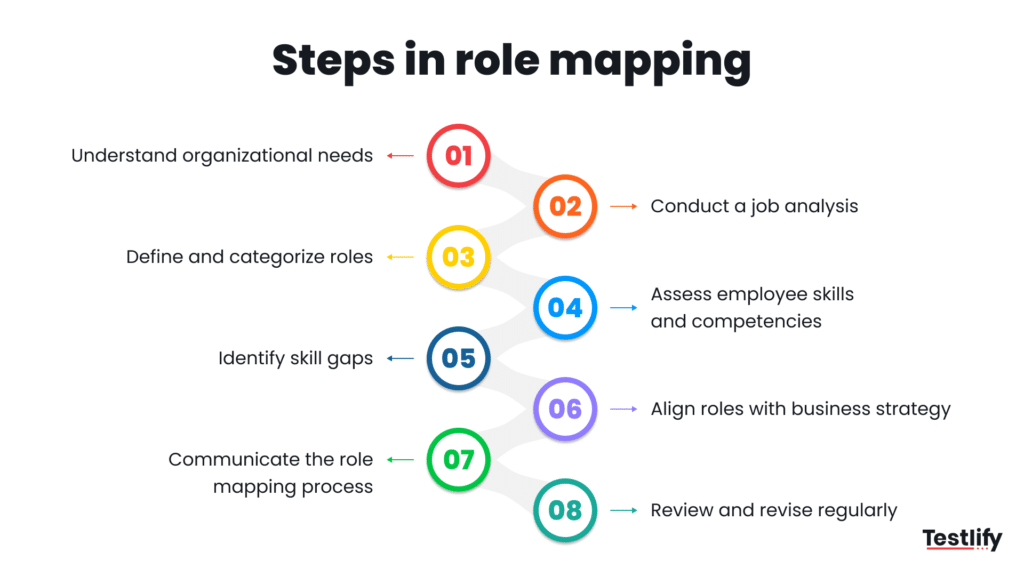
Step 1: Understand organizational needs
Before diving into the role mapping process, it’s essential to have a deep understanding of the organization’s long-term objectives. HR professionals should align the workforce strategy with the company’s mission, vision, and overall business goals. The organization’s strategic direction will guide the decision-making process in role mapping.
For instance, if a company is moving towards a more technology-driven approach, HR needs to ensure that roles are designed to support this shift, such as introducing roles in data science or digital marketing. Knowing where the company is heading allows you to align talent with the future direction, ensuring the workforce is well-prepared to meet upcoming challenges.
Key actions:
- Review business strategy and goals.
- Align the role mapping process with the organizational vision.
- Understand upcoming changes that might impact workforce needs.
Step 2: Conduct a job analysis
A thorough job analysis is one of the most critical steps in role mapping. This step ensures that each role within the organization is clearly defined, including its responsibilities, required qualifications, and skill set.
Without a well-defined job description, you may inadvertently create confusion regarding roles. An up-to-date job analysis ensures that employees are aware of what is expected of them, which leads to better performance and reduced conflicts.
Key actions:
- Gather information about current roles through surveys, interviews, or job shadowing.
- Update job descriptions to reflect the actual nature of each role.
- Document responsibilities, required qualifications, competencies, and key performance indicators (KPIs) for each position.
Step 3: Define and categorize roles
Once the job analysis is complete, it’s time to categorize the roles within the organization. These roles can be grouped into job families, departments, or functional areas based on shared skills, responsibilities, and job requirements.
By categorizing roles, HR can better understand the organizational structure and streamline the recruitment process. It also helps to match employees with roles that align with their expertise and career aspirations.
Key actions:
- Group similar roles into job families (e.g., IT, marketing, HR, finance).
- Identify essential skills or competencies for each role family.
- Ensure that roles are clearly defined within the organization’s goals and vision.
Step 4: Assess employee skills and competencies
Once roles have been clearly defined, you must assess the skills and competencies of current employees. This step helps determine whether employees are adequately equipped to take on the roles they are currently in or whether additional training or skill development is required.
Assessing employees’ skills ensures that the organization has the right talent in the right positions. It also helps you identify employees who may be ready for promotions or need additional support to perform better in their current roles.
Key actions:
- Use performance reviews, 360-degree feedback, and self-assessments to gather data.
- Consider educational backgrounds, prior experience, and ongoing training efforts.
- Map the skills and competencies of each employee to the requirements of their current roles.
Step 5: Identify skill gaps
Once employees’ skills and competencies are assessed, the next step is identifying any gaps between the current skill set and the skills required for each role. This helps you understand where employees may need additional training or where the organization needs to recruit externally.
Skill gaps can significantly affect the overall performance of the organization. Identifying these gaps ensures that you can plan development programs to upskill employees and meet future demands. Addressing skill shortages also improves employee engagement, as employees appreciate having the opportunity to grow.
Key actions:
- Compare the skills of employees with the skills required for each role.
- Identify gaps in key areas such as leadership, technical skills, or soft skills.
- Develop training programs or external recruitment strategies to fill these gaps.
Step 6: Align roles with business strategy
It is crucial that roles within the organization directly align with its business strategy. This alignment ensures that each role contributes to achieving the company’s overall goals.
A misalignment between roles and business strategy can lead to inefficiencies, poor performance, and employee dissatisfaction. By aligning roles with the strategic direction of the company, you can ensure that employees’ efforts are directed toward achieving the organization’s long-term vision.
Key actions:
- Reassess roles that no longer serve the company’s strategic goals.
- Create new roles to support emerging business needs (e.g., sustainability roles or digital transformation experts).
- Ensure that every role clearly contributes to the company’s bottom line or long-term objectives.
Step 7: Communicate the role mapping process
After the roles have been mapped and employees have been assigned the right roles, it is crucial to communicate the changes effectively. Transparency throughout the process ensures that employees understand the reasoning behind the changes and are aligned with the organization’s goals.
Clear communication helps reduce resistance and confusion. When employees know why changes are being made, they are more likely to accept the new roles and responsibilities. It also promotes trust in HR and leadership.
Key actions:
- Communicate role changes and the reasoning behind them to all employees.
- Provide clarity on career paths, role expectations, and growth opportunities.
- Ensure that employees feel supported and have the resources they need to succeed in their new roles.
Step 8: Review and revise regularly
Role mapping should not be viewed as a one-time process. To stay relevant, it needs to be reviewed and revised regularly to ensure it remains aligned with the company’s goals and workforce needs.
Businesses are constantly evolving, and roles need to be adjusted accordingly. Regular reviews help ensure the organization is agile and can quickly adapt to changing conditions, market demands, or business goals.
Key actions:
- Set up a regular review schedule for role mapping (e.g., annually or bi-annually).
- Analyze business changes and adjust roles accordingly.
- Collect feedback from employees and managers to improve the role mapping process.
How does role mapping impact employee development?
Role mapping directly affects employee development by clarifying career paths, identifying skill gaps, and providing opportunities for professional growth. Below are the ways role mapping influences employee development:
1. Personalized development plans
Role mapping allows HR professionals to create tailored development plans for employees based on their current skills and future potential. These personalized plans outline clear development goals and the necessary steps to achieve them, such as specific training programs, mentoring, or certifications.
By offering personalized development plans, HR helps employees progress in their careers, feel supported, and stay motivated. This also allows HR to align employee development with the company’s strategic needs.
2. Clear career progression
One of the greatest benefits of role mapping is that it provides employees with a clear career progression path. Employees are more likely to take ownership of their professional development when they see a clear roadmap for organizational advancement.
When employees understand how to move from one role to another, they are more motivated to acquire new skills and take on additional responsibilities. It also helps employees stay engaged, knowing there are opportunities for growth and advancement.
3. Increased employee engagement
When role mapping is done right, employees feel more connected to their work and the organization’s mission. Knowing their roles align with their skills and aspirations helps them feel valued, which can boost their overall engagement and productivity.
Higher engagement leads to greater job satisfaction, lower turnover rates, and an overall positive workplace culture. Employees who are in roles that align with their capabilities are more likely to perform at their best.
4. Leadership development
Role mapping is crucial in identifying potential future leaders within the organization. By assessing employees’ skills, motivations, and leadership potential, HR can provide them with targeted training and development opportunities.
Nurturing leadership potential is essential for long-term organizational success. Effective role mapping helps HR identify high-potential individuals and develop them into future leaders, ensuring the company has a strong leadership pipeline.
5. Improved employee retention
When employees see that their development is a priority and that there are opportunities for growth, they are less likely to leave for other opportunities. Role mapping helps employees feel that they are progressing in their careers, which leads to improved retention.
Retaining skilled employees reduces recruitment costs and ensures continuity within the organization. When employees stay longer, they accumulate knowledge and expertise, which benefits the organization in the long run.
What are the challenges in role mapping for HR?
Role mapping is a powerful strategy for HR professionals, but it has challenges. Below are some of the common obstacles that HR may face during the role mapping process:
1. Resistance to change
When roles change, employees may feel threatened or uncertain about their future. Some may resist the changes, especially if they perceive them as a demotion or a loss of responsibility.
Clear and consistent communication is key. HR should explain the reasons for the changes, highlight the benefits, and assure employees that their development is a priority.
2. Lack of accurate data
Role mapping relies heavily on accurate data regarding job roles and employee performance. If job descriptions are outdated or performance reviews are inconsistent, HR could make inaccurate decisions when mapping roles.
You should ensure that job descriptions and performance data are regularly updated. Use objective data and feedback to make decisions.
3. Identifying skills gaps
It’s not always easy to identify skills gaps, especially if employees are not forthcoming about their weaknesses. Inaccurate self-assessments or limited feedback can lead to incomplete skill assessments.
You should gather data from multiple sources, including managers, peers, and self-assessments. Regular feedback and performance reviews are essential for a complete view of employee skills.
4. Time-consuming
The process of role mapping can be time-consuming, especially when gathering data, analyzing performance, and aligning roles with business strategy.
Use role mapping tools and technologies to streamline the process. Breaking the process into smaller phases can help manage the workload effectively.
5. Lack of career paths
In organizations without well-established career paths, role mapping can be complicated. Without clear pathways for advancement, it’s challenging to map roles in a way that encourages employee development.
You should work with leadership to define career progression paths and make them part of the role mapping process. Providing a roadmap for employees helps them understand their potential career trajectories.
What tools or technologies can assist in role mapping?
Role mapping can be significantly streamlined with the right tools and technologies. Here are some that can assist HR teams in managing the role mapping process:
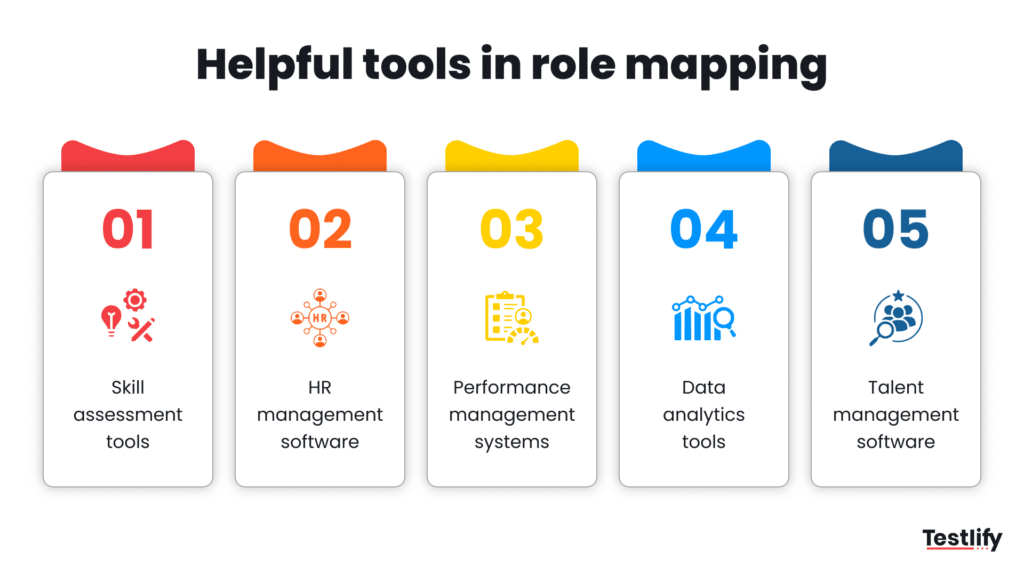
2. Skill assessment tools
Tools like Testlify offer skills assessments that help HR teams identify employees’ strengths and areas for improvement. These tools provide employees with resources to develop new skills and bridge skill gaps.
2. HR management software
Platforms like Workday, SAP SuccessFactors, and BambooHR are comprehensive solutions that help you manage employee data, performance, and competencies. These platforms often have role mapping capabilities and can integrate various HR functions to provide a holistic view of talent management.
3. Performance management systems
Performance management systems help you track performance and collect feedback. These systems align employee goals with company objectives, helping you assess whether employees are in the right roles.
4. Data analytics tools
Power BI and Tableau are data visualization tools that help HR professionals analyze workforce data. These tools can identify trends in skills, performance, and role effectiveness, assisting in data-driven decision-making during role mapping.
5. Talent management software
Platforms like Cornerstone OnDemand and Oracle Talent Management Cloud offer end-to-end solutions for managing talent, from recruitment to development and succession planning. These tools are ideal for organizations that must assess employee potential and map roles effectively.
Conclusion
Role mapping is essential for HR professionals who want to ensure their organization’s workforce is aligned with its business goals. By identifying and defining roles, assessing employee skills, and addressing any skill gaps, HR teams can optimize their talent pool, promote employee development, and drive long-term organizational success.
Though it comes with challenges, the benefits of role mapping, such as improved organizational efficiency, employee growth, and retention, are undeniable. By utilizing the right tools and following a structured process, HR professionals can master the art of role mapping and significantly impact their organization’s overall performance.
Frequently asked questions (FAQs)

Content Writer
Yashika Khandelwal is a Content Writer with 3+ years of experience creating research-backed content on hiring, talent assessment, and HR technology. She is a registered Organizational Psychologist and subject matter expert who combines behavioral science with practical recruitment insights to produce accurate, evidence-based content.
LinkedInRelated resources
View all
HR & recruitment
What is recruitment planning and how to create a recruitment plan?

HR & recruitment
An HR’s guide to skills taxonomy

HR & recruitment
What is departmentalization: Types, benefits and examples

HR & recruitment
Criterion-Related Validity: A Practical Guide for Hiring (2026)

HR & recruitment
How can employers assess candidates’ clerical skills?

HR & recruitment
Types of interviews: A complete HR guide
Get started.
Hire on proof, not resumes.
Run your first skills-based assessment free — no credit card required.