
How to build a skills mapping framework in 7 steps?
Learn how HR can build a skills mapping framework to identify gaps, boost development, and align workforce with business goals.

Job roles are constantly evolving, and new technologies reshape how work gets done, HR leaders are under increasing pressure to keep their workforce aligned with business needs. The traditional way of managing talent, through static job descriptions and annual reviews, is no longer enough. Organizations need a more dynamic, data-driven approach to understand what their people can do today and what they need to succeed tomorrow.
This is where a skills mapping framework comes in. Done right, it becomes a powerful tool that connects people, performance, and strategy. It helps HR teams move beyond guesswork and build a workforce that is agile, capable, and ready for change.
This guide walks you through a practical, human-centric way to build a skills mapping framework in seven steps, without overcomplicating the process.
 ChatGPT
 Gemini
 Claude
 Grok
Grok Perplexity
What is a skills mapping framework?
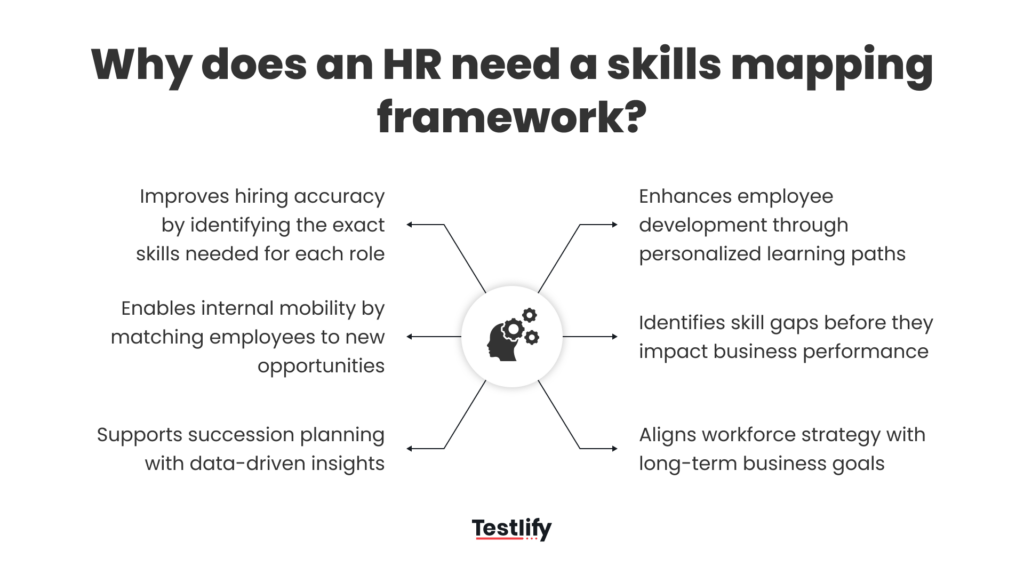
A skills mapping framework is a structured system used to identify, categorize, assess, and track the skills within an organization. It aligns employee capabilities with business goals, helping organizations identify skill gaps and plan for the future.
Think of it as a living map of your workforce’s capabilities, one that evolves as your organization grows and changes.

Steps to building a skills mapping framework
Building a skills mapping framework can feel overwhelming, but breaking it into clear steps makes it manageable. The following steps guide you to map, assess, and develop workforce skills effectively.
Step 1: Define business objectives and scope
Before building anything, clarity is critical. Many skills mapping initiatives fail because they start with tools or templates instead of purpose.
Begin by identifying what you want to achieve. Are you trying to improve hiring? Enable internal mobility? Prepare for digital transformation? Your objective will shape everything that follows.
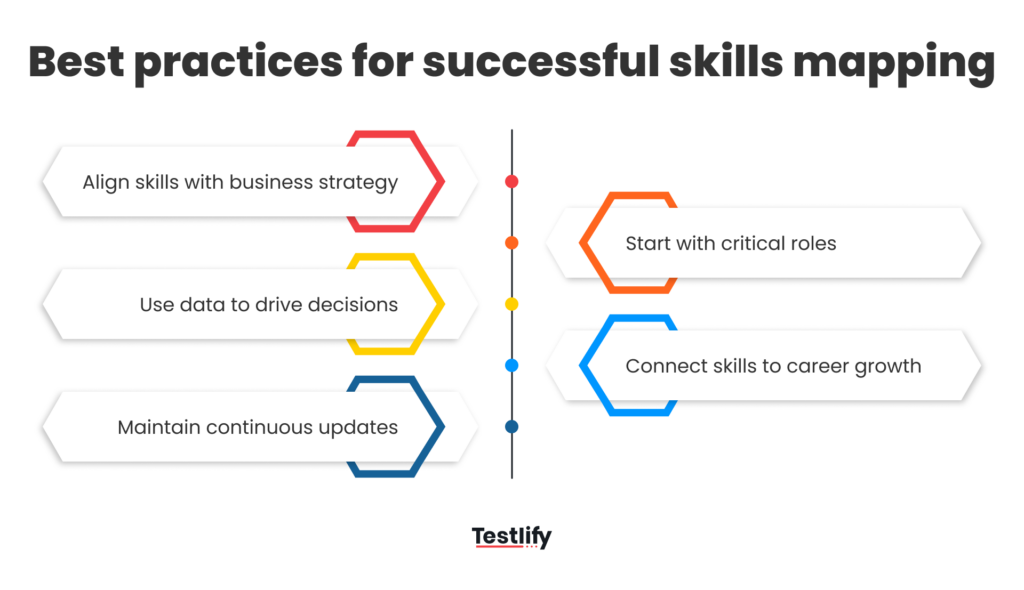
It’s also important to connect your framework to business strategy. If your organization is expanding into new markets, you may need more strategic and cross-cultural skills. If automation is a priority, digital and analytical skills will become more important.
Keep the scope manageable in the beginning. Instead of rolling it out across the entire organization, start with a specific function or a set of critical roles. This allows you to test, learn, and refine your approach before scaling.
Step 2: Identify and organize skills
Once your objectives are clear, the next step is to define the skills that matter. This is where many HR teams feel overwhelmed, but the key is to keep it structured and practical.
Most organizations benefit from grouping skills into a few broad categories:
- Technical or role-specific skills
- Behavioral or soft skills
- Leadership and managerial capabilities
- Digital and emerging skills
Within these categories, you can break skills down into more specific areas. For instance, under communication, you might include presentation skills, active listening, and stakeholder management.
It’s important to involve business leaders and subject matter experts at this stage. They bring real-world insight into what skills actually drive performance, which helps avoid creating a framework that looks good on paper but doesn’t work in practice.
Try not to aim for perfection. A simple, clear structure is far more effective than an overly detailed taxonomy that no one uses.
Step 3: Define proficiency levels
Identifying skills is only half the picture. You also need to define how well those skills are performed.
This is where proficiency levels come in. They provide a consistent way to measure capability across roles and teams.
A typical framework might include four levels, such as beginner, intermediate, advanced, and expert. However, what matters most is how clearly these levels are defined. Vague descriptions lead to inconsistent assessments and reduce the value of the framework.
For example, instead of saying someone has “good analytical skills,” describe what that actually looks like in practice, such as the ability to interpret data, identify trends, and make recommendations independently.
Consistency is key here. A certain proficiency level should mean roughly the same thing across the organization, even if the skills themselves differ.
Step 4: Map skills to roles
With your skills and proficiency levels in place, the next step is to connect them to specific roles.
This involves building role profiles that clearly outline what is required for success. Rather than focusing only on responsibilities, think in terms of capabilities. What does someone in this role need to be able to do, and at what level?
A typical role profile might include:
- Core skills required to perform the job
- Supporting skills that enhance performance
- Expected proficiency levels for each skill
It’s also helpful to distinguish between must-have skills and those that can be developed over time. This distinction becomes especially useful in hiring and internal mobility decisions.
When done well, this step creates clarity not just for HR, but for employees too. People understand what is expected of them and what they need to grow.
Step 5: Assess current workforce skills
Now comes the part where your framework meets reality. You need to assess the current skill levels of your workforce and map them against your role requirements.
There are several ways to do this, and the most effective approach usually combines multiple methods. Self-assessments are a good starting point because they are easy to scale, but they can be biased. Manager assessments add another layer of perspective, while skill tests and performance data provide more objective insights.
In some cases, organizations also use peer feedback to get a more rounded view of an employee’s capabilities.
The goal is not to achieve perfect accuracy but to build a reasonably reliable picture of your workforce. Even approximate data can be incredibly valuable when used thoughtfully.
Technology can play a helpful role here, especially in larger organizations. Skills management platforms can simplify data collection and provide useful analytics, but they should support your framework, not define it.
Step 6: Identify skill gaps and opportunities
Once you have both sides of the equation, role requirements and current capabilities, you can start identifying gaps.
These gaps can appear at different levels. Sometimes, an individual may lack a key skill needed for their role. In other cases, entire teams or departments may be missing critical capabilities. At a broader level, the organization itself may lack skills that are essential for future growth.
The real value lies in analyzing patterns. For instance, if multiple teams are struggling with the same skill, it may indicate a need for organization-wide training. If certain roles consistently show gaps, it could signal issues in hiring or onboarding.
Not all gaps require immediate action. It’s important to prioritize based on business impact. Focus first on the skills that are critical to performance and strategy, rather than trying to fix everything at once.
Step 7: Turn insights into action
A skills mapping framework is only as valuable as the actions it drives. Once you’ve identified gaps, the next step is to use those insights to make meaningful changes.
This often begins with learning and development. Employees can be given personalized learning paths based on their specific needs, which makes training more relevant and effective. Mentorship programs and stretch assignments can also play a role in building skills in a practical, hands-on way.
Another important application is internal mobility. When you have visibility into skills, it becomes easier to match employees with new roles or projects that align with their capabilities and aspirations. This not only improves productivity but also boosts engagement and retention.
Over time, the framework should be integrated into core HR processes such as recruitment, performance management, and succession planning. This ensures that skills remain at the center of talent decisions.
A skills framework is not static. Skills evolve, business needs change, and new roles emerge. Regular updates are essential to keep the framework relevant and useful.
Final thoughts
Building a skills mapping framework may seem like a complex undertaking, but at its core, it’s about gaining a deeper understanding of your people. It’s about knowing what they bring to the table today and how they can grow in the future.
This represents a shift from managing roles to managing capabilities. It enables more informed decisions, more meaningful development, and a stronger alignment between people and business strategy.
The key is to approach it step by step. Start with a clear objective, build a simple structure, and refine it over time. You don’t need a perfect system from day one, what matters is creating something that works and evolves with your organization.
In the long run, organizations that invest in understanding and developing skills will be far better equipped to navigate change, seize opportunities, and build a workforce that truly drives success.
For further reading, explore Zend Framework.
Frequently asked questions (FAQs)

Content Writer
Yashika Khandelwal is a Content Writer with 3+ years of experience creating research-backed content on hiring, talent assessment, and HR technology. She is a registered Organizational Psychologist and subject matter expert who combines behavioral science with practical recruitment insights to produce accurate, evidence-based content.
LinkedInRelated resources
View all
Skill assessment
Skills mapping vs competency mapping

Skill assessment
Top 9 benefits of skills mapping
Skill assessment
Free skills mapping template

Skill assessment
Top skills mapping tools

Skill assessment
Best pre-hire assessments when hiring for top roles in the financial industry

Skill assessment
Top 10 job roles that need pre-hiring assessments
Get started.
Hire on proof, not resumes.
Run your first skills-based assessment free — no credit card required.