
Post-hire employee monitoring and behavioral analysis
Post-hire employee monitoring helps HR teams understand real behavioral patterns, reduce turnover, and build a stronger, compliant workforce.

Employee monitoring is the practice of tracking how people work after they’ve been hired. Almost 8 in 10 employers now use some form of employee monitoring. They don’t do it to spy, but to see how people actually work after they’re hired.
Combining monitoring with behavioral analysis helps companies track patterns such as focus, engagement, and wasted time. It shows managers where teams are productive and where support is needed.
If used openly and in compliance with privacy laws, it can make workplaces more efficient. Before we look at productivity outcomes and tools, let’s start with the basics: what post-hire employee monitoring and behavioral analysis actually mean and how they work in practice.
 ChatGPT
 Gemini
 Claude
 Grok
Grok Perplexity
What is post-hire employee monitoring and behavioral analysis?
Employee monitoring is the tracking of staff work activity after they’re hired. This can include logging computer use, internet browsing, project hours, emails, or attendance.
Post-hire simply means this happens after someone has joined the company. It’s different from background checks that occur before hiring. Once an employee is on the job, monitoring focuses on their day-to-day activities.
This could include:
- Logging hours worked
- Checking which apps or websites are used during work
- Recording attendance
- Tracking progress on tasks or projects
Behavioral analysis goes a step further. It studies patterns in the data.
For example, suppose an employee works late every night but still misses deadlines. In that case, the data may show that the problem isn’t effort but poor time management. Or if someone seems less engaged online, it could point to stress or a heavy workload.
Together, monitoring and analysis give managers a clearer picture. Instead of guessing why productivity is low, they can see the real reasons. Then they can act, whether that means providing training, reducing workload, or offering support.
In short, post-hire employee monitoring and behavioral analysis help companies understand not just what employees are doing, but also why specific problems occur so that they can fix them fairly and helpfully.rtain problems happen, so they can fix them in a fair and helpful way.
“Monitoring shows what’s happening. Analysis explains why it’s happening.”

Why companies monitor employees after hiring
There are several reasons companies choose to track what happens after someone joins the team. It isn’t only about watching people work. It’s about understanding how the workplace runs and fixing problems before they grow.
1. Productivity and focus
Monitoring shows how much time is spent on actual work tasks compared to distractions. For example, if a team spends too many hours switching between apps or browsing non-work sites, managers can step in and help them focus better.
Studies show that companies using monitoring tools often report a 15-30% boost in productivity (Flowace).
2. Security and compliance
Many industries, such as finance and healthcare, handle sensitive data. Monitoring helps spot unusual behavior, such as copying files late at night or logging in from an unexpected location. This can prevent data leaks and keep the company in compliance with the law.
3. Attendance and accountability
Simple tracking of clock-in and clock-out times makes sure employees are paid fairly for the hours they work. It also helps managers see patterns, such as repeated late arrivals or long absences, that might need attention.
4. Training and support
Monitoring isn’t just about problems. It can highlight where people struggle and may need training.
For example, if an employee is slow with a particular software tool, the company can provide extra guidance. This turns monitoring into a way to build skills rather than punish mistakes.
5. Planning for the future
Looking at post-hire data also helps leaders make better decisions about staffing and workload. If one department shows signs of burnout or falling behind, managers can shift resources or hire extra help.
Types of employee monitoring (and what’s ethical to use)
Not all monitoring is the same. Some methods are simple and widely accepted. Others feel invasive and can damage trust. Here are the main types companies use, along with where the line of “ethical use” should be drawn.
1. Time and attendance tracking
What it is | Ethical? |
|---|---|
Logging when employees start, stop, and take breaks. | Yes, when it’s transparent. Employees should know that their hours are being recorded for payroll or fairness. |
2. Internet and app usage monitoring
What it is | Ethical? |
|---|---|
Checking which websites and applications employees use on company devices. | Yes, if limited to work hours and work equipment. It helps spot distractions or unsafe behavior, but shouldn’t track personal browsing off the clock. |
3. Task and project monitoring
What it is | Ethical? |
|---|---|
Tracking progress on tasks or projects through dashboards or project management tools. | Yes. It’s usually seen as supportive since it helps teams stay on schedule and shows where extra help is needed. |
4. Communication monitoring
What it is | Ethical? |
|---|---|
Reviewing emails, chat logs, or call data for patterns or keywords. | Acceptable in limited cases, like protecting sensitive data or preventing harassment. Companies should avoid reading personal content and must inform employees of what’s being tracked. |
5. Screen captures and recordings
What it is | Ethical? |
|---|---|
Taking screenshots or recording screens at intervals. | This is where it gets tricky. Screenshots should capture only work-related content and should not be taken without the employee’s knowledge. Blurring personal sections or allowing “pause” options makes it more acceptable. |
6. GPS and location tracking
What it is | Ethical? |
|---|---|
Using mobile devices or vehicle systems to confirm where employees are. | Works for field jobs like delivery or sales, but should never track people outside working hours. Always get consent. |
7. Keystroke logging
What it is | Ethical? |
|---|---|
Recording every key pressed on a device. | Largely considered too invasive. It collects sensitive personal data, such as passwords, and creates distrust. Most modern companies avoid this practice. |
Ethical monitoring is transparent, limited to work-related data, and respects personal privacy. If a method feels like spying, it probably is. Companies should focus on tools that support employees instead of controlling them.
How behavioral analytics turns data into insight
Collecting numbers alone doesn’t tell you much. Imagine writing down every move a soccer player makes but never asking why they play that way. You’d have pages of notes but no real understanding. That’s what raw monitoring data looks like without analysis.
Behavioral analytics is the step that makes sense of the data. It looks for patterns and explains why employees work the way they do.
- Productivity patterns: If the data shows that a worker spends 5 hours a day on email, analytics can point out that excessive communication is blocking real project work. Managers can then reduce meetings or adjust workflows.
- Signs of burnout: If someone’s activity log shows late-night logins or longer hours than usual, it may be a red flag for stress. This lets managers check in before the employee burns out.
- Engagement clues: A once-active team member who suddenly stops speaking up in chats or meetings may be losing interest or struggling silently. Analytics helps spot that change.
- Training needs: If a group keeps slowing down on the same software task, analytics highlights the need for extra training. This isn’t about punishment but about support.
- Risk prediction: If data shows that most projects stall at the same stage, analytics warns leaders early. They can fix the process before deadlines are missed again.
In a nutshell, behavioral analytics turns numbers into stories. Instead of only showing what employees do, it explains why they do it and what can be done to help.lp.
Legal and ethical guardrails (U.S. & global context)
When a company monitors employees, it must comply with the law and respect employees’ privacy. The rules change from place to place, but the idea is the same everywhere: be honest and fair.
In the U.S., most companies can monitor employees’ email or internet use on work devices. Still, some states, like New York, require employers to notify employees in writing.
In Europe, the GDPR sets a higher bar. Employers can only collect what’s necessary and must explain why. Using tools that track every keystroke or record webcams all day is usually not allowed.
Other countries apply similar principles. In the UK, monitoring must be “necessary and proportionate.” In Canada, it has to be “reasonable.” In India, policies and employee consent matter most.
No matter the location, the safe approach is simple: collect only the data you need, tell employees what you’re tracking, and keep that data secure.
How to implement employee monitoring ethically and effectively
If monitoring is rolled out carelessly, it can create fear and resistance. But if it’s introduced step by step, with clear rules, it can become a tool for both productivity and trust. Here’s a simple roadmap companies can follow:
Step 1: Start with a clear policy
Write down what you’ll track, when, and why. For example: “We’ll log time spent on projects and app usage during office hours to understand workload.” Share this policy with every employee so nothing feels hidden.
Step 2: Get employee input early
Before switching on monitoring, invite feedback. Hold a meeting or survey to hear concerns. This helps employees feel included and reduces suspicion.
Step 3: Run a pilot program
Don’t roll out monitoring to the whole company at once. Test it with one team or department first. See what works, what feels too invasive, and adjust before scaling.
Step 4: Track only what matters
Focus on work activities that directly connect to company goals. Time spent on tasks, meeting project deadlines, or using company tools is valid. Avoid tracking personal devices, breaks, or private conversations.
Step 5: Use insights to support, not punish
When data shows a problem, respond with help. For example, if one team is overloaded, hire extra support. If someone struggles with software, provide training. Monitoring should guide improvement, not create fear.
Step 6: Protect the data
Treat monitoring data the same way you would customer data. Store it securely, restrict access, and delete it once it’s no longer helpful. This keeps the system legal and fair.
Step 7: Review and adapt
Check in regularly. Are employees comfortable? Are the insights helping? Are new laws, like GDPR updates, being followed? Adjust the monitoring strategy as needed.
How Testlify supports responsible post-hire monitoring
One of the biggest problems with employee monitoring is that it can feel invasive if companies collect too much or don’t explain what they’re doing. Testlify helps lower these risks.
First, it improves hiring from the start. With over 3,000 ready-made tests, companies can find people who already fit the role. This means managers don’t have to rely on heavy monitoring later because the right people are in place.
Second, Testlify’s video and audio interview feature gives a fair view of how candidates speak, listen, and respond. Instead of waiting to track an employee’s behavior after they join, managers already have a clear sense of their strengths.
Finally, Testlify follows GDPR and FERPA rules. The data collected is kept safe and used only for clear purposes. This helps companies build a monitoring strategy that protects privacy while still supporting employee productivity.
In short, Testlify makes it easier for companies to monitor responsibly by starting with better hiring and keeping privacy in focus.
Wrap-Up: Monitor performance, not people
The purpose of employee monitoring is to improve work, not to control people. When used with behavioral analysis, it helps spot patterns, prevent burnout, and improve employee productivity. The focus should always be on performance, fairness, and respect.
Book a demo to see how Testlify supports responsible monitoring.
For further reading, explore How To Communicate With Candidates Post Interview.
Key takeaways
- Employee monitoring shows how work gets done after hiring.
- Behavioral analysis explains why patterns in work happen.
- Monitoring must follow rules like GDPR and FERPA.
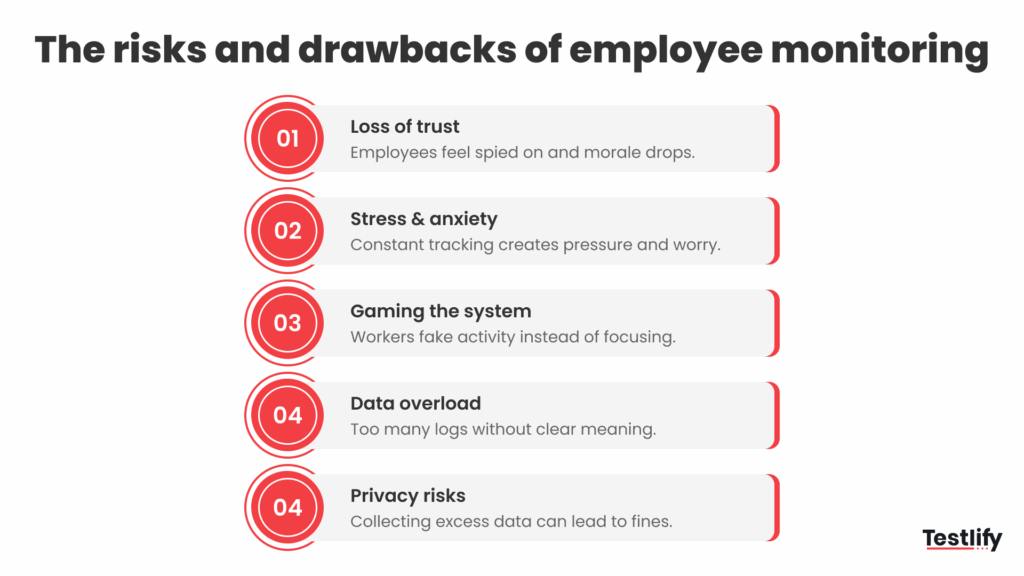
- Poor monitoring can harm trust and increase stress.
- Online assessment platforms like Testlify support fair and responsible monitoring.
Frequently asked questions (FAQs)

B2B SaaS Content Writer
Rishav Kumar is a B2B SaaS content writer with 4 years of experience. He loves crafting engaging content. Always exploring fresh ideas, he's passionate about helping businesses grow through impactful writing.
LinkedInRelated resources
View all
Hiring Risks & Safeguards
How to prevent qualification fraud in hiring?

Hiring Risks & Safeguards
Candidate ghosting in recruitment: Solutions
Hiring Risks & Safeguards
Candidate dishonesty: Key red flags

Hiring Risks & Safeguards
Which HR training strategies stop recruitment fraud?
Hiring Risks & Safeguards
How to detect cheating in exams using analytics
Hiring Risks & Safeguards
Which HR behaviors increase hiring fraud risk?
Get started.
Hire on proof, not resumes.
Run your first skills-based assessment free — no credit card required.