
Candidate ghosting in recruitment: Solutions
Learn why candidate ghosting happens in recruitment and how recruiters can prevent it with clear steps and better hiring tools.

Candidate ghosting occurs when a job seeker stops responding during the hiring process without providing a reason for doing so. It can occur after the application process, during interviews, or even on the first day of work.
A recent Indeed survey found that candidates have ghosted 76% of employers in the U.S. in the past year, and 28% of job seekers admit to ghosting employers when a better offer came along.
Candidate ghosting extends hiring timelines, increases recruitment costs, and frustrates hiring teams who are left to start over.
This blog breaks down what candidate ghosting really means, why it’s happening more often, how it affects recruiters, and the steps you can take to reduce the likelihood of it happening in your hiring process.
 ChatGPT
 Gemini
 Claude
 Grok
Grok Perplexity
What is candidate ghosting?
Candidate ghosting occurs when a job seeker stops responding during the hiring process without providing a reason.
It can happen at any point: someone might apply and never respond to the recruiter, attend one interview and then disappear, or even accept the offer but fail to show up on the first day.
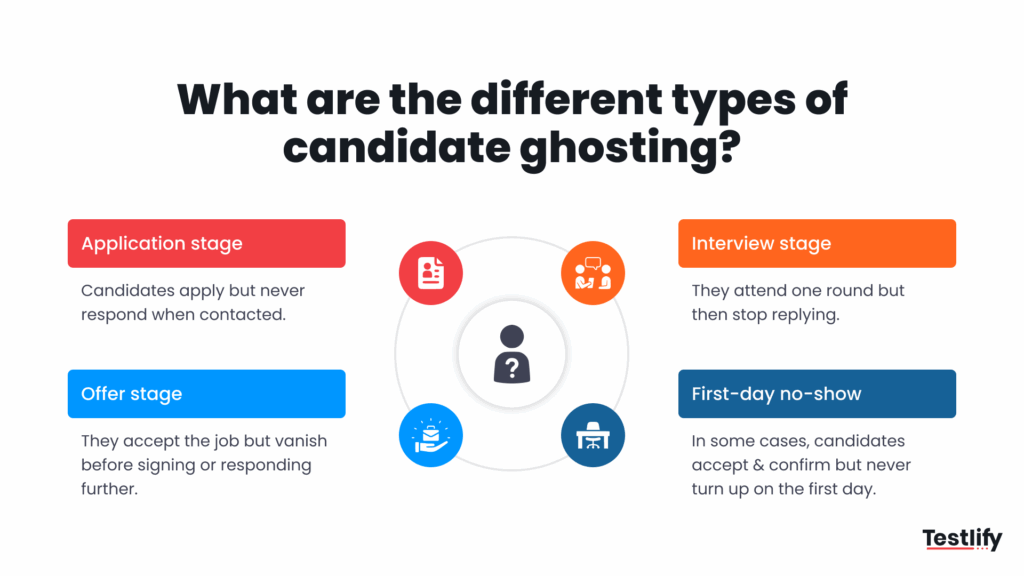
Research indicates that this is no longer a rare occurrence. Over half of U.S. employers report being ghosted by candidates in the last year.
For hiring managers and talent acquisition teams, candidate ghosting makes the process longer, more costly, and frustrating. Knowing what ghosting looks like is the first step to reducing it in recruitment.

Candidate ghosting trends in the U.S. job market
In the U.S., ghosting has become a common recruitment practice. A decade ago, recruiters rarely saw it. Today, many expect at least one candidate to drop out without warning during every hiring cycle. Recent surveys explain why this feels so common.
Technology is also changing the pattern. Candidates can now apply to dozens of jobs in minutes. This means they often have multiple interviews running at once, and if one option looks better, they stop responding elsewhere.
The problem is not just early dropouts. Recruiters often say that the hardest blow comes when a candidate ghosts after a job offer is accepted.
Teams prepare, managers plan work, and then the candidate never joins. This “offer-stage ghosting” forces companies to start over and rehire.
One reason ghosting has become more prevalent is the ease of applying for jobs online. Job seekers can send applications to dozens of employers in minutes.
With so many options, they may accept interviews everywhere and later choose only one. For recruiters, it feels like a race where the fastest and most precise offer often wins.
Stage of hiring | What happens | How common it is (U.S.) |
|---|---|---|
Application stage | Candidate applies but never replies to recruiter | Many recruiters report drop-offs right after resume screening |
Interview stage | Candidate attends one round, then stops responding | Over half of employers face this each year |
Offer stage | Candidate accepts offer but never joins | Recruiters say this is the most damaging trend |
First-day no-show | Candidate confirms joining but doesn’t turn up | Cases rising in IT and healthcare industries |
Why do candidates ghost recruiters?
When a candidate suddenly stops replying, it might feel rude or careless. But in most cases, there are simple reasons behind it.
1. They get a better offer
Many job seekers apply to more than one company at a time. Suppose another employer offers higher pay, remote work, or a faster start date. In that case, they often choose that option and disregard the rest.
2. The process takes too long
If it takes weeks to hear back after an interview, candidates lose patience. Long application forms or multiple interview rounds exacerbate the situation. Research indicates that ghosting is more likely to occur when the hiring process lasts longer than three weeks.
3. No communication
Sometimes candidates wait for an update that never comes. If they don’t hear back after interviews, they assume the company isn’t interested and walk away without saying anything.
4. They avoid saying “no”
Not everyone is comfortable rejecting an offer directly. For some people, ignoring calls and emails feels easier than having an awkward conversation.
5. The job isn’t what they expected
Suppose the salary is lower than promised or the role differs from what was described. In that case, candidates often disappear instead of arguing about it.
In short, candidates ghost because they have choices, they don’t want to waste time, and sometimes they don’t know how to say no. For recruiters, this highlights the need for clear communication and streamlined hiring processes.
Impact of candidate ghosting on recruiters and hiring teams
When a candidate ghosts the entire hiring process, it has ripple effects. Think about the time first. Every step takes hours of work. When someone stops replying, all that effort disappears with them.
Money is another cost. Interviews, assessments, and even background checks all come with a price. If a candidate ghosts after these steps, the process must restart, and the cost per hire increases.
Then there’s the impact on the team. An open position means an extra workload for the current staff. Managers stretch their teams, deadlines slip, and frustration builds. In some cases, projects stall because a key role remains empty.
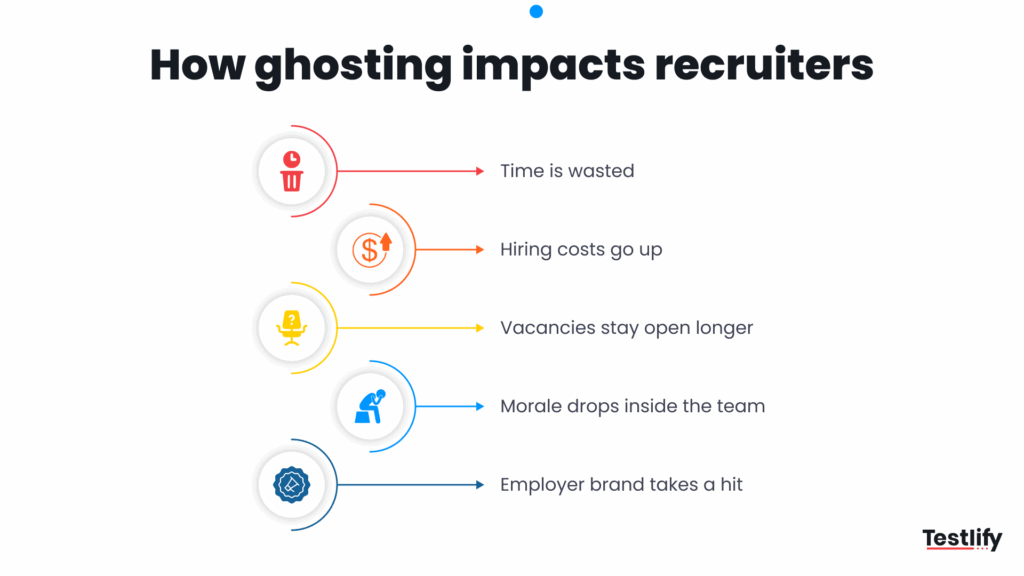
The emotional toll is real, too. Hiring managers and recruiters can feel drained when candidate ghosting occurs repeatedly. It lowers confidence in the process and makes it harder to stay motivated.
Finally, there’s reputation. Candidates talk. If ghosting is common in your pipeline, or if unhappy applicants share their experiences online, it can damage your employer brand and make future hiring even more challenging.
Candidate ghosting across industries
Ghosting doesn’t look the same everywhere. Each industry has its own pattern, shaped by the kind of work, hiring pace, and candidate expectations.
Industry | Stage where it happens most | Why it happens | What it looks like in practice |
|---|---|---|---|
Tech / IT | Offer stage | Candidates juggle multiple offers and wait until the last moment to choose the best one. | A developer accepts your offer but never joins because another company gives better pay. |
Healthcare | First-day no-shows | Long hours and stressful roles make workers switch at the last minute for better schedules. | A nurse confirms joining but doesn’t turn up on the first day after finding a less demanding role. |
Finance | Interview stage | Strict checks and long processes push candidates toward quicker employers. | An analyst attends one interview, then drops communication when another bank moves faster. |
Retail / Service | Application stage | High applicant volume, with many not being serious about the role. | Dozens apply for a cashier job, but most never reply when called for the first interview. |
How to prevent and reduce candidate ghosting
Ghosting can feel unpredictable, but most of the time, it happens for reasons that recruiters can control. The solution is not complicated: be clear, be quick, and treat people with respect. Here’s how you can do it step by step.
1. Tell the truth from the start
A lot of ghosting happens when a job isn’t what the candidate expected. Avoid that by being upfront. Share the salary range, work location, shift timings, and the exact steps of your hiring process early on.
Example: Instead of saying “good pay,” tell them “the salary range is $55,000-$65,000.”
2. Don’t make them wait too long
If a hiring process takes weeks, candidates move on. Keep applications concise and eliminate unnecessary steps. Aim to give feedback quickly (ideally within days, not weeks).
Example: If you take three weeks to reply after an interview, don’t be surprised if the candidate disappears.
3. Keep talking
Silence from recruiters is one of the biggest reasons people ghost. Even a brief message, such as “We’re still reviewing, expect an update by Friday,” keeps candidates engaged.
When you reject someone, do so politely; it shows respect and leaves the door open for the future.
4. Show that you care
Ghosting is less likely when people feel valued. Learn why they’re looking for a new job, adjust interviews around their schedule if needed, and thank them for their time. If they feel treated like a human being, they are far more likely to reply.
5. Stay close after they accept the offer
The worst kind of candidate ghosting occurs when someone accepts a job but fails to join. To reduce this, start engaging them right away. Send a welcome note, introduce them to their future team, or share the onboarding plan.
When they feel part of the company before day one, the chance of them disappearing is much lower.
How Testlify helps tackle candidate ghosting
Ghosting usually happens when candidates aren’t serious, the hiring process takes too long, or they lose trust along the way. Testlify can reduce all three.
- Skill tests that filter commitment: Candidates who take a short skill test up front demonstrate their seriousness. Testlify’s ready-to-use assessments make this step easy and quick, so recruiters don’t waste time on people who were never really interested.
- AI interviews that keep pace: Long gaps between rounds are a big reason candidates drop out. With Testlify’s AI video and audio interviews, recruiters can move faster, review responses quickly, and keep candidates engaged.
- Trust through compliance: Some candidates walk away when they don’t feel safe sharing details. Testlify is built with GDPR and FERPA alignment, which gives them confidence that their data is protected.
Together, these steps help recruiters run a process that feels clear, quick, and safe, which means fewer candidates ghosting midway.
Wrap-Up
Ghosting happens for a reason. Most people walk away because they don’t know what’s going on, the process feels slow, or the job isn’t what they thought.
The answer isn’t more steps. It’s the opposite. Tell them clearly what to expect. Keep your process short. Reply even when there’s no news. Treat them like you’d want to be treated if you were in their place.
AI-powered platforms like Testlify can help too. It makes it easy to filter serious candidates with quick skill tests. You can move faster with AI video interviews instead of dragging out rounds.
Ghosting won’t vanish completely, but if your hiring feels honest, quick, and human, far more candidates will stay with you until the end. Want to see how Testlify can help you cut ghosting and hire faster? [Book a demo today].
Frequently asked questions (FAQs)

B2B SaaS Content Writer
Rishav Kumar is a B2B SaaS content writer with 4 years of experience. He loves crafting engaging content. Always exploring fresh ideas, he's passionate about helping businesses grow through impactful writing.
LinkedInRelated resources
View all
Hiring Risks & Safeguards
Candidate dishonesty: Key red flags

Hiring Risks & Safeguards
Which HR training strategies stop recruitment fraud?

Hiring Risks & Safeguards
How to detect cheating in exams using analytics

Hiring Risks & Safeguards
Which HR behaviors increase hiring fraud risk?

Hiring Risks & Safeguards
Recruitment fraud: Everything you need to know

Hiring Risks & Safeguards
How to handle fake certificates in recruitment?
Get started.
Hire on proof, not resumes.
Run your first skills-based assessment free — no credit card required.