
Which HR training strategies stop recruitment fraud?
Learn how HR training prevents recruitment fraud by spotting red flags, verifying candidates, and protecting hiring from fake resumes or AI answers.

Many people lie to get jobs. Some job seekers make up past employment history. Others use fake certificates or give false email addresses for reference checks.
According to Forbes, nearly 70% of job applicants admit to having lied on a resume. This is one face of recruitment fraud.
The financial and technical stakes are rising too: the association of certified fraud examiners (2024) puts the median loss per fraud case at $145,000, and gartner (2024) predicts that by 2026, over 30% of hiring fraud attempts will involve AI-generated content, making it harder for traditional checks alone to catch.
With remote work, it has become easier to hide behind video interviews or even use AI-generated answers. This creates real problems for companies.
A single bad hire can lead to financial losses, the risk of identity theft, and reputational damage that can take years to rectify.
That’s why HR training matters. A trained HR team can use transparent verification processes to detect recruitment fraud before a job offer is made. Let’s examine how proper training can make hiring safer.
 ChatGPT
 Gemini
 Claude
 Grok
Grok Perplexity
Why is HR training important for fraud prevention?
Hiring fraud occurs when job applicants exploit weaknesses in the hiring process to gain employment. Some provide false employment histories, others create fake certificates, and many now use AI-generated resumes.
Training equips your HR team with the habits, checklists, and questions that help close those gaps.
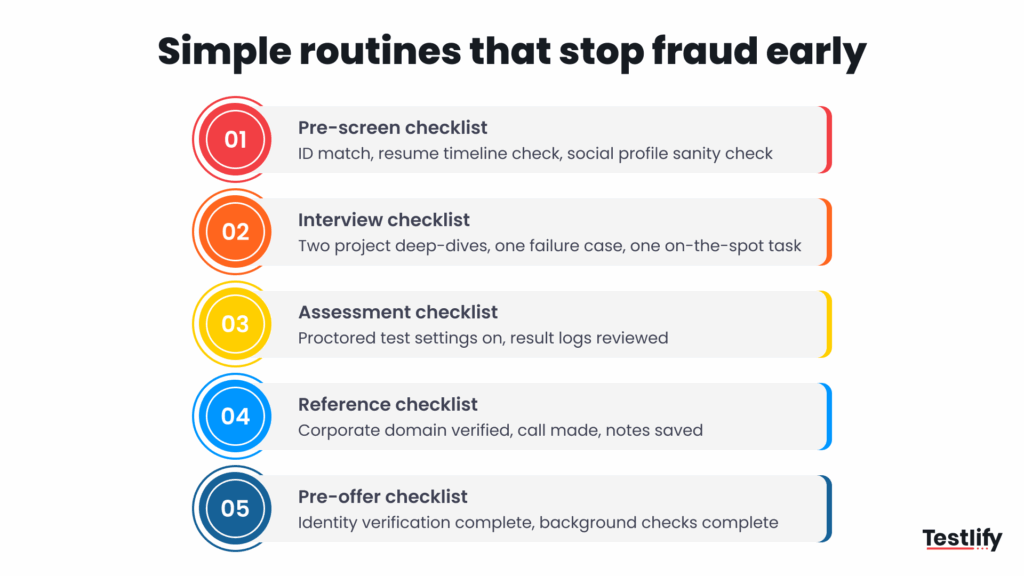
Step | What to Do | Why It Matters |
|---|---|---|
1. Know the common scams | Look out for false employment history, fake degrees, forged letters, AI generated resumes, impostors in video interviews, or references with personal email accounts. | These are the most common tricks job applicants use to commit recruitment fraud. |
2. Verify identity early | Ask for a government ID and live selfie check. Match name, photo, and date of birth across documents. Compare face to face meetings with earlier video interviews. | Prevents identity theft and confirms the identity of the person applying. |
3. Read resumes like an auditor | Check each job’s month and year, look for overlaps or unexplained gaps. Confirm company names on LinkedIn or websites. Inspect certificates for seals and verify with the issuer. | Make sure employment history and documents are genuine. |
4. Run interviews that show real work | Ask about one project per role, what went wrong, and what they learned. Use short, timed questions in video interviews. | Fraudulent applicants often give vague answers. Real experience shows in detail. |
5. Use skills tests with safeguards | Give short, job-relevant tasks. Use proctoring tools (screen lock, live environment scan, copy-paste blocking). Avoid take-home tests that reveal intellectual property. | Ensures the candidate has the skills and is the one completing the test. |
6. Do reference checks the right way | Don’t trust Gmail or Yahoo for references. Call company switchboards or use corporate email addresses. Confirm job details and ask if they’d rehire the person. | Prevents fake references and confirms employment history. |
7. Know background check limits | Use them to confirm history, but don’t depend only on them. Pair with identity verification, skills tests, and interviews. | Background checks can miss lies, so they must be part of a wider process. |
8. Protect data at every stage | Share the least amount of sensitive data until identity is confirmed. Give system access only after verification. Use NDAs and secure links for test material. | Keeps sensitive data and company systems safe from fraud and misuse. |
Training makes fraud prevention routine. When your HR team follows clear verification processes at each step, recruitment fraud is detected before a job offer is extended.

What red flags should HR teams watch for?
Recruitment fraud rarely presents itself as a single, blatant lie. It shows up as small clues. Good HR training teaches your team what those clues look like and what to do next.
1) Resumes and applications
Signs to notice | How to check |
|---|---|
Employment history with overlapping dates, missing months, or a company that did not exist at the time. | Map each role by month and year. Ask the candidate to explain any gap longer than one month. |
Inflated job titles with no detail on scope, team size, or results. | For each title, ask for one project, who else worked on it, and the candidate’s exact part. |
AI generated text that sounds polished but gives no real examples. | If the writing appears generic, request a brief, specific instance in their own words. |
Degrees and certificates with blurred seals, wrong issuer names, or no way to verify. | Confirm credentials with the issuer. Many universities and certification bodies have public verification pages or registrar emails. |
False employment history and fake certificates are the most common roots of fraudulent activity. Catching them early saves time and money later in the hiring process.
2) Identity and documents
Signs to notice | How to check |
|---|---|
Different spellings of the name across resume, ID, and email address. | Do an identity verification step before interviews for high-risk roles. Match name, date of birth, and photo across documents. |
A headshot that does not match the live person in video interviews. | During the live call, ask the candidate to tilt their head or turn slightly so you can match the face to the ID. |
Refusal to share ID before sensitive data is exchanged. | If you plan a face-to-face meeting later, compare it to the earlier video interviews. |
Identity theft harms access control, intellectual property, and compliance. A quick check prevents risk before a job offer.
3) Interviews (remote and in-person)
Signs to notice | How to check |
|---|---|
Scripted answers that repeat the question and avoid concrete details. | Ask for one recent project, the goal, the metrics, the tools used, and one thing that went wrong. |
Long pauses on simple questions in video interviews. | Use a few short, timed questions to reduce the chance of outside help. |
Technical questions were answered perfectly, but there was no follow-up detail. | If the answers feel rehearsed, consider changing the order of questions or request a quick screen share to walk through their past work. |
AI-generated responses and off-screen help are common in remote work. Good question design exposes real experience. The candidate cannot recall the names of managers, coworkers, or projects from their own resume. Someone who genuinely worked at a company can usually discuss the culture, the systems they used, or the challenges they faced — vagueness here often signals fraudulent activity.
4) References
Signs to notice | How to check |
|---|---|
References that use personal email accounts instead of company domains. | Ask for a corporate email address or call the company switchboard to reach the manager. |
References who speak in broad praise but avoid dates, responsibilities, or outcomes. | Confirm title, dates, projects, and whether they would rehire the person. |
A “manager” who cannot describe the candidate’s exact role or team. | In smaller firms or nonprofits that use personal email, consider requesting a work phone line or conducting a LinkedIn cross-check. |
Fake references are common. A 3-minute verification saves weeks of risk after a bad hire.
5) Online footprint and social media
Signs to notice | How to check |
|---|---|
A LinkedIn profile created very recently, or with few connections for a senior role. | Cross-check LinkedIn dates with the resume. Look for endorsements or recommendations from colleagues on those teams. |
Company names, locations, or dates that do not match the resume. | For engineers and designers, ask for code samples or design files during a shared screen session. |
A basic open-web check helps confirm employment history and reduces the risk of identity fraud.
6) Assessments and work samples
Signs to notice | How to check |
|---|---|
Take-home tasks were returned too quickly and were far above the level shown in interviews. | Prefer short, proctored tasks that mirror the real job. |
Writing samples with shifting tone or formatting that suggests copy-paste. | Use screen enforcement, tab proctoring, and copy-paste blocking for remote tests when needed. |
Code or content that appears in public repos or on the web. | Run simple plagiarism and reverse-image checks on samples. Ask the candidate to explain their own work life. |
Skills tests expose real ability and help you avoid long, risky take-home tasks that can leak sensitive data.
7) Process behavior
Signs to notice | How to check |
|---|---|
Pressure to skip steps and “move fast” to an offer. | Keep a standard checklist. No step is optional: identity verification, reference checks, background checks, and a role-relevant test. |
Refusal to share documents until a contract is signed. | If a candidate refuses checks, pause the process. Document the reason. |
A consistent process protects the company and treats all job applicants fairly across the US, EU, India, and other regions.
One red flag is a prompt to ask more. Three or more is a reason to stop and verify. HR training empowers your team to take on both.
Which HR behaviors increase hiring fraud risk?
Red flags describe what a fraudulent candidate looks like. It helps just as much to know which everyday HR habits make it easier for them to slip through in the first place.
1. Rushing to fill roles
When a role sits open, managers push to fill it fast. In that hurry, steps like background checks or ID verification get skipped. This is where fake identities and fraudulent activity find an easy entry, and a hire made in haste often costs more later in turnover, retraining, or reputational damage.
2. Skipping thorough screening
Relying only on a basic interview is not enough to confirm skills or identity. Candidates can prepare polished answers, use AI tools, or have someone else stand in for a video call. Without structured screening or proper assessments, fake identities and red flags are almost impossible to catch.
3. Neglecting background and reference checks
Fake resumes and references are still common; a candidate might claim jobs they never held or list a friend as a "former manager." if HR does not take the time to double-check past roles, call references at official numbers, or confirm qualifications, those lies slip through.
4. Ignoring compliance and policies
If HR ignores data-handling standards such as GDPR or FERPA, the company faces legal exposure and it signals weak internal processes overall, which fraudulent applicants can also learn to exploit.
5. Using fragmented processes
Many companies run hiring across a separate ATS, testing platform, and spreadsheets. When these systems do not connect, critical details get lost: a background check might raise a concern, but if it is not visible to the recruiter running interviews, the candidate can still move forward. Fragmented workflows create blind spots that bad actors can exploit.
How do background checks and verification help?
Background checks and verification processes serve as a safety net in the recruitment process. They do not remove all risks of recruitment fraud, but they make it much harder for job applicants to succeed with false claims.
When HR training covers how to use these checks properly, the hiring process becomes safer, and the hr team learns how to confirm details before making a job offer.
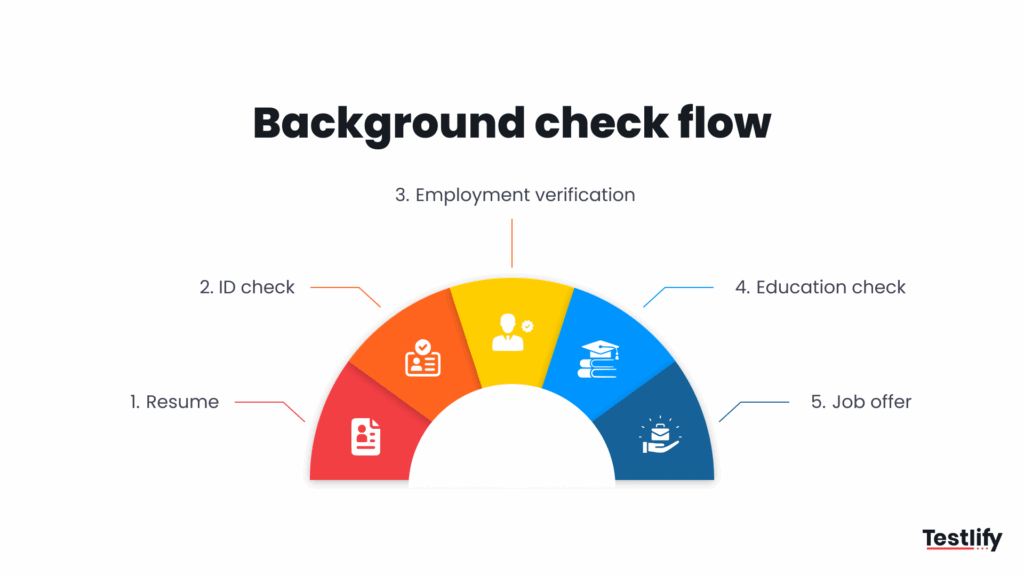
What background checks actually confirm
A background check is meant to confirm the facts in a candidate’s application. It helps HR teams verify employment history by matching job titles, dates, and responsibilities with past employers.
It verifies education records to determine if degrees and certificates are genuine and issued by accredited schools or training programs. Some checks also include criminal records, which can be relevant in fields such as finance, healthcare, or roles involving sensitive data.
Modern checks also include identity verification, which ensures the person applying is the same person shown on official documents. When these steps are completed correctly, fraudulent activity, such as fake certificates or false job history, becomes easier to spot.
Why verification has to happen early
Many companies make the mistake of waiting until the hiring process is almost complete before they run checks. At that stage, time and money have already been spent on interviews, skills tests, and recruitment processes.
HR training helps teams understand why verification should happen early, sometimes even before the first video interviews.
A quick ID scan or live verification process at the start can confirm identity and stop fraud before sensitive data or intellectual property is shared. This early step saves resources and protects the company from long-term financial losses or reputational damage.
Where background checks fall short
Although background checks are helpful, they cannot detect every type of recruitment fraud. A background check may confirm a degree or previous job experience.
Still, it cannot verify if an applicant is using AI-generated resumes or seeking outside help during video interviews.
It cannot detect impostors pretending to be someone else in remote work settings. This is why HR training emphasizes that background checks should never be used in isolation.
They need to be paired with identity verification, structured reference checks, and role-based skills testing.
Related: Are background checks enough to stop employment fraud?
Best practices for HR teams
When HR staff are trained to use checks properly, they focus on three things: timing, detail, and compliance. Timing means moving verification earlier in the hiring process so that fraud is caught before a job offer is extended.
Detail means reading reports carefully and asking follow-up questions when something looks unclear in employment history or education records. Compliance means respecting privacy and adhering to checks within legal frameworks, such as GDPR and FERPA.
Training programs that cover these points provide recruiters with the confidence to consistently and fairly use verification processes.
Background checks and verification are most effective when HR training teaches teams to utilize them early, pay close attention to detail, and integrate them with other fraud prevention methods.
How can HR training address AI-generated or fake content?
Recruitment fraud is no longer limited to fake certificates or false employment history. Today, job seekers can use AI tools to create professional-looking resumes, cover letters, and even scripted answers for interviews.
Some individuals go even further and utilize deepfake technology to appear as someone else in video interviews. This makes it harder for an HR team to know who the real person is. Training equips staff with the knowledge and skills to manage these risks effectively.
Spotting AI in resumes and applications
AI-generated resumes often appear neat but lack substance and depth. They repeat the exact phrases, avoid naming specific projects, and list achievements without evidence. HR training shows recruiters how to slow down and read between the lines.
A good practice is to ask: Does this resume explain real results, or is it just a list of skills? Training also covers verification processes, such as calling a university to confirm a degree or checking employment history with a past employer.
Handling AI in interviews
Interviews are where fake content can be harder to spot. Some job applicants use AI tools to obtain instant answers during video interviews. In contrast, others may ask a friend or family member to attend in their place. Training helps recruiters design questions that a script cannot answer.
For example, instead of asking “What are your strengths?” a recruiter might ask, “Tell me about the most difficult project you worked on last year. Who else was involved, and what part did you handle?” Real answers come with details and personal stories.
Training also helps staff watch for signs, such as long pauses, eye contact that does not match, or a candidate who appears different in later face-to-face meetings. These are strong signals of identity theft or outside help.
The FBI (2022) has warned of real cases of impostors using deepfakes and stolen ids to secure remote IT and finance roles. Clues to train staff on include lips that do not sync with the voice, a face that looks too still or "computer-like," and delayed answers to simple questions.
Using technology with training
Training is most effective when the right tools are in place to support it. HR teams can learn how to use proctored skills tests that block copy-paste or require a dual camera to confirm the identity of the test taker.
They can also be trained to use video interview platforms that compare faces across sessions to prevent impostors. Document checks, plagiarism scanners, and ID verification tools can all be part of the process.
When HR staff know how and when to use these tools, they can confirm their doubts instead of relying only on instinct.
Challenge | What HR training teaches | Why it helps |
|---|---|---|
AI generated resumes | Look for missing details, confirm employment history, verify certificates with issuers | Exposes false employment history and fake certificates early |
AI in video interviews | Ask detailed, project-based questions and look for delays or mismatches | Makes it harder for scripted or AI generated answers to pass |
Impostors or deepfakes | Compare ID with live video, check face to face consistency | Stops identity theft and ensures the same job applicant is present |
Fake work samples | Use proctored skills tests with dual camera and copy-paste blocking | Confirms that the real candidate is doing the work |
What builds a fraud-resistant hiring process?
A fraud-resistant hiring process is not built on one big step. It is built on many small checks that happen at the right time.
Recruitment fraud succeeds when HR skips steps or trusts documents without verifying them. Training helps HR teams build habits so that every applicant goes through the same safe path before a job offer is made.
Layering checks across the process
The most vigorous defense against fraudulent activity is to use several verification processes together. For example, an HR team may start with an identity verification step, then check employment history, and later confirm details through reference checks.
Adding skills tests with proctoring ensures that the same job seeker who applied is the one performing the work. Each step on its own may miss something, but when combined, they make recruitment fraud far more difficult.
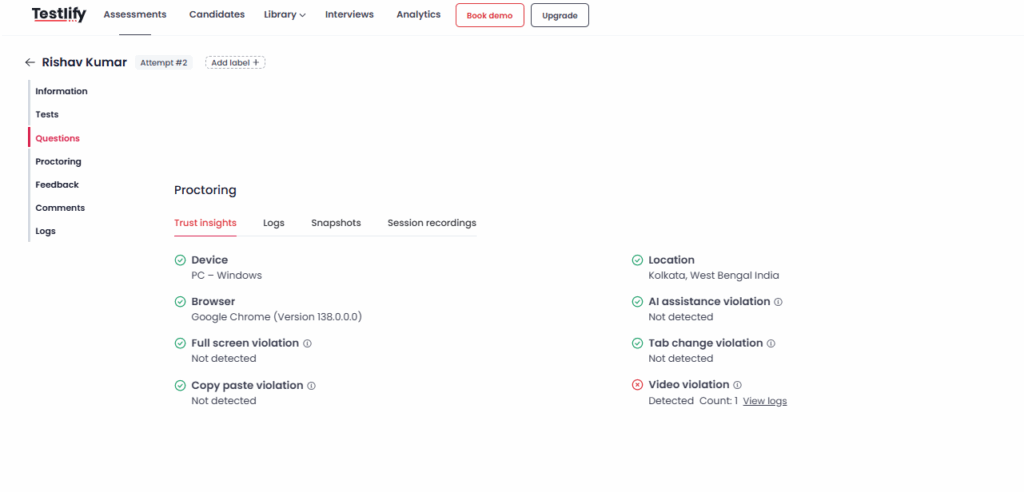
AI-powered platforms like Testlify support this layered approach by offering more than 3,000 ready-made skills tests, customizable assessments, and built-in proctoring features, including live environment scans and screen tracking.
Making verification routine
Fraud prevention is most effective when it becomes a routine part of your practice. A trained hr team should not treat background checks, ID verification, or social media checks as optional. Instead, they follow the same steps for every job applicant.
This prevents bias and makes the hiring process fairer for genuine job seekers. It also protects sensitive data and intellectual property by ensuring access is only granted to verified candidates.
Testlify helps make this routine easier by integrating with over 100 ATS platforms. Hence, verification processes fit smoothly into existing recruitment workflows.
Using tools with confidence
Technology makes these checks faster, but HR training teaches how to use the tools correctly. For example, document verification systems can scan certificates, and proctoring software can monitor video interviews or skills tests.
However, if HR teams are unsure how to interpret the results or follow up on red flags, the tools lose their value. With training, staff can act on what they see in Testlify’s proctoring logs or interview recordings, asking follow-up questions when something appears to be off.
Related: What is live proctoring? Secure online exam guide
Keeping compliance in mind
Fraud prevention must always respect privacy laws and regulations. In the US and EU, GDPR and FERPA guide how candidate data should be stored and checked. Training helps HR staff strike a balance between fraud prevention and these rules.
For example, they learn not to retain sensitive data longer than necessary and to request explicit consent before conducting checks. Platforms like Testlify are built with GDPR and FERPA alignment, allowing HR teams to focus on prevention without incurring additional legal risks.
The two frameworks cover different ground: GDPR regulates the collection and storage of personal data in europe, including resumes, ids, and background-check records, while FERPA protects student records in the US, including transcripts and test results. HR training should draw this distinction so teams know which rules apply to which piece of candidate data.
Wrap-Up: Building honest hiring habits
Recruitment fraud is not going away. Job applicants will continue to find new ways to bend the truth, whether through fake certificates, false employment history, or AI-generated answers in video interviews.
The only way to protect your company is by training HR teams to identify red flags and by utilizing tools that verify every detail before a job offer is made.
Testlify helps make this simple. With skills tests, proctoring, video interviews, and identity verification built into one platform, your hr team can focus on making the right hire without worrying about fraudulent activity.
Take the next step, book a demo with Testlify, and see how your team can build a fraud-resistant hiring process today.
Frequently asked questions (FAQs)

B2B SaaS Content Writer
Rishav Kumar is a B2B SaaS content writer with 4 years of experience. He loves crafting engaging content. Always exploring fresh ideas, he's passionate about helping businesses grow through impactful writing.
LinkedInRelated resources
View all
Hiring Risks & Safeguards
How to detect cheating in exams using analytics

Hiring Risks & Safeguards
Which HR behaviors increase hiring fraud risk?

Hiring Risks & Safeguards
Recruitment fraud: Everything you need to know

Hiring Risks & Safeguards
How to handle fake certificates in recruitment?

Hiring Risks & Safeguards
Are background checks enough to stop employment fraud?

Hiring Risks & Safeguards
How to prevent impostors in video interviews?
Get started.
Hire on proof, not resumes.
Run your first skills-based assessment free — no credit card required.