
How to measure time management skills [simple ways with examples]
Discover key time management skills, their workplace benefits, and how to assess and improve them to build high-performing, productive teams.
![How to measure time management skills [simple ways with examples]](/api/media/file/Importance-of-assessing-time-management-skills-in-recruitment-for-efficient-work-execution-2.png?dpl=dpl_6EF1e1bbhYuseK7CKKJE2ZCuSqYD)
Businesses aim to be as productive and efficient as they can be, and effective time managers are a key component of that. Time management is not merely about completing tasks in a hurry; it’s about being organized, prioritizing tasks, meeting deadlines, and staying productive at a high level without burning out. Time management skills are essential to maintaining a smooth flow of work, achieving targets, and accomplishing both organizational and personal objectives.
This blog will discuss time management skills, why they’re important, and how to evaluate them in job candidates, enabling companies to construct high-performing teams and individuals to achieve their highest potential.
 ChatGPT
 Gemini
 Claude
 Grok
Grok Perplexity
What are time management skills?
Time management skills are the capabilities and techniques that individuals apply to schedule, plan, and perform tasks in a manner that optimizes productivity and efficiency with minimal stress. Time management skills enable individuals to effectively manage their time to meet deadlines, achieve their objectives, and balance their work-life style.
Time management skills are more than the ability to manage your time; they are managing your energy, priorities, and resources in a way so that you can do the most in the shortest possible time. Effective development of time management skills is what you need to succeed in life and in business.

Why is time management important in workplace?
Time management skills are a must for any professional, regardless of their field or job. Here’s why:
Increased productivity
Staff who can manage their time effectively can get the job done faster, meet deadlines, and get improved results. Proper time management allows people to concentrate on what matters, so they can set priorities and reduce distractions.
Reduced stress
Lack of time management causes a perpetual sense of being under pressure. Deadlines are not met, tasks accumulate, and tensions build up. However, those who manage their time effectively can prevent last-minute frantically and avoidable stress, making their work more relaxed and productive.
Better work-life balance
Time management not only assists employees in their work; it also assists them in handling their life. Better time management translates into more time available for leisure activities, family, and relaxation. It’s the solution to job satisfaction and general happiness.
Improved decision-making
Effective time managers are not merely productive; they are also good decision-makers. With the capacity to plan, prioritize, and distribute resources, time managers are equipped to make proper decisions that serve both the individual and the teams.
Professional growth and development
Time management is a key to career growth. As workers advance in their careers, their workload increases, and they are also supposed to manage not just their own time but that of others as well. Those who can take on this responsibility are regarded as assets.
How to assess time management skills in candidates?
Though time management may appear to be a theoretical concept to measure, there are a few real-world ways to determine if a candidate possesses this critical skill. It’s about observing how they prioritize tasks, schedule things, and adhere to deadlines.
Several tools and platforms can assist in assessing time management skills effectively. Here are some of the most useful options:
1. Skills assessments
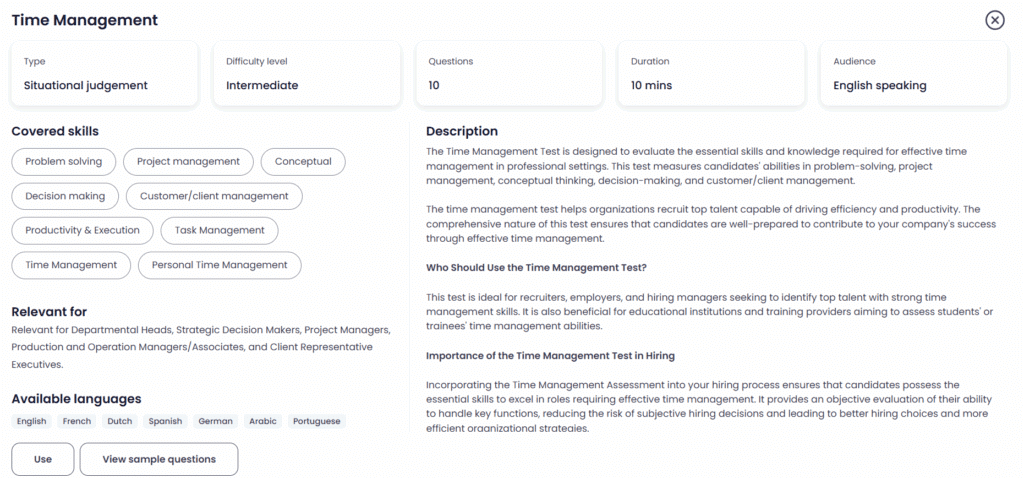
Time management test: Testlify’s time management test evaluates candidates’ skills in problem-solving, project management, decision-making, and customer or client management. This test helps recruiters understand how well candidates can manage their time, prioritize tasks, and stay organized under pressure. The results from this test can provide valuable insights into a candidate’s time management potential, making it easier to compare candidates objectively.
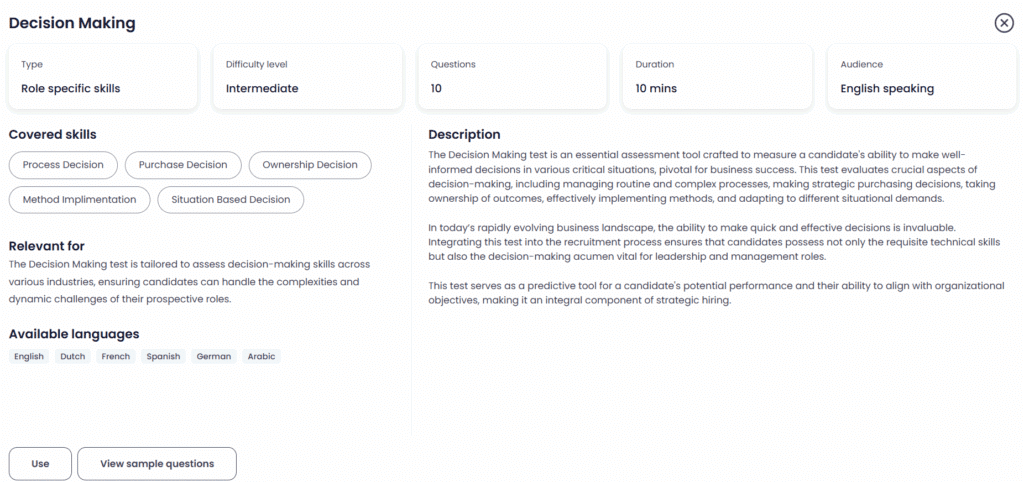
Decision-making test: Testlify’s decision-making test evaluates a candidate’s ability to make informed, timely, and effective decisions, which is essential in time management. Candidates who excel at decision-making are more likely to make swift choices that allow them to stay on track and avoid wasting time. This test involves providing candidates with hypothetical scenarios where they need to make quick, reasoned decisions about priorities, resources, or strategies.
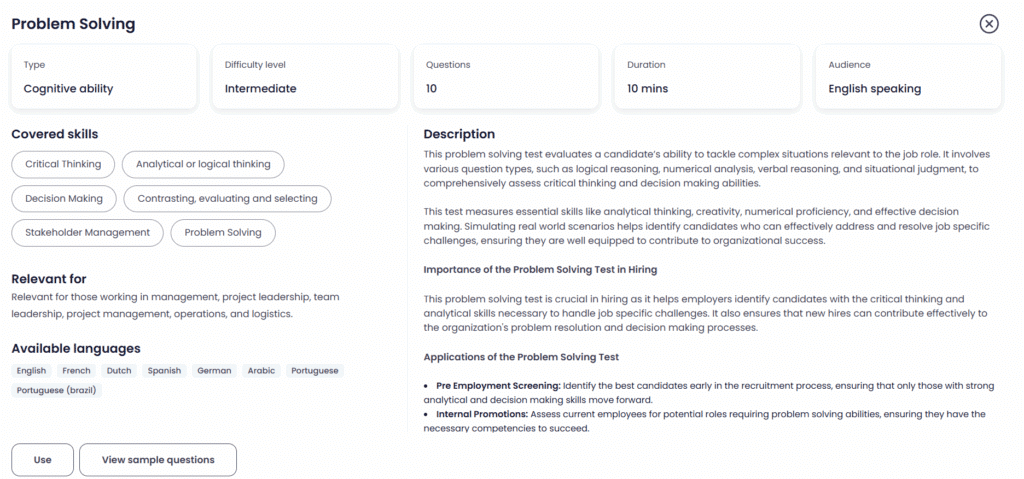
Problem-solving test: Problem-solving is a core aspect of effective time management. Time management often requires identifying challenges, finding solutions, and implementing changes efficiently. Testlify’s problem-solving test is designed to assess a candidate’s ability to approach and resolve issues in a structured and timely manner.
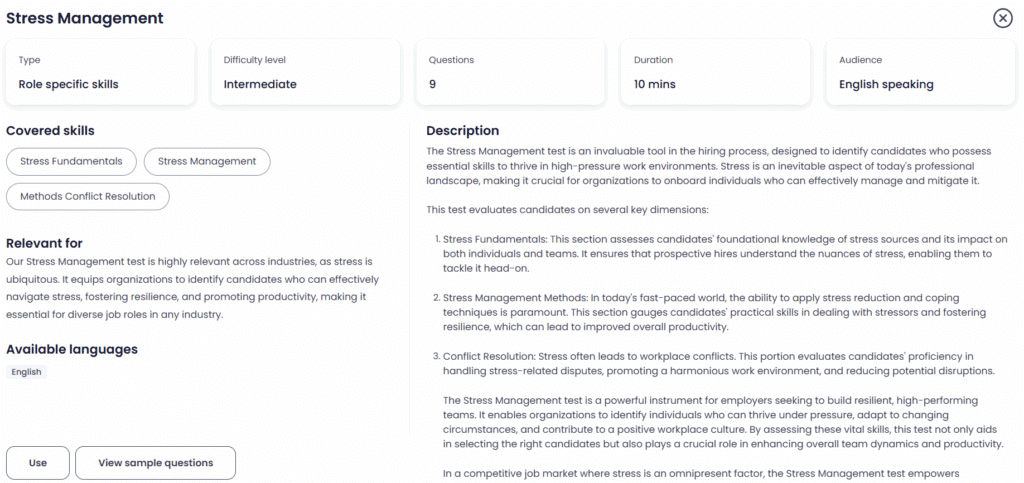
Stress management test: Time management often intersects with stress management. Candidates who can effectively manage their time under pressure are less likely to experience burnout or make mistakes due to stress. Testlify’s stress management test helps evaluate how well candidates handle stress and manage their time in high-pressure situations.
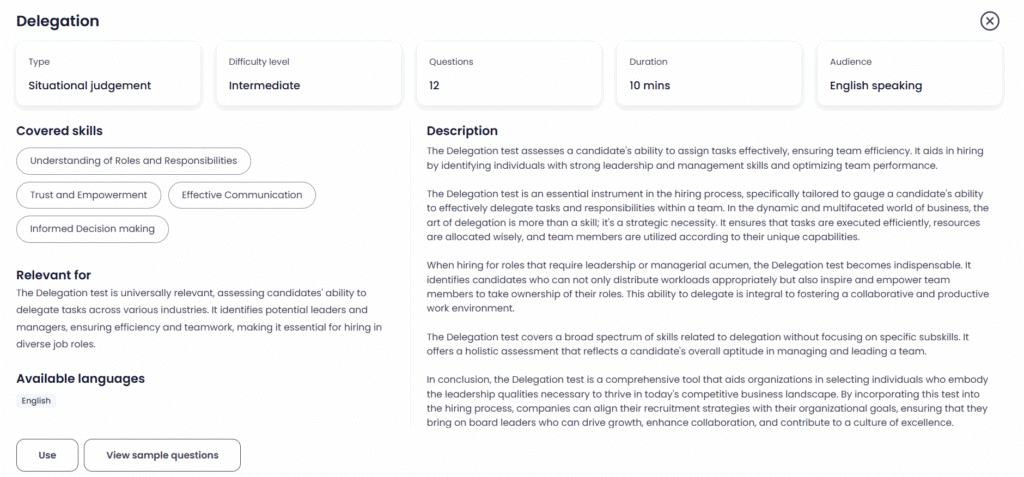
Delegation test: Effective time managers often need to delegate tasks to others in order to manage their workload and meet deadlines. Testlify’s delegation test assesses how well candidates can identify which tasks they should handle personally and which tasks can be delegated to others. It also evaluates how well they manage the delegation process.
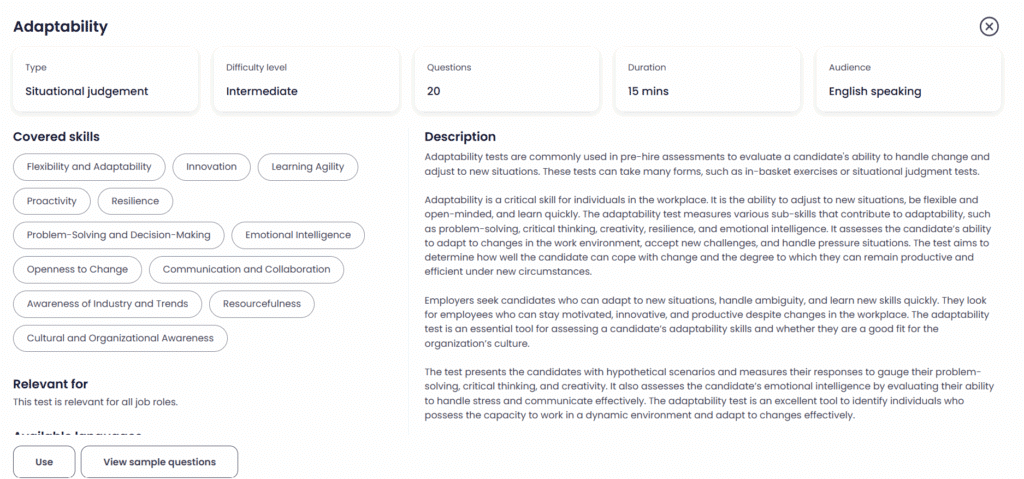
Adaptability test: Adaptability is a key component of time management. Often, unexpected changes or interruptions require individuals to adjust their plans. Testlify’s adaptability test evaluates how well candidates can modify their approach to time management in response to new challenges or shifting priorities.
2. Behavioral interviews
Behavioral interviews are one of the most effective ways to assess time management skills. By asking candidates to describe past experiences where they had to manage multiple tasks or meet tight deadlines, you can get a clear picture of how they handle time management in real-world situations.
Here are some example questions to ask during a behavioral interview:
- “Can you describe a time when you had multiple deadlines to meet? How did you prioritize your tasks?”
- “Tell me about a situation when you had to adjust your plans due to unforeseen circumstances. How did you manage your time?”
- “How do you ensure that you stay on track and meet your goals in a busy work environment?”
Look for answers that demonstrate an ability to assess the situation, prioritize tasks, and effectively allocate time to meet deadlines. Strong candidates will provide specific examples of how they managed their time, dealt with challenges, and ensured tasks were completed on schedule.
3. Reference checks
Reference checks are an excellent way to validate time management skills. Contacting a candidate’s previous employers, colleagues, or clients can provide insight into how well they managed their time in past roles. Ask specific questions regarding how the candidate handled deadlines, prioritized work, and balanced multiple responsibilities.
Questions for reference checks might include:
- “How did the candidate manage competing priorities and deadlines?”
- “Was the candidate able to consistently meet deadlines and manage time effectively?”
- “Can you provide examples of how the candidate handled high-pressure situations with multiple tasks?”
4. Google calendar or task management tools
Many companies use digital tools like Google Calendar, Asana, or Trello to manage projects and schedules. Asking candidates how they would use these tools for time management can provide insight into how they organize their day and meet deadlines. Additionally, you can ask candidates to complete a mock schedule for a day or week to see how they would organize and prioritize tasks.
Check out our software skills test.
5. Microsoft Excel or Google Sheets
Candidates with strong time management skills often use spreadsheets to create timelines, project schedules, and task lists. You can ask candidates to complete a time-related task using Excel or Google Sheets to see how well they manage tasks and time. This could involve creating a project plan or a schedule with specific deadlines and milestones.
Check out our MS office skills test and assess candidates for these skills.
How to improve time management skills in your team?
After you have recruited employees with good time management skills, it’s essential to keep developing and enhancing these skills in your employees. Below are some tips you can apply:
Set clear expectations and goals
Make sure that employees understand what is required of them and the timelines they should meet. Having clear goals and giving direction keeps employees on track and helps them manage their time well.
Provide time management tools and resources
Provide employees with resources such as calendars, to-do lists, and project management software that will assist them in staying organized and being on time. Training employees on the use of these tools will further enhance their effectiveness.
Encourage breaks and rest periods
Time management is not merely about working harder it’s about working smarter. Inspire employees to take regular breaks in order to prevent burnout and maximize productivity.
Offer time management training
Numerous employees will find it valuable to undergo proper time management training. This kind of training will instruct methods such as prioritization of tasks, the Pomodoro technique, or how to manage distractions successfully.
Conclusion
With the proper tools, strategies, and methods, companies can be confident they are hiring people who can meet deadlines, remain productive, and ultimately help the business run more efficiently and successfully. By taking the time and effort to evaluate time management abilities, businesses can prevent the financial losses associated with ineffective time management, such as lost deadlines, lost opportunities, and added stress.
Proper time management is a basic competence that stimulates productivity, alleviates stress, and supports a good work-life balance. Through the selection of applicants with effective time management skills, organizations are able to build a more productive and successful working environment.
For further reading, explore Compensatory Time Off Comp Time, Working Capital Management, Management Accountant & Save Screening Time Reduce Resume Fatigue.

Content Writer
Yashika Khandelwal is a Content Writer with 3+ years of experience creating research-backed content on hiring, talent assessment, and HR technology. She is a registered Organizational Psychologist and subject matter expert who combines behavioral science with practical recruitment insights to produce accurate, evidence-based content.
LinkedInRelated resources
View all
Skill assessment
How to evaluate problem solving skills of candidates

Skill assessment
How to accurately assess attention to detail skill in candidates?

Skill assessment
HR playbook for assessing communication skills in 2026

Skill assessment
Pre-hire assessments for retail industry

Skill assessment
The role of technology in skill assessments and its impact on the recruitment process

Skill assessment
How pre-hiring assessments can help recruiters make better hiring decisions
Get started.
Hire on proof, not resumes.
Run your first skills-based assessment free — no credit card required.