
Candidate dishonesty: Key red flags
Candidate dishonesty can cost more than money. Discover the top red flags in resumes, interviews, and remote hiring to make smarter hiring decisions.
Almost 6 in 10 hiring managers say dishonesty is the biggest red flag in candidates (Harvard Business Review, 2022). People often exaggerate their job titles, skills, or degrees more frequently.
This often ends in a bad hire. A bad hire doesn’t just cost money; it erodes trust and undermines team performance. This guide explains the key red flags of candidate dishonesty and shows you how to catch them early.
 ChatGPT
 Gemini
 Claude
 Grok
Grok Perplexity
What does candidate dishonesty really look like today?
Candidate dishonesty manifests in various ways, ranging from minor to serious. A Forbes survey shows that over half of applicants admit to lying on their resumes. It could be as simple as adding a skill they don’t really have, or as bold as faking a degree.
In interviews, dishonesty takes the form of vague answers, dodging questions, or blaming others. With remote hiring, new risks emerge, including having someone else take the test and using deepfake tools to pass video checks (FBI).
Below are the most common forms of candidate dishonesty today:
- Resume lies:Changing job titles, making job dates longer, or adding fake degrees. These are major red flags that can be checked with background screening.
- Interview dishonesty: Giving vague answers, avoiding eye contact, or refusing to talk about past mistakes. These communication red flags often signal that something is wrong.
- Exaggerating skills: A candidate may claim to be an expert in a tool or language, but struggle to provide detailed explanations when asked. Hiring managers often catch this by asking simple follow-up questions.
- Remote fraud: With increased online hiring, some candidates use AI-generated answers, fake references, or even have someone else take the interview on their behalf.
Dishonesty today goes beyond small lies. It can be planned and risky for the company. Hiring decisions based solely on trust, without thorough checks, can easily lead to a bad hire.
Tip for Recruiters: Treat your gut feelings seriously. If something feels off (a candidate avoids specifics or seems “too good to be true”), dig deeper with verification or testing.

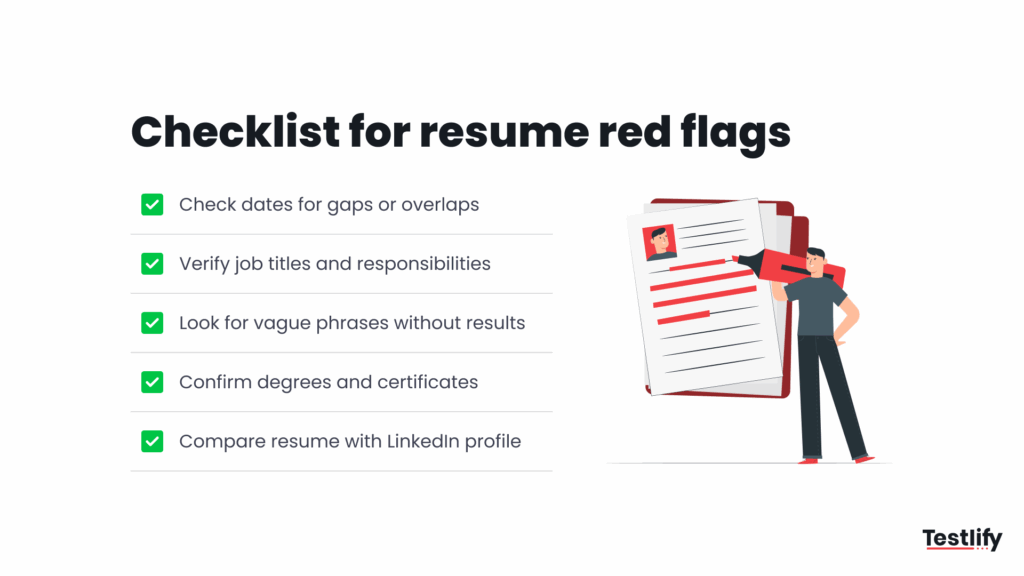
What are the resume red flags to watch for?
A resume is the first thing hiring managers see, and it’s also where most dishonesty starts. In fact, over 70% of resumes contain false or exaggerated details (CareerBuilder, 2023).
Some lies are small, like adding extra skills. Others are big, such as claiming a degree that was never earned. Both can mislead interview processes and lead to bad hiring decisions. Below are the key red flags to watch for:
Job history that doesn’t add up
If dates overlap or if there are long gaps with no apparent reason, that is a key red flag. Sometimes the candidate is hiding unemployment, other times it could be a fake job added to cover a gap. Always ask for simple explanations during the job interview.
Titles that seem inflated
A candidate might write “Project Manager” when they were really a “Project Assistant.” This type of candidate dishonesty is common, and you can often catch it when their interview answers don’t match the seniority of the title.
Too much vague language
Phrases like “worked in a fast-paced environment” or “responsible for key projects” mean little if there are no details. Honest candidates give numbers or examples. Dishonest ones often hide behind broad phrases.
Skill lists that look unrealistic
When a resume lists every tool and every software you can think of, that’s a potential red flag. In interview processes, these candidates often fail to demonstrate genuine interest or a clear understanding of the skills they claim.
Education or certificates that can’t be checked
Fake degrees and fake certificates are more common than many people think. Hiring managers should always confirm education through background checks. If something looks unusual, it probably is.
Mismatch with online profiles
If the LinkedIn profile says one thing, and the resume says another, that’s a major red flag. Honest candidates maintain consistent information across all platforms.
The main point is: resumes are not always what they seem. By slowing down and checking these details, you can save yourself from making hiring decisions based on false claims.
What interview behaviors signal dishonesty?
Interviews are where you can see signs that a resume alone cannot show. Candidates may appear confident on paper, but their manner of speaking, listening, and responding can reveal potential red flags. Hiring managers should pay attention to both what is said and how it is said.
1. Dodging direct questions
When you ask about a project or responsibility, a dishonest candidate often gives long answers without specifics.
For example, if you ask, “What was your role in that project?” and the answer is, “Oh, I was involved in many parts, it was a fast-paced role,” but no straightforward task is mentioned, that is a major red flag.
Honest candidates typically provide concise, precise details about what they actually did.
2. Changing stories
Another sign of candidate dishonesty is when the same question, asked in a different way, elicits different answers.
Inconsistent details about dates, team size, or results show that the story may not be real. Interview processes often expose these differences if you ask follow-up questions.
3. Avoiding eye contact
Avoiding eye contact alone does not always mean lying. Still, when paired with vague answers, it becomes a strong communication red flag.
For example, if someone looks away while being asked about their last role or skills, it may show discomfort with the truth.
4. Poor listening skills
Some candidates answer questions you never asked, or repeat lines that sound rehearsed. This can show a lack of preparation or an attempt to hide something. In job interviews, poor listening skills can be a potential red flag because they impact both honesty and future teamwork.
5. No interest in the role
Candidates who show no genuine interest in the role or company culture raise another red flag.
If the only questions they ask are about salary or vacation days, it suggests they are not focused on long-term fit. Culture fit red flags matter because they affect hiring decisions beyond skills.
These behaviors do not prove dishonesty on their own. But when you see several of them together, hiring managers should take a closer look before making a decision.
Tip for Interviewers: Use behavioral questions (“Tell me about a time…”), ask unexpected follow-ups, and compare the candidate’s story to their resume. Consistent, specific stories build credibility, whereas mismatches or shallow answers show caution.
How can remote interviews and AI fraud reveal dishonesty?
Remote hiring has made things easier for both companies and candidates. However, it also presents new opportunities for candidates to be dishonest.
In a typical job interview, body language and face-to-face conversation reveal a great deal about the candidate. In online interviews, dishonest candidates can hide behind screens, tools, or even another person.
Hiring managers need to be aware of new red flags that emerge specifically in remote settings.
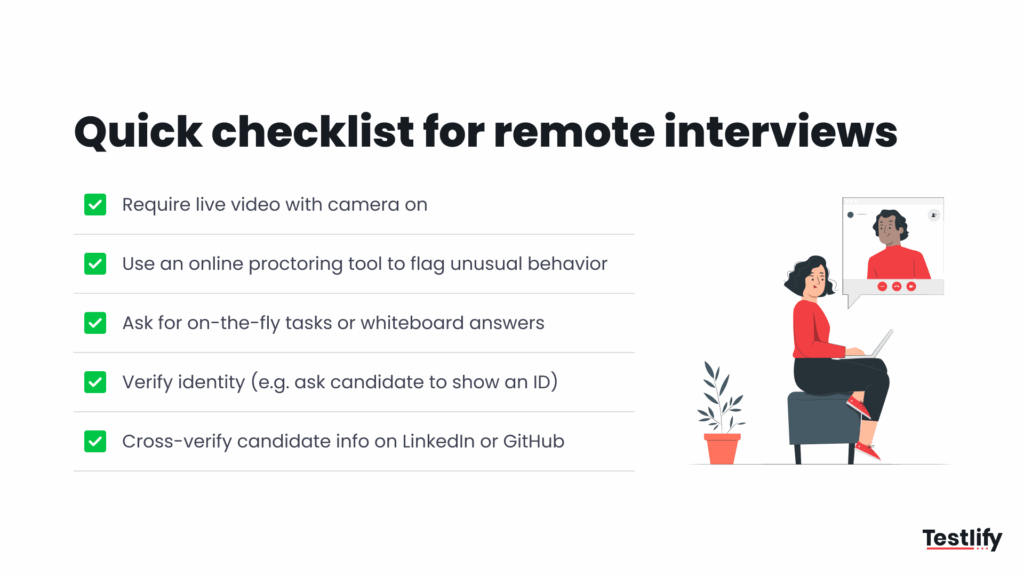
1) Video verification
Keep the camera on for every live interview. Ask for a quick gesture (such as a wave, turning your head left and right, or reading a line of text).
A deepfake or pre-recorded feed often fails to meet this standard. Ask the candidate to screen share while showing an ID, then match the name in your notes.
Turn off heavy filters and virtual backgrounds. Repeated “camera issues” or refusal to join on video are major red flags.
2) Anti-cheat proctoring
During remote tests, use tools that enforce full-screen, watch for tab switching, and take random webcam snapshots.
Copy-paste and print blocking help too. Live environment scans (using a webcam and phone) make stand-ins more challenging.
Platforms like Testlify include live video or audio prompts, screen-share options, and alerts when behavior looks risky. This makes cheating much more challenging to hide.
3) AI-powered checks and real-time tasks
Use ID-verification or deepfake-detection services when roles are sensitive. Mix in questions that require on-the-spot thinking (live coding, case walk-throughs, quick whiteboard math).
Change the order of questions. Ask for a short follow-up task with a tight time box. Studies have reported high cheating rates in unproctored online exams, often with the aid of hidden AI, so design tasks that require original thinking in real-time.
4) Document scrutiny
Look closely at any document sent for proof (such as a resume, certificates, or IDs). Blurry seals, mismatched fonts, wrong program names, or date errors are warning signs.
Call the issuer or use the university portal if available. Check at least two references. Request a link to a public profile or portfolio to verify work history.
5) Balanced approach
Blend remote and in-person work when possible. Some teams add a short on-site round before the offer. If on-site is not possible, schedule a second live video with a different interviewer, repeat one or two key questions, and confirm identity again.
Cross-check the candidate’s name and work timeline on two platforms (for example, LinkedIn and GitHub). Run background screening for critical roles.
Remote interviews can hide dishonesty, but a few steady habits (video checks, proctoring, real-time tasks, and document verification) bring problems to the surface fast.
How Testlify helps you spot red flags early
Hiring managers often struggle to determine whether a candidate is honest or simply skilled at presenting themselves well. This is where Testlify helps. Instead of trusting what’s written on a resume, you can use skill tests from its library of over 3,000 options.
For example, if a candidate claims to have strong Excel skills, they can be asked to complete a task that demonstrates this proficiency. If they claim to be fluent in Python, they can solve a short coding problem within the platform.
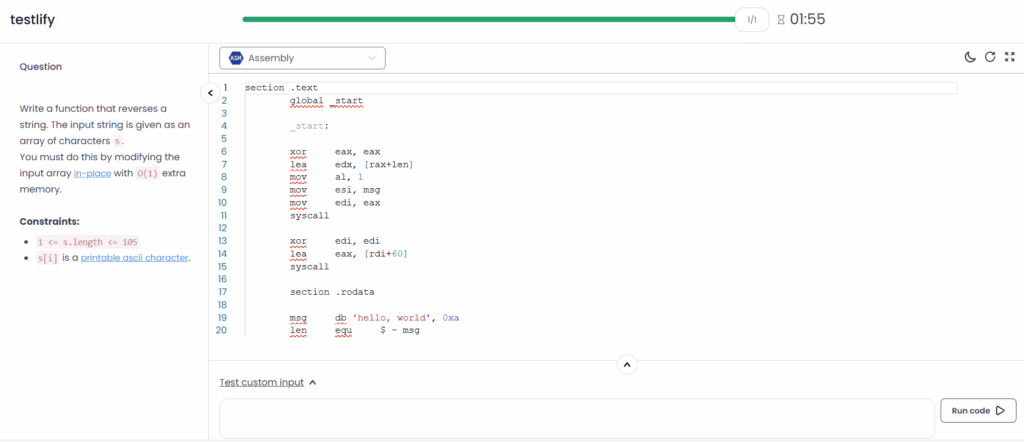
These tests reveal gaps right away, before you waste time in the interview process.
Testlify also supports AI video and audio interviews. This means you don’t just hear what the candidate says, you see how they explain, listen, and react. Dishonest candidates often struggle to give natural answers when the questions are unpredictable.
Built-in proctoring features take it further: live environment scans, screen sharing, and tab tracking make it harder for someone to use hidden help or impersonate another person. If a candidate tries to cheat, the system flags it for the hiring manager.
By combining skill checks, video interviews, and proctoring in one place, Testlify gives you a clearer picture of each candidate and helps you avoid dishonest hires.
Problem / Red Flag | How Testlify Helps |
|---|---|
Resume padding or fake skills | 3,500+ ready-made skill tests confirm if candidates can actually do the work. |
Scripted or vague interview answers | AI-powered video and audio questions capture tone, clarity, and genuine interest. |
Remote cheating during tests | Built-in proctoring (dual camera, screen share, tab lock, copy-paste block) stops hidden help and impersonation. |
Inconsistent details across profiles | 100+ ATS integrations let hiring managers cross-check candidate data seamlessly. |
Lack of preparation or false claims | Structured assessments highlight gaps between claims and actual performance. |
Wrapping it up: Red flags and next steps
Dishonesty in candidates is common. It can start with small lies on a resume and end with serious fraud in remote hiring. If these key red flags go unnoticed, they can lead to poor hiring decisions. A bad hire not only wastes money but also lowers team trust and slows down work.
As a hiring manager, here is what to focus on next:
- On resumes: check for job gaps, inflated titles, or vague skills.
- In interviews: watch for poor listening skills, inconsistent stories, or avoiding eye contact.
- In remote hiring: be alert to camera excuses, scripted answers, or signs of cheating.
The next step is to put checks in place so that these issues are identified before a hiring decision is made.
Use clear interview questions, confirm details with references, and test actual skills instead of relying solely on claims. Platforms like Testlify can help here by combining skill tests, proctoring, and interviews into a single process.
Want to see how these checks work in practice? You can explore them yourself with a quick Testlify demo.
Frequently asked questions (FAQs)

B2B SaaS Content Writer
Rishav Kumar is a B2B SaaS content writer with 4 years of experience. He loves crafting engaging content. Always exploring fresh ideas, he's passionate about helping businesses grow through impactful writing.
LinkedInRelated resources
View all
Hiring Risks & Safeguards
Which HR training strategies stop recruitment fraud?
Hiring Risks & Safeguards
How to detect cheating in exams using analytics

Hiring Risks & Safeguards
Which HR behaviors increase hiring fraud risk?

Hiring Risks & Safeguards
Recruitment fraud: Everything you need to know

Hiring Risks & Safeguards
How to handle fake certificates in recruitment?

Hiring Risks & Safeguards
Are background checks enough to stop employment fraud?
Get started.
Hire on proof, not resumes.
Run your first skills-based assessment free — no credit card required.