
What are employment assessments? Types, importance
Employment assessments evaluate candidates’ skills, traits, and potential through cognitive, behavioral, and technical testing methods.

Employment assessments are evaluations or tests employers conduct to determine whether an employee or candidate is perfect for the role. Companies use various tests to assess candidates’ skills, knowledge, competencies, and personality. Some job assessment test examples include psychometric tests, cognitive ability tests, role-specific tests, behavioral tests, etc.
Such tests help employers make informed decisions about hiring, training, promotion, and overall workforce development.
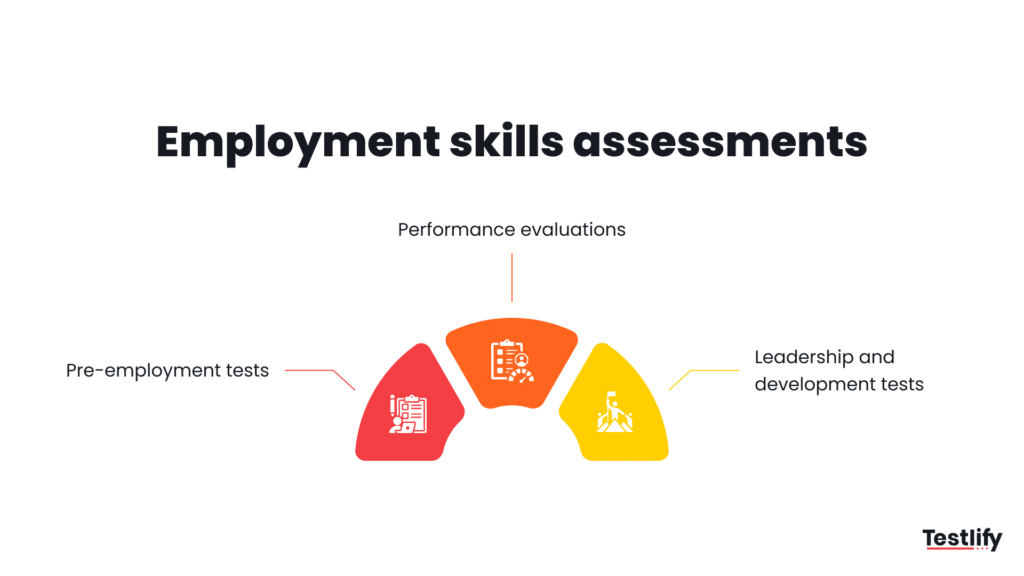
These tests can be used at different stages of employment, including:
- Pre-employment assessments (e.g., skills tests, cognitive tests, personality assessments)
- Performance evaluations (e.g., productivity metrics, 360-degree feedback)
- Leadership and development assessments (e.g., management potential tests, learning agility assessments)
Depending on the test type, it can be a standardized online assessment or homework assignment. The main goal of any assessment test for a job is to determine whether the candidate has the necessary skills and personality traits to succeed in the role.
A research by Aberdeen Group found that companies using pre-employment tests experience a 24% increase in hiring success, one of several independent studies (cited throughout this page) that consistently link structured assessment to better hiring outcomes.
 ChatGPT
 Gemini
 Claude
 Grok
Grok Perplexity
12 different employment assessments HRs should know
Hiring the right talent isn’t just about resume screening and interviews anymore. Employers use different types of assessments to test candidates on skills, knowledge, and job fit. These tests can include multiple-choice questions (MCQs), role-specific tasks, situational judgment questions, and even simple yes/no responses.
However, not all assessments work for every role. That’s why companies need flexible, role-specific tests. Testlify is the best pre-employment assessment platform, with 3,500+ ready-to-use assessments tailored for different industries and job levels.
Whether you’re hiring developers, sales reps, or marketers, you’ll find pre-built tests that match your needs.
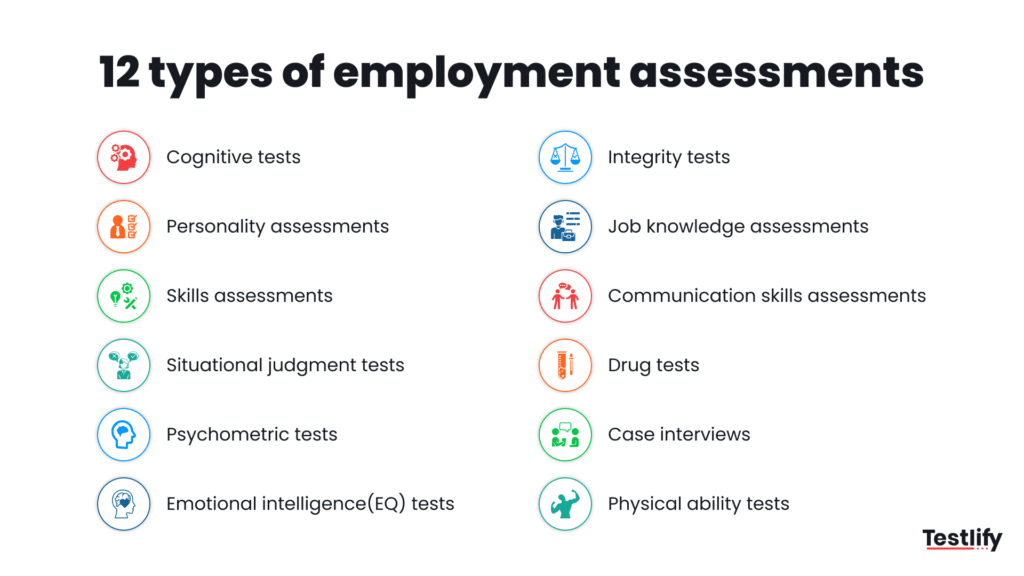
Here are 12 essential types of employment assessments that companies can use to make smarter hiring decisions.
Cognitive ability tests
Cognitive ability tests measure a candidate’s ability to process information, analyze complex scenarios, and make logical decisions. These assessments go beyond simple IQ tests by evaluating multiple cognitive skills, including:
- Numerical reasoning: How well candidates interpret and work with numbers.
- Logical reasoning: Their ability to recognize patterns and solve problems.
- Verbal reasoning: How well they comprehend and process written information.
- Spatial reasoning: How well candidates visualize and manipulate 2D and 3D shapes, useful for engineering, design, and technical roles.
Cognitive ability tests are the most validated pre-employment assessment type in industrial and organizational psychology: they measure how quickly a candidate can reason and learn, not what they already know, which is why they predict job performance across industries and not just in technical fields. The tradeoff to plan for is adverse-impact risk if a test isn't validated against the specific role and normed on a representative population — pair a generic cognitive test with at least one other assessment type rather than relying on it alone.
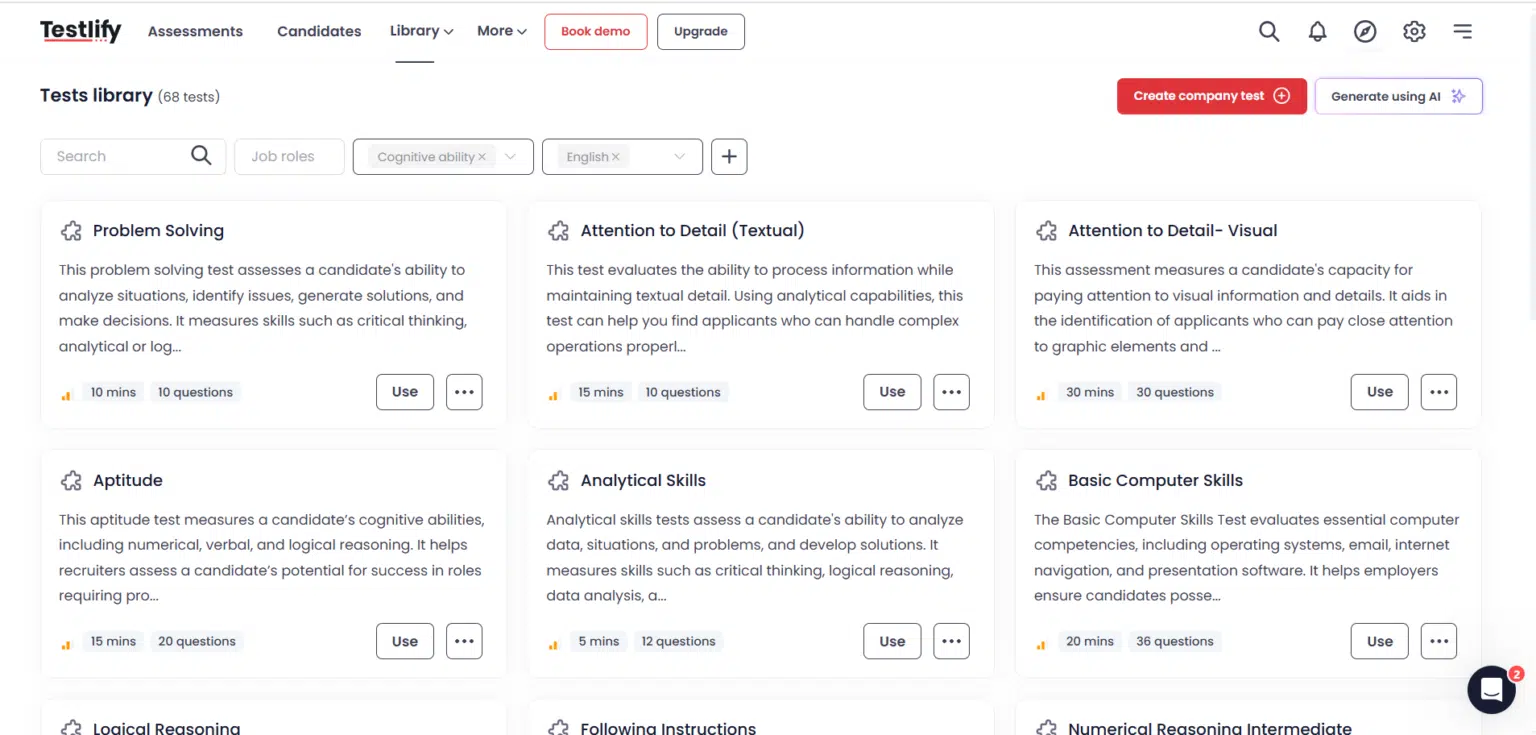
Testlify offers 68 cognitive tests ideal for software developers, analysts, engineers, and managers, where quick thinking and adaptability are crucial.
Personality assessments
Personality tests measure an individual’s motivation, preferences, interests, and behavorial traits. Companies use these tests to assess the cultural fitness of candidates or when filling positions that require specific personality traits. Some examples of commonly used personality tests offered by Testlify include:
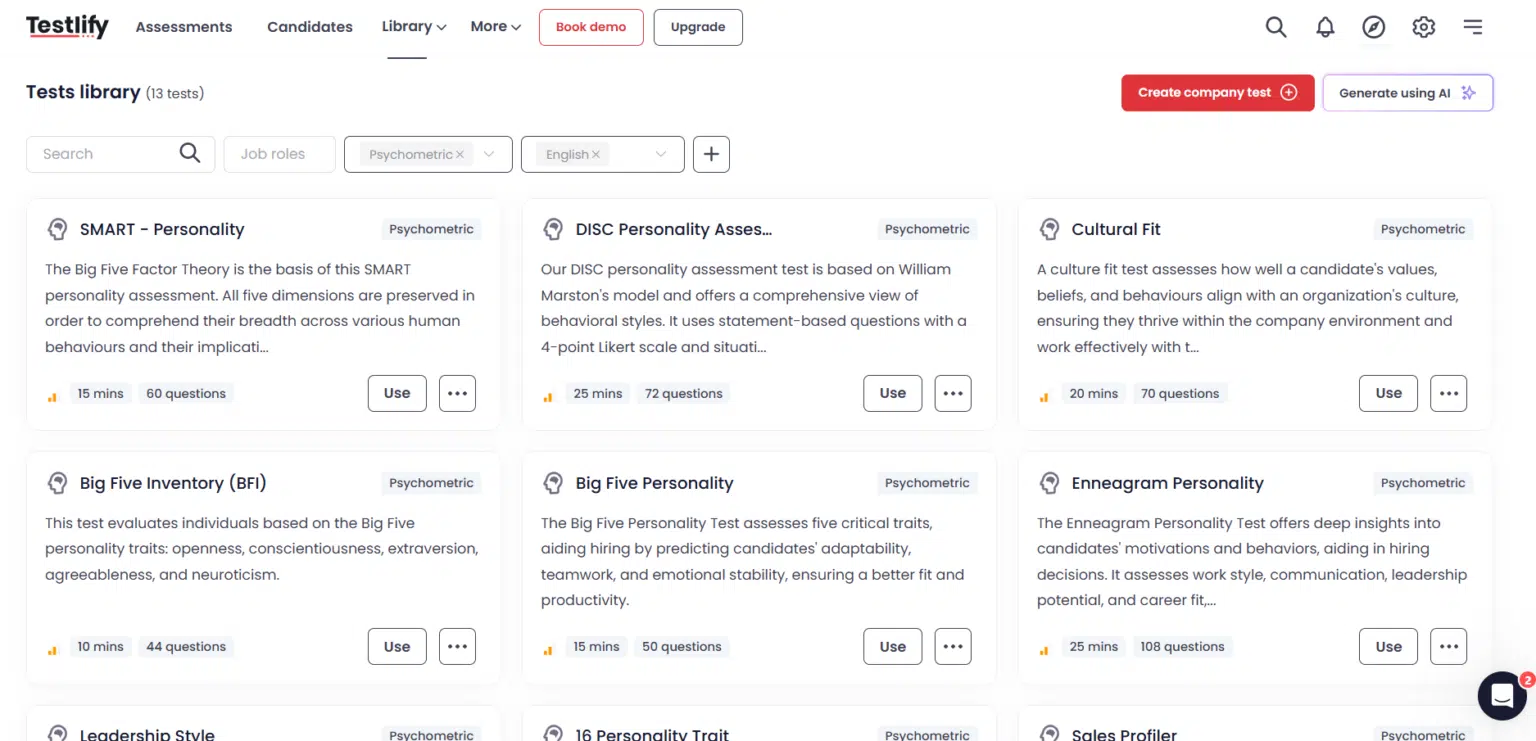
- The Big Five Personality Model (BFI) evaluates candidates based on five key traits: extroversion, emotional stability, agreeableness, conscientiousness, and openness to experience. It helps employers understand how individuals interact with others, handle stress, and approach work.
- Enneagram Personality Test categorizes individuals into nine core types, revealing deep motivations and behavioral patterns for personal and professional growth.
- PicOCEAN Personality Test is a picture-based assessment designed to evaluate candidates using the Big Five personality traits (OCEAN). It provides deep insights into behavioral tendencies, strengths, and areas for improvement, helping employers make data-driven hiring decisions.
- SMART personality tests is a data-driven test that evaluates sociability, mindfulness, agreeableness, receptivity to new things, and temperament. Unlike traditional models, it directly connects personality traits to workplace performance, helping companies identify candidates who align with job demands and company culture.
69% of U.S. executives say they will prioritize soft-skills hiring in their next cycle (LinkedIn Talent Trends, 2024). Personality and EQ assessments are one of the only reliable ways to screen for soft skills at scale before the first interview — but no personality dimension should be used as a hiring-decision-in-isolation tool. Some dimensions are susceptible to social-desirability bias (candidates answering how they think they should, not how they actually behave); forced-choice formats reduce this but don't eliminate it. Use the results to sharpen interview questions, not as a binary pass/fail filter.
Skills assessments
Skills assessment evaluates candidates’ hard and soft skills. These can be industry-specific skills like coding proficiency, language fluency, design software expertise, or experience with integration platforms such as Zapier and other widely used Zapier alternatives. Skills assessments are instrumental in determining whether a candidate has the practical capabilities needed for a role.
Some of the common skills assessments offered by Testlify include: Software skills test: Assesses a candidate’s proficiency in coding, debugging, and software development skills. Testtlify offers 961 types of software tests.
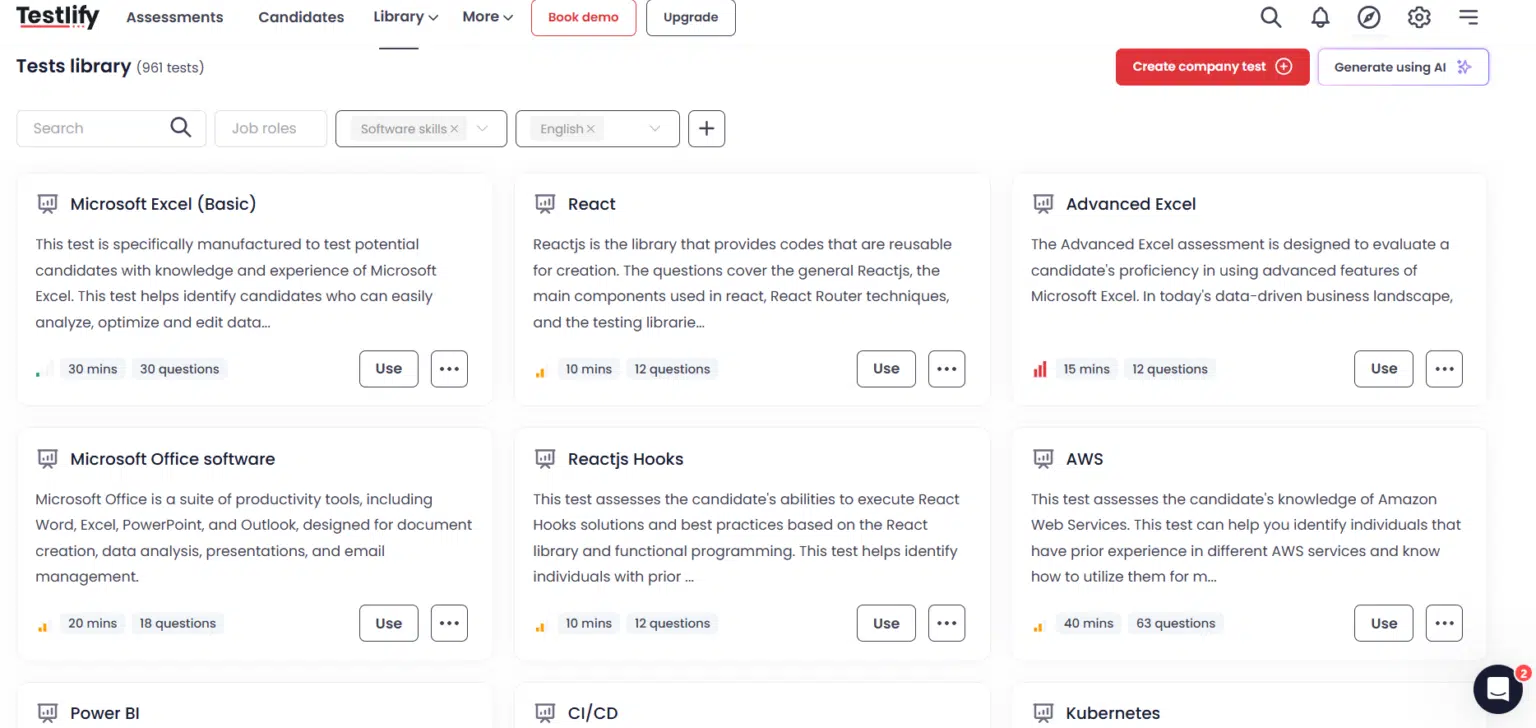
Typing test: Measures typing speed and accuracy to evaluate a candidate’s efficiency in data entry or administrative tasks. Testlify offers 6 typing tests that assess words per minute (WPM), keystroke dynamics, error rate, and proficiency in different typing formats.
Work sample tests
Work sample tests ask candidates to complete an actual piece of the job — write a piece of code, review a financial model, design a campaign brief, handle a simulated customer complaint. They have the highest face validity of any assessment type, meaning candidates immediately see why the test is relevant, which improves completion rates. They're also among the hardest to fake, since a candidate who can't debug code won't pass a debugging exercise just by writing confidently in an interview. The tradeoff is logistics: work samples take 20–60 minutes for candidates to complete and time for your team to score if they're open-ended, so for high-volume hiring they're usually reserved for the second screening round, after cognitive and skills tests have thinned the pool.
Situational judgment tests
A Situational Judgment Test (SJT) is an assessment that evaluates a candidate’s decision-making and problem-solving skills in workplace-related scenarios. Candidates face real-world situations on the job and must choose the best course of action from multiple response options.
Testlify offers 87 different types of situational judgment tests that measure candidates’ problem-solving, interpersonal skills, adaptability, ethical judgment, etc.
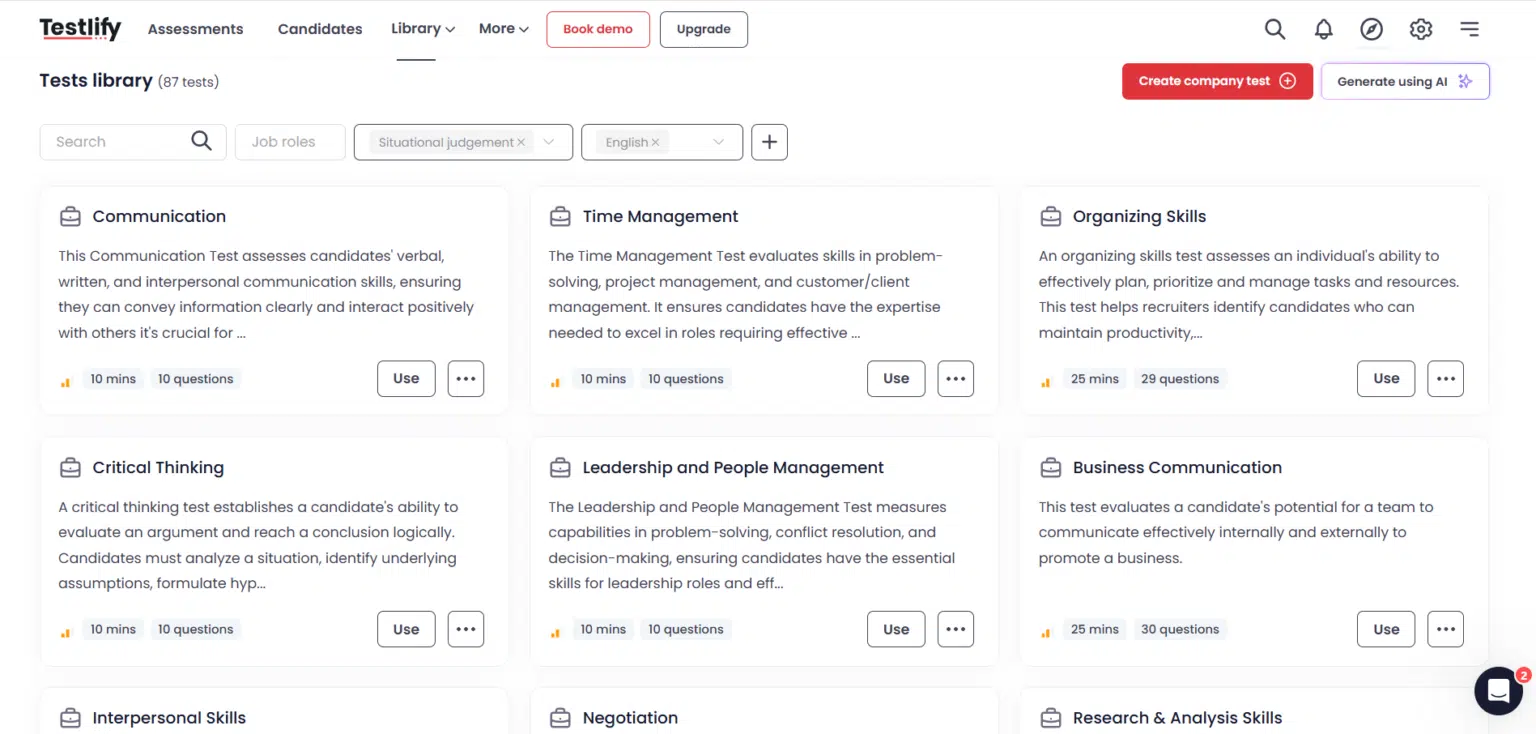
Testlify’s situational judgment tests are designed to reflect industry-specific challenges. With a vast library of customizable SJTs, employers can assess candidates in customer service, management, healthcare, IT, and more.
Related: How Situational Judgement Tests (SJTs) find the best fits
Psychometric tests
Psychometric tests in recruitment measure a candidate’s or employee’s intelligence, potential, and personality. These tests evaluate skills like problem-solving, logical reasoning, emotional intelligence, and communication to better understand how a candidate thinks and interacts in a work environment.
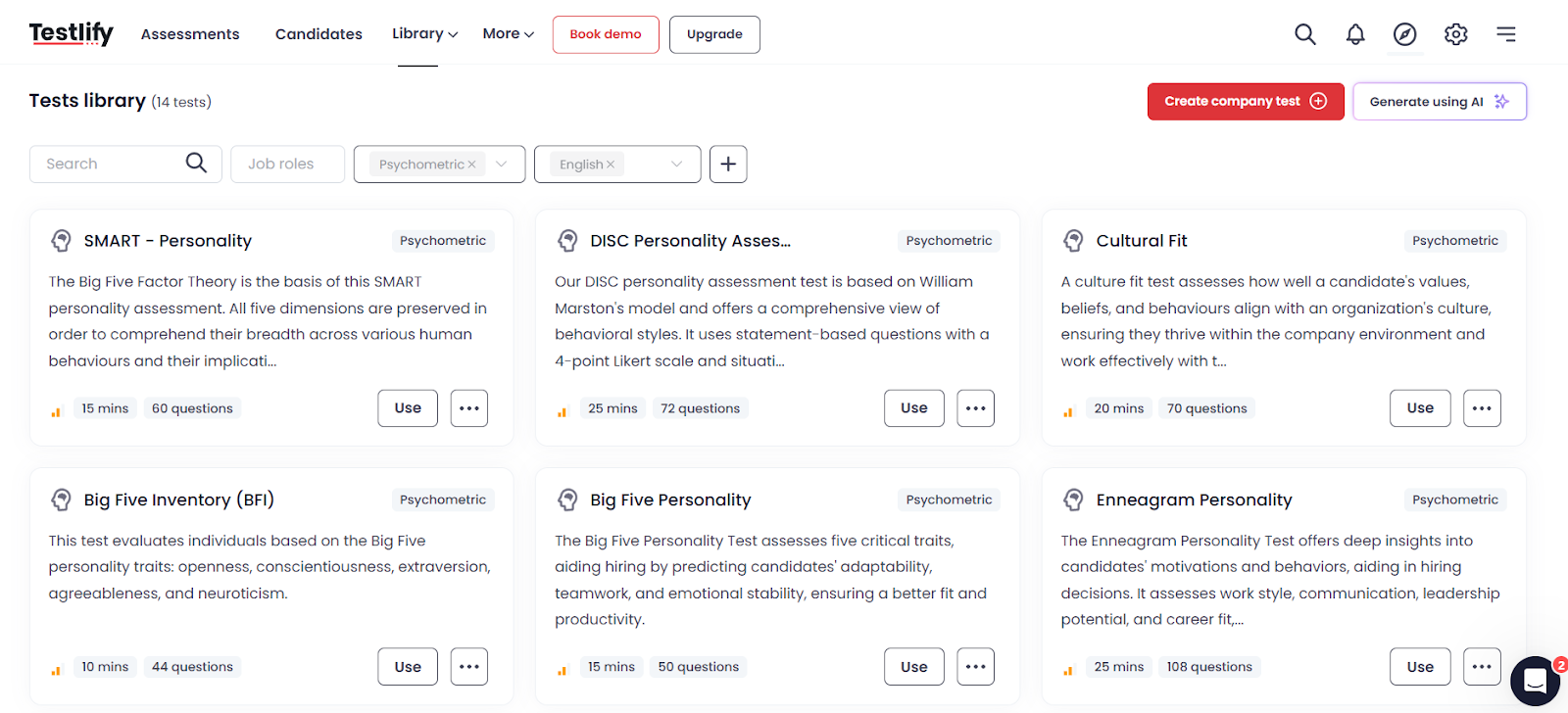
Employers use psychometric tests to make data-driven hiring decisions, ensuring that candidates have the right skills and fit well with the company culture and job requirements. Testlify offers 14 psychometric tests.
Related: How to use psychometric tests to improve employee performance
Emotional intelligence(EQ) tests
Emotional intelligence (EQ) tests measure candidates’ ability to understand, manage, and express emotions. Additionally, it measures how well a candidate perceives and responds to others’ emotions.
Evaluating emotional intelligence gives employers an idea of how well candidates can navigate an emotional situation. Such tests involve performance-based tasks, self-reported questions, etc, designed to test self-awareness, relationship management, and empathy.
For individual contributors, high EQ is useful; for leaders, it's close to a prerequisite — manager behavior is one of the top two drivers of team engagement, and only 20% of employees globally are engaged at work. Self-report EQ instruments carry the same social-desirability-bias risk as personality tests; for pre-hire use, look for EQ tools that use situational items rather than direct self-ratings, since they're harder to game.
Related: What is Emotional Intelligence test for Jobs and How to use?
Integrity tests
An integrity test is an assessment used to measure a candidate’s honesty, ethics, and reliability in the workplace. It helps employers understand if a person is likely to follow company policies, act responsibly, and make ethical decisions.
The integrity test offered by Testlify assesses traits like trustworthiness, accountability, and respect for rules. They are especially useful for roles that involve handling sensitive information, financial transactions, or customer interactions, ensuring that employers hire individuals who align with the company’s values and can be trusted in critical situations.
Job knowledge assessments
A job knowledge test or role-specific test measures a candidate’s understanding of specific concepts, procedures, and technical skills required for a role. These tests evaluate how well a candidate knows industry-related practices and whether they have the expertise to perform the job effectively.
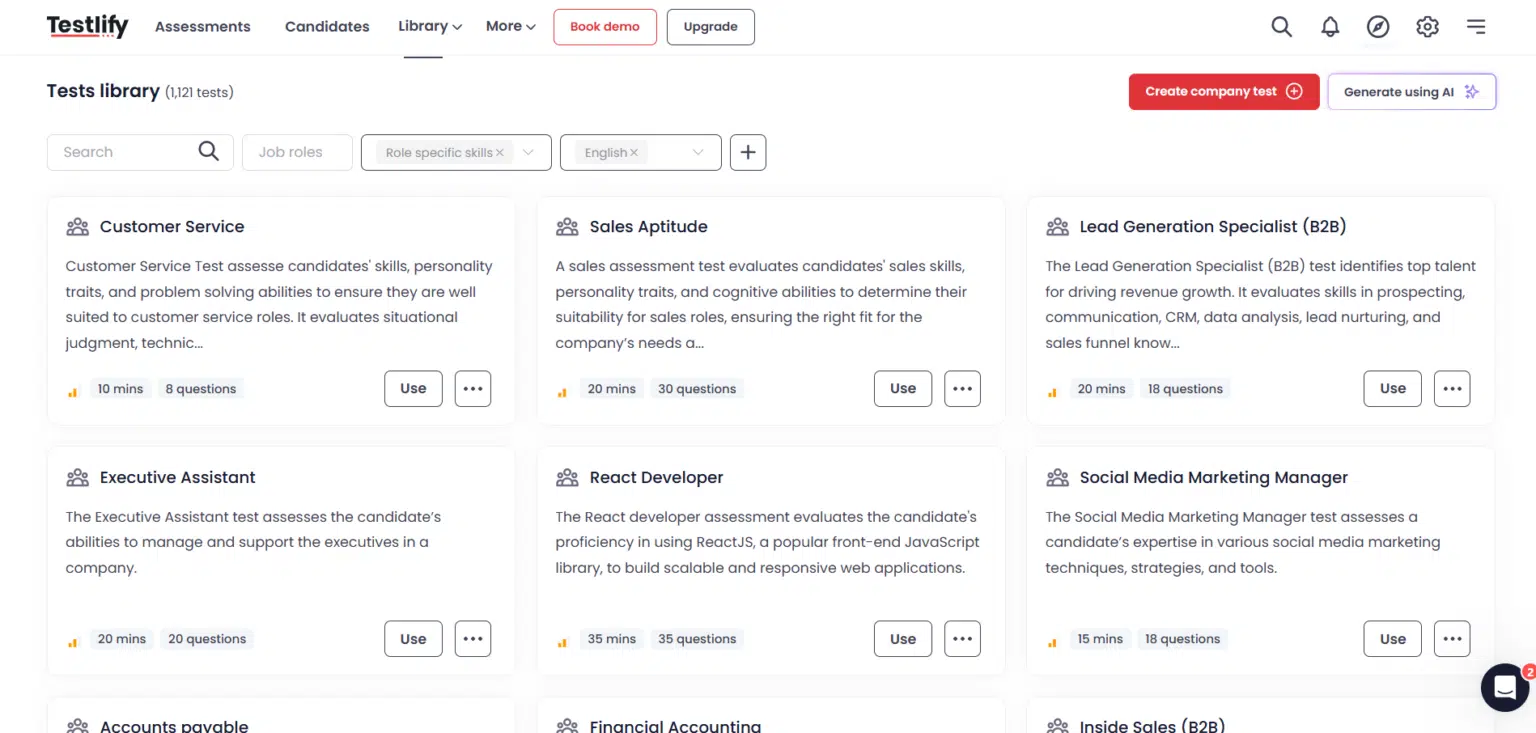
Testlify offers over 1100+ role-specific tests that test candidates’ current knowledge rather than potential or learning ability.
Communication tests
Communication tests evaluate how well a candidate can express ideas, listen actively, and interact professionally with others. It measures verbal and written communication, speech clarity, tone, and comprehension.
These tests are especially important for customer service, sales, management, and leadership roles, where clear and effective communication is essential. By using these assessments, employers can identify candidates who can confidently engage with clients, collaborate with teams, and convey information professionally and persuasively.
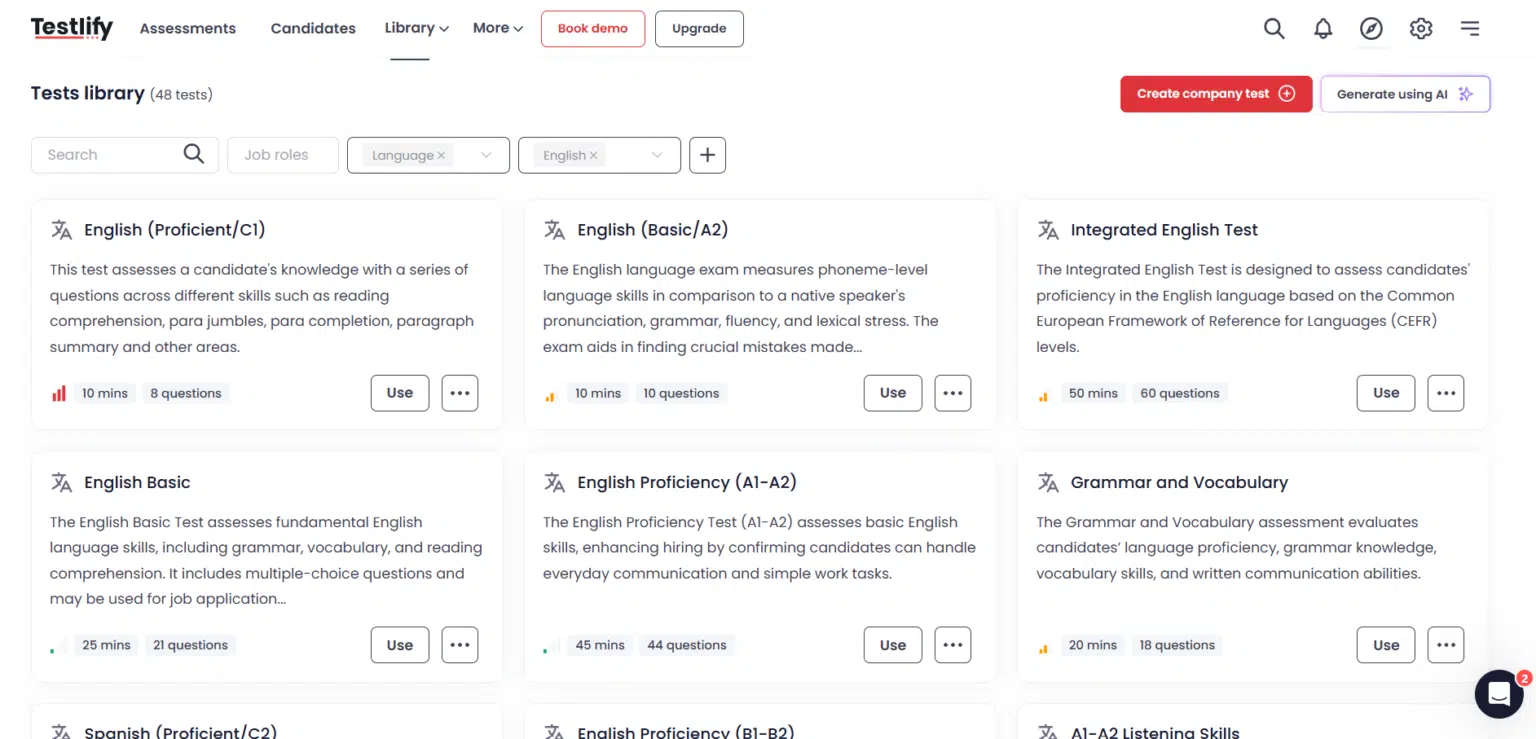
Testlify offers 48 language tests measuring an individual’s communication and written skills in 8+ languages.
Drug tests
Employers use drug tests to check if a candidate has used substances like drugs or alcohol that could affect their ability to perform their job safely and effectively.
Common drug tests include urine tests for recent drug use, hair tests for long-term detection, saliva tests for recent consumption, and sweat tests for extended monitoring. These tests are often required for safety-sensitive jobs, such as transportation, healthcare, and law enforcement, where being alert and sober is critical.
Case interviews
Case interviews are commonly used for as employment assessments especially for business, consulting, and finance roles to assess a candidate’s ability to analyze complex problems and develop effective solutions. In this interview, the candidate is given a real-world business scenario and asked to break it down, identify key issues, and propose strategic solutions.
Employers use case interviews to evaluate critical thinking, problem-solving skills, and the ability to work under pressure. Candidates who do well in these interviews demonstrate logical reasoning, structured thinking, and the ability to communicate their ideas clearly.
Physical ability tests
Physical ability tests measure a candidate’s strength, stamina, coordination, and overall fitness to ensure they can perform job-related physical tasks. These tests often assess specific muscle groups, endurance levels, and flexibility.
They are commonly used for physically demanding law enforcement, firefighting, construction, and security jobs. Employers use such assessment tests to reduce workplace injuries and ensure that candidates are physically capable of handling the job’s demands.
Some tests may include lifting weights, running, climbing, or performing repetitive physical tasks to simulate real job conditions.

What is the benefit of the employment assessments?
The use of employment assessments has become increasingly important in modern recruitment for several reasons:
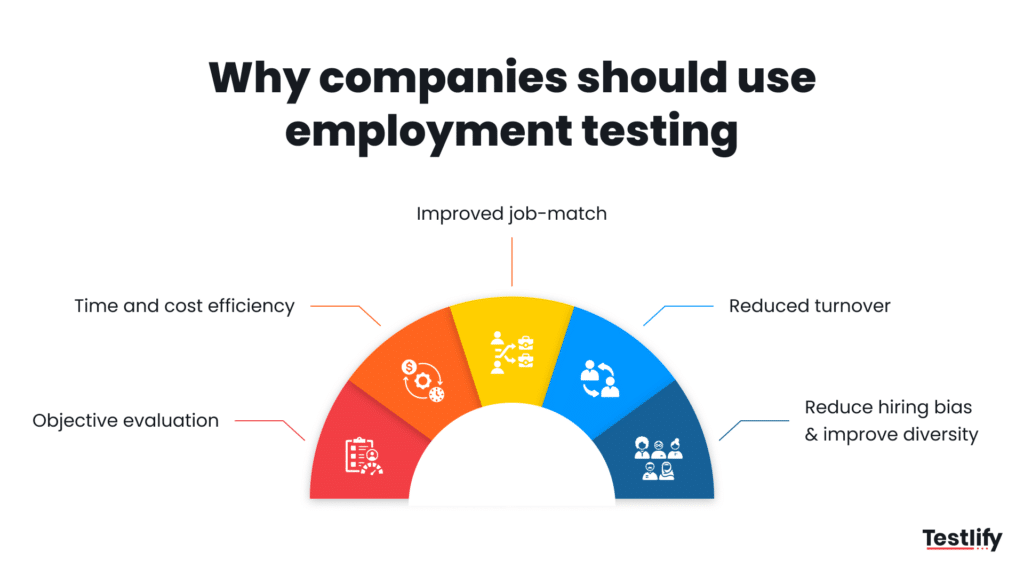
Objective evaluation:Employment assessments provide an objective and standardized way to evaluate candidates. This reduces the influence of bias and subjectivity in the selection process, leading to more fair and just hiring decisions.
Time and cost efficiency: Employment assessments streamline recruitment by quickly identifying candidates who meet the necessary criteria. This is crucial in a fast-paced job market where companies need to hire top talent promptly. Compared to the traditional method of interviewing, employment tests can be conducted in less than an hour.
Improved job-match: Assessments help ensure that candidates are a good fit for the role they’re being considered for. This alignment between skills and job requirements results in better job satisfaction for the candidates and improved performance for the company.
Reduced turnover: Matching candidates more accurately to their roles through employment assessments can reduce turnover rates. Employees well-suited to their positions are more likely to stay with the company long-term. The scale of the problem this solves is large: U.S. businesses lose an estimated $1 trillion annually to voluntary turnover, and replacing a single employee costs 50–200% of their annual salary (Gallup, 2019). Better pre-hire assessment is one of the most effective upstream fixes available.
Reduce hiring bias and improve diversity: Conventional recruitment methods often lead to unconscious bias. Forbes research shows that 48% of HR agree bias influences the candidate selection process. Employment tests can help reduce such biases and promote diversity. Such standardized tests allow companies to assess candidates based on their abilities and skills rather than personal preference. That said, the test itself can carry hidden bias — assessments are designed by humans using historical data, role assumptions, or culturally skewed benchmarks that can disadvantage certain candidate groups. Mitigate this by using validated, job-relevant assessments and regularly auditing results for adverse impact across demographic groups, not just by adopting testing in general.
How valid and reliable are these tests?
Validity confirms a test measures the right skill or trait and can predict job performance; reliability confirms results are consistent and stable over time. A test can be reliable but not valid — producing consistent results that are still irrelevant to the job. Published validity coefficients for pre-employment tests typically range from 0.20 to 0.50, and a coefficient of 0.30 or higher is generally considered meaningful for hiring purposes (higher = stronger prediction of job performance). Ask any vendor whether a test has been validated for similar roles, what performance outcomes it predicts, and how often it's reviewed or updated before adopting it. Testlify's own validity coefficient is close to 0.42.
Are pre-employment tests and employment tests the same?
Pre-employment tests and employment assessment tests are not the same. Employment assessments are a broader term that includes pre-employment assessments and assessments conducted during employment (e.g., performance evaluations, skill development tests, leadership assessments).
Pre-employment assessments refer to tests used during the hiring process to evaluate a candidate’s skills, cognitive abilities, personality, or job fit before hiring.
How to implement employment assessments?
Implementing employment assessments effectively can streamline hiring and ensure the right candidates are selected. Testlify makes this process simple, efficient, and data-driven.
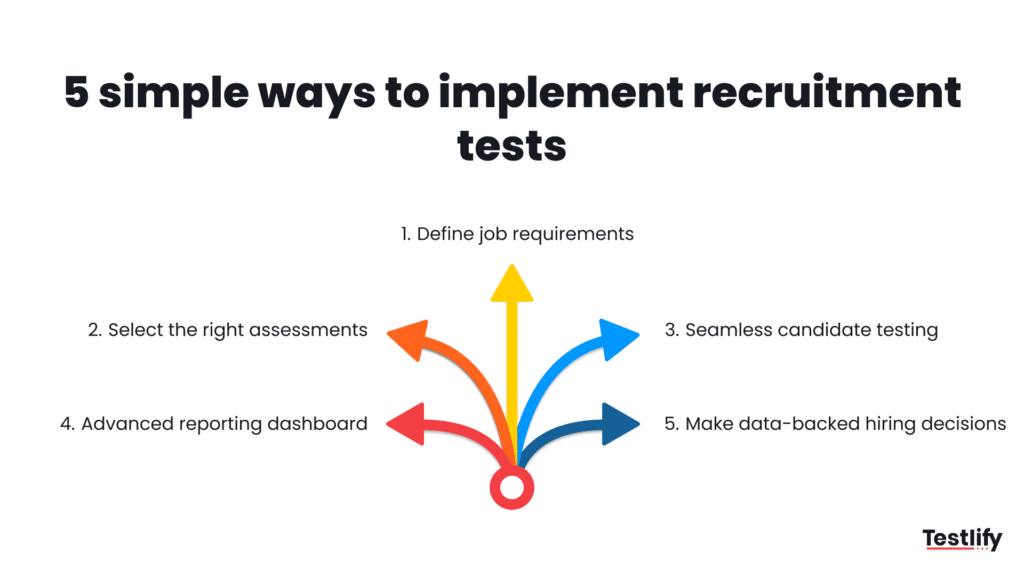
Define job requirements: Identify the key skills, personality traits, and knowledge needed for the role. Testlify offers a vast library of 3,500+ pre-built tests across industries to match specific job requirements. Turn this into a short list of 4-6 core skills rather than testing everything you can think of — over-testing adds candidate friction without proportionate signal, and align with the hiring manager up front on what gets tested via assessment versus what gets evaluated later in interviews.
Select the right employment assessments: Choose from cognitive, personality, skills, or job-specific tests. Testlify allows recruiters to customize assessments or select from validated test templates for different roles.
Seamless candidate testing: Send employment assessments to candidates effortlessly with Testlify’s automated platform using bulk invites or individual test links. This ensures a smooth, mobile-friendly experience. To ensure test integrity, the platform also provides anti-cheating measures, such as webcam monitoring, force full-screen mode, IP tracking, etc. Keep total test time reasonable for where candidates sit in the funnel: 20–30 minutes for entry or mid-level roles, 45–60 minutes for senior or critical roles. Nearly 83% of candidates surveyed on Reddit reported that assessments are often too long, tedious, or filled with unnecessary questions — a short explanation of why the test is used and how long it takes, given up front, improves completion rates.
Advanced reporting dashboard: Testlify’s AI-driven reports provide detailed performance breakdowns, making comparing candidates based on real data easy. Recruiters can quickly identify top performers and move them forward in the hiring process.
Make data-backed hiring decisions: With Testlify’s predictive analytics, recruiters clearly understand how candidates align with job expectations. This helps in reducing hiring bias and improving long-term employee success. Testlify recently added AI overviews, which analyze candidate performance and generate easy-to-read summaries, helping employers quickly assess reports and make informed hiring decisions.
Quick comparison: pre-employment test types at a glance
Each test type gives a different signal. Here's where each one works well and where its limits are:
Test type | What it measures | Best for | Key limitation |
Cognitive ability | Reasoning, learning speed, problem-solving | Fast-changing roles, analytical positions | Adverse impact risk if not properly normed |
Skills / knowledge | Technical proficiency, domain knowledge | Engineering, finance, ops, sales | Measures today's skills, not learning potential |
Personality | Behavioral tendencies, work style | Culture fit, customer-facing, leadership | Some dimensions susceptible to social desirability bias |
Situational judgment (SJT) | Decision-making in realistic scenarios | Management, high-stakes customer roles | Harder to design well; needs role-specific context |
Work sample | Real-world task performance | Technical, creative, operational roles | Time-intensive to build and grade at volume |
Emotional intelligence (EQ) | Empathy, self-regulation, social awareness | Leadership, HR, customer success | Self-report formats are susceptible to faking |
Integrity / Honesty | Ethical tendencies, rule adherence, counterproductive work behavior risk | Finance, security, retail, healthcare | Self-report format; candidates can fake responses if format is transparent |
Which assessments should you combine for a role?
No single test type tells the whole story: cognitive tests predict learning speed, skills tests confirm current ability, and personality or SJT tests predict fit and judgment. Most practitioners land on two to three test types, chosen by role characteristics rather than personal preference. A rough mapping by role family:
- Technical / engineering: Cognitive ability + coding or technical skills test + (optional for senior roles) work sample
- Finance / accounting: Numerical reasoning + role-specific knowledge test (accounting principles, Excel, or financial modeling)
- Sales / business development: Personality (conscientiousness, extraversion) + verbal reasoning + SJT with customer scenarios
- Customer success / support: EQ assessment + SJT (complaint and escalation scenarios) + verbal reasoning
- People managers / HR business partners: EQ + personality (Big Five) + SJT with management scenarios
- Operations / supply chain: Logical reasoning + role-specific knowledge + numerical reasoning
- Marketing / creative: Personality (openness, extraversion) + verbal reasoning + work sample (copy, brief, or analysis)
- Senior leadership: EQ + cognitive battery + SJT + structured behavioral interview debrief
Start with the two or three roles you hire most frequently, pick two test types from the relevant row, and measure quality-of-hire at 90 days — adjust from your own evidence rather than a vendor template.
What are the drawbacks of pre-hire assessments?
Assessments aren't a silver bullet. The honest tradeoffs to plan for:
Restricted scope: Depending on the platform, a pre-hire assessment can limit the set of skills and abilities it covers — some tools don't account for softer factors like motivation, work ethic, or adaptability. Use a broad, comprehensive assessment platform rather than a single narrow test to reduce this gap.
AI/design bias: Assessments can still reflect hidden bias, since they're designed by humans using historical data, role assumptions, or culturally skewed benchmarks. Overcome this by using validated, job-relevant assessments and regularly auditing results for adverse impact across demographic groups.
Cost: Assessments can feel expensive due to licensing fees, setup time, and internal effort, especially when used inefficiently or at high volume. An affordable, all-in-one platform that bundles skills assessments, conversational interviews, and proctoring in a single workflow (rather than licensing several point tools) helps standardize evaluation and keep the cost per hire down.
Frequently asked questions (FAQs)
Related resources
View all
HR & recruitment
The ultimate guide to choosing best recruiting tools

HR & recruitment
Top 25 employment assessment tools in 2026
HR & recruitment
Effective strategies for pre-employment testing

HR & recruitment
An HR approach to unbiased assessments
HR & recruitment
An HR guide to pre-employment testing

HR & recruitment
How to implement fair and effective employment testing
Get started.
Hire on proof, not resumes.
Run your first skills-based assessment free — no credit card required.