
How to build a scalable mass recruitment process
A practical guide to building a mass recruitment process that stays consistent, reduces overload, and helps your team hire faster even during high volume cycles.

When hiring needs rise suddenly, most teams realise their usual workflow cannot keep up. A mass recruitment process is simply about handling that surge without losing control.
Mass recruitment usually happens in retail, logistics, BPOs, healthcare, and even mid-size companies when demand peaks or new locations open.
The real pressure shows up in two places. First, the volume. High-volume roles receive up to 10x more applications than standard positions, which quickly overwhelms manual screening and scheduling.
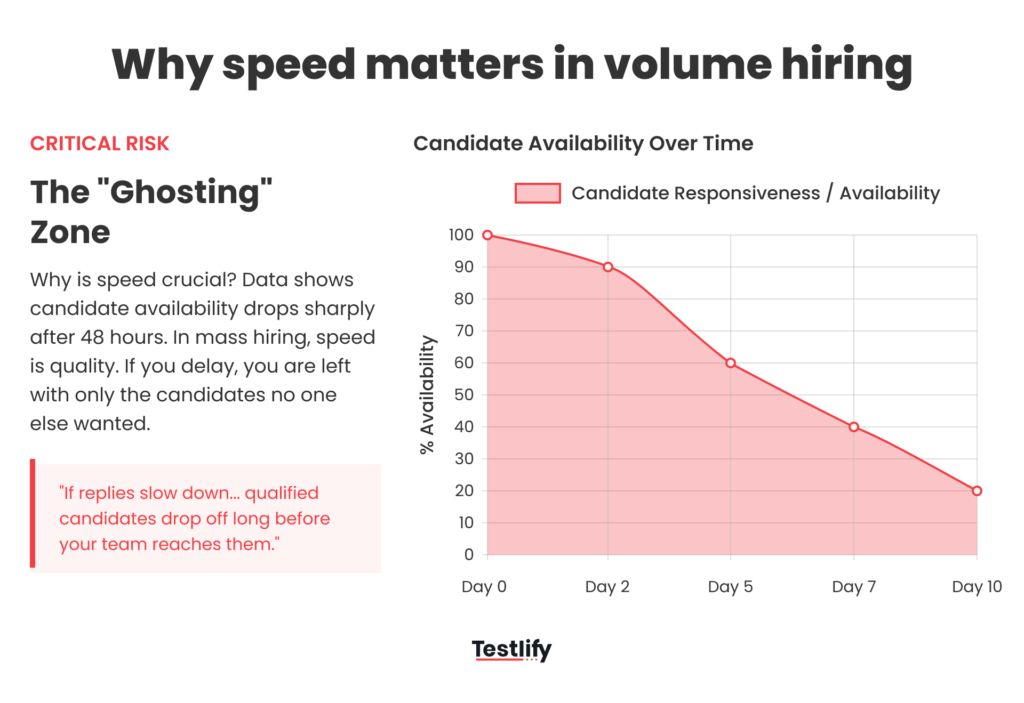
Second, the pace. If replies slow down or interviews get delayed, qualified candidates drop off long before your team reaches them. A scalable approach can help you avoid this.
This guide walks through how to build that type of system in a simple, practical way so your team can manage volume hiring without feeling overloaded.
 ChatGPT
 Gemini
 Claude
 Grok
Grok Perplexity
TL;DR – Key takeaways
- A mass recruitment process works best when every step follows a simple, repeatable structure that keeps your team aligned.
- Clear job posts and the right sourcing channels reduce unqualified applications and protect your team’s time.
- Smart tools, short assessments, and AI interviews help you manage a large number of applicants without slowing down.
- Consistent communication keeps the candidate experience personal, even during high-volume hiring cycles.
- Standardised onboarding and ongoing tracking help you reduce early dropouts and improve each hiring round.

When does mass hiring make sense?
Mass hiring makes sense when the workload becomes too heavy for a normal hiring routine. Most teams face this when the number of open roles rises suddenly, and they need people within a short window. A good example is holiday staffing.
Fortune found that large retailers in the U.S. often hire thousands of temporary workers between October and December because customer traffic increases sharply. Handling that with a regular process is almost impossible.
Mass recruiting also helps during planned growth. When a company opens a new branch or warehouse, it needs people in place before operations start. Hiring one by one slows things down, so a structured mass recruitment process helps the team move faster.
Another common reason is steady turnover. Roles in support, delivery, or field operations often need replacements every month. Mass hiring works well here because the job requirements stay the same and the hiring pattern repeats.
If your team keeps missing follow-ups, losing candidates due to late replies, or feeling overloaded by applications, it is usually a sign that a volume hiring approach will save time and reduce errors.
Step 1: Build a hiring structure that team can follow every time
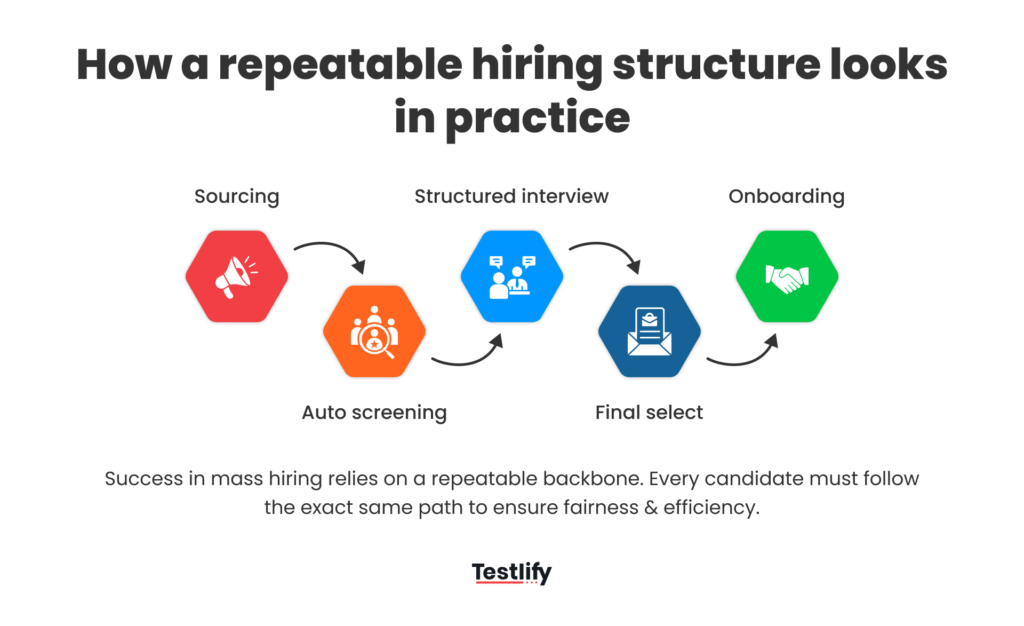
Scaling a mass recruitment process starts with one simple idea. Everyone on your team should follow the same steps in the same order. Most HR teams feel the pressure at two points. First, the number of applicants grows faster than the team can review them.
Second, information begins to scatter. Resumes sit in email threads, notes live in personal spreadsheets, and no one is sure who spoke to which candidate last. A clear structure prevents this from happening.
The best way to build this structure is to map the stages that will never change, regardless of the role. In practice, this usually includes sourcing, screening, interviews, evaluation, and onboarding. Keep these steps simple.
Once the stages are set, define what a good candidate looks like at each point. This could be a basic skill requirement for the first shortlist or a specific behavioural trait checked during the interview process.
The final part is tool discipline. Decide where the applications will live and how updates will be tracked. If you use an applicant tracking system, outline exactly how a recruiter should move a candidate from one stage to the next.
“A bad system will beat a good person every time.” – W. Edwards Deming
A repeatable structure becomes the backbone of volume hiring. It gives your team clarity, protects your candidate experience, and keeps the entire mass recruitment process stable even when the applicant count spikes.
Step 2: Attract the right candidates at scale
Attracting candidates at scale is not about getting the most applications. It is about getting the right people, so your team does not spend hours filtering profiles that were never a match.
Start with your job post. Make it very clear about the work, the hours, the pay range, and the skills someone really needs to succeed. In volume hiring, vague job descriptions increase the screening load.
Try our newFree Job Description Generator | No Sign-up Required
It has been noted that unclear job postings can raise unqualified applications by more than 30%.
Next, use the places your ideal candidates already visit. Retail and warehouse roles often perform well on local job boards and community groups. Customer support and telesales roles see better results on platforms where shift-based work is common.
Employee referrals also help during bulk hiring. People who already work with you usually know others with similar skills. Many companies see higher show-up rates and better fit from referrals compared to cold applications.
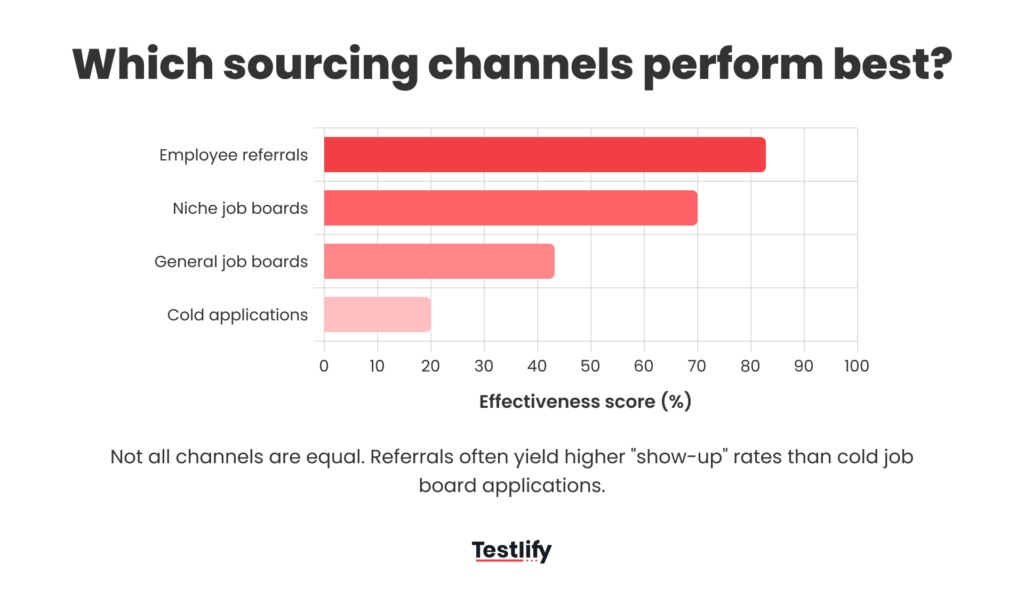
Finally, track what works. Look at which channels bring candidates who pass the first screening. If you use an applicant tracking system, check last month’s or last quarter’s data.
A steady flow of the right candidates sets the tone for the rest of the mass recruitment process. It protects your team’s time and keeps your talent pipeline healthy as you scale.
Step 3: Streamline screening with smart tools
When a role attracts a high volume of applicants, your team spends hours opening resumes, checking basic details, and trying to keep track of who fits and who does not. In practice, this is where smart tools make the biggest difference.
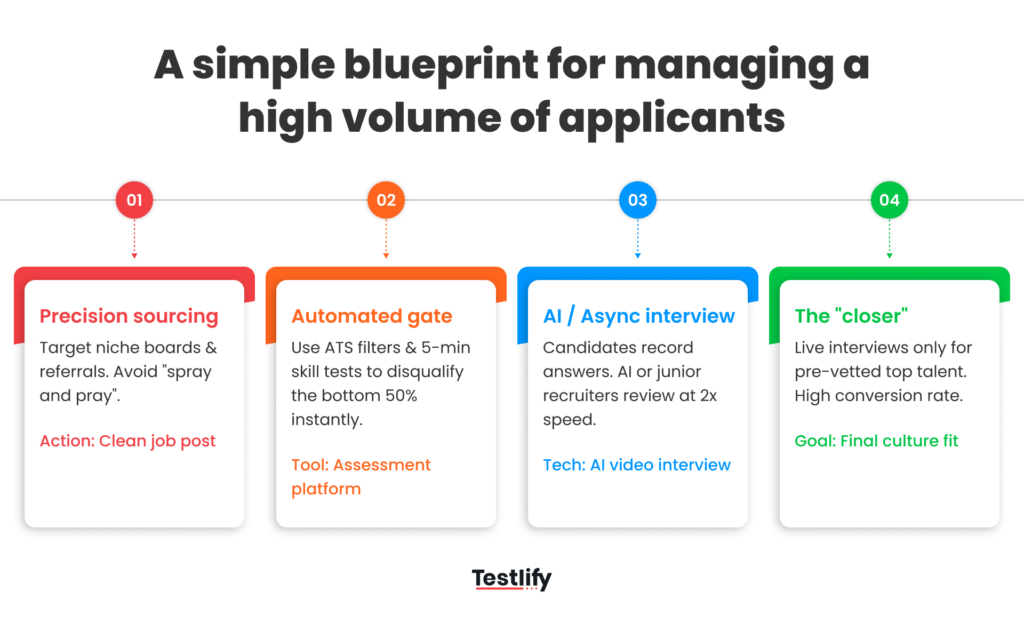
Start with an applicant tracking system that automatically groups candidates based on skills or experience. It replaces the messy mix of email threads and manual spreadsheets, giving you a single view of all active applicants.
Short skills assessments help you filter faster. For example, a five-minute test can show who meets the minimum bar before anyone schedules an interview. Simple scorecards also help keep recruiters consistent when reviewing large candidate pools.
These steps reduce the load on your team and keep the candidate experience smooth during busy hiring cycles.
Step 4: Run mass interviews without the chaos
Interviews are the point where a mass recruitment process can get messy fast. When you’re dealing with hundreds of candidates, the real challenge is the coordination.
A simple way to calm things down is to centralise scheduling. Let candidates pick their own slots using the system you already use.
Most applicant tracking tools do this well, and it removes that endless email chase. It also keeps everyone on the same page, which helps a lot in high-volume hiring.
Once scheduling is steady, ensure the interview flow remains uniform. A shared question set and a basic scoring guide help every interviewer evaluate candidates consistently.
For large batches, a mix of formats usually works best:
- Quick phone or audio screens to check basics
- One-way or recorded interviews for the first layer
- Live interviews only for the strongest candidates
Now, here’s where AI interviews fit in naturally. Instead of having your team handle every first-round conversation, you can let an AI interview handle the structured part.
On platforms like Testlify, the AI asks preset questions, listens to responses, and highlights patterns that your recruiters would usually spend a long time reviewing. It helps when the volume spikes or when you’re hiring across multiple locations simultaneously.
Step 5: Keep the candidate experience personal
In a mass recruitment process, candidates can feel like they’re moving through a factory line. The volume is high, the steps are fast, and most communication is automated.
But even in a bulk recruitment process, people notice small moments of care, and those moments shape how they see your company.
A good starting point is simple clarity. Tell candidates what will happen next, how long it might take, and who they can reach out to if they’re stuck. Even automated acknowledgements feel personal when they’re clear and straightforward.
Personalisation doesn’t need long messages. It just needs relevance. For example:
- Use the candidate’s name in updates.
- Share role-specific instructions instead of generic templates.
- Send short reminders before interviews so they know you’re expecting them.
Another helpful step is consistency. Make sure every channel says the same thing. If your applicant tracking system provides timelines, echo them in your emails.
Also, acknowledge delays openly. If screening or interviews are taking longer than expected, a short note helps people stay patient. Candidates don’t mind waiting as much as they mind silence.
If you’re using tools like AI interviews or automated scheduling, frame them correctly. Let candidates know these steps help remove bias and give everyone the same structured experience.
A personal touch requires a steady, honest communication rhythm. And when thousands of candidates are involved, that rhythm is what keeps the process humane.
Step 6: Standardize onboarding for high-volume hiring
When many new hires join on the same day, a small gap feels much bigger. People get stuck waiting for access, unsure who to contact, or confused about their first tasks. This early friction increases the chance of candidate dropouts within the first month.
A simple, structured onboarding plan prevents that. The easiest starting point is a checklist that every new hire goes through. It should include paperwork, tool access, training links, and the first responsibilities.
Learn More: Employee onboarding process: A complete guide for 2025
Group onboarding sessions also make a noticeable difference. A short welcome call, an overview of the work culture, and a clear explanation of the role give people confidence from the start.
Even a basic walkthrough of how the interview process leads into day one helps them understand why they were selected and what success looks like.
Small training modules add another layer of clarity. For example, a short video that explains where to find policies or how to raise a support ticket removes repeated questions for your HR team.
A steady onboarding plan protects the candidate experience at a crucial moment and reduces early turnover, which is one of the highest hidden costs in bulk hiring cycles.
Conclusion
A strong mass recruitment process is never fully complete. Each cycle teaches you something new, which is why Step 7 should focus on tracking what actually happens on the ground.
When you continuously review patterns and fix small gaps early, high-volume hiring becomes more predictable and less demanding on your team.
If you want support that keeps this cycle steady, explore how Testlify can help you run large-scale hiring with clarity.
Frequently asked questions (FAQs)

Content Writer
Yashika Khandelwal is a Content Writer with 3+ years of experience creating research-backed content on hiring, talent assessment, and HR technology. She is a registered Organizational Psychologist and subject matter expert who combines behavioral science with practical recruitment insights to produce accurate, evidence-based content.
LinkedInRelated resources
View all
High volume hiring
Volume hiring: An ultimate guide to plan and implement

High volume hiring
Pre-hire assessments for high-volume hiring: What to test and why it matters

High volume hiring
High volume hiring checklist for faster hiring

High volume hiring
High-volume hiring trends: What the latest data tells us this year

High volume hiring
Scale hiring in the IT industry with automated tech screening tools

High volume hiring
How can the BPO industry hire at scale without compromising quality?
Get started.
Hire on proof, not resumes.
Run your first skills-based assessment free — no credit card required.