
Scale hiring in the IT industry with automated tech screening tools
Scale IT hiring with automated tech screening tools. Streamline recruitment, reduce bias, and hire top talent faster, without compromising quality.

Hiring developers at scale has never been more critical or more complex. As organizations grow and digital transformation accelerates, the pressure on HR teams to find skilled IT talent quickly, accurately, and in volume continues to rise.
Manual screening methods, technical interviews stretched over weeks, and inconsistent hiring criteria are no longer sustainable. That’s where automated tech screening tools come in.
This blog explores how large organizations can utilize automated technical assessments to streamline and scale IT hiring without compromising on quality or candidate experience.
 ChatGPT
 Gemini
 Claude
 Grok
Grok Perplexity
Challenges of scaling IT hiring
Hiring tech talent at scale isn’t just about volume; it’s about speed, precision, and consistency. As demand for skilled developers grows, traditional hiring methods struggle to keep up. From screening inefficiencies to skill mismatches, the challenges quickly compound for large HR teams.
Rising demand, shrinking timelines
From cloud engineers to full-stack developers, the demand for skilled tech professionals is surging. Yet, most HR teams are still expected to deliver results fast, sometimes hiring entire teams in weeks, not months.
Manual screening just doesn’t scale
CV screening, initial phone interviews, and subjective coding rounds eat up a lot of time and are often biased or inconsistent. In large-scale hiring, these inefficiencies compound quickly.
Skill mismatch and attrition risks
Without objective testing, companies risk hiring candidates who don’t actually meet the technical bar. This leads to higher training costs, early attrition, and lower productivity.

What are automated tech screening tools?
Automated tech screening tools evaluate a candidate’s coding ability, problem-solving skills, and sometimes even soft skills, through standardized assessments. These tools can:
- Run coding tests in real-time
- Evaluate code for efficiency, accuracy, and best practices
- Support multiple programming languages and frameworks
- Integrate with ATS or video interview tools
- Provide analytics and benchmarking
Tools like Testlify help companies screen thousands of candidates efficiently, fairly, and accurately.
Why do you need tech screening tools to scale hiring?
Manual hiring processes can’t match the speed and accuracy that modern tech teams require. Automated screening tools help streamline evaluations, reduce bias, and ensure you’re hiring based on real skills, not just impressive resumes. They’re key to hiring faster, smarter, and at scale.
Faster time-to-hire
Automated tests streamline the early stages of recruitment by eliminating the need for phone screens or initial coding rounds. Candidates can take these tests remotely and on their own time, reducing bottlenecks and keeping your hiring funnel moving quickly. This leads to a significantly shorter time-to-hire across roles.
Objective, bias-free evaluation
Automated platforms evaluate all candidates based on the same criteria, removing human bias from the process. With standardized scoring and data-driven results, every applicant is judged purely on their skills and performance, not their resume format, college name, or past employers.
Better quality of hires
These tools go beyond theory by simulating real-life coding challenges and technical tasks. They help identify candidates who are not only technically sound but also able to perform in actual work conditions, improving job readiness and reducing the risk of poor hires.
Scalability for high-volume hiring
Automated platforms are built to handle large candidate volumes without burdening your recruiting team. Whether you’re hiring a small batch or conducting a mass recruitment drive, these tools ensure a smooth, consistent, and scalable process from start to finish.
Enhanced candidate experience
User-friendly interfaces, flexible test scheduling, and prompt feedback make these tools appealing for candidates. A smooth assessment process improves engagement and builds a positive employer brand, critical when competing for top tech talent in a saturated market.
How to integrate automated screening into your it hiring workflow?
Integrating automated screening tools isn’t just a tech upgrade; it’s a process transformation. With the right steps, you can move from reactive hiring to a seamless, data-driven flow that boosts efficiency and reduces recruiter fatigue. Here’s how to do it right.
Define the roles and skill requirements
Start by mapping out the exact skills needed for each position. Backend roles may need SQL and API knowledge, while frontend roles might require React or JavaScript expertise. Clear skill definitions help create targeted assessments and avoid screening out qualified candidates based on generic criteria. Collaborate with tech software recruiters to validate the competency map and translate it into structured, role-specific assessments and automation rules.
DevOps engineer
Evaluate candidates on real-world deployment or infrastructure automation tasks. Include scenario-based questions on incident handling.
Data engineer
Use test cases focused on data transformation, schema design, and writing optimized SQL or Python scripts.
QA engineer/Test automation engineer
Use role-based assessments to test for writing automated test cases, debugging flaky tests, and identifying edge cases.
Choose the right assessment platform
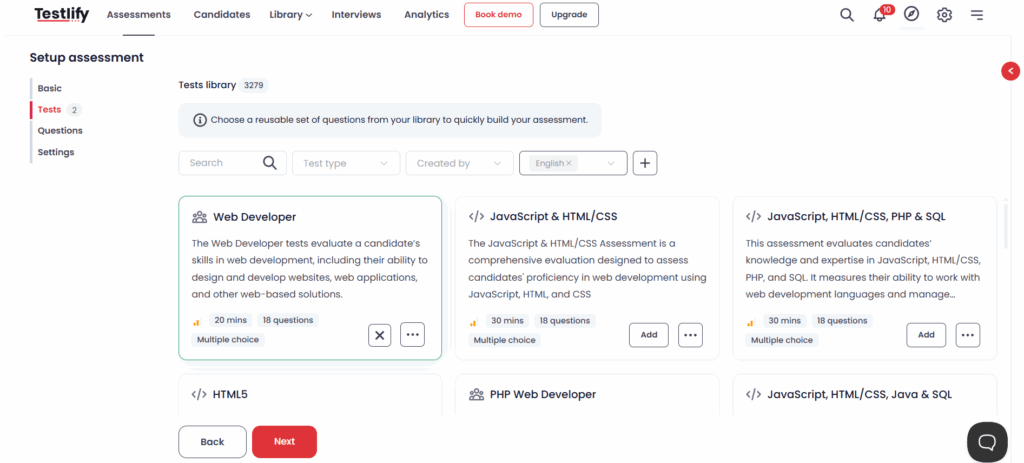
Select a platform that supports the languages and tech stacks you hire for. It should integrate easily with your existing tools, like ATS or video interview software, and offer clear analytics. Platforms like Testlify make this easier with pre-built test libraries and seamless integration capabilities. You can also customize the assessment or build your own test from scratch in just a few clicks. Design a hands-on assessment that mirrors day-to-day tasks.
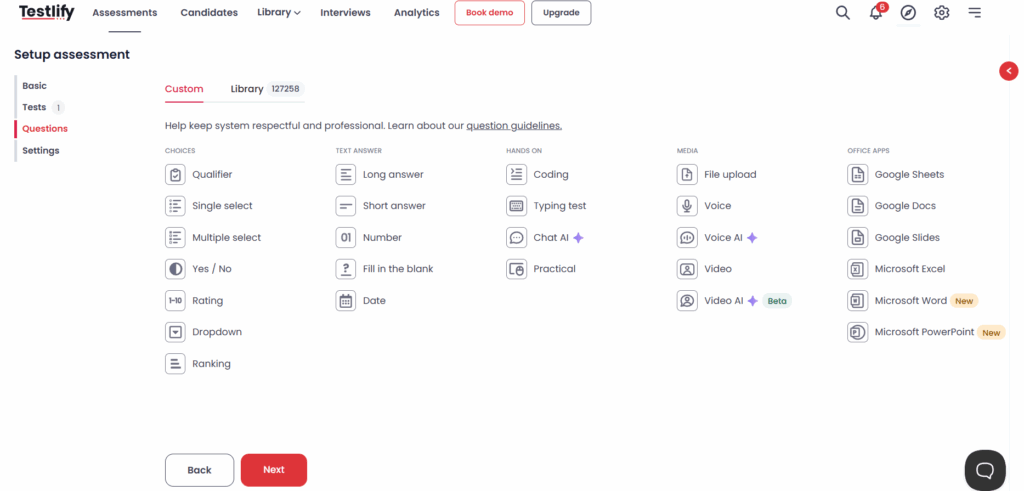
Create custom or role-based tests
Build assessments that reflect each role’s demands. Use templates or customize tests to evaluate core competencies such as coding logic, debugging, system design, and code efficiency. This ensures candidates are tested on real, relevant skills, not just textbook questions.
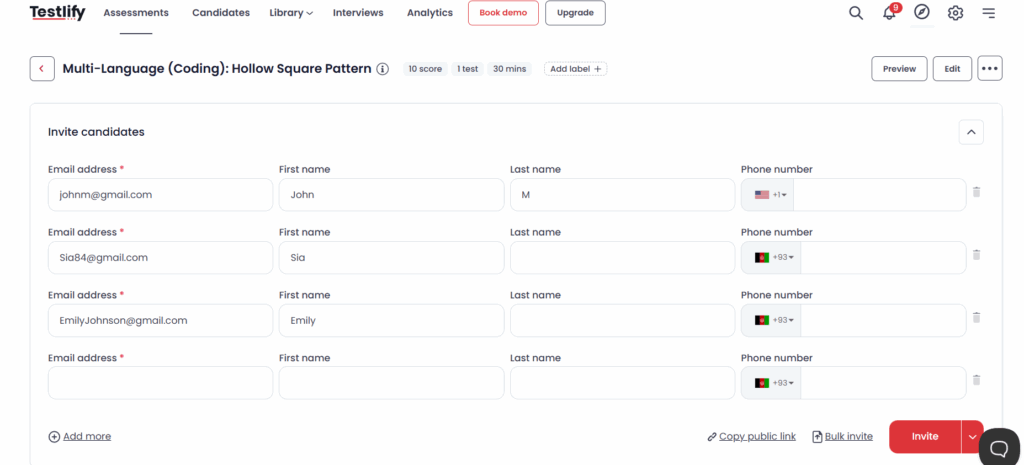
Automate the test invites and scheduling
To keep things moving, automate test invitations as soon as candidates apply or clear an initial screen. Most tools support scheduled reminders and deadline management, so your team doesn’t waste time manually following up with each applicant.
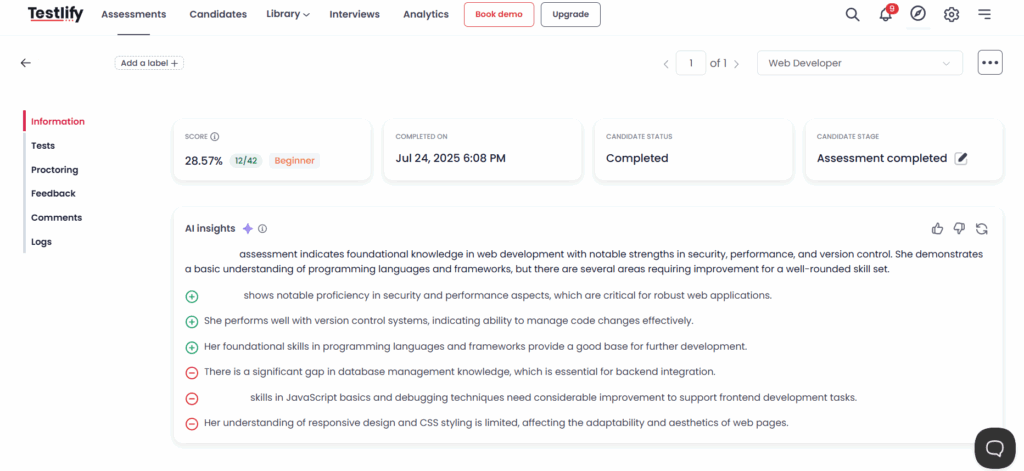
Evaluate and shortlist
Once tests are completed, let the platform automatically score and rank candidates. Focus your time on top performers who meet your technical criteria, and fast-track them to the next round. This cuts manual effort and boosts your overall hiring speed.
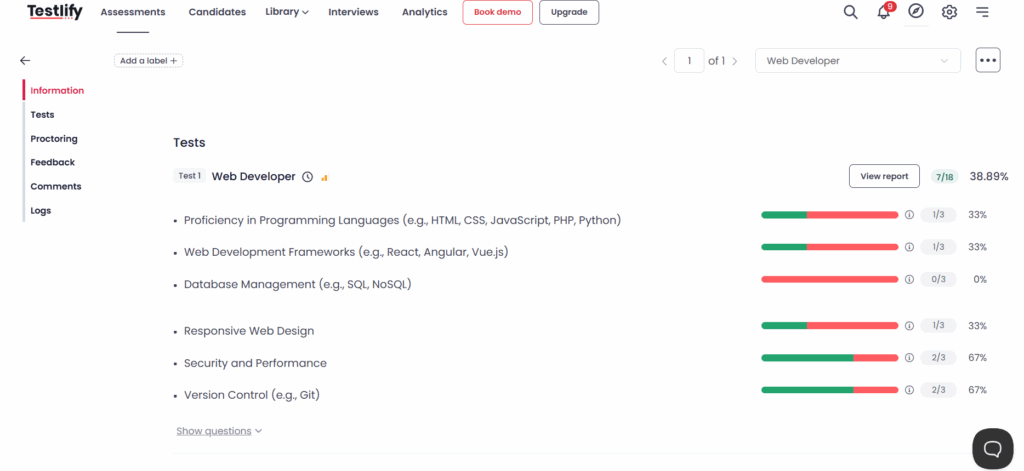
Interview smarter
Since the screening already verified core skills, use interviews to assess higher-level thinking, communication, and culture fit. Focus on collaborative problem-solving or architectural discussions, things that reveal how a candidate will function on the job and within your team.
With Testlify, you can automate your interview process with the Voice and Video AI interviews.
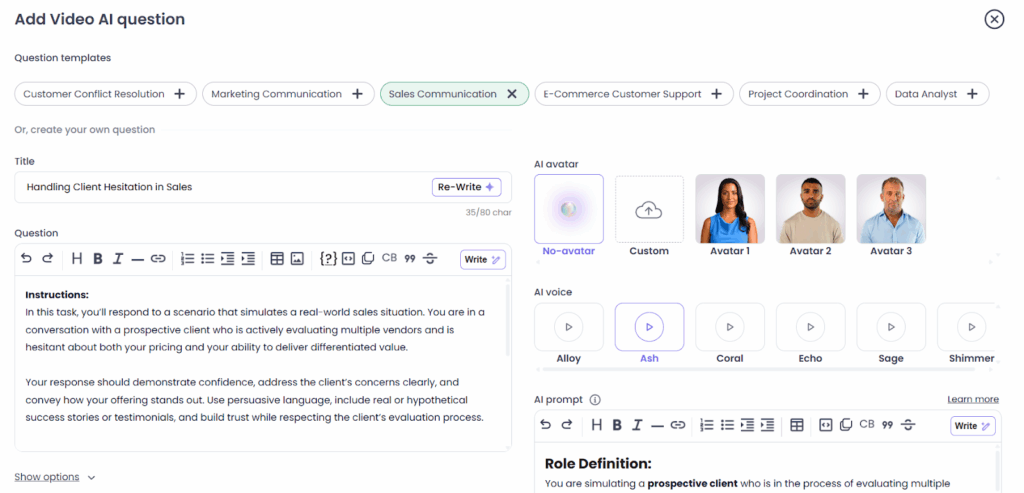
What to look for in a tech screening tool?
Not all screening platforms are created equal. The best tools combine accurate assessments, ease of use, and anti-cheating features to deliver both hiring precision and a positive candidate experience. Here’s what HR teams should keep an eye out for.
Real-world problem sets
Choose a platform that mirrors actual job tasks like building features, debugging code, or optimizing performance. Avoid tools focused only on academic quizzes or theory-based MCQs. Real-world simulations give you a more accurate picture of how candidates will perform once they’re on the job.
Customizability
Your tool should let you easily adjust tests based on role and seniority level. Junior candidates may need simpler logic tests, while senior engineers might require system design or architecture challenges. Customizability ensures each candidate is evaluated fairly and accurately for the role.
Candidate experience
A well-designed assessment platform should be intuitive and stress-free. Features like mobile-friendly access, a clean interface, and prompt communication help ensure candidates stay engaged. A smooth experience also strengthens your employer brand and lowers drop-off rates in the hiring funnel.
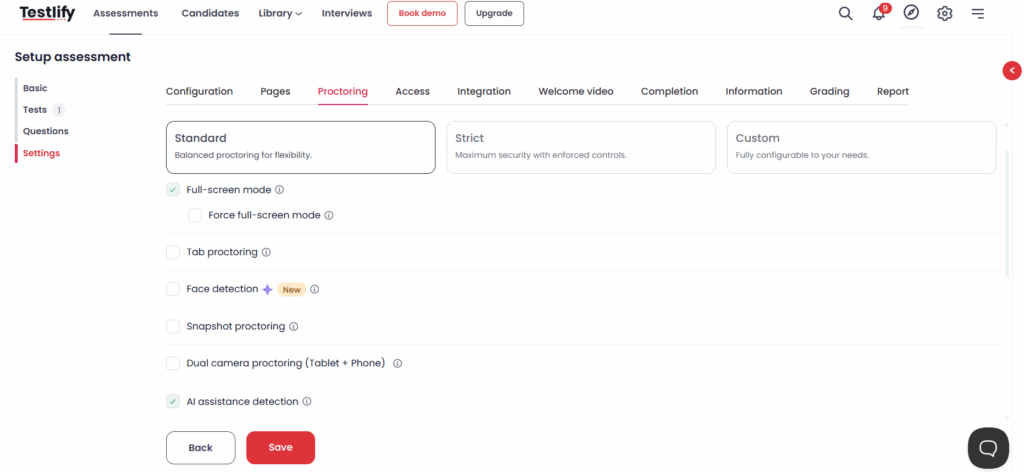
Anti-cheating features
To maintain the integrity of your hiring process, pick a platform with built-in anti-cheating tools like webcam monitoring, plagiarism detection, and copy-paste restrictions. These features ensure you’re evaluating the candidate’s actual skill, not someone else’s help.
Analytics and benchmarking
Robust analytics allow you to measure candidate performance across key metrics like time taken, score distribution, and question-level insights. Benchmarking features also help you compare performance across applicants or even against industry averages, making hiring decisions more data-driven.
Common mistakes to avoid
Even with the right tools, missteps can derail your hiring goals. From using generic tests to ignoring candidate feedback, these common pitfalls can cost you time, talent, and credibility. Learn what to avoid so your process stays effective and scalable.
Using one generic test for all roles
Every IT role demands a unique mix of skills. Using a single, generic test for all positions can result in false negatives or irrelevant evaluations. Tailor assessments to the role, what works for a frontend dev won’t work for a DevOps engineer.
Ignoring candidate feedback
If candidates are abandoning tests midway or giving negative feedback, it’s a red flag. The test might be too long, poorly designed, or not user-friendly. Monitor completion rates, gather feedback, and continuously refine the assessment to keep candidates engaged and motivated.
Over-relying on scores alone
Test scores offer valuable insights, but don’t tell the whole story. A candidate might think deeply, solve creatively, or have strong communication skills that a score doesn’t reflect. Use scores as a filter, not the final verdict, and balance them with interviews and soft skill evaluations.
Final thoughts
If you’re hiring developers at scale, automated tech screening tools are no longer optional; they’re essential. They help you:
- Save time
- Hire better talent
- Scale consistently
- Improve candidate experience
The key is to choose the right tool, integrate it well, and use it thoughtfully. And yes, platforms like Testlify can support you through this transformation with customizable tests and smooth ATS integrations.
Ready to hire at scale, without the stress? Start with a single role. Automate the assessment. See the difference.
Frequently asked questions (FAQs)

Content Writer
Yashika Khandelwal is a Content Writer with 3+ years of experience creating research-backed content on hiring, talent assessment, and HR technology. She is a registered Organizational Psychologist and subject matter expert who combines behavioral science with practical recruitment insights to produce accurate, evidence-based content.
LinkedInRelated resources
View all
High volume hiring
How can the BPO industry hire at scale without compromising quality?

High volume hiring
How automated candidate scoring systems improve hiring speed

High volume hiring
How high-volume hiring works with AI interviews

High volume hiring
How to find the best candidate for every role?

High volume hiring
How to utilize artificial intelligence for large volume hiring?

High volume hiring
11 high-volume hiring strategies for enterprises in 2026
Get started.
Hire on proof, not resumes.
Run your first skills-based assessment free — no credit card required.