
How to fix SaaS industry hiring bottlenecks with pre-hire testing?
Fix SaaS industry hiring bottlenecks with pre-hire testing. Learn how to hire faster, better, and smarter with skill-based assessments that scale.

With over 70% of SaaS companies planning to expand their teams, the competition for top talent is fierce, and mistakes are costly. Traditional hiring methods often fall short in environments where roles are specialized, teams are global, and speed is everything.
In fact, a bad hire can cost up to 30% of an employee’s annual salary, according to the U.S. Department of Labor.
This blog explores how pre-hire testing can solve common SaaS hiring bottlenecks, improve decision-making, and help companies hire faster without compromising on quality.
 ChatGPT
 Gemini
 Claude
 Grok
Grok Perplexity
Hiring challenges of the SaaS industry
Finding the right talent in the SaaS industry is tough, especially for niche roles, distributed teams, and overburdened hiring managers. These challenges often lead to rushed decisions, inconsistent evaluations, and costly mis-hires.
Fast growth means high pressure
SaaS companies typically operate in hyper-growth environments. New funding rounds, product launches, or market expansion can trigger the need to scale teams quickly. But rapid growth often leads to rushed hiring, where speed trumps precision and bad hires become expensive mistakes.
Highly specialized roles
From backend engineers fluent in go to product marketers who understand AI, SaaS roles often require deep, niche expertise. It’s hard to evaluate these skill sets from a resume alone, and general interviews don’t always reveal whether a candidate truly knows their craft.
Overloaded hiring teams
Hiring managers and HR teams are often stretched thin, juggling recruitment with their core responsibilities. Reviewing hundreds of resumes, conducting multiple interview rounds, and managing offer negotiations can take a toll on even the best teams.
Remote and global hiring
SaaS companies often hire globally. While this opens access to a wider talent pool, it also adds layers of complexity time zones, cultural nuances, and inconsistent qualification benchmarks.

Where do SaaS hiring bottlenecks happen?
Let’s look at some of the most common choke points in the SaaS hiring process:
Resume overload and low-quality applications
Even with ATS filters, recruiters often waste hours sifting through irrelevant or exaggerated resumes. For every 100 applications, maybe 10 are genuinely qualified. This slows things down and introduces bias.
Inconsistent technical screening
Not all hiring managers evaluate candidates the same way. One engineer might quiz a candidate on algorithms, while another focuses on code readability. This inconsistency can lead to great candidates being unfairly rejected or poor ones slipping through.
Interview bottlenecks
Coordinating interview panels, scheduling across time zones, and relying on long interview rounds often cause significant delays. By the time you’re ready to make an offer, your top candidate might already be off the market.
Gut-based hiring
Especially in early-stage SaaS startups, hiring often happens based on “culture fit” or intuition. While team chemistry matters, hiring purely on gut feel increases the risk of unconscious bias and inconsistent performance outcomes.
How does pre-hire testing solve SaaS bottlenecks?
Pre-hire testing brings structure, speed, and objectivity to the hiring process. By evaluating skills early it helps filter unqualified candidates, streamline evaluations, and reduce reliance on gut feel, saving time while improving quality.
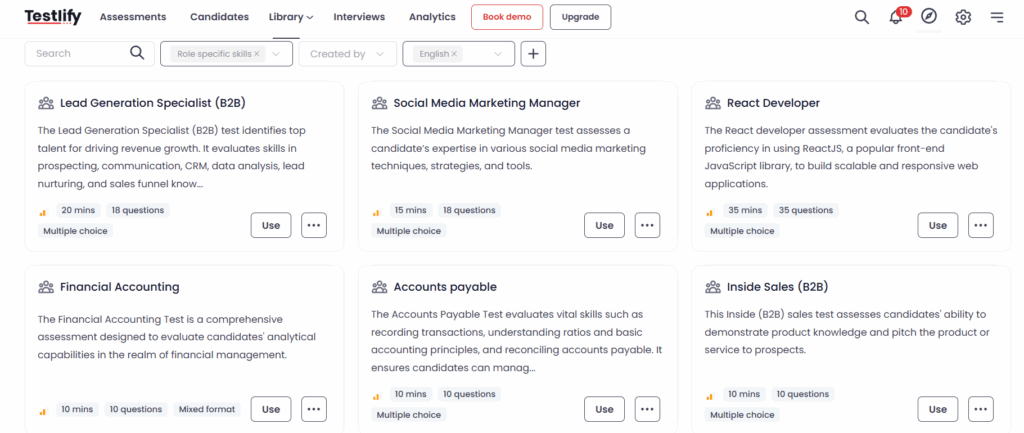
Cut resume clutter with role-specific assessments
When every applicant is invited to take a short, relevant test, unqualified candidates self-select out or get filtered based on results. This allows your team to focus only on top performers.
For a front-end developer role, candidates take a 30-minute JavaScript and React test. Only the top 20% move forward to interviews. Your team doesn’t waste time screening 100 resumes. Shortlist quality improves. Recruiters spend less time screening and more time closing.
Standardize technical screening across teams
Pre-hire testing platforms like Testlify offer calibrated tests that evaluate coding, logic, and problem-solving skills in a consistent way. Every candidate goes through the same challenge, reducing subjective judgments.
Two hiring managers need to hire backend developers. Instead of using different interview questions, they use the same coding tests and score rubric via Testlify.
More predictable, fairer outcomes. Easier collaboration between recruiters and hiring managers.
Speed up hiring by frontloading evaluation
By assessing candidates upfront, you avoid multiple redundant interview rounds. High-scoring candidates can skip straight to the final interview, often cutting the hiring timeline by 30–50%.
For a SaaS sales role, candidates take a 15-20 minute assessment. The top performers jump directly to the interview. Faster decisions. Reduced drop-off of high-quality candidates.
Make data-driven decisions, not just gut calls
With test scores, performance breakdowns, and benchmark data, hiring teams can make informed decisions based on objective evidence complemented by interviews, not replaced by them.
Two candidates perform equally well in interviews, but one scores 90% on a real-world coding assessment. The other scores 60%. Data adds clarity and confidence to hiring decisions.
What are the types of pre-hire tests that work well in SaaS?
Not all assessments are created equal. SaaS teams benefit most from a mix of technical tests, cognitive assessments, role simulations, and soft skills evaluations, all tailored to the unique demands of modern, cross-functional roles.
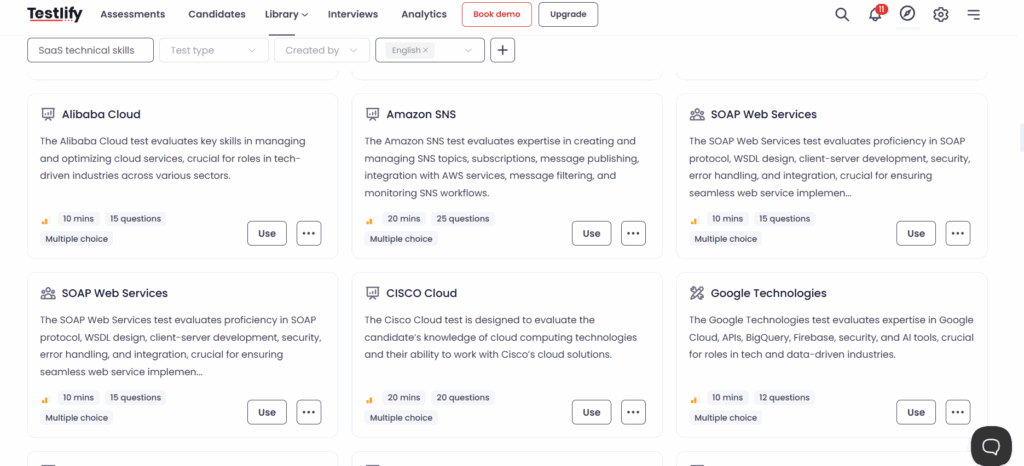
Technical skills tests
These are essential for roles like developers, data scientists, QA engineers, and DevOps professionals. They assess practical, job-relevant skills in languages and frameworks such as Python, Java, JavaScript, and SQL. By simulating real-world technical challenges, these tests help identify candidates who can truly perform on the job, not just those who look good on paper.
Cognitive ability tests
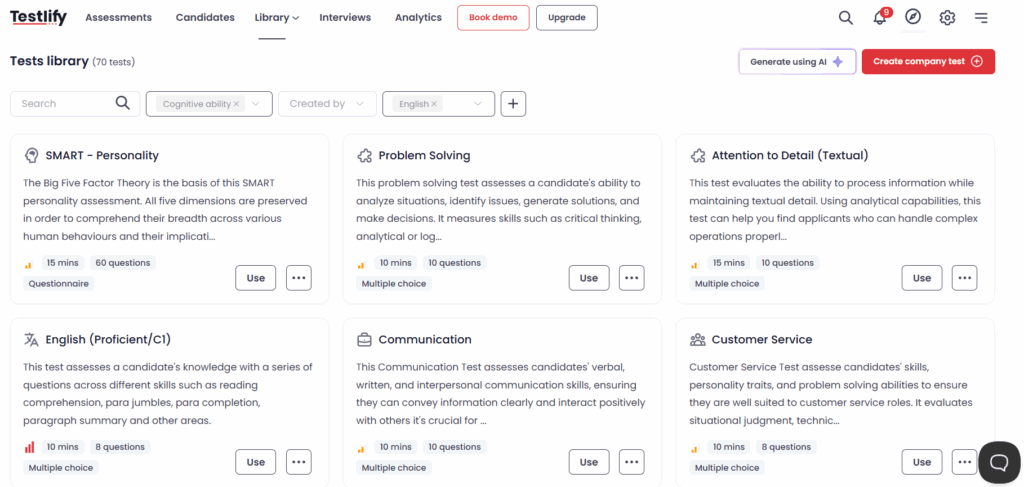
Cognitive ability tests are ideal for evaluating how well a candidate can think, learn, and solve problems. Particularly useful in product, analytics, and technical roles, these assessments measure logical reasoning, numerical aptitude, and critical thinking.
They’re a strong predictor of job performance and help hiring teams identify high-potential candidates with the ability to adapt and grow quickly in a SaaS environment.
Role simulations
Role simulations recreate real job scenarios to test how candidates would actually perform. These can include writing product launch emails, handling customer support tickets, or analyzing a product requirements document.
Simulations provide insight into practical skills, decision-making, and role readiness, making them especially effective for evaluating marketers, customer success reps, and product managers in a SaaS setup.
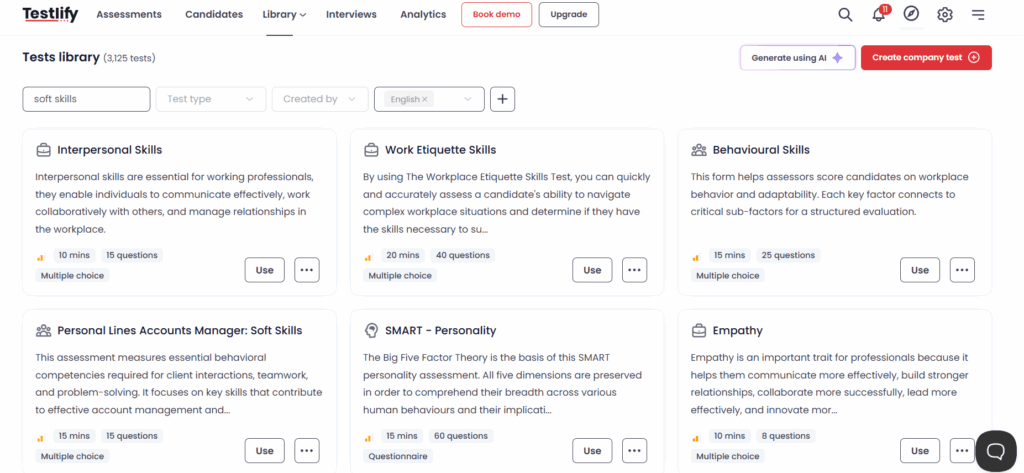
Soft skills & culture fit tests
These tests assess communication, collaboration, adaptability, and emotional intelligence skills that are often harder to quantify but vital in SaaS teams. Culture fit assessments also help determine whether a candidate’s values and working style align with your company’s environment. This is especially important in remote or cross-functional teams, where interpersonal dynamics can significantly impact performance and retention.
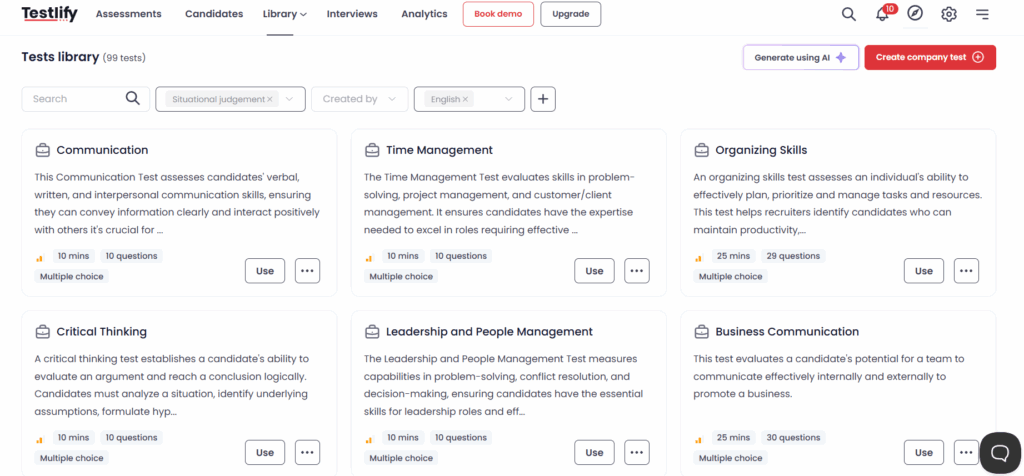
Situational judgment tests
Situational judgment tests (SJTs) present candidates with hypothetical workplace scenarios to assess their decision-making and problem-solving abilities. Commonly used for sales, support, and managerial roles, SJTs evaluate how candidates handle pressure, conflict, or customer issues. They help identify candidates who demonstrate sound judgment, empathy, and a strong understanding of what success looks like in real work situations.
How to hire for the most important SaaS industry roles?
Hiring in SaaS is never one-size-fits-all. Each role demands a unique combination of hard and soft skills. Here’s a breakdown of some of the most in-demand roles and how you can use pre-hire testing to make smarter, faster hiring decisions for each.
Software engineers
These roles require strong coding skills, problem-solving ability, and familiarity with specific tech stacks like JavaScript, Python, or Go. Use real-world coding assessments that test logic, debugging, and system design under time constraints to evaluate actual job readiness.
Define the role and the skills required to choose and combine the right tests or build a test from scratch.
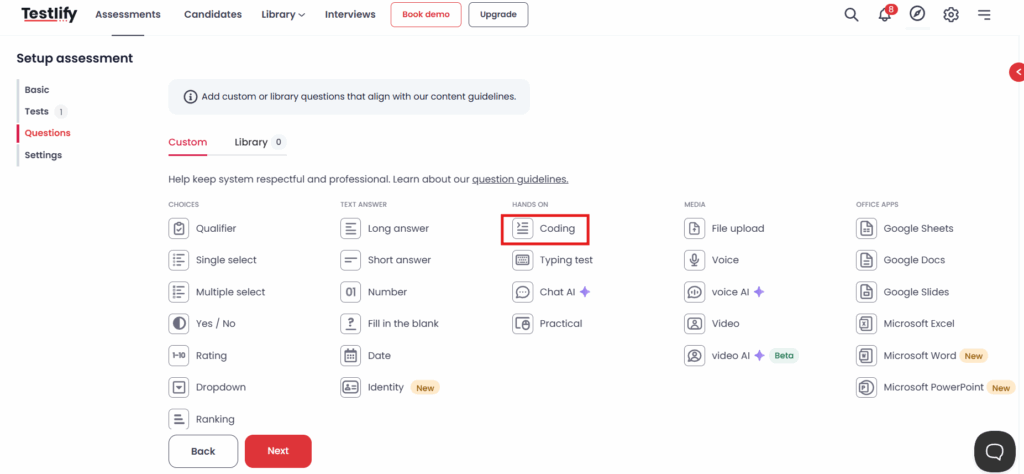
Use Testlify’s coding assessments and coding questions to assess candidates in a real testing environment.
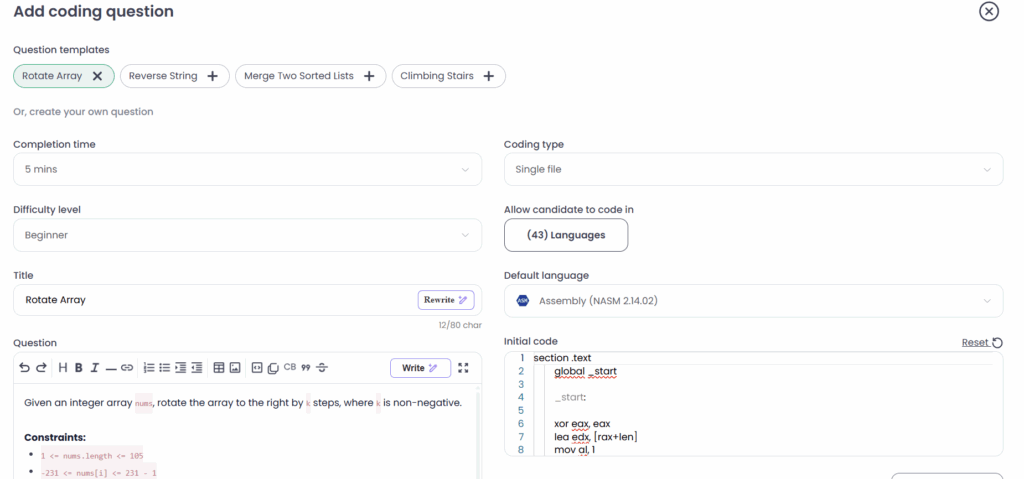
Testlify supports 40+ languages and databases.
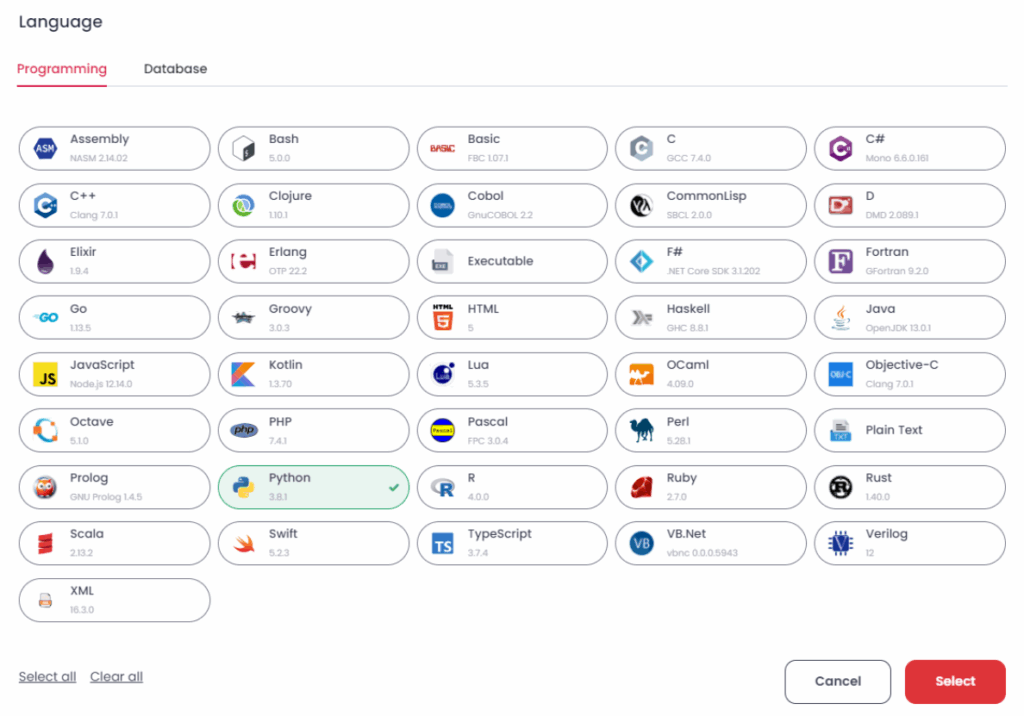
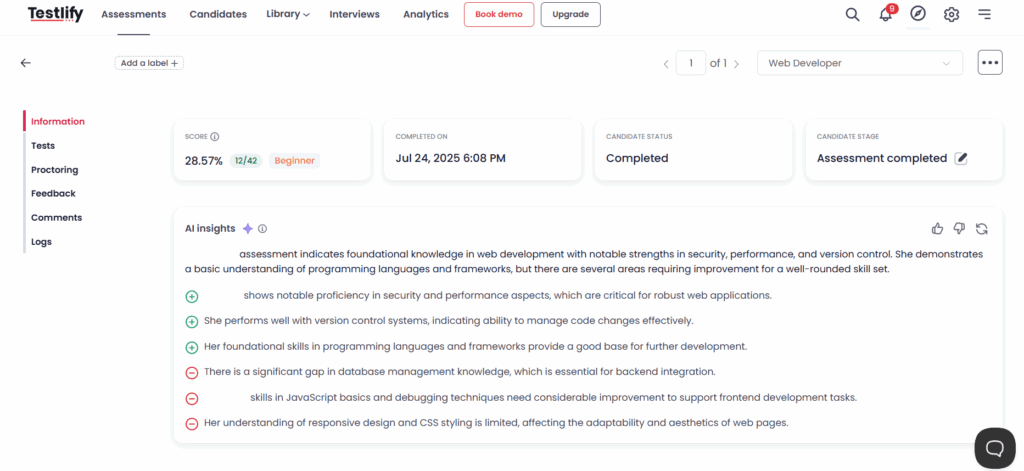
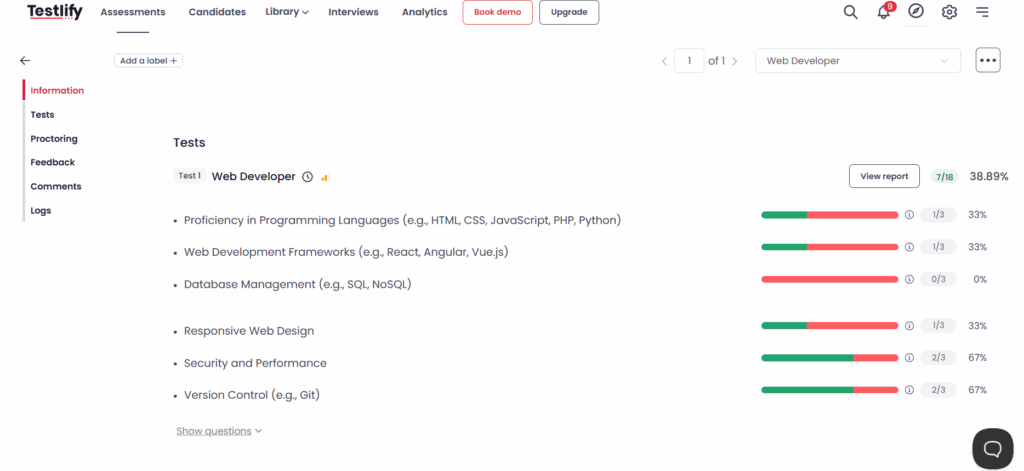
You can review auto-ranked results based on code quality, efficiency, and accuracy.
Product managers
Product roles call for analytical thinking, cross-functional communication, and strategic decision-making. A combination of cognitive ability tests and role-based simulations, like evaluating a product brief or prioritizing features, reveals how candidates think and collaborate.
Evaluate candidates using:
- Role-based simulations like prioritizing features or reviewing a product brief
- Cognitive ability tests for problem-solving and structured thinking
- Situational judgment tests to assess collaboration and decision-making
Customer success managers
Empathy, problem-solving, and communication are crucial here. Situational judgment tests and behavioral assessments help evaluate how candidates handle tough conversations, resolve issues, and build long-term relationships with customers.
Use Testlify’s
- Situational judgment tests to simulate real customer conversations
- Behavioral assessments to evaluate how they manage conflict or churn
- Communication skills test to assess tone and clarity
Sales Development Representatives (SDRs)
These candidates need persuasion, resilience, and quick thinking. Use simulations that mimic objection handling, cold-call scripts, or CRM navigation to test their ability to sell and follow the process.
You can use,
- CRM test to gauge process-following skills
- Personality tests to assess motivation and drive
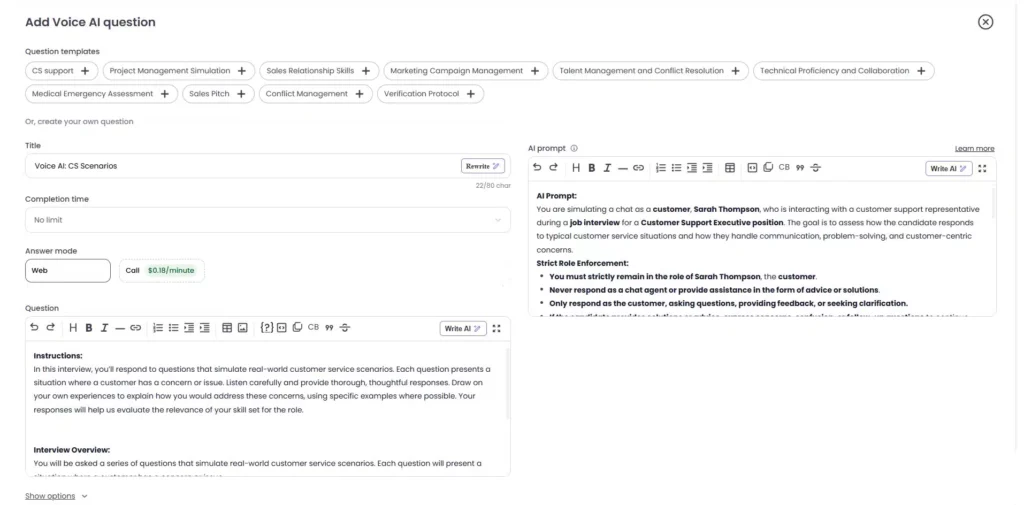
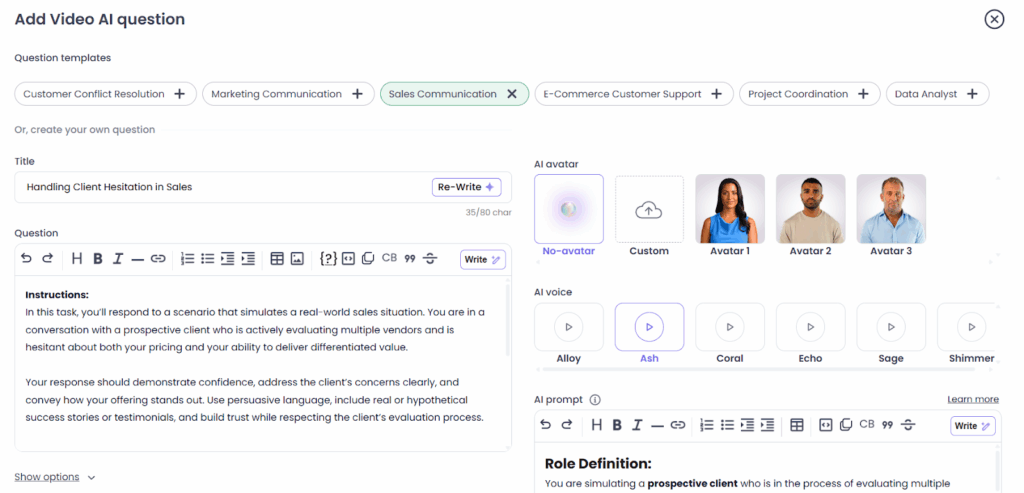
You can also use the voice AI feature that helps you assess skills with a cold call or objection handling simulation.
Marketing managers
SaaS marketers wear many hats: copywriting, campaign planning, analytics, and brand strategy. Assessments that include writing tasks, campaign planning simulations, or even basic analytical questions (like interpreting performance data) work well here.
Assess them with:
- Content writing test for basic writing skills
- English and vocabulary skills tests for clarity in communication
- Data interpretation test to evaluate performance analysis skills
QA engineers
Quality Assurance roles demand attention to detail, test planning, and automation knowledge. Use structured testing tasks where candidates find bugs, write test cases, or explain QA workflows in context.
Test for:
- QA tests to assess bug identification and test case creation skills
- Logical reasoning test to assess
- Attention to detail test in both code and documentation scenarios
Testlify helps you assess practical QA skills and reduce bad-fit hires early.
How to integrate pre-hire testing into your workflow?
Adding pre-hire testing doesn’t have to slow things down, it should do the opposite. With the right setup, tools, and automation, you can embed assessments seamlessly into your existing recruitment funnel and start seeing results fast.
1. Define what success looks like
Begin by aligning with hiring managers to define the must-have skills for the role both technical and behavioral. Consider what a successful employee in this position looks like. This clarity helps you choose the right test and ensures the rest of the hiring process stays focused on what truly matters, instead of being distracted by vague or subjective criteria.
2. Choose or customize the right test
Select a test that reflects the actual responsibilities of the role. Platforms like Testlify offer ready-made assessments or allow full customization. Make sure the test is specific to the role, takes a reasonable amount of time to complete, and is validated to avoid bias. The goal is to assess real skills without overwhelming the candidate or compromising fairness.
3. Automate test invitations from your ATS
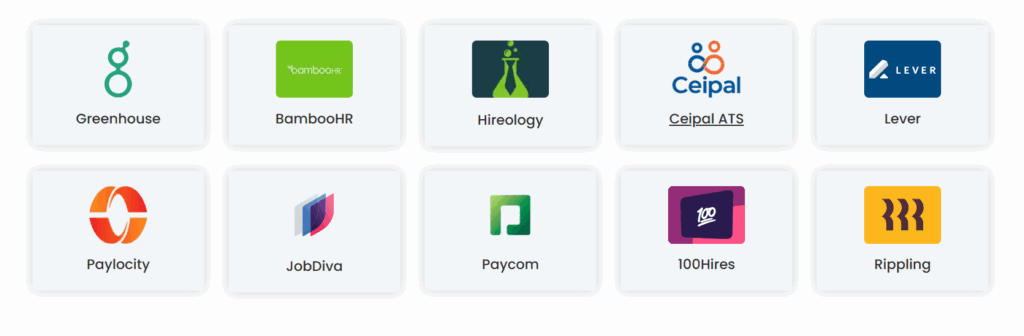
Integrate your pre-hire testing tool with your Applicant Tracking System (ATS) like Greenhouse, Lever, or Workable. This allows you to automatically send test invites as soon as a candidate applies. It saves manual work, speeds up the process, and ensures every candidate goes through the same initial evaluation, creating a more consistent and efficient experience for both recruiters and applicants.
4. Score and shortlist automatically
Leverage the platform’s scoring features to quickly identify top performers. Most tools offer candidate rankings, performance breakdowns, and comparison dashboards. This data helps recruiters and hiring managers focus only on qualified candidates.
It cuts down screening time drastically while ensuring objective, skills-based shortlisting decisions that reduce bias and improve hiring accuracy.
5. Combine with structured interviews
Use test results to guide the interview process. Focus on verifying strengths and exploring areas where the candidate scored lower.
Structured interviews paired with assessment insights help interviewers ask more targeted questions and make better-informed decisions. This hybrid approach blends objectivity with human judgment, leading to more effective, efficient, and fair hiring outcomes.
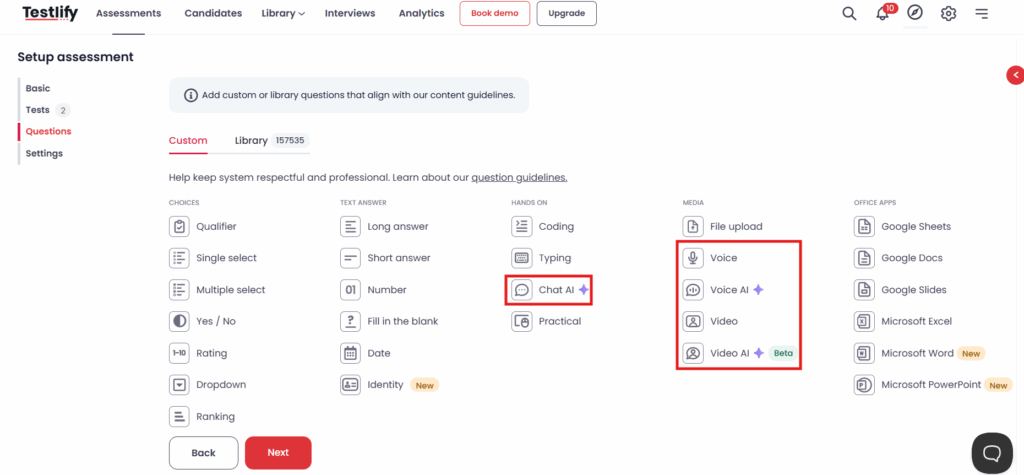
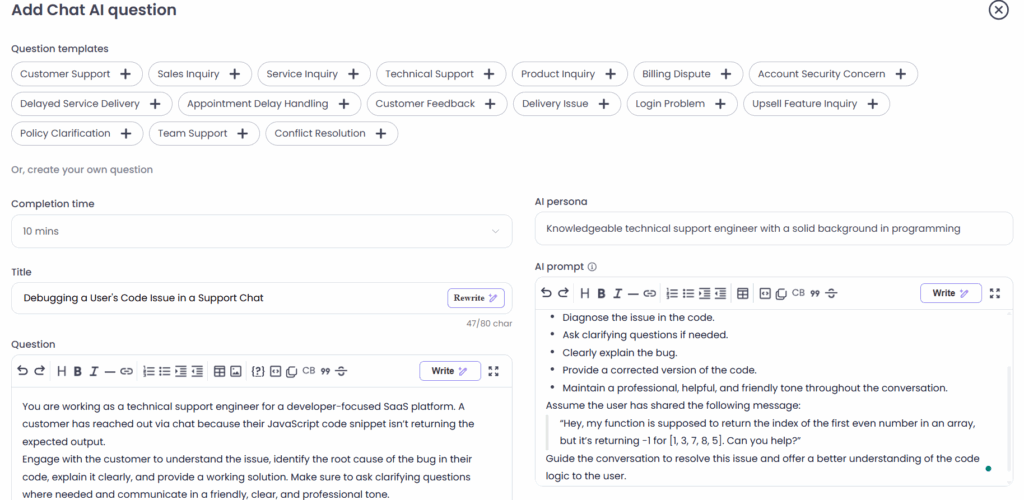
You can easily choose from the pre-built templates or create your own questions while using video, audio, or chat interviews.
Final thoughts
Hiring in the SaaS industry doesn’t have to be slow or chaotic. Pre-hire testing gives you a faster, fairer, and more data-driven way to evaluate candidates before interviews even begin.
By aligning on role expectations, using tailored assessments, and automating your workflow, you can remove friction from the hiring process and focus only on candidates who can actually do the job. Book a demo with Testlify and start your healthcare hiring journey.
Frequently asked questions (FAQs)

Content Writer
Yashika Khandelwal is a Content Writer with 3+ years of experience creating research-backed content on hiring, talent assessment, and HR technology. She is a registered Organizational Psychologist and subject matter expert who combines behavioral science with practical recruitment insights to produce accurate, evidence-based content.
LinkedInRelated resources
View all
Hiring Guide
How to build an engagement strategy that starts at hiring

Hiring Guide
Executive hiring playbook: a step-by-step guide

Hiring Guide
Talent recruitment trends that are influencing 2026

Hiring Guide
What’s holding your careers page back from attracting top talent

Hiring Guide
How upskilling can drastically improve workplace wellbeing

Hiring Guide
How should you handle sensitive information in the hiring process
Get started.
Hire on proof, not resumes.
Run your first skills-based assessment free — no credit card required.