
Direct vs indirect hiring costs: A complete breakdown
Learn about direct vs indirect hiring costs, what are their key difference, what gets overlooked, and more.

Hiring is expensive, but the highest costs rarely appear on your recruitment budget. Most companies track job ads, recruiter fees, and interview expenses, yet overlook the hidden costs of vacant roles, lost productivity, manager time, and poor hiring decisions. Those indirect costs often exceed the price of recruitment itself.
Understanding the difference between direct and indirect hiring costs is the first step toward controlling your cost per hire and improving your recruiting ROI. In this guide, you’ll learn direct vs indirect hiring costs, what each type includes, how to calculate them accurately, and practical ways to reduce both without sacrificing hiring quality or speed.
 ChatGPT
 Gemini
 Claude
 Grok
Grok Perplexity
TL;DR
- The fastest way to cut both is to hire fewer wrong people, and structured skills assessment is the highest-impact move for that.
- Direct hiring costs are visible and invoiced (job ads, agency fees, background checks, assessments, signing bonus). Indirect costs are hidden (recruiter and interviewer time, lost productivity, onboarding, a bad hire).
- SHRM puts the average cost per hire at about $5475, but that mostly counts direct costs. Add indirect costs and the real total often runs two to three times higher.
- The most expensive indirect cost is a wrong hire. Gallup estimates replacing an employee costs 50% to 200% of their annual salary.
- Most salaries are indirect costs, because they support the business broadly rather than one traceable task.

What are direct hiring costs?
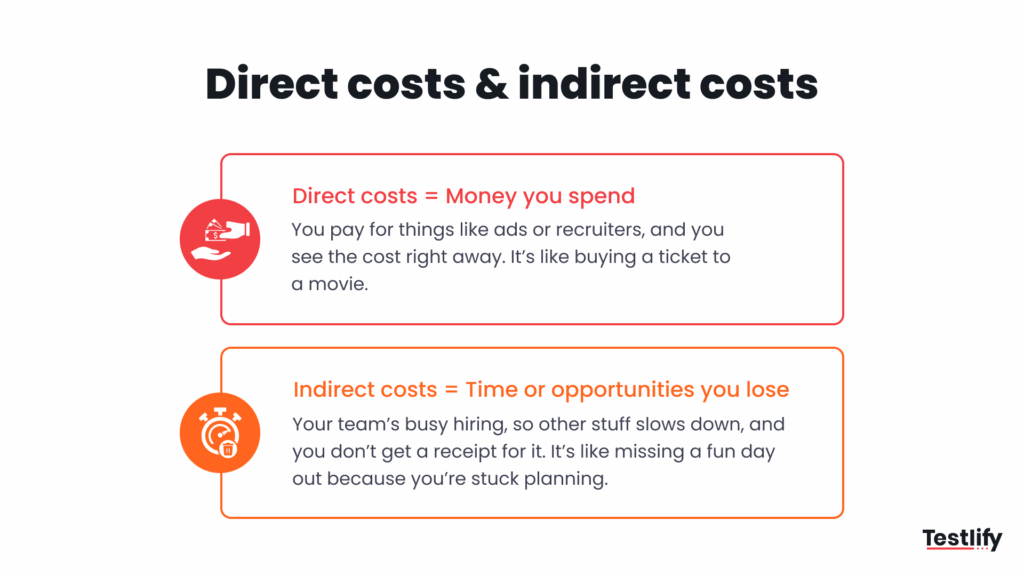
Direct hiring costs are the measurable expenses a company pays to fill a specific role, things like job ads, background checks, assessment tools, and a signing bonus. Because these expenses are visible, measurable, and directly linked to the hiring process, they are typically easier to budget for and track.
Examples of direct hiring costs
Direct hiring costs are the expenses you can point to on a receipt. They attach to one hire and one recruitment cycle, which makes them the easiest part of the budget to forecast. The common ones:
- Job posting and sourcing: Paid ads, job boards, career fairs, and the marketing spend to reach and screen candidates.
- Screening and pre-employment tests: Background checks and pre-employment tests that verify skills and history.
- Recruiting software: Subscriptions for an applicant tracking system, sourcing tools, or a skills-assessment platform.
- Agency and referral payouts: External recruiter fees and internal referral bonuses.
- Documentation and compliance: Work permits, visas, and the legal checks required to hire lawfully.
- Signing bonus: A one-time, upfront payment tied directly to the offer, so it is a clear direct cost.
What are indirect hiring costs?
Indirect hiring costs are the less visible expenses that arise during the hiring process and after a role remains unfilled. They include lost productivity, manager and recruiter time, delayed projects, overtime for existing employees, slower onboarding, and the impact of a poor hire.
Unlike direct costs, these expenses do not appear on an invoice, but they can have a much greater effect on business performance.
Examples of indirect hiring costs
Indirect hiring costs are the expenses that never reach an invoice but still hit the bottom line. They come from the time and attention hiring pulls away from the rest of the business, and from the fallout when a hire goes wrong. The big ones:
- Lost productivity: Output dips while a role sits open and again while a new hire ramps, because experienced people split their time to cover and to train.
- Recruiter and interviewer time: The hours HR and your top performers spend reviewing resumes, running interviews, and scoring candidates.
- Onboarding and training: Orientation, tools, and the ramp period before a new hire is fully productive.
- Admin overhead: Payroll setup, benefits enrollment, equipment, and records work for each new person.
- Lower morale: An understaffed, overworked team gets stressed and disengaged, which can trigger more resignations and more vacancies.
- A bad hire: When a hire doesn’t work out, the costs extend far beyond recruiting again. You pay for lost productivity, additional training, separation costs, and the time needed to refill the role. Gallup estimates that replacing an employee costs 50% to 200% of their annual salary.
Direct vs indirect hiring costs: key differences
Direct costs are tied to the recruitment transaction and are easy to measure. Indirect costs are tied to time, productivity, and risk, and they are harder to pin down. Here is how they compare across the dimensions that matter for budgeting:
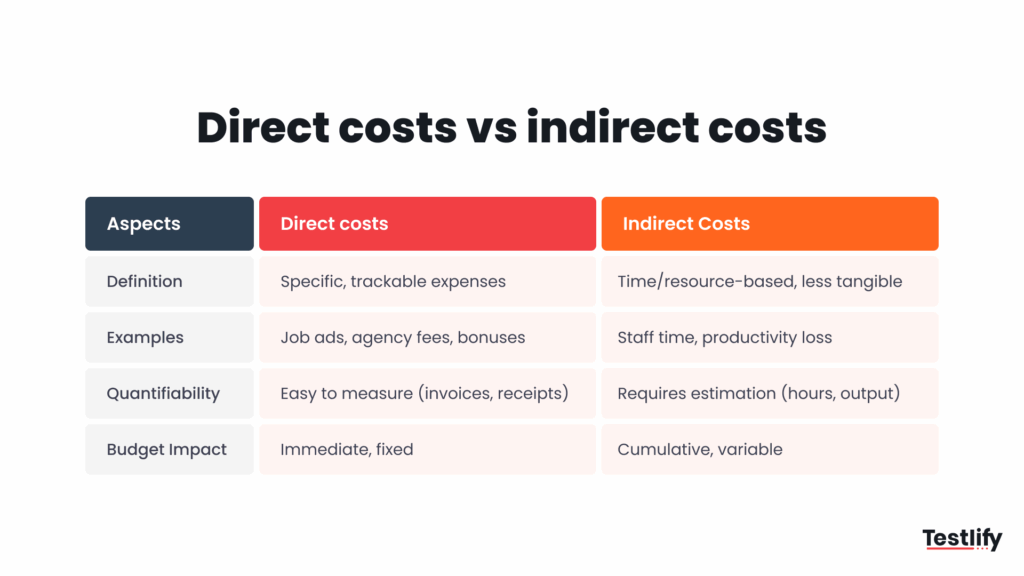
To measure the full cost of hiring, account for both the money you spend and the productivity you lose. A simple way to calculate this is by using this formula
Total hiring cost = direct hiring cost + indirect hiring cost
What is the average cost of hiring?
SHRM benchmarking puts the average cost per hire at about $5,475, with a range from $2,000 to more than $20,000 depending on role, seniority, industry, and location. That headline number mostly reflects direct costs. Once you add indirect costs, the real total often runs two to three times higher.
Retention is part of the math too. The US Bureau of Labor Statistics reports median employee tenure of 3.9 years as of January 2024, down from 4.1 years in 2022. Shorter tenure means you rehire the same roles more often, so every mis-hire that leaves early wastes the full ramp you paid for.
Analysts often split hiring spend into hard and soft costs
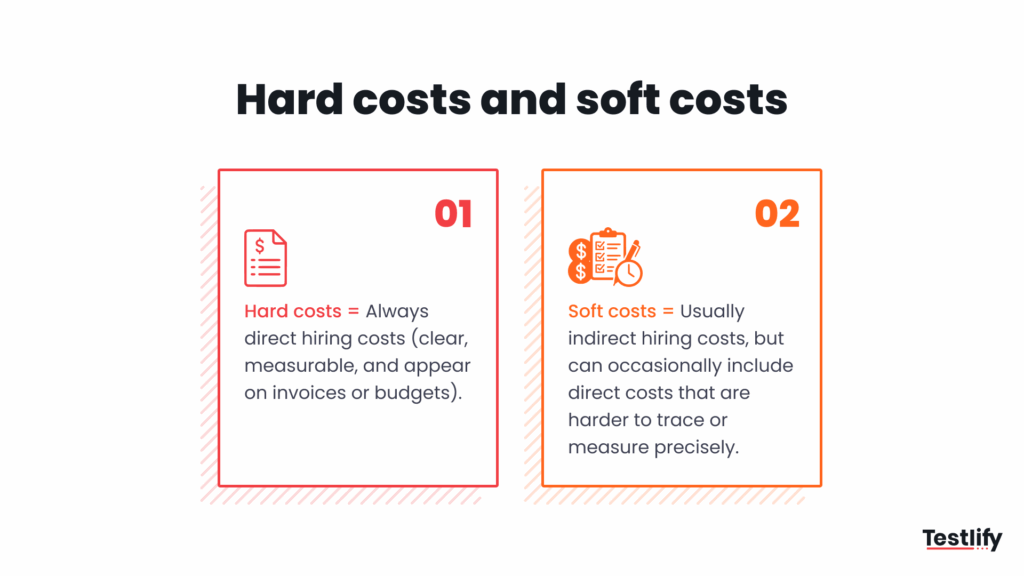
Hard costs: The expenses you can budget for
Hard costs are the hiring expenses with a clear price tag. They are easy to track because they appear on invoices, contracts, or finance reports, making them straightforward to budget and measure.
Typical hard costs include job advertising, recruitment agency fees, pre-employment assessments, background checks, ATS subscriptions, relocation assistance, and onboarding materials.
Soft costs: The expenses that don’t appear on invoices
Soft costs come from the time and productivity invested in making a successful hire. They rarely have a fixed dollar amount, yet they often represent the largest share of hiring costs because they affect multiple teams across the business.
Examples include recruiter and hiring manager time, employee interview hours, productivity lost while a role remains vacant, new hire ramp-up, training, knowledge transfer, and the impact of a poor hire on team performance.
Hard costs vs. soft costs
The difference is visibility, not importance. Hard costs are easy to see because finance teams can track every dollar spent. Soft costs are harder to measure because they are tied to time, productivity, and business performance. Together, they determine the true cost of every hire.
Pro tip: Track cost per hire and cost of a mis-hire as two separate numbers. Teams that only watch the invoice optimize the small half of the bill and ignore the large one. Run your figures through the free cost per hire calculator to see both sides.
How to reduce direct and indirect hiring costs?
Costs climb when the process is slow, unfocused, or prone to mis-hires. You cut them by tightening the workflow and, above all, by hiring the right person the first time. The moves below target both the visible and the hidden side of the bill. See the full playbook in our guide to reducing recruitment costs.
Simplify the recruitment process
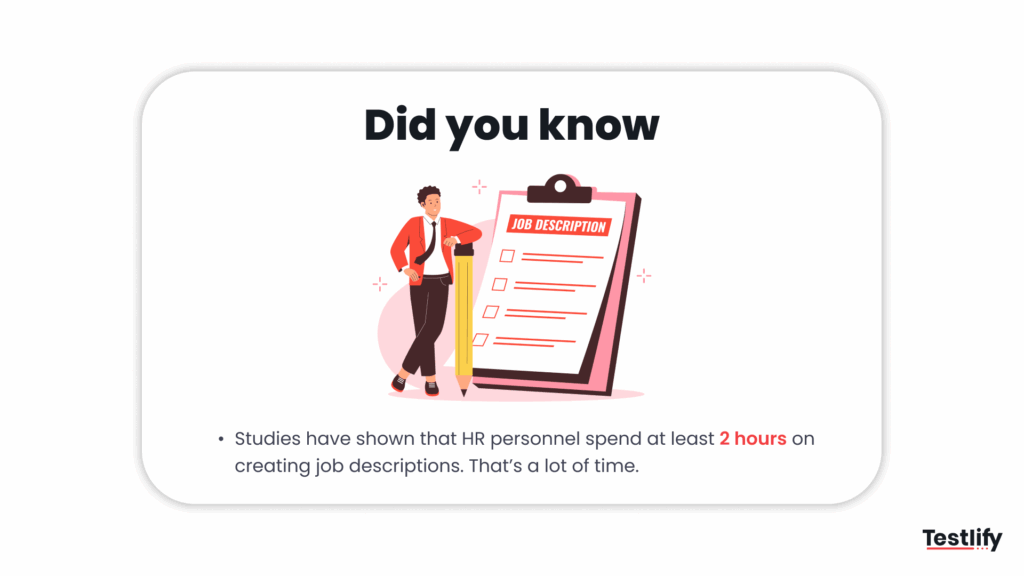
Every extra step costs recruiter time and candidate goodwill. Give each role a clear job description so the wrong people self-select out, then automate the repetitive work: resume screening, interview scheduling, and status updates. Watch time to hire and cost per hire, and fix the slowest stage first.
Build a talent pipeline
Starting every search from zero is expensive. A warm pool of past applicants, referrals, and engaged prospects cuts sourcing spend and time to fill, and it tends to raise hire quality because you already know the people. Keep the pipeline warm and pull from it before you pay to advertise again.
Use internal mobility
Hiring from within saves on sourcing and shortens onboarding, since the person already knows your tools and culture. Publish clear career paths so employees see how to grow, and check the internal bench before opening an external req. It is usually cheaper to promote and upskill than to source and ramp a stranger.
Screen with structured skills assessments
Gut-feel hiring is where the highest indirect cost is born. A wrong hire is expensive precisely because one weak signal, a polished interview or a strong resume, got weighted too heavily. Structured skills assessment fixes that by scoring candidates on the actual job before the first interview, so your shortlist is evidence-based, not impression-based.
Testlify offers 3,500+ skill tests across technical and non-technical roles, with proctoring and multilingual support for global hiring. Relying on a scored shortlist, rather than a hunch, is the single highest-impact way to cut the cost of a bad hire.
Strengthen your employer brand
A weak brand raises cost per hire, because fewer qualified people apply and more drop out midway. A clear careers page, real employee stories, and an honest culture pitch bring in better-fit candidates who accept faster and stay longer, which trims both the direct ad spend and the indirect churn.
Final thoughts
Direct hiring costs are the numbers everyone sees. Indirect hiring costs are the ones that quietly drain far more money through lost productivity, vacant roles, and poor hiring decisions. If you only measure invoices, you only measure part of the problem.
The most effective way to reduce total hiring cost is not simply spending less on recruiting. It is making better hiring decisions from the start. A structured, skills-first hiring process helps you identify qualified candidates faster, avoid costly mis-hires, and improve long-term retention, delivering a stronger return on every hire you make.
Key takeaways
- Split the bill in two: Direct costs are invoiced and plannable; indirect costs are hidden in time and productivity. If you only track the invoice, you are managing the smaller half of the spend and flying blind on the larger half.
- The hidden half is usually bigger: SHRM’s ~$4,700 average cost per hire mostly counts direct costs; add recruiter time, lost output, and onboarding, and the real total often runs two to three times higher, so budget for both.
- A bad hire is the costliest line of all: Gallup puts replacement at 50% to 200% of salary, which means one avoided mis-hire can save more than an entire recruiting campaign, so quality of screening beats volume of sourcing.
- Most salaries are indirect: Pay supports the business broadly, so it sits in indirect costs unless it maps to one traceable task, which matters when you allocate hiring spend accurately.
- Speed and structure cut both sides: Simplifying the workflow trims recruiter hours (indirect) and wasted ad spend (direct) at once, so fix the slowest stage before you spend more on sourcing.
- Evidence-based screening is the highest-impact move: Scoring skills up front with multiple signals prevents the expensive mis-hire, so it pays back across every future cycle, not just the current one.
Cut your direct and indirect hiring costs with Testlify
Every hiring decision affects both your visible recruitment spend and your hidden productivity costs. Testlify helps you reduce both by screening candidates on real job skills before the first interview, so you spend less time reviewing unqualified applicants and avoid costly mis-hires.
Start a free trial or book a demo to see how we can help you lower your recruitment costs and hire top talent faster.
Frequently asked questions (FAQs)

Senior Product Delivery Manager
Sankalp Menon leads Product Delivery at Testlify and builds repeatable, structured operating processes across teams. He writes on turning hiring into a measurable, repeatable workflow.
LinkedInRelated resources
View all
Hiring Guide
The Role of HR in CMMS Implementation Success

Hiring Guide
Optimizing HR: How Digital Transformation is Revolutionizing Human Resources

Hiring Guide
How Enterprise AI is Transforming Accounting for Large Organizations

Hiring Guide
How AI is helping startups attract top talent?

Hiring Guide
Building a strong employer brand with visual storytelling

Hiring Guide
5 Go-to strategies for aligning product development with customer feedback
Get started.
Hire on proof, not resumes.
Run your first skills-based assessment free — no credit card required.