
How to overcome challenges in healthcare industry hiring with pre-hire tests?
Discover how pre-hire tests can fix healthcare industry hiring bottlenecks, reduce time-to-hire, and improve quality.

Hiring in the healthcare industry isn’t what it used to be. Between rising patient demands, evolving compliance regulations, and a persistent talent shortage, HR teams are under more pressure than ever to fill roles quickly and with the right people.
But here’s the catch, rushing to hire can lead to mis-hires. And in healthcare, a bad hire doesn’t just affect team dynamics or productivity. It can impact patient outcomes.
That’s where pre-hire testing comes in. When used correctly, it doesn’t just help you hire faster; it helps you hire smarter. Let’s break down how you can use pre-hire assessments to fix bottlenecks in healthcare hiring, without compromising on quality or compliance.
 ChatGPT
 Gemini
 Claude
 Grok
Grok Perplexity
Why is hiring so difficult in healthcare today?
Hiring in healthcare isn’t just about filling roles, it’s about finding people who can handle high pressure, complex patient needs, and strict compliance. With growing talent shortages and rising burnout, traditional hiring methods simply can’t keep up.
A shortage of skilled professionals
It’s no secret that the healthcare sector is grappling with a talent crunch. From nurses and lab technicians to specialized therapists and administrative staff, the supply is struggling to meet demand.
The stakes are incredibly high
In this industry, even a minor mistake can lead to major consequences. That means every new hire must be carefully vetted, which slows things down.
Burnout and high turnover
Existing staff are overworked. New hires leave because the role isn’t what they expected, or they lack the right skills to cope. This means HR teams are constantly back at square one.
Compliance and credentialing
Hiring in healthcare involves strict regulations and background checks. It takes time to verify licenses, certifications, and work histories.
In short, the need to move fast is at odds with the need to hire right. That’s the bottleneck.

What is pre-hire testing?
Pre-hire testing refers to objective assessments conducted before a candidate is hired. These could include:
- Cognitive ability tests
- Job knowledge tests
- Behavioral and situational judgment tests
- Skill-specific simulations
- Personality and culture-fit assessments
In a healthcare setting, pre-hire testing can be tailored to roles ranging from RNs and medical billers to HR managers and hospital IT staff.
Platforms like Testlify allow you to create role-specific assessments that simulate real job tasks, ensuring candidates are not just qualified, but the right fit for the demands of your organization.
How does pre-hire testing address healthcare industry hiring challenges?
Pre-hire testing brings objectivity and speed to your hiring process. Evaluating candidates on real-world skills before the interview helps you identify top performers faster, reduce bias, and ensure every hire is job-ready from day one.
Reduces time-to-hire
Pre-hire testing streamlines the early stages of recruitment by automating candidate screening. Instead of manually reviewing dozens of resumes, HR teams can send out short, role-specific assessments and advance only the top performers.
For instance, a 20-minute skills test for lab technicians can quickly identify qualified candidates, cutting down time-to-hire dramatically while ensuring no promising applicant slips through the cracks.
Filters for job-ready candidates
Healthcare roles require more than just credentials they demand strong communication, critical thinking, and familiarity with industry tools. Pre-hire tests assess these capabilities objectively.
They help pinpoint candidates who can thrive in fast-paced, high-stakes environments and filter out those who aren’t ready. This removes guesswork, lowers the risk of bad hires, and ensures that only capable, job-ready professionals move forward in the process.
Improves quality of hire
A standardized testing process levels the playing field for all candidates. Everyone is evaluated on the same role-specific criteria, which reduces unconscious bias and ensures a fair, consistent selection process.
The result is better-quality hires of professionals who are both competent and aligned with the role’s demands, who tend to stay longer, perform better, and contribute more positively to team dynamics and patient care.
Helps you hire for potential
In a tight talent market, experience alone shouldn’t be the only deciding factor. Pre-hire tests help you uncover high-potential candidates who may not have the longest resumes but demonstrate strong learning ability, adaptability, and core skills.
This allows you to build a more diverse, future-ready workforce by hiring those who can grow into the role even if they’re not a perfect fit on paper.
Enhances employer brand
Candidates value fairness and transparency. A structured pre-hire testing process sends the message that you care about hiring the right people, not just filling roles quickly. It reflects professionalism, reduces interview bias, and boosts the candidate experience.
When applicants feel respected and evaluated objectively, they’re more likely to view your organization as a desirable place to work, enhancing your reputation in a competitive talent market.
What types of roles can benefit from pre-hire testing in healthcare?
You can design role-specific assessments for virtually every type of healthcare job. Here are a few examples:
Clinical roles
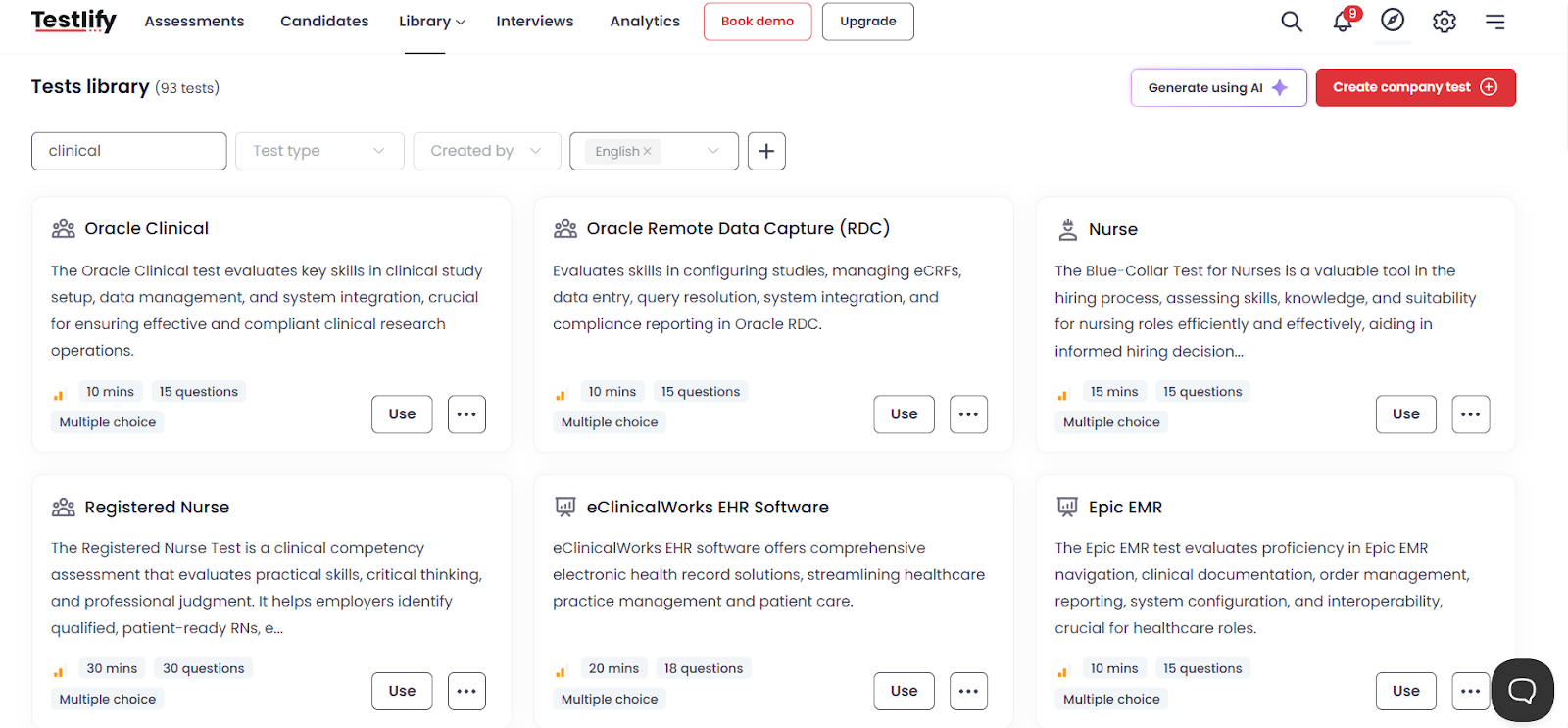
Pre-hire assessments for clinical roles help evaluate a candidate’s real-world decision-making and patient care skills. For nurses, this might include testing clinical judgment, communication under pressure, and emergency response.
Physiotherapists can be assessed through case-based simulations and patient interaction scenarios. These tests ensure candidates can handle the demands of direct patient care with competence, compassion, and clarity essential in high-stakes healthcare environments.
Administrative roles
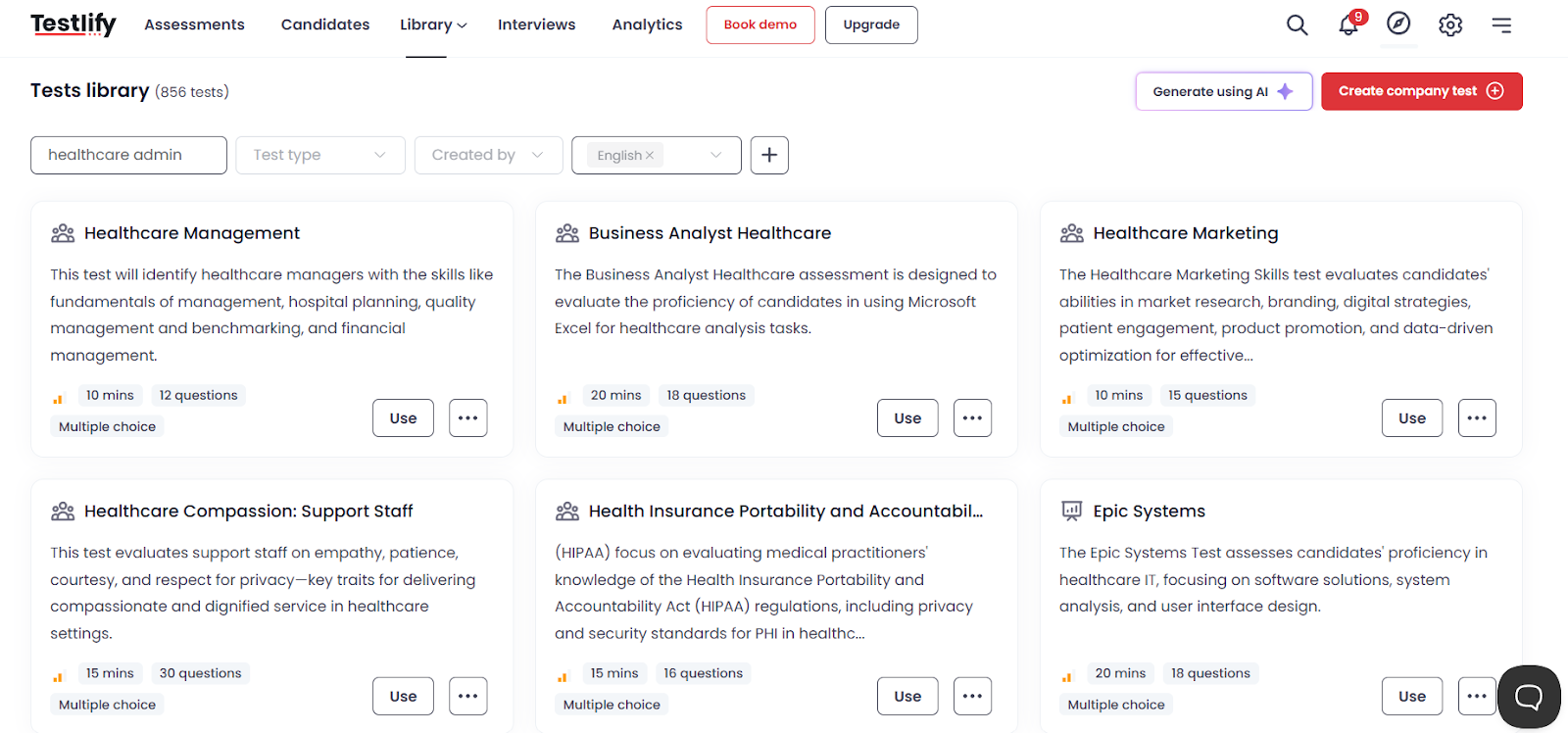
Administrative staff are the backbone of smooth patient experiences. Pre-hire tests for roles like medical billers can assess coding accuracy, software proficiency, and attention to detail. For receptionists, assessments might simulate real-time scheduling, patient interactions, and multitasking. These help identify candidates who are not only organized and efficient but also capable of maintaining professionalism and empathy in fast-paced front-desk settings.
Tech and support roles
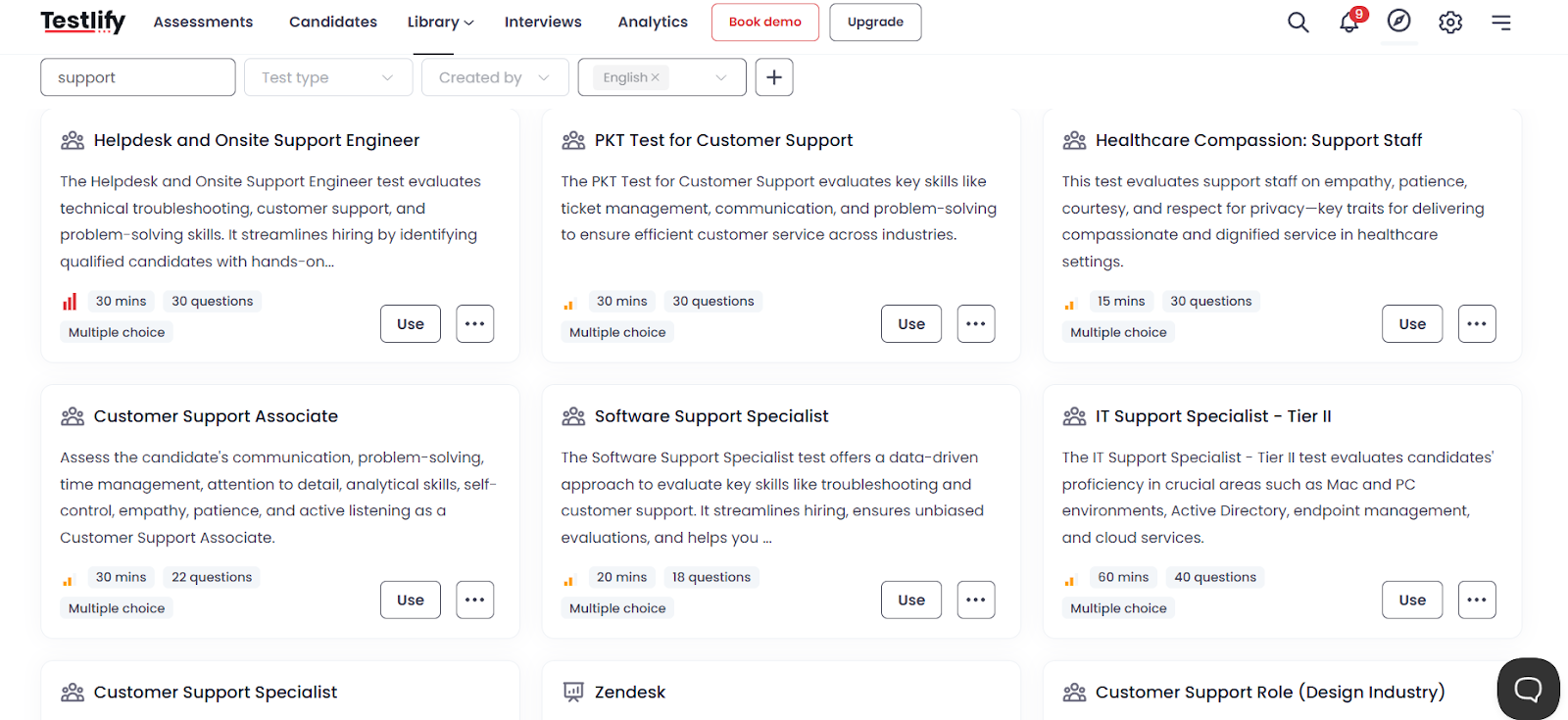
With healthcare systems increasingly reliant on technology, IT and lab support roles need candidates with technical accuracy and regulatory awareness. Pre-hire testing for IT staff might include evaluating EMR handling, cybersecurity basics, and troubleshooting.
Lab technicians can be tested on sample processing, data integrity, and protocol adherence. These assessments ensure candidates can support medical operations while upholding data security and compliance standards.
Management and HR roles
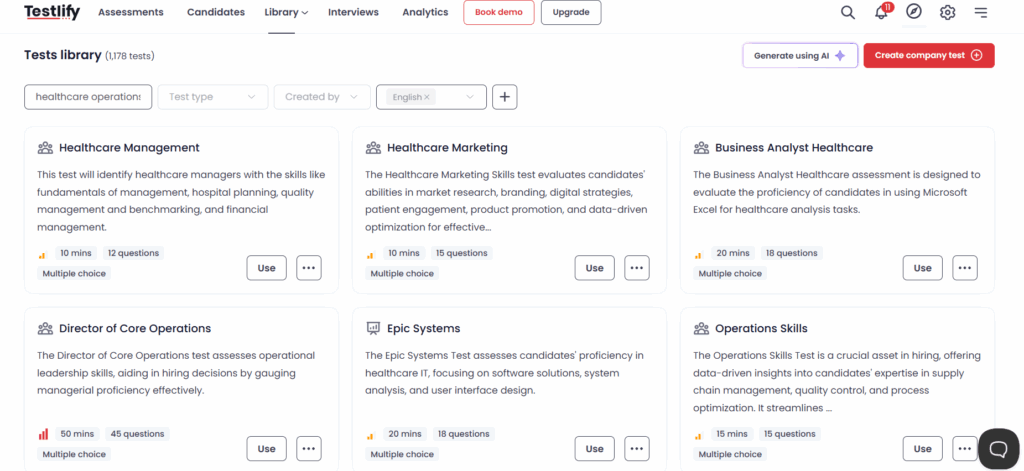
Hiring for leadership roles in healthcare requires a focus on soft skills, compliance, and strategic thinking. Pre-hire tests for healthcare HR professionals can assess knowledge of hiring laws, internal policy, and conflict resolution.
For operations managers, testing might focus on leadership under pressure, planning, and team coordination. These assessments help select individuals who can manage people and processes effectively in a high-stakes environment.
How to implement pre-hire testing in your healthcare workflow?
In healthcare, certain roles are always in demand, and getting the right people into these positions quickly can make or break service quality. Here’s how pre-hire testing can help across key functions:
Registered nurses
Test for clinical judgment, patient safety awareness, and situational decision-making. These tests help surface candidates who are ready to handle high-pressure scenarios.
Define the role. For nursing roles, success includes clinical judgment, fast decision-making, emotional resilience, and clear communication under pressure. Select assessments that simulate real-life nursing scenarios, like prioritizing patients, responding to vital sign changes, or managing shift handovers.
A talent assessment platform like Testlify lets you mix modules such as clinical reasoning, stress management, and patient safety.
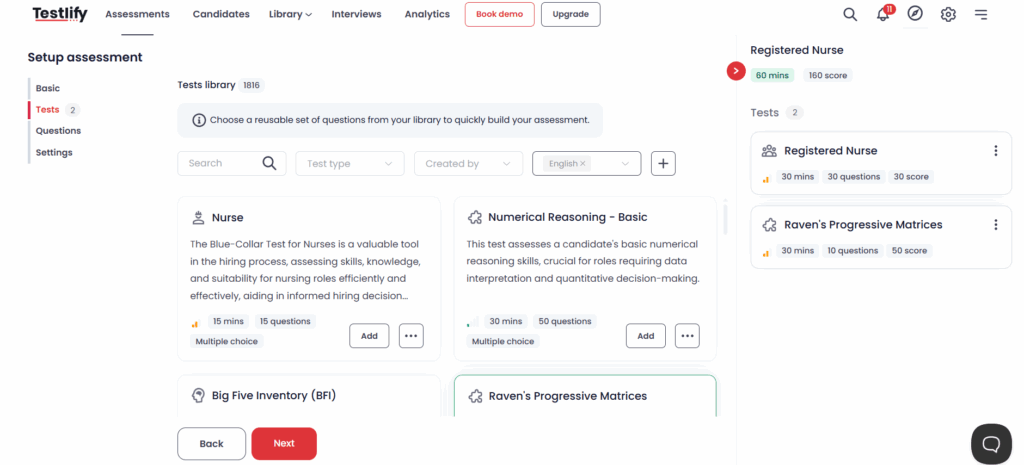
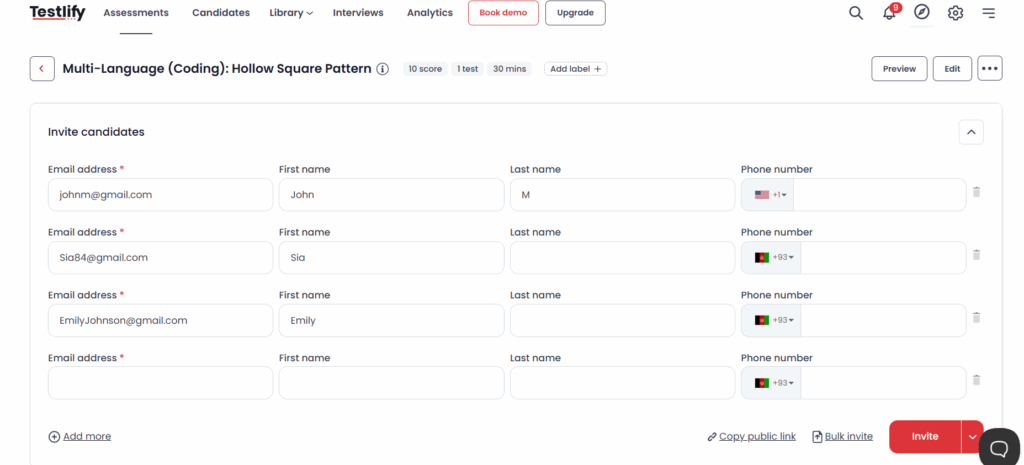
Invite candidates by sending them a test link that screens for core capabilities. This filters out underprepared candidates quickly, so your team only spends time on those who demonstrate real readiness.
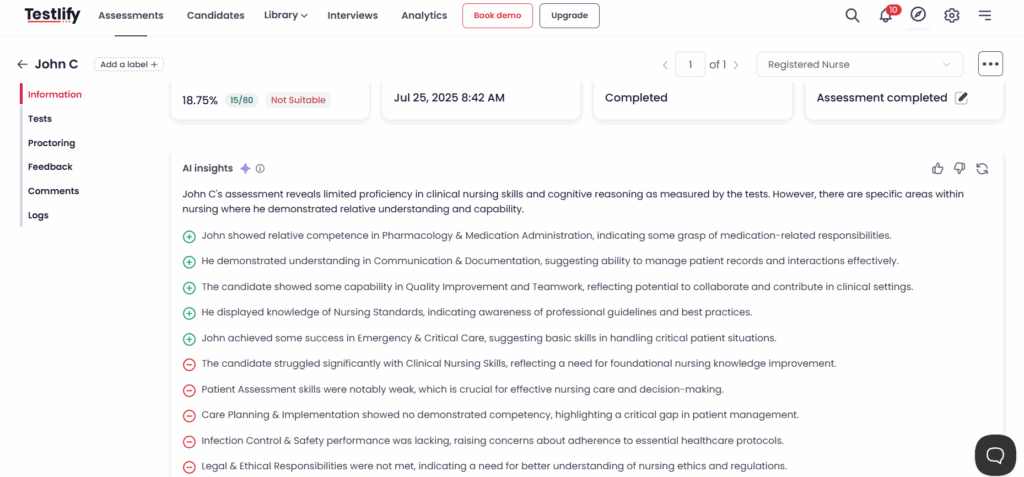
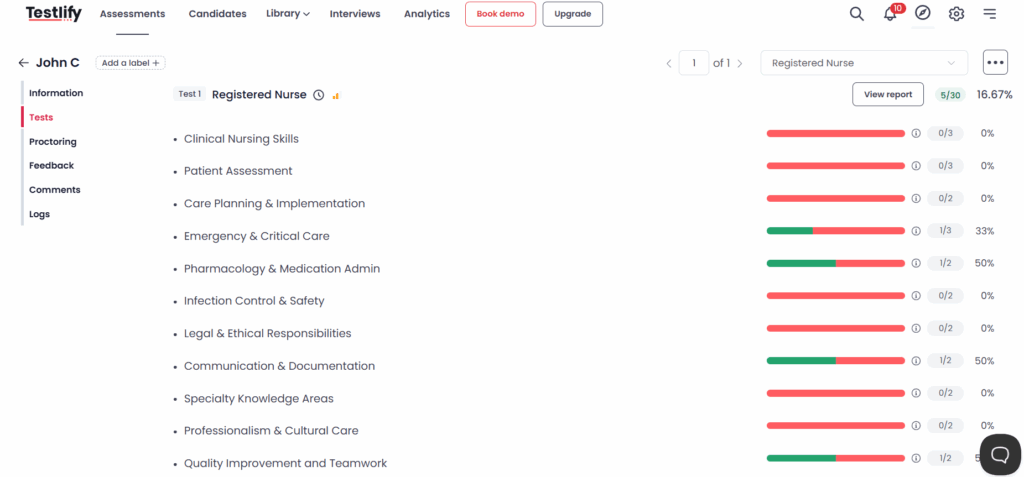
Instead of asking “Can they handle pressure?” in an interview, use test results to explore their decisions in simulated emergencies or shift management.
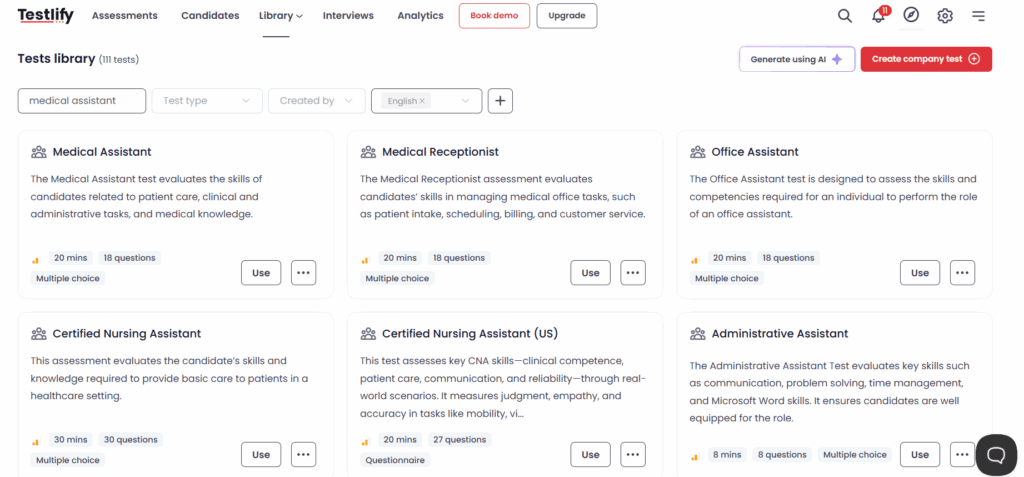
Medical assistants
Assess for basic clinical tasks, administrative organization, and communication skills. A short pre-hire assessment ensures the candidate is comfortable switching between patient care and front-desk duties.
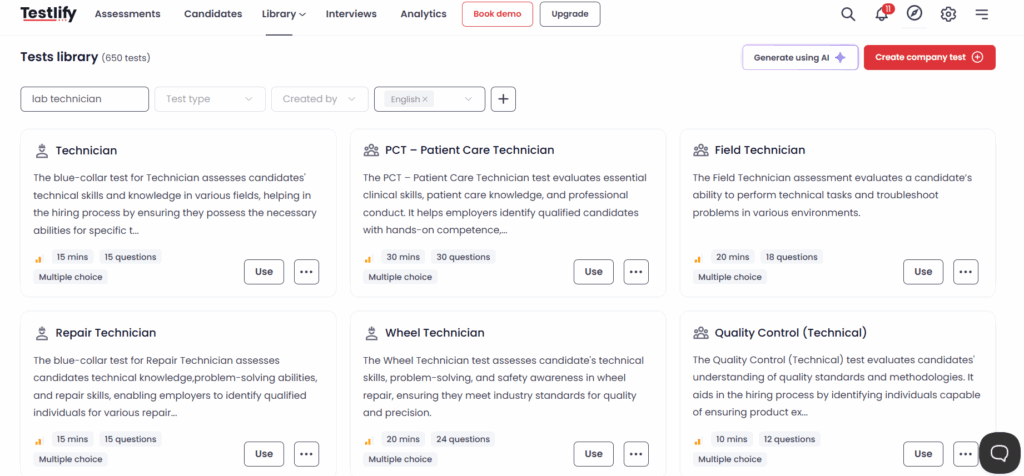
Lab technicians
Use testing to evaluate attention to detail, sample handling procedures, and compliance knowledge. These are roles where mistakes can impact diagnostics, so assessments help filter for accuracy.
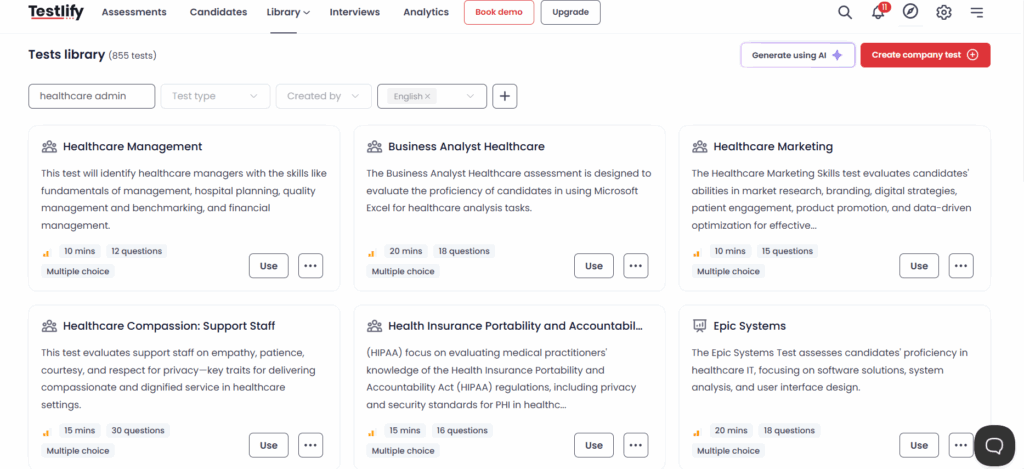
Healthcare admins and receptionists
Pre-hire assessments can simulate real-world multitasking like scheduling appointments while handling patient queries to ensure readiness.
Final thoughts
In healthcare, hiring right is as important as hiring fast. Patients depend on your people.
So if you’re struggling with hiring bottlenecks, it might be time to rethink your early screening process. Pre-hire testing can be the bridge between the urgency of today and the quality outcomes of tomorrow.
Let data support your decisions, not slow them down.
Ready to see how smarter assessments could transform your healthcare hiring? Book a demo with Testlify and see how it matches your workflow and values.
Frequently asked questions (FAQs)

Content Writer
Yashika Khandelwal is a Content Writer with 3+ years of experience creating research-backed content on hiring, talent assessment, and HR technology. She is a registered Organizational Psychologist and subject matter expert who combines behavioral science with practical recruitment insights to produce accurate, evidence-based content.
LinkedInRelated resources
View all
Hiring Guide
How to fix SaaS industry hiring bottlenecks with pre-hire testing?
Hiring Guide
How to build an engagement strategy that starts at hiring

Hiring Guide
Executive hiring playbook: a step-by-step guide

Hiring Guide
Talent recruitment trends that are influencing 2026

Hiring Guide
What’s holding your careers page back from attracting top talent

Hiring Guide
How upskilling can drastically improve workplace wellbeing
Get started.
Hire on proof, not resumes.
Run your first skills-based assessment free — no credit card required.