
What is talent optimization and what are its 4 key phases?
Learn what talent optimization is and explore its 4 key phases to align your workforce with business goals for better performance

The real challenge for organizations isn’t just hiring the right talent—it’s optimizing it. Talent optimization is often overlooked, but it’s critical for retaining top performers and ensuring long-term success.
While hiring the right talent is important, keeping them engaged and aligned with business goals is the real issue. For example, executives who leave their companies contribute to a staggering 36% turnover rate, while those who stay have a much lower rate of 17%. Let’s learn more about how to solve this issue.
 ChatGPT
 Gemini
 Claude
 Grok
Grok Perplexity
What is talent optimization?
Talent optimization is a strategic process that aligns a company’s business goals with its workforce. It goes beyond hiring, ensuring that the right people are in the right roles and are consistently developed and retained to support long-term success.
Optimization strategies, such as mentorship, targeted training programs, and career development initiatives, are designed to upskill employees and enable them to make meaningful contributions to the company’s growth and success.

Four phases of talent optimization
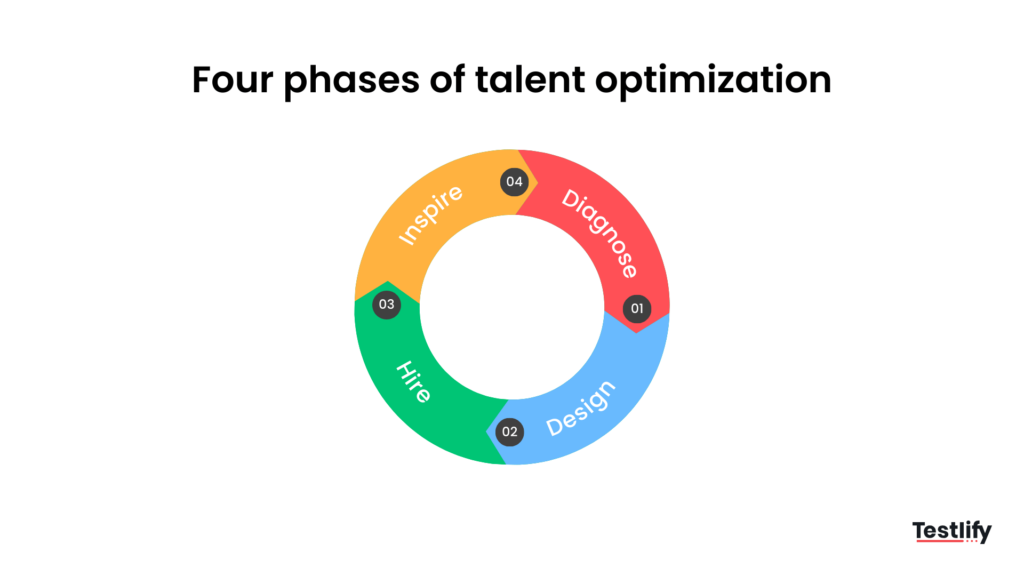
As mentioned, talent optimization is a strategic approach involving four key components: Diagnose, design, hire, and Inspire.
Though optimizing talent is a continuous process, depending on the maturity and goals, companies might need to improve certain aspects of their strategy. Let’s take a closer look at each of the disciplines.
Diagnose
Diagnostics is the essential component that connects all aspects of optimization. It involves regularly monitoring people’s data to ensure alignment with business objectives, helping companies identify issues early and improve existing processes.
When challenges are identified, they guide planning and corrective actions. Optimization tools and techniques enable HR teams and other departments to identify problems like low employee engagement.
Without these tools, issues like disengagement, toxic culture, and low productivity can lead to poor client service and other business setbacks.
Read about how toxic company culture is driving attrition rates.
To identify the root cause of your business challenges, follow these steps:
- Measure what matters.
- Analyze the data.
- Prescribe improvement actions.
These steps form a continuous cycle, repeating to drive ongoing improvement.
People data, or analytics, is collected within an organization to identify employee-related issues and understand their impact on broader business goals.
What people data should you measure?
- Behavioral profile
- Employee engagement
- Cognitive abilities
- Job performance
- Organization and company culture
- Employee sentiments
The scope of this data varies by organization and may include metrics like employee engagement, the relationship between workforce performance and organizational outcomes, or other indicators of talent optimization success.
Read about the importance of employee engagement.
Best practices for diagnosing: Conduct a talent audit
Employee performance is viewed differently by each manager. For example, one manager might see meeting deadlines as excellent performance, while another values communication and working well under pressure.
Therefore, conducting a talent audit is essential to accurately assess who is performing well and who may need additional support.
For a successful talent audit, senior leaders should choose a group of managers with a comprehensive understanding of the company, ideally managing no more than 100 employees.
Provide a rating scale (e.g., 1-5) with performance descriptions. Instruct managers to confidentially rate all employees they’ve worked with, both within and outside their teams.
Design
Designing is the next step after diagnosing the issues. Optimizing talents defines how talent, leadership, and organizational culture can drive key business goals.
The primary aim is to create alignment between the organization’s strategy and high-performing teams, ensuring they are positioned to achieve these objectives effectively.
Too many companies think building an effective team means pooling the best employees together. But that is not the case. Creating a team without paying attention to the team dynamics is one sure way to lose.
You might have the best management team, but they might not be ideal leaders if they lack the required soft skills, such as leadership, time management, etc.
Check out Testlify’s leadership test to effectively measure key traits and make confident hiring decisions for strong leadership.
Here’s how you can solve this issue in the design phase:
- Choose right structure for your organization
- Assess the fit of your leadership team
- Analyze senior team dynamics
- Define your company culture
By approaching these areas intentionally and strategically, with data-driven insights, you’ll be better equipped to elevate your company to the next level.
Tip: To choose the right organizational structure, follow these steps:
- Choose a structure that aligns with your strategy.
- Update it as needed to stay flexible.
Statista reported that key factors contributing to employee satisfaction included work-life balance, opportunities for career advancement, and employers’ commitment to ethics and talent development.
Ultimately, providing the right resources can optimize talent, but you will only achieve the best results with a positive team environment and good work-life balance.
Read about how to create a culture of work-life balance.
Hire
Hiring success isn’t just about filling open positions; it’s about selecting the right candidates who will thrive in their roles and contribute to the company’s success.
SHRM reports that the hiring success rate is only 43%, meaning HR professionals must carefully analyze data and assess candidates before hiring.
Businesses need reliable, high-quality data to evaluate internal and external factors related to specific roles and make effective hiring decisions.
One of the easiest ways to gather this data is to use innovative tools to analyze employee performance and hiring automation tools to help identify the best-fit talent.
When companies are focused on significant workforce growth or filling key roles, evaluating the competitive talent landscape becomes essential. High-quality employee data is crucial in understanding who you’re competing against and helps source the best talent.
Following a structured plan to define job requirements and using behavioral management and cognitive tests improves hiring outcomes. These tools allow you to go beyond surface-level impressions and predict on-the-job success.
The better hiring process includes the following:
- Defining and communicating job requirements.
- Equipping leaders to attract and land top talent.
- Predicting how new hires will fit into team dynamics.
- Assessing candidates’ cultural fit with the organization.
Employees feel motivated, engaged, and willing to go the extra mile when your hiring process is on point.
This boosts performance, engagement, and client satisfaction while strengthening your brand’s reputation. As your success becomes known, it naturally attracts more top talent.
Best practice for hiring talents
- Assemble the interview team
- Gather objective data on candidates
- Prioritize candidates to interview
- Conduct the interviews
When hiring managers put the wrong people in roles, employees struggle with work that doesn’t match their skills or strengths.
However, by training hiring managers to use people data, they can make smarter, more objective hiring decisions based on strategic insights.
Inspire
This aspect of optimizing talent focuses on how companies inspire and engage their people.
Leaders should have a solid understanding of talent optimization tools to effectively inspire their teams and help them grow in their careers. Creating a supportive, motivating environment is essential for new and current hires.
Studies show that nearly 75% of employers are affected by poor hires, and each mistake can cost your organization up to $17,000 in lost productivity.
Additionally, research shows that 66% of employees said they would leave the job if they felt underappreciated. This highlights the importance of motivation and acknowledgment in retention.
Optimization closely tracks the evolving dynamics of the business. When a company’s circumstances change, it’s crucial to understand how these changes will impact talent.
While challenges arose for the business and its people, companies needed to diagnose these issues, design an adaptation plan, ensure the right skills were in place, and keep teams motivated to continue driving success.
The inspire step consists of four key activities:
- Create new jobs and career paths
- Develop your leaders
- Protect your culture
- Build high-performing teams
Follow the framework laid out above and watch your business soar.
Why is optimizing talent important?
Talent optimization goes beyond recruitment by ensuring team members continuously improve and collaborate more effectively as they stay with the company. It is the key practice that helps HR leaders inspire and motivate employees to influence business outcomes positively.
McKinsey reports that 99% of companies with highly effective talent management outperform their competitors, compared to only 56% of those without.
Research consistently shows that focusing on talent leads to remarkable results—companies prioritizing performance are 4.2 times more likely to outperform their peers, with 30% higher revenue growth and 5% lower attrition.
Deloitte’s research also indicates that organizations using a skills-based hiring approach to talent strategy are 63% more likely to achieve business results and 57% more likely to adapt effectively to change.
Optimizing talent also fosters a positive work culture by making employees feel valued. Providing opportunities for skill development and clear career progression can lead to significant gains in innovation, collaboration, employee commitment, and overall engagement.
Challenges in talent optimization
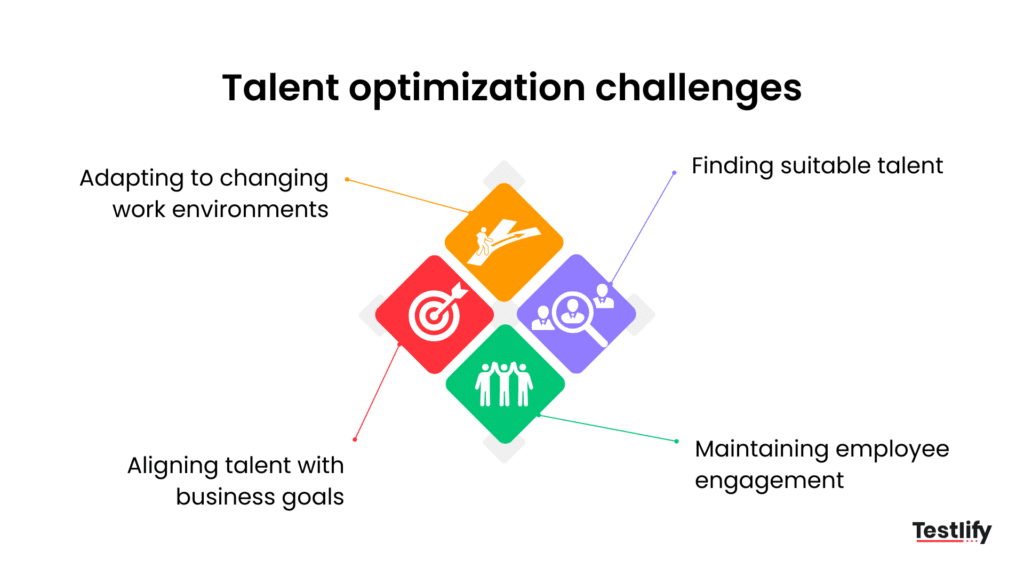
Talent optimization focuses on aligning talent management with business objectives, yet several challenges can impede its effectiveness.
Finding suitable talent
Finding the right talent for specific roles is a major challenge. Studies from Rober Half indicate that 90% of recruiters find it difficult to hire the top candidate.
Hiring managers often struggle to assess candidates’ skills and cultural fit, leading to high turnover and employee dissatisfaction. The definition of “talent” can also vary across industries and job functions, adding to the difficulty.
Check out Testlify’s culture fit test to evaluate candidates’ alignment with your organization’s values and ensure a strong cultural match.
Maintaining employee engagement
Another crucial challenge is fostering employee engagement. Organizations must identify factors contributing to disengagement and actively enhance employee experience. A high turnover rate disrupts team cohesion and incurs additional costs for recruiting and training new hires.
Aligning talent with business goals
Effective optimization of talent depends on constantly aligning talent strategies with business objectives. This involves regularly reviewing workforce data to identify issues and improve practices.
However, many companies need help turning these insights into practical strategies, which can result in lost growth opportunities.
Adapting to changing work environments
The shift in work dynamics, especially after the pandemic, presents additional challenges. Companies must update their talent optimization strategies to accommodate remote work, changing employee expectations, and new technologies. Being flexible in this way is crucial for staying competitive and attracting and retaining top talent.
Read about the top 10 hiring strategies for top talent.
Who should drive talent optimization?
While HR professionals handle talent management, they often lack the expertise or resources to effectively close the talent optimization gap. As a strategic business leader, you must take charge and ensure your talent is positioned to deliver the results your company needs.
Blaming HR for repeated mistakes will not solve the problem and will only create tension. Instead, take the lead and become a catalyst for positive change within your organization and your employees.
To succeed, educate yourself on how to align your workforce with business objectives and leverage talent optimization tools that provide data-driven insights. These tools will help you hire the right people, shape your company culture, assess engagement levels, and manage your team more effectively.
What is talent optimization consultant certification?
Talent optimization consultant certification is specifically designed for professionals who wish to improve their skills in aligning business strategies with talent management.
This certificate is ideal for management consultants, executive coaches, and HR professionals. The predictive index offers talent optimization consultant certification.
The certification provides consultants with the tools and methods needed to help clients optimize their workforce. This includes strategies for hiring the right talent, improving employee engagement, and aligning teams with the organization’s goals.
By becoming certified, consultants can establish themselves as experts in talent optimization, boosting their credibility and marketability in the consulting industry.
The certification usually covers a four-part framework that aligns business and people strategies. This comprehensive approach helps organizations achieve the best results by maximizing their human capital.
Over to you
Effective talent optimization is crucial for building a strong, resilient organization. Companies can make informed decisions that align their workforce with strategic goals by leveraging data-driven insights such as employee reviews, headcount growth, and talent movement.
A well-implemented optimization strategy helps create high-performing teams and ensures long-term stability and growth.
Frequently asked questions (FAQs)

Related resources
View all
Hiring Guide
A guide on how digital adoption is revolutionizing employee recruitment

Hiring Guide
The role of big data in predictive hiring: insights for talent management

Hiring Guide
Hiring process checklist: 12 steps from request to day 90

Hiring Guide
Hiring Velocity: What It Is and How to Improve It in 2026

Hiring Guide
What is selection process? 8 steps to a successful hire

Hiring Guide
Data-Driven Recruitment: A Complete Guide for Enterprise Teams (2026)
Get started.
Hire on proof, not resumes.
Run your first skills-based assessment free — no credit card required.