
Different recruitment types: Pros, cons, & what works best
There are two recruitment types: internal and external. Learn which strategy works the best for you along with its pros and cons.

According to SHRM, 77% of hiring managers struggle to source skilled talent. While several factors contribute to this challenge, one of the biggest is selecting the wrong recruitment type.
Recruitment type means the company’s different approaches or methods to source and hire candidates for open positions. Whether it’s internal, external, or a mix of both, understanding the strengths and limitations of each approach is essential.
When it comes to best recruitment methods, a hybrid approach combining internal and external strategies often delivers the best results. In this blog, we’ll explain everything you need to know!
 ChatGPT
 Gemini
 Claude
 Grok
Grok Perplexity
Types of recruitment: Internal and external
There are two recruitment types namely internal and external.
Internal recruitment
Internal recruitment involves hiring employees from within the company. This saves a lot of time as recruiters already know the skills and competencies of existing employees, so they can just match the job post with the employees. It eliminates going through a long hiring process such as sourcing, assessing, interviewing, and shortlisting talents.
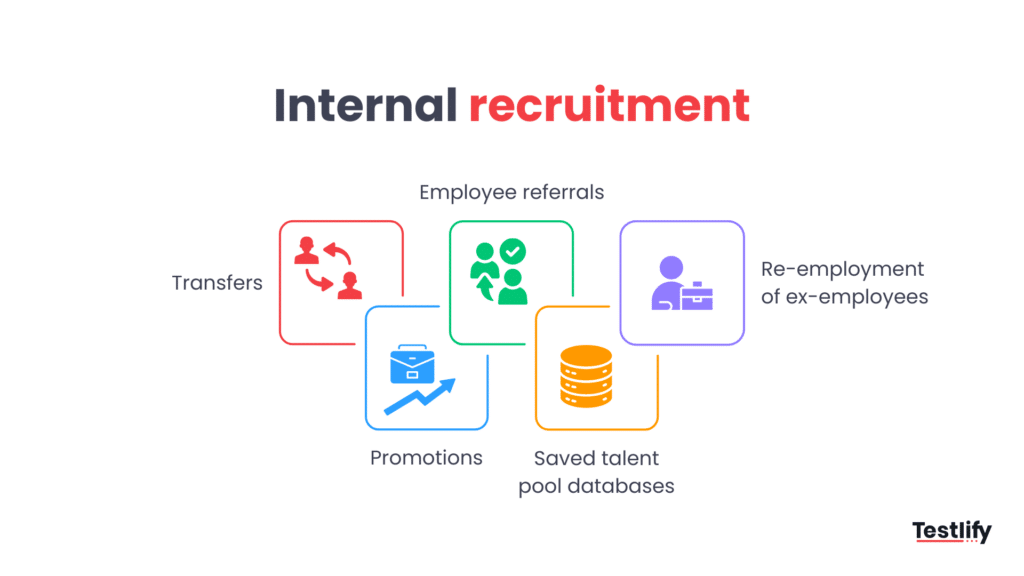
Transfer
A transfer occurs when an employee is moved from one location to another within the same organization. For example, a customer service representative working in the New York branch is transferred to the Chicago branch to fill a sudden vacancy.
Promotion
When an employee is promoted, they move up to a higher position in the company. For instance, an assistant marketing manager in the company is promoted to marketing manager when they consistently demonstrate leadership and deliver exceptional results, filling the gap for a leadership position in the team.
Rehiring previous employees
Companies sometimes bring back former employees for new roles if they have gained new skills or were valuable during their time with the company. This can help fill roles quickly with people who are already familiar with the company. For example, a data analyst who left the company a year ago returns as a senior data analyst after gaining advanced certifications and experience in their field.
Referrals
Internal employee referral programs are a great way to find new hires. Current employees know the company culture and role requirements, so they can recommend candidates who would be a good fit.
Unused talent pool databases
Sometimes, applicants who weren’t hired in the past may still be a good fit for future roles. These stored applications can serve as a valuable source to find candidates when new positions open up. For instance, a hiring manager reviews applications from a past job posting and finds a highly skilled software engineer who wasn’t selected earlier but now perfectly fits a new opening for a mobile app developer.
External recruitment
External recruitment is the process of hiring candidates outside the company. This involves hiring fresh talents using job boards, social media, external agencies, etc. Such a process is quite time-consuming as recruiters need to go through each candidate’s profile and make a decision.
There are several benefits to this strategy as well like diversifying talent pool, influx of fresh creative talents, better-skilled workforce, etc.
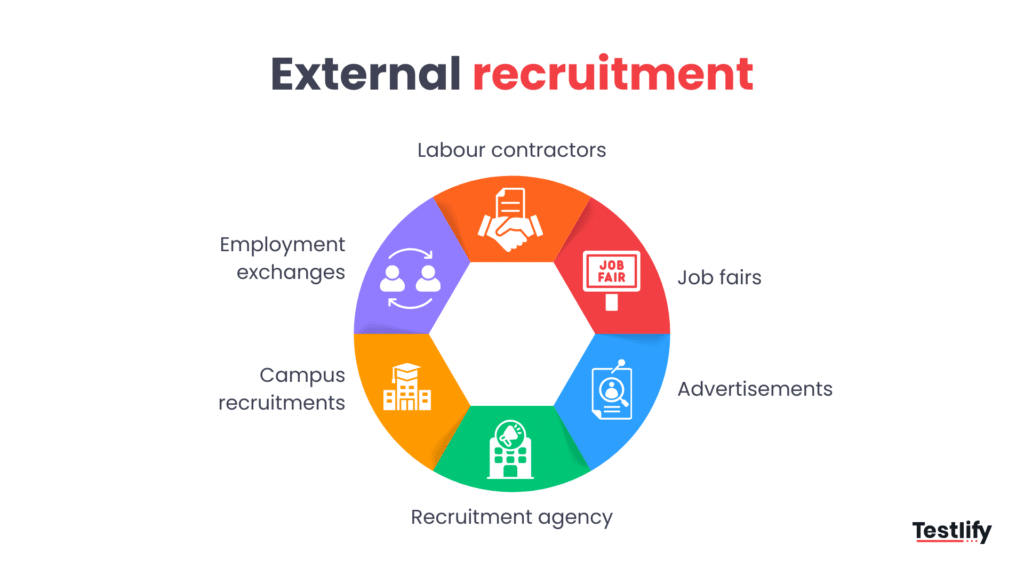
Advertisements
Companies post job openings on their website, social media, or job boards to attract job seekers.
Recruitment agency
Sometimes, companies hire a recruitment agency to find candidates. These agencies have large databases and match job seekers’ skills with the company’s needs to find the best fit.
Campus recruitment
Companies partner with universities and colleges to hire fresh graduates for entry-level roles. This is one of the most common external recruitment types to hire fresh talents.
Job fairs
Big companies host events to hire multiple candidates at once, often featuring walk-in interviews or recruitment competitions.
Employment exchanges
These are government-run platforms where job seekers and employers can connect, often used for non-skilled jobs.
Labor contracts
These are specialists who provide workers to factories or manufacturing plants. Through these contractors, workers are hired on a temporary basis, for a set period of time. If the contractor leaves the company, the workers hired through them must also leave.

When to use internal recruitment or external recruitment type?
The decision to use internal or external recruitment type depends on role requirements, budget constraints, and the organizational culture.
For specialized roles or when fresh perspectives are needed, external recruitment might be more suitable. However, if cost reduction and internal growth are priorities, internal recruitment is the better choice.
Many organizations use a hybrid approach, combining both methods to strike a balance between cost, culture fit, and expertise.
Internal recruitment type can save you time because there aren’t any specific interviews or onboarding required since you will be hiring existing employees. One possible downside is that when you hire from the same pool of employees, you might restrict diversity, innovation, and new ideas. External recruitment is a great recruitment method to bring in new ideas, fresh approaches, and unique angles to the team. Notably, this is a time-consuming process as candidates have to go through each recruitment process before you decide to hire them.
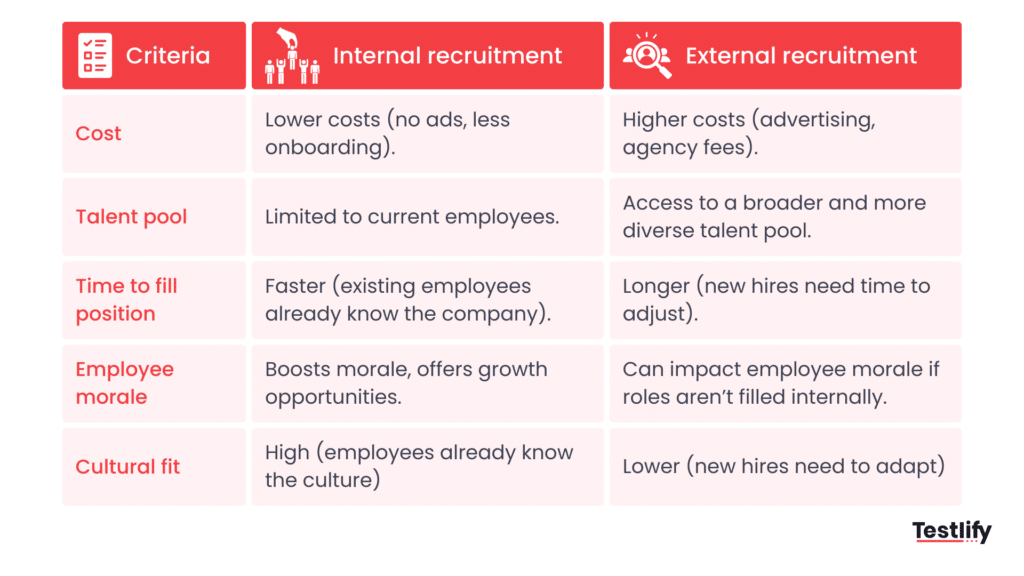
Internal recruitment is best when cost-effectiveness and promoting existing employees are priorities.
External recruitment is ideal when specialized skills or fresh perspectives are required, despite the higher costs and longer onboarding.
Pros and cons of internal and external recruitment
Internal recruitment:
Pros:
- Reduces hiring time since candidates are already within the organization.
- Shortens onboarding as current employees are familiar with company policies and culture.
- Lowers costs by eliminating expenses for advertising and recruitment agencies.
- Boosts employee morale by promoting from within and encouraging loyalty.
Cons:
- Limits the talent pool, potentially restricting the diversity of skills and ideas.
- Creates internal gaps when promoted employees leave their previous roles vacant.
- This can lead to resentment if other employees feel overlooked.
- Risks an inflexible culture without fresh perspectives.
External recruitment:
Pros:
- Provides access to a wider talent pool with diverse skills.
- Bring fresh perspectives and innovative ideas to the organization.
- Enables acquisition of specialized skills not available within the company.
- Enhances diversity by incorporating individuals from various backgrounds.
Cons:
- Higher costs due to advertising, recruitment agency fees, and training expenses.
- Requires a longer onboarding process for new hires to adapt.
- May impact employee morale if internal candidates are passed over.
- Can be time-consuming with sourcing, interviewing, and hiring processes.
What’s the difference between recruitment sources vs recruitment types?
Recruitment sources and recruitment types are related concepts, but they are not the same. Recruitment sources can be considered as a part of recruitment types because the source is part of the method or strategy you use to recruit.
- Recruitment types describe the broad method or approach you use for hiring, like internal or external recruitment.
- Recruitment sources are the specific places or ways you find candidates within that type. For example, under external recruitment, you might use sources like job boards, social media, or recruitment agencies.
Over to you
Now that you know the different recruitment types, how they differ, and when to choose internal or external recruitment, it’s time to put this knowledge into action and build a hiring strategy that aligns with your company’s goals.
Frequently asked questions (FAQs)

Related resources
View all
HR & recruitment
HR workplace failures: What’s breaking your culture?

HR & recruitment
Leveraging paraphrasing tools to enhance recruitment strategies

HR & recruitment
7 steps to master candidate profiling for top talent
![How to perform a talent review in 2026 [in 5 simple steps]](/wp-content/uploads/2025/01/How-to-perform-a-talent-review.png?dpl=dpl_9Ai1hrmD1YZ8yPSLhy5MhtJd5zy3)
HR & recruitment
How to perform a talent review in 2026 [in 5 simple steps]

HR & recruitment
Boolean search in recruitment: How to use it with examples?

HR & recruitment
Compensatory off: What is it, types of leaves
Get started.
Hire on proof, not resumes.
Run your first skills-based assessment free — no credit card required.