
What are HR SOPs and how to create them? [+Free template]
Learn what HR SOPs are, their importance, and how to create them with a step-by-step template to streamline your HR processes effectively.
![What are HR SOPs and how to create them? [+Free template]](/api/media/file/Blog_featured_image_37-2.png?dpl=dpl_9Ai1hrmD1YZ8yPSLhy5MhtJd5zy3)
HR SOPs ensure your HR team operates smoothly without constant retraining. Studies show that recruiters often spend up to two-thirds of their time just scheduling interviews, while junior recruiters can waste half their time deciding who to contact.
SOPs for the HR team streamline these tasks with clear guidelines, saving time and improving efficiency. This blog covers everything you need to know about them. Read on!
 ChatGPT
 Gemini
 Claude
 Grok
Grok Perplexity
What are HR SOPs?
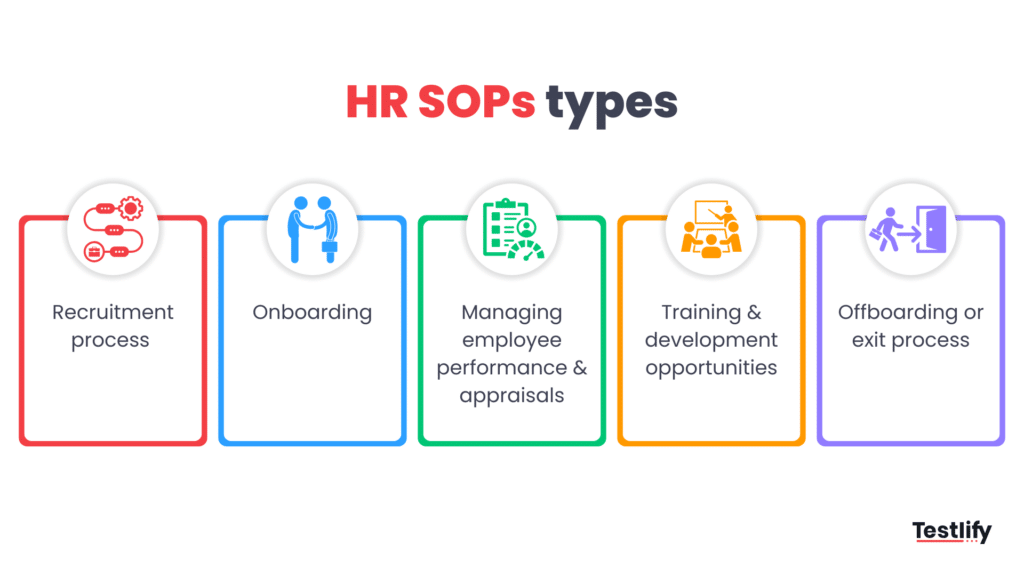
HR SOPs (Standard Operating Procedures) are documented guidelines with processes and practices instructing the human resource team regarding onboarding, recruitment, training, performance management, and offboarding.
These procedures are basic guidelines for HR professionals to perform their roles effectively. They ensure consistency and compliance with legal requirements. They are like a what-to-do checklist that helps you avoid labor violations and reduce errors.
Key components of a SOP for HR include:
- How to properly document the steps
- Relevant forms or templates needed
- Legal requirements HR must follow
- Timelines for completing the process
- Who is responsible for each task or decision
- Clear step-by-step instructions for the process
- The purpose of the document and what it covers
- Include version numbers and dates to ensure everyone uses the most up-to-date SOP.
HR SOPs differ according to the size of the company. In a multinational company, SOPs will be detailed and extensive, while for a startup, the SOP might be brief and have a lot of room for improvement.

Different types of HR SOPs and when to use it
The recruitment process is not a single step; it involves multiple stages, tasks, and decisions to find and hire the right candidate. Hence, a single SOP cannot cover every aspect of this process, so distinct SOPs are tailored to each step.
Recruitment process
This includes criteria and steps that the human resource team must follow when hiring new employees. HR SOPs for the hiring process include guidelines like:
- Sending emails to department heads to understand how many vacancies are in their team.
- Collaborate with managers to create optimized job postings to attract candidates via social media and other platforms.
- Edit the “about the company” section before publishing the vacancy.
- Set a clear deadline for applicants to submit their applications.
- Use an HR platform to screen and evaluate resumes efficiently.
- Shortlist candidates who possess the key skills required for the job role.
- Contact shortlisted candidates to explain the interview process in detail.
- Discuss salary expectations and proceed based on alignment with the role.
- Collaborate with employees and managers to create skill tests and set a deadline for their completion.
- Share completed tests with managers, request feedback by a specific date, and expedite the hiring process.
- Provide test results to candidates and proceed with selected individuals per internal team decisions.
- Recruitment SOPs also help HR assess candidates’ behavior and cultural fit to ensure they align with the company’s values.
Discover the perfect fit for your team with Testlify’s culture fit test—evaluate candidates’ alignment with your company’s values and build stronger, more cohesive teams.
Onboarding
Employee onboarding documentation provides HR teams with clear instructions on creating effective training modules.
These modules help new employees understand their roles and responsibilities, outline their growth opportunities within the company, introduce them to their managers and colleagues, and provide a structured framework for their initial days.
By using onboarding documentation, HR ensures that new hires integrate seamlessly into the company and adapt to its culture. This is important since studies show that a great onboarding experience improves employee retention by 55%.
Managing employee performance and appraisals
Performance reviews are essential for fostering growth and recognition in any organization. Just as employees seek acknowledgement for their contributions, companies also benefit from celebrating and rewarding high-performing individuals who drive success.
To ensure fair and effective evaluations, organizations must establish robust performance management and appraisal SOPs.
These SOPs serve as a roadmap for HR teams to:
- Develop a standardized evaluation process: Create a consistent, company-wide framework to identify and reward top-performing employees.
- Define measurable performance metrics: Establish clear, relevant criteria to assess employee contributions, objectively ensuring fair and transparent evaluations.
- Leverage advanced tools for feedback collection: Use reliable performance management testing platforms like Testlify to gather actionable feedback from managers, peers, and even self-assessments for a holistic review process.
- Align recognition with career growth: Link promotions, bonuses, and other rewards to measurable performance outcomes, ensuring employees feel valued and motivated to excel.
Training and development opportunities
Implementing a comprehensive Training and Development (T&D) program is essential for organizations that want to improve employee retention and satisfaction.
90% of HR managers agree that training boosts employee productivity and development. 86% say it helps with employee retention, and 85% believe it contributes to organizational growth.
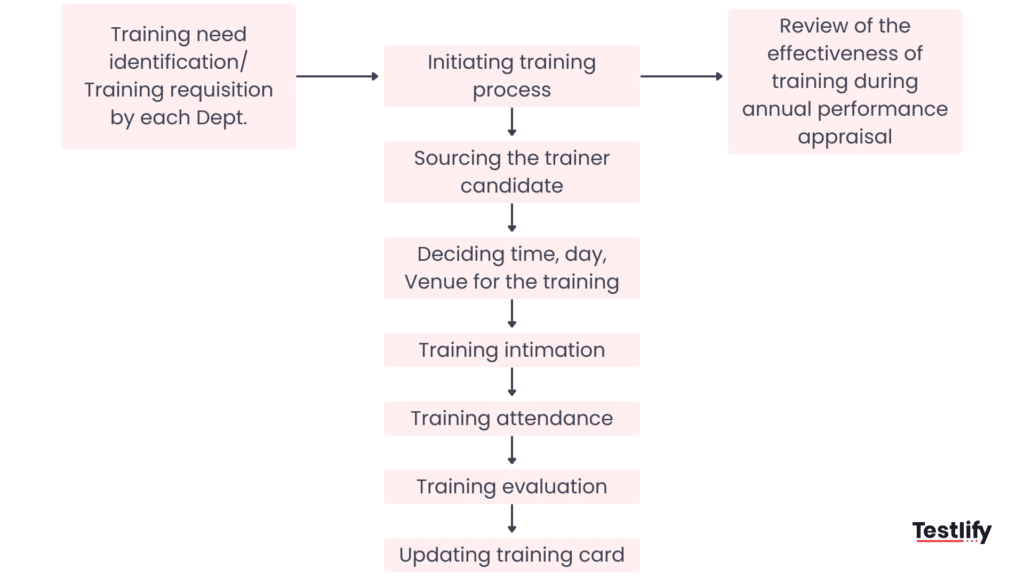
Establishing a SOP for training and development helps HR to:
- Develop tailored programs: Create targeted training modules that align with the organization’s evolving skill requirements, ensuring employees are equipped with relevant competencies.
- Update training materials: Regularly revise training content to reflect the latest industry standards and organizational changes, preventing information from becoming obsolete.
- Identify qualified trainers: Select experienced professionals to deliver training, enhancing the quality and effectiveness of the programs.
- Assess training effectiveness: Implement methods to evaluate the success of training initiatives, ensuring they meet organizational objectives and contribute to employee development.
- Schedule training sessions: Organize training at times that accommodate employees’ availability, maximizing participation and engagement.
Adhering to a structured T&D SOP can help organizations foster a culture of continuous learning, which can improve employee performance and increase retention rates. In fact, companies with robust learning cultures experience retention rates that are 30-50% higher than those without.
Offboarding or exit process
This SOP should include steps for managing employee transitions, identifying effective methods for knowledge transfer, and gathering employee feedback through exit forms to improve the workplace culture.
Additionally, it should help pinpoint potential issues that may cause employees to leave and ensure departing employees have access to important documents like experience letters, pay slips, and tax forms to support their next career move.
Compensation and benefits
This includes procedures for administering employee compensation and benefits, such as bonuses and payroll. It helps the HR team ensure that employees are paid timely and accurately, leading to better employee engagement.
Benefits of using HR SOPs
A clear, standardized guideline helps recruiters and hiring managers speed up the process with minimal errors. With a checklist-like protocol, the hiring process, which usually takes one to two weeks after the interview, becomes much simpler.
Consistency and fairness in practices
HR SOPs standardize processes, ensuring every employee is treated fairly and equally, regardless of who handles the task. This eliminates discrepancies, personal bias, and confusion in decisions such as hiring, promotions, or disciplinary actions.
For example, standardized compensation criteria ensure equitable rewards based on objective factors rather than subjective discretion.
Improved efficiency and productivity
Clearly defined procedures streamline complex tasks into manageable steps, reducing time spent on repetitive or unclear activities.
SOPs eliminate guesswork and allow HR teams to focus on strategic goals, such as leadership development or DEIB (Diversity, Equity, Inclusion, and Belonging) initiatives.
For instance, a structured onboarding process ensures new hires have a smooth experience regardless of location, saving time and improving productivity.
Ensuring compliance and managing risks
HR SOPs provide clear guidelines for adhering to labor laws and industry standards, reducing the risk of legal penalties and non-compliance.
Organizations can effectively manage risks by documenting and updating procedures as regulations change while maintaining a compliant workplace.
Improved employee training and onboarding
SOPs are effective training tools for new HR staff. They provide a structured learning path for routine processes, allowing new employees to quickly adapt to their roles. This consistent reference guide ensures reliable, high-quality HR services.
For example, standard payroll steps reduce errors and maintain uniformity regardless of who handles the task.
Promoting company values
SOPs align HR processes with organizational values, ensuring that decisions are made while adhering to these principles.
This fosters a culture where employees and management operate under a shared framework of values and expectations.
Error reduction
SOPs minimize mistakes by providing clear instructions and standardized steps. Employees understand exactly what procedures to follow and know when to seek HR’s guidance, ensuring smoother operations with fewer disruptions.
Knowledge retention and continuity
HR SOPs preserve institutional knowledge by documenting processes, even when experienced team members leave.
They are a reliable reference for current and future staff, ensuring that critical information remains accessible and operations remain seamless.
Encouraging continuous improvement
SOPs provide a baseline for evaluating HR operations, making it easier to identify inefficiencies or outdated processes. For example, tracking deviations in recruitment timelines can highlight areas for improvement, leading to better practices over time.
How to create an HR SOPs checklist?
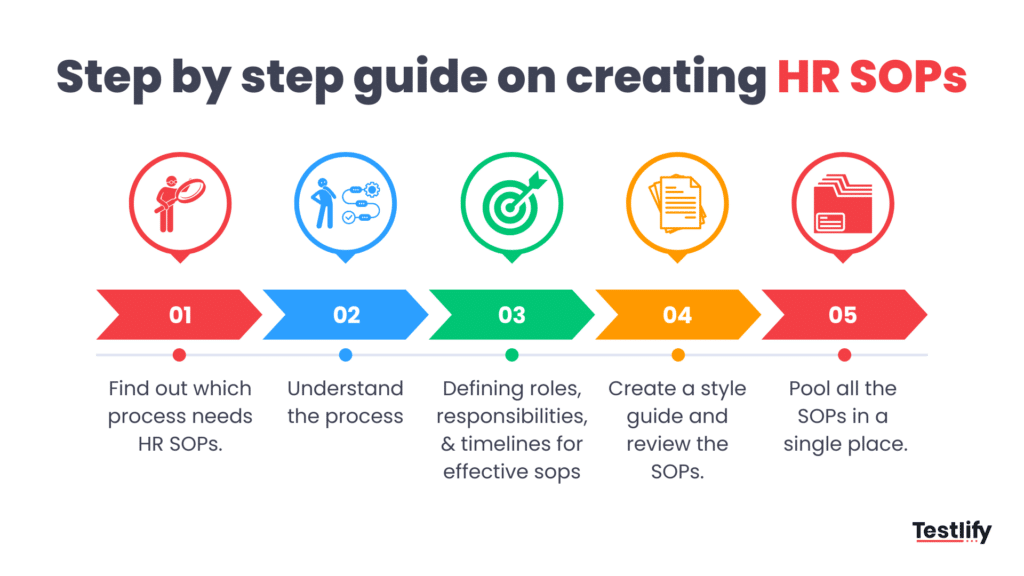
Find out which process needs HR SOPs.
Prioritize the process that needs SOPs. This could be the one with the highest impact on the company. Examples include recruitment, employee onboarding, training and development, etc. Once you have identified them, analyze them further by thoroughly researching who is involved. Ask yourself the following questions:
- Does it require an entire team, hiring managers alone, or different departments?
- Does it have legal risks involved?
- Is this a process that is performed now and then? Does it involve any bottlenecks or touchpoints?
This step will give you an idea of what processes to consider when creating an SOP.
Understand the process
Once you have identified which process needs SOPs, ensure you understand it better. This means getting a broad idea of the goals, stakeholders involved, best practices, and other relevant information about the process.
Connect with subject matter experts of that process who already have experience with the process you want to write SOP for. This will give you first-hand exposure to the challenges or bottlenecks of the process.
Also, include relevant policies in your SOP to avoid non-compliance or inconsistencies.
Defining roles, responsibilities, and timelines for effective sops
To create an effective SOP, start by breaking down each process into individual tasks and arranging them in the correct order. Assign responsibility to a specific role, individual, or team for each task to ensure accountability.
For more complex processes that involve multiple team members, tools like the RACI matrix (a chart that outlines roles and responsibilities for a project or process) can help define and clarify roles, reducing confusion about who is responsible for what, especially when tasks cross between different functions.
It’s also important to set a clear timeline for each task to ensure timely completion. Make sure the deadlines are realistic and include buffer time to handle unexpected delays. If you’re unsure how long a task should take, consult experienced team members for a better estimate.
Create a style guide and review the SOPs.
To ensure consistency in your HR department, create a style guide for your SOPs. This guide helps maintain clear, concise, and easy-to-follow documents, saving time when creating new ones. Tailor the guide to fit your organization’s needs, considering your industry, communication style, and location.
The style guide should use simple, jargon-free language to ensure clarity and consistency in formatting, such as font type, size, headings, and bullet points.
It should also provide instructions for incorporating visual aids like checklists and flowcharts, which can simplify complex processes, and a list of standardized terms to ensure everyone understands the terminology.
Finally, have subject matter experts review the SOPs to ensure they are accurate and complete. This step helps identify mistakes or gaps, ensuring that your SOPs are effective guidelines for HR staff.
Pool all the SOPs in a single place.
Now that you have created HR SOPs for different processes, you must ensure they are available for everyone. Create a single repository and give access to relevant individuals.
The final and most important part of creating HR SOPs is to conduct regular reviews to ensure they remain practical and relevant to your organization.
HR SOP template example
While we’ve covered various HR SOP items, let’s dive into an example to help you create your own HR SOP from scratch.
Here’s what your HR SOP template should include:
- Name: The HR SOP should be clearly named, such as “Performance Appraisal” or “Compensation Management.”
- Purpose: Describe the purpose of the SOP and how it will help HR team members efficiently manage the process it covers. Make it clear how this contributes to smoother operations.
- Applies When: Outline the specific scenarios or circumstances in which this SOP applies to employees or the HR process, ensuring clarity on its scope.
- Step-by-Step Procedure: Detail each stage or action involved in the process, incorporating relevant content, images, and videos for better understanding and to reduce confusion later.
- Frequently Asked Questions: Anticipate common questions and include answers to them. This reduces the need for HR members to frequently reach out for clarification.
- Links to Relevant Articles: Provide links to articles or resources that offer additional context or deeper insights into the process.
- Feedback: Include a section to gather feedback on whether the SOP helped resolve the issue or if any improvements are needed.
This straightforward, easy-to-follow template ensures quicker creation and implementation of HR SOPs, ultimately improving team efficiency.
There you go! Now you know how to create effective HR SOPs and understand their importance in streamlining processes, ensuring consistency, and improving overall efficiency within your HR department.
Frequently asked questions (FAQs)

Related resources
View all
HR tools
What is HR automation? Benefits, use cases, and how to get started

HR tools
Are recruitment chatbots necessary for talent acquisition?

HR tools
Tech Tools for Enhancing HR Efficiency

HR tools
How to find the right senior developer

HR tools
Leading with Data: 6 Tech Strategies for Executive Leaders

HR tools
Top talent acquisition tools that integrate with existing HR systems
Get started.
Hire on proof, not resumes.
Run your first skills-based assessment free — no credit card required.