
What are the top-rated recruitment automation tools?
Explore top recruitment automation tools to streamline hiring, automate screening, and improve candidate experience. Find the best fit for your team.

Let’s be real, hiring is exhausting. Between screening hundreds of resumes, scheduling interviews, sending follow-up emails, and trying to keep candidates engaged throughout the process, it often feels like there aren’t enough hours in the day. And yet, somehow, you’re also expected to hire the right person, fast.
That’s exactly where recruitment automation tools come in. These platforms are designed to take the repetitive, time-consuming tasks off your plate so you can focus on what actually matters: connecting with the right people and making great hiring decisions.
In this blog, we’ll walk you through the top-rated recruitment automation tools, what they do, who they’re best for, and how to choose one that fits your team’s needs.
 ChatGPT
 Gemini
 Claude
 Grok
Grok Perplexity
Why is recruitment automation no longer optional?
A few years ago, automation in hiring was a “nice to have.” Today, it’s basically a necessity. The volume of applications has exploded, especially since the rise of easy-apply features on LinkedIn and other job boards. HR teams are dealing with more candidates than ever, but headcount hasn’t scaled to match.
Recruitment automation helps you move faster without sacrificing quality. It handles the grunt work, parsing resumes, sending status emails, coordinating calendars, while keeping your pipeline organized and candidates informed.
The bottom line: If your team is still copy-pasting rejection emails or manually sorting through spreadsheets of applicants, you’re losing time and probably losing candidates to competitors who respond faster.

What to look for in a recruitment automation tool?
Before we dive into the tools themselves, it’s worth knowing what separates a genuinely useful platform from a shiny but overpriced one. Here’s what good recruitment automation actually looks like:
- Applicant Tracking System (ATS) integration, most tools work alongside an ATS, not instead of one
- Resume parsing and screening, automatically pulls out key info and filters candidates by criteria you define
- Automated communication, sends timely, personalized emails or texts to candidates at each stage
- Interview scheduling, eliminates the back-and-forth by letting candidates self-schedule
- AI-powered matching, surfaces the best-fit candidates from your applicant pool
- Analytics and reporting, shows you where candidates drop off and how your pipeline is performing
- Candidate experience features, keeps applicants engaged and informed throughout
Now, let’s look at which platforms actually deliver on these fronts.
Top-rated recruitment automation tools in 2026
We’ve covered a broad mix, from enterprise-grade platforms to leaner tools built for growing teams. Each has a distinct strength, so pay attention to the “best for” notes.
1. Testlify
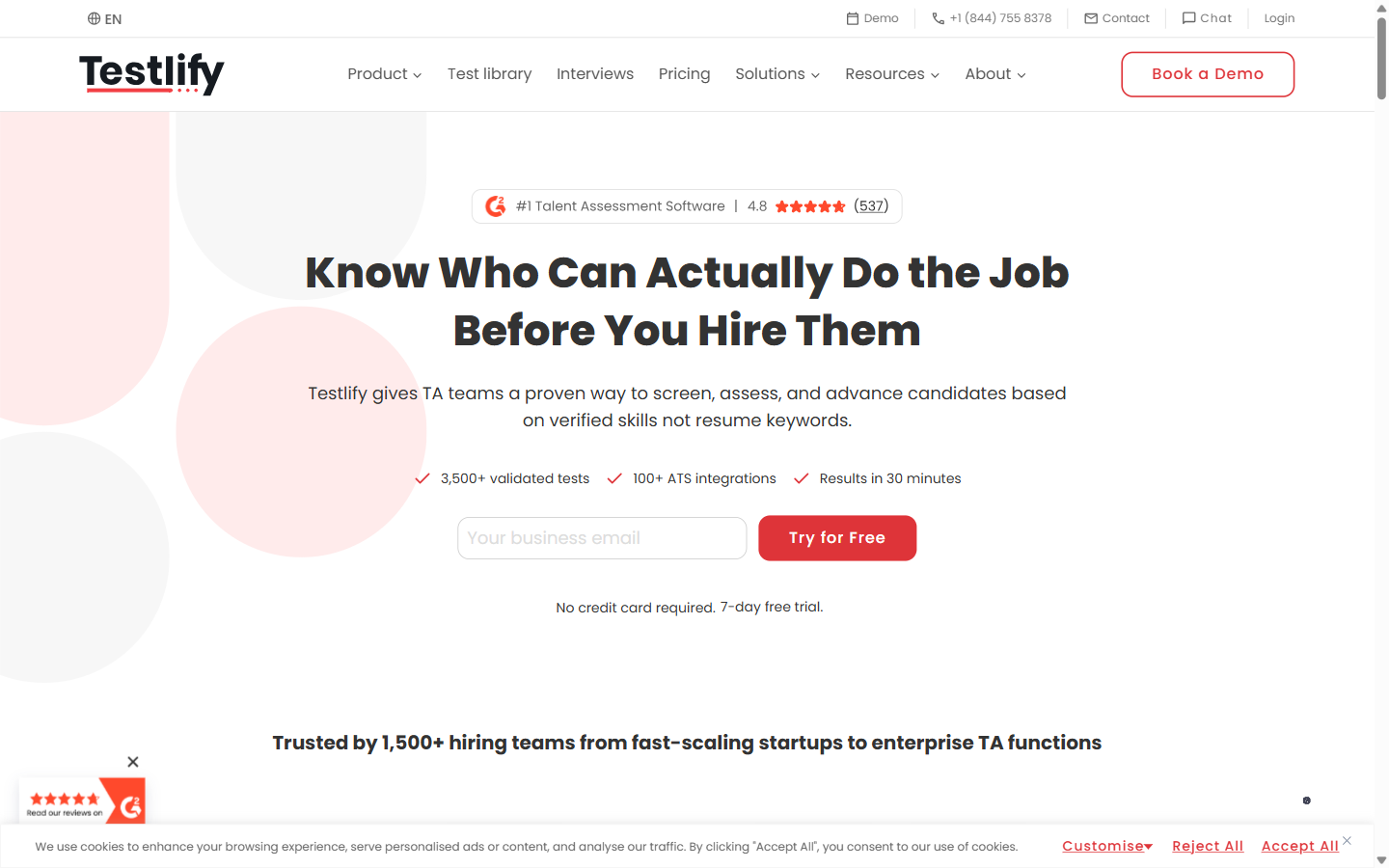
Testlify is an AI-powered skills assessment and interviewing platform that helps you evaluate candidates based on what they can actually do, not just what they’ve written about themselves. Instead of relying on resume screening to shortlist applicants, you send them a role-specific assessment, let the platform automatically score their responses, and only advance the candidates who genuinely have the skills the job demands.
Best for: Companies that want to move beyond resume screening and assess real candidate skills, especially useful for technical hiring, high-volume roles, remote teams, and organizations committed to reducing bias in early-stage evaluation.
2. Xobin
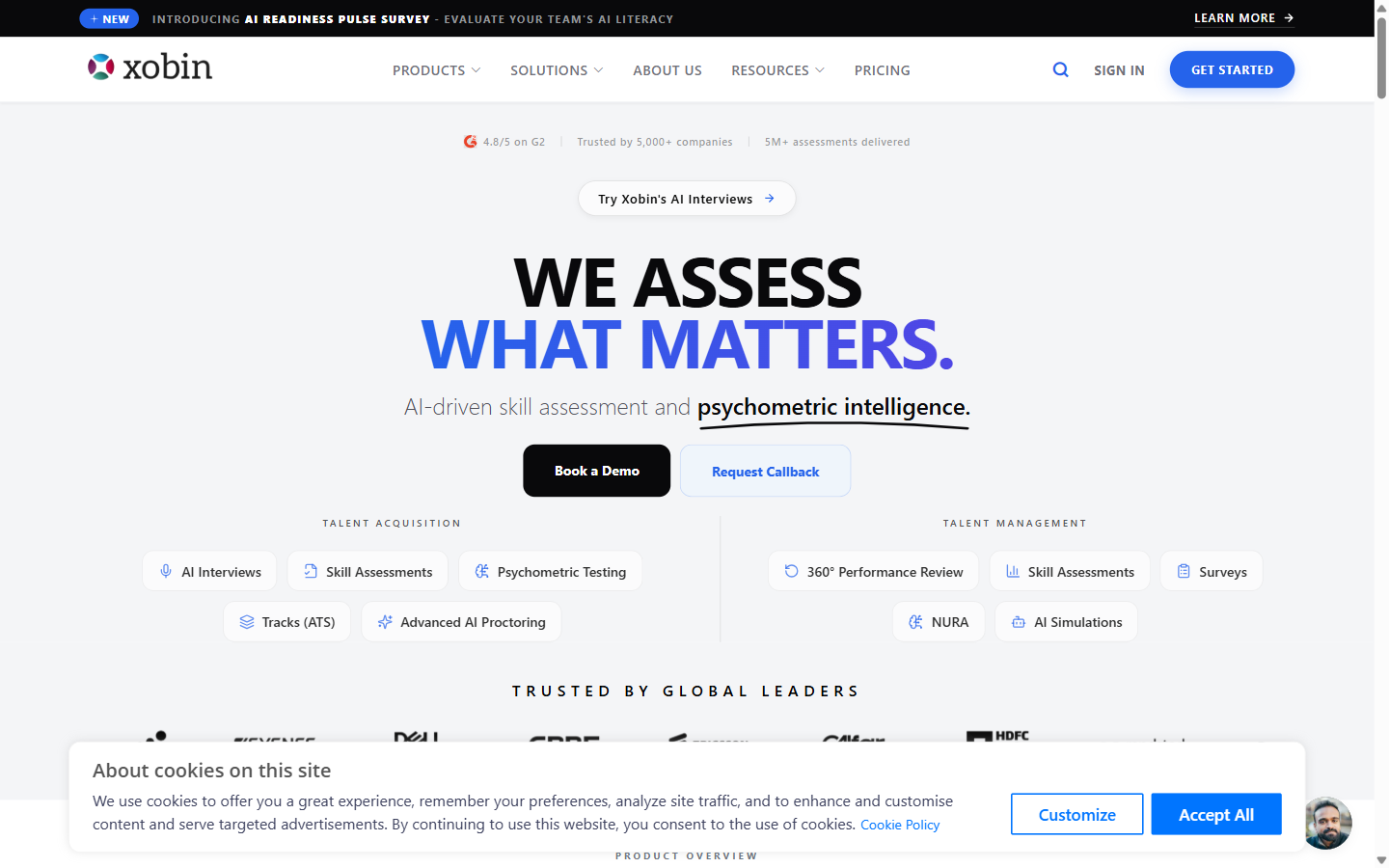
Xobin is an AI-powered recruitment automation platform that handles the full hiring workflow from job post to offer. Its trigger-based automation engine dispatches assessments, auto-scores responses, shortlists candidates, and sends reminders, all without manual recruiter input. Agentic AI interviews run L1/L2 screening rounds autonomously 24/7, and AI voice outreach with localised accents handles candidate communication at scale.
For teams dealing with high application volumes, Xobin removes the repetitive work at every stage: resume parsing and fitment scoring replace manual CV review, automated stage progression replaces manual pipeline management, and AI-driven shortlisting cuts time-to-hire from weeks to days.
Best for: High-growth companies and enterprises that want to automate screening, shortlisting, and outreach without adding recruiter headcount.
3. Dripify
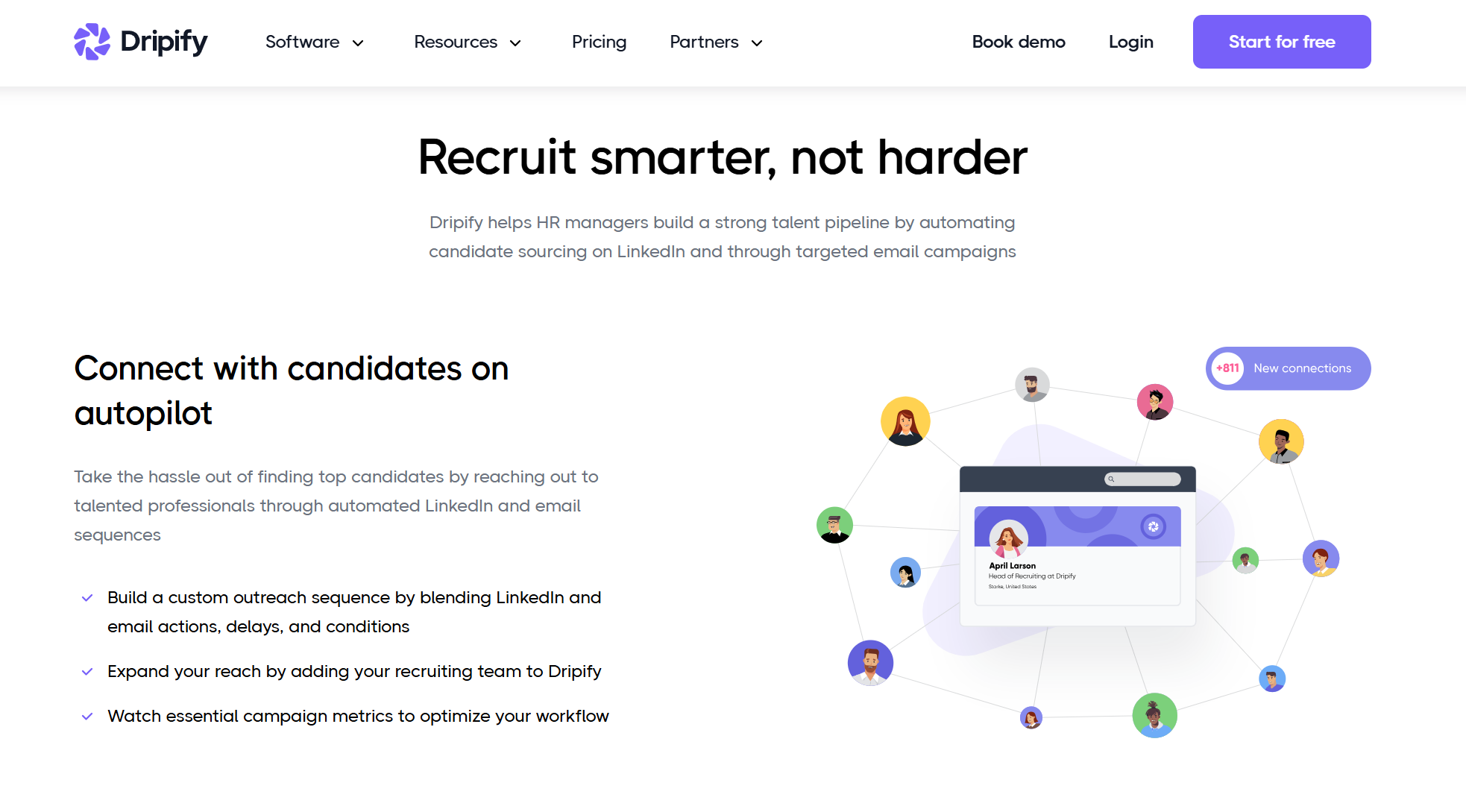
Dripify takes an outreach-first approach to recruitment, bringing candidate sourcing directly to LinkedIn. You can build automated sequences that mix LinkedIn and email actions, so every candidate gets personalized, multi-touch outreach without manual follow-ups. It also keeps passive talent engaged by automatically viewing profiles, endorsing skills, and sending greetings on birthdays and job changes.
Personalization is a real strength. With 20+ variables and an AI icebreaker, messages feel individually written. A dedicated inbox, built-in email finder, campaign analytics, and team management round out the package, making dripify a solid sourcing engine for teams of any size.
Best for: recruiters and HR teams who source heavily on LinkedIn and want to automate personalized outreach to passive candidates.
4. Greenhouse
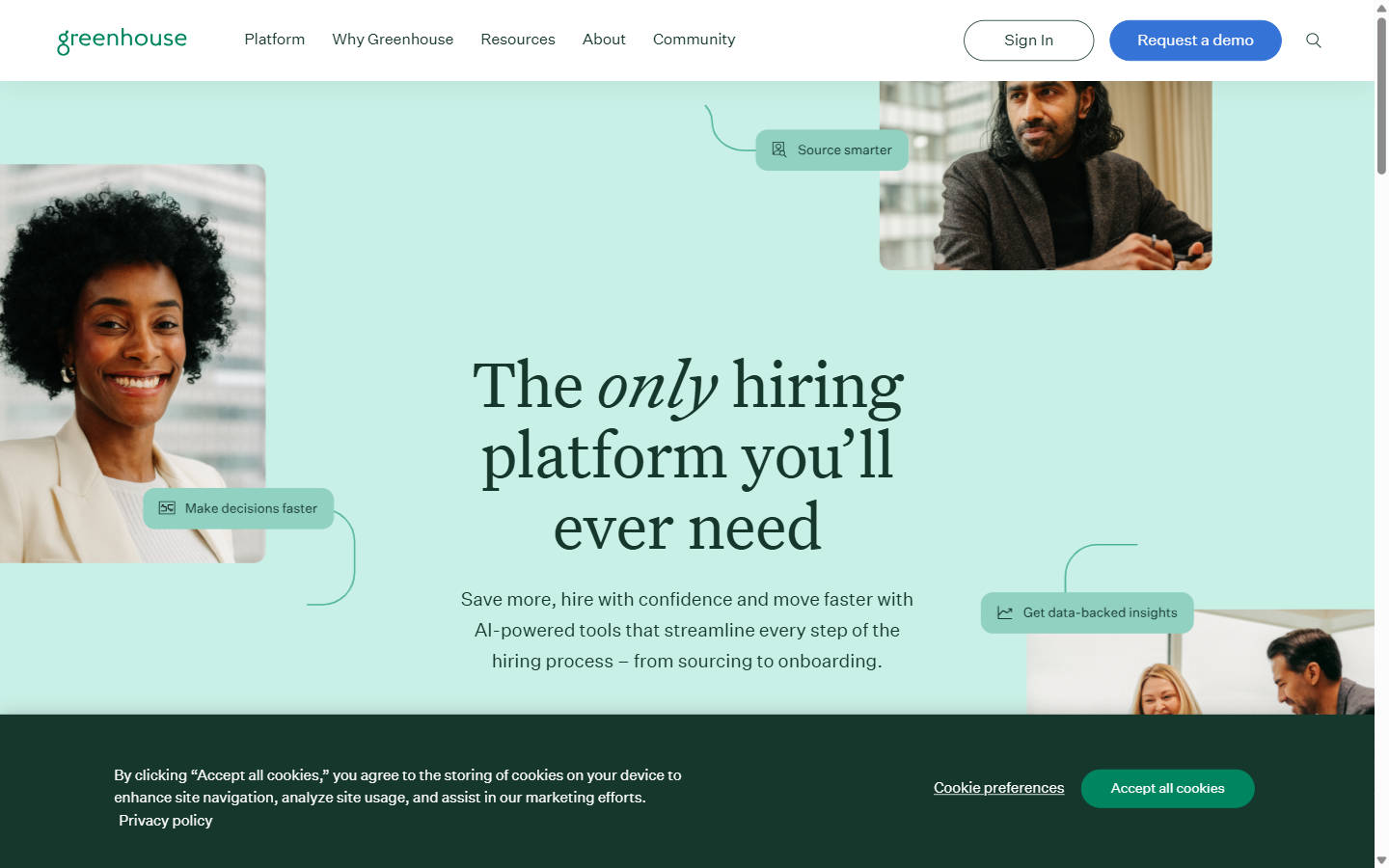
Greenhouse has long been the gold standard for companies that take structured, data-driven hiring seriously. It’s not the flashiest tool in the market, but it’s incredibly well-built. The platform automates job posting across multiple boards, moves candidates through stages automatically based on triggers, and sends templated (but personalized) communications throughout the process.
What sets Greenhouse apart is its emphasis on removing bias from hiring. It includes built-in DEI dashboards, anonymized resume review options, and structured interview kits that ensure every candidate is evaluated on the same criteria. If your organization is serious about fair and repeatable hiring practices, Greenhouse is hard to beat.
Best for: Mid-size to large companies focused on structured, compliant, and equitable hiring processes.
5. Lever
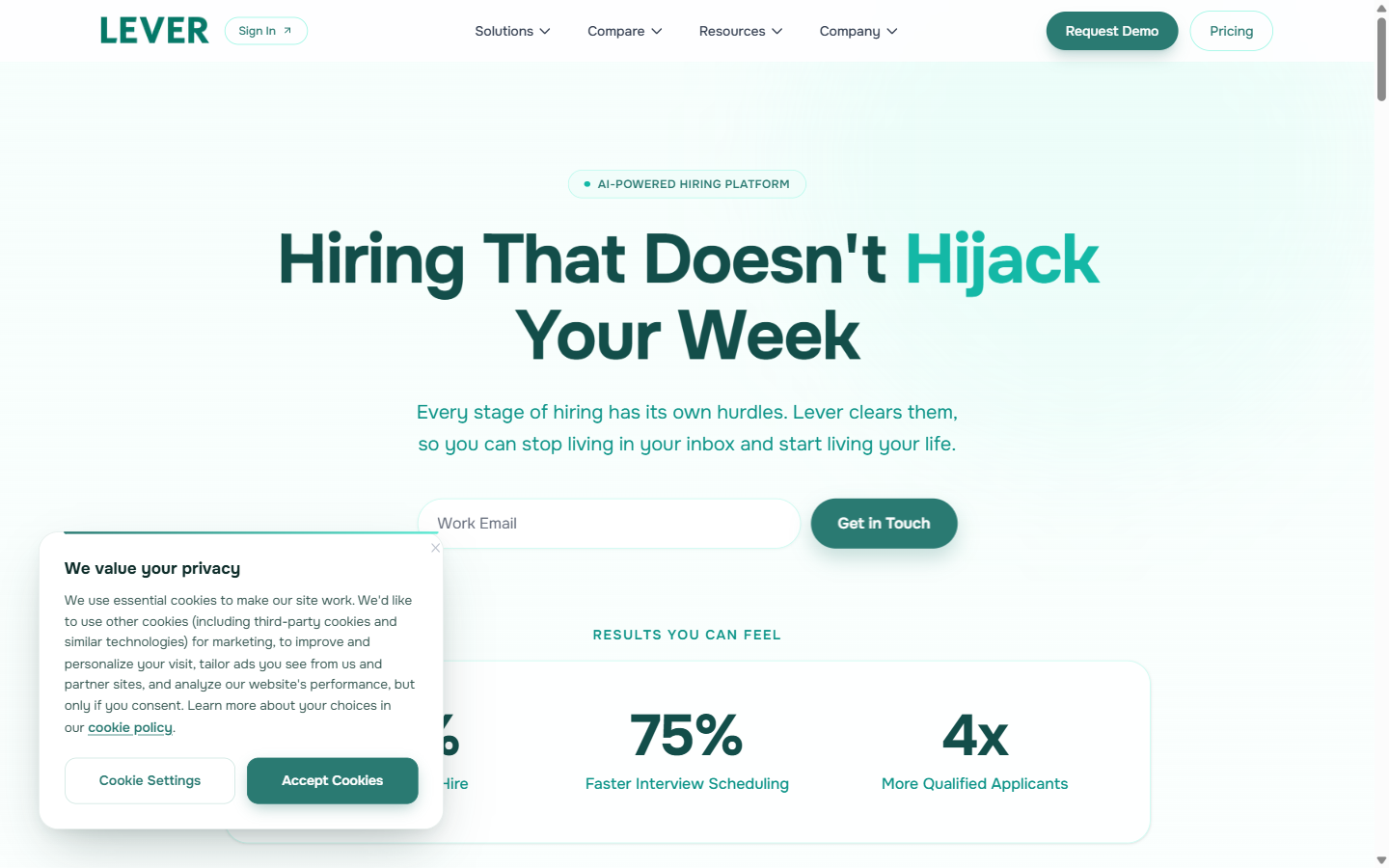
Lever takes a CRM-first approach to recruitment, which means it treats candidates more like relationships to nurture than applications to process. This makes it exceptionally good at talent pipeline management, you can tag candidates, segment them, and set up automated nurture sequences so that when a role opens up, your talent pool is already warm.
The automation features in Lever are genuinely intuitive. You can automate outreach, interview scheduling, and status updates, all while keeping a clear view of where every candidate sits in your pipeline. The analytics are also robust, you’ll quickly see where drop-offs happen and which sourcing channels perform best.
Best for: Fast-growing startups and mid-size companies that hire frequently and want to build a proactive talent pipeline.
6. Workable
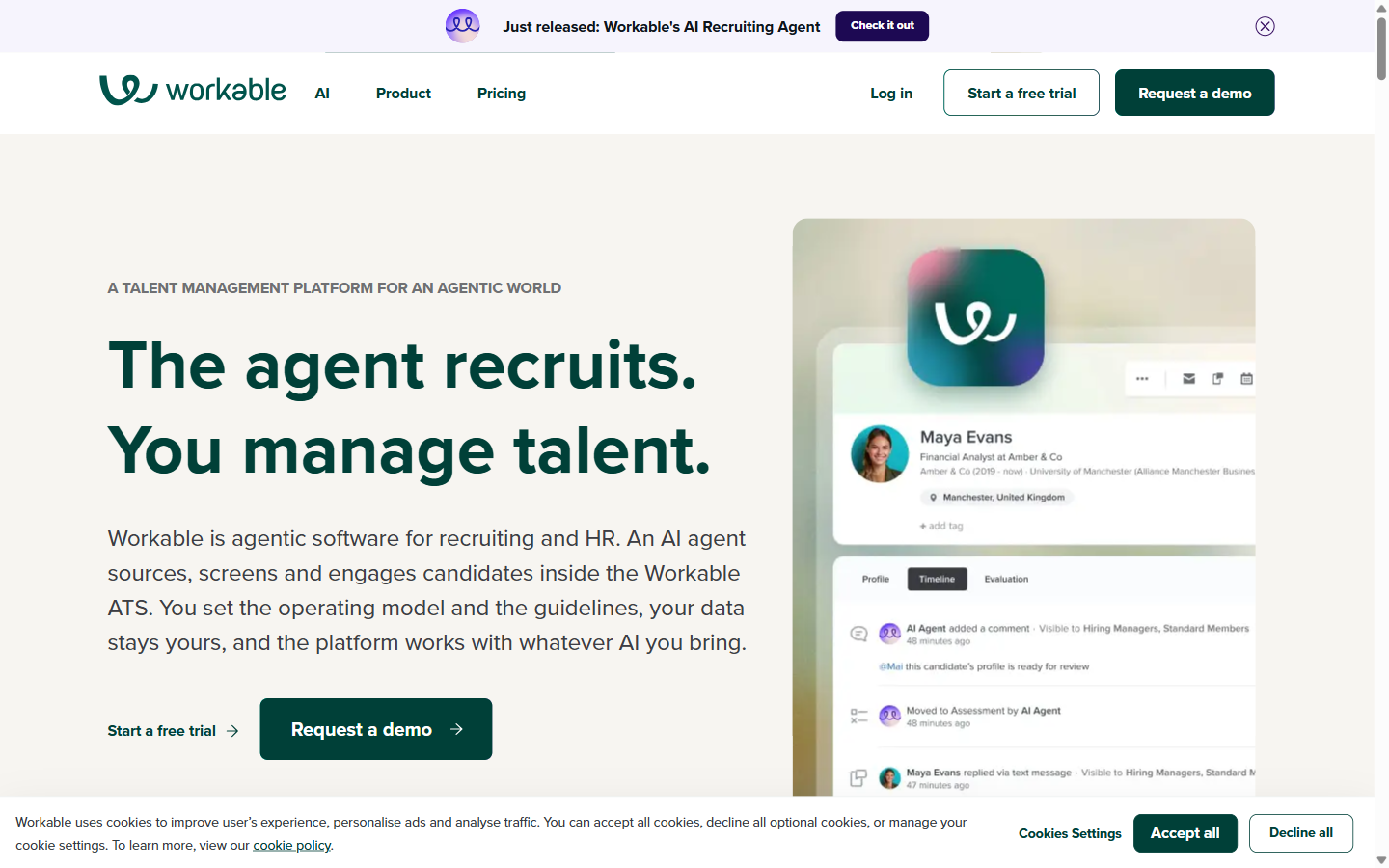
Workable is one of the most popular choices for small to mid-size businesses, and for good reason. It packs a ton of functionality into a clean, easy-to-use interface. With Workable, you can post to 200+ job boards in one click, use AI-powered screening to shortlist candidates, automate email sequences, and schedule interviews, all without needing a dedicated IT setup.
Their AI Recruiter feature is particularly impressive for smaller teams. It proactively searches for passive candidates who match your job description, which essentially turns every posting into an active sourcing effort. If you’re a team of one or two recruiters juggling multiple open roles, Workable can feel like having an extra pair of hands.
Best for: Small to mid-size businesses that need a full-featured, easy-to-set-up recruitment platform without enterprise-level complexity.
7. Paradox (Olivia)
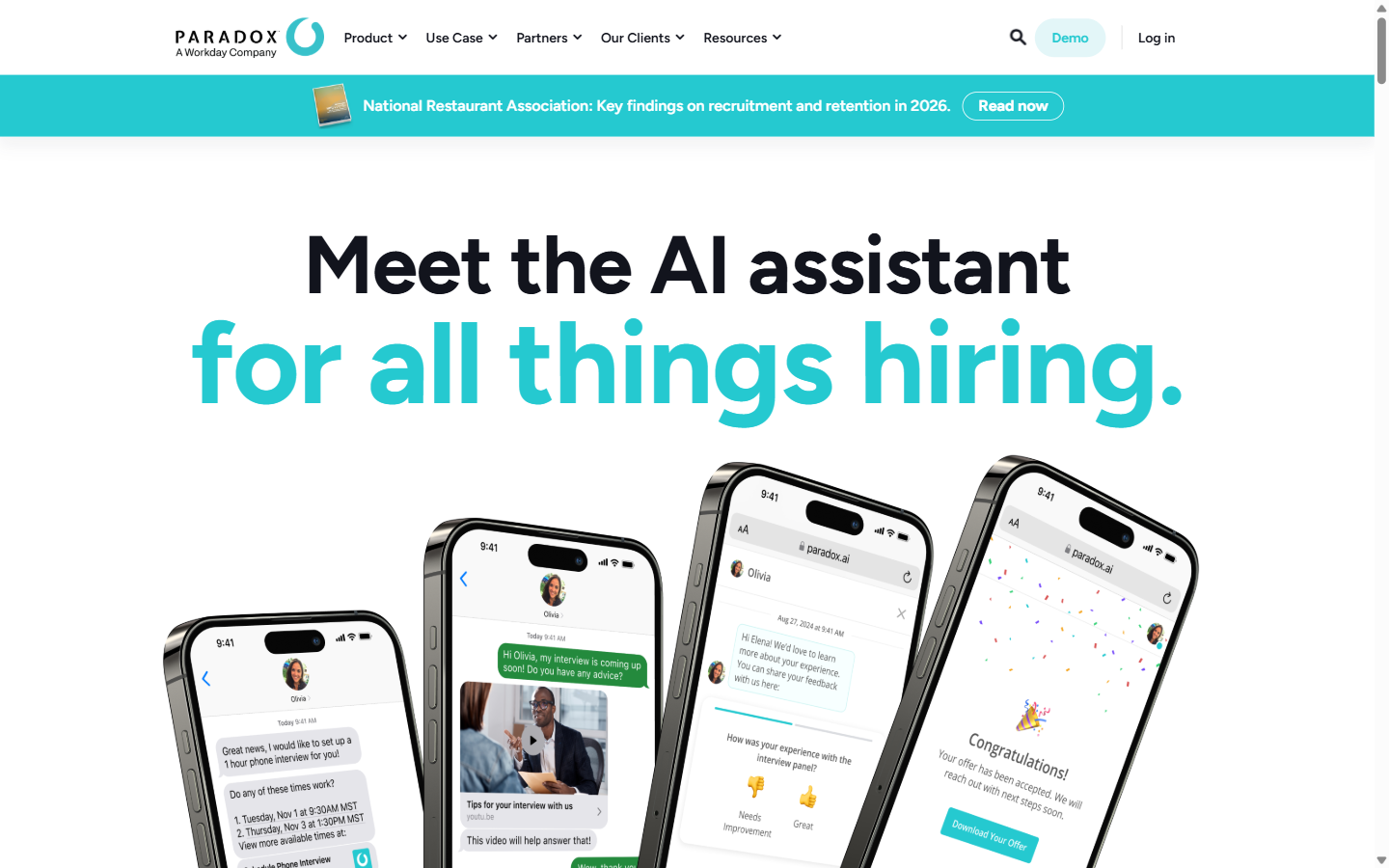
Paradox is unlike most tools on this list, it’s centered around an AI recruiting assistant named Olivia, who handles candidate conversations via chat or text. Olivia can screen applicants, answer their questions, schedule interviews, send reminders, and collect assessments, all through a conversational interface that feels remarkably human.
For industries with high-volume, hourly hiring, retail, hospitality, and warehousing, Paradox is a game-changer. Candidates can apply and schedule an interview in under five minutes, without ever waiting for a human recruiter to respond. Time-to-hire drops dramatically. It’s also great for improving candidate experience, since Olivia is always available and always responsive.
Best for: Companies with high-volume, frontline, or hourly hiring needs where speed and candidate experience are critical.
8. Eightfold AI
Eightfold is where recruitment automation meets talent intelligence. Powered by deep learning, it goes far beyond keyword matching, it analyzes a candidate’s full career trajectory, infers transferable skills, and predicts their potential to succeed in a role. This means you’re not just matching resumes to job descriptions; you’re identifying candidates who may not look perfect on paper but have all the underlying skills for the job.
The platform is also strong on internal mobility, helping you identify current employees who could step into open roles before you go external. For enterprises that are serious about skills-based hiring and reducing attrition, Eightfold’s approach is forward-thinking and genuinely differentiated.
Best for: Enterprises investing in skills-based hiring, internal mobility, and long-term workforce planning.
9. Breezy HR
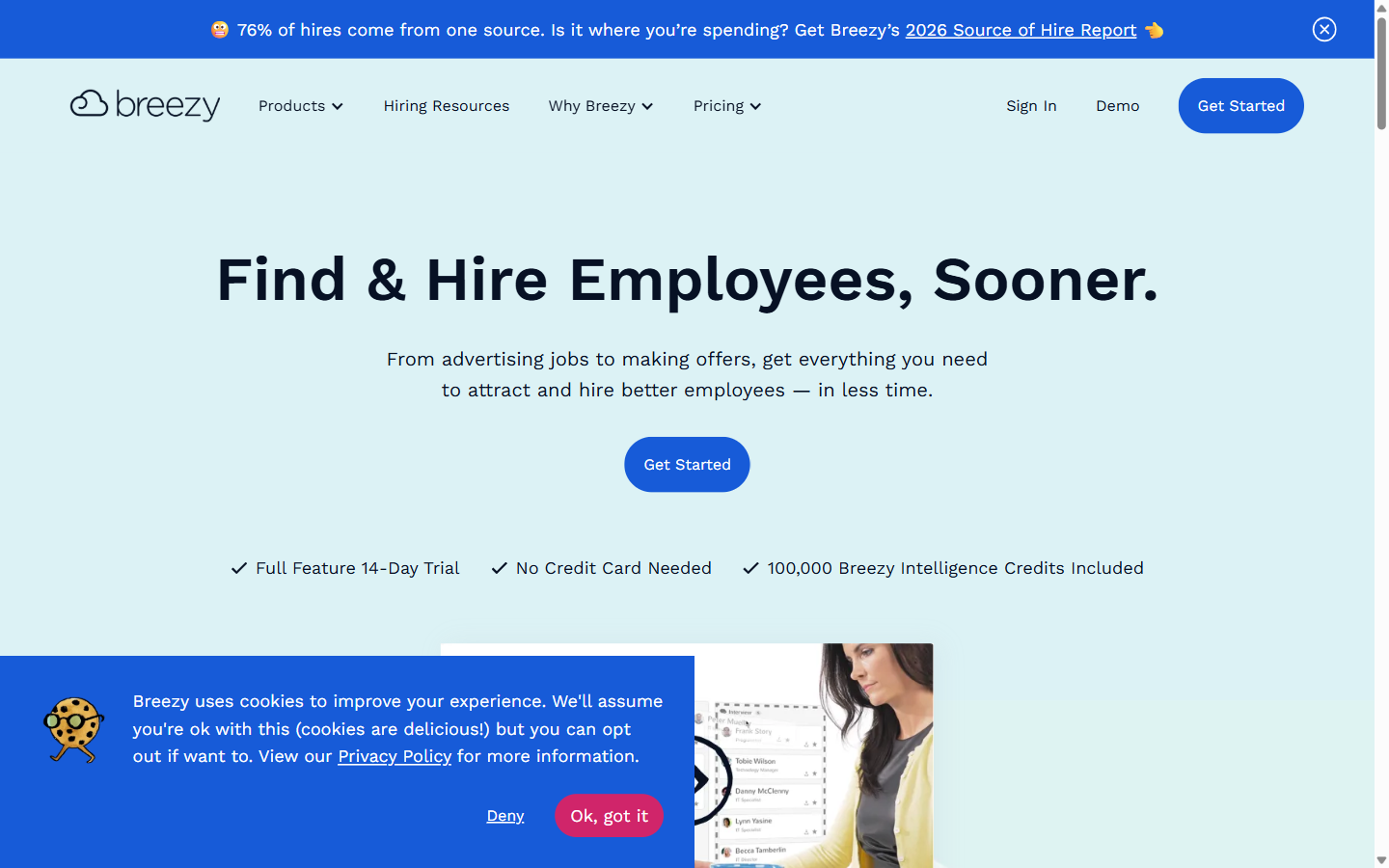
Breezy HR takes a visual, drag-and-drop approach to recruiting that makes it exceptionally easy for non-HR people, hiring managers, team leads, to participate in the process. The Kanban-style pipeline view gives everyone a clear picture of where candidates stand, and automated emails and SMS can be triggered at each stage move.
What we particularly like about Breezy is its questionnaire and scoring feature, you can automatically score candidates based on their answers to knockout questions, which saves enormous time in early screening. It also has a generous free plan that makes it accessible for very small teams or those just getting started with automation.
Best for: Startups, small businesses, and teams that need an intuitive, collaborative hiring tool without a steep setup process.
10. Kai
Kai is an AI executive assistant that takes the admin around hiring off a recruiter's plate. It sorts your gmail or outlook inbox as candidate emails come in, drafts a reply to each one that needs it, and shares a booking link so candidates pick an interview slot that fits your calendar.
During interviews, kai takes notes on any call without a bot joining, then hands you a summary and the action items when it ends, so feedback and next steps don't depend on memory.
Best for: recruiters and hiring managers who spend their day between candidate emails, interview scheduling and debriefs.
How to choose the right tool for your team?
With so many solid options out there, how do you actually decide? Here’s a simple framework to guide your thinking:
Start with your biggest pain points
Are you drowning in resumes? Look for tools with strong AI screening. Is scheduling eating your day? Prioritize tools with robust self-scheduling. Are candidates ghosting you because of slow follow-ups? Focus on automated communication features.
Think about your hiring volume
If you hire 10–50 people a year, Breezy HR or Workable are likely more than enough. If you’re filling hundreds of roles across multiple locations, you’ll need something like Testlify for skills assessment.
Consider your team’s technical comfort level
Not everyone on your team is a tech wizard, and that’s fine. Tools like Breezy HR and Workable are designed for ease of use. Talent assessment platforms like Testlify are a great choice with the easy UI amd can be learnt in a jiffy. Be honest about what your team will actually adopt and use.
Check your existing tech stack
The best recruitment tool is one that plays nicely with what you already use, your HRIS, payroll system, background check provider, and so on. Always check native integrations before committing to a platform. Testlify, being a skills assessment tool itself, also integrates with almost ATS and HRMS.
Pro tip: Always ask for a free trial or a demo with your actual data and workflows. A tool that looks great in a polished sales demo might feel clunky when applied to your specific use cases.
What makes Testlify stand out?
The platform’s assessment library is genuinely impressive, with over 3,000 pre-built tests covering everything from coding and data analysis to cognitive reasoning, communication skills, sales aptitude, and domain-specific knowledge across 50+ industries. If a ready-made test doesn’t quite fit your role, the AI assessment builder lets you create a customized one quickly, without needing any psychometric expertise.
Beyond static tests, Testlify has leaned hard into conversational AI interviews. Candidates can be screened via chat simulation, audio responses, or video, and the platform’s AI evaluates their answers in real time, scoring for relevance, communication quality, and intent. This effectively automates your first-round interviews at scale, without requiring a recruiter to sit through hours of recorded video.
There’s also a strong anti-bias angle built in. Testlify’s auto-scoring is based on defined criteria, not gut feeling, which means every candidate gets evaluated on the same rubric.
Weighted scoring lets you prioritize what matters most for a specific role. And because the platform supports assessments in over 15 languages, it’s a solid choice for global or distributed hiring teams.
On the automation side, Testlify integrates with 100+ ATS platforms, so candidate data flows seamlessly into your existing workflow. You can automate assessment invitations, set up reminders, trigger next-stage moves based on scores, and get detailed reports without manually crunching numbers.
Real-world result: One Testlify customer reported a 75% improvement in their initial screening process after adopting the platform, saving significant recruiter time while improving the quality of candidates reaching the interview stage.
Read Endiprev’s success story to know more.
Common mistakes HR teams make with recruitment automation
Automation can genuinely transform your hiring process, but only if you set it up thoughtfully. Here are some pitfalls to watch for:
Over-automating the human touch
Automated emails are great for status updates, but no candidate wants to feel like they’re talking to a robot throughout the entire process. Reserve personalized, human touchpoints for key moments, after a great interview, when making an offer, or when delivering difficult news. Use automation to free up time for those moments, not to replace them entirely.
Setting up automation and forgetting about it
Automated sequences need regular review. That rejection email you wrote two years ago might no longer reflect your brand tone. Review your automated communications at least every six months to ensure they’re still accurate, warm, and on-brand.
Ignoring candidate experience metrics
Your automation tool should help you track how candidates feel about the process, not just how efficiently you’re moving them through it. Many tools include candidate NPS surveys or drop-off tracking, use these insights to continuously improve.
Choosing based on features alone
It’s tempting to pick the platform with the longest feature list, but what matters is whether your team will actually use those features consistently. A simple tool that your whole team adopts will always outperform a complex tool that only one person understands.
Final verdict
Recruitment automation isn’t about replacing recruiters, it’s about giving them superpowers. The right tool should make your process faster, more consistent, and more enjoyable for both your team and your candidates.
Here’s a quick cheat sheet based on your situation:
- Small business/startup: Start with Breezy HR or Workable, easy setup, great value
- Fast-growing mid-size company: Lever or Greenhouse will give you the structure and pipeline visibility you need
- High-volume/frontline hiring: Testlify will dramatically cut time-to-hire
- Large enterprise: Testlify for scale, integrations, and AI-driven features
- Skills-based hiring focus: Testlify is in a league of its own here
Whichever tool you choose, start small. Pick one or two workflows to automate first, like interview scheduling or post-application acknowledgments, and build from there. Small wins add up quickly, and your team will feel the difference almost immediately.
The future of hiring is faster, smarter, and more human than ever. Recruitment automation is how you get there.
Frequently asked questions (FAQs)

Content Writer
Yashika Khandelwal is a Content Writer with 3+ years of experience creating research-backed content on hiring, talent assessment, and HR technology. She is a registered Organizational Psychologist and subject matter expert who combines behavioral science with practical recruitment insights to produce accurate, evidence-based content.
LinkedInRelated resources
View all
HR tools
In-app telephone screening for faster, better interviews

HR tools
25 Top interviewing platforms

HR tools
What is AI proctoring and why it matters in certification

HR tools
Prioritization matrix: What it is & how to use it effectively
HR tools
What is timesheet management? Benefits and best practices
![What are HR SOPs and how to create them? [+Free template]](/api/media/file/Blog_featured_image_37-2.png?dpl=dpl_9Ai1hrmD1YZ8yPSLhy5MhtJd5zy3)
HR tools
What are HR SOPs and how to create them? [+Free template]
Get started.
Hire on proof, not resumes.
Run your first skills-based assessment free — no credit card required.