
7 types of HR reporting and steps to implement
Learn everything about HR reporting in this blog! Discover key metrics, tools, benefits, and tips to improve your workforce management strategy.

HR is a crucial part of any organization. HR professionals are significant in managing an organization’s most precious resource: its employees. The evolving nature of business translates to changing expectations on the role that HR departments are supposed to play. Among these is HR reporting, which plays a vital role in helping HR professionals make informed hiring decisions and strategize well.
In this guide, we delve deeper into HR reporting to cover what it is, its importance, what types of reports need to be tracked by HR teams, and how to go about implementing an effective HR reporting system.
 ChatGPT
 Gemini
 Claude
 Grok
Grok Perplexity
What is HR reporting?
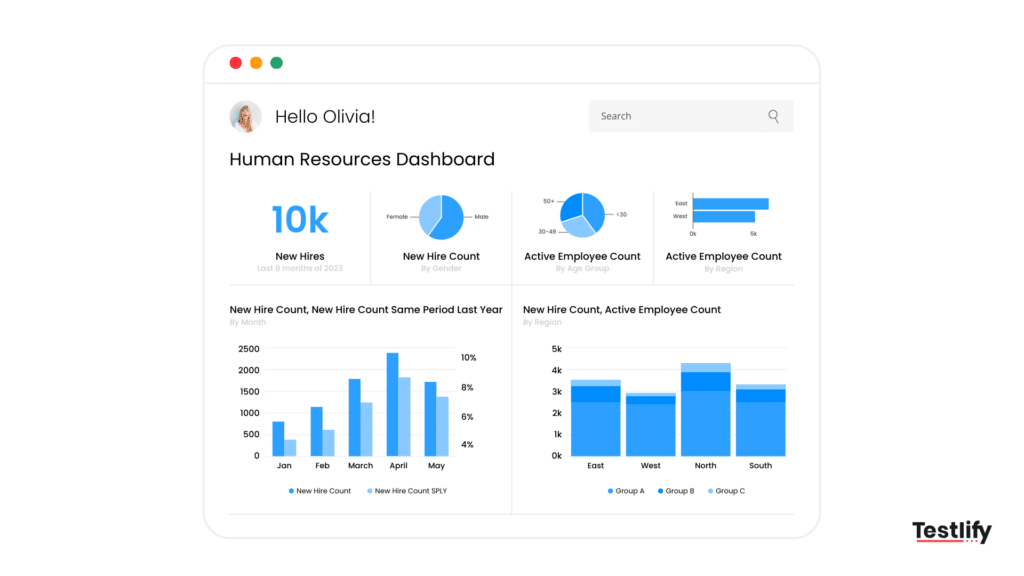
HR reporting is the process of gathering, analyzing, and presenting employee-related data to inform HR professionals’ decisions. These reports track various HR metrics, such as employee performance, turnover, diversity, and compensation. They also play a crucial role in understanding trends, improving processes, and ensuring compliance with labor laws.
From simple charts and tables to complex dashboards and analytics, HR reporting can take various forms; at its core, however, it seeks to provide actionable insights that help the HR department deliver support for the overall organization’s goals.

Why is HR reporting important?
HR reporting is a vital tool for HR professionals in the following ways:
1. Data-driven decision making
HR reporting allows HR professionals to make data-driven, more accurate, and effective decisions rather than relying on gut feelings or assumptions. With data analysis, HR can spot trends, detect problems early, and make informed decisions that are good for the organization and its employees.
2. Tracking key metrics
HR reports track many metrics that reflect the health of an organization’s workforce. Companies with diverse leadership see 19% higher revenue growth on average. Such metrics include employee satisfaction, turnover rates, hiring trends, and diversity statistics. Such reports are monitored regularly to allow HR to address such areas of concern proactively.
3. Improving workforce planning
HR reports provide insights that help HR teams plan for future workforce needs. HR can anticipate staffing requirements, skill gaps, and budget constraints by analyzing historical data. This allows HR departments to create effective hiring and retention strategies.
4. Ensuring compliance
HR reporting ensures the organization complies with labor laws, company policies, and the industry. Such compliance reports – working hours, benefits, and payroll-related – also help HR identify potential risks or legal breaches.
5. Enhancing communication
HR reports improve the transparency level within the organization. This way, if the key metrics and reports are given to the top-level leadership or other departments, it encourages better communication, alignment, and trust between the business entities.
Key types of HR reports
According to SHRM, 74% of U.S. employees cite company culture as the top driver of job satisfaction. HR reports are categorized into several types, focusing on human resource management. Let’s proceed to the key types of reports that HR departments usually issue:
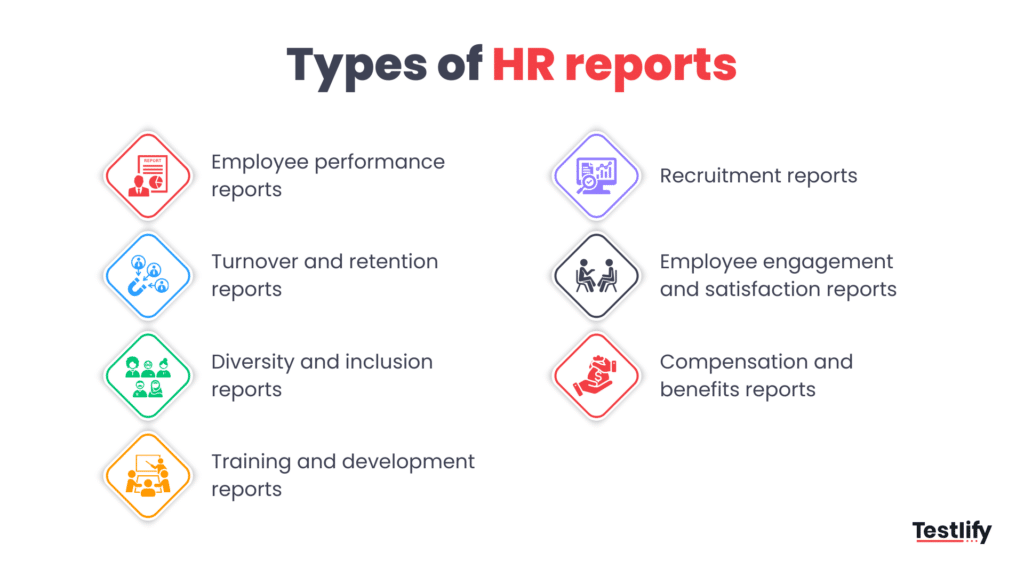
1. Employee performance reports
Employee performance reports assess the performance of the employees against set goals and benchmarks. Employee performance reports may include job completion information, skill development, training participation, and manager feedback.
Employee performance reports can provide insight into the productivity of an individual and team. It helps to identify the high performers, areas for improvement, and future leaders.
What to include in an employee performance report?
Key Performance Indicators (KPIs): Metrics specific to roles, such as sales targets, project completions, or customer satisfaction ratings. |
|---|
2. Recruitment reports
Recruitment reports assess the success of hiring processes. These metrics track time to hire, cost per hire, and sources of hire.
Recruitment reports help HR assess the effectiveness of the recruitment process and determine whether the organization is attracting the right talent. They also help the HR teams improve hiring processes and reduce time-to-hire.
What to include in a recruitment report?
Time to hire: Average duration from job posting to hire. |
|---|
3. Turnover and retention reports
Turnover reports focus on the rate employees leave the organization, while retention reports focus on how well HR can keep employees. These reports track voluntary and involuntary turnover, reasons for leaving, and the impact of turnover on the business.
Understanding turnover and retention rates helps HR teams address underlying issues that may lead to employee dissatisfaction, such as compensation, work culture, or career development opportunities.
What to include in a turnover and retention report?
Turnover rate: Percentage of employees who left during a given time. |
|---|
4. Employee engagement and satisfaction reports
Employee engagement reports help track the satisfaction and morale among employees working in a company. In most cases, such reports contain information gathered from survey forms, feedback forms, and other methods that reflect the extent of employee engagement towards their work and the organization.
Companies that celebrate small wins see an 83% increase in employee engagement. Engaged employees are productive, motivated, and loyal. By analyzing engagement and satisfaction data, HR can take steps to improve the overall work environment, culture, and employee experience.
What to include in an employee engagement and satisfaction report?
Engagement scores: Results from employee engagement surveys. |
|---|
5. Diversity and inclusion reports
Diversity and inclusion reports are used to monitor the diversity of a company’s workforce, including its composition of gender, ethnicity, age, and other aspects of diversity. These reports ensure the diversification of an organization by creating an environment of inclusiveness in practices.
Diversity and inclusion are critical factors in ensuring a healthy and innovative workplace. With the tracking of D&I data, HR will ensure that the company fosters an inclusive environment and achieves its goals regarding diversity.
What to include in a diversity and inclusion report?
Demographic breakdown: Gender, ethnicity, age, and other diversity metrics across the organization. |
|---|
6. Compensation and benefits reports
Compensation data regarding salaries, bonuses, and benefit packages for employees is evaluated in compensation and benefits reports. This helps compare the organization’s compensation structure with that of the industry to ensure competitive and fair compensation.
Compensation and benefits reports enable HR to ensure fair remuneration of workers and competitiveness in attracting talent while keeping them. Compensations and benefits reports can identify probable pay inequities that must be addressed.
What to include in a compensation and benefits report?
Salary distribution: Average, median, and range of salaries across roles or levels. |
|---|
7. Training and development reports
Reports on training indicate the completion and effectiveness of programs in the organization. It reflects employee participation, skill improvement, and performance and productivity results from training.
Training and development reports help the HR department assess the effectiveness of learning programs and identify areas where further investment is needed. These reports ensure that employees have the skills they need to succeed.
What to include in a training and development report?
Training participation: Percentage of employees attending sessions. |
|---|
Steps to implement effective HR reporting
An effective HR reporting system requires thoughtful planning and execution. Here are the steps to develop an effective HR reporting system:
1. Define clear objectives
First, define clear objectives regarding HR reporting. What is the report for? Is it to track employee performance, improve recruitment, reduce turnover, or something else? This will help you determine the data you need to focus on.
2. Collect accurate and relevant data
The basis of good HR reporting is accurate and relevant data. Data collection processes must be clearly defined and must be consistently documented. For example, if you collect data on employee turnover, ensure the data includes actual reasons for leaving, tenure, and department.
3. Use the right tools
HR reporting tools and software enable automatic collection and reporting processes. HR software, such as a human resources information system, an applicant tracking system, or a performance management portal, is sometimes available. This software can gather all your data efficiently and correctly and represent the reports in attractive graphic presentations.
4. Choose the right metrics to track
The abundance of data is overwhelming. Focus on measuring what is most important to track in alignment with the HR objectives. For example, to reduce turnover, track the following metrics: turnover rates, exit interview data, and employee satisfaction.
5. Automate report generation
Where possible, automate the report generation process. Many HR software tools allow you to create automated reports that can be generated regularly (weekly, monthly, quarterly). Automating reports saves time and ensures that data is consistently available when needed.
6. Analyze the data
Once you have your reports, it’s time to analyze the data. Look for patterns, trends, and areas of concern. For example, if you notice a spike in turnover in a specific department, investigate why. Use the insights to inform your decision-making and HR strategies.
7. Share insights with key stakeholders
HR reports should not end just in the HR department. Share key insights with senior management and other organization stakeholders. Visualizations, including charts, graphs, and dashboards, make the data easier to understand and act upon.
8. Continuously improve
HR reporting is a continuous process. Continuously review your reports and refine your approach. Stay current with new trends and tools that may improve the effectiveness of your HR reporting. Regularly ask for feedback from stakeholders to ensure that the reports provide value and meet the organization’s needs.
Best practices for HR reporting
Keep these best practices in mind to ensure that your HR reports are as effective as possible:
1. Keep it simple
HR reports should be easy to understand and straightforward. Do not overwhelm stakeholders with too much information. Only stick to the most important metrics and provide context when needed.
2. Be transparent
Transparency is key when it comes to HR reporting. Be transparent about how data is collected and how it is being used. This builds trust within the organization and helps ensure that reports are taken seriously.
3. Use visuals
Let HR reports employ more visual elements like charts, graphs, and infographics. Use visuals to point out key trends and insights to make the data understandable, even for non-HR professionals.
4. Tailor reports to the audience
Not all stakeholders will require the same degree of detail. Tailor your reports to the audience that will view them. For instance, senior leadership may only need high-level summaries, but department managers may require more detail.
5. Monitor progress over time
Effective use of HR reports is a way to track progress over time. Use historical data to track current performance against past trends. This will give you better insight into how well your HR strategies work.
Conclusion
HR reporting is a very strong tool for HR professionals. It tracks key metrics, helps make informed decisions, improves workforce planning, and ensures compliance. With an effective HR reporting system, you can provide the most valuable insights to contribute to the overall success of your organization.
Remember that HR reporting is an ongoing process, and it’s important to continuously refine your reports to ensure that they remain relevant and actionable. By following the steps and best practices outlined in this blog you’ll be well on your way to mastering HR reporting and driving positive organizational change.
Frequently asked questions (FAQs)

Content Writer
Yashika Khandelwal is a Content Writer with 3+ years of experience creating research-backed content on hiring, talent assessment, and HR technology. She is a registered Organizational Psychologist and subject matter expert who combines behavioral science with practical recruitment insights to produce accurate, evidence-based content.
LinkedInRelated resources
View all
HR & recruitment
What is job profiling? Everything you need to know

HR & recruitment
What is text recruiting and how to start using it to hire

HR & recruitment
Career Pathing: How to Build Paths That Retain Talent

HR & recruitment
Pros and cons of cross-training employees in 2026

HR & recruitment
How to use reverse mentoring to make it work?

HR & recruitment
How talent acquisition teams can benefit from citizenship investment programs
Get started.
Hire on proof, not resumes.
Run your first skills-based assessment free — no credit card required.