
100 key recruitment statistics to hire better in 2026
Discover 2025’s top recruitment statistics revealing hiring challenges, talent gaps, and trends reshaping the future of recruitment.

Stay ahead of the hiring game with these 100 must-know recruitment statistics. If you want to stay ahead, you need more than instincts; you need numbers.
We have analyzed 500+ sources to bring you the most comprehensive global recruitment statistics.
In this article, we’ve compiled a list of 100 key HR and recruiting statistics that reveal what’s working, what’s changing, and where hiring is headed next.
 ChatGPT
 Gemini
 Claude
 Grok
Grok Perplexity
Recruitment statistics you shouldn’t ignore
Here are the latest recruitment statistics and trends startups need to know to stay competitive and hire smarter in 2026 and beyond.
62% of recruiters are content with AI’s impact on hiring. Source: LinkedIn Talent Solutions
Recruiters consider communication (77%) the most important soft skill for the next five years. Source: LinkedIn Talent Solutions
In the U.S. alone, employee turnover is estimated to cost $430 billion by 2030 due to low retention rates. Source: LegalJobs
90% of hiring managers prefer candidates with solid problem-solving skills. Source: NACE’s job outlook 2025 report
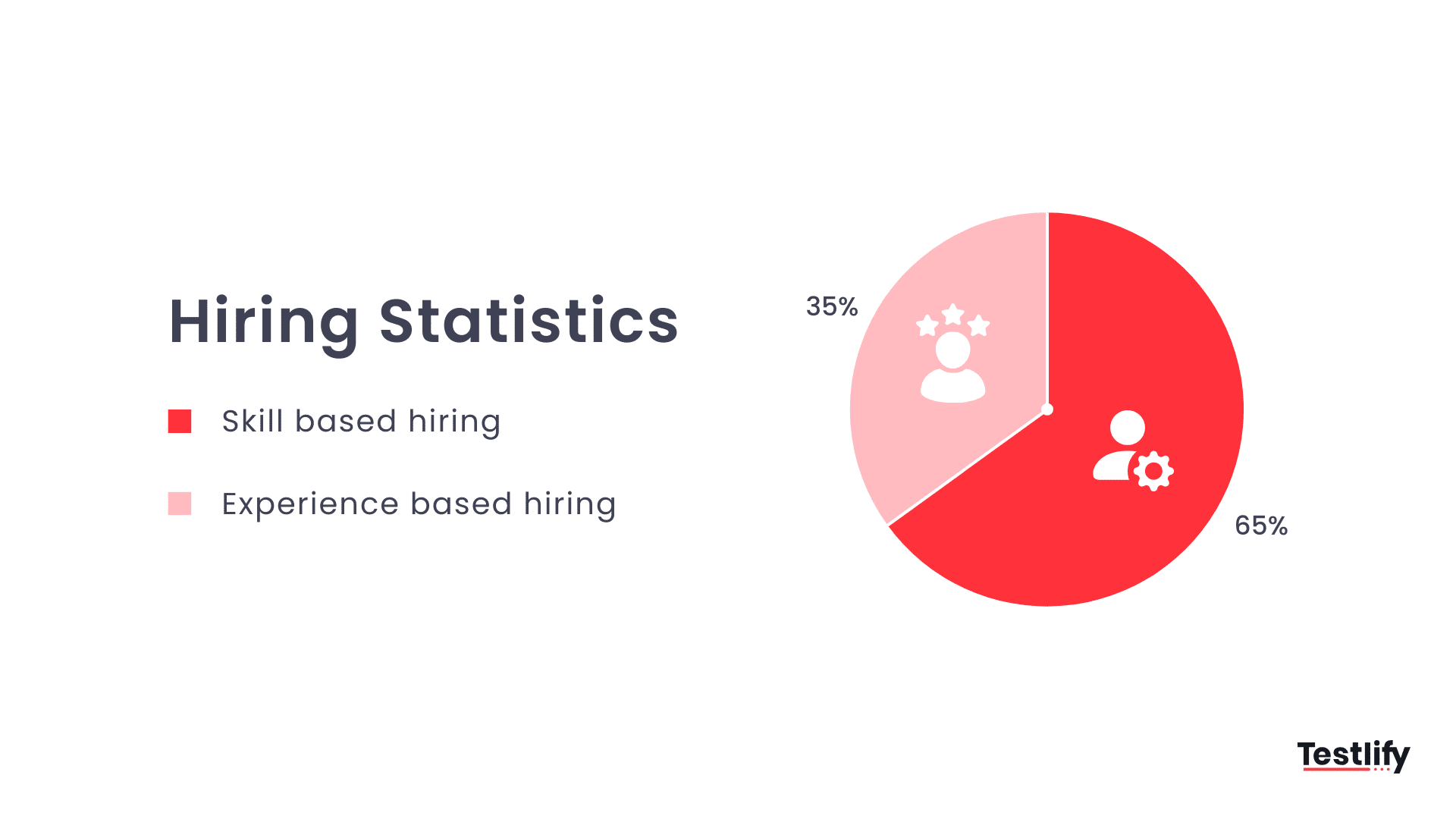
65% of recruiters are open to hiring candidates based on their skills rather than work experience. Source: ResumeGenius
55% of CEOs anticipate expanding the hiring process and only 7% of small and medium-sized companies plan to reduce their headcount. Source: Forbes
54% of companies are already using pre-employment assessments for effective hiring. Source: SHRM
43% of HR believe a degree from a prestigious institution doesn’t impact hiring decisions. Source: ResumeGenius
About 47% of hiring professionals find recruiting a full-time employee somewhat difficult (39%). Source: SHRM 91% of recruiters are focused on agility to adapt to hiring needs. Source: LinkedIn
84% of recruiters emphasize culture fit as an important factor for hiring. Source: Talogy 36% of HR leaders reported a lack of resources to recruit top talent. Source: Forbes For managerial roles, recruiters consider employee conflict resolution a must-have. Source: Gartner
32% of companies don’t consider resume gaps while hiring. More than 75% of HR professionals believe pre-employment assessment scores are as important or even more important than traditional criteria. Source: SHRM
15% have ramped up their use of these assessments over the past 12 months. Source: SHRM
78% of recruiters say using assessments has improved the hiring quality of their organization, and 36% of them reported that these assessments improved their time-to-fill. Replacing an entry-level employee typically costs between 30% and 50% (6-9 months) of their annual salary, while substituting a mid-level employee can cost around 150% of their annual salary. Source: SHRM

Talent shortage statistics in recruitment
Think talent shortage is not a big problem? Think again. Understanding the latest talent statistics can help you make smarter hiring decisions and bridge critical skill gaps in your organization.
80% of organizations that provide apprenticeships or returnships report these programs have been somewhat or very successful in mitigating talent shortages. (SHRM)
Over 85 million jobs may remain vacant due to a lack of qualified candidates in 2030. Source: Korn Ferry
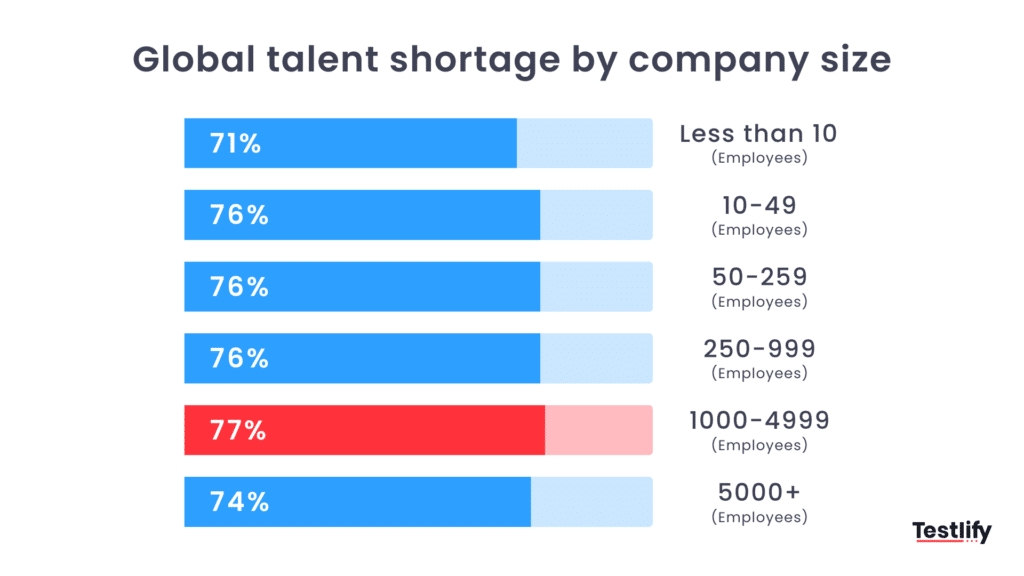
In 2025, the global talent shortage reached 75%, with companies employing between 1,000 and 5,000 people experiencing the highest shortage at 77%. Source: ManpowerGroup
The U.S. labor shortage in 2025 is at 70%. This translates to 5% below the global average. Also, 75% of candidates are unable to find jobs. Source: ManpowerGroup
Collaboration and teamwork are the most challenging soft skills employers find lacking in candidates. Source: ManpowerGroup
71% of recruiters believe that reskilling and upskilling their current workforce can tackle talent shortage issues. Source: ManpowerGroup
51% of talent management professionals believe the global education system has failed to address the skills shortage issue.
46% of Gen Z employees believe the pandemic made pursuing their educational or career goals harder, while 51% feel their education has not adequately prepared them for the workforce. Source: Gartner
According to LinkedIn data, emphasizing skills can expand talent pools by up to 10 times. Source: LinkedIn
69% of HR professionals observed a skills gap at their company, an increase from 55% the previous year. Source: Workforce Monitor
Key recruitment challenge statistics every HRs should know
Think hiring is a cake walk? Probably not that easy. Here are the top 6 hiring challenge stats you need to know.
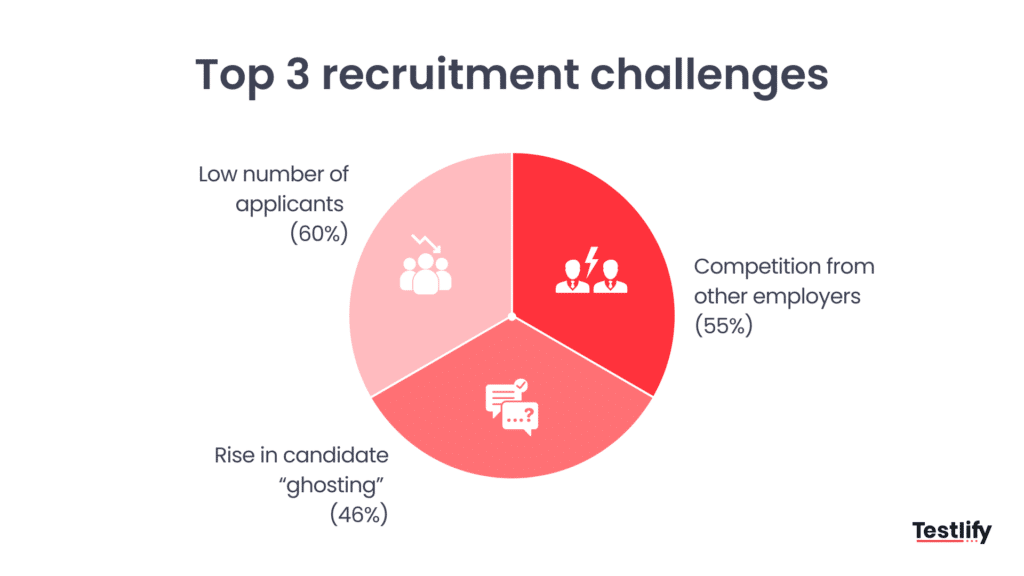
51% of HR executives find budget constraints as a challenge to meet the company’s goal in 2025. Source: SHRM The top three challenges faced by recruiters include a low number of applicants (60%), competition from other employers (55%), and a rise in candidate “ghosting” (46%).
49% of organizations have struggled to retain full-time regular employees over the past 12 months. Source: SHRM
40% of candidates lack the necessary skills for a particular job. Source: SHRM
39% of employees feel the salary compensation is not competitive in the market. Source: SHRM
58% of recruiters report that limited time is the biggest challenge. Source: SHRM
Top hiring trends shaping the future of recruitment
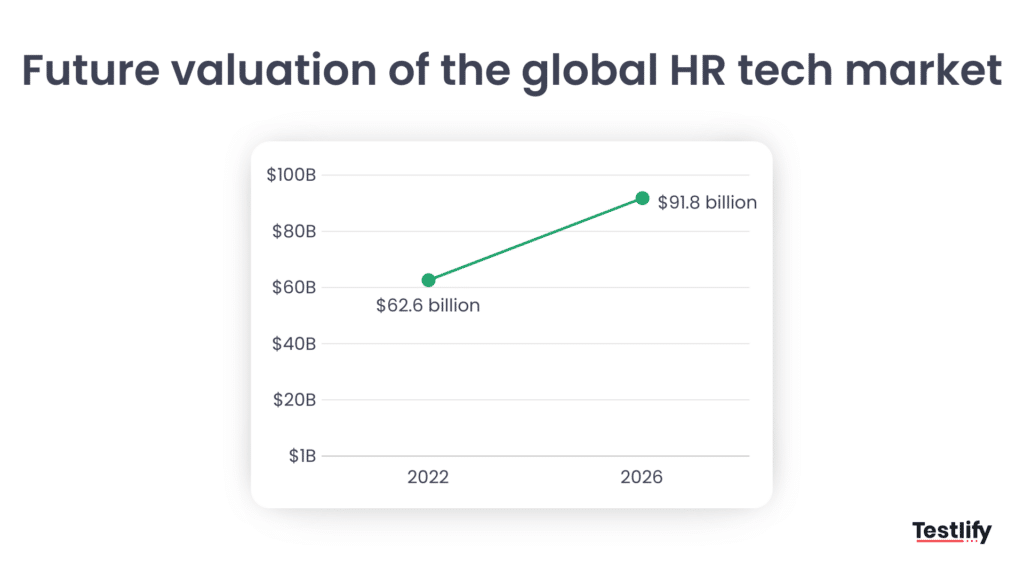
The global HR technology market hit a valuation of USD 62.6 billion in 2022 and is estimated to accrue a revenue of USD 91.8 billion by 2026. Source: Statista
89% of HR leaders intend to either increase or maintain their technology budgets, making it the #1 investment area. 29% of HR leaders prioritize investing in integrated HR service management. 63% of HR software buyers regret their purchase due to a poorly organized buying process. Source: Gartner
60% of HR professionals consider generative AI tools handy. Source: SHRM
Companies have reported a 20% reduction in hiring costs by using artificial intelligence (AI). Source: G2
One-quarter of companies use an internal talent marketplace for hiring. Source: SHRM
Bad hire statistics: Why companies struggle with talent
Hiring a single bad employee can cost an organization nearly $15,000. Source: Career Builder
Conversely, losing a valuable employee can cost an organization nearly $30,000. Source: Career Builder
Nine percent of poor hires generally lack essential soft skills.
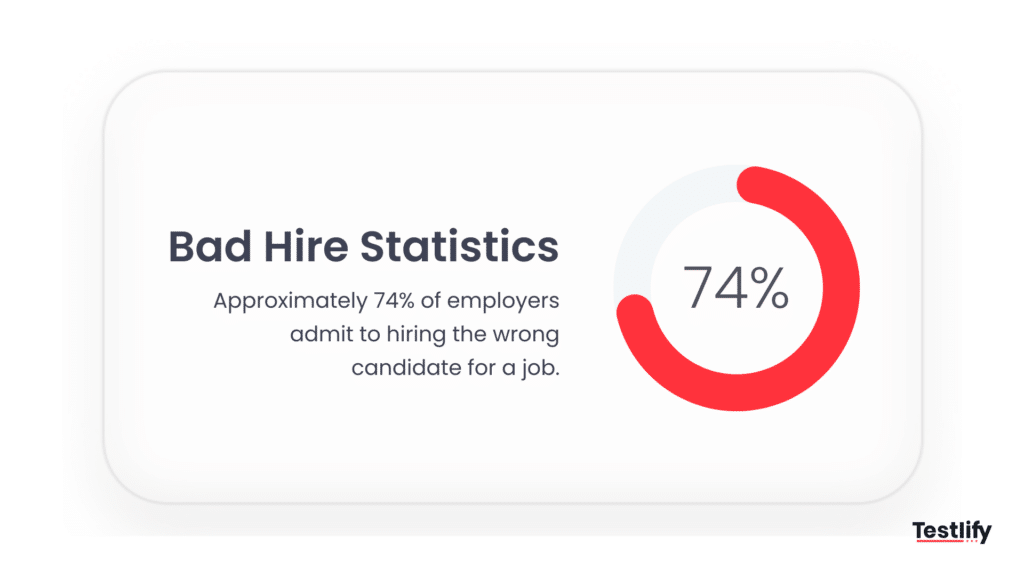
Approximately 74% of employers admit to hiring the wrong candidate for a job. Source: Career Builder
30% of new hires depart within the first 90 days. Source: Forbes
50% of employees are unlikely to apply to a company with a poor reputation. Source: Forbes
Hiring the wrong talent source can cost 30% of the role’s salary and result in low productivity. Source: CareerBuilder
Researchers at Northwestern University revealed that a bad hire can cost a business up to $15,000, and this figure can increase significantly depending on the role. Almost 60% of bad hires occur because employees fail to meet the employer’s quality standards. Source: Buisnessnewsdaily
3 time to hire statistics
The average global time to hire stands at approximately 44 days, showing a slight rise in recent years. This reflects the typical duration from job posting to candidate acceptance. Source: staffingindustry.com
In the tech sector, the average time to hire is around 36 days, though this can fluctuate based on the job’s level of specialization and the role itself. Source: huntly.ai
Studies reveal that conducting 42% more interviews per hire has led to a 24% increase in time-to-hire, from 33 to 41 days.
10 key job search statistics for candidates
87% of workers say fair compensation is their priority. Source: SHRM
Candidates spend 11 hours a week on average searching for a job. Unemployed job seekers spend around 25 hours a week. Source: Career Builder
94% of job seekers open job applications on their smartphones, marking a massive dependency on mobile for job searches. Source: RecruitBPM
25% of millennials are actively switching jobs. Source: G2
3.3 million people resigned from their jobs in July 2025. Source: Bureau of Labor Statistics
80% of candidates believe that well-being is crucial to an organization’s success. Source: Deloitte
There are 7.1 million unemployed people in the U.S. in 2025, a 4.2% increase. Source: U.S. Bureau of Labor Statistics It takes an average of 28 days from applying to landing a job. Source: Standout CV
90% of recruiters use social media for hiring and over 80% of job seekers use social media for finding jobs. Source: CareerArc
70% of job seekers are passively looking for a job while only 30% are actively searching. Source: LinkedIn
10 must-know diversity and inclusion (DI) statistics
80% of recruiters say that their organizations are committed to creating a more diverse workforce. Source: LinkedIn 52% of companies plan to implement or expand inclusion, equity, and diversity (IE&D) initiatives. This could be because of a shift in priority or a lack of proper resources. Source: SHRM
32% of candidates prefer companies that emphasize diversity in their workplace. Source: Glassdoor
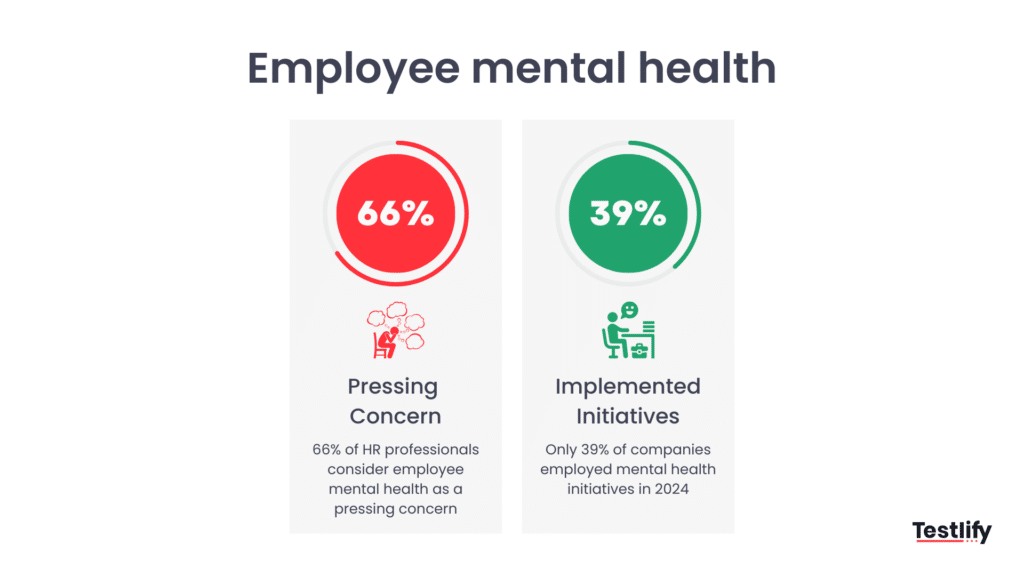
66% of HR professionals consider employee mental health a pressing concern. Yet, only 39% of companies employed mental health initiatives in 2025. Source: SHRM
Ninety percent of Fortune 500 companies have set up diversity, equity, and inclusion (DEI) groups. Source: Forbes
Seventy-six percent of employees view a diverse workplace as important. Source: Forbes
Forty-five percent of Black employees and forty-nine percent of Hispanic employees have left their jobs due to witnessing discrimination, while thirty-eight percent of white employees have done the same. Source: Forbes
75% of applicants believe a diverse workforce is crucial when evaluating a job offer. Source: Glassdoor
57% of workers say their companies need to put more effort into better diversity. Source: G2
63% of workers cite low pay as a reason for quitting. Source: Pewresearch
4 most impactful employee engagement statistics
Employee engagement in the U.S. continues to decline, hitting as low as 30% among full-time and part-time employees. This indicates 4.7 million employees who are less engaged in their work. Source: Gallup Hybrid employees (81%) report a higher work engagement rate than on-site workers (72%). Source:
Disengaged employees cost the U.S. economy $1.9 trillion in lost productivity. Source: Bloomberg
81% of recruiters say maintaining employee engagement and morale will be a priority for companies in 2025. Source: SHRM
7 employee retention statistics you should be watching
The highest employee turnover rate in the U.S. in 2025 is 13.5%, excluding contractors, volunteers, and retirees. This indicates a decline from 17.3% in 2023. Source: Mercer 83.6% of workers are more likely to stay in a job when they feel recognized. Source: Nectar 47.2% of U.S. recruiters reported facing difficulty in retaining or hiring employees for certain roles. Source: Mercer 71% of employees are less likely to leave their organization if they get recognized more often. Source: Nectar
51% of recruiters think employee retention benefits will play a major role in the coming 3-5 years. Source: Metlife
Companies spend half to twice an employee’s annual salary to replace them. Source: Gallup 73% of recruiters said employee turnover puts extra strain on current employees. Source: HRdrive
7 Onboarding statistics for HRs
30% of employees reported quitting a job within their first 90 days. Source: Job Seeker Nation Report Employees with a positive onboarding experience are 2.6 times more likely to be satisfied with their job. Source: Gallup 47% of companies find it challenging to onboard new employees due to restraints in infrastructure access. Source: The Year of Access 2025 Within the first month, 70% of new hires assess if a job is the right fit, while 29% make this decision in the first week. Source: BambooHR
The cost of recruiting, hiring, and onboarding new employees ranges from $7,500 to $28,000, making it a hefty process. Source: BambooHR
It takes recruiters 3-6 months to onboard a new employee completely. Source: PeopleSphere Effective onboarding boosts new hire retention by 55% and increases productivity by 70%. Source: G2
Candidate experience statistics
Check out the most searched top 7 candidate experience stats and improve your hiring process.
68% of candidates believe that their overall experience while interviewing indicates a company’s culture. Source: Career Builder 60% of candidates abandon the application process if a company has a lengthy screening process. Source: SHRM
30% of potential candidates will not spend more than 15 minutes on a job application. Source: Business News Daily Nearly 45% of seniors and 40% of millennials reported that they never heard back from employers. Source: Business News Daily
72% of job seekers are likely to share their negative experiences online or with someone directly. Source: CareerArc
Nearly 63% of candidates feel disappointed with how most employers communicate after they’ve applied. Source: Talentegy
72% of job seekers evaluate the interview process to decide whether to accept the job offer or not. Source: Withe
5 Future trends in the HR industry to watch out for
26% of HR departments plan to use AI tools in 2025 and beyond. This signifies that half of the HR department could potentially be using AI tools by 2025. Source: SHRM
Remote work is the future. 60 to 90 million Indians will work remotely by 2025. Source: Forbes
By 2025, Gen Z is set to surpass Baby Boomers in the full-time workforce, marking a long-anticipated shift. Source: Glassdoor
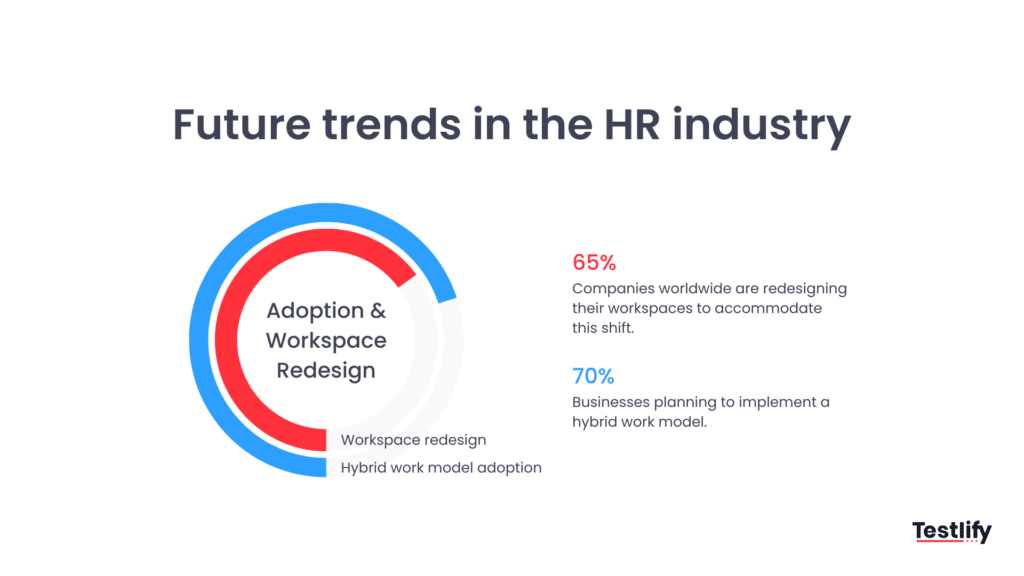
70% of businesses plan to implement a hybrid work model, and more than 65% of companies worldwide are redesigning their workspaces to accommodate this shift. Source: G2
By 2025, nearly 22% of the US workforce is expected to work remotely. Source: G2
Now that you have all the data at your fingertips, use these recruiting statistics to make better hiring decisions.

Related resources
View all
HR & recruitment
What is an internal talent marketplace and how does it work?
HR & recruitment
Skills mismatch: types, causes, and how to fix it in 2026
HR & recruitment
What is a skills inventory and how to create one?
HR & recruitment
How to build autonomous teams?
HR & recruitment
An HR’s guide to internal mobility
HR & recruitment
Skills Matrix: What It Is, How to Build One, and Why It Matters in 2026
Get started.
Hire on proof, not resumes.
Run your first skills-based assessment free — no credit card required.