
Candidate screening: Methods, process, and best practices
Candidate screening: methods, process, and best practices to help hiring teams review applicants, improve shortlists, and hire with more confidence.

Candidate screening is the early stage of hiring where recruiters check whether an applicant meets the basic needs of the role and should move to the next step. It usually sits between application review and interviews.
When assessing candidates from different countries and language backgrounds, it’s also worth checking whether your tests are truly language-fair. Our practical guide to language fairness in pre-employment assessments covers how to eliminate language-load bias from your screening process without compromising on standards.
It helps recruitment teams focus on the right people early. That matters more than ever because hiring is still hard. In SHRM’s 2025 State of the Workplace research, more than 75% of organizations reported difficulty filling full-time roles. When roles are already hard to fill, weak screening only makes things harder.
In this guide, we will break down what candidate screening really means, the methods teams use, and how the candidate screening process works so teams can make screening more accurate and easier to manage.
 ChatGPT
 Gemini
 Claude
 Grok
Grok Perplexity
TL;DR – Key takeaways
- Candidate screening helps recruiters decide who should move forward before full interviews begin.
- The best screening process uses clear role criteria, not just quick resume reviews.
- Different roles need different screening methods, from knockout questions to work samples.
- Structured interviews, scorecards, and skills checks make screening more consistent and useful.
- Good candidate screening saves time, improves shortlist quality, and supports better hiring decisions.

What is candidate screening?
Candidate screening is the first serious check in the hiring process. It helps recruiters figure out whether an applicant meets the basic role requirements and deserves the next step.
At this stage, the goal is to narrow the field in a sensible way. Recruiters look at things like relevant experience, core skills, availability, must-have qualifications, and early signs that the person could do the job well.
In simple terms, candidate screening helps teams move from a large applicant pool to a smaller group of qualified candidates worth spending more time on. When done well, it makes the rest of the process cleaner.
Candidate screening vs candidate evaluation vs candidate selection
These three terms are connected, but they do not mean the same thing.
- Candidate screening happens early. It is about checking basic fit. Does the person meet the main needs of the role? Should they move forward?
- Candidate evaluation goes deeper. This is where teams start evaluating candidates in more detail through interviews, assessments, work samples, and other structured methods. The focus shifts from basic fit to actual ability and role suitability.
- Candidate selection is the final stage. It happens when the team compares the strongest people left in the process and decides who should get the offer.
Why candidate screening matters
Candidate screening matters because the first filter often shapes the whole shortlist. If that filter is weak, hiring teams lose time and also risk missing top candidates early and moving the wrong applicants forward.
That matters even more in a tough hiring market. SHRM reports that the average cost per hire is nearly $4,700. When hiring is already expensive and hard, early screening cannot be treated like a quick resume skim.
It also affects hiring quality. LinkedIn’s 2025 Future of Recruiting report found that more than nine in ten talent acquisition professionals believe accurately assessing a candidate’s skills is crucial for improving quality of hire.
The same report says companies using the most skills-based searches were 12% more likely to make a quality hire. That is a strong reminder that effective candidate screenings should look beyond job titles or polished resumes and focus on evidence that matches the role.
Explore More: Challenges of manual candidate screening processes
Candidate screening methods explained
There is no single best way to screen candidates. The right method depends on the role, the number of applications coming in, and the kind of proof a team needs before moving someone forward. Some roles need a quick fit check. Others need stronger evidence early.
The best screening processes usually combine a few methods instead of relying on just one. That gives recruiters a clearer view of who is worth the next step and who is not.
Resume and application screening
This is where screening usually starts. Recruiters review resumes and application forms to check whether a candidate meets the basic needs of the role. That may include relevant experience, required qualifications, location, notice period, or industry background.
It is a useful first filter, but it has limits. A resume can show where someone has worked, but it does not always show how well they can do the job. It also makes it easy to overvalue polished profiles and miss people with real ability but less polished applications.
That is why resume screening works best as an entry point, not the full decision. Some teams now use tools that add more structure here. For example, Testlify’s AI resume screener evaluates resumes against role-specific criteria, assigns explainable fit labels, and can push shortlisted candidates into the next step automatically.
Knockout questions
Knockout questions are short filters used at the application stage to remove candidates who clearly do not meet non-negotiable requirements. These usually cover things like work authorization, shift flexibility, required certifications, language needs, or willingness to work from a specific location.
They help save time, especially when hiring volume is high. But they need to be used carefully. If teams treat preferences like hard filters, they can screen out good candidates too early. A knockout question should only be used when the answer truly affects whether someone can do the job.
In other words, this method works best when it is strict on essentials and flexible on everything else.
Screening interviews
A screening interview is a short conversation used to confirm basics before the full interview stage begins. It helps recruiters check interest, communication, salary alignment, availability, and whether the candidate’s experience matches the role in a practical way.
This method is especially useful when the resume leaves open questions or when the job depends heavily on how a person explains their work. It adds context that an application form cannot always capture.
A screening interview should not try to test everything. It should simply answer one question: does this person seem strong enough to move forward? Some teams now use one-way or structured video interviews for this stage to reduce scheduling delays and review candidates more consistently.
Testlify, for example, offers an AI video interviewing tool as part of the same hiring flow, which can be useful when recruiters need a quicker first pass without adding another disconnected tool.
Know More: Screening interview explained: purpose, stages, and tips
Skills tests and work samples
This is often the strongest screening method because it shows what a candidate can actually do. Instead of guessing from job titles or years of experience, recruiters get a direct look at how someone writes, solves problems, codes, analyzes, or responds to real work situations.
The test itself does not need to be long. In fact, shorter and role-relevant is usually better. A good work sample should reflect the real job, not feel like an exam. That is also where platforms like Testlify fit naturally.
Teams can move from resume review into role-specific assessments inside one workflow, which makes screening feel more connected and evidence-based instead of split across separate tools.
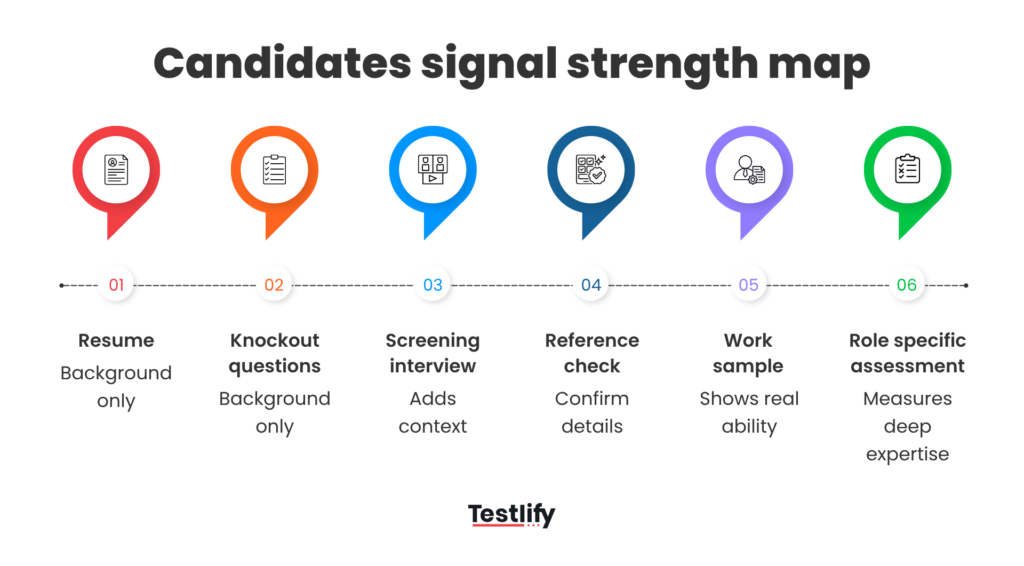
Background and reference checks
Background and reference checks still matter, but they belong later in the process. They are best used to verify details, reduce risk, and confirm what the team has already seen through interviews or assessments.
Using them too early can slow the process down and add friction before a candidate has even been properly evaluated. They also should not replace stronger screening methods. A reference can support a hiring decision, but it should not be the main reason someone moves ahead.
AI and automation in screening
AI and automation help most when screening becomes repetitive. They can sort applications, apply consistent criteria, schedule interviews, route candidates, and reduce the time spent on manual review. That is a big reason more hiring teams are using them earlier in the funnel.
But automation works best when the process itself is already clear. If the criteria are weak, automation just speeds up weak decisions. If the criteria are strong, it can make screening much more consistent. That is also why AI should support human judgment, not replace it. LinkedIn’s 2025 report notes that AI is helping recruiting teams automate tasks and improve quality of hire.
Also Read: How to automate your candidate screening process
A step-by-step candidate screening process
A good candidate screening process should help teams answer one question at each stage: does this person deserve to move forward? The mistake many teams make is trying to answer everything too early. A better process builds evidence step by step, keeps the bar tied to the role, and makes it easier to compare candidates fairly.
Step 1: Define success before you review applicants
Start with the job, not the resumes. Before anyone screens applications, the recruiter and hiring manager should agree on what success in the role actually looks like. That means the main responsibilities, the must-have skills, the non-negotiables, and the things that are only nice to have.
NACE’s hiring guide recommends spelling out duties, responsibilities, and objective job qualifications early, because weak job definitions usually lead to weak screening later.
Step 2: Choose the right evidence for the role
Once success is clear, decide what evidence will best show it. A customer support role may need communication and judgment. A sales role may need objection handling and follow-through. A technical role may need a practical task, not just a list of tools on a resume.
Step 3: Review applications with a structured scorecard
This is where screening becomes more disciplined. Instead of reviewing every application by instinct, use a simple scorecard with a few clear criteria such as relevant experience, required skills, work samples, or role-specific signals.
Structured review makes it easier to compare candidates fairly and explain why someone moved forward. Testlify’s own guidance on candidate assessment recommends a weighted scoring rubric so no single signal dominates the decision, and its platform supports qualifying questions, custom questions, and role-based assessments inside one workflow.
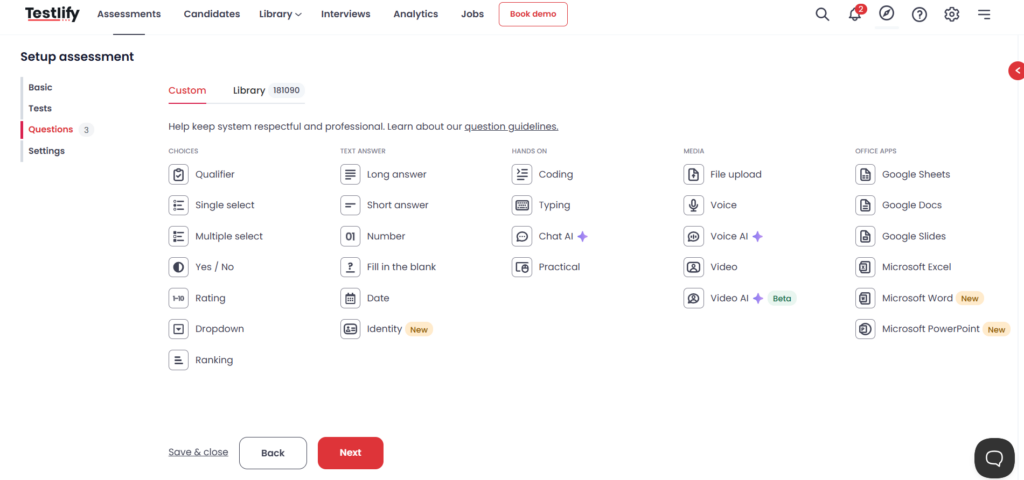
Step 4: Run a focused screening interview
A screening interview should confirm fit, not do the whole job of final interviews. Use it to clarify experience, check motivation, confirm logistics, and understand whether the person can speak clearly about their work.
SHRM’s assessment guide notes that structured interviews are built around a specific set of questions tied to job-relevant knowledge, skills, and abilities, and that they work best when interviewers use standardized rating criteria. In plain words, ask everyone the same core questions and score the answers against the same standard.
Step 5: Add a role-relevant test or work sample
This is often the strongest step in the process because it shows what a person can actually do. A short writing task, case prompt, coding exercise, portfolio review, or scenario-based test usually tells you more than another resume pass.
LinkedIn’s 2025 report says skills-first hiring improves role alignment and supports better long-term hiring outcomes. That is why many teams now bring work samples or assessments into screening earlier. Platforms like Testlify make that easier by letting teams combine qualifying questions with role-specific tests, and its help center recommends keeping total assessment time under 60 minutes to reduce candidate drop-off.
Step 6: Shortlist with hiring-manager alignment
Once the first round of evidence is in, the recruiter and hiring manager should review the same shortlist together. This step matters because it keeps both sides aligned.
Instead of debating based on gut feel, they can look at the same scorecard, interview notes, and test results. That kind of shared review is easier when screening data sits in one place rather than across emails, spreadsheets, and disconnected tools.
Testlify’s workflow and ATS integrations are built around that idea, with assessment data flowing into broader hiring workflows across 100+ ATS tools.
Step 7: Verify final-stage details
Verification should come near the end, not at the start. This is the stage for reference checks, employment verification, and other final details that reduce risk or confirm what the team already believes.
NACE notes that employers should think carefully about when and how they use background screening methods, and also points out that state and local “ban the box” laws can limit when criminal-history questions may be asked.
In other words, verify what matters, but do it at the right time and in a way that matches the role and the law.
Common candidate screening mistakes
Most screening mistakes happen when teams try to move fast without enough structure. The result is usually the same: weak shortlists, inconsistent decisions, and too much time spent on the wrong applicants. Good screening should be job-related, consistent, and based on clear criteria, not guesswork.
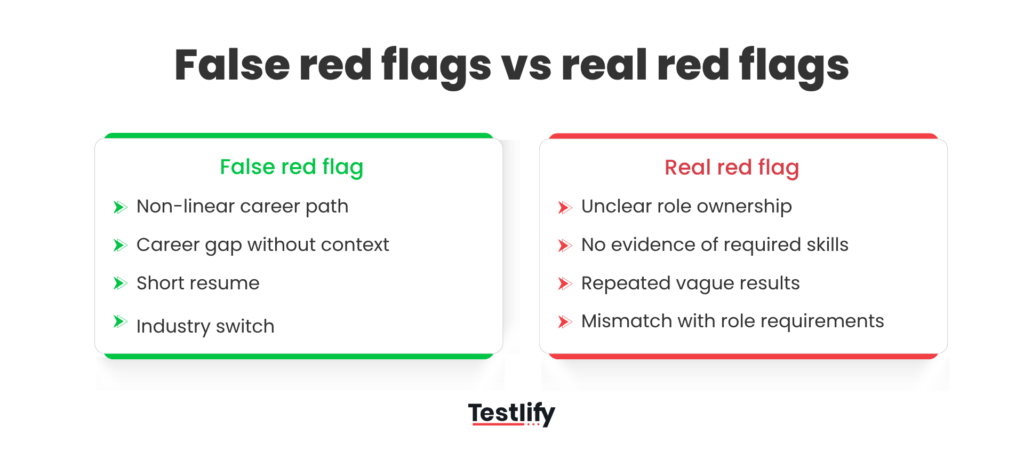
- Starting with a vague job description: If the role is not clearly defined, screening becomes subjective from the start. Recruiters and hiring managers end up looking for different things.
- Relying too much on resumes: A resume can show background, but it does not always show real ability. Strong screening needs more than profile matching, especially for skill-heavy roles.
- Using different standards for different candidates: When each recruiter asks different questions or judges answers differently, screening becomes inconsistent. Structured questions and scoring make comparison more reliable.
- Over-filtering too early: Too many knockout questions or rigid requirements can remove good candidates before they are properly assessed. Filters should only be used for real job needs.
- Confusing preference with requirement: Not every “nice to have” belongs in the first screen. When teams treat preferences as must-haves, they shrink the talent pool for no strong reason.
- Leaving hiring managers out too late: If alignment happens only after screening is done, recruiters may build a shortlist that gets challenged later. Early alignment saves rework.
- Adding automation before fixing the process: Automation can save time, but it cannot fix weak criteria. If the screening logic is poor, tech just speeds up poor decisions.
- Checking backgrounds too soon: Background and reference checks are useful, but they should support final-stage decisions, not replace proper screening earlier in the funnel.
Recommended: Candidate screening dos and don’ts: best practices for recruiters
How candidate screening changes by hiring type
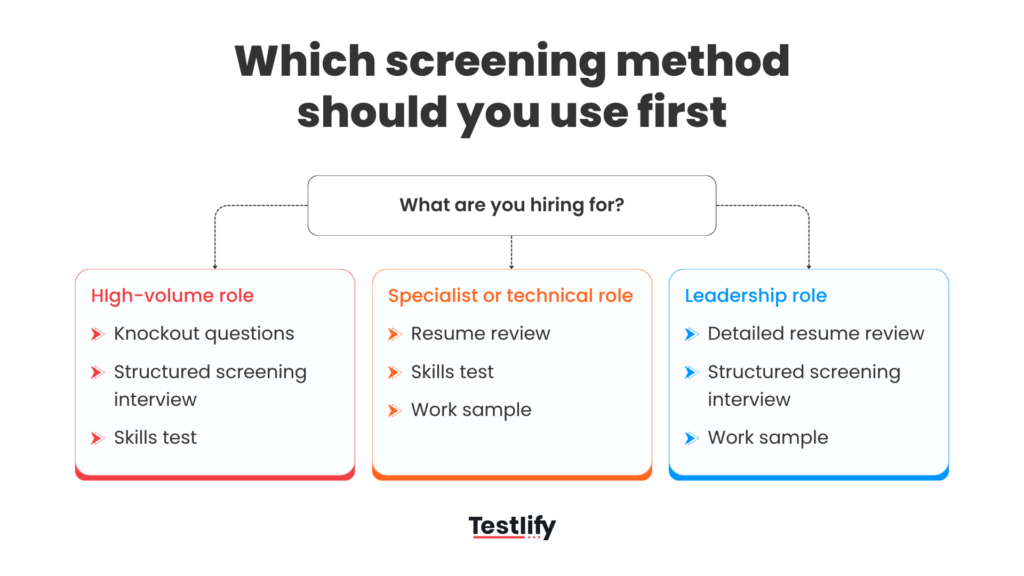
Candidate screening should not look the same for every role. A frontline role with hundreds of applicants needs speed and consistency. A technical role needs stronger proof of skill. A leadership role needs more context, judgment, and alignment before anyone moves forward.
Across all three, the basic rule stays the same: use job-related criteria, apply them consistently, and match the screening method to the work itself.
High-volume hiring
In high-volume hiring, the biggest challenge is volume, not just fit. Recruiters need a process that can handle a large applicant pool without turning into a slow manual review exercise. That usually means simple knockout questions, structured pre-screening, and short assessments that help teams spot qualified candidates fast.
Automation helps here, but only when the criteria are clear. Otherwise, it just speeds up poor filtering.
Specialist or technical roles
For specialist and technical roles, resumes are rarely enough on their own. A person may list the right tools, but that does not prove they can solve the kind of problems the job demands. That is why these roles usually need stronger evidence early, such as work samples, structured technical questions, or role-specific tasks.
Leadership roles
Leadership hiring needs a different kind of screen. The question is not just whether the person can do the work. It is whether they can lead through complexity, make sound decisions, and work well with the people around them. That makes structured interviews especially useful, because they let teams assess leadership, communication, planning, and judgment in a more consistent way.
Hiring type | What screening should focus on | Methods that usually work best | Common mistake |
|---|---|---|---|
High-volume hiring | Speed, consistency, basic fit | Knockout questions, pre-screening, short assessments, automation | Spending too much time on manual resume review |
Specialist or technical roles | Proof of skill and problem-solving | Work samples, technical tasks, structured interviews | Treating resumes as enough evidence |
Leadership roles | Judgment, communication, stakeholder fit | Structured interviews, panel discussions, deeper alignment with hiring managers | Screening too narrowly on keywords or past titles |
Final takeaway
Candidate screening works best when it helps teams make cleaner decisions earlier, without adding extra friction for recruiters or candidates. The goal is not to build a harder process. It is to build a smarter one, where each step gives hiring teams better proof and better direction.
If your team wants to make screening more structured, faster, and easier to manage across roles, Book a demo and see how Testlify can help turn early-stage screening into a more reliable part of your hiring process.
Frequently asked questions (FAQs)

B2B SaaS Content Writer
Rishav Kumar is a B2B SaaS content writer with 4 years of experience. He loves crafting engaging content. Always exploring fresh ideas, he's passionate about helping businesses grow through impactful writing.
LinkedInRelated resources
View all
Candidate Screening
Screening interview explained: Purpose, stages, and tips

Candidate Screening
Candidate Screening Dos and Don’ts: Best Practices for 2026

Candidate Screening
How to automate your candidate screening process (2026)

Candidate Screening
Preliminary Screening: How to Run the First Filter in Hiring

Candidate Screening
Which technical assessment platforms support in-browser coding with live proctoring?

Candidate Screening
Language fairness in assessments: The complete guide for global hiring teams
Get started.
Hire on proof, not resumes.
Run your first skills-based assessment free — no credit card required.