
What is an interview scorecard and how to create one?
An interview scorecard helps evaluate candidates objectively. Learn what it is and how to create one to enhance your hiring process and decision-making.
The ultimate goal of any recruiter is to identify the best candidate with the best skills, competencies, knowledge, and experience.
However, personal biases and beliefs can easily influence decisions during interviews. This is where interview scorecards come in.
About 97% of recruiters hire based on intuitions. That’s a massive amount of decisions based on gut feeling; including a scorecard while interviewing solves this issue. Read on to know everything about this.
 ChatGPT
 Gemini
 Claude
 Grok
Grok Perplexity
What is an interview scorecard?
An interview scorecard is a tool that helps interviewers evaluate candidates for a position using established criteria and competencies. It is an essential part of structured hiring, also called a candidate scorecard, interview scoring sheet, or hiring scorecard.
Recruiters compile the scoring sheets of candidates to identify the most suitable talent for the particular job.
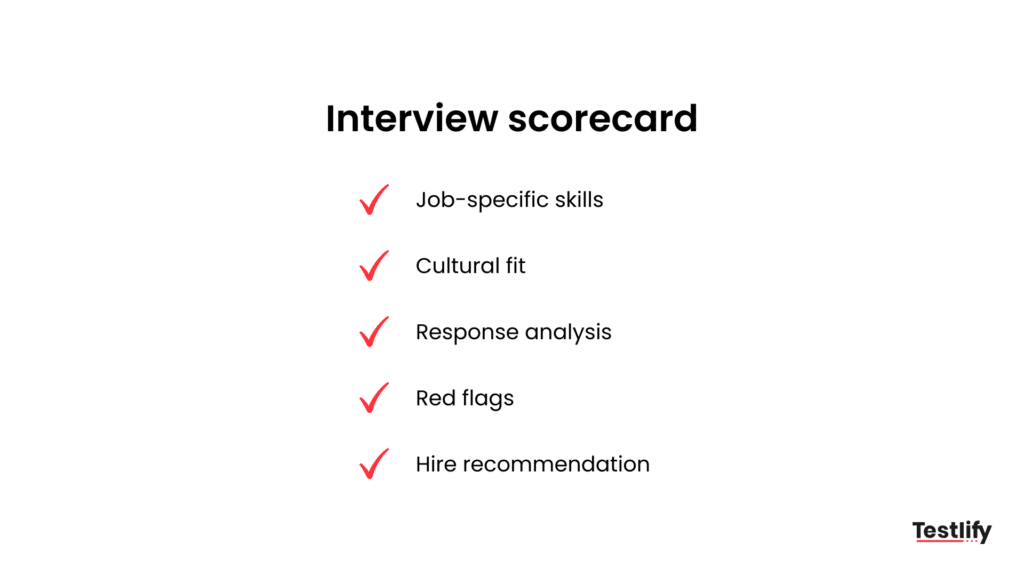
Interview scorecards usually include the following details:
- Job-specific competencies
- Candidate alignment with organizational culture
- Observations detailing responses to questions
- Areas of concern or potential red flags
- A recommendation for hire or not hire
The main goals of using interview scorecards include:
- Creating a consistent, objective evaluation method throughout the interview process
- Aligning all interviewers on assessment criteria for determining candidate suitability
- Establishing a standardized interviewing approach to promote effective collaboration within the hiring team.

Why do interview scorecards matter?
Interview scorecards help organizations evaluate the effectiveness of their hiring managers by comparing employees’ long-term job performance with their interview scores.
By analyzing this data, companies can determine how well their interview process predicts future performance and fit within the organization.
A bad hire costs nearly $15000, so using scoresheets to avoid costly mistakes is essential.
If interview questions are well-designed and consistently applied, there should be a clear link between a candidate’s score on the scorecard and their later performance as an employee.
Additionally, there should be an overall correlation between scorecards and the future performance of all hires. While some exceptions may occur, frequent inconsistencies indicate a need to revise the scorecard, interview questions, or broader hiring strategies to improve outcomes.
Benefits of using a scoring sheet
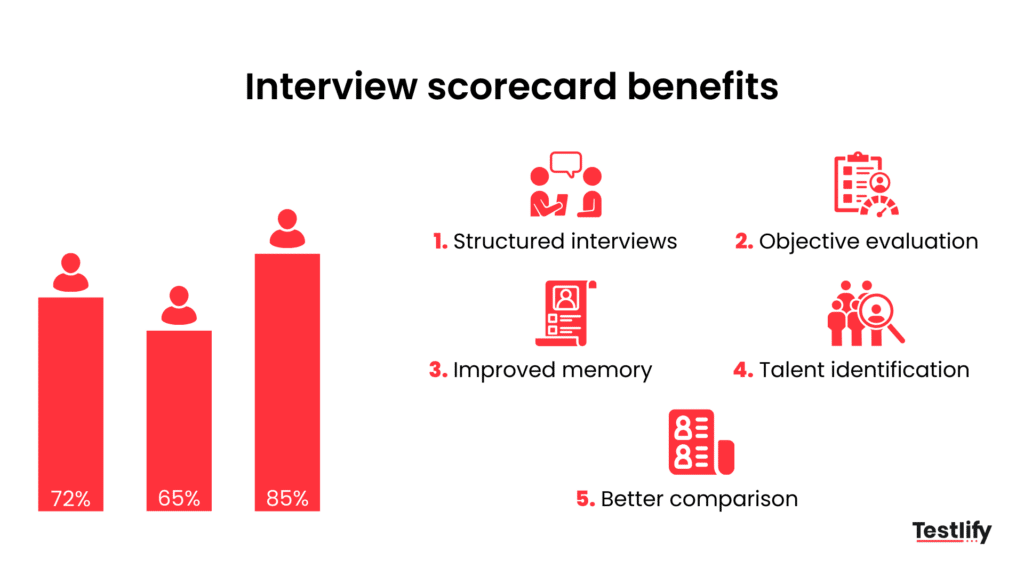
1. Helps in structured interviewing
Using an interview scoring sheet allows recruiters or interviewers to rate all candidates objectively and systematically. Integrating a video interview tool with your scoring sheet can streamline the process and ensure all candidates are evaluated under similar conditions.
The pre-selected questions enable interviewers to evaluate candidates fairly across the board.
2. Allows objective evaluation
A candidate scorecard ensures that interviews remain objective and don’t fade to personal preferences or other subjective aspects.
It maintains consistency and rates every potential talent on the same scale.
3. Improves candidate memory
Conducting several interviews can make remembering the details difficult and make it difficult to distinguish between candidates.
Scorecards allow interviewers to document their impressions and feedback, making reviewing and accurately reflecting on how each interview went easier.
4. Helps identify best talents
Scoring sheets help identify the best candidates more effectively by focusing on specific skills and traits essential for the job.
This structured approach can lead to better-quality hires, encouraging interviewers to concentrate on relevant qualifications rather than relying on gut feelings or informal assessments.
5. Allows better candidate comparison
The interview scoring sheet allows recruiters to compare candidates’ performance. This makes it easier for hiring professionals to discuss and make better decisions.
Disadvantages of using an interview scoring sheet
Below are certain downsides of using a candidate scoresheet.
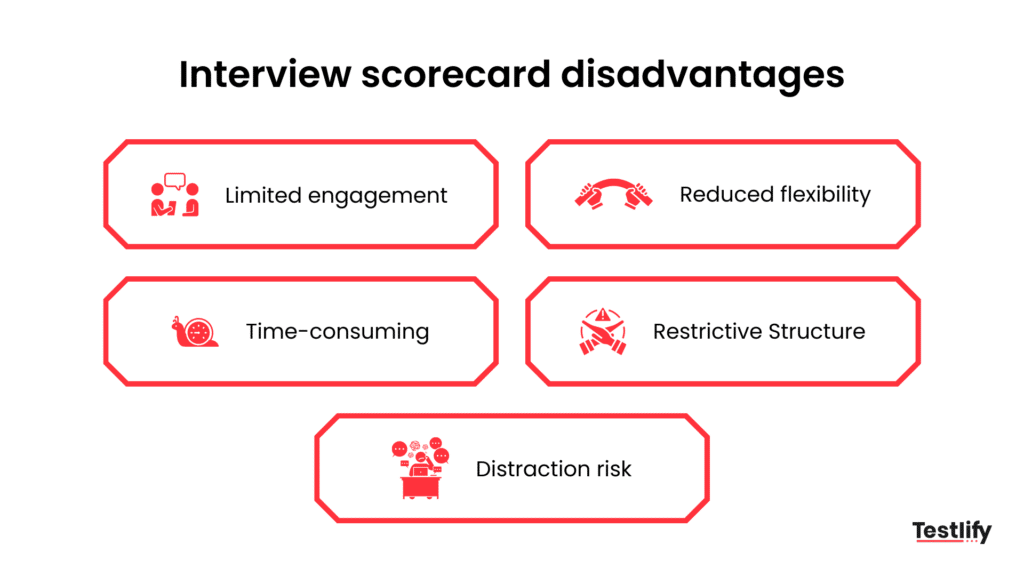
1. Limited engagement
Since interviewers may concentrate too much on completing the scoring sheets, they may need help engaging and connecting with the candidate.
Filling out the interview sheet after the interview could help reduce distractions and improve focus during the conversation.
2. Restrict interview’s flexibility
While scoring sheets help standardize the process, they can also constrain it. Compelling interviews are often dynamic, allowing for spontaneous exploration of relevant topics.
The structured nature of a scorecard can restrict these natural opportunities to assess a candidate more holistically.
3. Time constraints
Developing scorecards is time-consuming. You need to define clear hiring objectives, align them with the company’s overall goals and culture, and craft tailored questions that support those objectives, which adds complexity to the process.
3 ways to use interview scorecards
Interview scorecards are an excellent way to evaluate candidates and predict their performance later in the job.
There are three steps to using an interview scorecard effectively, and are as follows:
1. Define job criteria
Establish clear criteria and competencies against which the candidates will be evaluated right before the interview. This will ensure that interviewers know what skills and abilities to look for in the candidate.
2. Assess the candidates
Use the scorecard during the interview to take notes and evaluate candidates according to a predetermined scale for each criterion. This approach ensures an objective assessment based on their responses and behaviors.
3. Compare and contrast
Discuss each candidate’s scores after the interview with the rest of the hiring team. A collaborative approach helps make informed decisions more straightforward.
When to use an interview scorecard?
Candidate scorecards are extremely helpful for hiring competitive roles. For example, a tech startup expanding its engineering team can use an interview scorecard to standardize evaluation across hiring managers, ensuring only the most qualified candidates move forward.
Interview scores are also used as a pre-screening tool to assess a large talent pool. With this quantitative approach, recruiters can hire the best talent without bias.
Since hiring the wrong candidate can cost 30% of the role’s salary, scoring cards can drastically reduce costly hiring mistakes and improve overall decision-making efficiency.
5 steps to create an interview scorecard like a pro
Having a clear objective of what you want in a candidate makes creating an interview scoring sheet easier.
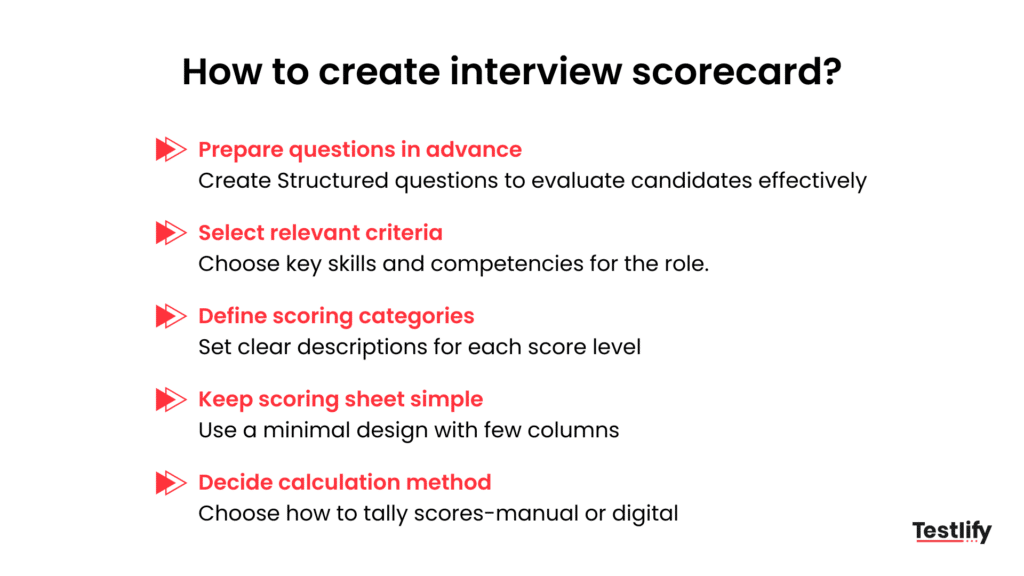
Consider the following steps.
1. Prepare good questions beforehand
The first step in creating a scoring sheet is the questions. Hence, ensure a structured interview plan with proper questions that help you evaluate candidates.
Include power skills vital to your industry and common challenges that could arise, and choose relevant questions.
Consider including the below questions:
- Select 5-6 criteria or skills related to the position
- Thoroughly go through the job description
- Choose the competencies you want in your ideal candidate
2. Add scoring categories
Pay close attention to candidates’ nonverbal communication and confidence. This could include checking whether they maintain proper eye contact, a firm handshake, a professional presentation, etc.
Do not be subjective and rely on personal intuition. Instead, include additional scoring categories for candidates’ mannerisms.
Tip: Consider adding context beside each score to note your impressions correctly.
⭐ = Very poor
⭐⭐ = Poor
⭐⭐⭐ = Satisfactory
⭐⭐⭐⭐ = Good
⭐⭐⭐⭐⭐ = Excellent
3. Have a clear scoring system
A defined scoring system ensures that interviewers interpret numeric scores consistently. Without clear definitions, interviewers may view the same score differently, leading to inconsistent evaluations.
Each score should have a specific description, helping interviewers align their assessments.
Consider the following questions while scoring candidates:
- How well did they answer your questions?
- Was the response clear and coherent?
- Did they provide real-life or hypothetical examples while explaining?
- Does the candidate have the required skillset and experience?
Tip:Score candidates based on a smaller scale, like 1-4 or 1-5. This approach promotes more accurate and consistent candidate evaluations.
4. Keep a simple scoring sheet
The scoring sheet should be simple and uncluttered. It should have no more than two columns to avoid unnecessary complexities.
Though the format of each candidate scorecard can vary, it’s best to keep the design minimal and visually simple.
Tip: Providing a scoring sheet for each interviewer promotes independent scoring. This helps keep the interview objective and not get carried away by others’ opinions. While discussing with other panel members is essential, having your own opinion first is always good.
5. Determine how to calculate
Once you have the data, decide beforehand how you will tally everything. Would you choose manual calculation, a digital rating tool, or automatic data compilation?
Collaborate with other panel members to discuss which candidate you want to advance to the following levels. Consider choosing candidates who scored the maximum according to the pre-set parameters.
Remember to review and explain each score on your scorecard, detailing your conclusions for every criterion with others. Though it takes time and effort, this step is essential.
4 best practices for recruiters when using an interview scorecard
1. Address any skills gaps in your scorecards
While interview scorecards are crucial for streamlining and shortlisting candidates, they don’t offer a complete report of a candidate’s abilities.
Address any potential skills gaps while understanding their boundaries.
Using a scorecard alone is not enough. Combine it with other assessments, like skill-based tests, to get a holistic picture of your candidates. Check out Testlify’s test library.
2. Train interviewers on how to use scorecards effectively
Using candidate scorecards is a part of the recruitment process; hence, recruiters need to know how to create and use one effectively.
Train interviewers to avoid making judgments or relying on their gut feelings. Instead, adopt scoring sheets as a primary evaluation tool. This drastically reduces unconscious bias.
3. Use different scorecards for different roles
Each job in your organization is different, so interview scorecards should be too.
Tailoring scorecards for each role ensures that evaluations are relevant and valuable. Create separate scorecards for each position’s unique needs and qualifications.
4. Maintain standardization and regularly update the sheet
Maintaining a balance between standardized criteria and individual context in your interview scoring is essential.
Standardized criteria ensure objectivity, but it’s also important to consider that each candidate brings unique qualities.
Review the interview scoring sheet regularly to assess whether it aligns with the job requirements. Include feedback and areas for improvement from the hiring team and adjust the scoring criteria.
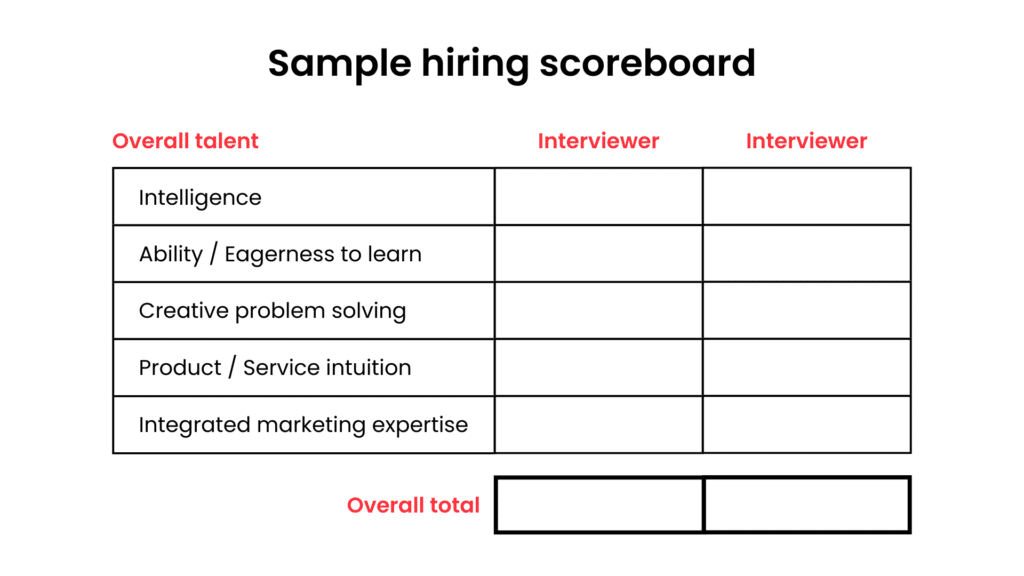
Example of an interview scorecard
Creating an interview scorecard involves defining key competencies and skills required for the role and assigning a scoring scale to evaluate each.
Start by outlining the core categories such as technical abilities, cultural fit, and problem-solving skills.
For each category, provide specific criteria and a clear scoring system (e.g., 1-5). This structured approach ensures consistency in evaluating candidates and helps make more objective hiring decisions.
How do assessments integrate with hiring manager scorecards?
Assessments integrate with hiring manager scorecards by converting objective test results from technical and soft skill tests into standardized data points that map directly onto scorecard competencies.
This integration eliminates gut-feel decisions and forces every candidate through the same measurable benchmarks.
Hiring managers will also no longer rely on memory or impression alone. They open a single dashboard and see test scores sitting next to interview ratings, ready for comparison.
The shift matters because about 97% of recruiters still hire based on intuition, and integrated scorecards are the fastest way to fix that.
Companies that combine skill assessments with structured scoring tend to make better hiring decisions and see stronger quality-of-hire outcomes over time.
The four mechanics that connect assessments to hiring manager scorecards
The integration runs on four specific mechanisms. Each one closes a gap that subjective hiring leaves wide open.
Direct competency mapping
Assessment criteria like “Python proficiency” or “problem-solving” lock onto specific scorecard rows. A candidate’s score on a coding test populates the technical competency line automatically.
Weighted scoring
Test results carry a pre-assigned weight, usually 20% to 40% of the total candidate score. The system calculates the weighted average and surfaces it alongside interview ratings without manual math.
Actionable rubrics
Scorecards translate raw test percentages into a 1-to-5 rating or pass/fail flag. This rubric tells the hiring manager exactly what a 78% on a cognitive ability test means in hire-or-pass terms.
Centralized dashboard sync
Applicant Tracking System (ATS) integrations push assessment data into the hiring manager’s view in real time, helping them quickly determine the best candidates to schedule interviews with.
The three business outcomes this integration delivers
The conversation around ATS integrations usually focuses on efficiency. That matters, but it is rarely the reason hiring quality improves.
The real shift happens when objective candidate data enters the process earlier, influencing decisions before opinions and biases take hold. The result is three meaningful business outcomes:
Reduces unconscious bias at the source
Every applicant faces identical, job-relevant benchmarks before a human opinion enters the room. This protects diversity and inclusion goals and defends the company against discrimination claims tied to unconscious bias.
Surfaces blind spots a resume hides
A polished CV often masks weak fundamentals, while a quiet candidate often hides standout skills. Integrated pre-hiring assessments expose both before the offer stage.
Enables data-backed comparisons
Hiring teams rank candidates against combined metrics instead of debating who “felt right.” This matters more in volume hiring and lateral hiring scenarios, where panel disagreement slows time-to-hire.
Final Takeaway
An interview scorecard is a valuable tool for recruiters. It helps them evaluate and identify top candidates while standardizing the hiring process.
As companies increasingly recognize the importance of scorecards, advancements in AI and machine learning may automate evaluations in the future, offering deeper insights and reducing unconscious biases for fairer hiring practices.
However, while scorecards are promising, relying on them alone won’t guarantee the best results. Complementing them with skill-based assessments is essential for a comprehensive view of each candidate. Check our assessments to start hiring better.
Frequently asked questions (FAQs)

Related resources
View all
Skill assessment
Learning Agility: What It Is and How to Assess It (2026)
Skill assessment
What are power skills and how to assess them?

Skill assessment
Organizational Skills Test: How to Assess Candidates in 2026

Skill assessment
Types of skills assessment tests

Skill assessment
How to assess skills fairly and effectively

Skill assessment
How deductive reasoning test helps you screen candidates?
Get started.
Hire on proof, not resumes.
Run your first skills-based assessment free — no credit card required.