Demo
Demo
 +1 (844) 755 8378
 Contact


Is your workplace productivity suffering due to hidden skill gaps? Today, skill issues have become a significant concern for most organizations.
According to McKinsey & Company, 87% of companies report having skill gaps now or anticipate them in the future.
Another shocking fact by PwC reveals that by 2030, U.S. businesses could lose $8.5 trillion due to skill issues and talent shortages. This urgent issue calls for immediate action to prevent economic setbacks.
Technology is advancing rapidly, and the demand for new skills keeps evolving. You can’t rely on employees to stick to outdated expertise and replace them when things change.
So, what can be done? Well! We are here with the answers. Let’s dive in and explore the ways out of it!
Summarise this post with:
 Chatgpt
 Perplexity
 Gemini
 Grok
Grok Claude
What is a skill issue?
A skill issue, also known as a skill gap, is the gap between the skills a person has and the skills needed to perform a job effectively. This gap can include technical abilities, behavioral skills, or proficiency with tools and technology.
The term “skill issue” originated from gaming, describing a player’s inability to complete a task or beat an opponent. Over time, the term expanded beyond gaming and is now used in HR contexts. Having a skill issue in a game is not a big deal, but it’s concerning for the workplace.
In the workplace, unresolved skill issues can lead to reduced productivity. Addressing these gaps is essential for maintaining productivity and meeting organizational goals.
Skill issues often arise in rapidly evolving industries, where the demand for new skills outpaces employees’ current capabilities.

What are the different types of skill issues?
Skill issues can arise in various forms. Two primary types significantly impact businesses: hard skills and soft skills.

It is often easier to identify hard skill issues, while soft skills tend to be trickier to pinpoint. However, before focusing on identification, it is essential to first understand these skill issues.
So, let’s go through some of the different types of skill issues and understand them.
Hard skill issues
Hard skills refer to technical abilities or job-specific expertise, such as programming, data analysis, or operating machinery. These skills are measurable and often a key requirement for specific roles.
Examples of hard skills include:
- Data analysis
- Programming (e.g., Python, Java)
- Project management
- Graphic design
An employee who lacks these specific skills is said to be having hard skill issues. For instance, an individual unfamiliar with data analysis tools would struggle in a data analyst role.

A Springboard survey revealed that 44% of hard skill gaps involve data analysis and project management.
Moreover, 36% of hard skill challenges stem from emerging fields like AI and machine learning, highlighting the impact of rapid technological advancements.
Soft skill issue
Soft skills involve interpersonal and behavioral competencies, such as communication, teamwork, problem-solving, etc. These skills are not easily quantifiable, which makes their evaluation more challenging.
Those who lack soft skills are said to be having soft skill issues. There has always been a debate in the market about hard skills vs soft skills. However, in recent times, organizations have started focusing on soft skills more than ever, which was not traditionally the case.
Transferable skill issues
Transferable skills are general skills that apply across industries and job roles, such as problem-solving, adaptability, and time management. Employees who lack these skills are known to have transferable skill issues and may struggle when transitioning between roles or industries.
What causes skill issues?
There are various causes of skill issues that usually hurt both the performance and morale of an employee. It’s essential to understand the root causes in order to tackle the causes of skill issues in your workplace. Let’s explore some common culprits, along with stats and insights to illustrate the bigger picture.
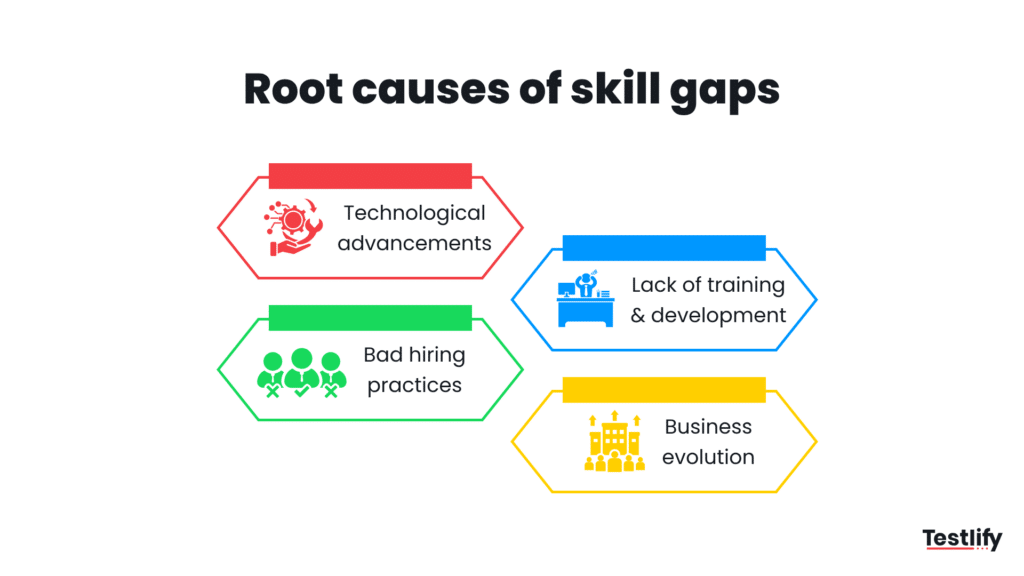
Technology Outpacing the Workforce
Innovation moves very fast in today’s market. There’s always a new software, AI tool, or automated process that rolls out on a daily basis. The world of tech is moving really fast.
Imagine the evolution by thinking about the computers that were used in 2010 and those that are being used now! There’s a huge noticeable difference.
This calls up employees to upskill and keep up with AI and automation. According to IBM research, over 120 million workers across major economies like the US and the UK may need reskilling to keep pace with AI and automation.
The stat above gives a broader picture of the skill issue due to today’s technical advancement. To understand the impact promptly, imagine an IT specialist who’s never trained on cloud platforms. They can slow project rollouts and inflate operational costs.
Insufficient training and development
Hiring a knowledgeable and experienced candidate from a top organization or college doesn’t guarantee they won’t face a skills mismatch down the line.
In most cases, most employees need to upgrade their skills to be a valuable asset to their team. Companies should invest in training and development programs that enhance both hard and soft skills.
According to the latest Training Industry Report, the majority of US companies with over 100 employees invest in training and development programs, with spending exceeding $100 billion in recent years
Without regular workshops or updated training and development modules, employees may feel stuck and leave for better opportunities.
It might make you think about the huge cost upfront but, if you keep on neglecting it, ultimately it may hamper your business. The World Economic Forum reports that upskilling could boost global GDP by $6.5 trillion by 2030.
Poor hiring practices
Hiring the wrong person for a role can lead to long-term skill gaps. A strategic hiring process prevents skill mismatches and improves business efficiency.
Previously, many businesses prioritized quick hiring over skill alignment, leading to costly errors. However, most organizations have now recognized this and focused on avoiding hiring mistakes that cause long-term inefficiencies.
Imagine a company hiring a sales associate with excellent people skills but no experience in B2B sales. The result? Missed quotas, lost deals, and expensive retraining.
To prevent such scenarios, organizations must be proactive and meticulous in the hiring process, ensuring that candidates not only fit the role but also align with the long-term skill demands of the business.
How to identify and address skill issues?
Identification of skills issues and addressing them at the right time can enhance overall company performance and job satisfaction. Let’s break this down into two key areas: how to identify skill issues and how to address them.
Identify skill issues
- Conduct skills assessments – Structured assessments help evaluate employee strengths and weaknesses. Tools like Testlify offer assessments that provide data-driven insights into skill gaps.
- Monitor performance & productivity – Low productivity, frequent errors, or missed deadlines often signal skill gaps. Analyzing work quality and efficiency metrics can help pinpoint specific areas that need improvement.
- Regular feedback – Employees often recognize where they need growth. Regular check-ins and performance reviews help identify training needs before they affect job performance.
Address skill issues
- Implement targeted training & development programs – Providing structured training aligned with business needs is crucial. Companies can invest in hard and soft skill development. For instance, If employees lack analytical skills, workshops on Power BI or Google Analytics can bridge the gap.
- Utilize pre-employment assessment – Hiring right from the start reduces long-term skill gaps. Testlify’s AI-powered assessments help businesses select candidates with the right skills, reducing costly hiring mistakes.
- Promote continuous learning – Encouraging employees to learn regularly helps future-proof their careers. Businesses can offer learning incentives or provide access to self-paced learning tools.
Addressing skill issues isn’t just about training—it starts with hiring the right talent and continuously upskilling teams. Testlify’s talent assessments make it easier to identify gaps and hire smarter.
Final thoughts
Ignoring skill issues may lead to lost productivity, lower employee engagement, and higher turnover. But the good news?
Skill issues aren’t roadblocks; they’re opportunities. Companies that invest in skills development see 2x higher employee retention rates and faster innovation cycles.
With Testlify’s talent assessments, businesses can identify skills gaps before they impact performance, hire candidates with the right job-fit competencies, and support employees in continuous learning.
A proactive approach to skills management doesn’t just fill gaps—it builds a workforce ready for the future.
In today’s rapidly evolving world, your competitive edge isn’t just hiring talent—it’s developing it. The question is, are you ready to act?