
How to attract top talent during a campus hiring drive?
Discover how to attract, assess, and hire top campus talent with smart strategies, employer branding, and tools like Testlify.

A campus hiring drive is a huge opportunity for U.S. companies to build a pipeline of high-potential individuals who will grow on to become thought leaders. However, with increasing competition for top students, simply showing up on campus is no longer enough.
Recruiters must adopt savvy campus recruiting strategies to stand out and attract top university talent. A successful campus recruitment campaign combines a strong employer brand, targeted engagement with Gen Z talent, and well-designed internship programs.
In this blog, we will be exploring in detail how campus recruiters in the U.S can successfully attract top talent in 2026.
 ChatGPT
 Gemini
 Claude
 Grok
Grok Perplexity
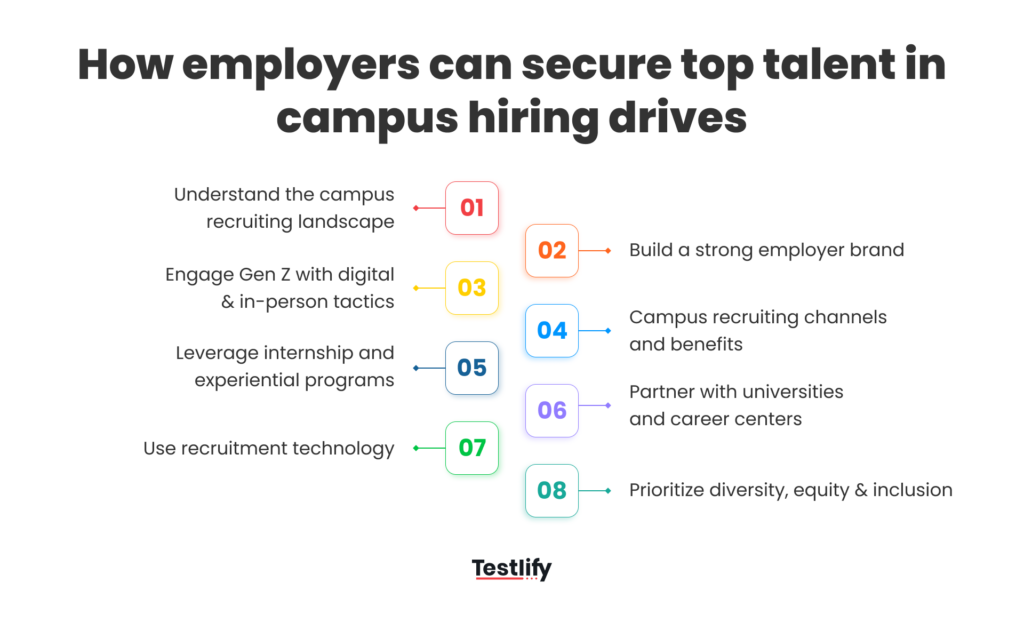
Understand the campus recruiting landscape
Campus hiring drives are a key hiring channel for U.S. employers. Nearly 87 percent of companies plan to hire both interns and full-time graduates through campus hiring efforts. With more employers competing for student attention, recruiters need a clear and focused strategy.
Start by identifying the right campuses based on your hiring needs. Focus on universities known for relevant majors, such as schools with strong STEM programs for technical roles.
Set clear goals early, including the number of applicants you want to attract, diversity targets, and hiring outcomes. Track metrics like application to offer rates and the return on investment from campus events to improve results over time.
Most importantly, recognize what recent college graduates value. Gen Z candidates expect transparency, quick communication, and values-alignment from employers.
Nearly two-thirds of younger workers would “rather make less money at a job they love than work at a boring job underscoring that mission and culture matter.
Use early outreach (even before students set foot on campus) to introduce your company culture. In fact, 72% of students begin planning their careers by sophomore year, so start engagement early with internships or informational events.

Build a strong employer brand
A compelling employer brand is the foundation of campus recruitment. Gen Z students research employers online, talk with alumni, and share opinions on social media. Some best practices for employer branding include:
- Authentic storytelling: Feature real employee testimonials (especially current interns or recent grads) on social media. Short videos or blog posts about “day-in-the-life” at your company can build excitement.
- Campus ambassador programs: Recruit a handful of student ambassadors at target schools who can promote your employer brand among peers. Ambassadors can host info sessions, distribute swag, or post about your internship programs.
- Consistent messaging: Ensure all materials (job descriptions, event flyers, career site) emphasize your key values. For example, highlight flexibility and growth opportunities if Gen Z desires meaningful work.
- Inclusive brand: Showcase diversity and inclusion efforts. Today’s graduates look for employers aligned with their values, including social impact and D&I. Companies that highlight real DEI progress (not just buzzwords) gain an edge.
Engage Gen Z with digital and in-person tactics
Modern campus recruiting is hybrid. Virtual channels extend your reach, but in-person interactions still build personal connections. According to Robert Half, while digital events “erase geographical barriers,” many students still value face-to-face contact. Use a mix of tactics:
- Social media and content marketing: Post job openings and company news on LinkedIn, but also on Instagram or even TikTok, where Gen Z spends time. Share engaging content such as employee stories, career tips, or highlights from campus events to spark student interest.
- Virtual info sessions: Host webinars or live Q&A sessions with recruiters and students. These low-cost events let students from many campuses attend simultaneously.
- On-campus events: Traditional career fairs and employer presentations still matter. Go beyond booths by organizing interactive activities. For example, hackathons are great for attracting top tech talent and showcasing your company’s thirst for innovation.
- Early internships: Maintain year-round engagement by offering summer internships and cooperative education programs. NACE notes that over 70% of organizations plan to increase or maintain intern hiring. Internships give students a taste of your culture and often lead to full-time offers.
- Micro-internships or projects: Consider short-term, paid projects (like Parker Dewey’s model) that students can do remotely. Since 83% of students want skills-based experiences but may feel underqualified, micro-internships bridge the gap with meaningful work.
- Campus ambassadors programs: Formalize the ambassador program. Give students tasks (social media posts, organizing info sessions) and small rewards (mentoring, certificates).
- Leverage influencer outreach: Partner with well-known student groups (clubs, honor societies) or the student newspaper to spread the word about your hiring drive.
Campus recruiting channels and benefits
Channel | Examples | Benefits |
|---|---|---|
Social Media Campaigns | LinkedIn, Instagram, TikTok, Facebook | Broad Gen Z reach; drives awareness and website traffic |
Virtual Events | Webinars, Live Q&As, Virtual Fairs | Low cost; wide geographic reach; accessible anytime |
On-campus Events | Career fairs, Info sessions, Hackathons | Personal connection; deep engagement; brand exposure |
Internship Programs | Summer internships, Co-ops | Build talent pipeline; trial-to-hire conversion |
Partnerships | University career centers, Alumni networks | Trust relationships; direct candidate referrals |
Pro tip: Personalize your approach. For example, run a “hackathon day” with a campus computer science club to spot top coders. Use interactive mini events (coffee chats, contests) to keep students engaged outside formal events. Wherever possible, offer both virtual and in-person options: “hybrid recruiting” is now the new normal.
Leverage internship and experiential programs
Internships are a proven gateway to full-time hires. NACE research shows 70%+ of organizations plan to increase or maintain intern hiring even if overall hiring dips. Strong internship programs do double duty: they give students real-world experience (which 83% of Gen Z crave) and keep your employer brand visible on campus. Consider these practices:
- Formal internship conversions: Aim to increase intern-to-employee conversions. This reduces recruiting costs and onboarding time since interns already know your culture.
- Semester co-ops: In technical fields, offer co-op programs where students rotate between study and full-time work over a semester or year. This deepens engagement compared to a summer internship.
- Micro-internships/projects: Partner with platforms like Parker Dewey or create short-term paid projects (1–3 weeks) for juniors/seniors. This meets Gen Z’s desire for flexible, skills-based experience.
- Intern engagement: Keep interns engaged with meaningful work and mentorship. Provide training, networking events, and project ownership. Satisfied interns become brand advocates, boosting your employer’s image on campus.
- Promote across majors: Don’t limit internships to technical roles. Business, marketing, and operations interns also become influencers on campus.
Data Point: More than 70% of employers say they will increase or maintain intern hiring. Use this trend to your advantage by building robust internship pipelines into your campus recruiting program.
Partner with universities and career centers
Strong university relationships are critical. Career centers and faculty often gate-keep campus hiring opportunities. Cultivate those partnerships early:
- Campus recruiting committees: Offer to join or sponsor career center advisory boards. Engage college placement coordinators by providing detailed job descriptions, salary ranges, and promotional materials well before the fair.
- Alumni networks: Use alumni at your company as advocates. Host events where alumni share experiences with students. Alumni can help “sell” your company since they understand both sides.
- Career fairs & info sessions: Book tables early. To stand out, offer giveaways (company merchandise, gift cards) and interactive demos.
- Campus media: Advertise in campus newspapers or email newsletters. Write a guest piece for the student blog about career tips, subtly mentioning your company. Visibility beyond official events helps your brand. Another effective communication channel is digital signage for education, which enables career centers and universities to promote job openings, internship deadlines, employer presentations, and career fair information on campus screens in high-traffic locations such as libraries, student unions, and cafeterias.
- Student organizations: Sponsor or judge case competitions, hackathons, or club events in fields related to your business. For example, sponsor a finance club stock-pitch contest if you hire analysts. This cements relationships and highlights your company’s interest in students’ development.
- Diversity partnerships: Partner with cultural or affinity groups (Black Student Union, Society of Women Engineers, etc.) to reach diverse talent. Attend HBCU (Historically Black Colleges & Universities) career fairs or veteran service events if diversity is a priority.
Use recruitment technology
Leverage Applicant Tracking Systems (ATS), CRM tools, and analytics to measure outcomes of your campus drive. Key practices include:
- Tracking metrics: Measure where the best candidates come from (e.g., particular campus events, online ads, referrals). Track metrics like offer acceptance rates and recruiting cycle time by source.
- Automate administration: Use ATS or campus recruiting software to manage applications, schedule interviews, and send reminders. This reduces manual work and improves candidate experience.
- Candidate relationship management (CRM): Build a talent pipeline database of interested students (even those not hired). Send periodic updates or event invites to nurture them.
- Tech tools: Utilize platforms such as Testlify for pre-screening candidates with online skills assessments before the fair, so you can focus on quality conversations onsite.
- Mobile-friendly apps: Many Gen Zers prefer applying on mobile. Ensure your careers site and job postings are mobile-optimized.
Using data allows you to improve the efforts of your campus hiring drive and clearly justify the budget to leadership. For example, if Instagram drives more campus event sign-ups than email, you can redirect your budget toward social media ads in future hiring cycles.
Prioritize Diversity, Equity & Inclusion
Generation Z places high importance on diversity and inclusion. Plan your campus recruitment with DEI in mind to tap wider talent pools:
- Recruit diverse campuses: In addition to Tier 1 universities, include HBCUs, Hispanic-serving institutions, and community colleges in your campus list. This broadens the candidate mix.
- Inclusive messaging: In your outreach, highlight commitment to equity (scholarships, employee resource groups, inclusive policies). Use gender-neutral language and images of a diverse workforce in your materials.
- Nontraditional pathways: Offer opportunities for students with unconventional backgrounds. The Parker Dewey report notes 26% of students are “nontraditional learners” juggling jobs or family. Provide evening internships or flexible schedules for such students.
- Skills-based hiring: Don’t overemphasize GPA or pedigree. Consider blind resume reviews or skills tests during campus drives to reduce unconscious bias and identify top campus talent
- D&I on the team: Include a diverse panel of interviewers. Students often feel more comfortable when they see representation among recruiters.
Focusing on inclusive hiring not only widens your talent pool but also strengthens your employer brand among socially conscious Gen Z candidates.
Final thoughts
Campus hiring is moving fast, and recruiters don’t have the luxury of long screening cycles or manual shortlisting anymore. The teams that win early talent today are those that think beyond attendance and applications, and instead focus on delivering a thoughtful candidate experience that reflects their values.
If your goal is to run campus hiring initiatives with up to 6× higher efficiency, Testlify helps you assess and shortlist students early through skills assessments and conversational AI interviews.
Book a demo with Testlify today and identify top campus talent faster.
Frequently asked questions (FAQs)

Content Writer
Yashika Khandelwal is a Content Writer with 3+ years of experience creating research-backed content on hiring, talent assessment, and HR technology. She is a registered Organizational Psychologist and subject matter expert who combines behavioral science with practical recruitment insights to produce accurate, evidence-based content.
LinkedInRelated resources
View all
HR & recruitment
How to determine the right level of difficulty in technical code screening

HR & recruitment
How to integrate problem-solving and critical thinking in programming tests

HR & recruitment
Coding bootcamps: A new frontier in developer hiring

HR & recruitment
Top 10 must-have elements in a successful programming test

HR & recruitment
Avoiding 5 common pitfalls in the developer hiring process

HR & recruitment
IT skills testing: Everything you need to know
Get started.
Hire on proof, not resumes.
Run your first skills-based assessment free — no credit card required.