
Diversity and Inclusion (D&I)
Diversity and Inclusion are key to fostering a culture of innovation, creativity, and growth. Embracing differences allows for unique perspectives and ideas.
 ChatGPT
 Gemini
 Claude
 Grok
Grok Perplexity
What is diversity and inclusion (d&i)?
Diversity is who is in the room; inclusion is whether everyone in the room can genuinely participate.
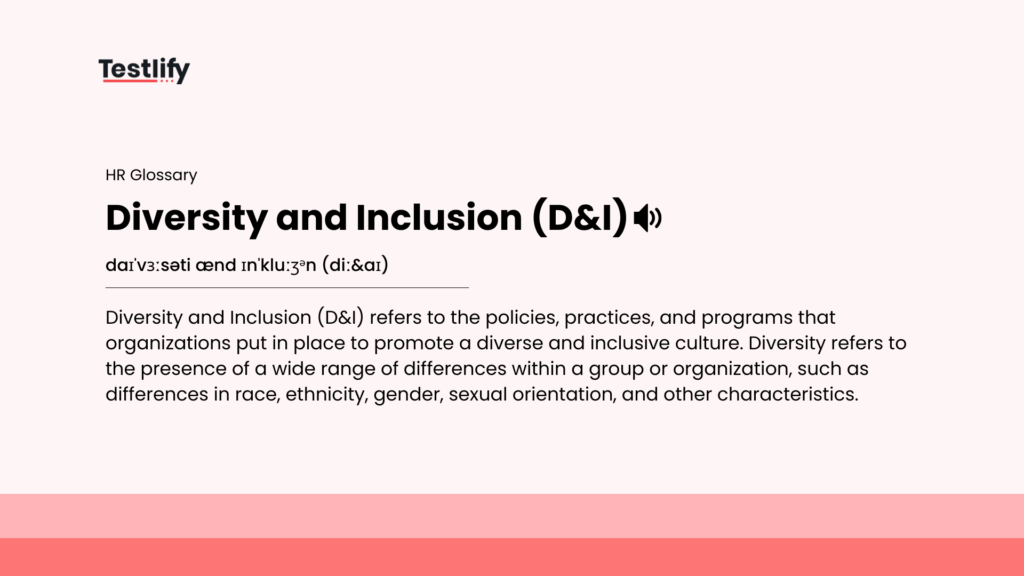
Diversity refers to the presence of a wide range of differences within a group or organization, such as differences in race, ethnicity, gender, sexual orientation, and other characteristics.
Inclusion, on the other hand, refers to the active, intentional, and ongoing engagement with diversity:in other words, creating an environment in which all individuals feel valued and respected, and have equal opportunity to reach their full potential. Together, Diversity and inclusion are key components of creating a culture of equity and belonging. HBR’s diversity and inclusion research shows that organizations ranking in the top quartile for ethnic and cultural diversity are 36% more likely to achieve above-average profitability than those in the bottom quartile.
D&I encompasses not only demographic diversity but also diversity in thought, skill, perspective, experience and so on. It also aims to address the barriers that prevent certain groups from reaching their full potential and actively working towards a more equitable society.
This can include initiatives to increase representation, provide training and education, and create policies and procedures to prevent discrimination and promote inclusiveness.
Characteristics of diversity and inclusion (d&i)
Several key characteristics of Diversity and Inclusion (D&I) are important to creating a culture of equity and belonging:
- Multidimensionality: D&I encompasses a wide range of differences, including but not limited to race, ethnicity, gender, sexual orientation, socioeconomic status, age, physical abilities, religious beliefs, and political beliefs.
- Inclusiveness: D&I is about creating an environment in which all individuals feel valued and respected, and have equal opportunity to reach their full potential.
- Intersectionality: Recognizing that individuals have multiple identities, and that these identities interact and intersect in complex ways.
- Active engagement: D&I is an active and ongoing process, requiring ongoing commitment and effort to create an inclusive culture.
- Equity: D&I aims to create a culture of equity in which all individuals have an equal opportunity to succeed.
- Cultural humility: Showing an openness to learn from others, and a willingness to acknowledge one’s own cultural biases and privileges.
- Holistic: D&I encompasses not only demographic diversity but also diversity in thought, skill, perspective, experience and so on.
- Systemic change: D&I efforts involve creating policies, procedures and systems that support and sustain a more inclusive environment, rather than relying on individual effort alone.
- Continuous learning: D&I requires ongoing learning, education and self-reflection to improve and adapt.
- Measurement: D&I efforts involve tracking progress, and setting measurable goals to achieve and track success.
What is the purpose of diversity and inclusion (d&i)?
The purpose of Diversity and Inclusion (D&I) is to create an inclusive culture in which all individuals feel valued, respected, and have an equal opportunity to succeed.
By valuing and leveraging the unique differences of all individuals, organizations can benefit from a diverse range of perspectives, ideas, and experiences. This can lead to increased innovation, improved decision-making, better representation of customers, and increased productivity and profitability.
Another purpose of D&I is to address and rectify historic and systemic barriers to opportunity and equity, that have led to certain groups being underrepresented and disadvantaged. By actively working towards more diversity, equity, and inclusion, organizations can contribute to a more just and equitable society.
D&I also promotes cultural awareness and understanding, fostering a more inclusive and harmonious environment for all employees, it helps individuals to feel that they belong and can be their authentic selves and also help preventing bias and discrimination in the workplace.
In short, the purpose of D&I is to create a culture that leverages the strengths of diversity, promotes equity and inclusion, and results in better outcomes for everyone.
Benefits of diversity and inclusion at work
Diversity and inclusion are not just buzzwords anymore:they’re powerful drivers of business growth, innovation, and employee satisfaction.
When an organization embraces people from different backgrounds, identities, and perspectives, it opens the door to real progress, not only in terms of workplace culture but also in terms of performance and reputation.
Key benefits include:
- Improved decision-making: Teams made up of diverse members tend to evaluate situations from multiple angles, which often leads to better, well-rounded decisions.
- Higher employee engagement: Employees who feel respected and included are more likely to stay motivated, loyal, and invested in the company’s success.
- Better innovation and creativity: People with varied life experiences and thinking styles can spark new ideas and challenge traditional ways of working.
- Access to a broader talent pool: Companies that prioritize diversity naturally attract a wider range of candidates, increasing the chance of finding top talent.
- Positive employer branding: A reputation for inclusivity enhances the company’s image in the job market and among customers, especially Gen Z and millennials who value social responsibility.
- Reduced employee turnover: Inclusive workplaces tend to have lower attrition rates, as people are less likely to leave an organization where they feel valued and understood.
- Better financial performance: Several reports, including from McKinsey, show a clear correlation between diverse leadership teams and higher profitability.
Diversity and inclusion are no longer optional:they are competitive advantages in today’s global and socially conscious work environment.
Diversity and inclusion in the workplace examples
Understanding the theory is one thing, but seeing diversity and inclusion in action makes the concept more relatable and real. Below are some practical examples of how organizations bring D&I to life:
Examples:
- Blind hiring practices: Removing names, photos, and other bias-triggering details from resumes to focus purely on skills and experience.
- Employee Resource Groups (ERGs): Companies like Microsoft and Accenture support ERGs that represent specific identities or experiences (e.g., LGBTQIA+, women in tech, veterans) to build community and provide peer support.
- Culturally inclusive holidays: Allowing floating holidays so employees can celebrate events that are meaningful to their culture or religion, instead of being limited to traditional public holidays.
- Inclusive language in communication: Replacing gendered terms like “chairman” with neutral ones like “chairperson,” and using “they” instead of assuming gender pronouns.
- Leadership training on unconscious bias: Equipping managers with tools to recognize and interrupt bias during hiring, performance reviews, and promotions.
- Flexible dress codes: Respecting cultural or religious attire preferences, such as hijabs, turbans, or protective hairstyles like locs or braids.
- Supplier diversity programs: Partnering with vendors and businesses owned by minorities, women, veterans, or people with disabilities to expand inclusion beyond the company walls.
These are actions that show a company’s commitment to equity and representation across all levels. SHRM research confirms that 55% of job seekers consider diversity an important factor when evaluating job offers, making D&I strategy directly linked to talent acquisition effectiveness.
D&I programs strengthen both organizational performance and talent attraction outcomes. Using pre-employment assessments alongside a structured hiring plan drives compliance. Strong talent acquisition practices focused on skills-based hiring improve outcomes.
Frequently asked questions
Diversity refers to the presence of differences : representation of varied demographic, cognitive, and experiential backgrounds. Inclusion refers to the culture and practices that ensure diverse individuals feel valued, heard, and able to contribute fully. Diversity is who is in the room; inclusion is whether everyone in the room can genuinely participate. You can have diversity without inclusion : but inclusion requires diversity to fully realize its potential.
Cite this page
Copy a ready-made citation for this page in your preferred style.
- APA
Testlify. (2023). Diversity and Inclusion (D&I). https://testlify.com/hr-glossary/diversity-and-inclusion-di/
- MLA
"Diversity and Inclusion (D&I)." Testlify, 12 January 2023, https://testlify.com/hr-glossary/diversity-and-inclusion-di/.
- Chicago
Testlify. "Diversity and Inclusion (D&I)." Testlify. Last modified September 14, 2026. https://testlify.com/hr-glossary/diversity-and-inclusion-di/.
- HTML link
<a href="https://testlify.com/hr-glossary/diversity-and-inclusion-di/">Diversity and Inclusion (D&amp;I)</a>, Testlify (2023)
Related terms
Domestic HRM
Domestic HRM manages human resources within a single country, including recruiting, hiring, training, and managing employees, as well as compliance with national labor laws.
Domestic Inquiry
A Domestic Inquiry is a formal investigation into alleged misconduct or violation of company rules by an employee, conducted by an impartial party with evidence-based findings and due process rights for the employee.
Downshifting
Downshifting refers to a lifestyle choice where an individual reduces their work hours, income, or status to pursue other activities, achieve a better work-life balance and increased fulfillment in their personal and professional life.
Downsizing
Downsizing refers to the process of reducing the size of a company, organization or workforce.
Draw
Draw refers to a situation where a game or competition ends with no winner or loser, or in an organization, where there is no clear winner or loser in a decision-making process, requires tie-breaking or compromise to resolve the outcome.
Dual Career Ladder/Track
Dual Career Ladder/Track is a type of employment structure where employees have opportunities to advance in two separate but related career paths, providing flexibility, career development and retention while increasing productivity, but also requiring employees to balance multiple roles and responsibilities.
Get started.
Hire on proof, not resumes.
Run your first skills-based assessment free — no credit card required.