
What is live proctoring? Secure online exam guide
Learn how live proctoring ensures test integrity and discover how Testlify merges AI and human support for secure online assessments.
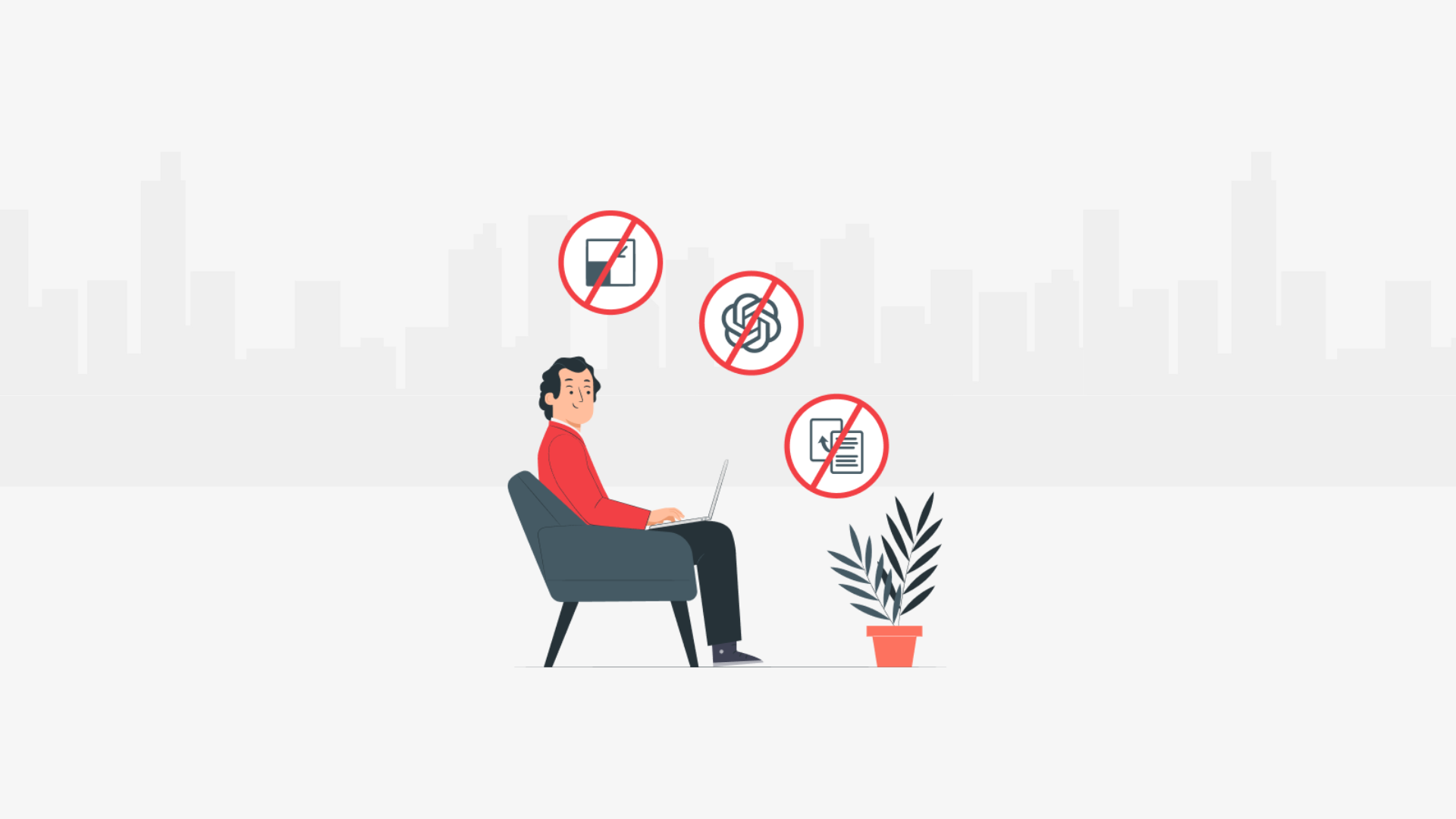
Online assessments have become the new normal. Remote proctoring has made it simpler to conduct tests at any time and from any location. However, this convenience introduces complexities, particularly when exam integrity is at stake.
While over 65% of institutions are already using or considering AI-powered proctoring to scale online assessments, it’s easy to assume that automation can fully replace human oversight.
But the question remains: Is technology alone sufficient to guarantee academic honesty and test security? This is precisely where live proctoring, also known as live online invigilation, comes into play.
This blog explores the definition, operation, and reasons for the continued importance of live proctoring in the current hybrid assessment environment.
 ChatGPT
 Gemini
 Claude
 Grok
Grok Perplexity
What is live proctoring?
Live proctoring is the real-time supervision of online exams by human proctors who monitor candidates through webcams, screen-sharing, and audio to prevent cheating and maintain test integrity.
This method allows the human invigilator to verify identities, monitor candidate behavior, and even communicate with test-takers if necessary.
Live proctoring, in contrast to fully automated systems, enables prompt human intervention whenever questionable behavior is noticed.
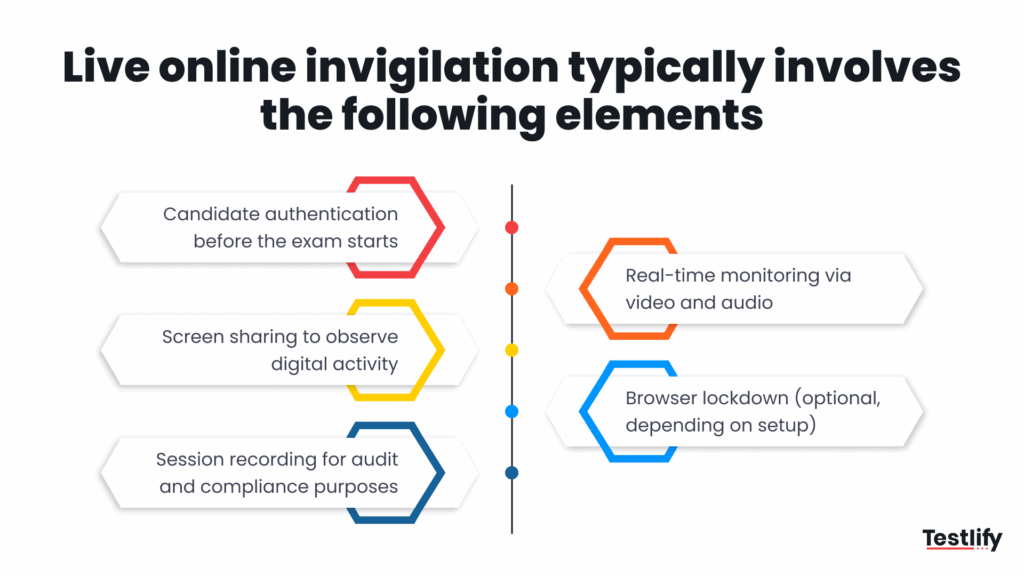

How does live proctoring work?
Live online invigilation blends tech and human supervision. Let’s break it down step by step:
1. Candidate logs in and verifies identity
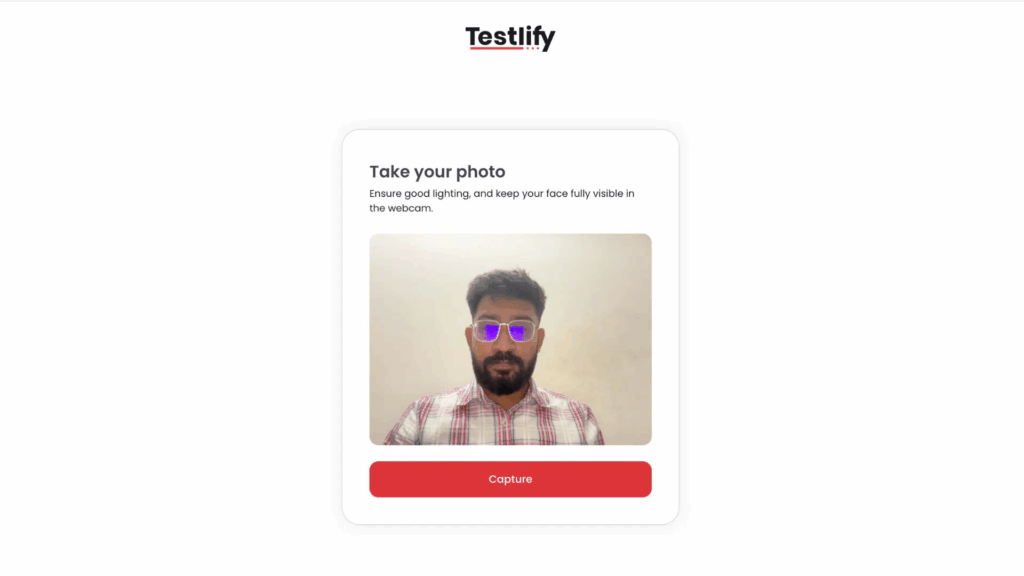
Before the exam begins, the candidate goes through identity verification. This could be a photo ID check, face scan, or live authentication. The process is in place to ensure that the person taking the test is indeed who they claim to be.
2. System check and environment scan
Once the candidate is logged in, a friendly proctor (a real person!) will quickly check their setup. Proctors ensure that the candidate’s screen sharing, webcam, and microphone are working, and they may also ask candidates to show them their testing area.
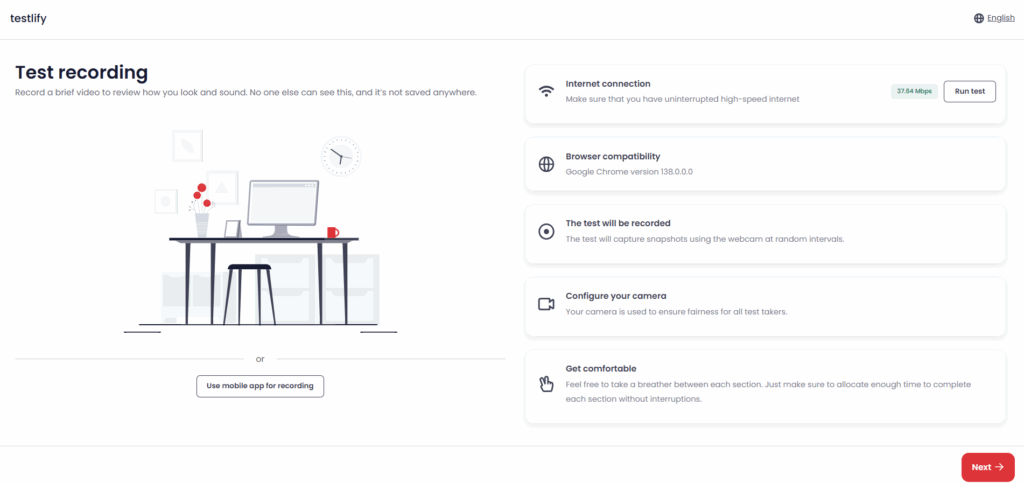
With Testlify, the system automatically checks the candidate’s internet speed, browser compatibility, webcam, and mic before the test begins. This ensures a seamless experience for both the candidate and the proctor.
The clean, user-friendly setup page helps test-takers confidently prepare their environment, reducing last-minute hiccups or support tickets.
3. Live monitoring begins
Now the exam starts. Throughout the session, the proctor monitors everything in real-time. They do not just look for cheating; they watch for odd behavior, background noise, or anything that doesn’t feel right.
4. Real-time intervention if required
If something seems off, the proctor can step in immediately. They can send a warning, pause the test, or even end the session depending on the situation.
5. Exam ends, and the session is recorded
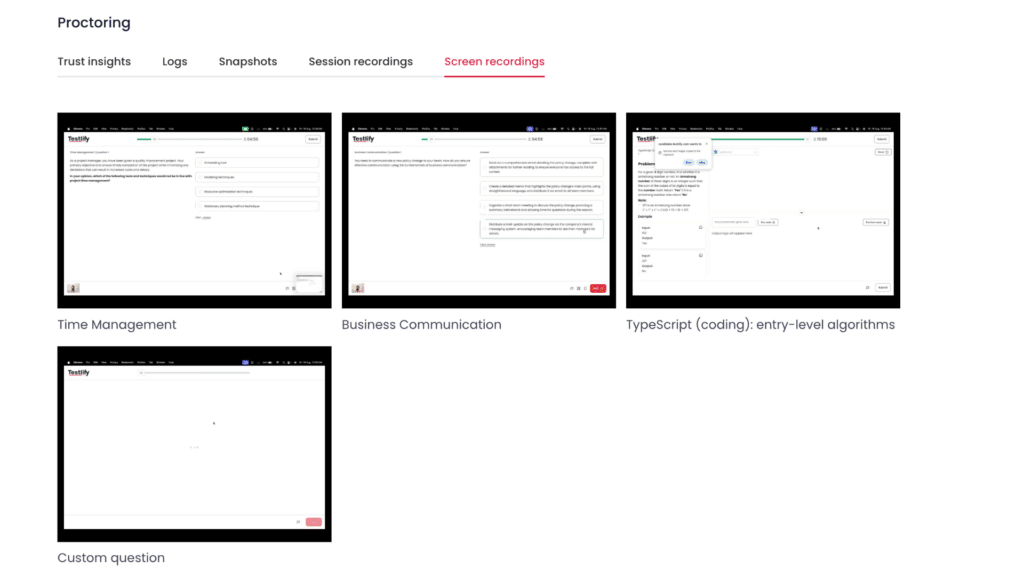
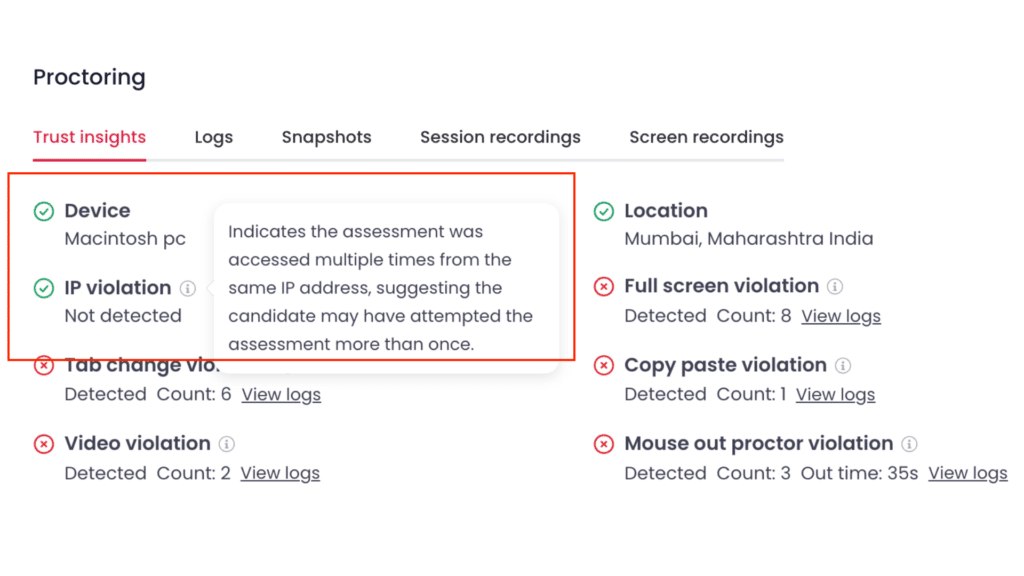
Everything is saved after the test. Later, this recorded session can be used for audits, disputes, or to ensure that academic integrity and GDPR compliance are maintained.
Benefits of live proctoring
Online examinations can benefit from technology, but there are instances where live proctoring is essential. Why live proctoring matters: and why still institutions trust real people against automated-only solutions:
Immediate human support
If something goes wrong during an exam, or if a student encounters sudden technical issues or accidentally breaks a rule, there is someone who can intervene immediately.
Unlike automated proctoring, human invigilators can act with empathy and help resolve problems quickly rather than flagging them.
Accurate judgment and fairness
Sometimes, peculiar situations arise during exams. Maybe somebody’s internet cable got cut, or the webcam froze. AI might misclassify this as cheating.
On the other hand, people can determine the context of events and carefully evaluate the situation to uphold fairness for every candidate.
Builds trust and confidence
Students taking important exams often feel nervous or stressed. Knowing a real person is available to guide them or handle unexpected difficulties can significantly lower anxiety, creating a more comfortable test-taking environment.
Ideal for high-stakes exams
Tests that carry serious consequences, whether certification exams, professional licensing tests, or university finals, cannot rely solely on technology.
Live proctoring provides enhanced test security and protection of academic integrity, ensuring exam results are credible and reliable.
Clear identity verification
Real proctors verify each test-taker’s identity carefully. They check identification documents, match faces, and ensure the right person is taking the test. This additional layer of verification helps ensure exams are secure and credible.
The bottom line is simple: live proctoring combines technology and human insight, creating an exam process that’s both secure and fair. Even in our increasingly digital world, the human touch still matters.
Challenges and limitations of live proctoring
Live proctoring offers numerous outstanding benefits, but, of course, it also comes with a series of challenges. Working with both people and technology often presents certain practical issues or limitations. Let’s be straightforward about some of these challenges:
Internet and technical issues
One major disadvantage of live online invigilation is that it relies heavily on stable internet connections. Suppose a candidate is working on a weak internet connection; they might occasionally experience video lagging, freezing, or audio cutting out.
This can interrupt the exam and affect the overall test environment. Not every student has access to reliable internet, and that’s a challenge that can’t be ignored.
Cost and resource-intensive
Hiring trained human invigilators for real-time monitoring isn’t cheap. Unlike AI-powered proctoring, live proctoring involves ongoing staffing costs. If you have thousands of students or candidates taking live proctored exams, this can quickly add up and become expensive.
Limited scalability
Most automated systems can monitor hundreds or thousands of exams at once, whereas live proctoring depends on human supervision. There is basically an upper limit to the amount that one proctor can observe in an exam satisfactorily.
Large-scale online proctoring sessions, if held on a frequent basis, would thus be hard to accommodate.
Human errors and bias
One benefit of live proctoring is human judgment, but this can also become a drawback. Proctors might make mistakes, misinterpret certain actions, or unintentionally exhibit bias.
Unlike automated systems, human decisions aren’t always consistent. This can sometimes lead to questions around fairness and academic integrity.
Privacy concerns
With constant video and audio surveillance, students often feel uneasy about their privacy during exams.
Although proctors are trained to handle personal data securely and responsibly, some candidates might still feel uncomfortable knowing they’re being closely watched.
Ensuring proper GDPR compliance and clear transparency about data usage is critical, but still challenging.
Fatigue and reduced attention
Proctors are human, and like all humans, they get tired. Watching screens for hours at a time can create fatigue, which in turn reduces their effectiveness in maintaining strong cheating prevention measures.
An automated mechanism would catch suspicious behavior regardless, but a tired proctor could very well miss it, thereby possibly putting the entire test at risk.
Scheduling and time zone issues
Live proctoring requires scheduling around proctor availability. If your candidates are spread across different countries or time zones, finding suitable time slots becomes challenging.
Some candidates may end up taking tests at inconvenient hours, making it harder to ensure fairness and equal conditions for everyone.
Where is live proctoring used?
You might be wondering: “Who actually uses live proctoring and in what situations?” The truth is, it’s more common than you might think.
Schools, companies, and certification bodies around the world are now using live online invigilation whenever issues of fairness and security truly are at stake. Let’s explore some of the most common scenarios:
Setting | Why a live proctor makes sense |
|---|---|
Universities & colleges | Final exams, admissions tests, and even take-home quizzes now happen online. A live invigilator checks IDs, watches the screen share, and jumps in if a student’s connection or behavior goes sideways. |
Professional certifications (CPA, PMP, nursing boards) | Credentials impact careers and public safety. Real-time monitoring and recorded evidence enable boards to defend pass/fail decisions in court or audits. |
Corporate training & compliance | Firms use live proctoring for mandatory security or ethics tests. If an employee’s webcam or mic fails, a live proctor can pause the exam, saving retakes and frustration. |
Government & public-sector exams | Civil-service, licensing, and entrance exams demand watertight test security. Live proctors confirm candidate authentication, keep detailed logs, and ensure equal treatment across time zones. |
MOOCs & global e-learning platforms | Coursera, edX, and similar platforms attach verified certificates to some courses. Live proctoring reassures employers that the person who earned the badge actually did the work. |
Live proctoring vs AI proctoring vs hybrid proctoring
When you’re planning an online exam, you’ve got three main ways to keep things fair: live proctoring, AI proctoring, or a hybrid of both. Each has its strengths and weaknesses. Let’s break them down simply:
1. Live proctoring (Real humans watching)
With live proctoring, an actual person supervises the exam using webcam monitoring and screen sharing. They can directly interact with candidates, handle problems immediately, and judge situations with context.
Strengths | Weaknesses | Best for |
|---|---|---|
Real-time help if something goes wrong. | It’s usually more expensive. | High-stakes tests, such as professional certifications or university finals, where academic integrity and fairness can’t be compromised. |
Proctors can clearly understand the context | Harder to scale if you have many candidates. |
2. AI proctoring (Fully automated)
AI-powered proctoring means the software does all the monitoring. AI watches for suspicious behaviors, such as frequent glances away from the screen, background noise, or multiple faces appearing. The software flags these issues automatically for later review.
Strengths | Weaknesses | Best for |
|---|---|---|
Affordable and easy to scale, even when thousands of students are being tested simultaneously. | AI often flags innocent behaviors, causing unnecessary stress. | Low-stakes tests or practice exams, where cost-effectiveness and scalability are most important. |
Excellent at spotting obvious cheating patterns. | No real-time human support |
3. Hybrid proctoring (AI & human review)
Hybrid proctoring combines the strengths of both methods. AI handles most monitoring, but real people step in if the software flags potential cheating. It’s a balance between technology and human judgment.
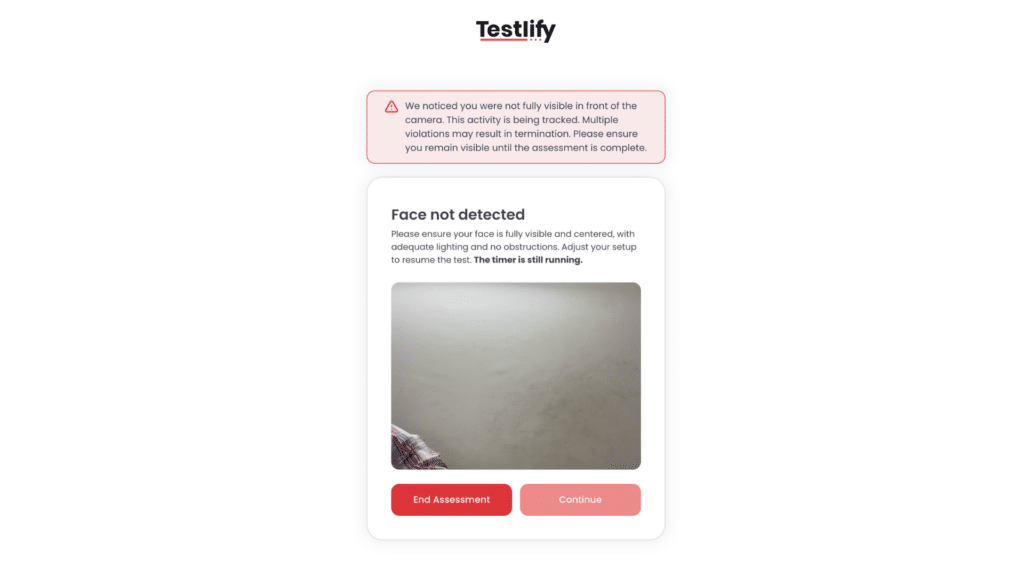
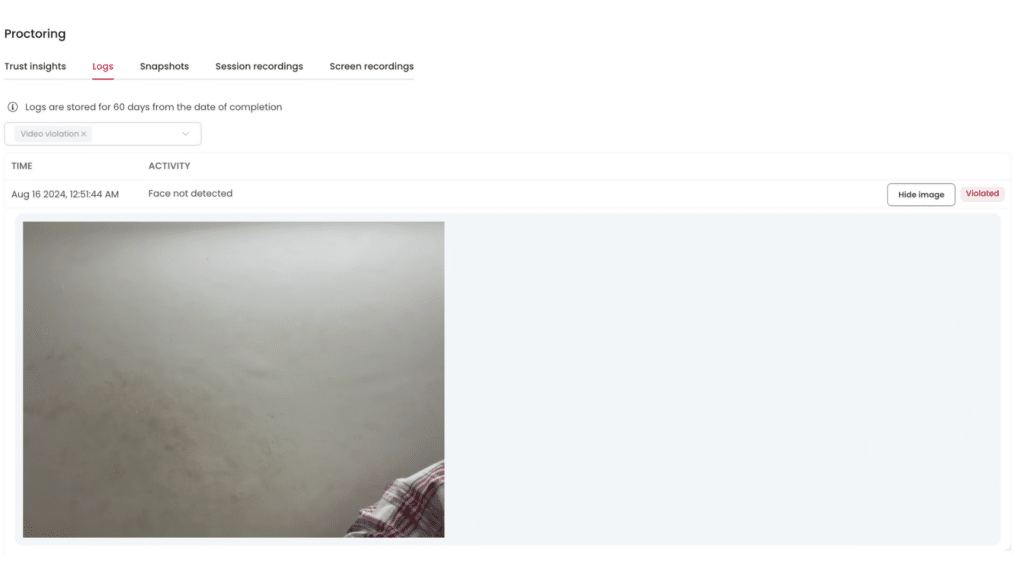
Testlify uses intelligent video violation detection. If a candidate leaves the frame or their face is not visible, the system flags the session and optionally pauses the test.
Hiring managers or academic admins can set the threshold, like how many violations result in auto-disqualification. This offers control without full manual supervision.
Strengths | Weaknesses | Best for |
|---|---|---|
Good balance of cost, accuracy, and human support. | More expensive than pure AI solutions. | Mid to high-stakes exams, or any situation where you need accuracy and fairness without breaking the budget. |
Easier to scale than fully live proctoring. | Humans only intervene if AI flags an issue. |
So, which one should you pick?
- Choose live proctoring when accuracy and fairness outweigh costs and scalability.
- Select AI proctoring when cost savings and handling large groups are most important.
- Go hybrid if you want a practical mix: fair, affordable, and scalable enough.
If handling multiple platforms sounds like a nightmare, Testlify has your back. With Testlify, you don’t have to choose just one type. You can go from live to AI to hybrid depending on your exam requirements.
It’s a one-stop solution trusted by teams who care about cheating prevention and test security.
Final thoughts: Is live proctoring still relevant?
Let’s be real: technology has changed how we take exams, but humans haven’t gone out of style. Sure, AI proctoring can save money and handle a large number of tests simultaneously.
Still, it cannot read a candidate’s facial expressions, offer instant help, or assess context as effectively as a person can. That’s why live proctoring isn’t going anywhere, for now at least.
The truth is, there’s no perfect proctoring method; each has its strengths. But a platform like Testlify makes the decision easy. You don’t have to pick sides. Whatever your test requires, Testlify has it covered, all in one place.
Ready to streamline your online exams? Try Testlify and simplify proctoring once and for all.
Frequently asked questions (FAQs)

B2B SaaS Content Writer
Rishav Kumar is a B2B SaaS content writer with 4 years of experience. He loves crafting engaging content. Always exploring fresh ideas, he's passionate about helping businesses grow through impactful writing.
LinkedInRelated resources
View all
Proctoring
What is remote proctoring? Ultimate guide
Proctoring
AI-powered proctoring: how it works and where it fits
Proctoring
What is automated proctoring? Explained simply
Proctoring
What is online proctoring? A simple guide
Proctoring
How to set up a proctored exam: A simple guide for secure online assessments
Proctoring
Online proctoring services compared: top 5 tools vs Testlify
Get started.
Hire on proof, not resumes.
Run your first skills-based assessment free — no credit card required.