
Why U.S. employers use mental health perks to attract top talent
Discover why companies in the US are prioritizing mental health and leveraging wellness perks to not only support their employees but also attract top talent
 ChatGPT
 Gemini
 Claude
 Grok
Grok Perplexity
Introduction
The COVID-19 pandemic dramatically destigmatized mental health issues and amplified employee expectations for support. As a result, organizations across industries have made mental well-being a central focus.
In fact, 90% of employers now offer mental health benefits, up from 84% just a few years ago. This surge reflects a broader realization: prioritizing employee well-being is not only the right thing to do, but also a powerful lever to attract and retain top talent.
Recruiters and HR leaders are increasingly using wellness perks, ranging from counseling services and stress management programs to flexible work arrangements, to differentiate their company culture.
This article examines the rise of mental health benefits in the U.S. and why these perks are so attractive to today’s workforce.

The rise of wellness perks
Not long ago, corporate health benefits primarily meant medical insurance and perhaps a gym stipend. Now, mental health coverage and wellness programs are virtually standard. A recent SHRM survey shows the vast majority of U.S. organizations offer mental health coverage as part of their benefits.
This represents a significant increase from pre-2020 levels, underscoring how the pandemic served as a catalyst for change, prompting employers to enhance related benefits and telehealth solutions.
Crucially, this is not a temporary trend. Surveys indicate that companies plan to continue expanding wellness offerings in the years ahead. Despite economic uncertainty, 93% of employers say they will maintain or increase well-being benefits in 2025.
In a survey of large global employers, fully 100% included mental health in their well-being strategy, and nearly half ranked it as the number-one priority. These numbers confirm that supporting mental and emotional health is now viewed as a core component of workforce strategy, not an optional add-on.
This boom in benefits spans a variety of programs. Employee Assistance Programs (EAPs), which provide counseling and referrals, are among the most common offerings. Employers have also rolled out stress management workshops, mindfulness training, resiliency coaching, and more.
Telemedicine and digital health have made mental health services more accessible than ever – 95% of multinational employers now offer teletherapy options (virtual counseling sessions) to their people.
Additionally, many organizations added or expanded coverage for therapy sessions through third-party providers. For instance, Starbucks began offering all U.S. employees and their family members up to 20 free therapy sessions per year via a partner platform in 2020
The proliferation of wellness perks isn’t limited to tech giants or progressive brands. Across corporate America, employers large and small recognize that mental well-being is integral to employee performance.
Research compiled by the Global Wellness Institute shows that organizations embedding well-being into their culture see tangible results like 10% higher employee retention and up to 20% higher productivity.
When workers feel supported, they are more engaged, innovative, and less frequently absent due to illness or burnout. These outcomes build a strong business case for sustained investment in wellness.
Skeptics who once questioned the ROI of such programs are coming around, as data links well-being to both improved lives and better business performance. In short, mental health benefits have graduated from peripheral “extras” to strategic imperatives in the workplace.
Why wellness perks attract top talent
Beyond improving employee lives, wellness benefits have become a magnet for talent. Today’s job seekers, especially Millennials and Gen Z, evaluate potential employers by the breadth and depth of their benefit offerings.
According to a Glassdoor survey, 60% of job candidates say that perks and benefits significantly influence their decision to accept a job offer. In fact, many employees would prefer additional benefits over a pay raise when weighing a new role.
Compensation will always matter, but an attractive benefits package can tip the scales for a candidate choosing between offers.
For example, some companies emphasize unlimited PTO and mental health days to signal a culture of trust and self-care. Others might highlight a generous wellness stipend that employees can use for anything from gym memberships to meditation retreats.
The goal is to make benefits memorable and reflective of what the organization stands for. Employers who ignore these expectations risk alienating a massive segment of emerging talent. Conversely, those who offer wellness perks are more likely to attract energized, loyal young professionals who appreciate those investments in their quality of life.
Flexibility and wellness: Two sides of the same coin?
Flexibility also deserves special mention as an invaluable “benefit” tied to mental health. While not a benefit in the traditional sense, flexible work arrangements (remote work options, hybrid schedules, flexible hours, etc.) are consistently cited as one of the most valued perks for improving well-being.
Flexibility gives employees a sense of control over their work and personal lives, which reduces stress. Leading employers have come to view flexibility and mental health support as intertwined aspects of a modern benefits strategy.
Both address the holistic needs of employees, and both are highly attractive to talent. When a company can say it offers remote work options, mental health days, counseling services, and wellness stipends in addition to competitive pay, it gains a recruiting edge as an employer of choice.
Wellness perks as a competitive differentiator
Top employers now intentionally brand their benefits package as part of their Employee Value Proposition (EVP). Rather than quietly matching industry standards, they actively promote unique perks that align with their mission and workforce demographics.
Another dimension of differentiation is personalization and flexibility in benefits. A one-size-fits-all package is less likely to impress today’s diverse workforce.
Many employers are introducing benefit choices or flexible benefit accounts that let employees tailor perks to their needs. This trend includes offerings like lifestyle spending accounts (LSAs), essentially wellness wallets that employees can spend on activities or services of their choosing.
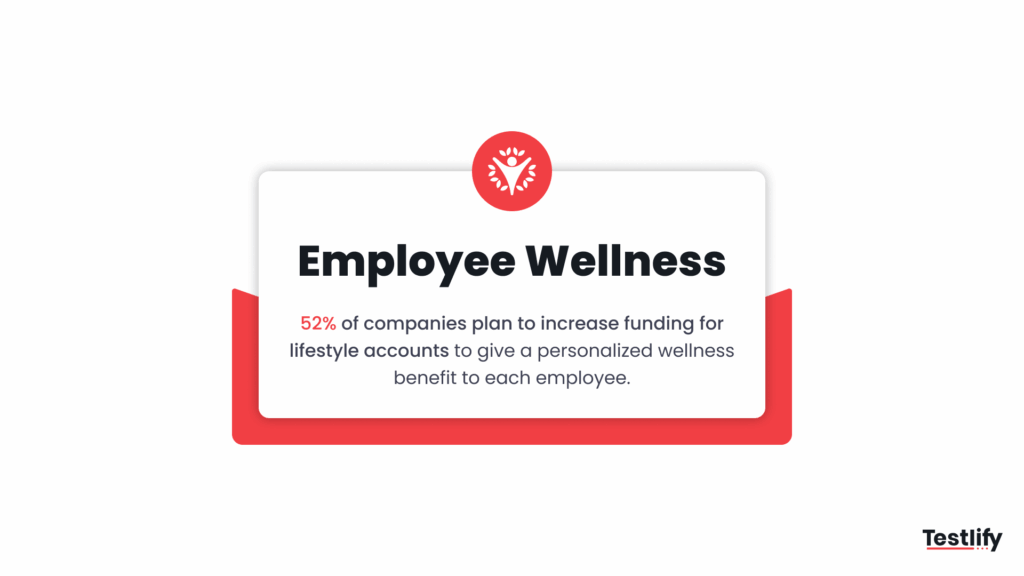
By allowing workers to choose the wellness perks most meaningful to them, employers demonstrate an extra level of commitment to individual well-being. Such flexibility is itself a selling point to recruits who have varied definitions of “wellness.”
Crucially, companies are not just adding benefits; they are communicating them more prominently in hiring and retention efforts. Job postings, careers websites, and recruitment pitches now often feature wellness perks front and center.
As a result, phrases like “comprehensive mental health coverage,” “employee well-being program,” “paid volunteer days,” and “flexible PTO” are highlighted to catch the eye of top talent. During interviews, recruiters and hiring managers are spending more time discussing benefits and how the company supports work-life balance, because these factors can sway candidate decisions.
In essence, we’ve reached a point where wellness perks are a key battleground in the competition for talent. Employers not only must keep up with the market standard (e.g., offering EAP access or mental health insurance parity), but also find creative ways to stand out.
Case studies: Wellness strategies in action
Real-world examples illustrate how wellness perks are being implemented to positive effect. Let’s look at a couple of cases that highlight best practices and tangible outcomes:
1. Starbucks – free therapy and holistic support
Starbucks provided all of its U.S. employees (including part-timers) and their eligible family members with access to 20 free therapy sessions per year through a partnership with Lyra Health. Starbucks also offers free subscriptions to the Headspace meditation app and other wellness resources as part of its “Health & Well-Being” package
According to Starbucks leadership, these mental health perks quickly became some of the most appreciated and widely used benefits, especially among younger employees.
In an industry with relatively high turnover, offering valued benefits has helped Starbucks recruit and retain staff. The coffee chain’s interim CEO noted that free mental healthcare and even unconventional perks like Spotify subscriptions were instrumental in keeping employees engaged during a challenging period.
2. Marsh McLennan – Digital well-being tools
Global professional services firm Marsh McLennan tackled employee well-being by leveraging digital tools to complement its wellness programs. The company introduced a suite of online resources and apps for its 20,000+ employees, including stress tracking apps, virtual fitness classes, and teletherapy platforms as part of a coordinated well-being strategy. The results were impressive: Marsh McLennan boosted staff well-being and saw improvements in productivity and job satisfaction across its workforce.
By meeting employees where they are and making wellness accessible anytime, the firm increased participation in health initiatives. This digital-first approach proved especially useful for engaging a dispersed, hybrid workforce. Marsh McLennan’s success demonstrates that investing in innovative wellness technology can yield measurable gains in engagement.
Through these examples, a few common threads emerge. Successful wellness programs need executive support and adequate resources; they benefit from being tailored to employee needs (often via feedback or surveys), and they should be communicated effectively so employees know what’s available.
When done right, the payoff is a healthier, happier workforce and a stronger ability to attract new talent who see the organization living its values. Moreover, these initiatives often complement one another: time off policies work better when paired with a culture that truly encourages their use; digital tools gain adoption when integrated into broader wellness campaigns.
Integrating wellness with recruitment and onboarding
For maximum impact on talent attraction, wellness strategies should extend into the recruitment and onboarding phases of employment. It’s one thing to have great benefits on paper; it’s another to convey and deliver that experience to candidates from day one. Employers are now consciously weaving wellness into their talent acquisition processes in several ways.
Firstly, employer branding and recruitment marketing efforts highlight wellness commitments. As mentioned, job listings and career sites proudly list mental health perks and flexible work options. Some organizations share employee testimonials or blog posts about their well-being programs to add credibility.
Recruiters are trained to discuss how the company supports work-life balance during interviews, not just as a selling point, but to set accurate expectations of a supportive culture. It helps prevent a disconnect between what’s promised during hiring and the reality inside the organization.
Secondly, the candidate experience itself is being designed with empathy and reduced stress in mind. The hiring process can be fraught with anxiety for candidates; forward-thinking employers recognize this and take steps to make the process humane.
For example, some provide candidates with tips on self-care and managing interview stress, or simply build in adequate breaks during day-long interview panels. Others leverage technology to simplify assessments and interviews.
This is where tools like Testlify come into play. Testlify is a conversational AI-powered skills assessment tool that many recruiters use to efficiently evaluate candidates’ capabilities and cultural fit.
By crafting candidate-friendly assessments, employers can create a hiring process that is both rigorous and respectful of candidates’ time and energy.
Clear instructions and a supportive tone in assessment invitations can go a long way toward easing candidates’ nerves. Instead of an intimidating gauntlet, skills tests can be positioned as an opportunity for candidates to shine in a fair and unbiased way.
Testlify, in particular, allows companies to assess a wide range of skills from cognitive abilities to technical know-how and even behavioral traits. This can complement wellness strategies by helping identify candidates who will thrive in the company’s culture.
In essence, using a skills assessment tool such as Testlify in recruitment can demonstrate organizational competence and care, reinforcing that the company will likewise care for employees post-hire.
Additionally, employee onboarding programs are being aligned with wellness goals. Once a candidate becomes a new hire, the first weeks are crucial for setting the tone. Progressive HR teams ensure that orientation includes an overview of all wellness benefits and how to access them.
Rather than burying this information in a handbook, they might host a dedicated well-being orientation session. New employees could hear from wellness coaches, EAP representatives, or even the CHRO about the resources available for mental and physical health.
This focus during onboarding is not only good for the employee but also for the employer’s reputation. When new hires have a positive, supportive onboarding experience, they are more likely to share their experience with others, indirectly boosting the company’s talent brand.
Final thoughts
As we’ve seen, the majority of employers plan to keep growing their wellness initiatives, with mental health at the center. They are doing so not just out of altruism, but because it yields results in lower absenteeism, higher productivity, and a workforce that’s engaged rather than burned out.
For recruiters and HR leaders, the mandate is to integrate wellness thinking into every facet of talent strategy. That means continuing to innovate benefits packages, regularly benchmarking against industry trends, and, importantly, communicating the value of these benefits to current and prospective employees.
Finally, leadership must champion a culture where wellness is embedded in daily operations. As the Global Wellness Institute noted, organizations that make well-being a core business strategy (not a peripheral HR program) gain a competitive advantage in retention and attraction.
For further reading, explore Home Health Aide.
Frequently asked questions (FAQs)

Related resources
View all
Mental Health
Why HR teams optimize recruitment budget for AI-first Hiring
HR & recruitment
AI across all stages of the hiring process in 2026

AI in recruitment
Best practices for hiring data analysts using assessments?

Candidate assessment
What tools support voice responses for language proficiency testing?

Candidate assessment
How do ATS-integrated assessments streamline hiring workflows?
Candidate assessment
How to assess financial modeling and accounting skills pre-hire?
Get started.
Hire on proof, not resumes.
Run your first skills-based assessment free — no credit card required.