
HR checklist for 2026: Key steps you can’t miss
Discover the essential HR checklist and key steps to streamline hiring, onboarding, and compliance for efficient talent management.
More than 40% of Human Resource (HR) professionals experience recruiter burnout. Though this could be due to several reasons, the main culprit is the tiresome hiring process.
What if there was a guide that could help recruiters navigate this process easily? This is exactly what the HR checklist helps with.
These checklists keep the talent acquisition team organized and efficient, streamlining hiring, onboarding, and other HR functions. Let’s see how HR checklists can simplify and improve HR functions.
 ChatGPT
 Gemini
 Claude
 Grok
Grok Perplexity
What is an HR checklist?
An HR checklist is a guide human resources teams use to organize and track essential tasks and processes in managing employees. It provides a structured way to handle various responsibilities, such as:
- Onboarding new employees: This includes completing necessary paperwork, providing training, and helping new hires adjust to their roles and workplace.
- Job descriptions: Ensuring all job roles are clearly outlined and effectively communicated to set expectations.
- Compliance tasks: Verifying that the company adheres to employment laws and regulations, such as workplace safety, fair pay practices, and record-keeping requirements.
HR checklists help professionals stay organized and prevent critical steps from being overlooked during hiring, onboarding, or other HR activities. These checklists can be simple lists for routine tasks or more comprehensive templates designed to cover complex HR processes.

Why do HR checklists matter?
A practical HR checklist acts as a to-do list that helps HR understand various hiring procedures and ensure employees follow them.
Ensuring compliance with employment laws and regulations provides clear guidance to HR managers, helping them avoid legal and financial penalties.
It also provides direction for managing the workforce, including recruitment, training, performance management, workers’ compensation, onboarding, and offboarding.
HR checklists are key in promoting fairness and accountability within the workplace. They ensure that all employees are treated equally and fairly, helping to build a positive work culture and reducing the risk of bias or discrimination.
By standardizing processes, checklists contribute to a more equitable environment where everyone is held to the same standards.
Additionally, checklists allow hiring managers to shift their focus from administrative duties to more strategic initiatives, which drive organizational growth and success.
How to create an HR checklist?
To create an effective HR checklist, define its purpose, such as onboarding new employees or ensuring compliance with legal requirements.
Review the processes or activities the checklist will cover to ensure it addresses the needs of managers and employees. List the key steps in each process, ensuring all necessary tasks are included to avoid missing important details.
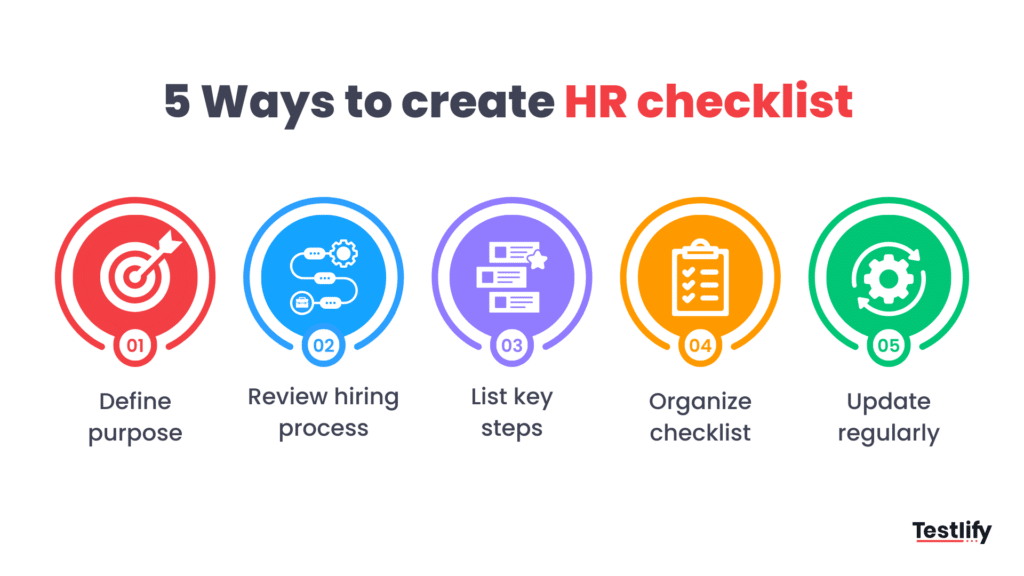
Organize the checklist in a clear, logical sequence so tasks flow smoothly. Finally, the checklist should be regularly updated in a timely manner to stay current with changes in laws, policies, and company procedures, keeping it practical and relevant.
What should you include in an HR checklist?
The HR checklist is a comprehensive tool that covers every key aspect of human resource management, from hiring new employees to managing their exit from the organization.
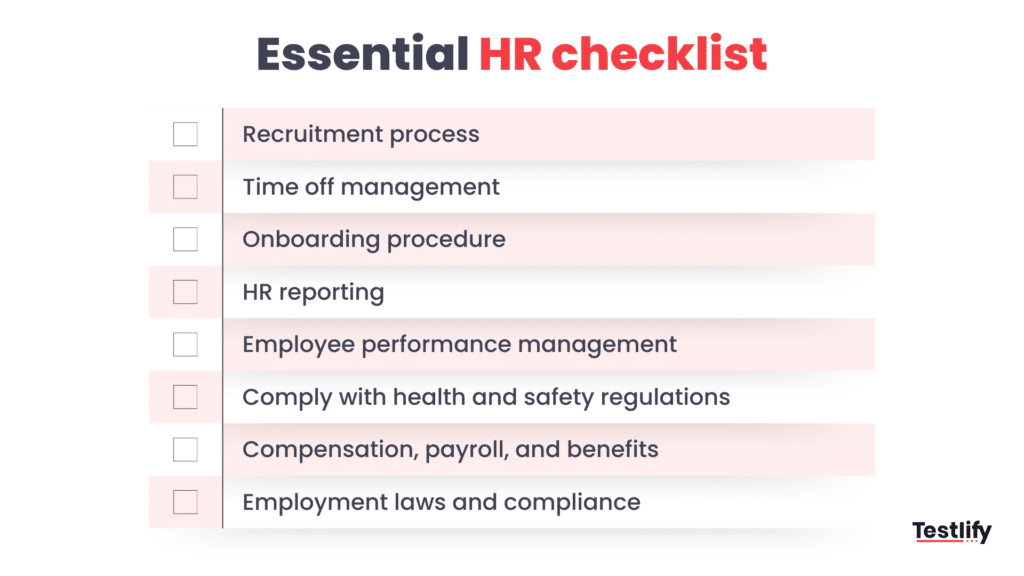
Recruitment process
A recruitment checklist is a roadmap for the hiring team. It streamlines the process and ensures nothing is overlooked. It helps keep the team aligned and avoids inefficiencies or wasted time.
Key items in a recruitment checklist include:
- Securing management approval to hire.
- Preparing a detailed job description that outlines the role’s responsibilities, deliverables, and qualifications.
- Posting the job and advertising it through the appropriate channels.
- Defining the application process, such as resume submissions or online forms.
- Establishing the recruitment process might include competency tests, skills assessments, or psychometric evaluations.
- Conducting interviews and preparing relevant questions.
- Screening candidates and selecting those who are the best fit.
- Communicating with successful candidates and notifying other applicants.
- Performing reference and background checks to verify the candidate’s credentials.
Time off management
Taking time off is crucial for employees as it supports mental and physical health, reduces stress, and helps maintain work-life balance.
Studies show that taking breaks can boost focus by 78% and reduce burnout by 81%. They also help lower stress levels and promote overall well-being, leading to healthier, more productive employees.
Related: How to create a culture of work-life balance?
A time-off management checklist should include the following:
- Develop and communicate a clear, compliant time-off policy that offers competitive benefits.
- Track all employee time-off requests, including the time taken and time they’ve earned.
- Ensure employees take the required minimum vacation time as per regulations.
- Understand and comply with government-mandated parental leave, compassionate care, and public holidays.
Onboarding procedure
Hiring a candidate is just the beginning; providing an exceptional onboarding experience is equally critical. Research highlights that one in three new hires leave their job within the first 90 days, often due to poor onboarding.
On the flip side, companies that invest in comprehensive onboarding programs can see an 55% improvement in employee retention.
Related: Employee onboarding process: A complete guide
A well-structured onboarding process helps new hires adapt quickly and sets the foundation for long-term organizational engagement and success.
The onboarding checklist should include the following:
- Orientation: This is the time to introduce the new hire to company policies, procedures, and workplace culture. It is also the time to address any questions or concerns the employee may have to help them feel comfortable and informed.
- Staff documentation: Provide all necessary forms and documents for the new hire to complete. These may include the employee handbook, tax forms, personal information sheets, and employment contracts. Ensuring this step is thorough helps establish clear expectations and compliance.
- Work tools and resources: Equip the new employee with everything they need to perform their role effectively. This could include laptops, software access, office supplies, and company-branded items like mugs or notebooks.
- Office tour: Give the new hire a guided workplace tour to help them navigate their surroundings.
HR reporting
Reporting involves tracking essential HR metrics, such as employee turnover, HR department profiles, time-off usage, and tenure. These metrics help measure the effectiveness of HR strategies and provide insights into workforce trends.
Regularly reviewing these reports with executives and company leaders ensures alignment with organizational goals, promotes informed decision-making, and highlights areas for improvement in HR processes.
Related: 15 key HR metrics to watch in 2024
Employee performance management
Employee performance impacts the organization’s bottom line. Productive employees are valuable assets. It helps identify skill gaps and offers training opportunities to enhance employee performance.
These initiatives help organizations build an inclusive culture and support long-term succession planning.
A performance management checklist ensures structured evaluation and includes the following:
- Setting performance goals and standards
- Using performance appraisal tools
- Gathering and analyzing feedback
- Developing training and skill improvement plans
- Monitoring employee performance
- Managing disciplinary actions or terminations as needed
Comply with health and safety regulations
Complying with health and safety regulations is essential to creating a safe work environment and adhering to legal standards. An HR checklist must contain information about Occupational Safety and Health Act (OSHAct).
This typically includes safety measures such as
- Emergency plans
- Clear emergency exits
- First aid supplies
- Rules on maintaining a secure environment
In addition to safety, the checklist must also contain policies on behavioral conduct, including equal employment opportunities and sexual harassment prevention.
Compensation, payroll, and benefits
Payroll management is crucial to any HR operations as it enables timely and accurate salary processing while complying with local laws. Delays in salary payments can damage the company’s reputation and show a lack of care for employees’ financial well-being.
A good checklist that includes payroll, compensation and benefits part must cover the following aspects:
- Pay structure: Established after conducting a compensation survey to ensure competitive and fair salaries within the industry.
- Benefits offered: Includes mandatory benefits required by law (e.g., health insurance, workers’ compensation insurance, and annual leave) and optional benefits like wellness programs, childcare assistance, and stock options.
- Details and eligibility for benefits: Clear information on which employees are eligible for various benefits.
- Payroll compliance: Ensuring the company follows all tax, employment, and labor law regulations related to payroll.
- Payroll processing: Involves calculating employee pay, choosing the payment method, and administering payslips.
Employment laws and compliance
An employment laws and legal compliance checklist ensures employers follow the legal requirements governing employment relationships.
Employers must stay updated on changes to employment laws to avoid legal disputes and penalties. The checklist typically includes:
- HR policies and procedures: Ensure they are up-to-date and communicated to employees through handbooks.
- Termination procedures: Follow proper steps for exit interviews, final paychecks, and severance payments.
- Diversity and inclusion: Update hiring practices, ensure equal pay, and accommodate disabilities.
- Employment law compliance: Adhere to laws regarding anti-discrimination, anti-harassment, employee classification, and equal employment.
Is the HR compliance checklist and HR checklist the same?
No, an HR compliance checklist is not the same as an HR checklist. An HR compliance checklist focuses more on whether the company follows laws and regulations related to employment. It helps the HR team document their compliance efforts and meet legal requirements. The HR checklist, on the other hand, covers a broad range of HR activities, from hiring to onboarding, without necessarily focusing on compliance alone. Though both these checklists are important, each serves a different purpose.
Over to you
As HR practices evolve, checklists will continue to play a vital role in streamlining processes, enhancing efficiency, and ensuring compliance.
The future of HR checklists lies in their ability to adapt to new technologies, such as AI and automation, which will further simplify tasks and improve decision-making.
HR professionals will rely on these tools to maintain consistency and drive employee engagement, performance, and organizational growth.
Frequently asked questions (FAQs)

Related resources
View all
Hiring Guide
White Collar vs Blue Collar Jobs: Key Differences (2026)

Hiring Guide
Practical tips for HR to optimize working days

Hiring Guide
What is involuntary turnover? Formula, types, best practices
Hiring Guide
What is talent optimization and what are its 4 key phases?

Hiring Guide
A guide on how digital adoption is revolutionizing employee recruitment

Hiring Guide
The role of big data in predictive hiring: insights for talent management
Get started.
Hire on proof, not resumes.
Run your first skills-based assessment free — no credit card required.