
Recruiter burnout: causes, symptoms, and how to prevent it
Discover the causes, symptoms, and effective strategies to prevent recruiter burnout, ensuring well-being and productivity in talent acquisition.

TL;DR
- Recruiter burnout is chronic exhaustion that builds when the demands of a hiring role keep outrunning a recruiter’s time to recover. The World Health Organization treats burnout as a real occupational condition, not a rough week.
- It shows up first in three ways: energy running out, growing cynicism about the work, and a quiet drop in the quality of your decisions.
- The biggest driver is not grit or personality. Primary research keeps pointing at the system around the recruiter: workload, tooling, and how the team is managed.
- Prevention that lasts needs both halves. Habits the recruiter controls, plus caseload and tooling decisions only managers and leaders can make.
- Cutting the manual screening load is the fastest structural fix, because so much of a recruiter’s day disappears into admin that needs zero recruiting skill.
Recruiters run the wellness sessions, promote the mental-health weeks, and remind everyone else to log off. They rarely turn that thinking on themselves. Recruiter burnout is what happens when that catches up: a state of chronic physical and emotional exhaustion that builds when the pressure of a talent acquisition role keeps outrunning a recruiter’s capacity to recover.
It is measurable, preventable, and capable of undermining hiring quality long before anyone hands in their notice. This guide explains what causes it, how to spot the warning signs early, and the strategies that keep it from happening.
 ChatGPT
 Gemini
 Claude
 Grok
Grok Perplexity
What is recruiter burnout?
Recruiter burnout is chronic workplace stress that has not been successfully managed. The World Health Organization defines it by three symptoms: energy depletion, growing mental distance or cynicism toward work, and reduced professional effectiveness.
In recruiting, burnout develops over time as heavy requisition loads, constant hiring pressure, and limited support wear people down. The WHO added burnout to its International Classification of Diseases in 2019 as an occupational phenomenon, tied specifically to work rather than life in general.
That distinction matters. Burnout is not a sign that a recruiter is unsuited to the job. It is a predictable response to sustained workloads that demand more energy than people can recover.

What causes recruiter burnout?
Recruiter burnout rarely has a single cause. It usually develops when several pressures build at the same time, leaving recruiters with more work than they can realistically sustain.
Microsoft’s Work Trend Index found that 53% of managers already feel burned out, and recruiters carry the same stakeholder pressure, usually with fewer people to absorb it.
The most common causes include:
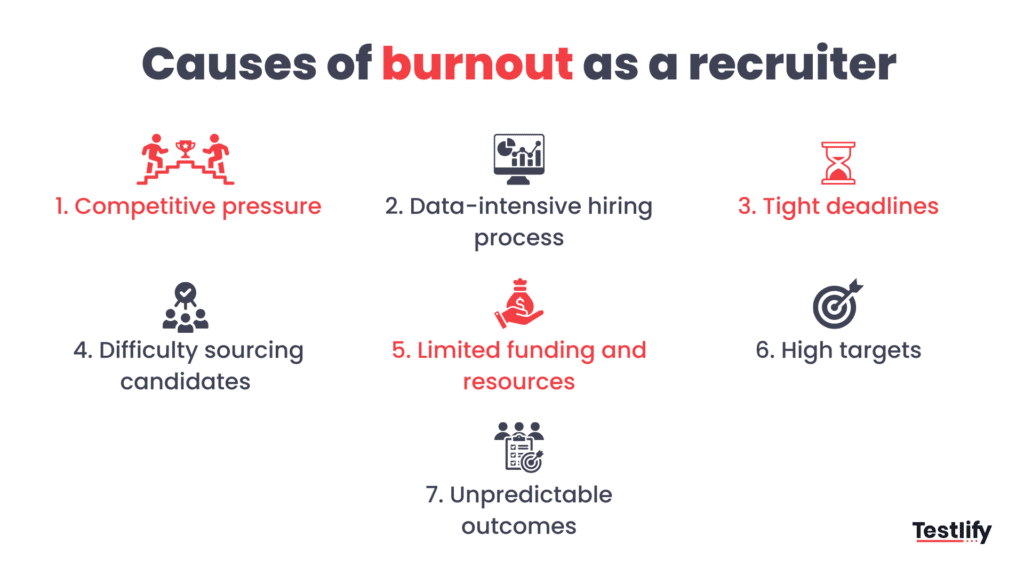
Competitive hiring pressure
Strong candidates are often evaluating multiple offers at once. Losing a top candidate after weeks of sourcing, interviews, and negotiations adds pressure that compounds with every failed hire.
Administrative overload
Scheduling interviews, updating ATS records, coordinating feedback, and sending follow-ups consume hours that require little recruiting expertise. The more time recruiters spend on administrative work, the less time they have for sourcing, screening, and engaging candidates.
Unrealistic hiring targets
Recruiters are expected to fill roles quickly, even when talent shortages make hiring more difficult. High requisition loads combined with aggressive deadlines create sustained pressure that is difficult to maintain over time.
Hard-to-fill roles
Some positions have a limited pool of qualified candidates. Recruiters may spend weeks sourcing niche talent with little progress, making these searches mentally demanding despite significant effort.
Limited tools and resources
Manual hiring processes, outdated technology, and frozen budgets increase the workload on recruiters. When automation and hiring support are missing, every additional task falls back on the recruiting team.
Unpredictable hiring outcomes
Recruiting involves factors that recruiters cannot control. Candidates withdraw, accept competing offers, or roles are paused after weeks of work. Repeated setbacks without visible progress gradually erode motivation and energy.
The common thread
Notice the pattern. Most of these causes stem from workload, processes, and limited resources rather than individual resilience. Burnout is rarely a motivation problem. More often, it is the predictable result of asking recruiters to do more than their systems and support allow.
What are the symptoms of recruiter burnout?
The early signs of recruiter burnout are easy to dismiss because they resemble an unusually busy period. Persistent exhaustion, growing cynicism toward candidates or hiring managers, difficulty concentrating, declining productivity, and small mistakes creeping into an otherwise reliable process are all early warning signs.
Recognizing these patterns early can be the difference between helping a recruiter recover and losing a high performer altogether.
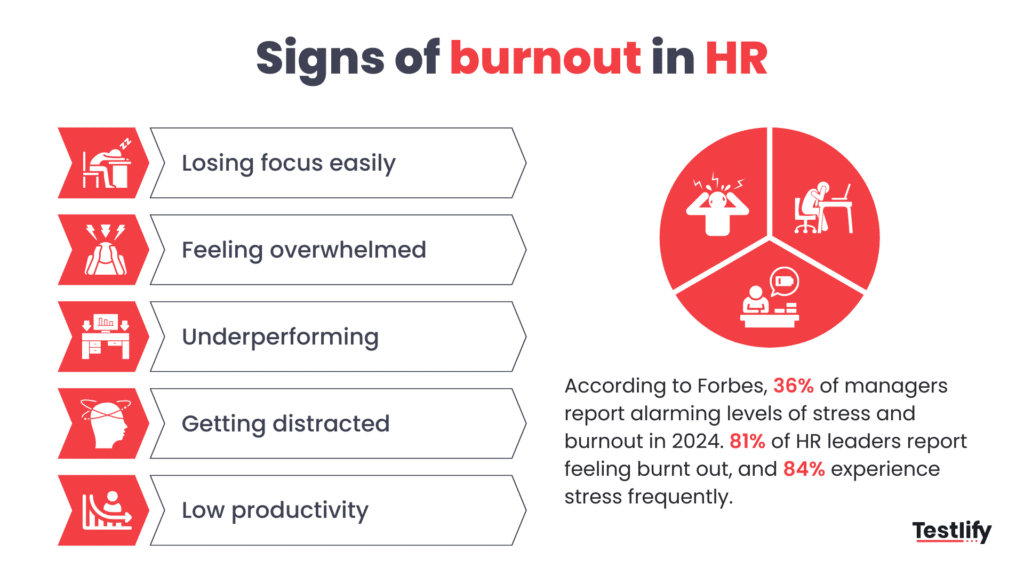
The World Health Organization defines burnout through three dimensions. When you map a recruiter’s day-to-day experience against them, the warning signs become much easier to recognize.
Difficulty staying focused
Burnout makes it harder to concentrate on sourcing, screening, and interviews. Recruiters find themselves rereading resumes, forgetting follow-ups, or struggling to stay engaged during conversations.
Energy depletion
Energy depletion goes beyond feeling tired after a busy week. Recruiters feel physically and mentally drained even after adequate rest. Tasks that once felt routine require more effort, concentration fades, and the week feels exhausting long before it ends.
Growing cynicism
Cynicism often appears as emotional distance from the job. Conversations become transactional, candidate empathy declines, and frustration with hiring managers grows. Instead of focusing on finding the right person, the priority shifts to simply filling the vacancy.
Reduced productivity
Burnout also affects performance. Recruiters struggle to maintain productivity, make slower decisions, and feel as though their efforts have little impact. Requisitions take longer to fill, sourcing becomes less effective, and everyday tasks feel harder than they should.
Increased mental distraction
Frequent context switching and mental fatigue make it harder to stay focused on high-value recruiting work. Small mistakes become more common as attention slips.
Key takeaway: Everyone has difficult days. Burnout is different because the symptoms persist. When exhaustion, growing cynicism, and declining performance appear together for several weeks, they signal chronic workplace stress rather than a temporary busy period.
Why recruiter burnout is a business problem
Here is the part most burnout advice skips: the data says the environment causes it more than the person does. The McKinsey Health Institute studied burnout across 15 countries and found that toxic workplace behavior was the single biggest predictor of burnout symptoms in every one of them.
Employees who face high levels of it are almost eight times more likely to report burnout. You cannot mindfulness your way out of a workload or a culture problem.
The scale is easy to underestimate. Gallup’s 2024 workplace study found that only 23% of employees worldwide are engaged, and 41% felt a lot of stress the day before they were surveyed. Recruiters sit at the sharp end of that, because they absorb the anxiety of every hiring manager and every candidate at the same time.
And it does not stay contained to the recruiter. A burned-out recruiter rushes screening, leans harder on gut feel, and lets small process gaps through. That shows up later as weaker hires, longer time-to-fill, and candidates who felt processed rather than assessed. Burnout is not just a wellbeing line item. It is a hiring-quality risk with a real cost attached.
How can recruiters and hiring leaders prevent burnout?
Preventing recruiter burnout takes two things at once: habits the recruiter controls, and structural decisions only leaders can make. Do only the first and burnout comes back within weeks, because the workload that caused it is still there.
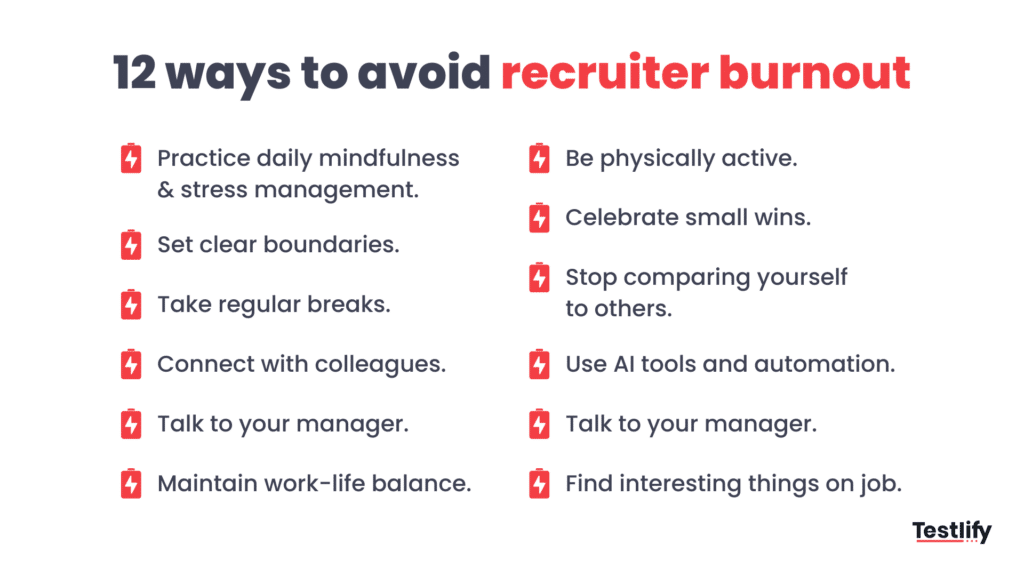
What recruiters can do?
While organizational support is essential, recruiters can build habits that reduce daily stress and protect their energy. These practices won’t eliminate every pressure, but they make it easier to stay productive, recover more quickly, and reduce the risk of burnout over time.
Set clear work boundaries
Decide when the workday ends and stick to it. Candidates and hiring managers quickly adapt to consistent expectations.
Reduce context switching
Batch sourcing, screening, interviews, and administrative work into dedicated blocks. Fewer interruptions reduce mental fatigue and improve focus.
Build recovery into the day
Short breaks between interviews or sourcing sessions restore energy more effectively than waiting for the weekend.
Raise workload concerns early
Discuss unrealistic requisition loads before they become overwhelming. A conversation about capacity is easier than replacing an experienced recruiter.
Track small wins
Recruiting often has long feedback loops. Recording successful hires, positive candidate feedback, and closed requisitions helps maintain motivation during difficult searches.
Make stress management a habit
Simple routines such as a short walk, breathing exercise, or stepping away between meetings can reduce stress before it accumulates.
Stay connected with your team
Regular conversations with fellow recruiters provide perspective and emotional support. Sharing challenges often makes setbacks easier to manage.
Protect work-life balance
Set a consistent finish time and make space for activities outside work. Recovery is essential for sustained performance.
Stay physically active
Even brief movement throughout the day can reduce stress and improve concentration during busy hiring periods.
Focus on your own progress
Every recruiter works with different roles, markets, and hiring managers. Measure improvement against your own performance rather than someone else’s metrics.
Automate repetitive work
Use AI-powered screening, interview scheduling, and workflow automation to reduce manual administration and create more time for candidate engagement.
Stay curious
Approach each search as an opportunity to learn about a new industry, role, or career path. Curiosity helps maintain engagement during repetitive hiring cycles.
What hiring leaders can do
Burnout is ultimately an organizational issue. The American Psychological Association’s 2023 Work in America Survey found that employees in toxic workplaces were more than three times as likely to report harm to their mental health, while 57% of workers experienced at least one negative effect linked to burnout. Workload, processes, and workplace culture are leadership decisions.
Set realistic recruiter workloads
Not every requisition requires the same effort. Balance caseloads based on role complexity rather than simply counting open positions.
Invest in better hiring technology
Automation should remove repetitive tasks such as resume screening, interview scheduling, and candidate tracking, allowing recruiters to focus on higher-value work.
Hold regular workload check-ins
One-on-one meetings should cover capacity and wellbeing, not just hiring metrics. Burnout is easier to address when identified early.
Set achievable hiring expectations
Agree realistic timelines with hiring managers based on market conditions and role complexity. Overpromising creates unnecessary pressure for recruiters.
Reduce burnout with a better hiring process
Technology alone cannot prevent burnout, but it can eliminate much of the repetitive work that causes it. Platforms such as Testlify combine skills assessments, workflow automation, ATS integrations, and structured evaluation to reduce manual screening and administrative effort.
When candidates are assessed before the first interview, recruiters spend less time reviewing resumes and more time building relationships with qualified talent. AI supports the workflow, while hiring decisions remain firmly in human hands.
Prevention lever | Who owns it | What it actually changes |
|---|---|---|
Boundaries and break rhythm | Recruiter | Protects daily recovery so stress does not compound |
Batching and small-win tracking | Recruiter | Cuts mental drain and keeps cynicism in check |
Caseload caps by role family | Manager | Removes the overload at the root, not the symptom |
Screening automation and tooling | Leadership | Gives back hours lost to zero-skill admin |
Honest SLAs and prioritization | Leadership | Stops the impossible-promise trap that guarantees burnout |
How do you recover from recruiter burnout?
Recovering from recruiter burnout requires more than taking a few days off. It starts with reducing the demands that caused the burnout in the first place. That may mean lowering an active requisition load, delegating repetitive administrative work, and creating protected time for rest and recovery.
Recovery also depends on organizational support. Recruiters can improve their routines, set healthier boundaries, and rebuild their energy, but they cannot reduce unrealistic hiring targets or invest in better tools on their own. Managers need to rebalance workloads, remove unnecessary manual work, and create realistic expectations.
The key is to treat burnout as a systems problem rather than an individual one. When organizations address workload, processes, and support together, recovery is far more likely to last. When they expect recruiters to “push through” without changing the conditions that caused burnout, the cycle almost always repeats.
Pro tip: Track burnout as an operational signal. Watch caseload trend per recruiter, time-to-fill drift, and the share of the day spent on admin-related tasks. When those move the wrong way, a team is heading for burnout before anyone says the word. Build them into the recruiting KPIs you already review.
Take the manual grind off your recruiters’ plates
Most recruiter burnout starts with a workload no habit can fix. Testlify’s skills assessments and automated screening score candidates before the first call, so your team spends its hours on judgment and human connection instead of sorting resumes. See how it fits your hiring workflow.
Key takeaways
- Burnout is an occupational condition, not a character flaw: The WHO defines it by exhaustion, cynicism, and reduced performance, so recruiters and managers can name it early and treat it as a work problem to solve, not a weakness to hide.
- The system causes it more than the person: McKinsey found toxic workplace behavior is the biggest predictor of burnout across 15 countries, which means resilience training alone cannot fix a workload or culture problem, and budget should follow that reality.
- Catch the three early signals: Energy that sleep does not restore, rising cynicism, and slipping output are the leading indicators. Spotting two or three together for a couple of weeks is your cue to act before you lose a recruiter.
- Prevention needs both halves: Individual habits protect daily recovery, but only managers can cap caseloads and fund tooling. Do one without the other and burnout returns, so treat prevention as a shared responsibility.
- Automation is the fastest structural lever: A large share of a recruiter’s day goes to admin that needs no recruiting skill. Automating screening returns those hours to judgment work, which lowers daily stress and lifts hiring quality at the same time.
- Track burnout like a metric: Caseload trend, time-to-fill drift, and admin-time share move before morale does. Reviewing them alongside your recruiting KPIs turns burnout from a surprise into a signal you can act on.
Frequently asked questions (FAQs)

Related resources
View all
HR & recruitment
How to create a strategic HR roadmap?

HR & recruitment
What is the buddy system in the workplace? Benefits, steps, and 2026 guide

HR & recruitment
10 game-changing HR innovation examples you need to know

HR & recruitment
Upskilling and reskilling differences: Which fits your needs?

HR & recruitment
A recruiter’s guide to Employee Net Promoter Score (eNPS)
HR & recruitment
Spans and Layers: How to Right-Size Your Org Structure
Get started.
Hire on proof, not resumes.
Run your first skills-based assessment free — no credit card required.