
Top HR programs every organization should have
Learn how to attract, engage, and retain top talent while boosting productivity and employee satisfaction with HR programs.

Human Resources is more than just managing people—it’s about creating an environment where employees thrive, and the organization excels. HR programs play a critical role in achieving this balance. From recruitment and onboarding to performance management and employee wellness, HR programs are designed to enhance productivity, employee engagement, and organizational success.
In this blog, we’ll dive into the essentials of HR programs, how to implement them effectively, and why they’re indispensable for any organization. Along the way, we’ll share real-world statistics and facts that show just how impactful these programs can be.
 ChatGPT
 Gemini
 Claude
 Grok
Grok Perplexity
What are HR programs?
Primarily, an HR program refers to a structured initiative designed to improve the management of human resources in various aspects, from the attraction and selection of appropriate talent to the offer of career development and satisfaction. Whether big or small, HR programs are part of the larger process of making sure that the workforce is motivated, competent, and aligned with company goals.
HR programs typically fall under the following categories:
- Talent acquisition (Recruitment and onboarding)
- Training and development
- Performance management
- Compensation and benefits
- Employee engagement and wellness
- Compliance and employee relations
Each of these programs plays a vital role in shaping the organization’s culture and performance. So let’s break them down one by one.

Why are HR programs so important?
If you’ve ever wondered why HR programs seem to be everywhere in today’s business landscape, the answer is simple: they work. A well-executed HR program can lead to higher employee satisfaction, improved productivity, and even a healthier bottom line. Here’s why HR programs are indispensable:
1. Aligning workforce with organizational goals
Effective HR programs keep the employees’ goals in line with the overall objectives of the company. This alignment gives a sense of purpose and subsequently motivates them, which eventually leads to enhanced performance. According to Gallup, organizations with highly engaged employees see 21% higher profitability compared to those with lower engagement levels.
2. Enhancing employee retention
The process of hiring and training new employees is costly. High employee turnover can hurt the reputation of an organization, together with their morale. This, in itself, is one of the strongest reasons for investing in HR programs concerning employee engagement, recognition, and development: it greatly reduces turnover. Indeed, one study found that 77% of employee turnover can be eliminated through appropriate development programs.
3. Improving efficiency and productivity
By streamlining processes like recruitment, performance evaluation, and training, HR programs make HR operations more efficient. This will let HR professionals focus on more strategic initiatives, such as building a talent pipeline and fostering a positive work culture.
4. Legal and regulatory compliance
HR programs keep the business compliant with labor laws, workplace regulations, and industry standards. Non-compliance may lead to hefty fines, lawsuits, and damage to the company’s reputation. According to a study by the Society for Human Resource Management, organizations with strong HR practices are 3.5 times more likely to be in compliance with labor regulations.
5. Building a positive company culture
The right HR programs and initiatives foster a workplace culture that is inclusive, collaborative, and supportive. A leading factor for top talent both in attraction and retention, a report by LinkedIn on 2023 Global Talent Trends says 64% of employees make workplace culture among the most desirable factors in selecting jobs.
Related: How to align HR practices with modern workforce dynamics
The core HR programs every organization should have
While every organization is unique, there are several HR programs that are universally important for success. Here’s a rundown of the most essential HR programs you should consider:
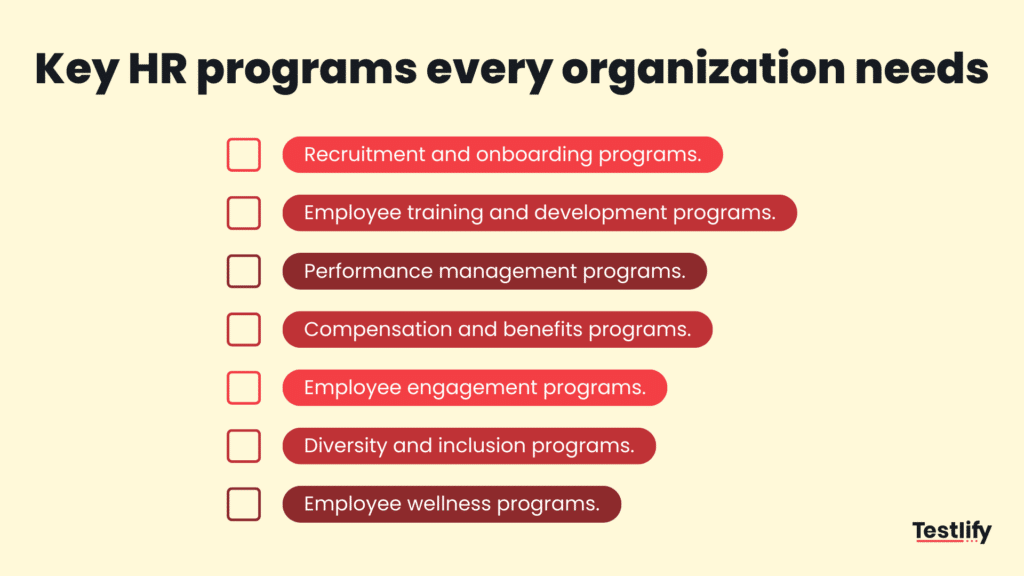
1. Recruitment and onboarding programs
Recruitment is the process of identifying, attracting, and hiring new employees. Onboarding is the process of integrating new hires into the company culture and helping them settle into their roles.
Recruitment program
An effective recruitment program involves:
- Job descriptions: Clearly outline job responsibilities, qualifications, and expectations.
- Interview process: Structure your interview process to assess candidates on both technical skills and cultural fit.
- Candidate sourcing: Utilize various channels like job boards, social media, and recruitment agencies to source the best candidates.
- Employee referrals: Encourage current employees to refer potential candidates, as they can provide insights into the candidates’ compatibility with the company culture.
Onboarding program
An effective onboarding program helps new hires feel welcomed, valued, and equipped to succeed. Some essential components of a strong onboarding program include:
- Pre-boarding: Provide new hires with necessary information and documentation before they start, so they feel prepared.
- Orientation: Offer a comprehensive overview of the company’s policies, culture, and values.
- Mentorship: Assign a mentor or buddy to help guide new employees during their first few weeks or months.
Related: HR Benchmarking: Types, benefits and challenges
2. Employee training and development programs
Training and development programs ensure that employees have the skills and knowledge they need to perform their jobs effectively. These programs also contribute to employee satisfaction by offering opportunities for career growth and advancement.
Types of training
- On-the-job training: Employees learn by doing their actual work, often with guidance from a supervisor or mentor.
- Workshops and seminars: Offer employees the chance to enhance their skills through structured, classroom-style learning.
- Online learning: Leverage online courses and webinars to provide employees with flexible learning options.
- Leadership development: Train employees with high potential to take on leadership roles within the organization.
Benefits of training programs
- Increased productivity: Well-trained employees perform their tasks more efficiently and effectively.
- Employee retention: Offering training programs can increase employee satisfaction and loyalty, as employees feel their personal growth is valued.
- Skill enhancement: Training keeps employees’ skills up-to-date and helps them adapt to industry changes.
3. Performance management programs
Performance management programs help organizations evaluate and improve employee performance. This program ensures employees meet their goals, align with organizational objectives, and continue growing in their roles.
Key components of performance management
- Goal setting: Set clear and measurable performance goals that align with the organization’s objectives.
- Regular feedback: Offer continuous feedback, both positive and constructive, to employees about their work.
- Performance reviews: Conduct regular performance appraisals to assess employee performance, provide feedback, and set future goals.
- Employee recognition: Recognize employees for their hard work and accomplishments to boost morale and motivation.
Benefits of performance management programs
- Improved productivity: When employees know what is expected of them and receive constructive feedback, their performance improves.
- Employee development: Regular feedback and reviews help identify skill gaps and areas for improvement, leading to targeted training opportunities.
- Clear expectations: Performance management helps employees understand their role in achieving organizational goals.
4. Compensation and benefits programs
Compensation and benefits are a core part of employee satisfaction. A well-structured compensation and benefits program can help attract and retain top talent.
Types of compensation
- Base Salary: The fixed pay an employee receives for their role.
- Bonuses: Additional pay based on performance or meeting specific targets.
- Commissions: A percentage of sales or revenue earned, commonly used in sales roles.
Types of benefits
- Health Insurance: Provides employees with coverage for medical expenses.
- Retirement Plans: Includes 401(k) or pension plans to help employees save for retirement.
- Paid Time Off (PTO): Time off for vacation, illness, or personal reasons.
- Wellness Programs: Initiatives that promote physical, mental, and emotional well-being, such as gym memberships or counseling services.
Why compensation and benefits matter
- Attraction of talent: Competitive salaries and benefits can make your company more appealing to top talent.
- Employee retention: Offering attractive compensation packages encourages employees to stay with the company long-term.
- Employee satisfaction: A fair and transparent compensation program ensures employees feel valued for their contributions.
5. Employee engagement programs
Employee engagement is crucial to fostering a motivated and committed workforce. Engagement programs focus on improving employee satisfaction, communication, and overall work culture.
Key elements of employee engagement
- Surveys and feedback: Regularly ask employees for their feedback and act on their suggestions.
- Team building activities: Organize activities that promote collaboration, communication, and camaraderie among employees.
- Employee recognition: Recognize and reward employees for their hard work and achievements, both formally and informally.
Benefits of employee engagement
- Improved Productivity: Engaged employees are more productive, as they are motivated to perform at their best.
- Reduced Turnover: Employees who feel engaged are less likely to leave the company, reducing turnover costs.
- Better Work Culture: Engagement programs foster a sense of belonging and create a more positive work environment.
6. Diversity and inclusion programs
Diversity and inclusion (D&I) programs promote a workplace where all employees, regardless of their background, feel valued, respected, and empowered.
Key elements of D&I programs
- Training and education: Offer training programs on unconscious bias, cultural competency, and diversity awareness.
- Inclusive hiring practices: Ensure that recruitment processes are fair and inclusive, actively seeking to attract a diverse pool of candidates.
- Employee resource groups: Create groups where employees from similar backgrounds or interests can connect and support each other.
Why diversity and inclusion matter
- Improved innovation: Diverse teams bring different perspectives, which can lead to more innovative solutions.
- Better employee experience: Employees who feel included and respected are more likely to stay with the company and contribute to its success.
- Attraction of talent: Companies with strong D&I programs are more attractive to top talent who value diversity in the workplace.
7. Employee wellness programs
Employee wellness programs focus on the physical, mental, and emotional well-being of employees. These programs help employees maintain a healthy work-life balance and reduce stress.
Key components of wellness programs
- Physical health initiatives: Provide access to fitness centers, healthy snacks, or wellness challenges to encourage employees to stay active and healthy.
- Mental health support: Offer counseling services, mental health days, or stress management workshops.
- Work-life balance: Provide flexible work hours or remote work options to help employees balance their personal and professional lives.
Why wellness programs matter
- Reduced absenteeism: Employees who are healthy and feel supported are less likely to take sick leave.
- Improved productivity: Healthy employees are more focused, energized, and productive at work.
- Employee satisfaction: Offering wellness programs shows employees that you care about their well-being, leading to higher job satisfaction.
Best practices for implementing HR programs
Now that you have a deeper understanding of the different types of HR programs, let’s explore some best practices for implementing them successfully.
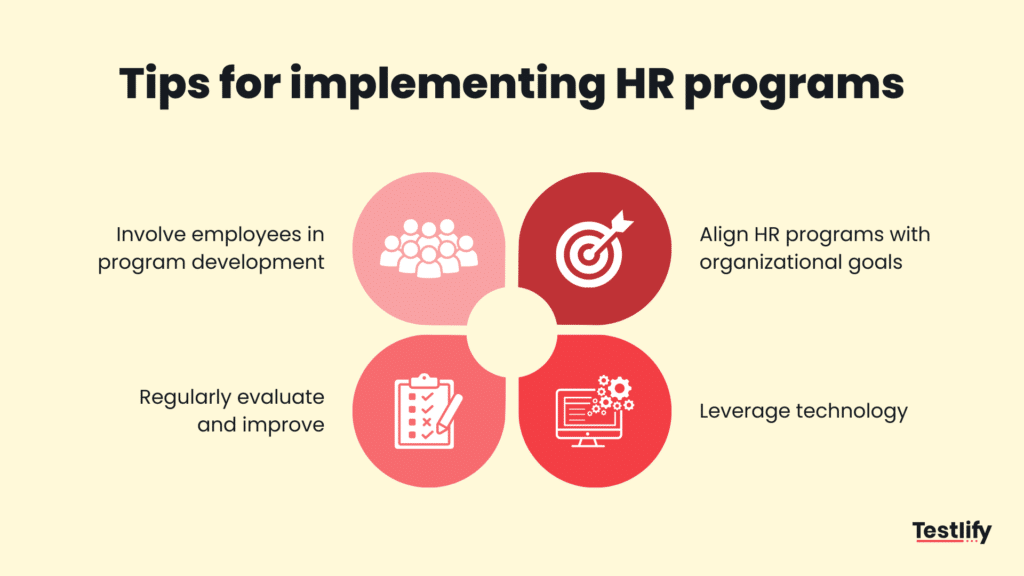
1. Align HR programs with organizational goals
To get the most out of your HR programs, they must align with your company’s broader business objectives. For instance, if your company is expanding into new markets, HR programs should focus on developing the skills that align with those strategic goals.
2. Leverage technology
Using HR software and tools can help automate processes, track performance, and gather valuable data that can drive decisions. Many organizations now use platforms for recruitment, employee feedback, and performance management to enhance efficiency.
3. Regularly evaluate and improve
HR programs should be dynamic and adaptable. Regularly assess their effectiveness through employee surveys, performance metrics, and feedback. Adjust as necessary to keep them relevant and impactful.
4. Involve employees in program development
It’s essential to get input from employees when designing HR programs. After all, they are the ones who will be directly impacted by these programs. Surveys, focus groups, and open communication channels can help you tailor programs to meet their needs.
Conclusion
HR programs are essential tools that help businesses manage their workforce, promote employee well-being, and ensure compliance with regulations.
From recruitment and training to performance management and wellness initiatives, there is a wide array of programs that can benefit both employees and employers.
By implementing the right HR programs, organizations can foster a positive and productive work environment, reduce turnover, and ultimately, drive business success.
Frequently asked questions (FAQs)

Content Writer
Yashika Khandelwal is a Content Writer with 3+ years of experience creating research-backed content on hiring, talent assessment, and HR technology. She is a registered Organizational Psychologist and subject matter expert who combines behavioral science with practical recruitment insights to produce accurate, evidence-based content.
LinkedInRelated resources
View all
HR & recruitment
Gamified assessments: types, examples and benefits

HR & recruitment
HR KPIs: What are they? Examples & formulas
HR & recruitment
A complete guide to human proctoring vs AI proctoring

HR & recruitment
14 HR industry trends to look at in 2026

HR & recruitment
What is high-performance culture and how to build one?

HR & recruitment
7 Proven strategies to combat workplace negativity today
Get started.
Hire on proof, not resumes.
Run your first skills-based assessment free — no credit card required.