
HR budget 101: A comprehensive guide for 2026
Discover everything about HR budget, covering essential tips and strategies to effectively manage your HR spending and resources.

As businesses face tighter budgets and increasing demands, 60% of human resource (HR) leaders expect their budgets to remain the same or decrease in the near future. Despite this, HR spending still accounts for an average of only 0.76% of a company’s revenue.
HR budgeting is crucial as it helps HR professionals ensure they’re not overspending or underspending, keeping their resources aligned with the organization’s needs and goals. This blog post discusses everything you need to know about it. Read on!
 ChatGPT
 Gemini
 Claude
 Grok
Grok Perplexity
What is an HR budget?
An HR budget is a financial budgeting plan that outlines the costs of hiring, managing, and developing employees over a specific period, usually a year. It must be carefully detailed, planned, communicated, and approved by the organization’s leaders.
Simply put, the HR budget is the fund allocated to perform all HR processes company-wide.
The HR-based budget not only details the current year’s expenses but also includes previous years and future plans as well.
For example, if you’re opening a new office, you’ll need to invest a lot in recruiting and hiring staff for that location. Or, if you’re introducing new software across the company, you’ll need to spend more on training employees to use it.
HR-based budgets are often reduced to save money if the company’s overall operating costs go up—which happens to many businesses.

What should be included in an HR budget?
When creating an HR budget, several essential items should be included to ensure comprehensive coverage of all human resource needs.
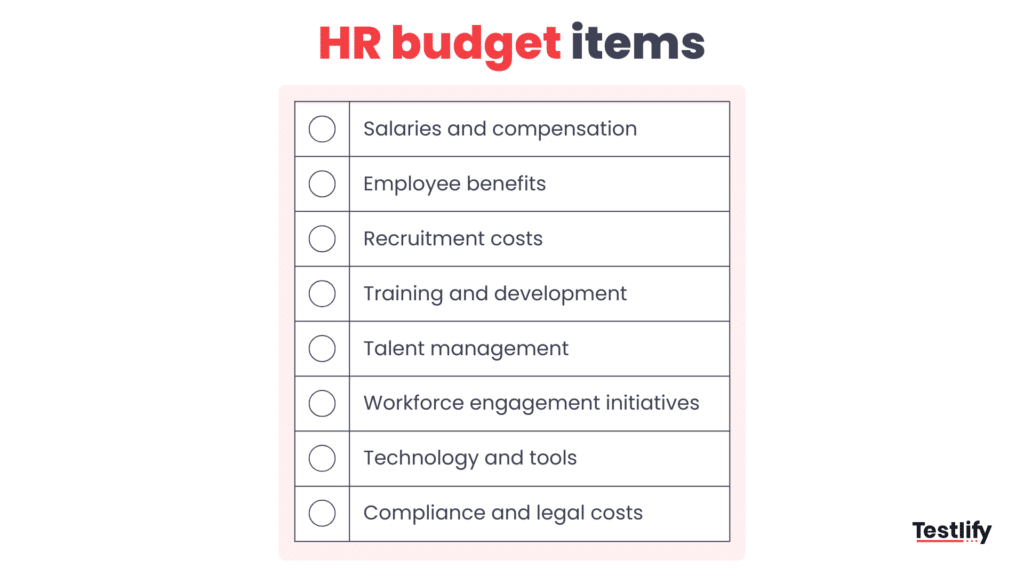
Here are the main components:
Salaries and compensation: This includes regular salaries, overtime pay, and any additional employee compensation. Accounting for all forms of pay is crucial to ensuring fair and competitive compensation practices.
Employee benefits: The budget should cover various employee benefits such as healthcare plans, retirement contributions, and other perks offered by the organization
Recruitment costs: Allocate funds for hiring new employees, which may include advertising job openings, recruitment agency fees, and costs associated with interviewing candidates.
Training and development: Include expenses for developing employee training programs, professional development, and any resources needed to enhance employee skills and performance.
Talent management: This includes costs related to performance management systems, succession planning, and strategies to retain top talent.
Workforce engagement initiatives: Budget for programs to improve employee engagement and satisfaction, such as team-building activities and wellness programs.
Technology and tools: Consider the costs of HR software, recruitment tools, performance management systems, and any technology that supports HR functions.
Compliance and legal costs: Ensure that funds are allocated for compliance with employment laws and regulations, which may include legal consultations and training on compliance issues.
Different types of HR budget
There are three main types of HR-based budgeting: Incremental, zero-based, and flexible budgeting.
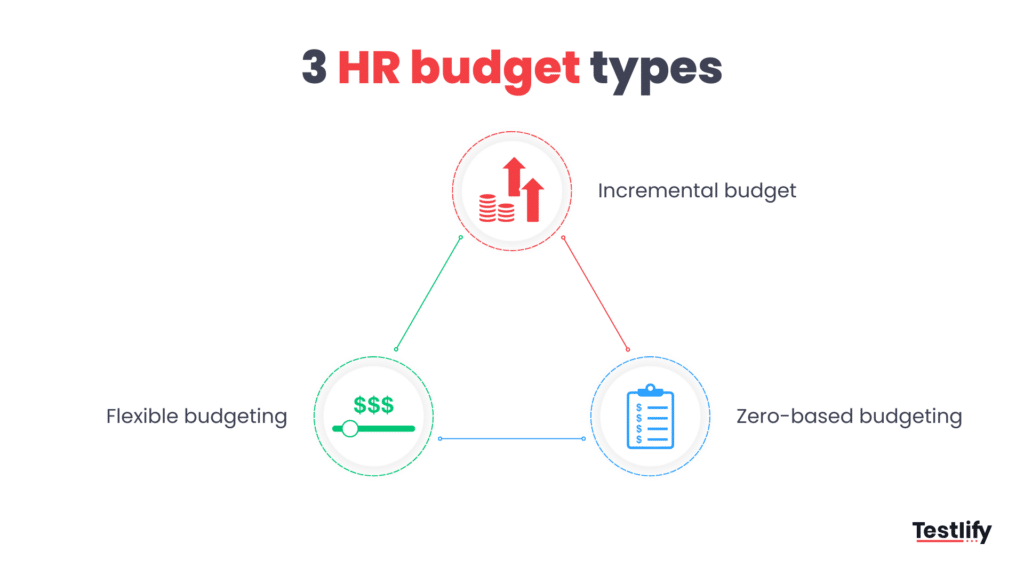
Incremental budget
With incremental budgeting, you create your HR budget by looking at last year’s budget and making small adjustments. Here’s how it works:
- Review last year’s budget: Examine the previous year’s HR-based budget to see what was spent on different items.
- Identify current needs: Determine what items to include in this year’s budget. For each item, decide if it requires more, less, or the same amount of funding as last year.
- Make adjustments: Based on your analysis, adjust the budget for each item accordingly.
Large companies commonly use this method to manage their human resource budgets effectively.
Incremental budgeting focuses on minor changes to the existing budget rather than starting from scratch.
Zero-based budgeting
A zero-based budget starts fresh each year. Instead of using last year’s budget as a base, the team lists everything they need for the upcoming year from scratch. They carefully analyze what is necessary and only include those items in the budget.
This approach is particularly useful for startups and small companies, as it allows them to focus on their current needs without being influenced by past spending.
Flexible budgeting
As the name suggests, a flexible budget can be adjusted yearly. This is useful for new or small, mid-sized companies vulnerable to market fluctuations.
Such an approach is suitable for businesses that experience significant cost fluctuations depending on the time of year, such as those that operate primarily in specific seasons (e.g., holiday shops or tourism businesses).
These businesses have variable expenses that change greatly from quarter to quarter, requiring careful financial planning to manage these differences.
Why is HR budgeting important?
There are numerous benefits of having a well-defined human resource budget, some of which are listed below.
Plan for present and future
Once you create an HR budget, you will know the funds allocated to each recruitment process. This will give you an idea of how many people you need to hire and how much it will cost your company.
Without a defined HR-based budget, recruitment costs might get sidetracked and become excessive. This is because you might have hired too many people or insufficient funds to pay them on time. Such a situation eventually leads to talent shortages, potentially limiting your business growth.
Related: How to handle hiring while talent shortages
Minimize turnover rate
A budgeting strategy is essential for any organization, especially those with high employee turnover. It requires strong analytical skills and making tough decisions based on turnover rates.
An HR-based budget helps plan how money will be spent during the year. It guides managers in making smart choices about hiring, training, and developing employees.
Get the funding you need
Just like other departments, HR needs a budget to request and secure the resources required to achieve its goals successfully.
Also, a detailed HR budgeting system helps you assign resources to the most important hiring costs, such as salaries and benefits. Setting clear resource allocation standards lets you measure each new hire’s impact.
Prevent over-hiring
Over-hiring occurs when companies spend too much time and effort hiring new employees and neglect to provide training and development opportunities to older employees.
A SHRM survey shows that 30% of companies have intentionally overhired as a strategy to support growth during expansion periods. This is a serious issue because people think they can hire more people because they can afford it.
Such a practice will only bring down the company because new hires may not always be the key to your problem. Upskilling and reskilling older employees plays a major role. Studies show 71% of employers agree that upskilling leads to better job performance.
HR-based budget can help overspend money on unnecessary hires.
Decoding the HR budget planning process
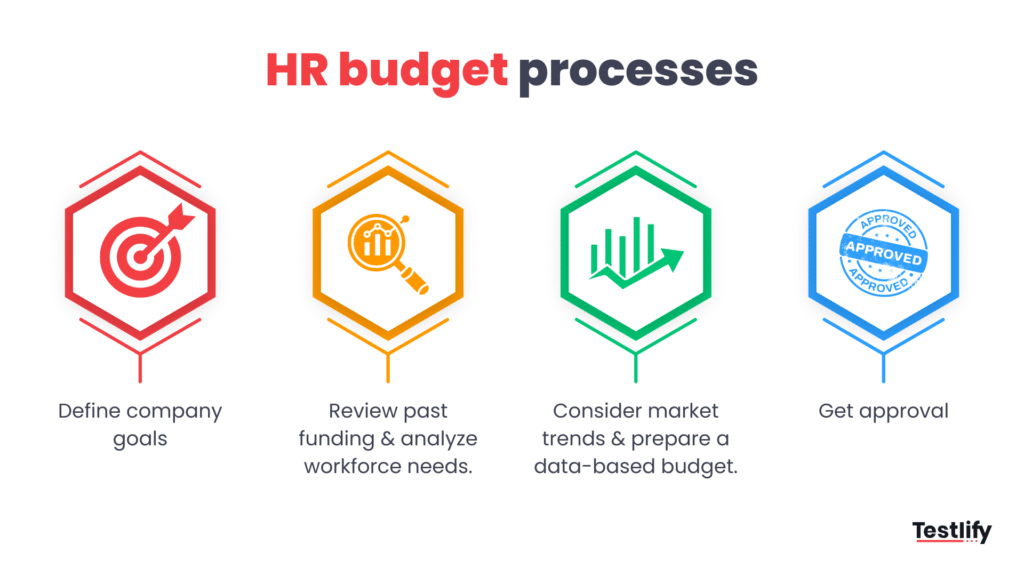
The whole process of HR-based budgeting can be divided into five steps, and they are as follows:
1. Define company goals.
HR planning should align with the company’s main goals to ensure HR activities support overall success. Start by identifying the business’s top priorities, then move to less critical areas.
Using OKRs (objectives and key results) can help set clear goals and track progress effectively, keeping HR efforts strategic and meaningful.
For example, suppose your company plans to expand its workforce next year. In that case, your human resource budget should include funds for recruitment tools, advertising job openings, onboarding programs, and training new hires.
2. Review past funding and analyze workforce needs.
Learn from your past budgeting errors. Review past HR-based budgets to see how much you have spent and whether the resources and investments were effective.
If there were areas where you overspend or underspend, make the necessary adjustments in the upcoming budgeting process.
Another element you need to consider is your workforce’s needs. Check if you provide ample opportunities for employee growth and development, preventing turnover rates from rising. Research shows that 94% of employees prefer staying in a company that offers development and growth opportunities.
3. Consider market trends and prepare a data-based budget.
Even if you know your company’s goals, it’s important to look at what your competitors are doing and stay updated on industry trends. Is your HR budget in line with industry standards? Are your compensation and benefits competitive? Are your turnover rates higher or lower than average?
These things will help you create a strong HR-based budget, which is key to attracting and keeping top performers.
Once that’s done, analyze your workforce needs and prepare a budget, keeping that in mind. Use as much data as possible.
4. Get approval
The final step in creating a budget is getting it approved. It will probably take some time to ensure everything is right, but if you have quantified everything and backed up your requests with data, this step shouldn’t take much time.
Note: It is important to plan for the best and worst-case scenarios beforehand. For example, if suddenly employee turnover hits more than 15%, the budget should be able to cover the extra need for hiring new employees.
4 best practices for HR budget management
Here are some best practices for managing an HR budget:
Follow an HR strategy: An HR strategy is a plan that connects workforce investments to the business’s needs, ensuring HR activities support the company’s goals. If you don’t have one, you can create it yourself or get help from a consultant.
Create a culture of financial awareness in HR teams: Train all HR staff to be aware of the budget and think about the business when planning and carrying out HR tasks.
Train HR staff: Ensure HR staff knows how to create and track budgets using tools like Excel or specialized software.
Document the future budget: Keep a document explaining how the budget was set up. This will help everyone understand why certain amounts were allocated and provide a reference for the future.
There you have it. Follow the simple steps and processes this article explains and create a solid budgeting that can withstand any market changes.
Frequently asked questions (FAQs)

Related resources
View all
HR & recruitment
16 innovative recruitment strategies in 2026
![13 most common HR issues [and solutions]](/api/media/file/13-most-common-HR-issues-and-solutions-2.png?dpl=dpl_6Z8Gzi5dgny5ePrnCfPbRPCRYCA7)
HR & recruitment
13 most common HR issues [and solutions]

HR & recruitment
Global recruitment: benefits, models, and best practices

HR & recruitment
7 types of HR reporting and steps to implement

HR & recruitment
What is job profiling? Everything you need to know

HR & recruitment
What is text recruiting and how to start using it to hire
Get started.
Hire on proof, not resumes.
Run your first skills-based assessment free — no credit card required.