
How does structured hiring improve recruitment?
Discover how structured hiring improves recruitment by reducing bias, aligning teams, and making better, data-driven hiring decisions.

Hiring today looks nothing like it did a decade ago. As businesses scale and the demand for skilled talent rises, organizations are starting to realize that ad-hoc interviews and gut-feeling decisions just don’t cut it anymore.
More and more teams are moving toward structured hiring because it works. When everyone involved in recruitment is aligned on what to ask, what to look for, and how to assess it, you naturally get better results.
Not just in terms of who you hire but how confidently and fairly those decisions are made. So, what exactly is structured hiring, and why is it getting so much attention lately? Let’s break it down.
 ChatGPT
 Gemini
 Claude
 Grok
Grok Perplexity
What is structured hiring?
Structured hiring is a recruitment approach where every step is designed with consistency and clarity. In simple terms, structured hiring is about getting everyone on the same page.
Unlike traditional, unstructured methods that often rely on gut instinct or casual conversations, a structured process uses predefined criteria and standardized procedures to assess every candidate similarly.
For companies looking to improve how they hire, structured hiring is a long-term strategy to optimize talent acquisition and build stronger teams.
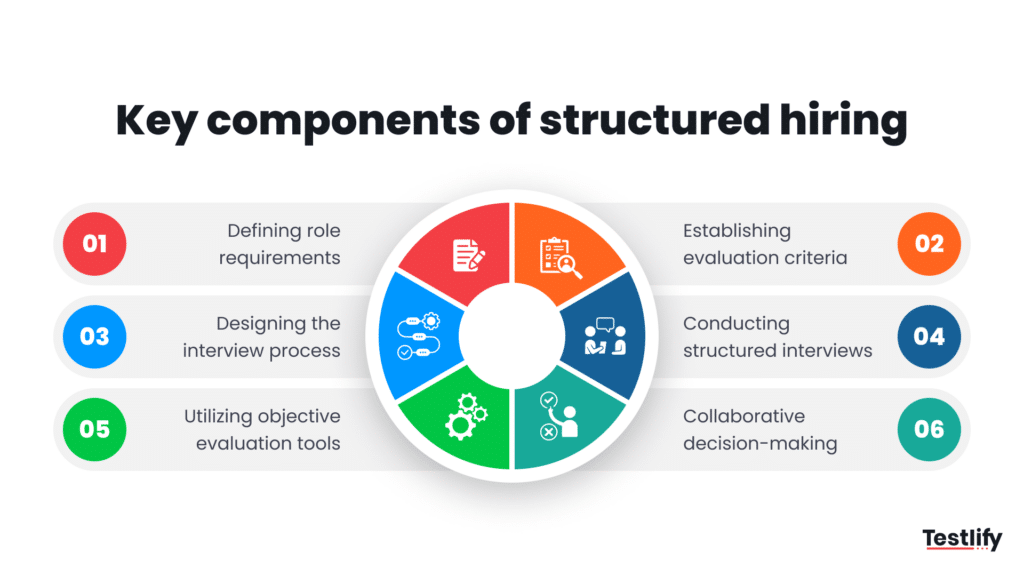

Why the shift toward structured hiring?
For years, unstructured interviews were the norm. The shift toward structured hiring is driven by the need for more objective and equitable hiring processes.
With structured hiring, every candidate is asked the same set of questions, evaluated on the same criteria, and judged by data. This helps reduce unconscious bias and ensures that decisions are based on what actually matters for the role.
There’s also a growing legal and ethical push for more inclusive hiring practices. Structured hiring helps organizations stay compliant while building more diverse teams.
Key points (Why the shift?):
- Improved predictive accuracy
- Enhanced efficiency and consistency
- Legal compliance
- Risk mitigation
Pros and cons of structured hiring
Pros of structured hiring
- Consistency and fairness: By standardizing interview questions and evaluation criteria, structured hiring ensures that all candidates are assessed uniformly. This approach minimizes biases and promotes a fair selection process.
- Enhanced predictive validity: Structured interviews are more reliable predictors of job performance than unstructured ones. Research indicates that they assess specific job-related competencies and behaviors.
- Legal defensibility: A standardized interview process provides documented evidence of fair hiring practices. This reduces the risk of discrimination claims and enhances legal defensibility.
- Efficient candidate comparison: With uniform questions, employers can more easily compare responses across candidates, facilitating objective decision-making.
Cons of structured hiring
- Rigidity: The fixed nature of structured interviews may limit the ability to explore unexpected topics or delve deeper into a candidate’s unique experiences
- Time-consuming preparation: Developing standardized questions and evaluation criteria requires significant upfront effort, which can be resource-intensive for organizations.
- Candidate discomfort: Some candidates may perceive structured interviews as too formal or impersonal, hindering their ability to showcase their true potential.
Steps to the structured recruiting process
To implement a structured recruiting process,
Step 1: Analyze the specific position to identify the essential duties, required skills, and qualifications.
Step 2: List the knowledge, skills, abilities, and other characteristics (KSAOs) necessary for success in the role.
Step 3: Structure the flow—right from screening to final decision. Whether it’s a phone interview, a technical round, or a final culture-fit call, define each stage of the recruitment process in advance.
Step 4: Design a thoughtful set of questions that assess the exact competencies you’re looking for.
Step 5: Create scoring rubrics to help evaluate candidates objectively. What does a firm answer look like? What counts as a red flag?
Step 6: Even the best structure fails without consistency. Ensure everyone on the hiring team understands how to conduct structured interviews, take notes, and score responses.
Step 7: Once interviews are complete, look at the scores, notes, and insights. Resist the urge to rely on “gut feel.”
This is how a structured hiring process removes the guesswork from recruitment. When you put structure behind your hiring decisions, you hire better.
Final thoughts
Hiring is about shaping the future of your team. And how you hire says a lot about what kind of company you’re building.
Structured hiring isn’t a rigid framework to follow for its own sake. It’s a way to bring intention into the recruitment process. A way to slow down just enough to ask: Are we being fair? Are we being clear? Are we choosing based on what really matters?
When every candidate gets a consistent experience and when decisions are based on shared standards. You build trust. You build better teams. And maybe that’s the whole point. Hiring shouldn’t feel like a gamble. It should feel like a decision you can stand by.
So, if you’re rethinking how your company brings in talent, structured hiring might just be the clarity you didn’t know you needed.
Frequently asked questions (FAQs)

B2B SaaS Content Writer
Rishav Kumar is a B2B SaaS content writer with 4 years of experience. He loves crafting engaging content. Always exploring fresh ideas, he's passionate about helping businesses grow through impactful writing.
LinkedInRelated resources
View all
HR & recruitment
Should pre-hire tests be mandatory for all?

HR & recruitment
Top 9 email templates for referrals & internal hiring

HR & recruitment
11 Campus hiring & job fair email templates that work

HR & recruitment
Internal job posting email: Free Templates & guide

HR & recruitment
Internship & probation confirmation emails: templates & guide

HR & recruitment
12 HR communication email templates for hiring managers
Get started.
Hire on proof, not resumes.
Run your first skills-based assessment free — no credit card required.