
Reviving cold talent: The goldmine sitting in your ATS
Unlock hidden hiring potential in your ATS. Learn reviving cold talent, reduce costs, and fill roles faster with this smart HR strategy.

Enterprise hiring teams face growing pressure to reduce time-to-hire, cut sourcing costs, and show ROI on expensive ATS and CRM tools. Yet while new candidates are chased externally, a goldmine of pre-qualified talent is often ignored your cold candidates.
These are applicants who once engaged with your brand but weren’t hired. Re-engaging this talent can lower cost-per-hire, speed up recruitment, and align more closely with evolving business goals.
Plus, it avoids the risks of constant outreach that can dilute your employer brand. It’s time to stop overlooking what’s already yours—your next great hire might be sitting quietly in your Applicant Tracking System (ATS).
 ChatGPT
 Gemini
 Claude
 Grok
Grok Perplexity
What is cold talent?
Cold talent refers to candidates who’ve previously applied or interacted with your company but weren’t hired. These talents are not actively in your recruitment funnel right now, but they’ve already shown interest.
Think of them as pre-qualified leads in sales. They weren’t a perfect fit then, but they might be now.
Cold talent refers to previous applicants who:
- weren’t hired due to timing or fit at the time
- declined an offer
- made it to the interview stage but didn’t progress
- withdrew voluntarily
- were strong silver-medal candidates

Why should you care about cold talent?
The best candidates aren’t always found through fresh job postings. 1. Talent acquisition is costly and time-consuming
We all know the drill: sourcing, screening, interviewing, negotiating, and onboarding. It’s expensive and takes time. A study by SHRM estimates the average cost-per-hire is over $4,700. And that’s for a single hire.
Reviving talent already in your ATS can dramatically lower both time-to-hire and cost-per-hire.
2. These candidates already know you
Candidates in your ATS have already interacted with your brand. They’ve taken the time to apply, maybe interviewed, and possibly even received an offer. There’s built-in brand awareness and, in many cases, brand affinity.
3. You have data you’ve already paid for
Your team spent time and money sourcing these candidates. Interviews were conducted. Notes were written. Assessments completed. This data has value, but only if you use it.
You wouldn’t let customer data sit unused in your CRM. So why do it with candidate data?
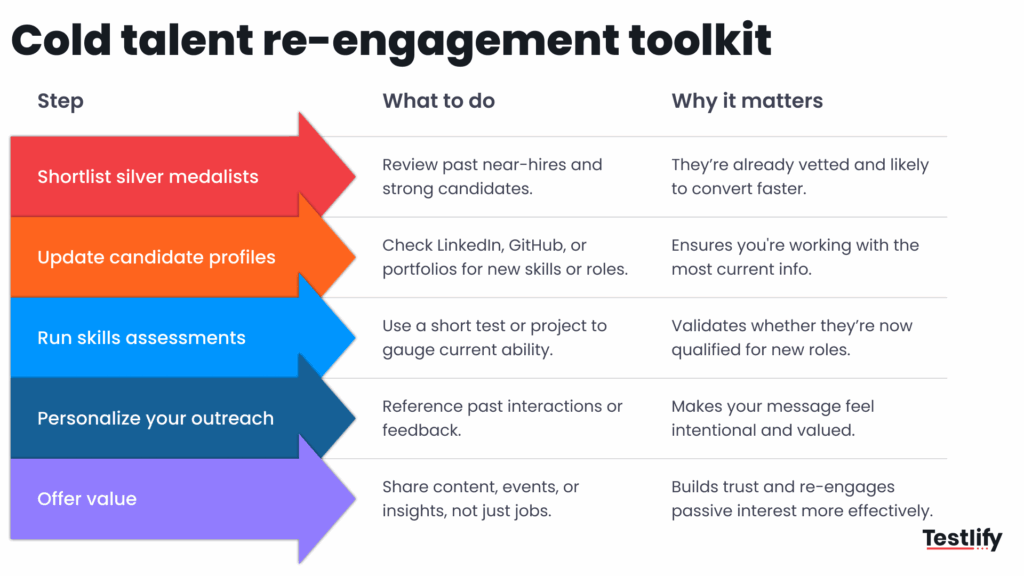
Signs you’re sitting on a goldmine
Your ATS holds a treasure trove of potential candidates, but many may be overlooked. By identifying the right signals, you can tap into this goldmine and find highly qualified talent that’s already familiar with your organization.
1. Your ATS has thousands of records
If your organization has been hiring over the years, your ATS likely contains thousands of candidate records. These aren’t just outdated resumes, they’re potential future hires. Many of these individuals have likely advanced in their careers, gained new skills, or changed industries. With the right filters and a little effort, you can uncover candidates who are now ideal fits for your current roles.
2. You’re struggling to fill certain roles
Hard-to-fill positions, especially those open for over 60 days, are a clear sign that your sourcing strategy may need a rethink. Before launching new recruitment campaigns, look inward.
Your ATS could already house candidates who are qualified but were previously overlooked, unavailable, or just too early in their careers. Re-evaluating them now might reveal a quick and cost-effective hiring solution hiding in plain sight.
3. You regularly get “silver medalists”
“Silver medalists” are candidates who made it to the final stages of your hiring process but didn’t get the job. They were strong, well-qualified, and likely would’ve been hired if circumstances were slightly different.
These candidates already know your company and have gone through your process. Re-engaging them is not only efficient, it also boosts candidate experience and strengthens your long-term talent pipeline.
Why is cold talent hot again?
What was “old” talent yesterday is today’s goldmine. Changing industry demands and developing skill sets make candidates who were once rejected ideal candidates for your company’s needs today.
1. Candidates improve over time
Just because someone wasn’t the ideal fit a year or two in the past doesn’t mean they aren’t now. People upskill and accumulate new experience with time. A candidate who previously didn’t possess certain qualifications may now possess the very same certifications or skills you require.
Looking back at these profiles enables you to take advantage of their professional development without the time and expense of finding brand-new talent.
2. Talent movement creates new fit opportunities
Companies, teams, and technologies are dynamic. A candidate who didn’t quite fit your company culture or team setup a year ago could be an ideal fit today because of changes within your organization or theirs.
Reviewing previous applicants from the lens of today’s needs can reveal talent that fits your roles, values, or tools better today than ever before.
3. It shows candidates you care
Reaching out to rejected candidates sends a strong, usually surprising message: “We remembered you.” This shows respect and forward thinking, which helps to humanize your brand.
Even if the candidate is not interested at this time, it leaves a lasting impression. A thoughtful follow-up can convert a former “no” into a future “yes” and really boost your employer brand in the process.
How to identify cold talent worth re-engaging?
Not all cold talent is equal. With the proper strategy, you can find top talent candidates who are more likely to be a good fit for your available positions and your team’s changing needs.
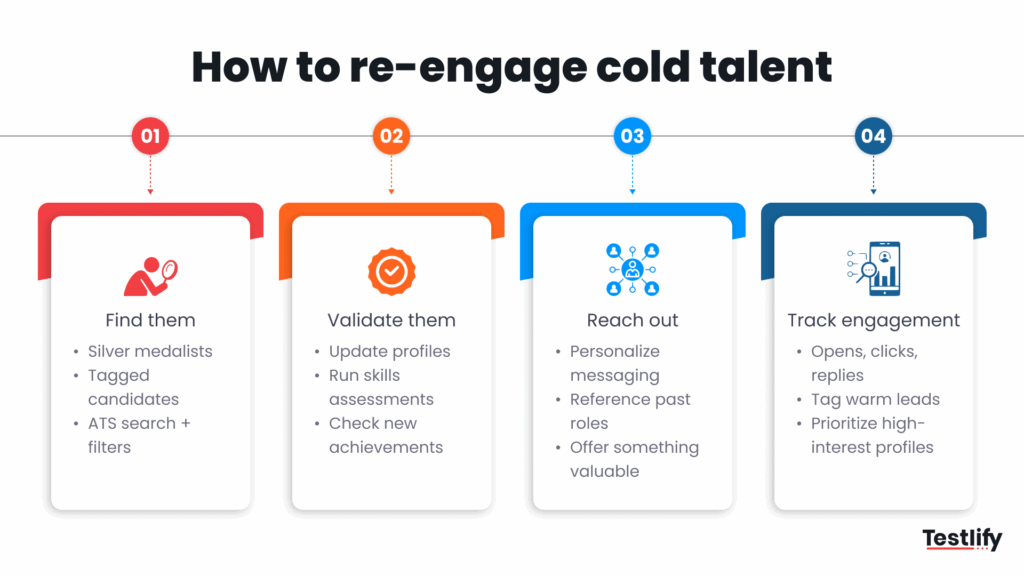
1. Start with “silver medalists”
Start your re-engage efforts by going back to “silver medalists” the final-stage candidates who weren’t hired. They’re already screened, demonstrated great potential, and may have missed out only because of timing or internal reasons. Review hiring manager’s notes for the ones who were just short on experience or job fit. They may now be your best hire.
2. Use tags and filters
Your ATS probably includes tagging and filtering tools that can quickly bring forward relevant candidates. Skills, job functions, prior stages in the hiring funnel, or geography, use this metadata to find potential matches for new openings. Intelligent filtering saves you from having to start over and instead targets talent already consistent with your shifting hiring needs.
3. Leverage AI-powered search
If your ATS has AI-powered search functions, get them working. These applications can read through job postings and automatically associate them with profiles in your database without taking hours of your time to screen by hand. Using AI to bring back applicants with comparable experience means no one qualified is going to slip through the cracks simply because their resume has been dormant for a long time.
4. Reassess skills with updated evaluations
Before re-engaging cold candidates, consider running a quick skills assessment with platforms like Testlify to gauge their current capabilities. Many candidates improve significantly over time, and a short test or project can reveal whether their skills now align with your current requirements. This step adds a layer of validation and ensures you’re approaching talent that’s truly ready for the role today.
How to warm up a cold talent?
Let’s say you’ve identified promising candidates. What now?
Personalize your outreach
Generic messages fall on deaf ears. When contacting cold prospects, let them know you recall them. Mention the particular position they applied for, highlight a skill or experience listed earlier, and tie it to a new opening. A personalized, thoughtful message makes the candidate feel like more than just a name in a database; it generates interest and re-engages a relationship with sincerity.
Example: “Hi Sara, we remember your strong background in product design from your 2023 application. We just opened a new senior design role that feels like a great fit for your skills today.”
Provide value upfront
Don’t jump straight into a job pitch. Instead, offer something meaningful an industry report, an invitation to a webinar, or access to an exclusive talent community. Providing value helps re-engage cold candidates by showing you’re invested in their career, not just filling a role. This approach builds trust and increases the likelihood they’ll want to talk when the time is right.
Rebuilding talent pools from the inside out
Your ATS can become the foundation for segmented talent communities:
1. Build talent pools by skill or function
Transform your ATS into a living database by organizing candidates into clear talent pools such as marketing, engineering, sales, or customer success. Within each group, further segment based on factors like seniority, location, or industry experience. This structured approach allows for faster, more relevant outreach when roles open, helping recruiters focus on warm, pre-qualified candidates instead of starting every search from scratch.
2. Use nurture campaigns
Treat your ATS like a CRM. Once candidates are grouped into pools, keep them engaged with ongoing nurture campaigns. Regular, non-intrusive communications like newsletters, company updates, role spotlights, or employee stories keep your brand fresh in their minds. These touchpoints warm up cold candidates over time, so when an opportunity arises, you’ve already laid the groundwork for a faster, more receptive hiring conversation.
Types of campaigns:
- Monthly newsletters
- Company updates
- Role highlights
- Employee success stories
Best practices for managing cold talent in the ATS
Proper cold talent management in your ATS can provide valuable resources when openings occur. Best practices ensure that your database remains organized, current, and prepared for effective re-engagement.
1. Keep the data clean
A disorganized ATS becomes useless right away. Establish a routine to periodically review and cleanse your database remove duplicate profiles, archive non-relevant candidates, and delete bounced email addresses. Clean information maximizes search and segmentation efficiency, allowing your team to find high-quality candidates in record time when it counts most. In addition, ATS integration streamlines your hiring process by syncing candidate data across your HR systems, reducing manual work, and helping to maintain clean and accurate records. Use your ATS as a strategic asset, not as a digital junk drawer.
2. Encourage hiring managers to leave feedback
Thorough candidate feedback is like gold for subsequent hiring. Prompt hiring managers to move beyond “yes” or “no” and capture actual strengths, development areas, and team fit. Densely annotated notes provide recruiters with context when they look at profiles months or years later. Having this become a regular part of your hiring process enhances long-term talent visibility and aids in finding excellent fits that may’ve been overlooked earlier.
3. Track engagement
Today’s recruiting software typically displays who’s interacting with your messages, who’s opening emails, clicking links, or changing their information. These activities indicate interest and must inform your follow-up. By monitoring candidate interactions, you can concentrate your efforts on those who are getting to know your brand better, maximize your outreach effectiveness, and increase rates of conversion from passive interest to active applicants.
When to re-engage cold talent?
Timing is key when re-engaging cold candidates. Trigger moments can make outreach more relevant and well-received. For example, a similar role opening up to one they previously applied for could be a great opportunity.
Timing matters. Some triggers include:
- A similar role opens
- New leadership or direction changes team dynamics
- A former candidate reaches a career milestone
- New tech or tools align with their skillset
Use job alerts or automation rules to surface matching profiles as soon as new roles are opened.
Overcoming internal resistance
Internal skepticism can hold your team back from revisiting cold talent. By addressing common objections and framing cold talent as an opportunity, you can gain internal buy-in and unlock the full potential of your ATS.
1. “Isn’t old talent…Old?”
Encourage your team to view cold talent as “mature” rather than outdated. Over time, candidates grow, acquire new skills, and gain valuable experience. As business needs evolve, what may not have been a fit previously can now align perfectly with your current requirements. Shifting this mindset helps recognize the untapped potential in your ATS rather than dismissing candidates based solely on past circumstances.
2. “We don’t have time to dig through the ATS”
If time is a concern, invest in tools that simplify the process. Modern ATS platforms often feature intelligent search capabilities, AI-powered filtering, and profile enrichment, which automatically surface the most relevant candidates.
These tools save you hours by identifying promising profiles, allowing your team to focus on engagement rather than sifting through outdated records or re-screening every applicant manually.
3. “Won’t it feel awkward to reconnect?”
Reconnecting with cold candidates doesn’t have to feel awkward if approached with empathy and personalization. Most candidates appreciate hearing from a company that valued them enough to reconsider.
As long as your outreach is thoughtful and relevant, they’ll likely feel positive about being remembered, especially if they were treated respectfully during their original interview process. This approach fosters goodwill and strengthens your employer brand.
Future-proofing your ATS for cold talent revival
To leverage cold talent long-term, you need a future-proof strategy. By building a strong talent pipeline, integrating with other systems, and prioritizing candidate experience, you can ensure your ATS remains a valuable asset for years to come.
1. Build a talent-led culture
Create a talent-first mindset across your organization. Encourage team members to think beyond just filling current roles and focus on building long-term relationships with candidates.
This approach ensures that talent isn’t just a short-term solution but a strategic asset that can be revisited in the future. A talent-led culture cultivates strong connections, making it easier to tap into your ATS for future opportunities.
2. Integrate with CRM and HR tech stack
Seamless integrations with your CRM and other HR tech tools can significantly enhance the quality of your candidate profiles. Connecting your ATS with platforms like LinkedIn Recruiter, candidate CRM systems, or performance data tools creates a more complete view of each candidate.
This ensures that when you go to revisit a cold candidate, you have access to updated and comprehensive information, making re-engagement much more effective.
3. Make candidate experience a priority
The candidate experience doesn’t end when someone is rejected. Leaving candidates in the dark or ghosting them creates negative impressions that make it harder to re-engage them later.
Providing constructive feedback and maintaining open lines of communication helps to build goodwill, leaving the door open for future opportunities. When candidates feel respected, they’re more likely to want to reconnect down the road.
Conclusion: Don’t let great talent go cold
Your ATS is more than just a filing cabinet; it’s a living, breathing ecosystem of potential. While new talent will always be needed, don’t ignore the valuable relationships already sitting in your database.
The future of recruiting isn’t just about sourcing harder. It’s about sourcing smarter. And that means mining the gold you already own.
So next time you open your ATS, don’t think “archive.” Think “opportunity.”

Content Writer
Yashika Khandelwal is a Content Writer with 3+ years of experience creating research-backed content on hiring, talent assessment, and HR technology. She is a registered Organizational Psychologist and subject matter expert who combines behavioral science with practical recruitment insights to produce accurate, evidence-based content.
LinkedInRelated resources
View all
HR & recruitment
Hiring Funnel Bottlenecks: How to Stop Candidate Ghosting

HR & recruitment
Global hiring challenges and how enterprises are solving them

HR & recruitment
When candidates show their true colors: interview red flags to look out for

HR & recruitment
Tips for conducting your first job interview as an HR intern

HR & recruitment
Optimizing Talent Acquisition: Integrating AI and PPC Strategies

HR & recruitment
Top reasons to study human resource management in 2026
Get started.
Hire on proof, not resumes.
Run your first skills-based assessment free — no credit card required.