
What is a job requisition & position: A guide for hiring managers
Learn how to create and manage requisition positions effectively and streamline your hiring process.

When it comes to hiring new employees, the requisition process is one of the most important tasks you’ll find yourself managing in human resources.
Whether your company is expanding at warp speed or you need to fill a vacancy that has been left open by an employee who moved on, understanding the requisition process is an absolute necessity.
In this blog, we’ll break down the key aspects of creating and managing requisitions effectively. From understanding what a requisition is to navigating the approval process, you’ll find practical tips and insights to streamline your recruitment efforts and ensure you’re getting the right candidates for the job.
 ChatGPT
 Gemini
 Claude
 Grok
Grok Perplexity
What is a job requisition?
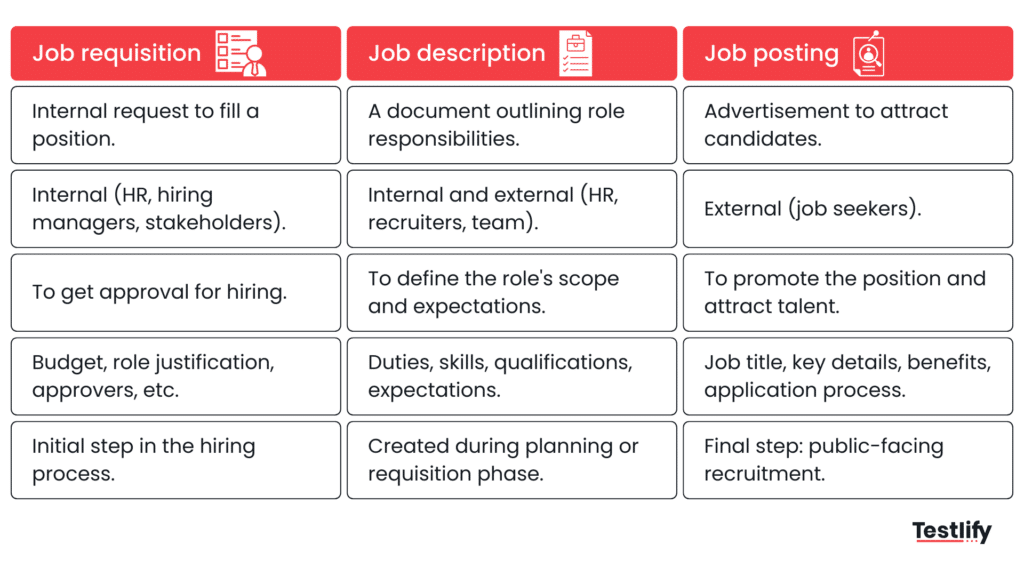
A job requisition is an official request to fill a job vacancy within an organization. It provides a structured way for managers to communicate the need for a new hire, whether it’s due to a new position, a vacancy, or to meet growing business needs.
This formal request helps HR departments assess whether there’s a genuine need for the role and if it aligns with the organization’s budget, goals, and hiring priorities.
Think of the requisition as a blueprint or starting point for the recruitment process. It contains all the necessary information, such as:
- Job title and description
- Reporting structure
- Key responsibilities and requirements
- Salary range
- Department or team
- Justification for the role
By carefully reviewing and filling out a job requisition, you’re setting the stage for finding the right talent, within the right budget, and with the right skills.

Why is a requisition position important?
You May ask, “why bother with a requisition position when we already know what we need?” the answer lies in the Many benefits provided by requisition positions-not just to HR but to the company as a whole.
1. Clarifies job expectations
A requisition position ensures that anyone involved in recruitment is on the same page by clearly outlining a job’s duties, required skills, and qualifications. It avoids future misunderstandings at the end; It is rather a contract sort of thing since it lets both the hiring team and the applicants know what will be expected at the end of the day.
2. Ensures compliance
Many companies, especially the large ones, require formal requisitions to ensure hiring decisions align with company policies and legal regulations. For instance, companies must monitor job openings, ensure equal opportunity for all candidates, and sometimes meet diversity hiring goals. If a requisition does not exist, there is a risk of overlooking these considerations.
According to a study conducted by Glassdoor, nearly 58% of job seekers are concerned about the fairness of hiring processes, which indicates just how important transparency and compliance are.
3. Prevents unnecessary hiring
In larger companies, multiple teams might have similar job openings at once. Without a requisition position, it’s easy for departments to duplicate efforts or hire for positions that aren’t truly necessary. A requisition provides visibility, allowing HR to prioritize hiring efforts and allocate resources wisely.
4. Aligns recruitment with budgeting and strategy
Most often, requisitions Will need some level of financial clearance, such as the ability of the company to accommodate this particular role.
An example of when requisitions help determine only which core positions must be filled by a company, whether the firm is experiencing an economic downturn or simply repositioning its internal organizational structure.
It helps monitor and determine which organizational positions are added or phased out in order for recruitment efforts to follow suit.
How to create a job requisition?
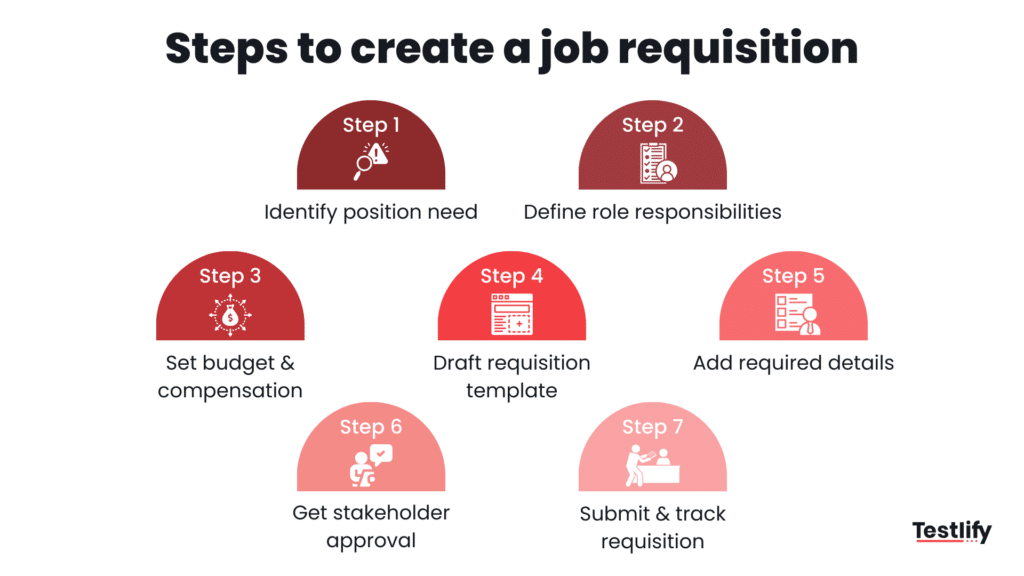
Now that we know what a requisition position is and why it’s important, let’s look at how to create one. It is not just filling out a form; This requires careful thought, planning, and collaboration with various stakeholders. Here’s a step-by-step guide to help you create a well-rounded requisition position.
Step 1: Understand the role
Before you sit down to write a requisition, you must first understand what the role is trying to fill. So ask the hiring manager and employees who Will be working closely with the new hire all these questions:
- Why is this role necessary? Is it replacing someone who left, or is it a new position?
- What specific challenges is the team facing that this new hire Will address?
- What skills, experiences, and qualifications are absolutely essential for success in this role?
According to LinkedIn, 83% of talent professionals say that understanding the job’s needs before posting helps improve the quality of hires.
Step 2: Write a clear job description
A good requisition position starts with a clear job description. It should be detailed but brief, and in a way, be able to convey just the right amount of information to get the right applicants. Here’s a checklist of what your job description should include:
- Job title: Make it specific and aligned with industry standards.
- Core responsibilities: List the key tasks the new hire Will be expected to perform. Use bullet points for readability.
- Skills and experience: Include both hard (Technical) And soft (Interpersonal) Skills. Be sure to specify any particular qualifications, certifications, or experience necessary.
- Working environment: Mention whether the position is in-office, remote, or hybrid, and any other important details about the job environment.
A survey by jobvite found that 56% of applicants leave a job application halfway if the job description isn’t clear or lacks relevant details. So, Don’t skip this step!
Step 3: Define the qualifications
It’s a delicate balance between specificity and flexibility when defining qualifications for a position. While clarity is necessary on what’s absolutely required, for example, a bachelor’s degree or specific certifications, you still want to give room for candidates who May have different, but equally valuable, experiences.
- Education: Define the minimum level of education required for the position.
- Experience: Specify how Many years of experience the ideal candidate should have, and in what areas.
- Technical skills: These can include proficiency in specific software, tools, or technologies relevant to the role.
- Soft skills: These might include communication, teamwork, leadership, or problem-solving abilities.
A recent talent board report showed that 56% of job candidates said that having a clear set of qualifications and expectations helped them feel more confident in applying for a role.
Step 4: Budget and compensation
Compensation is an important component of the requisition position. Even though it can be hard to nail down an exact salary before a candidate is selected, at least provide a salary range that falls within industry standards and the company budget. Do not forget to include the following:
- Base salary: The typical compensation for the role, based on market rates.
- Bonuses and incentives: If applicable, include performance-related bonuses or other incentives.
- Benefits: List out health insurance, retirement plans, paid time off, and any other benefits the role comes with.
The Bureau of Labor Statistics reports that salaries and benefits account for a large portion of company expenses, so HR must ensure that they align with both market rates and internal pay scales.
Step 5: Get approvals
Once you’ve created the requisition position, it’s now time to get the approval. Often, you are going to require finance approval and hiring manager for the purpose of ensuring the budget is there and this requisition satisfies the team requirements.
The more bureaucratic your organization the more higher-ups you might be required to meet with before sending the requisition out for an interview.
How to manage the job requisition?
It just begins with the creation of the requisition position. Then comes the management of it throughout the recruitment process. Here are some key tips on staying on top of the requisition once it’s created:
1. Track the status of the requisition
Once the requisition is submitted, make sure to track the status regularly. You Don’t want it to get stuck in the approval process or forgotten. Some companies even use software called an applicant tracking system (ATS) To automate the approval workflow. This can really make the whole process much smoother.
2. Adjust as needed
Sometimes, the requisition May need to be changed. For instance, the job market May change, or the team’s priorities May change. It is essential to be flexible and update the requisition.
3. Close the requisition once it’s filled
Once a candidate has been hired and onboarded, it is time to close the requisition. This step is important for record-keeping and helps HR maintain a clear picture of open positions and hiring activities.
Best practices for requisition positions
The following are some of the best practices that can be implemented to enhance the requisition process:
1. Standardization of the process
Create a standard requisition template that should be followed by all hiring managers. This process May ensure uniformity in all of them and thereby expedite the process.
2. Open communication
During the entire requisition process, maintain clear and open communication with all stakeholders involved in the hiring decision. From the hiring manager to the finance team or even senior leadership, regular check-ins avoid bottlenecks and delays.
3. Leverage technology
Requisition management can become a breeze when using an applicant tracking system. Most ats tools enable the creation of requisitions, submitting for approval, and tracking them in real-time by HR professionals.
4. Periodically review and update
Since the company evolves, the roles and responsibilities of the organization do as well. Periodically review and update your requisition templates to stay current and in alignment with the company’s goals.
Conclusion
Requisition positions form the foundation of the hiring process. They are clear, set expectations in place, ensure compliance, and help guide the entire recruitment journey. The time spent creating a thoughtful requisition helps HR professionals streamline the hiring process, avoid miscommunications, and, ultimately, assist the company in finding the right talent for the job.
As you refine your process, remember that requisitions are not just administrative hurdles but are important tools that Will help ensure that your hiring decisions are strategic, efficient, and aligned with the company’s long-term goals.
For further reading, explore Position.
Frequently asked questions (FAQs)

Content Writer
Yashika Khandelwal is a Content Writer with 3+ years of experience creating research-backed content on hiring, talent assessment, and HR technology. She is a registered Organizational Psychologist and subject matter expert who combines behavioral science with practical recruitment insights to produce accurate, evidence-based content.
LinkedInRelated resources
View all
HR & recruitment
Top HR programs every organization should have

HR & recruitment
Gamified assessments: types, examples and benefits

HR & recruitment
HR KPIs: What are they? Examples & formulas

HR & recruitment
A complete guide to human proctoring vs AI proctoring

HR & recruitment
14 HR industry trends to look at in 2026

HR & recruitment
What is high-performance culture and how to build one?
Get started.
Hire on proof, not resumes.
Run your first skills-based assessment free — no credit card required.