
Top 9 people management skills and how to assess them
Discover the top 9 people management skills and learn effective ways to assess them, ensuring you build a strong, cohesive, and high-performing team.
People management skills are required to construct a strong team that encourages employee collaboration, satisfaction, and productivity. You must find the appropriate people skills whenever you hire someone into a managerial position or promote an individual from within. But what skills do you focus on, and how can you do that effectively?
This blog discusses the key people management skills any recruiter should look for and how to evaluate them in a potential candidate.
 ChatGPT
 Gemini
 Claude
 Grok
Grok Perplexity
What are people management skills?
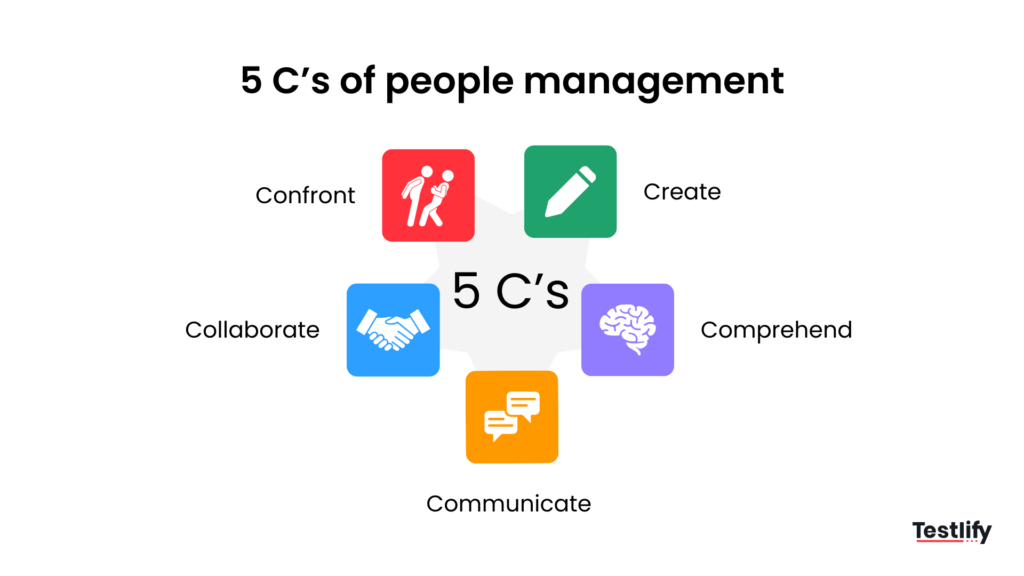
People managers lead and guide team members to achieve organizational goals. People management involves understanding individual team members, helping them reach their full potential, and ensuring they work effectively together.

Why do you need managers with good people management skills?
According to SHRM, 75% of employees who voluntarily leave their jobs cite poor management as the reason. When you hire someone with good people management skills, they can help you make all the difference in your organization. Here’s why:
- Increases team productivity: A good manager empowers their workforce to increase productivity and efficiency.
- Higher employee engagement: People their immediate supervisors believed in and supported are likelier to keep themselves engaged and motivated.
- Builds a healthy work culture: A good people management system develops trust and cooperation, leading to an inclusive work environment.
- Reduces turnover: Employees tend to stay when they see that a manager cares for their growth and ensures their well-being.
Since managing people is a critical responsibility, let’s explore the core competencies you should consider if hiring or promoting someone to a leadership position.
Top people management skills
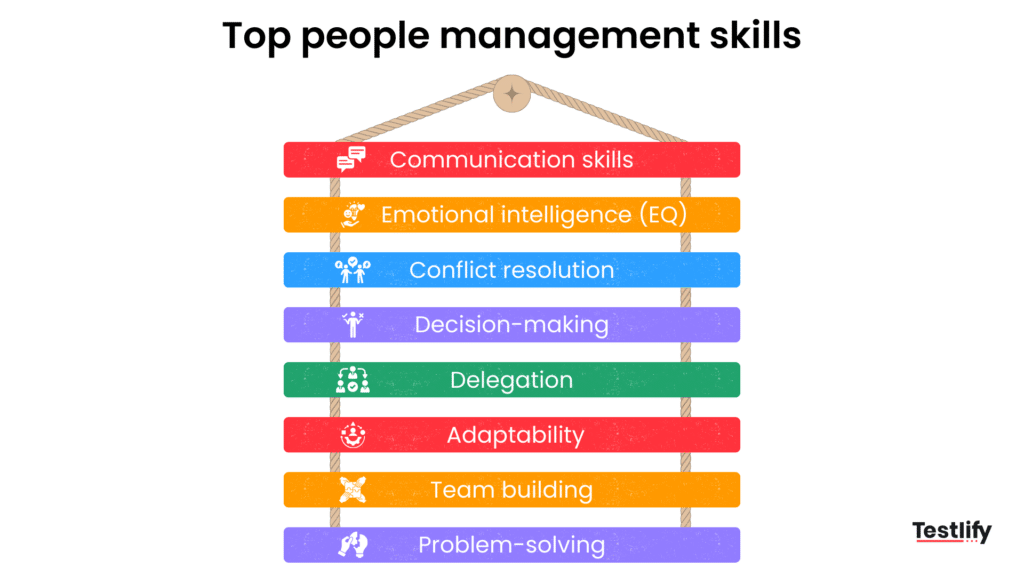
Effective people management is essential for building strong, productive teams, and free leadership training can help professionals strengthen core skills like communication, delegation, and decision-making. By mastering key skills like communication, emotional intelligence, and conflict resolution, managers can create positive work environments and drive team success. Below are the top people management skills every recruiter should look for when hiring.
1. Communication skills
Communication is the core of good management. Managers should be able to communicate information but also listen attentively. This spans verbal and written communication as well as providing constructive feedback.
According to Deloitte, employees with managers who communicate effectively are 3.5 times more likely to be engaged. A good communicator develops a trusting and open environment around the team. It decreases the chances of miscommunication, improves collaboration, and ensures all parties are on the same page.
2. Emotional Intelligence
Emotional intelligence is a specific ability to reflect upon one’s emotions and those of others; it concerns empathy, self-awareness, and emotion regulation. Organizations with leaders who have high emotional intelligence see a 31% improvement in team performance.
Managers with high EQ can better cope with interpersonal relationships, manage stress, and develop a healthy work environment. Chances are that such managers will become approachable and sympathetic, which will be reflected positively in higher morale and lower stress among employees.
3. Conflict resolution
Conflict resolution is handling, resolving, and managing disagreements or conflicts. Managers who are good at settling conflicts in a fair, unbiased manner help to encourage teamwork.
Conflicts are destined to be present anywhere in the workplace, but this conflict can be either a catalyst for growth or an entity of tension. An efficient manager can solve conflicts so that team harmony is not disturbed and relationships are enhanced.
4. Decision making
Decision-making is making judgment calls, consulting all the information you have taken in, considering a few available choices, and making smart decisions. It is one of the most important skills for managers because decisions affect teams and entire organizations.
Managers must make daily decisions, from resource allocation to team issues. Good decision-making decides with the highest possible interest of the team in mind, minimizing risks and leading to better outcomes.
5. Delegation
Delegation is giving out tasks to members and considering their strengths and workload. It requires trust, understanding of what the team members can do, and a clear guide without over-managing.
In reality, delegation enables managers to do strategic work and to motivate team members to take charge of their tasks. It also plays a significant role in team development, allowing employees to learn and develop new skills.
6. Adaptability
A flexible person can change easily, be it in team dynamics, company policies, or unexpected challenges. It means a person is flexible yet resilient under change.
Change is such an inevitable part of today’s fast-working business environment. Managers adapt themselves, ensuring that even the rest of their teams, where things are changing, are productive and engaged.
7. Time management skills
Time management is the art of deciding which tasks should be given priority and the best use of one’s time. For managers, that would mean personal time and how they help their team get things done on time.
A time-management manager ensures that the tasks they and other team members must do will be completed on time. It also avoids burnout because the workloads are brought in and distributed accordingly.
8. Team building
Team building is forming a coherent team that works cohesively and with trust, which is the right direction. It establishes a positive culture through teamwork, solves issues as they surface, and more.
A great team can accomplish far more in collaboration than it can if members only work independently. Managers who master team building create an environment where employees feel connected, valued, and motivated to work toward common goals.
9. Problem-solving skills
Problem-solving means identifying problems and providing solutions. This is a critical managerial skill that leaders need to be able to communicate with issues within the teams or even issues of the projects.
A manager with good problem-solving skills will save the organization from trivial issues becoming major ones, keep the team on track, and help to allow a continuous improvement culture where threats turn into stepping stones for improvement opportunities.
How do you assess people management skills?
It is challenging for any recruiter to evaluate people management skills as most are soft and interpersonal skills. Still, a comprehensive approach involving interviews and skill assessments may give the recruiter better insights into the candidate’s abilities.
1. Skills assessments
Skills assessment is an objective tool for evaluating a candidate’s people management skills. A skills assessment is designed to be a structured test meant to measure particular competencies. It will give an even clearer and much more standardized view of where the candidate is strong and what on which one may support him or her is even stronger.
Benefits of skills assessments
Consistency: Candidates are evaluated using the same yardstick. Hence, comparisons become easier.
Data-driven decisions: Assessments provide concrete data regarding a candidate’s competencies. You could choose the best fit and make good-informed decisions while hiring or promoting someone.
Real-life simulations: Assessments like situational judgment tests allow the candidates to respond to practical workplace scenarios, making it easier to determine one’s critical thinking skills and decision-making abilities.
Some of the most prominent people management assessment on Testlify target key areas such as emotional intelligence, communication, decision-making, and problem-solving skills.
Some skills assessments that help assess people management skills include:
Emotional Intelligence test tests how well the candidate can understand their emotions, work with themselves, and respond to others around them.
Leadership test: The leadership test helps check one’s leadership style and how they resolves conflicts and make decisions.
Situational judgment tests: Situational judgment tests help you present a practical situation in front of the candidate and assess their response to it to understand their on-the-job skills and knowledge.
Psychometric tests: SMART personality test, Big Five personality test, and Ennergram personality test are some psychometric tests that you can use to assess candidates for people management skills by getting an idea about their personality.
2. Behavioral video interviews
Behavioral video interview questions can be among the best ways to determine how one candidate has handled situations involving management in the past. Asking specific experience questions will bring to light how they communicate, handle conflicts, and lead their teams.
Example behavioral questions to ask candidates:
- Can you describe a time when you had to handle a conflict within your team? How did you resolve it?
- Tell me about a situation where you had to give constructive criticism to one of your team members. How did you handle that?
- How do you juggle conflicting deadlines with yours versus those of your team?
3. 360-degree feedback
When recommending an individual internally or recruiting from outside, where that previous experience is managerial, gathering feedback from former colleagues, subordinates, and supervisors would be ideal. 360-degree feedback is a more comprehensive evaluation of the candidate’s ability to manage employees from those who have direct experience with him or her.
What to look for in feedback?
- How did the candidate handle conflict?
- How accessible and empathetic was he with the feelings of the employees?
- How did he implement follow-through on his individual and group action plans?
- Ability to handle workload and deadlines.
Conclusion
An individual must possess strong people management skills to be a leader. These skills can be assessed through skills assessments and video interviews to ensure the best decisions are made for the team and the company.
With this, you can best assess and compare candidates to ensure you hire individuals with the right leadership qualities.
FAQs

Content Writer
Yashika Khandelwal is a Content Writer with 3+ years of experience creating research-backed content on hiring, talent assessment, and HR technology. She is a registered Organizational Psychologist and subject matter expert who combines behavioral science with practical recruitment insights to produce accurate, evidence-based content.
LinkedInRelated resources
View all
Hiring Guide
How to create a recruitment dashboard that drive results?

Hiring Guide
7 simple steps to create a hiring process flowchart

Hiring Guide
10 Recruitment challenges and how to solve them

Hiring Guide
Onboarding External Workers: A Practical 2026 HR Guide

Hiring Guide
How to optimize your resume for tech jobs

Hiring Guide
The best recruiting email templates for tech startups
Get started.
Hire on proof, not resumes.
Run your first skills-based assessment free — no credit card required.