
All you need to know about direct sourcing
Discover the power of direct sourcing in recruitment! Learn how HR can cut costs, speed up hiring, and build a strong talent pipeline efficiently.

Direct sourcing has become one of the hottest trends in recruitment, and for good reason. As an HR professional, understanding this strategy can be a game-changer for hiring processes. Direct sourcing allows you to streamline recruitment, reduce costs, and connect with top-tier talent directly without relying on third-party recruitment agencies.
In this blog, we’ll see what direct sourcing is, why it’s becoming essential, and how you can successfully implement it in your organization.
 ChatGPT
 Gemini
 Claude
 Grok
Grok Perplexity
What is direct sourcing?
Direct sourcing refers to identifying and engaging potential candidates candidates without using external recruitment agencies or staffing firms. Instead, organizations rely on internal resources such as recruitment teams, employee referrals, social media channels, job boards, and even internal talent pools to find and attract candidates.
Direct sourcing relies on employer brand and reputation. The main idea is to leverage your organization’s resources and networks to directly source talent, reducing dependence on external agencies and gaining more control over recruitment.

Why is direct sourcing gaining popularity?
Direct sourcing offers several compelling benefits that make it a highly attractive option, especially in an era of growing competition for talent. Here are some of the key reasons why more organizations are adopting this strategy:
1. Cost savings
One of the biggest advantages of direct sourcing is the potential to reduce recruitment costs. According to a LinkedIn survey, employers that use direct sourcing save an average of 30% on hiring costs compared to those that rely on recruitment agencies.
External recruiters often charge high placement fees, especially for hard-to-fill roles. Direct sourcing eliminates these additional fees, making it a more cost-effective approach in the long run.
2. Control and flexibility
When you’re managing the hiring process in-house, you have full control over every step. From initial candidate outreach to interviews and offer negotiations, you’re directly involved in ensuring the process aligns with the company’s goals and culture.
In a report by Harvard Business Review, 75% of HR leaders cited control over the hiring process as one of the most significant advantages of direct sourcing. It offers flexibility in engaging with candidates and helps ensure the recruitment process is as efficient and effective as possible.
3. Access to a larger talent pool
Direct sourcing helps companies tap into a broader range of candidates, including passive candidates.
LinkedIn’s 2023 Global Talent Trends report revealed that 70% of the global workforce is passive.
With direct sourcing, HR teams can proactively build relationships with these candidates, keeping them in mind for future openings.
4. Faster time-to-hire
When HR teams rely on recruitment agencies, it can take weeks or even months to fill a position, especially if there are delays in communication or a lack of quality candidates.
Direct sourcing can speed up this process by allowing you to identify and engage with candidates quickly. A report from Glassdoor suggests that organizations using direct sourcing for recruitment see a 25% faster time-to-hire than those who outsource their recruitment.
5. Improved candidate experience
Job seekers today value transparency and communication throughout the hiring process. Direct sourcing allows HR teams to provide a more personalized experience, which can positively impact the employer brand.
According to a Talent Board survey, candidate experience is one of the top three factors in determining whether top talent will accept a job offer. When candidates directly interact with your company, they are more likely to feel valued and engaged, resulting in a stronger relationship.
Steps to implement direct sourcing
How can you start using direct sourcing in your organization? Let’s break it down into clear steps.
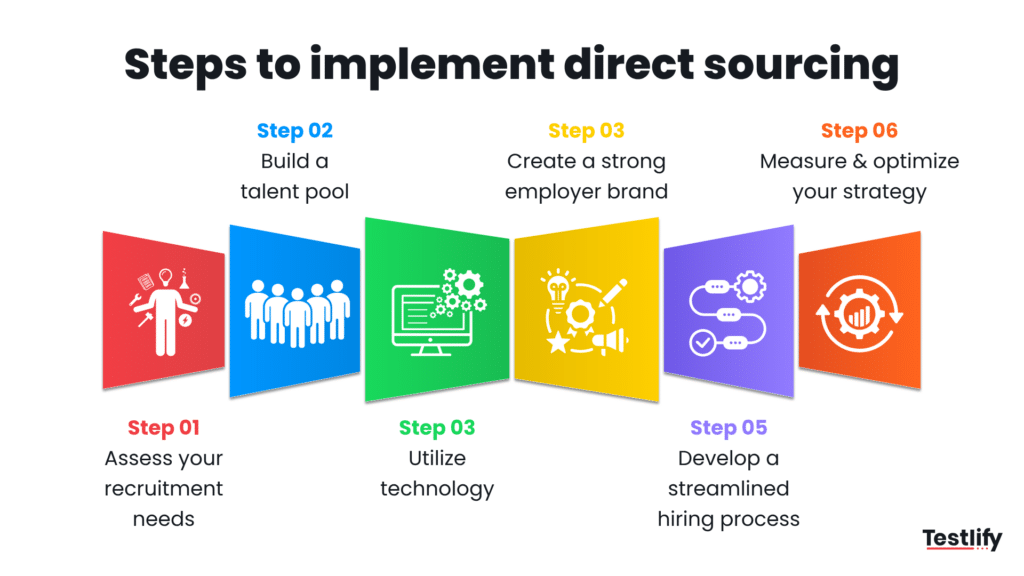
1. Assess your recruitment needs
Before diving into direct sourcing, take a moment to assess your company’s hiring needs. Consider the following questions:
- What types of roles are you hiring for? Specialized roles require more targeted sourcing strategies, while general positions are easier to fill.
- How many positions do you need to fill, and what is the anticipated volume of hires in the next quarter or year?
By understanding your recruitment needs and the level of urgency for different roles, you’ll be better positioned to plan your direct sourcing efforts.
2. Build a talent pool
Building a strong, reliable talent pool is a key component of direct sourcing. Your talent pool should consist of active and passive candidates well-suited for your organization’s future hiring needs.
- Employee referrals: Employee referrals remain one of the most effective sourcing channels. Employees hired through referrals are more likely to stay longer, with some studies showing that employee retention rates are 45% higher for referred candidates.
- Social media & networking: Platforms like LinkedIn, Twitter, and Facebook are great places to build a network of potential candidates. Actively engage with individuals, post relevant job openings, and create a strong employer brand that reflects your company’s values and culture.
- Job boards: While direct sourcing is about more than posting job ads, leveraging job boards such as Indeed, Monster, or Glassdoor can still effectively reach active candidates. Craft engaging and clear job descriptions highlighting your company’s unique culture and the benefits of working with you.
3. Utilize technology
Implementing the right technology can simplify your direct sourcing efforts and save time. HR tools like Applicant Tracking Systems (ATS) and recruitment marketing platforms help you streamline candidate management and engagement.
- Applicant Tracking Systems (ATS): ATS software helps you manage resumes, track candidate progress, and stay organized throughout the hiring process. It’s especially useful for building and maintaining your internal talent pool.
- AI & automation: Artificial intelligence (AI) can play a huge role in automating repetitive tasks like resume screening and interview scheduling, leaving your team with more time to focus on building relationships with candidates.
4. Create a strong employer brand
Your employer brand plays a pivotal role in attracting top talent. Candidates are more likely to apply to a company they perceive as attractive, and a strong employer brand can help you stand out in a competitive job market.
- Share your culture: Showcase your company’s work environment, values, and employee success stories through social media, blogs, and other content. Companies with an authentic and appealing employer brand tend to attract higher-quality candidates.
- Be transparent: Candidates appreciate transparency throughout the hiring process. Be clear about an employee’s role, responsibilities, and company values.
5. Develop a streamlined hiring process
A streamlined and efficient hiring process is essential for direct sourcing success. Lengthy, complicated processes can lead to losing top candidates to other employers. A well-organized process that includes clear communication, timely feedback, and a structured interview process will make it easier for HR teams to engage with the best talent.
- Clear job descriptions: A well-crafted job description can help you attract the right candidates. Be specific about the role, responsibilities, required qualifications, and skills needed.
- Efficient interviewing: Ensure the interview process is structured and consistent, ensuring all candidates are assessed on the same criteria. Consider video interviews to save time and make the process more accessible.
6. Measure and optimize your strategy
Like any recruitment strategy, direct sourcing requires continuous evaluation. Track key metrics such as time-to-hire, cost-per-hire, quality of hire, and candidate experience to assess the effectiveness of your sourcing efforts.
- Time-to-hire
- Cost-per-hire
- Candidate quality
You can continue refining the direct sourcing approach by analyzing these metrics.
Best practices for direct sourcing success
To maximize the effectiveness of direct sourcing, keep these best practices in mind:
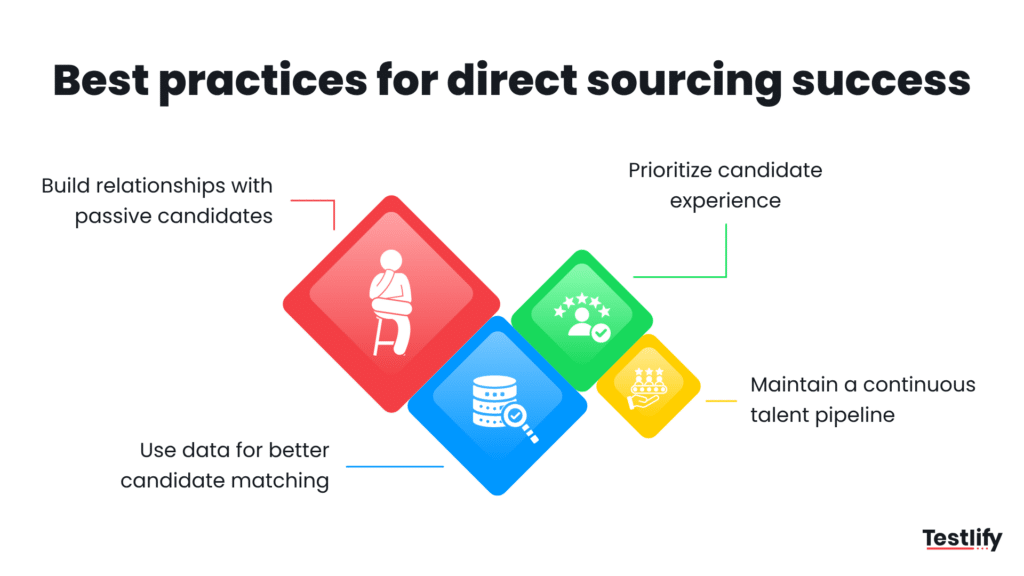
1. Build relationships with passive candidates
It’s not just about filling an immediate vacancy; it’s about building relationships for the future. Even if candidates aren’t actively looking for a job, nurturing relationships with them can pay off. Stay connected through regular updates, networking events, and shared industry content.
2. Use data for better candidate matching
Data analytics can help you make better hiring decisions. By analyzing historical hiring data, you can identify traits of successful employees and use this information to target candidates who match these characteristics.
3. Prioritize candidate experience
Treat candidates like customers. Ensure timely communication, offer constructive feedback, and make the interview process as smooth as possible. A positive experience can turn even those who weren’t selected into future applicants.
4. Maintain a continuous talent pipeline
Direct sourcing is not a one-time activity; it’s an ongoing process. Continuously build and nurture your talent pool to ensure a strong pipeline of potential candidates, ready when a role becomes available. You can also use talent assessment tools like Testlify and assess candidate skills to build a talent pipeline of skilled candidates.
Challenges of direct sourcing
While direct sourcing can be highly effective, it does come with its challenges:
Resource intensive: Managing the process effectively requires time, effort, and resources. Smaller HR teams may struggle to keep up with sourcing, engaging, and screening candidates.
Training requirements: Not all HR teams know direct sourcing techniques. Training may be necessary to get the best results from this approach.
Conclusion
Direct sourcing is more than just a passing trend; it’s a highly effective way for HR teams to take control of their recruitment process, reduce costs, and find better talent faster. By building strong talent pools, leveraging technology, improving your employer brand, and streamlining your hiring process, you can create a direct sourcing strategy that works for your company.
As more organizations turn to direct sourcing, it’s clear that this strategy is here to stay. By adopting it, HR teams can gain a competitive edge in attracting top-tier talent and ultimately drive their organizations’ success.
Frequently asked questions (FAQs)

Content Writer
Yashika Khandelwal is a Content Writer with 3+ years of experience creating research-backed content on hiring, talent assessment, and HR technology. She is a registered Organizational Psychologist and subject matter expert who combines behavioral science with practical recruitment insights to produce accurate, evidence-based content.
LinkedInRelated resources
View all
HR & recruitment
What Is Job Design? Elements, Approaches, and Best Practices (2026)

HR & recruitment
Phased return to work: a complete guide for HR teams

HR & recruitment
What Is Adaptive Leadership? Definition, Principles, and HR Applications (2026)

HR & recruitment
Inclusive succession planning: promoting diversity in leadership roles

HR & recruitment
Skills Profile: What It Is and How to Build One (2026)

HR & recruitment
Talent mobility: Benefits, strategies, and best practices
Get started.
Hire on proof, not resumes.
Run your first skills-based assessment free — no credit card required.